This guide will help you:
- Increase the chances that your home survives a wildfire through practical tips for home hardening and creating defensible space.
- Plan for wildfire on your woodland property by implementing management practices like thinning and fuel breaks.
- Create an emergency preparedness plan for your family.
- Prepare for wildfire smoke by monitoring air quality and improving your home’s indoor air.
- Explore how wildfires have shaped the Hood River landscape and learn about collaborative efforts to improve wildfire resilience in Hood River County.
Wildfire in Hood River County
Wildfire resilience is within our reach
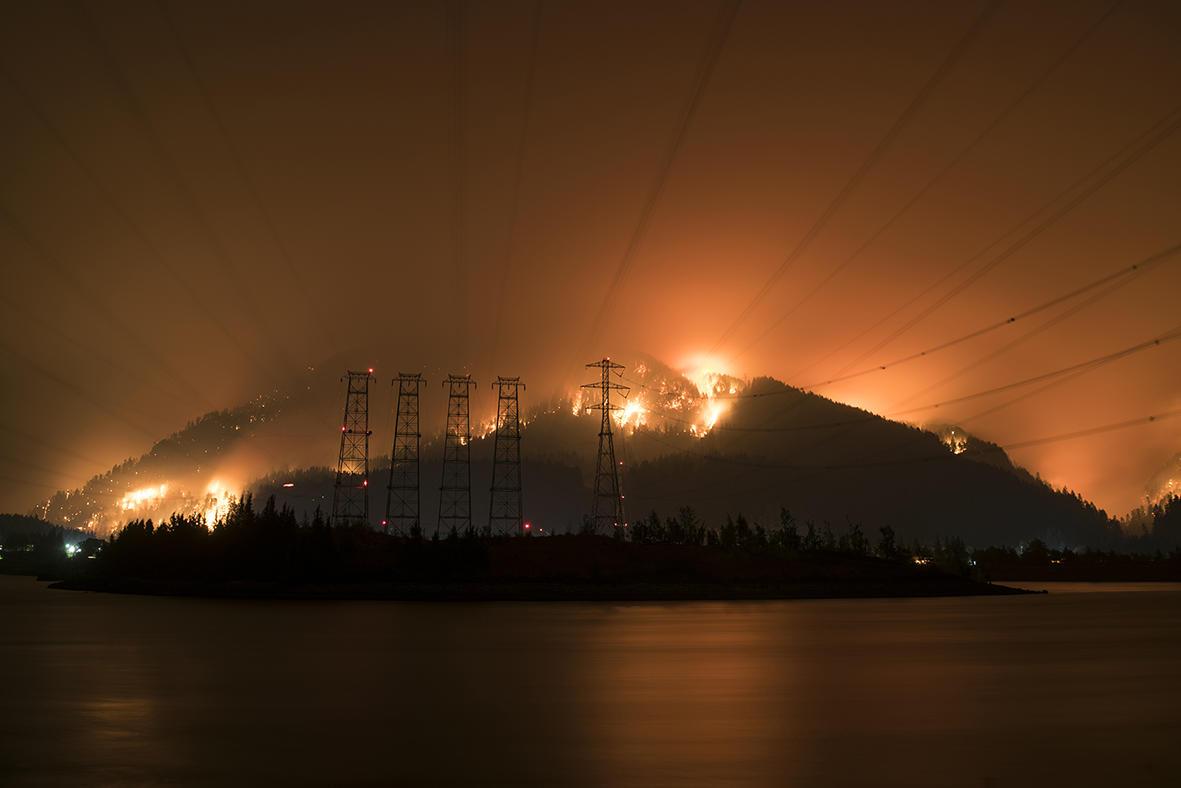
Wildfires are a natural and important part of Hood River County's environment. Historically, periodic fires helped keep our landscape healthy and thriving.
Our county is home to different types of forests, each with its own fire history. For instance, the oak savannas in the eastern part of the county had frequent but mild fires, while the wetter Douglas-fir forests in the west and at higher elevations experienced less frequent but more intense fires. These fires started through lightning strikes or were set by Indigenous people for land management. They were often driven by strong winds from the Columbia Gorge.
Over the last century, things have changed. Forest management practices like efforts to prevent wildfires and historical logging have led to less complex forests with more, but smaller, trees. Non-native plants and animals have put native species under stress. Climate change has made the area hotter and drier, and worsened pest problems.
As the population grows, land use has also changed. Agriculture, recreation, and other industries have expanded across the county, placing homes, orchards and other valuable areas closer to flammable forest materials.
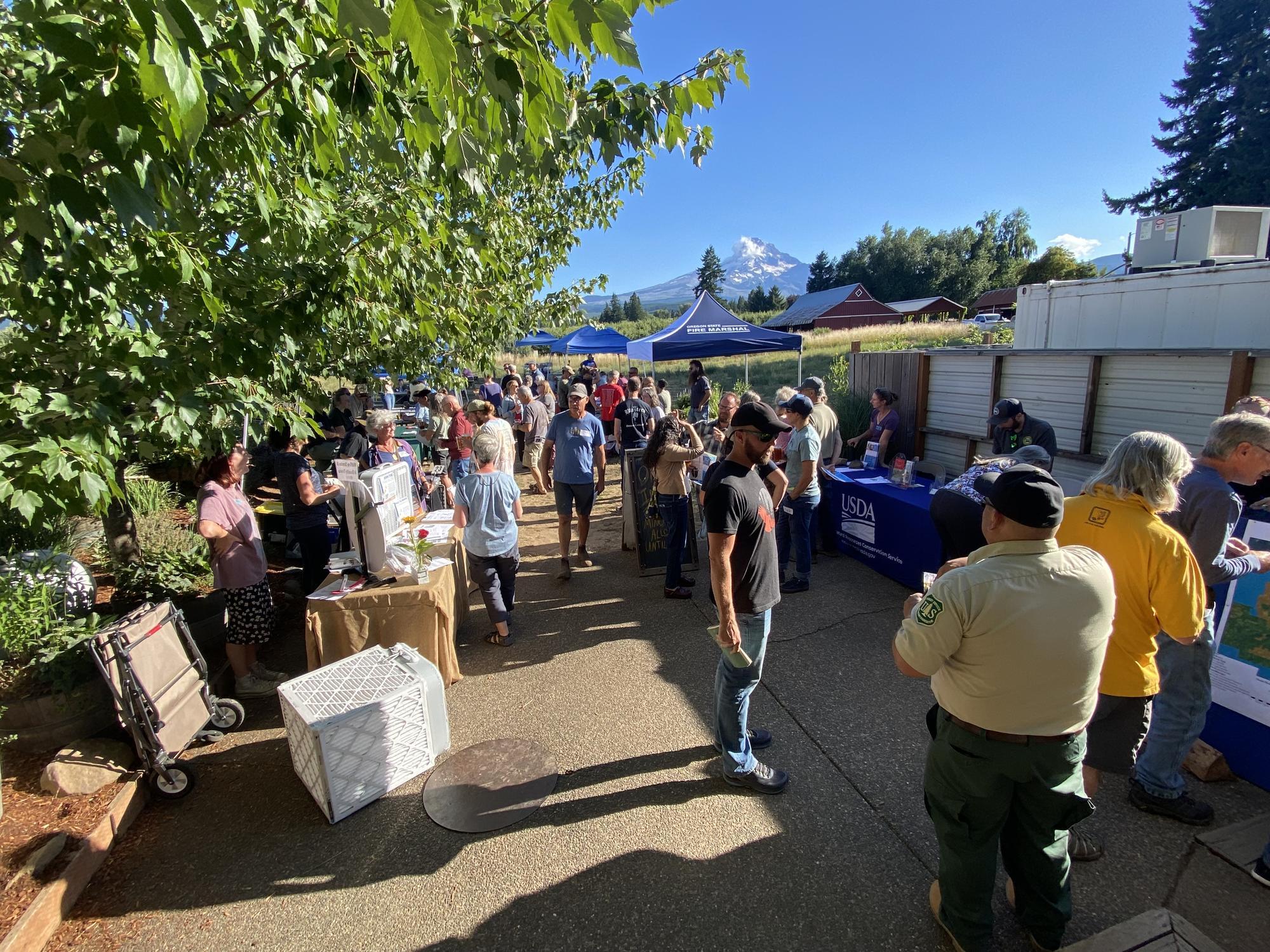
Firefighters, land managers and governments are working hard on fire safety, but community involvement is crucial for better wildfire preparedness. As residents or landowners, you can help by preparing your homes, lands, and communities for fires. We can create areas around our homes to buffer them against fire, reduce flammable materials in our woods to protect communities and make emergency plans for dealing with smoke and fire. The following pages will explore all these strategies (and more!).
Let’s work together to prepare Hood River County to be as resilient as possible before wildfire strikes.

Preventable Wildfires
Minimizing the chances of sparking a fire
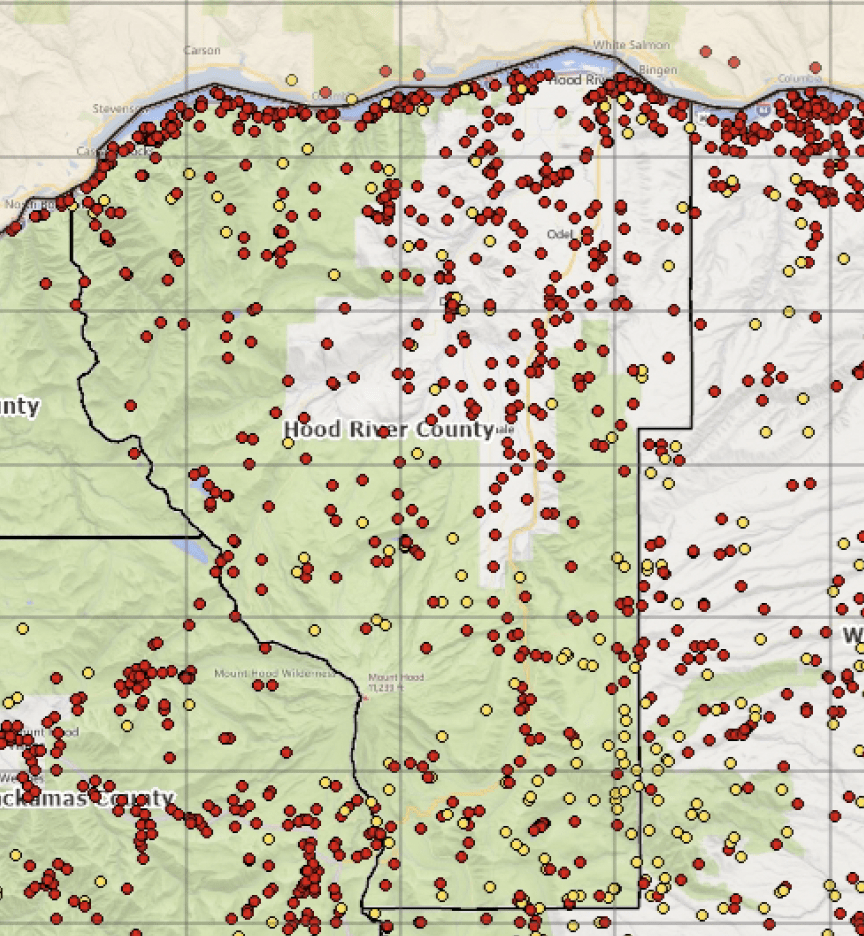
In the past 20 years, humans have accidentally started 81% of the wildfires in Hood River County. These fires often start close to roads, houses, places where we enjoy outdoor activities, and other important areas, creating a big risk. Here are some tips to help avoid accidentally starting a wildfire:
Vehicle safety:
- Avoid driving or parking vehicles over dry vegetation.
- Carry a shovel, bucket and fire extinguisher in your vehicle.
- If you’re towing a trailer, ensure the tires are not worn, bearings and axles are greased, brakes are working properly and safety chains are in place and not dragging on the ground.
Equipment and machinery:
- Avoid operating machinery on windy days or during red flag warning conditions (red flag warnings are issued when the weather is very hot, dry and windy).
- Maintain equipment to prevent sparks and overheating.
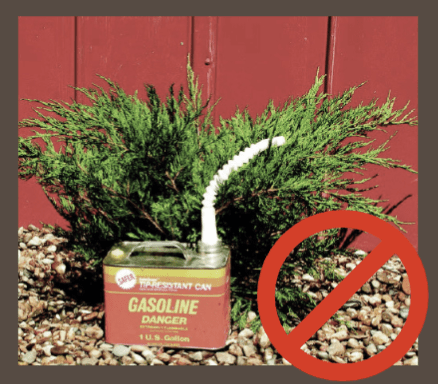
- Store fuel in appropriate containers.
Backyard burning:
- Do not burn on windy days.
- Backyard debris burning is not allowed during fire season. Consider alternatives like chipping, composting or recycling yard debris during the summer.
- Keep a water source, shovel and fire extinguisher nearby. Monitor burning piles and keep them from spreading into the surrounding vegetation.
- Fully extinguish fires by drowning the ashes in water and stirring until the pile is cold. Check the site in the following days to ensure burn areas are cold, as residual heat can sometimes be rekindled later.
- Burn permits are required year-round in Hood River County. Contact your local fire district for a permit to burn small backyard debris piles. For larger slash or brush piles associated with a grant or commercial operation, contact Oregon Department of Forestry (ODF) in The Dalles.
Campfires:
- Select a flat, open location away from flammable vegetation, preferably in a pre-established fire ring or fire-proof container.
- Keep campfires small by using short lengths of wood.
- Do not leave or go to sleep until your campfire is completely extinguished.
- Campfires may be prohibited during periods of high fire danger. When camping, check with the land management agency, such as state parks, ODF, Forest Service or county parks, for fire bans.

Your Home and Defensible Space
Reducing the likelihood that a wildfire ignites your home
“A home that does not ignite is a home that does not burn.”
— Jack D. Cohen, USDA Forest Service Missoula Fire Science Laboratory
A well-prepared house and yard can dramatically increase the survivability of your home in the event of a wildfire. Create a defense system by hardening your home against wildfire and reducing the fuels in the area surrounding your home.
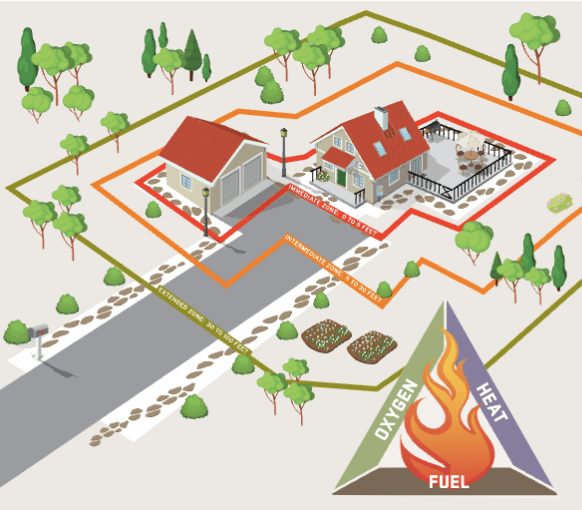
Fire requires three ingredients: fuel, heat and oxygen. Without any one of these elements, fire will not occur. While it is difficult to remove heat or oxygen to stop the progress of a wildfire, we can reduce the availability of fuel, either by replacing combustible materials with non-flammable ones or by reducing the amount of fuel available to burn. These steps can reduce your home’s ignition potential and increase your home’s likelihood of survival.
How do homes ignite?
Flying embers — an not the main fire front — ignite most homes that burn in wildfires. Embers can travel on high winds, far ahead of an advancing wildfire. Hood River County residents have seen how far embers can travel with enough wind — the Eagle Creek Fire jumped the Columbia River and started spot fires on the Washington side in 2017, crossing almost a mile of open river.
When embers land on or around your home and encounter combustible fuels in your gutters, on a patio chair or in pine litter around the base of your home, they can quickly ignite and spread. Embers can also enter your home through unscreened vents or other cracks and ignite your home from the inside.
The Home Ignition Zone
The Home Ignition Zone, or HIZ, is defined as the home and its immediate surroundings, out to a distance of 100 feet (or 200 feet on steeper slopes).
Studies by the U.S. Forest Service and the Insurance Institute for Business and Home Safety (IBHS) have found that the condition of your HIZ is the primary factor determining whether your home will survive a wildfire. That’s good news because it means that there are actions you can take to reduce your risk!
Where and how your home is constructed, including site location, design and building materials, influence whether your home will survive a wildfire. Additionally, the fuels near your home—including vegetation, like trees and shrubs and manmade fuels such as fences, decks and outbuildings—also affect ignitability.
The defensible space around your home includes three zones:
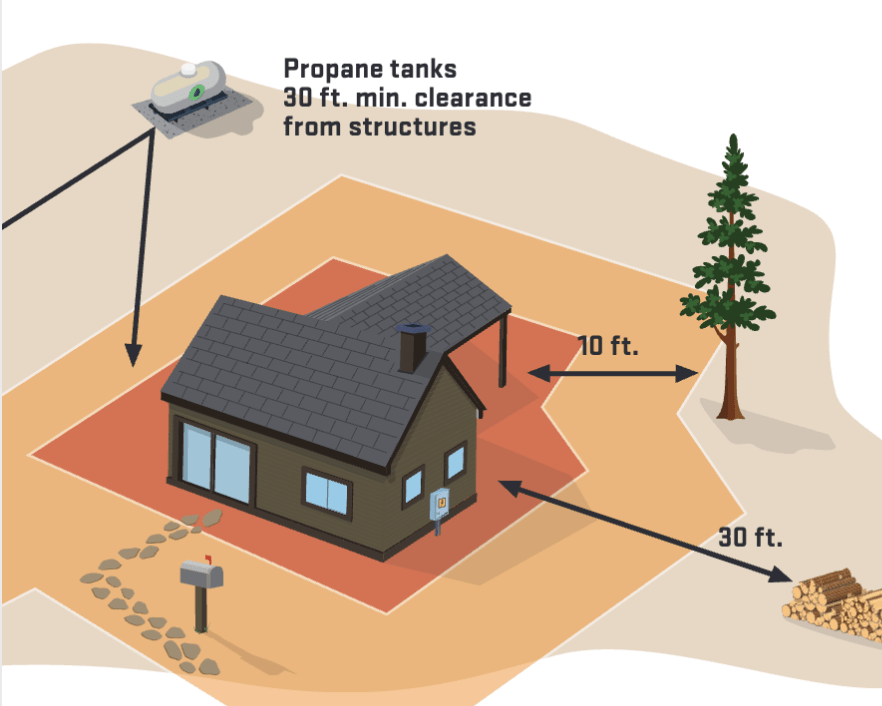
- Immediate zone: 0 to 5 feet from each structure
- Intermediate zone: 5 to 30 feet from each structure
- Extended zone: 30 to 100 feet from each structure (up to 200 feet on steep slopes)
Each zone has several checklist items to consider before fire season to help protect your home from wildfire. In the following pages, we will offer suggestions for site considerations, home hardening and the three defensible space zones.
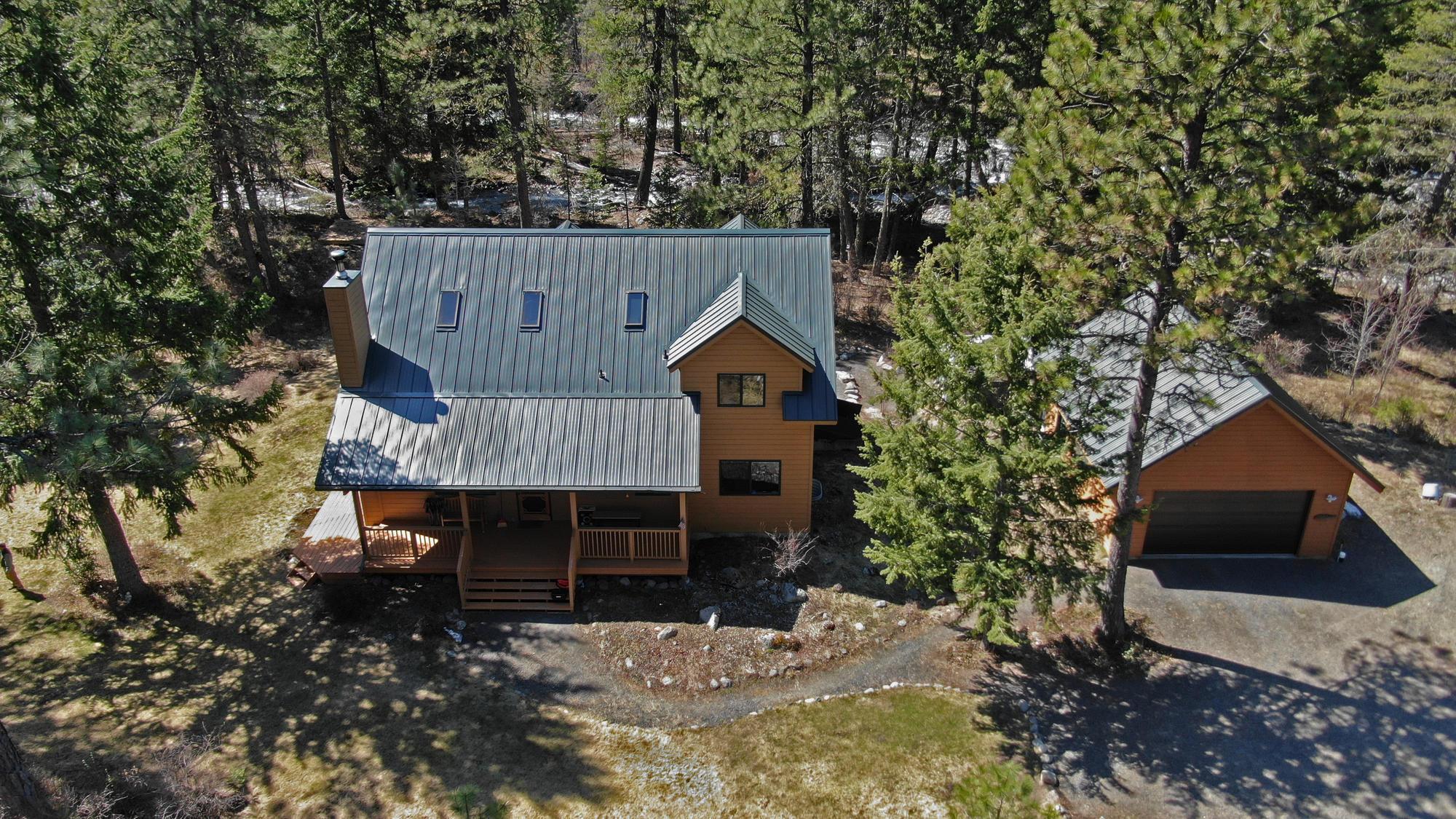
The big picture: Check your surroundings
- Locate and label water sources like hoses and sprinklers for potential use in fire response. Your fire department may be able to evaluate compatibility with their pumps and equipment.
- Minimize fuels, especially on your southern exposures and in the direction of prevailing winds, both of which cause vegetation to dry out more quickly.
- Consider focusing extra effort between your house and nearby structures such as a detached garage, shop, shed, or neighboring home. These structures are fuel that could ignite your home through ember cast or radiative heat.
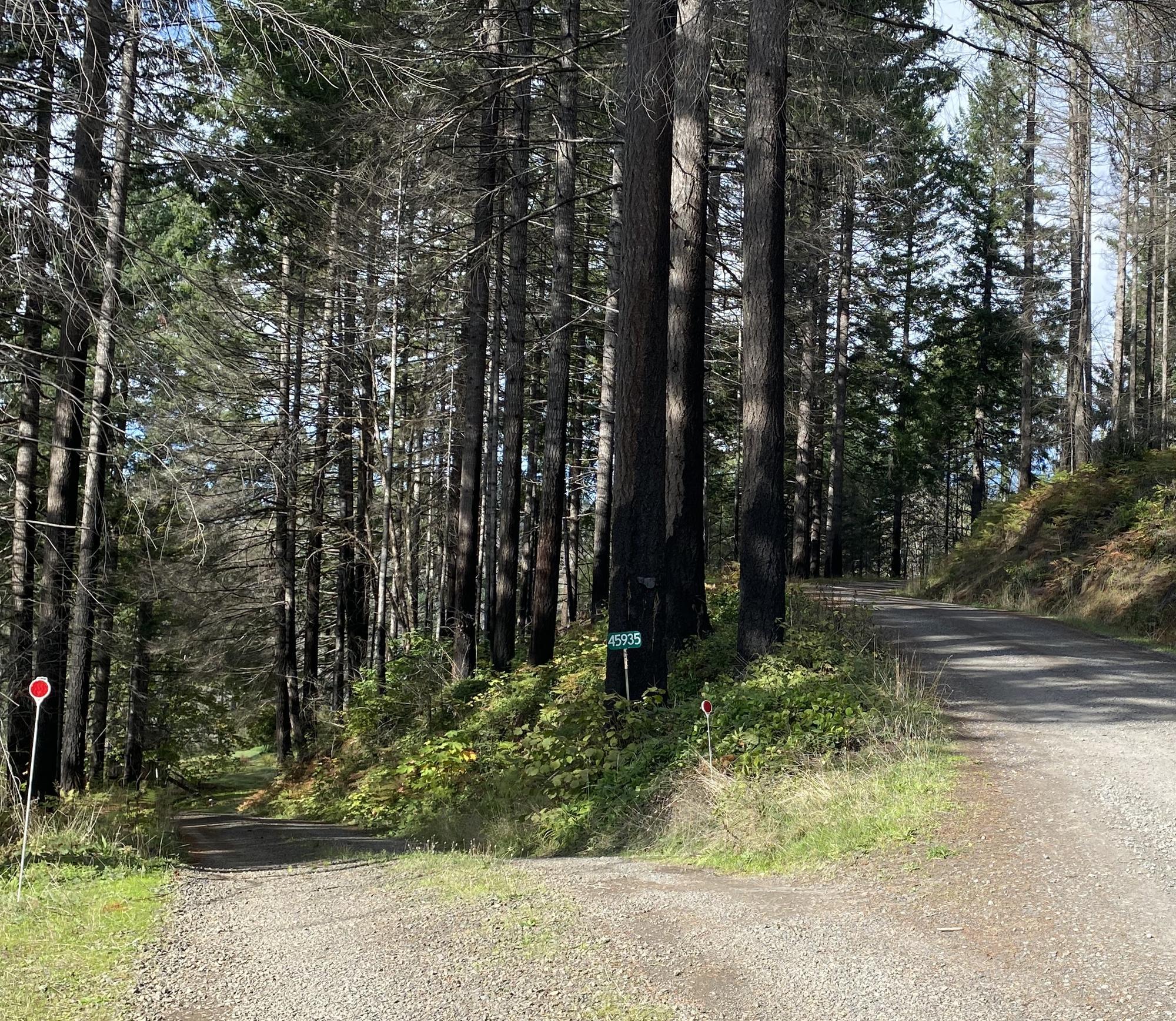
- For emergency responders to find your home, street signs and address labels should be posted at each intersection leading to your home. Characters should be made of reflective, non combustible material and be at least 4 inches tall.
- Homes at the end of long driveways or dead-end roads should have pullouts for 2-way traffic and turnaround areas suitable for large fire equipment. Check with your fire department for specific requirements.
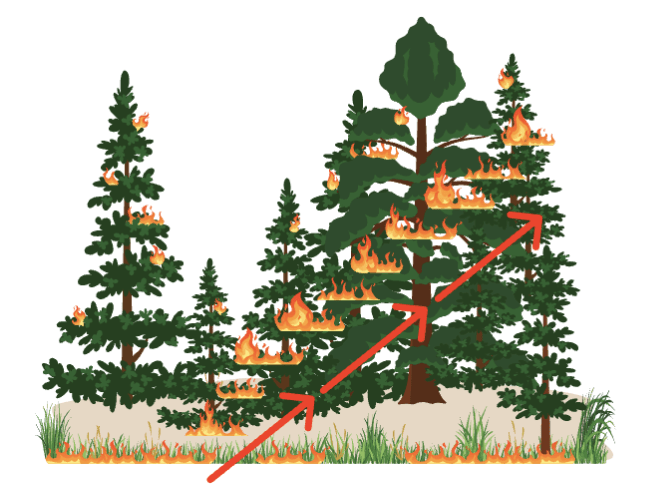
- Assess your topography and increase vegetation management if your house sits on a slope above dense vegetation, as fire spreads quickly going uphill.
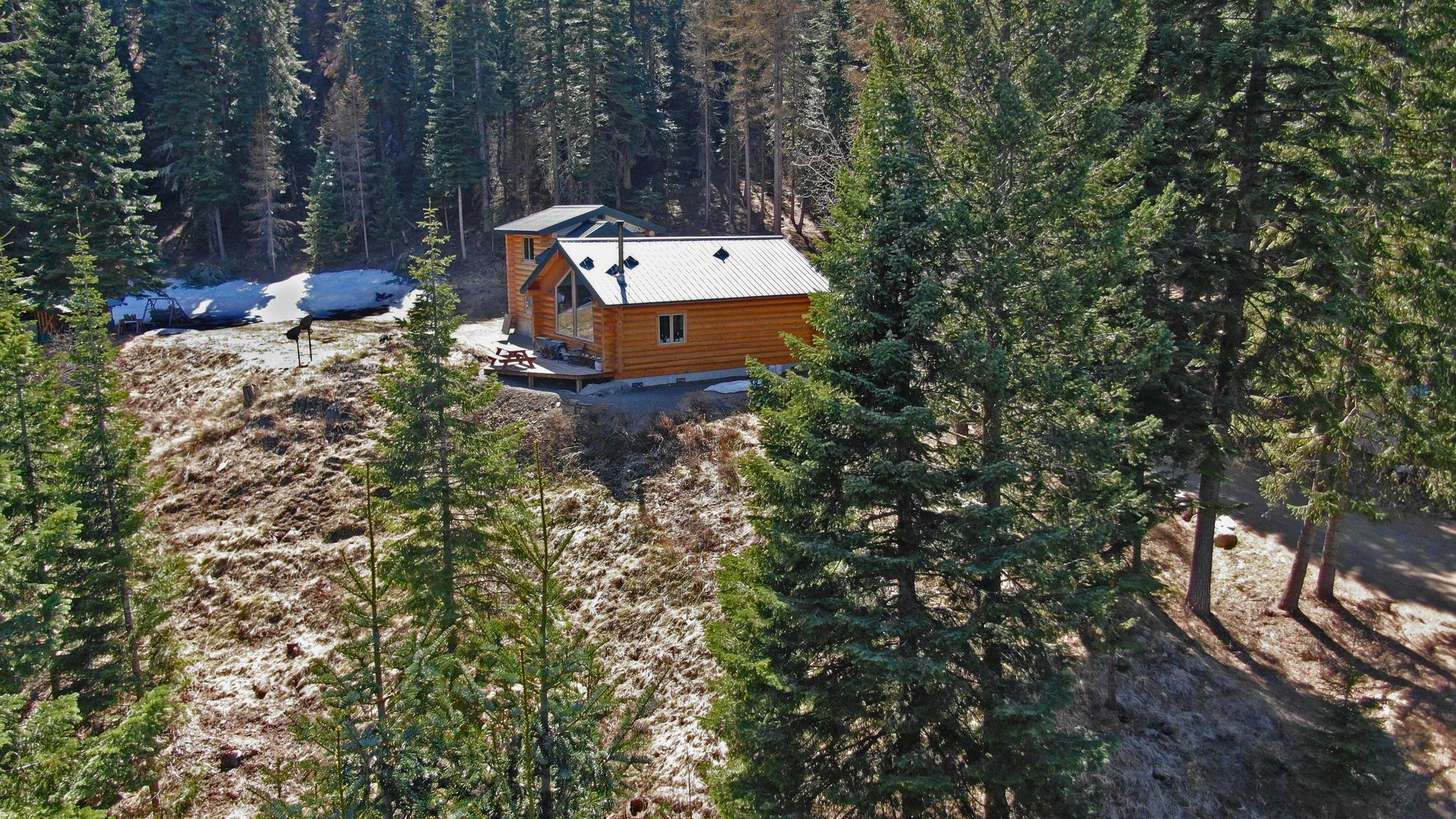
Home Hardening: Reduce the chances that hot embers can enter your home.
- Evaluate roofing materials and assembly. When replacing your roof, use a noncombustible material, such as composite or asphalt shingles, metal, slate, clay tile or concrete. Check annually to ensure shingles are in good condition: flat, with no missing shingles, tears, cracks or gaps.
- Install and maintain noncombustible roof gutters. Keep them free of litter and debris.
- Cover the underside of eaves with a soffit, box them in, or fill gaps with caulk. Open eves can be exposed to embers and flames from below.
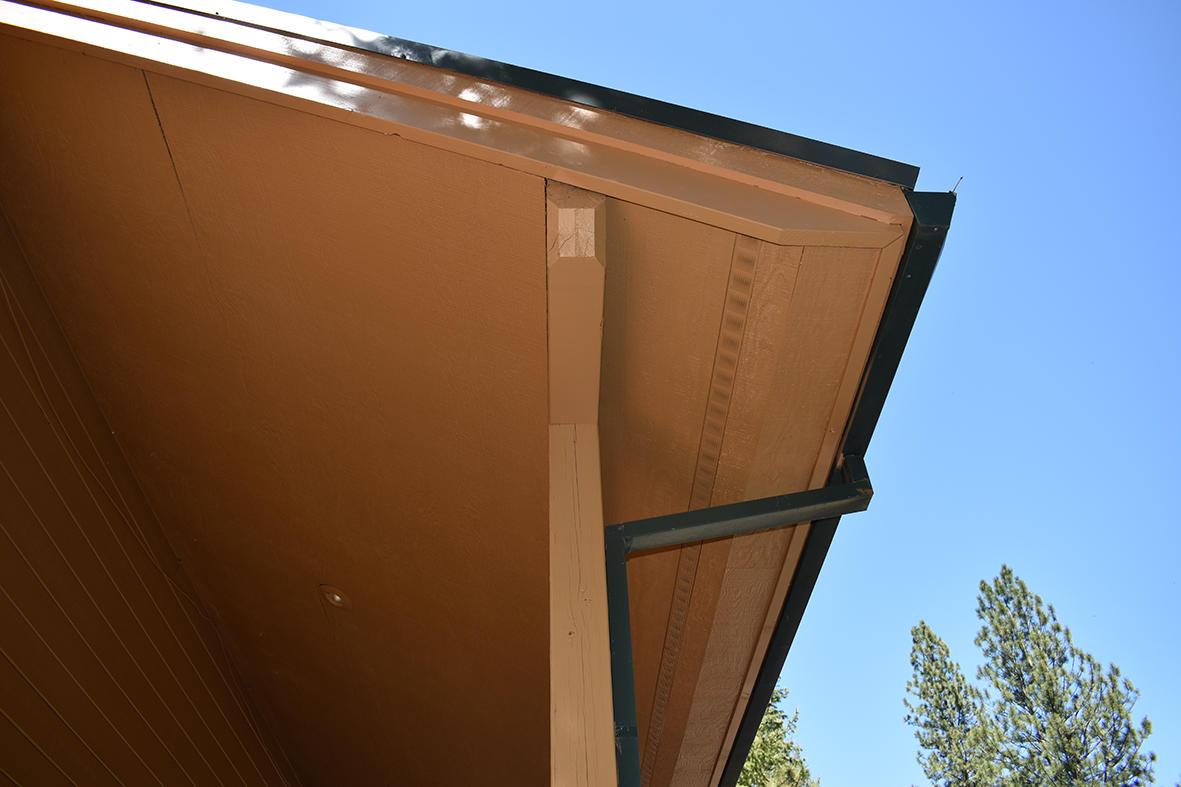
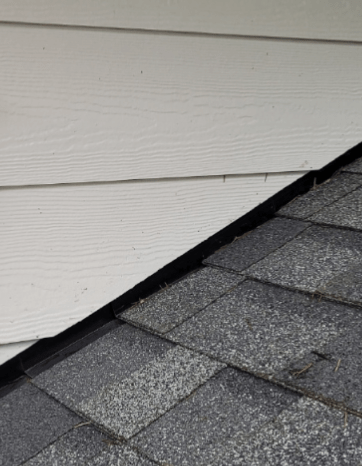
- Ensure all areas where the roof and siding meet are properly flashed.
- Consider fire-resistant sidings such as stucco, brick, steel or cement board. Seal any gaps in your siding to prevent ember intrusion.
- All attic, eave and foundation vents or crawl space openings should be covered with 1/8-inch or smaller wire mesh to keep embers from being blown inside. Consider closing vent shutters (but do not permanently cover vents).
- Ensure at least 6 vertical inches of non-combustible materials around the base of your home.

- Add flue caps and screens to chimneys. Screen roof turbine vents.
- Clear roof skylights of debris. Use double-pane glass instead of a domed or plastic skylight. Seal any seams around skylights, chimneys and stovepipes.
- Install double-pane windows, ideally with tempered glass, to improve heat resistance. Add metal screens to windows. Ensure windows are closed during a wildfire.
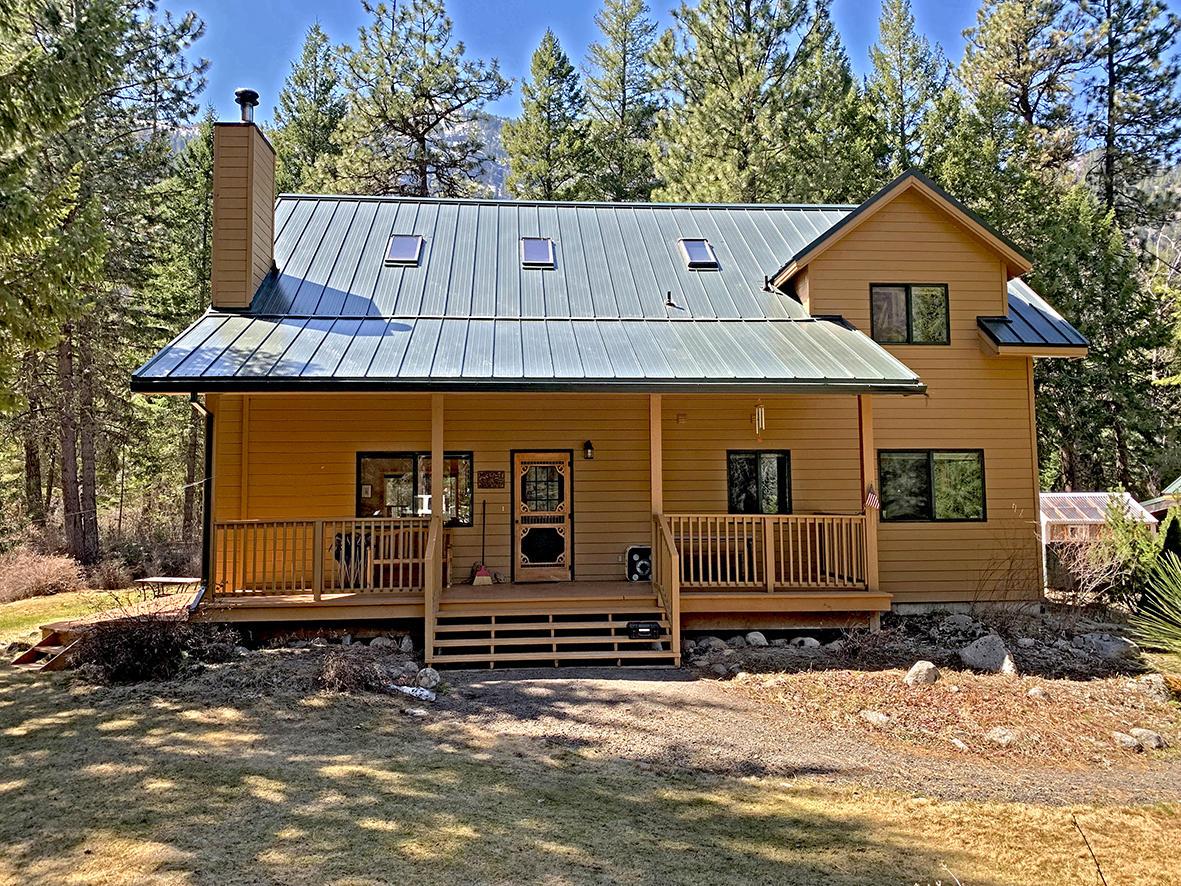
Immediate zone (0–5 feet): Maintain a noncombustible area around your home
- Create a noncombustible area at least 5 feet wide around the base of your home so that if embers accumulate, they cannot ignite additional fuels or the base of your house.
- Use gravel, river rock or hard surfaces such as brick and pavers.
- Keep this area free of woodpiles, wood mulches and flammable shrubs such as juniper and arborvitae.
- Avoid planting anything below windows, soffit vents, eaves or in front of foundation vents.

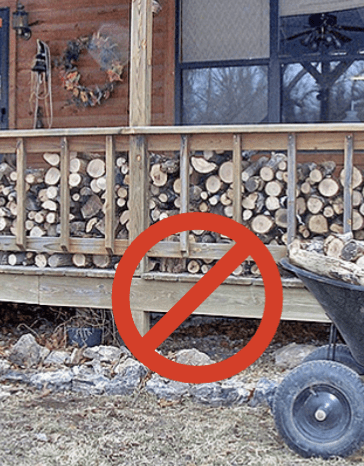
- Routinely clear debris from all attachments such as decks, porches, patios, steps and accessibility ramps. Keep spaces under elevated decks or steps clear of all storage and debris. Consider enclosing first-story decks with 1/8-inch or smaller wire mesh or boxing them in with noncombustible siding material.
- Remove temporary fuels like flammable doormats, brooms, garbage cans and cushions from the immediate zone when fire risk is elevated.
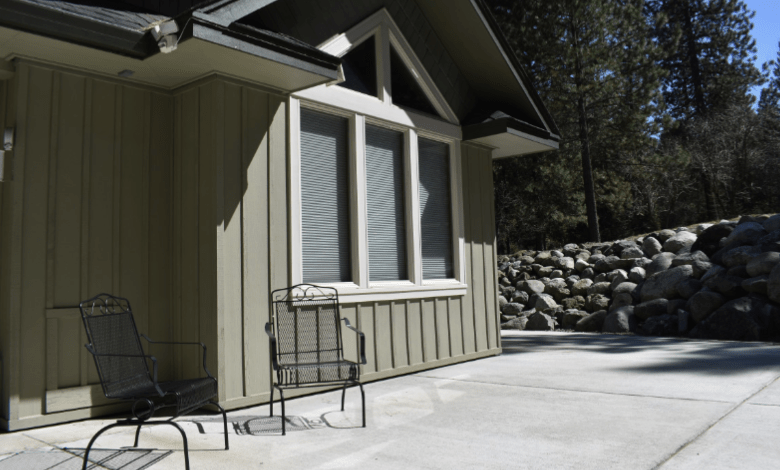
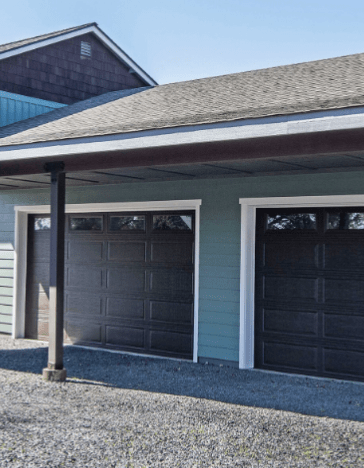
- Properly seal exterior garage doors. Install self-closing, solid wood (or other fire-rated) doors between the garage and the house.
- If parking outside, park vehicles on a nonflammable surface outside the 5-foot noncombustible area and keep windows rolled up.
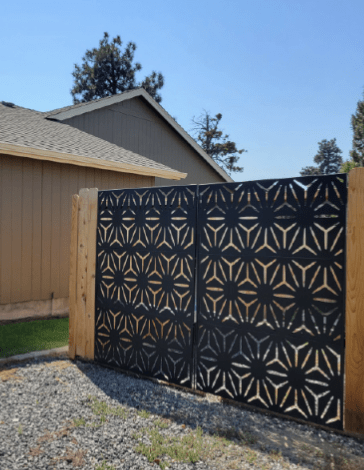
- Break up combustible "pathways" for fire, such as a line of wood mulch or a wooden fence attached to the house.
Immediate zone (5–30 feet): Make it lean, clean and green
- Mow grass to under 4 inches and keep it watered during fire season.
- Use rock landscaping or low-growing herbaceous vegetation.
- Space out bushes and shrubs at least two times their mature height to reduce the chance that fire can spread from one bush to another.
- Remove all dead and dying vegetation in this zone.
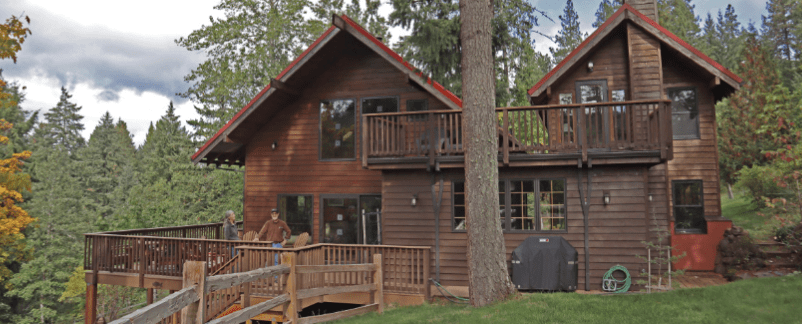
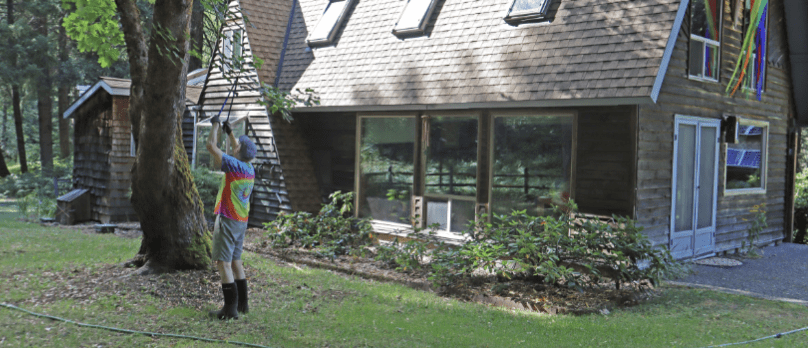
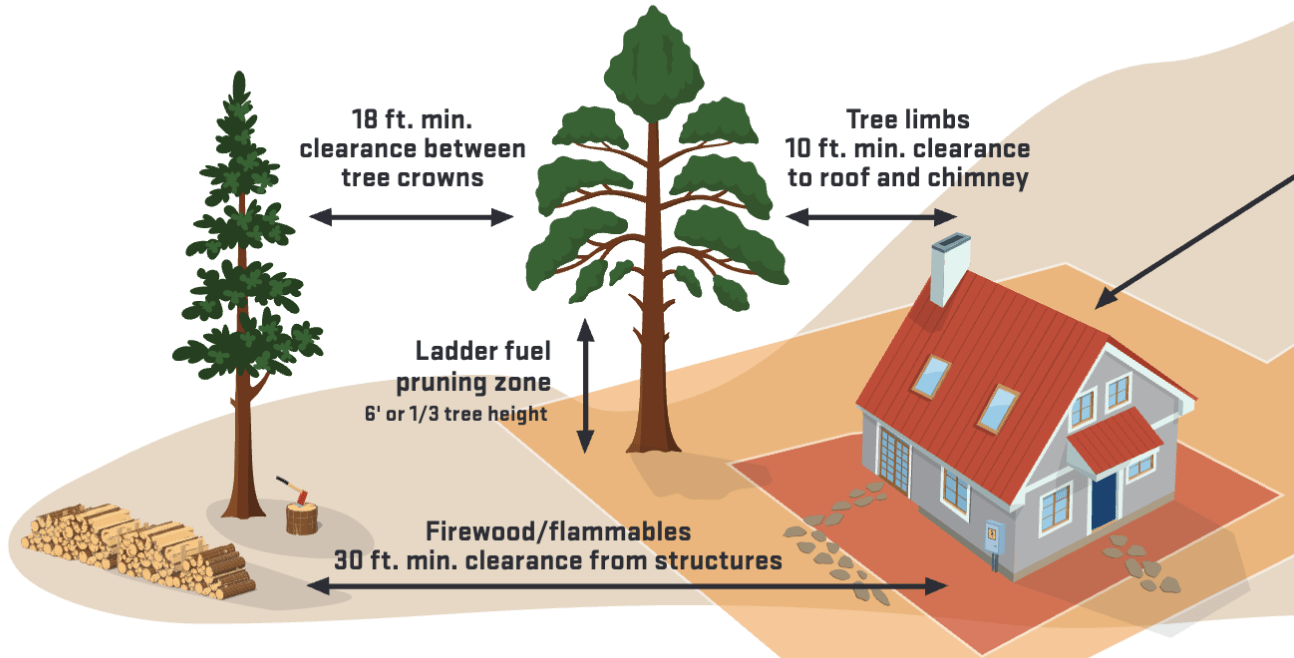
- Prune tree limbs at least 10 feet away from the roof, chimney, stovepipe and power lines.
- Prune trees at least 6 feet from the ground (not to exceed 1/3 of the tree’s total height) to reduce the chance that fire can climb into the canopy of trees.
- If shrubs are grown under tall trees, prune limbs up to three times the height of the vegetation underneath.
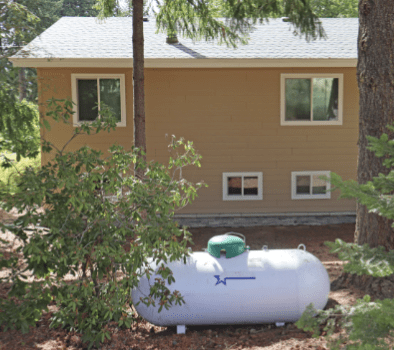
- Site propane tanks at least 30 feet from structures and clear all vegetation within 10 feet of the tank.
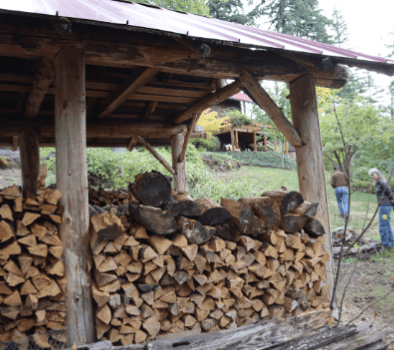
- Stack firewood at least 30 feet from structures and keep it covered when possible.
- When using wood mulch, keep it moist and break up its continuity with patches of hardscapes, such as landscape rocks or gravel, or with areas of watered grass.
Extended Zone (30–100 feet, or 200 feet on steep slopes): Thin, prune and separate
- Thin dense patches of trees and shrubs to create separation between them, slowing the spread of fire.
- Reduce ladder fuels by pruning low tree branches and shrubs growing directly under trees.
- If you want to keep a particular patch of trees and shrubs for a visual screen, clear out the area around it, creating an island and ensuring that you are breaking up the continuity of fuels.
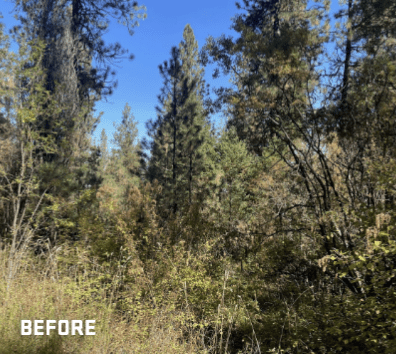
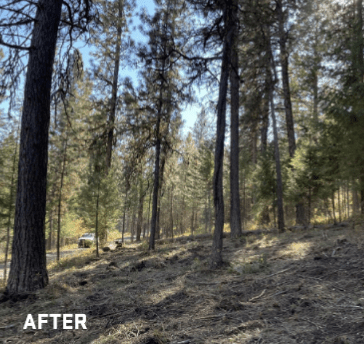
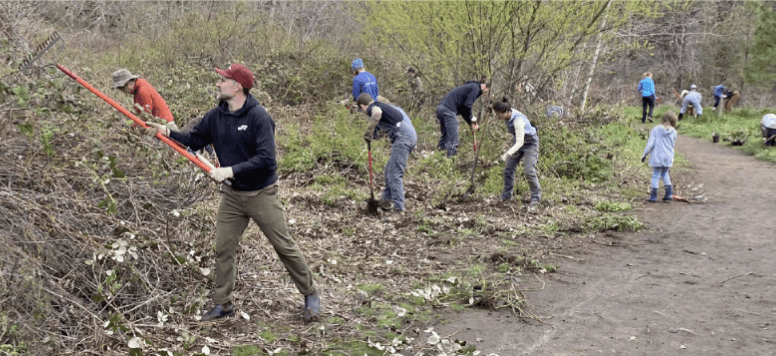
- Remove invasive weeds such as Himalayan blackberry, cheatgrass and knapweeds.
- Consider extending this zone on the typical prevailing wind side of the property to ensure protection due to wind-driven wildfire events.
- Ensure access routes are properly cleared for safe and effective evacuation.
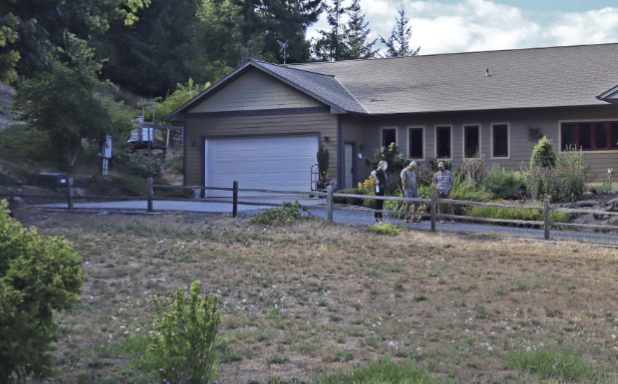
If you're like many Hood River residents, you appreciate the privacy afforded by having a vegetation screen close to your home, such as a row of Arborvitae.
To retain the privacy while using fire-safe practices, develop your screen farther from the house (at least 30'), use fire-resistant plants, create space between groups of trees, and incorporate non-combustible barriers or breaks in vegetation.
Pace yourself!
These updates take time and can feel overwhelming. Plan to carry out this work over several months or years, according to your budget and availability
Key Principles for Creating Your Defensible Space
The work you do on your property to reduce the risk of losing your home to wildfire creates defensible space. During large wildfire events it is likely that firefighting resources will be limited for home protection, so your defensible space might be your home’s best protection. If firefighters are present, defensible space improves their ability to defend your property safely and effectively.
Create separation
Dense stands of trees and shrubs pose a significant wildfire threat and contribute to declining tree or plant health and vigor. Create separation between plants and between tree canopies to reduce wildfire spread across your property.
Remove dead vegetation
Remove dead or dying trees and shrubs within the recommended defensible space zones. Clean up downed branches. Inspect all trees and shrubs for sections of dead foliage in the center.
Sensitive areas
Additional considerations may apply if your defensible space zones include sensitive areas, such as lakeshores, beaches, stream-environment zones, scenic resource areas, important wildlife habitats or conservation or recreation areas. Seek professional advice on how to achieve defensible space while managing sensitive areas.
Decrease Ladder Fuels
Understory vegetation, such as small trees, low branches, grasses and brush, can act like ladder rungs—carrying fire from the ground into treetops (also called the canopy or crowns). By pruning low branches, removing small trees and clearing brush, you can disconnect fire’s pathway into tree canopies. Ladder fuel removal also prevents surface fires from burning too hot, which can damage or kill the trees you want to keep.
Additional resources
■ Reducing Fire Risk on Your Forest Property (PNW 618) beav.es/SPe
■ Fire-Resistant Plants for Home Landscapes (PNW 590) beav.es/ce3
Work with Your Neighbors
Wildfires do not recognize property boundaries.
Implementing defensible space practices around every home improves the survivability of entire neighborhoods and helps create a fire-adapted community. Wildfire risks are shared among neighbors, as wildfire does not recognize property boundaries. For that reason, planning for community protection is a critical part of your wildfire preparedness.
Neighborhood-scale efforts to increase emergency access, improve evacuation options and fortify defensible space are ways that you can help each other become more collectively prepared. Consider these aspects of community-level wildfire preparedness when working with your neighbors.
Home and neighborhood assessments
Many fire districts offer free assessments of your home and neighborhood. These assessments consider individual home readiness and the wider context, including housing density, proximity to hazardous vegetation, proximity of fire response resources, local fuel breaks, emergency access routes and more.
Check with your local fire department or schedule an assessment through the Oregon State Fire Marshal’s
program: oregondefensiblespace.org.
Secondary road for evacuation
When communities only have one way in and out, evacuating residents while emergency responders arrive can result in traffic jams and dangerous driving conditions. A second access road, even one only used for emergencies, can improve traffic flow during a wildfire and provide an alternate escape route.
Working together
Develop a neighborhood communication system for fire preparedness that works for your community. Consider ideas such as hosting annual wildfire workdays to remove hazardous vegetation, organizing spring BBQs to plan together for the wildfire season, maintaining an email distribution list for sharing community updates, or extending assistance to neighbors who might require help with yard maintenance. For some neighborhoods, formalizing this collaboration through Firewise designation is a helpful approach: Firewise.org.
The “sparkplug”
Often, it just takes one leader to spark interest in wildfire preparedness across the neighborhood. Do you have the passion, time and interest in wildfire preparedness to be that spark? If so, contact the Oregon State Fire Marshal for resources to help you guide your neighbors towards wildfire preparedness: fireadaptedoregon.org.
Do you live in the Columbia River Gorge National Scenic Area?
Consult with the Hood River County Planning Department to discuss opportunities to align your wildfire preparedness actions with National Scenic Area requirements.
- (541) 387-6840
- [email protected]
Your woodland
Improving fire resilience and resistance on your woodland property
If you’ve developed defensible space in the 100 feet nearest your home, you’ve improved just under one acre of land. Work in the first 100 feet is the most critical for reducing the risk of home ignition, but if you’re a woodland property owner, there's more you can do.
Homes in our county are often nestled within or are close to forests or other wooded areas. This means that fires can spread from the woods to the homes or from the homes to the woods. It also means that firefighters’ jobs are more complicated—the presence of homes, powerlines and other infrastructure makes firefighting more complex and dangerous.
Thinning trees and managing understory vegetation, like grass and brush, can be very helpful in reducing the risk of a wildfire spreading through your wooded property. By removing some trees, thinning creates more space between remaining trees, making it harder for fire to spread from tree to tree. It also leads to healthier trees since they have less competition for water and nutrients in the soil and better access to sunlight for photosynthesis.
How much thinning is enough?
That’s a bit complicated in Hood River County. Western Hood River County receives more rain than its east side, temperatures vary significantly between low and high elevations and the topography of valleys and ridges influence how much sunlight reaches the ground. Consult pages 16-17 for thinning recommendations for the various Hood River County forest types.
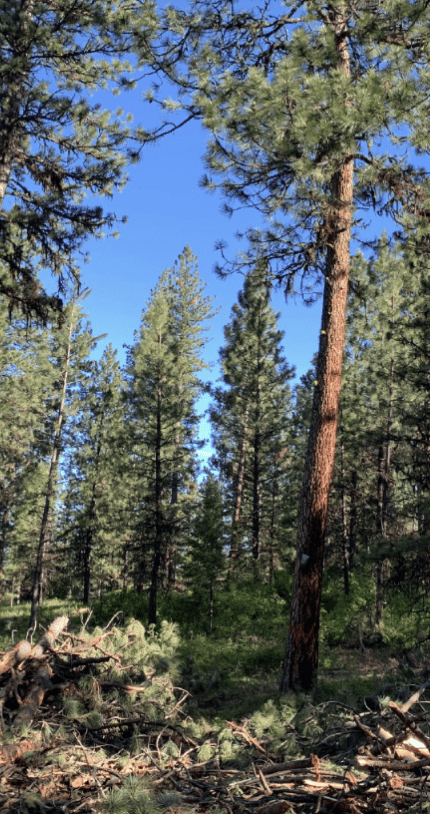
Thinning doesn’t have to make every part of your woodland look the same. From an ecological perspective it’s fine to leave some areas untreated to provide hiding areas or thermal cover for animals while thinning other areas to prevent or reduce wildfire spread. The combination of patches and gaps can be great for wildlife, as they provide a variety of food and cover conditions.
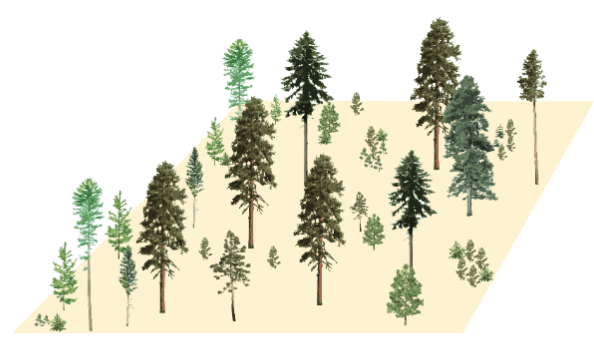
Unthinned Stand
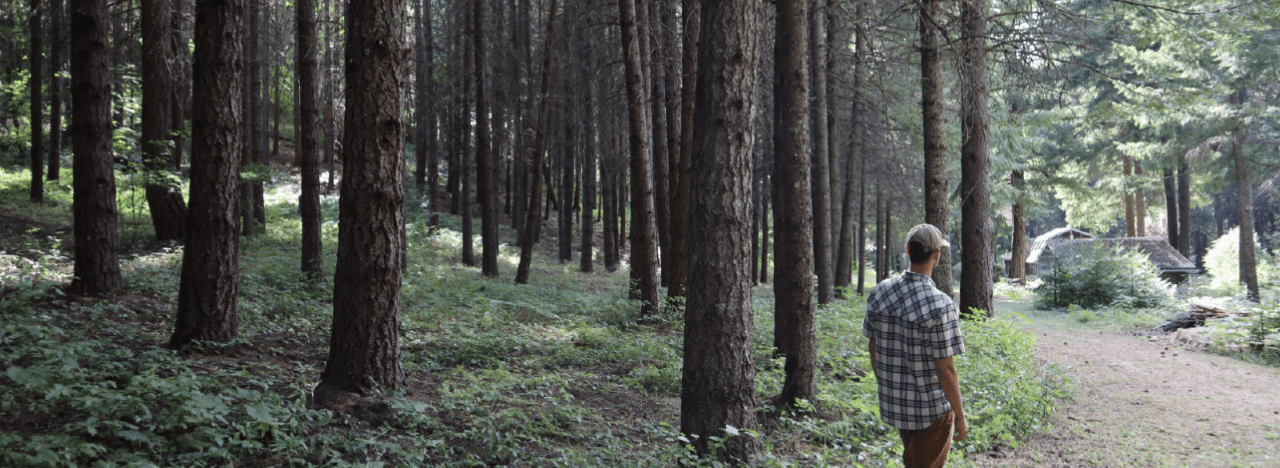
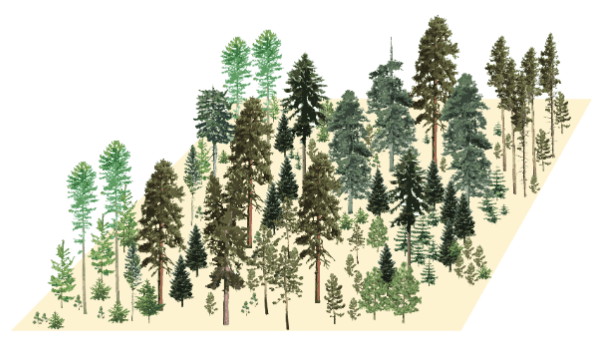
This unthinned stand has densely packed trees and lots of small trees that could serve as ladder fuels to carry a surface fire into the treetops. Thinning would space out the trees, reducing fire risk and improving the health of the remaining trees.
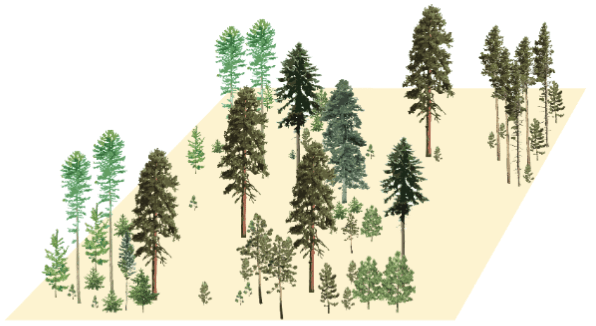
Uniformly Thinned Stand
This uniformly thinned stand gives trees more room to grow, and the spacing reduces fire risk. Small trees are spaced away from large trees so they won’t serve as ladder fuels. In this example, the best-formed and healthiest trees have been retained, but that doesn't always have to be the case. As the landowner, you get to choose which trees to retain.
Patchy-clumpy Thinned Stand
Thinning can also incorporate clumps of trees separated by openings. This arrangement benefits some wildlife species and may be more visually appealing for some landowners. Make sure there is enough space between clumps to keep fire from moving easily between treetops.
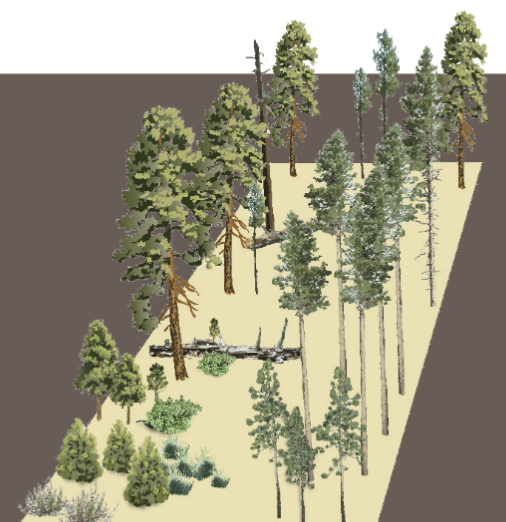
Wildlife-friendly Thinning
Combine the patchy-clumpy approach above with some variation in the understory and surface fuels to improve wildlife habitat. Leaving small patches of shrubs that are disconnected from the forest canopy (i.e., not ladder fuels), large-diameter downed logs and the occasional standing dead tree (snag) creates a variety of food and cover conditions.
To learn more about wildlife-friendly fuel reduction strategies, consult: beav.es/qFA.
Manage the understory
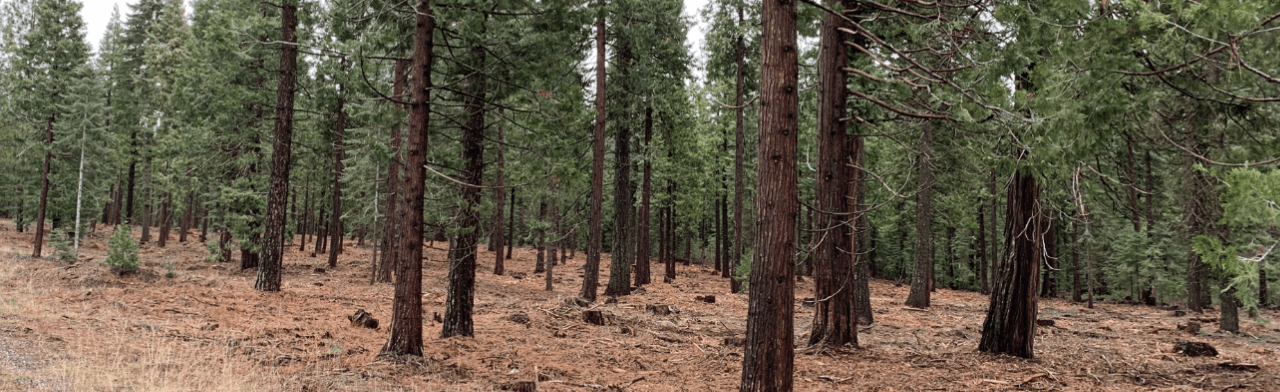
The understory is the vegetation, such as young trees, shrubs and grasses, that grow under mature trees or on the ground. These surface fuels are a big driver of how fires behave. In addition to thinning, it’s important that you manage your understory surface fuels by mowing, chipping, grazing, hand-thinning or prescribed burning.
As with thinning, understory treatments can also be applied unevenly across the property to maintain the complexity of your understory plant community, leave areas of refugia, and provide a more varied range of habitats.
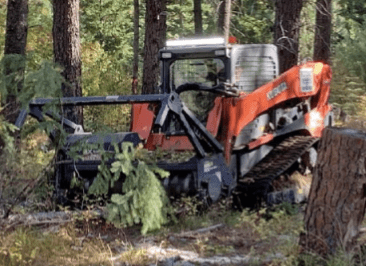
- Mowing – Use a brush mower or masticator to control shrubs or young trees before they become ladder fuels.
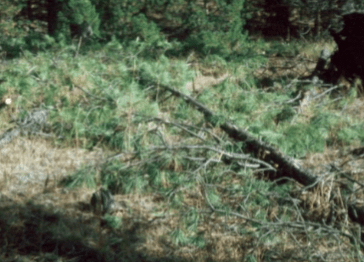
- Chipping – Once cut, grind the downed brush and small trees to disperse heavy fuel loads.
- Mastication/brush cutting – Grind or cut shrubs and small trees so they don’t serve as ladder fuels. This leaves the fuel on the site as large chips, which can still burn but at a much-reduced intensity.
- Grazing – Cattle, sheep, goats and horses can help keep grass and shrubs small, reducing fuel loads and ladder fuel potential.
- Hand thinning – Cutting and scattering or piling small trees and brush can keep ladder fuels under control.
- Burning – Piling and burning are common ways to remove small wood and debris from thinning. Understory and broadcast burning are effective tools for managing surface fuels but require more planning and expertise.
Manage your slash
Branches, treetops and trees left on the ground after thinning are called “slash” and can be a significant fire fuel source for many years. To reduce the hazard presented by leaving lots of fuel on the ground, landowners generally pile slash in openings and burn it once it has had time to dry.
Depending on how you thin, you could end up with a few large piles or many small piles. We recommend partially covering piles to keep some fuel dry and burning the piles the following spring or fall. Make sure to have an Oregon Department of Forestry burn permit and any required safety equipment. Slash management is a legal requirement on private forest lands regulated by ODF. Escaped pile burns are a significant source of wildfire starts every year, so use caution when burning piles.
Protect your soil
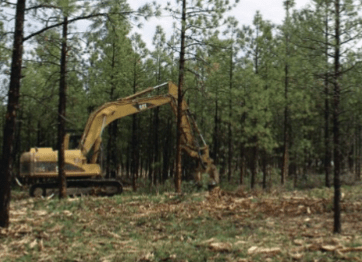
Whether thinning trees or managing understory plants, protect your soil. Equipment operation increases erosion potential and invites invasive annual grasses and other weeds to encroach. If using machinery, try to limit activities to times when the soil is either dry or frozen. Consider seeding disturbed areas with fire-adapted native seed suitable to your site or make a plan to treat weeds. It is also important to clean machinery and equipment regularly to avoid the spread of seeds from invasive plants.
Know the rules
Oregon requires forestland owners or their contractors to file a Notification of Operation with ODF fifteen days (or more) before thinning (and obtain a burn permit if burning slash) for any lands falling under ODF’s jurisdiction. A smoke management registration may also be required. Do this online with ODF at ferns.odf.oregon.gov/e-notification or by contacting the local ODF office in The Dalles: (541) 296-4626. If you're unsure if this applies to your woodland, check with ODF.
The importance of maintenance
Plants grow back, and flammable vegetation needs to be routinely removed and disposed of properly. Before each fire season, re-evaluate your property and implement the necessary defensible space recommendations. Your main objective with these practices is to maintain low fuel loads on the ground and keep young trees and brush from becoming ladder fuels.
None of these treatments offer a one-and-done approach! Restoration requires ongoing efforts and recurring treatments to maintain desired forest conditions and keep fire risk low. Plan to maintain this work every 3 to 5 years as needed.
Warning!
Fresh pine slash attracts the pine engraver (Ips) beetle. The beetle prefers material 3–8 inches in diameter, which can include treetops and large branches. Once established in slash, Ips beetles can spread to and kill other small-diameter pine trees or the tops of larger pine trees.
To minimize risk from Ips beetles, promptly chip, masticate or burn pine slash created from January through the end of September. Pine slash created in October through December can be scattered and left to dry, but may later require piling and burning to reduce fire hazard. See beav.es/SPn for more details.
Recommendations for Hood River County Forest Types
Oak and pine savanna
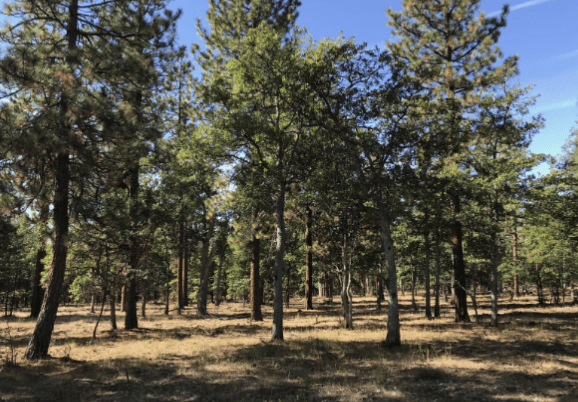
Mostly occurring in the central and east side of the county, these areas have a mix of Oregon white oak, ponderosa pine, and a grass- and shrub-dominated understory. Historically, frequent low-intensity fires kept the trees widely spaced and prevented brush and downed wood from building up on the ground by burning through the understory occasionally without significant impact on mature trees.
To improve wildfire resilience in this forest type, thin trees so they are widely spaced, keeping the largest healthy pine and oak trees and removing small trees and those that aren’t ponderosa pine or oak.
We recommend favoring these species because Oregon white oak and ponderosa pine are adapted to living with fire. These species have thick bark that can tolerate the heat of fires. Oak and pine are also drought tolerant. Scientists anticipate these species will have an advantage in a hotter and drier future.
There is some difference of opinion on whether small oaks should be thinned from these stands. You may need to thin some small oaks to reach the desired stand density, but they tend to sprout back from the stump and become shrublike. If you remove small oaks, you may need to apply herbicide treatments or conduct manual maintenance to prevent shrub oak from becoming a ladder fuel problem.
Oak, or oak and pine, woodlands occur in the same general area as oak and pine savanna but on sites with more moisture. These sites can host more trees than the savanna sites. To learn more about the restoration of oak habitat in the Columbia Gorge, consult the East Cascades Oak Partnership: beav.es/qCz.
Ponderosa pine
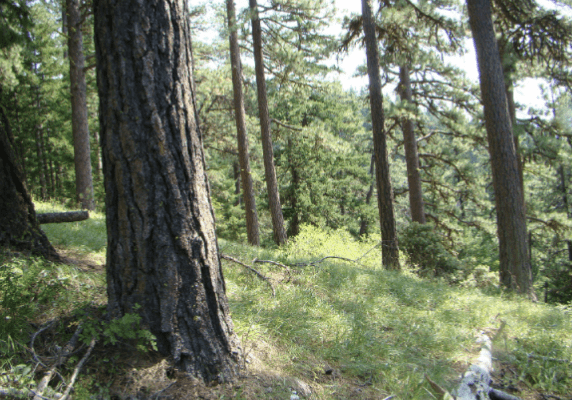
This forest type mostly occurs in the central and east side of the county but in areas with a bit more moisture than the oak and pine savanna sites. These forests are mostly ponderosa pine, with grassy or shrubby understories. Historically, the understory burned frequently at low intensity, preventing the buildup of pine needles, grass, brush and dead wood but not producing a lot of tree mortality. To prepare this forest type for wildfire, thin trees to a moderately wide spacing, keeping primarily ponderosa pine.
Dry-mixed conifer
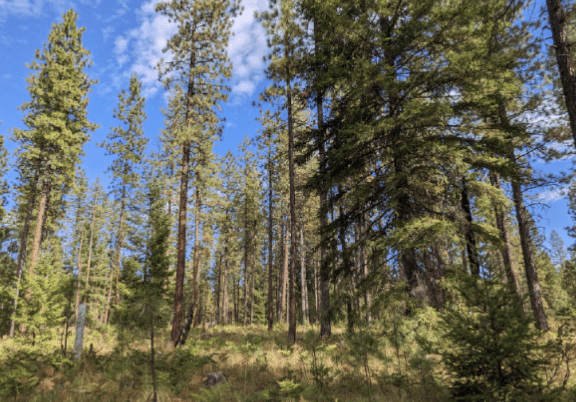
This forest type occurs in warm areas with a bit more moisture than the oak or pine sites. These forests contain a mix of ponderosa pine, western larch, lodgepole pine, grand fir and Douglas-fir. Historically, they burned at about the same frequency as the drier oak and pine forests but were more likely to experience moderate or high-intensity fire. Periodic wildfires kept forests patchy so that fires rarely got large.
To increase fire resilience in this forest type, thinning is recommended to reduce fuel continuity and promote the development of larger trees. Consider retaining the most fire- and drought-tolerant species, such as ponderosa pine, western larch and mature Douglas-fir.
You can choose to thin these trees relatively evenly or to have some more dense areas separated by more open areas that serve to reduce fire spread.
Douglas-fir
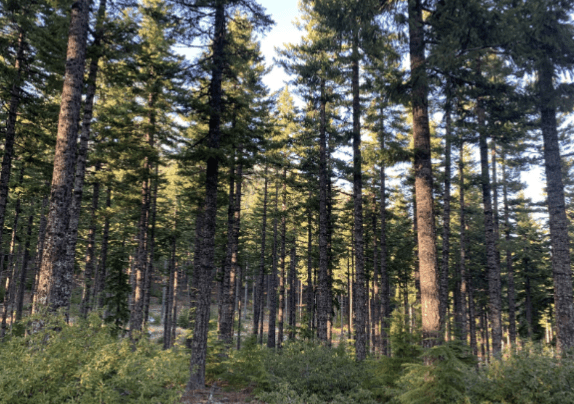
These mostly westside forests consist primarily of Douglas-fir but include a few other species, such as bigleaf maple and red alder. Historically, fire was less frequent in these moist sites. Trees in this forest type naturally grow at closer spacing than the drier forest types listed earlier. Some thinning is necessary to keep them healthy and growing well. However, thinning to the lower density required to moderate fire spread is impractical for large tracts of these dense forests. Instead, prioritize the more intensive thinning in areas along roads and near structures, where thinned areas can serve as shaded fuel breaks. Trees and shrubs in this forest type grow quickly, so regular maintenance will be required.
Moist-mixed conifer
These higher elevation forests occur mostly on Forest Service lands and near the community of Cascade Locks. Historically, these forests burned infrequently but at higher intensities, with significant tree mortality.
If you own property in this type of forest, consider managing your forestland much as we recommended for Douglas-fir, with some thinning for forest health and shaded fuel breaks to create buffers around homes and
along roads.
Due to the significant precipitation, things grow back quickly in this forest type, so plan regular maintenance on thinning or understory work.


Your preparedness plan
Start planning early and be ready
The best time to prepare for an emergency is when there isn’t one, so start planning early while time is on your side. Being prepared doesn't have to be expensive or happen all at once. It's about doing what you can with what you have to keep yourself and your loved ones safe. Being ready means having an emergency plan, staying informed and aware of risks, and knowing how to get information during an emergency.
It is even more critical to prepare early if you have extra needs. Consider additional preparedness actions if you have small children or your family includes anyone with mobility issues, a disability or functional needs. And don’t forget about preparing for pet and livestock evacuation.
The next pages are from the Oregon Department of Emergency Management and offer a checklist of actions during a wildfire evacuation. You can do many things on the checklist before a wildfire is nearby.

Know evacuation levels and follow the advice of emergency officials. Make the best decision for your safety. Don't wait to evacuate if you feel unsafe.
Evacuation Levels
Level 1 (Green): Be ready to evacuate
Be aware of danger in the area and stay informed:
- Sign up for local emergency alerts with your county at ORAlert.gov.
- Check for updates through local city, county and emergency service websites, social media, TV and radio.
- Have your emergency plan and go-kit ready with supplies for health, safety and identification.
- Act early if you are older or have children, disabilities or limited access to transportation.
- Consider moving pets and livestock early.
- Plan possible evacuation routes. Use TripCheck.com or call 511 for road closure information.
- Plan for emergency shelter. Call the American Red Cross at 1-800-733-2767 or visit RedCross.org.
- If you can do so safely, check with your neighbors and share information.
- Don't wait to evacuate if you need extra time to leave or if you feel unsafe.
Level 2 (Yellow): Be set to evacuate
Be prepared to evacuate at a moment's notice:
- There is significant danger in the area. Stay informed and be alert.
- Continue to check for updates through local city, county and emergency service websites, social media, TV and radio.
- Time to act - follow your emergency plan and grab your go-kit of supplies.
- If you have livestock, put your animal evacuation plan into action.
- Inform loved ones of your evacuation plans.
- Conditions can change rapidly. You do not need to wait for another evacuation notice.
- Leave if you feel unsafe.
Level 3 (Red): Go now! Leave immediately
There is extreme danger in the area. Leave without delay!
- It is unsafe to stay and threatens the safety of you, your family and emergency responders.
- Emergency responders may not be available to help if you choose to stay.
- Do not stop to gather belongings or protect your home.
- Follow your emergency plan and grab your go-kit.
- Leave as fast as safely possible. Drive carefully. Turn on your headlights. Follow traffic safety warnings and instructions from local authorities.
- Once you are safe, check with friends and family.
- Do not return until public safety officials announce the area is safe
Wildfire evacuation checklist
Your air quality
Preparing for wildfire smoke
We all know the saying, “Where there’s smoke, there’s fire,” and the reverse is also true: wildfires can create lots of smoke. When air quality is bad due to wildfire smoke, there are steps you can take to protect your health and improve your indoor air quality.
Some people will feel the effects of bad air quality more than others. People who may be more sensitive to wildfire smoke include children younger than 18, adults 65 or older, those who are pregnant, people with chronic health conditions, like asthma, heart or lung disease, outdoor workers and the unhoused.
Know when to protect yourself
The Air Quality Index (AQI) measures air quality ranging from “Good” to “Hazardous.” Checking the local AQI can help you decide if you and your family need to take precautions to prevent the negative effects of smoke on your health. In the Columbia Gorge, we’re expanding the network of air quality monitors to help you better determine air quality conditions across the region.
To check on local AQI, visit: SmokeReadyGorge.org.
Improve indoor air quality
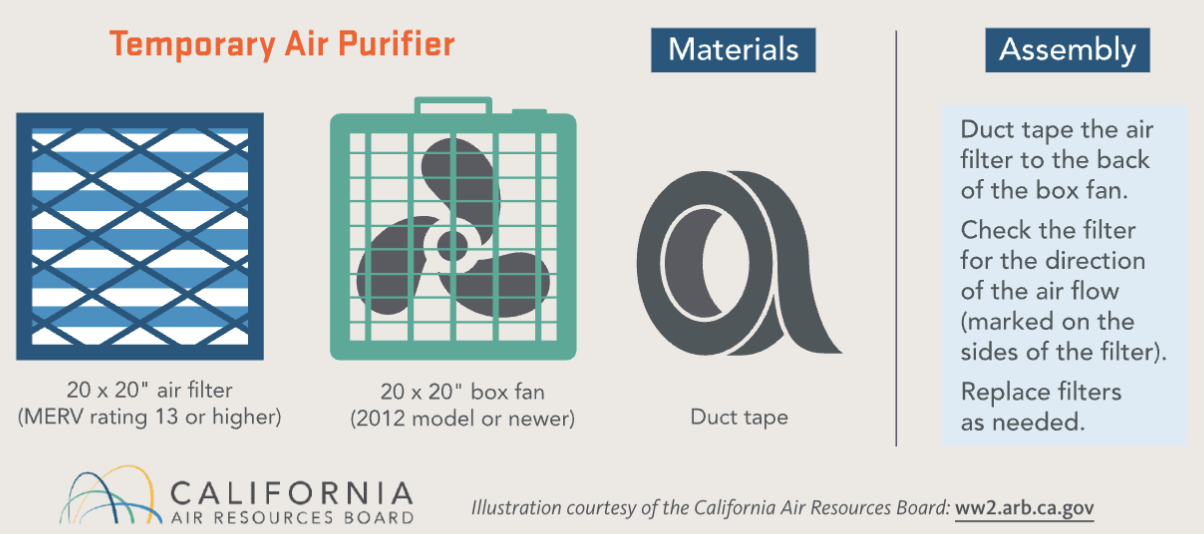
During smoke events, stay inside as much as possible. You can use indoor air filters and purifiers to clean indoor air and improve air quality. Commercial and DIY box fan filters are both effective at cleaning indoor air. To learn more about improving indoor air quality, check out this guide from OSU Extension: beav.es/SmokeReady.
If you must go outside during smoke events, use a tightly fitted N95 mask to prevent smoke from entering your lungs and causing lasting damage.
County-level smoke preparedness
In partnership with OSU Extension, Hood River and Wasco counties have developed a Smoke Management Community Response Plan which helps protect residents and visitors from smoke-related health impacts. The plan includes communication and notification systems for residents and guidance on ways communities can reduce the impacts of smoke. The plan recognizes the need to use prescribed fire to reduce the threat of major wildfire events and improve forest health and resiliency while also considering the health and safety of community members.
Our fire-adapted future
Partnership-driven community and forest resilience
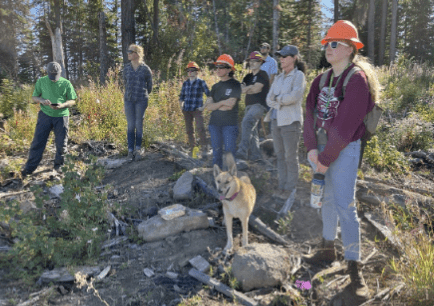
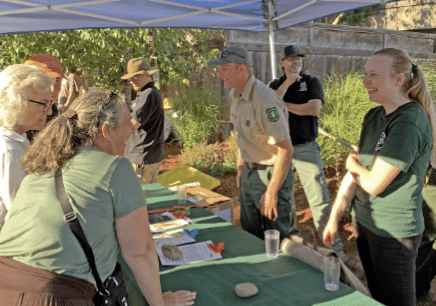
Working towards wildfire preparedness is a collective task. Across Hood River County, collaborative efforts, such as the ones described here, are making our communities safer and restoring the health of our private and
public forestlands.
Hood River County Community Wildfire Protection Plan
A Community Wildfire Protection Plan (CWPP) is a roadmap to wildfire resilience, aiming to prepare forests and communities for the potential impacts of future fires. The county develops the plan with input from fire districts, federal, state and local government, community organizations and interested residents. Through this process, local partners assess hazards and risks associated with wildfire and document and prioritize ways to address those risks.
Hood River County Emergency Management oversees the CWPP, which is nested within the broader Natural Hazard Mitigation Plan (NHMP). To check out the current Hood River County CWPP, visit: http://beav.es/qvb.
Hood River Forest Collaborative
The Hood River Forest Collaborative brings together diverse interests to cooperatively plan forest restoration and wildfire risk reduction projects on public lands. The group has worked together since 2011 and includes natural resource professionals, wildland fire planners and first responders, wildlife biologists, road engineers, hydrologists, representatives from the timber industry and environmental groups.
The Hood River Forest Collaborative meets on the second Thursday of each month, often for field tours to restoration sites on the Mt. Hood National Forest. For more information, contact: [email protected].
Wildfire Crisis Strategy and Mt. Hood National Forest Priority Landscape Designation
Recognizing wildfire risk in Hood River County, the Forest Service designated the Mt. Hood National Forest as a National Priority Landscape as part of the Forest Service’s 10-Year Wildfire Crisis Strategy, released in 2021. The Wildfire Crisis Strategy aims to restore healthy forested landscapes and improve the safety and effectiveness of fire suppression efforts.
The Mt. Hood Priority Landscape spans from the drier forests east of the Cascade crest (out to Maupin) to the wet, western flanks of Mount Hood (approaching Sandy). To learn more, visit: beav.es/qva.

Hood River County resources
In an Emergency Dial 9-1-1
Hood River County
Emergency Management
(541) 386-1213
getreadygorge.com
Hood River Soil and Water Conservation District
(541) 386-4588
hoodriverswcd.org
West Side Rural Fire Protection District
(541) 386-1550
westsidefire.com
Parkdale Rural Fire Protection District
(541) 352-6092
parkdalefire.com
Wy’East Fire District
(541) 354-1648
wyeastfire.com
Cascade Locks Fire & EMS
(541) 374-8510
cascadelocksfire.com
Hood River Fire & EMS
(541) 386-3939
https://cityofhoodriver.gov/fire
Columbia Land Trust
(360) 696-0131
http://columbialandtrust.org/
Columbia River Gorge National Scenic Area
(541) 308-1700
https://www.fs.usda.gov/crgnsa
Hood River Natural Resources Conservation Service
(541) 386-4588
http://bit.ly/HoodRiverCo
Oregon Department of Forestry – The Dalles
(541) 296-4626
https://odfcentraloregon.com/
Oregon State Fire Marshal
(503) 378-3473
http://fireadaptedoregon.org/
Oregon State University Extension Service, Hood River County
(541) 386-3343
https://extension.oregonstate.edu/hoodriver
Hood River Forest Collaborative
[email protected]
Mt. Hood National Forest Hood River Ranger District
(541) 352-6002
https://www.fs.usda.gov/mthood
About the authors