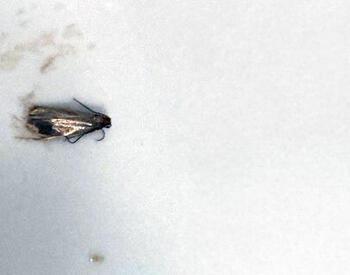
CORVALLIS, Ore. — Controlling pests outdoors is a common summer activity for gardeners, but protecting clothing indoors also requires care. Clothes moths can ruin fabrics, and while mothballs can be effective, they must be used correctly to avoid health risks.
Mothballs are among the most common ways to control clothes moths, yet many people don’t realize they are pesticides. Misuse can be harmful to people, pets and the environment.
Mothballs are among the most common ways to control clothes moths, yet many people don’t realize they are pesticides. Misuse can be harmful to people, pets and the environment, said Tim Stock, integrated pest management education specialist with the Oregon State University Extension Service and director of the OSU Extension School IPM Program.
“People often use mothballs in inappropriate sites and against incorrect pests,” Stock said. “The only recommendation that counts is the product label, which is a legal document whose instructions must be followed — particularly on where mothballs may be used and which pests they control.”
Avoid using mothballs in open spaces
Mothballs should never be used in attics, crawl spaces, gardens, trash cans or vehicles.
“Unfortunately, mothballs are used in these locations to control pests other than clothes moths, including squirrels, skunks, deer, mice, rats, dogs, cats, raccoons, moles, snakes, pigeons and other animals,” Stock said. “Any such use is illegal and can be harmful to human health. A relatively common mistake is placing mothballs in an attic to repel squirrels. This almost always results in a persistent and noxious odor throughout the home.”
The real culprits: clothes moth larvae
Two species of clothes moths are responsible for most fabric damage in the Pacific Northwest — the webbing clothes moth (Tineola bisselliella) and the casemaking clothes moth (Tinea pellionella). The larvae, not the adults, cause the damage. They are shiny, white and about a half inch long.
“Clothes moth larvae don’t eat synthetic fibers,” Stock said. “They feed on fibers of animal origin such as wool, feathers and felt. They can, however, chew through synthetics to reach dirt or stains of animal origin.”
Clothes moths often infest garments or fabrics that have been undisturbed for long periods, especially those containing animal fibers.
Know what’s in your mothballs
Mothballs — which come as cakes, crystals, tablets, bars or flakes — contain either naphthalene or paradichlorobenzene. Never mix these two chemicals, Stock said.
“Both chemicals are fumigants, meaning their volatile compounds vaporize at room temperature,” he said. “Naphthalene has been linked to headaches, nausea, dizziness and difficulty breathing. Paradichlorobenzene can also be hazardous, though typically less so.”
To use mothballs safely, follow label directions and only apply them in airtight containers or garment bags. Never use them in open closets or plastic garbage bags. Vapors can spread through a home and be detected at concentrations as low as a few parts per billion — similar to a few drops of water in an Olympic-size swimming pool.
Safer ways to prevent and control moths
People who prefer not to use chemical treatments have alternatives. The best protection for animal-fiber clothing is to keep garments clean and store them in airtight containers.
“For existing infestations, you must do more,” Stock said. “Vacuum drawers, closets, furniture and other areas where lint, pet hair or human hair may accumulate. These materials can be breeding grounds for clothes moths.”
After vacuuming, immediately dispose of the vacuum bag. You can treat cracks and crevices with boric acid dust once infested items are removed and cleaned — but always follow the label.
“For clothing not stored in airtight containers, place garments in a dryer or in the sun once or twice a month to destroy larvae,” Stock said. “Shake or brush clothes before returning them to storage to dislodge eggs and larvae.”
Learn more
For more information, visit Mothballs: Proper use and alternative controls for clothes moths.