
Introduction
Oregon has seen an increase in wildfire events and impacts over the last decade, and with that has come more media coverage of the topic. Wildfires that threaten public safety often create an urgent need for time-sensitive information to be shared, and they tend to interest people.
However, there are many other facets to fire. One is that it is an ecosystem process. This means that it plays an important role in how species evolve and adapt, and in the interactions of plants, animals, elements and other parts of our world. Ecosystem-appropriate fire can help minimize the potential of extreme fire events.

Another aspect of wildfire is how it’s intertwined with humans and culture. It can have impacts on our homes, communities, and physical and mental health. It can help or harm values that matter to us, such as wildlife habitat, drinking water and cultural and spiritual places and practices. We also shape the conditions for fire, we cause fires, and we react to and are affected by them when they occur. Wildfire even makes people think, learn and organize together in new ways as we try to figure out how to prepare for and recover from events.
Wildfire is much more than the moment in which we may experience it, such as a threat to our community or as visible smoke. It has many stories to tell.
Media are one way that these stories are told. Media in all forms provide crucial information during fires and can be key messengers to the public. They can also share knowledge about fire causes, effects and history that help us all better understand why fires occur and what is happening when fire moves across the landscape. Media can also share the human stories of fire, beyond its impacts. These include efforts to return fire to its ecological and cultural roles where it can do good, address fire hazards and prepare our communities. Importantly, fire’s story is different around Oregon, because it is an ecologically, socially, and culturally diverse state.
Media are one way that these stories are told. Media in all forms provide crucial information during fires and can be key messengers to the public. They can also share knowledge about fire causes, effects and history that help us all better understand why fires occur and what is happening when fire moves across the landscape. Media can also share the human stories of fire, beyond its impacts. These include efforts to return fire to its ecological and cultural roles where it can do good, address fire hazards and prepare our communities. Importantly, fire’s story is different around Oregon, because it is an ecologically, socially, and culturally diverse state.

Section 1. What to expect when covering fire events in Oregon
If you are going to an incident that falls under the provisions of Oregon’s Safe Media Access to Disaster Sites bill (HB4087), you must follow its requirements for equipment and advance safety training. This guide does not cover these requirements. This bill applies only to public non-federal lands; it does not apply to private property, federal land, tribal land, or property owned by educational institutions.
The organization of fire response
If you have been to one fire, you haven’t been to them all. Wildfire events vary significantly in size, location, and affected or threatened values — and therefore, how the incident response is organized. Being aware of the size and complexity of the incident you are reporting on can help you better understand the situation and how to obtain information.
What wildfire events do have in common is that they are managed through the Incident Command System. This is a standardized system with established procedures and terminology for managing personnel and communications. It can be expanded to match the complexity of an incident while retaining the same foundational structure of five function areas or “sections” (Figure 1).


Complexity is what determines the scale of the incident command organization. Complexity refers to the “level of difficulty, severity, or overall resistance faced by incident management or support personnel,” according to the National Incident Management System. This depends on a combination of factors that affect the probability that personnel can control the incident. Incident complexity follows a five-point scale, with Type 5 being the least complex incident and Type 1 the most complex.
Public information is part of the command section. Public information officers, or PIOs, are your point of contact during wildfire events. It is part of their job to assist you with what you need to do your reporting. The number of PIOs and how they will interact with you depends on the complexity of the incident. Less complex incidents or incidents in their early stages may have just one PIO handling all aspects of incident information, while more complex incidents can have multiple PIOs with some specializing in media engagement. When there are many fires at once in a state and the complexity of those fires is high, multiple agencies may form a Joint Information Center. This is a team managed by a lead PIO to handle the numerous communication duties that arise.
Physical preparation
It is important to show up to a fire response environment with the appropriate physical preparation and awareness of the situation you will be in. Being prepared helps improve your reporting because you will be more ready to effectively engage with incident personnel. You must always ensure that you will be safe in fire camp, at the fireline where firefighters are actively working, or in postfire settings — all of which present hazards and logistical considerations.
Arriving at a fire in appropriate gear gives confidence to PIOs and fire personnel that you know what you are doing and understand the paramount importance of safely reporting while on scene. It also demonstrates respect for fire personnel, which increases the likelihood that they will show respect to you. Mutual respect is a key cultural value in wildland fire settings.
Physical preparation includes personal protective equipment for keeping your head, eyes, body, hands and feet safe. If you have a peer or colleague who is more accustomed to reporting on fires, you can also ask for their tips on what to bring and prepare. As time allows, make a list of what you need to bring and, if possible, ask the public information officer what they want you to bring or what you can borrow on site. Suppliers such as Forestry Suppliers, Cascade Fire Equipment, Wildland Warehouse and the Supply Cache all sell protective equipment online. Organizing your gear in a “go-bag” or box where it is prepped and ready at a moment’s notice is also important so that you can head out the door quickly. Consider obtaining and preparing your gear well before the season starts.
Fill your vehicle up with gas before going out to cover a fire. Wildfires are usually in remote areas. Once you arrive at the base fire camp, you will typically travel many miles to the fire site itself, and then spend several hours driving around in the fire area looking for crews to cover. In general, if it is an Oregon Department of Forestry fire, you will travel in their vehicle. If it is a federal agency fire, you are not allowed to travel in their vehicle. Running out of gas in a remote area near an active wildfire is not a good idea. Also make sure that your vehicle is reliable and can handle driving on steep, rough and rocky dirt roads.
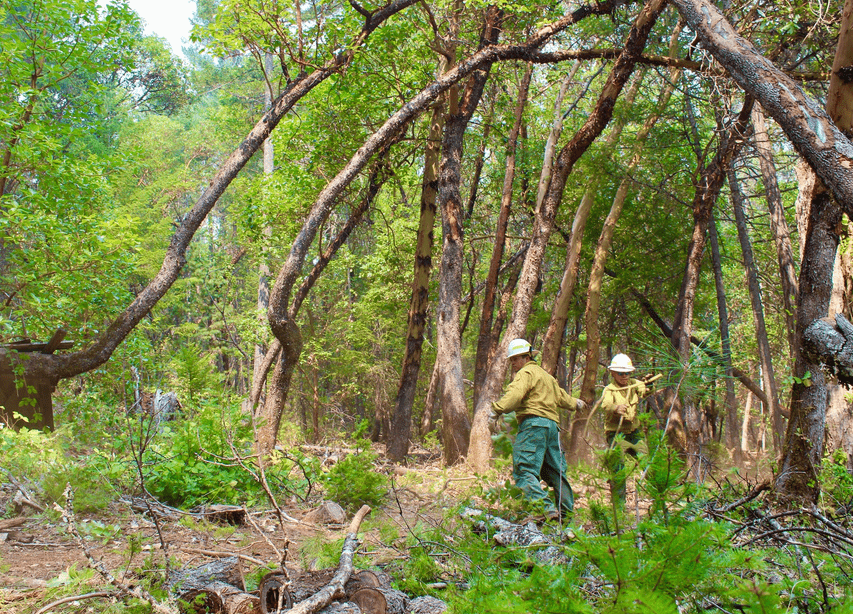
When you are on site, follow all training and instructions that you have been given and that are required. Keep your hard hat on your head, your Nomex shirt buttoned and tucked in, and your water, gloves and shelter on your person at all times. In general, focus on your situational awareness, tracking what is going on around you that you can and can’t see. The hazards of fire response environments are not limited to flames. Many accidents and safety issues are related to driving to and from an incident, parking, smoke, being around heavy equipment and aerial resources such as helicopters, or being in recently burned areas where vegetation and soils still contain heat or are unstable.
If you plan on going to the fireline, it’s important to know it can be a dangerous, harsh environment.
The air can be hazardous, it's typically hot, and wildfires are often in rugged terrain, making movement physically demanding. Consider your physical fitness and ability to hike on steep ground, carry equipment, and be in smoke when deciding to go to the fireline. There is always risk involved, including getting caught in a precarious position if the wind shifts or the fire intensifies. Knowing the risks inherent in covering fire events can help you decide what is the right path for your reporting and how best to mentally prepare.
Mental preparation
Mental preparation is just as important as logistical and physical preparation. Fires can present stressful and emotional aspects for you and the people and communities with whom you are engaging. During an active wildfire, community members and incident personnel typically are coping with a range of matters at any given time. The mental effects of fire events on a community or person also can last a long time, even when the incident is far in the past, and new incidents can trigger challenging memories. Contentious issues pertaining to wildfire policy, management decisions and relationships among people and organizations can also be difficult to observe and navigate effectively. This all can also be hard for you to experience as a reporter. While we provide a brief overview on some key aspects of wildfire reporting and mental preparedness below, you can also visit the Global Center for Journalism & Trauma for additional resources on dealing with trauma and reporting during wildfires.
There are several steps you can take to support your mental health and that of others when reporting on wildfire or related topics. During a wildfire event, stay up to date on fire status and evacuations. If you are covering an area that is being evacuated, find a safe place where you can access food, water, rest and medical care if needed. Understand that wildfires affect people differently. If you find that you are experiencing emotional distress such as restlessness, sadness, low or no energy, feeling afraid, or other distressing signs, connect with others and know that you are not alone. There are many tools and strategies to help you cope. Choose approaches that make the most sense for you.
You can also support the mental health of others before, during, and after a wildfire by using a trauma-informed care approach to reporting. A trauma-informed approach means understanding what individuals might be experiencing in the wake of a traumatic event, such as a fire, and responding with care, respect and kindness. You can do this by being clear with individuals about how their stories will be used, using active listening techniques and paraphrasing back what you hear to make sure it's accurate. The Global Center for Journalism & Trauma offers a detailed guide for journalists, editors, and managers covering traumatic events. The center recommends that after a disaster or tragedy, it's important to rely on factual reporting and not to sensationalize or embellish events.
Images are a powerful tool, and there are several important considerations to capturing them in a fire context.
When photographing wildland firefighters, consider that not everyone may want their photograph taken. Seek permission from them. Be aware that adults in custody may be working as firefighters and start by asking your public information officer what is permissible if they are present. Be aware that if you are covering a wildfire that has led to an evacuation of homes and structures that have been destroyed by the fire, the evacuees and homeowners often do not yet know the status of their property. Seeing the status of the property for the first time, such as an image of the burned and destroyed home on a news site or news publication, can result in emotional distress. Think carefully about what images are most appropriate to publish, and consider whether property owners and residents have been notified. When handling potentially traumatic imagery, you will also want to consider its effects on media workers, including yourself, who have to index and prepare these photos for publication.
Beyond burned structures or photos of flames, it’s important to show the other aspects of impact, including burned trees or other affected areas. Consider using satellite imagery and maps to show the extent of a fire. As communities deal with fires, consider using images that highlight human resilience, as well as the human toll, which can be a powerful way to let people know that they are not alone.
Sources of information
As technology and communications about fire continue to change, there are many sources of online information about wildfire events that you can use in reporting. Focus on those managed by officials on the fire or by sources that exist to offer up-to-date fire status information across the region. The amount and location of information online will vary from fire to fire, and depending on which agency or agencies are responsible. Large fires will have the most information available. These are defined as any wildland fire in timber 100 acres or greater, and 300 acres or greater in grasslands or rangelands, or has an Incident Management Team assigned to it.
Evacuation information is one of the most common topics that people want to know about when a fire is occurring. Regardless of which agency or agencies are managing the incident itself, evacuation is always the responsibility of the local government (county officials). Always rely on the official local source of evacuation information. There can be confusion about how to sign up to receive evacuation notices, as this varies by county. Most local officials will also use Facebook to share evacuation information.
Numerous websites now offer free data and resources about current wildfires, including maps of fire perimeters, incident action plans, daily status summaries, satellite or infrared observations of active heat areas, air quality and logs of radio traffic from personnel on the incident. These are for information only and can improve your situational awareness of fire status, but your first line for facts about a fire is the public information officer. When using these sites, review all contextual notes and disclaimers about the information offered. For example, “hotspots” of thermal activity are not always due to fire, and not all fires are detected at all times by satellites due to fire size, cloud cover, or other factors.
Additional resources
- Safe Media Access to Disaster Sites (Oregon HB4087) information
- National Interagency Fire Center Media Page
- Northwest Fire Science Consortium “Fire Facts” easy to read flashcards of key fire management and operations terms
- Inciweb quick reference glossary of common fire operations, equipment, and fire behavior terms
- FEMA National Incident Management System Incident Complexity Guide
- Oregon Evacuation Levels and Information
- Tips for Working with Traumatic Imagery, Global Center for Journalism and Trauma
- Trauma-informed toolkit
- Our future in our hands: Working together to reduce wildfire impacts — care for your mental health, EM 9404-C
- Columbia Journalism Review article by Tony Biasotti, ‘As Scary As It Is, That’s Our Job’: Prepping Journalists for California’s Next Wildfire
- National Oceanic and Atmospheric Administration’s media resource guide to fire season and fire weather
- Society of Professional Journalists’ Toolbox for Covering Wildfires
Section 2. Fire and land management in Oregon
Oregon has a diversity of landownerships and jurisdictions (Figure 2). This means that preparing for, responding to and recovering from wildfires usually involves many different entities. These entities own or manage land, have legal authority and responsibilities in fire response, or are affected directly or indirectly by how land, wildfire and smoke are managed. Each has its own mission, mandate, budget, structure, culture and politics. In this section, we outline the different entities that might be engaged in land management, wildfire mitigation, or wildfire response.
It is especially important to convey the land ownership and management context in which a fire event is occurring and the specific roles, responsibilities and mandates of the responding agency or agencies. Being aware of the diversity of relevant entities can also help you increase contacts and sources for your reporting.


Tribes
The state that we now call Oregon contains homelands of nine federally recognized Indian Tribes. Each is a sovereign nation and Tribal lands are not public property. The Oregon Department of Forestry provides fire response for reservation lands through a master cooperative agreement, but many tribes have their own fire programs and fire staff as well. Reporting about Indigenous people and fire necessitates tact, care and nuance. Resources offered by the Indigenous Journalists Association provide considerations for how to present accurate and respectful information.
Federal agencies
A little more than half of Oregon’s land is managed by federal agencies; largely the U.S. Department of Agriculture Forest Service; and U.S. Department of Interior Bureau of Land Management, Bureau of Indian Affairs, National Park Service and Fish and Wildlife Service.
Each has roles in wildfire mitigation and preparedness that include environmental analysis, planning fuels reduction projects and monitoring outcomes. They also award grants and contracts to external partners or the private sector to help plan and implement wildfire risk reduction. They each lead fire response within their jurisdictions with their own fire workforces, and provide cooperative assistance to other partners on their lands when needed. Federal land management agencies coordinate closely with each other and with Tribal, state and local governments on fire response through interagency agreements and dispatch centers that organize the sharing of information and resources.
State agencies
Several state agencies manage land in Oregon, including the Department of State Lands, Department of Forestry, Department of Fish and Wildlife and Parks and Recreation Department. Each of these agencies has varying purposes for their land management. Oregon Department of Forestry also is authorized to provide fire suppression on assessed private land, state land managed by the above agencies, tribal reservation lands and Bureau of Land Management forestland in western Oregon. Emergency response agencies involved in wildfire are the Oregon State Fire Marshal and the Office of Emergency Management. Two state agencies that do not manage land or have emergency management responsibilities are the Oregon Watershed Enhancement Board and Oregon Department of Agriculture, which support watershed councils and soil and watershed conservation districts through grants and technical assistance that can include wildfire risk reduction and postfire activities.
Fire protection departments, districts and associations
Fire departments and rural fire districts have fire suppression responsibilities for a designated local area. Fire departments serve municipalities and rural fire districts provide protection in many places outside of municipal areas. Oregon also has 12 forest protective associations, which are organized groups of forestland owners, and 28 rangeland fire protection associations, or RFPAs, in Eastern Oregon, which allow landowners and federal land permittees who lease grazing lands from the government to respond to wildfires. RFPAs are a valuable asset in rural and remote areas where ranchers may be the closest to a fire start. Both types of associations can provide fire protection across landownerships (private, state, federal) through state statutory authority and cooperative agreements with federal agencies.
Other entities
- County or municipal governments: Local governments develop community wildfire protection plans and other preparedness efforts, issue evacuation notifications for residents within their jurisdictions, and coordinate with structural and wildfire suppression agencies during incidents. Counties also typically have road departments and manage fuels along county roads, and have health services and resources that pertain to prescribed and wildfire smoke.
- Federal and state regulatory agencies: These include the U.S. Environmental Protection Agency, U.S. Department of Environmental Quality, U.S. Fish and Wildlife Service, Oregon Department of Environmental Quality, Oregon Department of Fish and Wildlife and Oregon Department of Forestry. Some of these agencies are relevant to wildfire risk reduction because they regulate and monitor air quality, setting parameters for conditions under which managers can use prescribed burning to reduce hazardous fuels. Monitoring information is also used for health and safety during wildfire events. Other agencies regulate the management actions that can be taken on federal, state and private lands to reduce wildfire risk through required environmental analysis processes or forest practices compliance.
- Private landowners: Privately-owned lands also compose a significant amount of Oregon’s landscape. Private landowners vary in type, management goals and size of ownership. They include private industrial (corporate) forestland owners, primarily managing their lands for timber production or investment; nonindustrial private forestland owners (individuals, families); and privately-owned agricultural and rangelands. ODF provides fire suppression for assessed private forestlands.
- Private land and fire management businesses: Private sector businesses often provide fuels reduction, thinning, forest health and wildfire response capacities through contracts with governments or landowners.
- Nongovernmental and community organizations: Nonprofit, nongovernmental organizations of various sizes and scales also participate in wildfire risk reduction through planning, collaboration, partnerships, grant writing and capacity building. Some also have their own workforces for fuels reduction work and workforce training. Some national or regional organizations that work on wildfire-related issues in Oregon include The Nature Conservancy, Sustainable Northwest and Blue Forest Conservation. Watershed councils and soil and water conservation districts are another common type of organization found locally throughout Oregon, and are often involved in postfire response and managing watershed impacts from fire.
- Collaboratives and partnerships: Oregon is also uniquely known for its collaborative spirit and is home to many examples of collective groups of diverse interests. These include groups that host dialogue and review science about how to manage vegetation and fire risk, partnership that coordinate implementation of on-the-ground projects, and community or neighborhood groups of residents who work together on wildfire preparedness. NGOs and collective groups can contribute local knowledge to your reporting, as well as human interest stories about working together on shared goals and helping each other.
What to expect before, during and after fires
Before: Prevention, preparedness, mitigation, risk reduction, adaptation
Individuals, communities and networks can take action to prevent human-caused ignitions, prepare structures and communities for fire events, and mitigate the risk of fire’s undesired effects by reducing fuels on the landscape.
Small pieces of burning airborne wood, vegetation or both called embers are the most common cause of structure ignition and how up to 90% of structures are destroyed during a wildfire. Risk to structures can be mitigated by implementing measures to reduce vulnerability and enhance structural integrity to an ember intrusion.
Risk to communities can be mitigated through land use planning, building codes and regulations, community wildfire protection plans, emergency management systems and response plans. Community emergency shelters, clean air spaces, evacuation routes and warning systems are vital components of preparedness.
Fuels reduction activities on the landscape include thinning of trees and brush, mastication (mulching forest vegetation into small chunks), and prescribed (controlled) fire. These are used differently around the state, depending on the kinds of vegetation present and the role of fire in those ecosystems. For example, some types of thinning that work well to reduce fuels and restore forest health in dry ponderosa pine forests may not have the same results in wetter coast range forests. The social context varies too. In some places in Oregon, especially those with prior experience of fire, more people are typically aware of these preventative and mitigation needs, and more work may have been done. When covering how communities or land managers prepare for fire and reduce fire risk, you can ask scientists and managers about the kinds of fuels reduction treatments and preparation measures that make the most sense for the local area.
During: Response
When a fire occurs, the managers in charge will make informed decisions about how to respond. They will consider multiple factors including response resource availability locally and nationwide, projected weather conditions, firefighter and community safety, proximity to values at risk, potential for a fire to have positive ecological or fuels reduction impacts, and potential of spread. Not all agencies have the same mission or mandate around fire. For example, the Oregon Department of Forestry is required by statute to seek full suppression of wildfires within its response jurisdiction, while federal agencies are allowed to manage wildfires for multiple objectives, including resource objectives such as improving forest conditions, reducing fuels, or improving soil health.
When covering a fire event that lasts more than a day and involves multiple agencies, you can look for information about the objectives, strategies, tactics and any public land closures in daily update reports, agency websites and social media. There are many different ways to respond to wildfires. Some fires may have different objectives and strategies in different areas. For example, parts of a fire may occur in areas of terrain that are unsafe to access and that may have resource benefits from experiencing fire, while other parts require more direct protection because they are near communities or other values. Strategies can also change during the course of a fire. Using phrases such as “let burn” can be misleading because they don’t reflect the amount of analysis, planning, decision-making, and action that goes into fire response, even when the strategy at the time may be to monitor and not take direct action.
Fire suppression has been a primary goal of many agencies for the past century, and language used in the media has often reflected that. It can be easy to use militarized language, perpetuating the notion that all fire should be “fought” and removed from the landscape. However, having more low-severity fire can help us avoid more significant fire events in the future. As you write about fire, you may want to consider how you frame it as a positive, negative, or neutral process; and how that might influence your audience’s understanding of how we can live with fire.
Reporting relevant metrics during a wildfire event can be difficult. There are many metrics you can choose to describe the consequences of the event or fire season. Typically, the number of wildfires and total area burned are the easiest metrics to report. Unfortunately, they often do not meaningfully reflect the impact of wildfire. Wildfires can have either positive or negative impacts depending on various factors. A large wildfire burning in a remote area might reduce fuels and revive fire-adapted ecosystems, whereas a small fire in a populated area could cause incalculable social and economic upheaval. Fire severity tends to be a better metric, because it helps point to fire effects on ecological resilience, recreation, clean water, carbon sequestration and timber production; but it may be difficult to obtain reliable data until months after the fire is over. Metrics offered by Susan Prichard and Matthew Hurteau might be useful when reporting on the impacts of wildfires on communities and ecosystem services:
- Number of residents evacuated.
- Number of homes burned.
- Acres of high-severity fire.
- Amount of a watershed severely burned.
- Air quality index and smoke impacts to communities.
- Hospitalization rates due to smoke.
After: Postfire repair, stabilization, rehabilitation, restoration and recovery
After a fire, there can be physical impacts to vegetation, soils, watersheds and built infrastructure. There are also often mental, social and economic impacts for those affected. Some of these impacts can be from the response effort itself, such as flame retardants in waterways, or questions and concerns about how the incident was handled. In the short term, the focus may be on assessing damage, repairing impacts of suppression activities, performing emergency stabilization for burned areas, and mental and community reflection about the event. This phase can involve urgent activities that are time-sensitive to implement, and emotions may range across a spectrum of grief and anger. There can also be questions and fears about whether drinking water is safe or what valued areas that remain closed to the public look like after the fire. Over the medium and long term, efforts shift to rehabilitation and restoration, which can include replanting vegetation, larger repairs to infrastructure, and rebuilding or relocation for survivors. Mental health impacts of experiencing wildfire can last for months or years after the event itself.
A challenging aspect of the postfire environment is that there can be many different government agencies and nonprofit organizations involved over time depending on the extent and types of impacts. Many of these can be from outside a community. For community members, it is often difficult to know where to go for accurate information or helpful resources, and this can add to their trauma and frustration. Reviewing resources about trauma-informed reporting can be helpful when reaching out to affected residents.
Additional resources
- Fire FAQ: Who owns Oregon’s forests, and how does that matter when it comes to fire?
- Overview of Oregon’s Nine Federally Recognized Tribes
- National Interagency Fire Center information on postfire recovery
- Santiam Canyon Community Health Impact Assessment offers examples of how one area of Oregon experienced community health issues following a large fire event
- Oregon Wildfire Response and Recovery

Section 3. Fire in Oregon: The big picture
The ecological role of fire
Fire has always been part of Oregon’s ecosystems. It interacts with vegetation, climate and topography to shape the state’s diverse forests, grasslands and shrublands. Just like rainfall patterns influence why we have deserts and rainforest, patterns of fire strongly influence the landscape. These patterns are called “fire regimes” and are defined by factors including how often fire occurs (frequency) and its consequences to the ecosystem (severity). Many of today’s fire management problems exist because fire regimes have been altered since colonization by several factors, including:
- Removal of Indigenous people and repression of cultural burning practices.
- Fire exclusion (through suppression of fires), which causes live and dead vegetation (fuel) to accumulate.
- Logging of large fire-resistant trees.
- Climate change.
The impact of each of these factors varies throughout the state because of its diverse fire regimes. Where fires are limited by a moist, cool climate, more fuel can build up, and the next fire could be more intense. In the wetter forests of the Coast Range and western Cascades, vegetation was historically able to grow more prolifically between fires, which were limited by the moist climate rather than by the amount of fuel. When weather conditions became suitable for fire spread, large areas of forest would burn, and a high proportion of trees could be killed.
In contrast, frequent, low-severity fire regimes are found in the dry forests of southern and eastern Oregon, and the prairies and oak savannas of the Willamette, Umpqua and Rogue valleys. Historically, fire behavior in those areas was limited by the amount of fuel, which was kept sparse and discontinuous by frequent fires. The resulting fire behavior was less intense and allowed for the survival of most trees. In addition, the traditional burning practices of Indigenous peoples have influenced landscapes and fire regimes. Understanding the difference between climate-limited, infrequent, high-severity fire regimes and fuel-limited, frequent, low-severity fire regimes is critical to understanding what is happening with wildfire events today in Oregon.
Culture and fire
Tribes and Indigenous peoples are central to the past, present and future of fire. Indigenous knowledge about wildfire stems from time immemorial, including cultural burning practices that have been greatly reduced. Importantly, fire is part of a web of reciprocal relationships between people, plants, water and the land, helping support stewardship obligations and ecological connections among all.
Burning achieves many outcomes that are important to tribes, including maintaining habitat for game species such as deer and elk, creating quality plant materials for basketry, rejuvenating berry and nut bushes, and clearing along trails and around homes. In some ecosystems such as the oak savannas and grasslands of the interior valleys of western Oregon, fire was used across large areas for these purposes. In other ecosystems such as higher elevations in the Cascades, burning may have been limited to more specific areas such as huckleberry patches.
Today, tribal members continue to use cultural burning on a small scale, while some tribes employ large-scale prescribed burning as part of their forest management operations. Changing fire regimes have unique implications for tribes, including declines in cultural plants from lack of fire, damage to archeological resources during suppression activities, and exposure to high-severity wildfires.
The many faces of fire in Oregon
Climate and vegetation types vary dramatically across Oregon, and so do fire regimes (Figure 3).
- In the wet Douglas-fir/western hemlock forests of northwest Oregon, fire is less frequent than in drier parts of the state, although there is growing evidence that burning by Indigenous peoples has been more common than previously recognized. Trees and shrubs also grow faster, so fuel tends to be abundant. What limits fires from being large and frequent here is that ignitions rarely line up with the right weather conditions. However, if conditions become dry and windy, high-severity fires can spread across large areas, which is what happened historically. Fire exclusion has had a lesser impact on these forests, and the feasibility of managing fuels on a large scale to reduce fire risk is questionable. Because climate was historically the main obstacle to wildfires, climate change predictions suggest that this region may see the greatest relative change in fire regimes (1).

- Dry forests of Southwest and Eastern Oregon have seen much greater contemporary change in fire behavior and extent due to fire exclusion. Fire was historically much more frequent than in wetter forests than it is today, burning about every five to 35 years. Because of the prevalence of fire, the amount of fuel was the primary factor limiting fire behavior. Today, fire exclusion has caused a fire deficit in these forests (2). While wildfires may still have beneficial ecological impacts under the right conditions, increased tree density and live and dead fuel have caused fires to burn more severely overall and the size of high-severity patches has increased, creating concerns about forest recovery. The fact that attempts to eliminate fire from the landscape inevitably lead to more damaging fires that escape suppression is called the “wildfire paradox” (3). Measures to reduce fire severity include thinning, prescribed burning and reducing aggressive fire suppression under mild weather conditions.
- While much focus is directed toward forest fires, more than half of Oregon is not forested. Large portions of Southeastern Oregon are a mix of rangelands and sagebrush shrublands. In contrast to many other regions, wildfires in this environment have become larger and more common than historically, in part due to flammable invasive annual grasses. These grasses have fundamentally changed how fire behaves and reinforce the cycle of more frequent fire by readily colonizing burned areas and excluding native fire-adapted plants. Dealing with this issue requires cross-boundary partnerships that prioritize protecting rangelands and sagebrush habitats that have not yet been affected by annual grasses and are thereby relatively resilient to effects of wildfire.
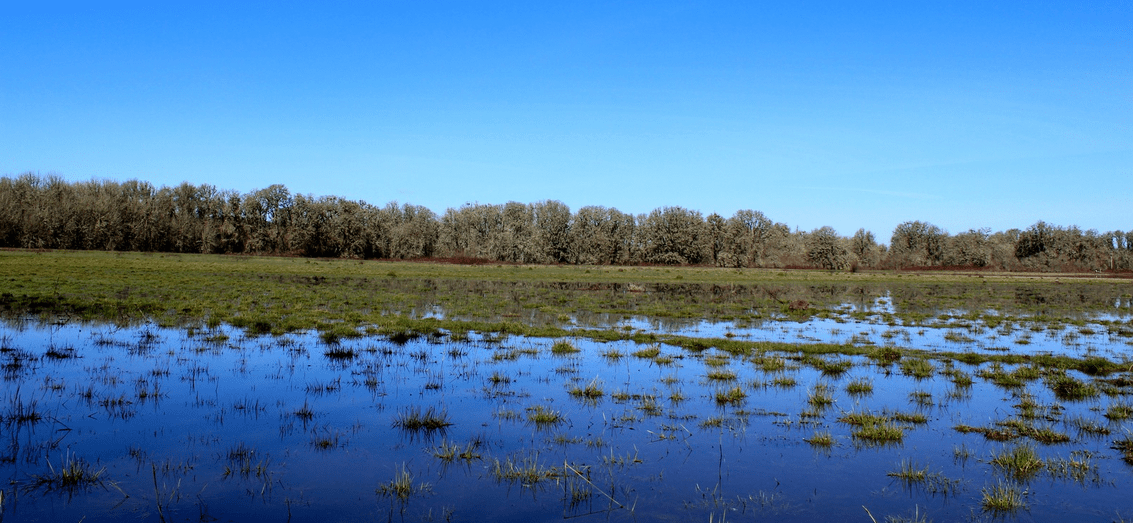
- The interior valleys of Western Oregon (Willamette, Umpqua and Rogue), and the Columbia Gorge are home to ecologically stunning oak savannas and prairies that were once burned annually by Indigenous peoples. Without fire, these ecosystems can change rapidly due to the growth of shrubs and conifers which degrade the habitat value for numerous species and undermine their fire-adapted nature. The dependence of oak and prairie habitats on fire has made them a high priority for prescribed and cultural burning, though urbanization complicates implementation of these practices.

Changes over time
Since the late 19th century, numerous changes have taken place on the landscape that have altered how fire behaves. Logging has removed large, fire-resistant trees and they have been replaced more flammable plantations in many places. The frequent, low-severity fires that helped sustain ecosystems were reduced because of policies to put all fires out for much of the 20th century. Indigenous people were largely removed from their homelands due to depopulation from illness caused by diseases brought by settlers, and forced to relocate to reservations. In rangelands and sagebrush habitats, invasive annual grasses that are more flammable have increasingly replaced native vegetation. These factors combine in geographically distinct patterns to change the type and continuity of fuels, and thus influence fire behavior. Changes in patterns of development leading to more homes in the Wildland-Urban Interface, and changes in climate have together further exacerbated the consequences of these ecological alterations.
Climate change alters the condition of the landscape because it affects fuel moisture and fire behavior. Summer drought is causing fuels to become drier and more flammable, and increases the number of extreme fire weather days. Fire seasons are becoming longer, placing a strain on the agencies and firefighters responding to wildfires. The role of climate change is difficult, perhaps impossible, to separate from other alterations to the landscape. It is also important to consider regional differences and time scales.
In dry forests, much of the increase in fire extent and behavior in recent decades is the product of climate change. However, climate change is interacting with historically unprecedented fuel loads, or amounts of fuel. Social-ecological changes in the last 200 years include the legacy of fire suppression policies, removal of Indigenous burning practices and resource extraction, all of which have set the stage for impacts of climate change. When discussing climate change trends and predictions, it is important to consider regional differences in impacts, relevant timeframes and interactions with other human-caused changes. It is also useful to differentiate between wildfire extent (area burned) and outcomes (for example, proportion burned at high severity).
- Extent: Scientific models suggest that the overall area burned will continue to increase regardless of prevention and suppression efforts (4). While forest and fire management won’t alter this trend, it is possible to lower the severity of fires when they occur and help firefighters respond to protect communities, sensitive infrastructure and natural resources. Remember that many landscapes are currently far below the historic annual area burned, and that this fire deficit is a primary contributor to increased fire intensity, particularly in dry forests. Therefore, reporting on the area burned alone leaves out important information about the outcomes of wildfires, which can be positive or negative.
- Outcomes: As a proportion of area burned, contemporary wildfires experience 3-14 times more high-severity fire than compared to the precolonization period, depending on the ecoregion (5). This trend is projected to persist; given this, attempts to continue suppressing all fire will only exacerbate its undesirable impacts. Additionally, the size of high-severity patches is increasing, creating a growing concern about forest loss in vulnerable areas. Wet forests of northwest Oregon have not seen as much of an increase in fire severity because wildfires are naturally relatively infrequent and already more severe in those ecosystems.

References about fire and climate change
- Reilly, M.J., et al. 2022. “Cascadia Burning: The historic, but not historically unprecedented, 2020 wildfires in the Pacific Northwest, USA.” Ecosphere 13(6).
- Haugo, R.D., et al. 2019. “The missing fire: quantifying human exclusion of wildfire in Pacific Northwest forests, USA.” Ecosphere 10(4).
- Calkin, D,E., et al. 2015. “Negative consequences of positive feedbacks in US wildfire management.” Forest Ecosystems 2(9).
- Halofsky, J.E., et al. 2020. “Changing wildfire, changing forests: the effects of climate change on fire regimes and vegetation in the Pacific Northwest, USA.” Fire Ecology 16(1).
- Parks, S.A., et al. 2023. “Contemporary wildfires are more severe compared to the historical reference period in western US dry conifer forests.” Forest Ecology and Management 544.
People and fire
Social and cultural concepts can be helpful when covering how different communities are exposed to, live with, or are affected by wildfire. Social systems and interactions also influence the way we see and experience the world. Our previous experience with fire, what we learn from media, and our social interactions help us understand fire’s role on the landscape.
Social vulnerability is a term used to describe a population’s ability to adapt, respond to, and recover from natural hazards like wildfires. Not all communities have the same access to resources to adequately prepare for and respond to wildfires when they happen.
Resource-abundant communities are likely to be more resilient after a wildfire because they have the resources to prepare for and recover from a wildfire.

For natural hazards, although not wildfire specifically, some of the most studied dimensions of social vulnerability include race, age, socioeconomic status, gender, housing structure and population density. Figure 4 is from a 2018 study on vulnerability and wildfire. The strength of social connections and social organizations can also affect vulnerability. Because social vulnerability has multiple dimensions that often intersect, it can be difficult to study, but it is one component of how wildfire’s impacts are not the same for everyone.
Labeling a community as vulnerable can contribute to stigma or stereotypes, so you can document individual and community strengths in addition to vulnerabilities. One way to highlight their strengths is through asset framing, a concept explained by Trabian Shorters that defines people by their assets rather than starting with what they may be lacking. This is particularly important when thinking about communities that might otherwise be defined as vulnerable.
Equity and environmental justice are important components in wildfire preparedness, response and recovery. The EPA has previously defined environmental justice as the fair treatment and meaningful involvement of all people regardless of race, color, national origin, or income with respect to the development, implementation and enforcement of environmental laws, regulations and policies. Equity and environmental justice call attention to the disproportionate exposure to and impacts of environmental hazards for certain communities, and the need for equitable access to environmental resources and protection from environmental hazards.
Some social dimensions you could examine when covering wildfire events include:
- Social and cultural values that inform land management.
- Public trust in the organizations that prepare and respond to wildfire.
- History of place and previous wildfire exposure and impact.
- Land ownership patterns.
- Homeownership and rental patterns (and issues related to insurance at these dwellings).
- The amount of wildfire mitigation happening at multiple scales (individual properties, community level, and so on.)
- Cultural burning practices and Indigenous relationships to fire.
- The impacts of wildfire and smoke on different groups.

Fire, winds and power in Oregon
Perhaps the most-known contemporary wildfires in Oregon are “the Labor Day fires”, which affected numerous communities and areas around the state in September 2020. These fires were landmark events for several reasons. They grew or started more quickly than most fires, causing widespread evacuations and destruction in a relatively short time period. They affected over 1 million acres, and together resulted in the loss of nine lives and over 3,000 structures. Many people in Western Oregon or within urban or town centers had not expected to experience such events. The psychological, economic, political and other impacts of these fires are longstanding.

Another key feature of the Labor Day fires and other historic events such as the Tillamook fires was the role of east winds. These move downslope off the Cascades and other mountain ranges from the east towards the west. They are typically warm, drying, and can be gusty and very strong. This can cause fires to spread rapidly. East winds with effects on wildfires are most common in Oregon in September. These winds can damage and knock down power lines and poles, which can spark wildfires. Power lines and utilities have become a key part of how we prepare for and respond to fires. Oregon utilities are now required by state law to create yearly mitigation plans describing how they will maintain their equipment and manage vegetation near power infrastructure. Importantly, power shutoffs are also possible during "red flag warnings," issued by the National Weather Service when heat, low humidity and wind speeds are expected to together increase fire danger.
Additional resources
- OSU’s Not All Flame’s the Same
- OSU Extension Fire Program Fire Aware. Fire Prepared webinars and resource guides
- Adapting Western US Forests to Climate Change and Wildfires: Sustainable Northwest's storymap addressing ten common questions related to forest management and wildfires
- Climate Change and Western Wildfires research articles collection in Ecological Applications
- OSU Extension Fire Program’s Community Engagement in Wildfire Preparedness: It’s How that Matters
- Indigenous Journalists Association’s Reporting Guides and Bingo Card to identify tropes or stereotypes when reporting in Indian Country
- Oregon Health Authority’s FAQ about Wildfire Smoke and Public Health
- Oregon Office of Emergency Management’s 2020 Oregon Wildfire Spotlight storymap
- Statesman Journal Podcast about east winds in Oregon with forecaster Eric Wise
- Information about wildfires and electric utility systems in Oregon
Section 4. Engaging with scientists
Where can scientists’ perspectives be incorporated into coverage?
Although a scientific perspective is not needed for every story, scientists who study wildfire are a great resource for reporting on the bigger picture. Many have dedicated their careers to learning about how fire works, its effects, and numerous other topics that can enrich stories with crucial details and interesting facts. Their knowledge can be useful for building a longer-term understanding of key issues in fire science that may come up repeatedly.
While we focus this section on Western science, it’s important to recognize and highlight the equal value and importance of Indigenous Local Knowledge (also referred to as Traditional Ecological Knowledge).

Tips for including scientists in your reporting
- Seek expertise specific to your topic. Consider if you are asking about a biophysical topic, social topic, or both. Research about fire is found in many different disciplines, including ecology, environmental management, forestry, engineering, geography, sociology, public policy, anthropology, communications, public health and more. If you’re exploring a social topic, you can look for social scientists, who focus on the behaviors of individuals or groups of people. They can help with data and information about issues such as community experiences with fire, social responses to fire management decisions, public perceptions of management practices, or policy, among others. Understand that many scientists have a narrow field of expertise and might not feel comfortable speaking about broad topics or areas outside of what they study.
- Find the most place-based knowledge. Seek scientists who have studied fire topics in the community, area, or region of your story. This is not always possible, but when it is, it can provide locally relevant knowledge about the ecosystem at hand. This can help you better reach audiences with content that directly relates to places they care about, including locations, landmarks, plants, or other features that they know. Scientists based at universities and government or nonprofit organizations located in or near the place of the story can be good starting points. Targeted searches in Google Scholar may also be helpful, using community names, land management unit (for example, the national forest or other landownership where a fire is), or a broad regional descriptor (for example, Southern Oregon).
- Use existing resources to direct your search. Academics and government institutions often have media experts' pages, which offer concise lists of scientists with their topics and contact information. There are also organizations that exist to help connect scientific knowledge to the real world. In Oregon, these include the Oregon State University Extension Service and the Northwest Fire Science Consortium. Their websites can help you learn more about a topic and identify potential scientist contacts. In particular, personnel working within the Extension Service are trained to listen to questions, communicate about science in a clear way, and help you find further resources.
- Consider whose voices you may be elevating. Studies have found that news stories routinely feature men more than women as subject matter experts. While these studies were not focused specifically on wildfire, reporting that repeatedly features a small section of featured scientists may miss the opportunity to highlight relevant research and perspectives. In addition, some data suggest that scientific editorial boards lack racial and ethnic diversity. To combat issues of source diversity, some newsrooms have implemented initiatives to track and increase source diversity.
What makes for an effective conversation with scientists?
Scientists can vary greatly in their interest, comfort level and capacities for engaging with media. Some are comfortable with a cold call and speaking on the spot, while others may want to learn more about your story or receive written questions in advance. Some may not understand that you are on deadline or return your calls in a timely way. It can be helpful to clearly communicate your deadline and the nature of your story when leaving a message or sending an email.
A common challenge is that what reporters or the public want to know is often hard for scientists to generalize. Much scientific work is specific to a site or context, and can’t be assumed to apply more broadly. Some scientists may respond that “it depends” and offer a lot of considerations or conditions, rather than a straightforward and brief answer. To help get at what you want to know, you can consider asking them questions such as:
- Does the available science on this topic include studies based in the ecosystem or community context that I’m reporting on?
- Do you have a story or specific example you can share?
- What, if any, are the most current and new findings about this topic, and how have they changed how you think about this?
- For whom or what does this matter the most? Are there implications you feel comfortable discussing?
- Can you summarize what you just said in a one- or two-sentence take-home message?
If you interview a scientist and don’t feel you obtained enough or sufficiently clear information, or you want to learn more, you can ask for recommendations about others who could speak on the topic. This could include other scientists, land managers, or community organizations with local knowledge about the fire event or issue. You can also ask them if they have any fact sheets, websites, story maps, or other written or visual resources about their or others’ work that can help further explain it.
When identifying sources for your reporting, you are likely to encounter a variety of views (for more information, see Counteracting Wildfire Misinformation). Attempts to spread misinformation can often be used to promote certain management paradigms; for example, increasing conventional logging as a solution to wildfires, or, on the contrary, discrediting any form of forest management to reduce wildfire risk. Individuals who make extensive blanket statements may not be accurately representing the state of scientific consensus about a topic or location. In addition to reviewing the credentials and organizational affiliation of potential experts, you may also validate findings with other subject matter experts within the same discipline. It may be helpful to establish contacts with trusted sources in advance of wildfire events for timely input and fact-checking when needed.
Parting words
Media professionals play a crucial role in conveying accurate and timely information about wildfire events and related topics to the public. You support people in better understanding all facets of wildfire, and taking action to prepare for and live with fire. This guide offers context, considerations and resources to help effective reporting in this context. We hope that it has helped you become more familiar with terms used to describe fire ecology, behavior and operations. We also hope that it has provided a sense of the ecological and social diversity of Oregon, and how fire therefore has many stories across the state.
If you have feedback on this guide, please contact us. We want this and our future efforts to be useful for anyone covering fires in Oregon, and we welcome your thoughts.
References
Adlam, C., Almendariz, D., Goode, R.W., Martinez, D.J. & Middleton, B.R. (2022). Keepers of the flame: Supporting the revitalization of Indigenous cultural burning. Society & Natural Resources, 35(5), pp.575-590.
Al-Baldawi, Z., Pickering, C., Champagne-Poirier, O., & O’Sullivan, T. (2021). Framing of youth as a high-risk population in Candian disaster news media. International Journal of Disaster Risk Reducation, 58, 102174.
Bibbins-Domingo, K., Flanagin, A., Sietmann, C., Bonow, R.O., Navar, A.M., Shinkai, K., Roberson, M.L., Ayanian, J.Z., Ponce, N., Inouye, S.K. & Durant, R.W. (2024). Advancing equity at the JAMA Network — self-reported demographics of editors and editorial board members. JAMA, 331(10), pp.837-839.
Calkin, D.E., Thompson, M.P. & Finney, M.A. (2015). Negative consequences of positive feedbacks in US wildfire management. Forest Ecosystems, 2, pp.1-10.
Cassell, B.A., Scheller, R.M., Lucash, M.S., Hurteau, M.D. & Loudermilk, E.L. (2019). Widespread severe wildfires under climate change lead to increased forest homogeneity in dry mixed‐conifer forests. Ecosphere, 10(11), p.e02934.
Christianson, A. (2014). Social science research on Indigenous wildfire management in the 21st century and future research needs. International Journal of Wildland Fire, 24(2), pp.190-200.
Coughlan, M.R., Ellison, A., & Cavanaugh, A.H. (2019). Social vulnerability and wildfire in the wildland-urban interface: Literature synthesis. Ecosystem Workforce Program Working Paper #96. University of Oregon, Eugene, OR.
Cutter, S.L., Boruff, B.J. & Shirley, W.L. (2003), Social vulnerability to environmental hazards*. Social Science Quarterly, 84: 242-261.
Cutter, S.L. & Finch, C. (2008). Temporal and spatial changes in social vulnerability to natural hazards. Proceedings of the national academy of sciences, 105(7), pp.2301-2306.
Davies, I.P., Haugo, R.D., Robertson, J.C. & Levin, P.S. (2018). The unequal vulnerability of communities of color to wildfire. PloS one, 13(11), p.e0205825.
Davis, K.T., Dobrowski, S.Z., Higuera, P.E., Holden, Z.A., Veblen, T.T., Rother, M.T., Parks, S.A., Sala, A. & Maneta, M.P. (2019). Wildfires and climate change push low-elevation forests across a critical climate threshold for tree regeneration. Proceedings of the National Academy of Sciences, 116(13), pp.6193-6198.
D’Evelyn, S.M., Jung, J., Alvarado, E., Baumgartner, J., Caligiuri, P., Hagmann, R.K., Henderson, S.B., Hessburg, P.F., Hopkins, S., Kasner, E.J., Krawchuk, M.A., Krenz, J.E., Lydersen, J.M., Marlier, M.E., Masuda, Y.J., Metlen, K., Mittelstaedt, G., Prichard, S.J., Schollaert, C.L., Smith, E.B., Stevens, J.T., Tessum, C.W., Reeb-Whitaker, C., Wilkins, J.L., Wolff, N.H., Wood, L.H., Haugo, R.D., & Spector, J.T. (2022). Wildfire, Smoke Exposure, Human Health, and Environmental Justice Need to be Integrated into Forest Restoration and Management. Current Environmental Health Reports, 9, 366–385.
Dennin, L.R., Nock, D., Muller, N.Z., Akindele, M., & Adams, P.J. (2025). Socially vulnerable communities face disproportionate exposure and susceptibility to U.S. wildfire and prescribed burn smoke. Communications Earth & Environment 6, 190.
Fletcher, S., Joe, M.B., Hernandez, S., Toman, I., Harrison, T.G., & Ruzycki, S.M. (2021). The Gender of COVID-19 Experts in Newspaper Articles: a Descriptive Cross-Sectional Study. J GEN INTERN MED 36, 1011–1016.
Grannan, C., Toff, B. & Searles, K. (2025). Counting on Diversity: Approaches to Tracking Sources in US News Organizations. Journalism Practice, pp.1-20.
Gould, C.F., Heft-Neal, S., Johnson, M., Aguilera, J., Burke, M., & Nadeau, K. (2024). Health effects of wildfire smoke exposure. Annual Review of Medicine, 75:277-292.
Halofsky, J.E., Peterson, D.L. & Harvey, B.J. (2020). Changing wildfire, changing forests: the effects of climate change on fire regimes and vegetation in the Pacific Northwest, USA. Fire Ecology, 16(1), pp.1-26.
Haugo, R.D., Kellogg, B.S., Cansler, C.A., Kolden, C.A., Kemp, K.B., Robertson, J.C., Metlen, K.L., Vaillant, N.M. & Restaino, C.M. (2019). The missing fire: quantifying human exclusion of wildfire in Pacific Northwest forests, USA. Ecosphere, 10(4), p.e02702.
Howell, L. & Singer, J.B. (2019). Pushy or a princess? Women experts and UK broadcast news. Journalism Practice, 13(8), pp.1018-1023.
Jones, G. M., Vraga, E. K., Hessburg, P. F., Hurteau, M. D., Allen, C. D., Keane, R. E., Spies, T. A., North, M. P., Collins, B. M., Finney, M. A., Lydersen, J. M., & Westerling, A. L. (2022). Counteracting wildfire misinformation. Frontiers in Ecology and the Environment.
Niemi, M.K. & Pitkänen, V. (2017). Gendered use of experts in the media: Analysis of the gender gap in Finnish news journalism. Public understanding of science, 26(3), pp.355-368.
North, M.P., Stephens, S.L., Collins, B.M., Agee, J.K., Aplet, G., Franklin, J.F. & Fulé, P.Z. (2015). Reform forest fire management. Science, 349(6254), pp.1280-1281.
NPR (2022). Our news source tracking.
Oostlander SA, Champagne-Poirier O, & O’Sullivan TL. (2021). Media portrayal of older adults across five Canadian disasters. The International Journal of Aging and Human Development, 94(2):234-250.
Oregon Department of Environmental Quality (2023). Wildfire smoke trends and the Air Quality Index.
Painter, M.A., Shah, S.H., Damestoit, G.C., Khalid, F., Prudencio, W., Chisty, M.A., Tormos-Aponte, F., & Wilhelmi, O. (2024). A systematic scoping review of the Social Vulnerability Index as applied to natural hazards. Nat Hazards 120, 7265–7356.
Parks, S.A., Miller, C., Abatzoglou, J.T., Holsinger, L.M., Parisien, M.A. & Dobrowski, S.Z. (2016). How will climate change affect wildland fire severity in the western US? Environmental Research Letters, 11(3), p.035002.
Prichard, S. & Hurteau, M. (n.d.) Wildfire metrics – size is a poor measure of impact.
Reilly, M.J., Zuspan, A., Halofsky, J.S., Raymond, C., McEvoy, A., Dye, A.W., Donato, D.C., Kim, J.B., Potter, B.E., Walker, N., Davis, R.J., Dunn, C.J., Bell, D.M., Gregory, M.J., Johnston, J.D., Harvey, B.J., Halofsky, J.E., & Kerns, B.K. (2022). Cascadia Burning: The historic, but not historically unprecendented, 2020 wildfires in the Pacific Northwest, USA, 13(6).
Reining, S., Wussow, M., Zanocco, C., & Neumann, D. (2025). Roof renewal disparities widen the equity gap in residential wildfire protection. Nature Communications, 16, 463.
Salazar JW, Claytor JD, Habib AR, Guduguntla V, & Redberg RF. (2021). Gender, race, ethnicity, and sexual orientation of editors at leading medical and scientific journals: A cross-sectional survey. JAMA Internal Medicine, Sep 1;181(9):1248-1251.
Schinko, T., Berchtold, C., Handmer, J., Deubelli-Hwang, T., Preinfalk, E., Linnerooth-Bayer, J., Scolobig, A., Serra, M., & Plana, E. (2023). A framework for considering justice aspects in integrated wildfire risk management. Nature Climate Change. 13, 788–795.
Shek-Noble, L. (2023). Communicating vulnerability in disasters: Media coverage of people with disabilities in hurricane Katrina and the Tōhoku earthquake and tsunami. In: Jeffress, M.S., Cypher, J.M., Ferris, J., Scott-Pollock, JA. (eds) The Palgrave Handbook of Disability and Communication. Palgrave Macmillan, Cham.
Turco, M., Jerez, S., Augusto, S., Tarín-Carrasco, P., Ratola, N., Jiménez-Guerrero, P. & Trigo, R.M. (2019). Climate drivers of the 2017 devastating fires in Portugal. Scientific Reports, 9(1), p.13886.
Vernal-Vilicic, T., & Reyes-Betanzo, C. (2024). The visibility of women experts in the Chilean press during COVID-19. Journalism & Mass Communication Quarterly, 0(0).
Acknowledgments
We thank student partners Laura Gattis, Beatriz Mira, and Sam Lorenzo of the University of Oregon for their assistance with interview data collection and analysis; and Dede Setiono of Oregon State University for assistance with project concepts and background research.
We would like to thank all of the individuals who participated in interviews that informed this document.
We would also like to thank the individuals who provided feedback on the 2023 version of this document, including Melanie Brown, Dylan J. Darling, Marcus Kauffman, Joy Krawczyk, Kelli Matthews, Andrew Nelson, Christopher Pietsch, Zach Urness, and two anonymous reviewers. Autumn Ellison of Oregon State University administered the peer review process.
This guide was made possible with funding from the University of Oregon's Agora Journalism Center, the University of Oregon's Center for Science Communication small grants program, and the Oregon State University Extension Fire Program. Casey Davis of Sola Design, LLC, provided design assistance.
About the authors


