
History
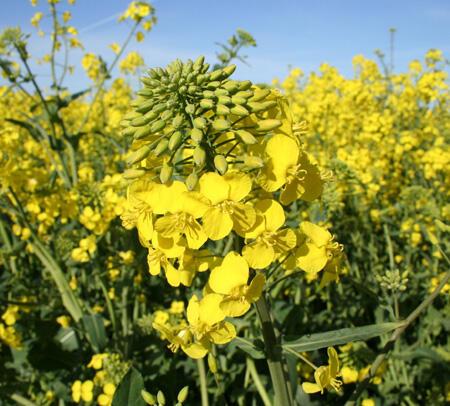
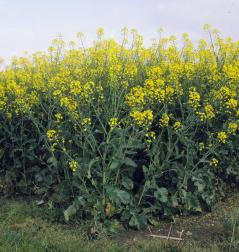
Rapeseed and canola are closely related members of the mustard family (Brassicaceae) that are both grown as oilseed crops. All current varieties of rapeseed and canola were developed from Brassica napus and Brassica rapa.
Rapeseed is grown primarily as a source of erucic acid, which is not edible but is valuable in high-performance industrial lubricants. In the early 1970s, Canadian plant breeders used conventional breeding techniques to remove the anti-nutritional erucic acid and bitter glucosinolates from rapeseed. Removing these compounds resulted in an oilseed crop that produced edible oil low in saturated fats and a very palatable, high-protein meal for animal feed. They coined the word canola (for Canadian oil low acid) to describe a crop that is low in both compounds.
Canada is currently the largest single producer of canola, with nearly 20 million acres grown annually. Because winter canola will not consistently survive Canada’s extreme winter conditions, growers on the Canadian prairie produce spring-planted canola.
North Dakota dominates U.S. canola production, accounting for over 60% of acreage in recent years. The United States has more than 1.5 million planted acres. The majority of this production is spring varieties. Improvements in winter canola varieties have spurred production in Oklahoma and Kansas. Oklahoma has become the second largest U.S. canola producer in recent years, with 10% to 20% of acreage. With continued strong demand for canola oil for use in food products and as a biodiesel feedstock, canola acreage is expected to increase in all U.S. regions.
Uses
Nutrition
Canola oil is used mainly as cooking oil and in shortening and margarine. To be considered canola, the oil and meal must both meet the following standards:
- Oil < 2% erucic acid.
- Meal < 30 micromoles of glucosinolates per gram.
The fatty acid profiles of rapeseed and canola are compared in table 1.
Because canola oil is very high in unsaturated fatty acids, it is considered a high-quality food oil that is healthy in human diets. Canola oil is particularly desirable for frying because it has a neutral flavor and can be heated to higher temperatures than many other oils without smoking or burning.
|
Oil source |
16:0* |
18:0 |
18:1 |
18:2 |
18:3 |
20:1 |
22:1 |
22:2 |
24:1 |
|---|---|---|---|---|---|---|---|---|---|
|
Canola |
4% | 2% | 60% | 20% | 10% | — | 2% | — | — |
|
Rapeseed |
3% | 1% | 24% | 15% | 8% | 13% | 35% | — | 1% |
* Fatty acid profiles show the percentage of each fatty acid component in a vegetable oil. The first number in the notation at the top of each column in the profile (e.g., 18:3) indicates the number of carbon atoms in the fatty acid. The number after the colon indicates the number of double bonds in the fatty acid. Although fatty acid profiles vary somewhat from sample to sample, they are generally used to characterize vegetable oils from particular species or varieties of plants.
Animal feed
Canola meal is a high-protein animal feed used by the dairy, cattle and poultry industries. It is a byproduct of oilseed extraction that consists of the solids left after oil is extracted from seeds. The meal is highly palatable and typically contains 34 to 38 percent protein with a high percentage of bypass protein. Extracting oil with mechanical screw presses (rather than solvent extraction) usually leaves 8% to 12% residual oil in the meal, which also provides a dietary source of energy in animal feed rations.
Industry
Fluctuating petroleum prices and federal government policy have increased interest in growing canola for production of biodiesel in the Pacific Northwest (PNW). With its combination of high seed yield and high oil content, canola currently offers the greatest potential oil yield per acre of any PNW crop. High levels of unsaturated fatty acids in canola oil also result in biodiesel with superior low-temperature performance compared to many other vegetable oils.
Adaptation
Climate
Because it can germinate and grow in relatively cool temperatures, canola is one of the few oilseed crops that can be cultivated over wide areas of the temperate zone. Both winter and spring varieties of canola have been developed, but winter canola normally produces about twice the yield of spring canola in the same production area (see “Yield” section below). Canola can also be grown dryland or under irrigation.
A major risk for production of winter canola in the PNW is stand establishment failure. Dry fall weather without enough available soil moisture to germinate and establish nonirrigated winter canola can produce erratic stands or complete crop establishment failure. Late establishment of winter canola can result in significant yield reduction. High temperatures shortly after seedling emergence can also damage and kill young canola plants by burning the stems at the soil surface.
During the 2010s, Dr. Don Wysocki of Oregon State University conducted trials on dryland Eastern Oregon sites in which winter canola was planted in the spring for seed harvest the following summer. Such a planting practice allows for reliable crop establishment and often results in more consistent yields than fall planting.
Soil
Canola performs best in well-drained soils and generally will not tolerate flooded or poorly drained areas. A range of slightly acidic to neutral pH is acceptable.
Cultural practices
Canola fits very well in rotation with many crops, including small grains, grass seed and potatoes. Due to the potential buildup of diseases, however, do not plant canola more than once every four years in a rotation.
Canola is sensitive to many persistent herbicides. Carefully read herbicide labels and avoid planting canola in areas where herbicide residues may be a problem. Since canola germinates rapidly, a simple bioassay (planting in soil from the field) can quickly determine if herbicide carryover will affect crop establishment.
Some Brassica species cross-pollinate readily, and isolation of crops is essential. Cross-pollination between edible oil, industrial oil, condiment mustard, and Brassica vegetable seed crops generally reduces the quality of all crops. Most PNW states have established Brassica production districts to minimize production conflicts among growers. See “Limitations on canola production in Oregon” section below.
Seedbed preparation
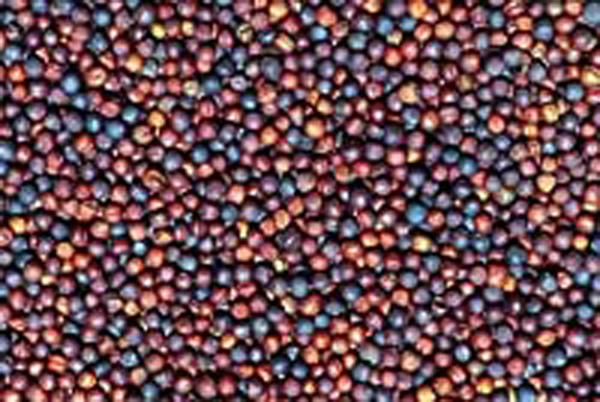
Canola seeds are small and require a firm seedbed free of large clods for optimum germination and stand establishment. Most growers use a roller with the last tillage operation to pack the soil before planting. Working soil too fine or packing too hard can cause crusting, which may inhibit seedling emergence.
Planting date
Since potential yield declines rapidly with later fall planting, optimum seeding dates are especially important when growing winter canola. The goal is to grow well-established plants with a closed canopy of leaves before the onset of cold weather. In Western Oregon, winter canola typically is planted in mid-September. In Eastern Oregon, begin planting winter canola in mid-August. Plant spring canola at the normal time for spring grain crops.
As noted earlier, research is being done to develop spring-planting strategies for winter canola in dryland areas of Eastern Oregon. Under this system, winter canola would be planted in late spring to early summer, when soil moisture is adequate, to assure plant establishment. To date, yields have not been superior to successful fall-planted crops, but reliability of establishment is significantly improved.
Seeding rate
Suggested seeding rates for winter canola range from 4 to 12 pounds of seed per acre. Under normal conditions, plant 4 to 7 pounds of seed per acre. Use higher seeding rates (8 to 12 pounds per acre) for late plantings, heavier soils, or in field conditions where emergence may be reduced. Plant spring canola at 5 to 8 pounds of seed per acre.
Seeding depth
Optimum seeding depth is ½ to 1 inch.
Row spacing
Canola usually is planted with a conventional grain drill. In high-moisture areas or under irrigation, a row width of 6 to 10 inches normally is used. In dryland conditions, row width should be increased to 12 to 16 inches. Narrower row spacing promotes rapid canopy closure and reduces weed competition.
Variety selection
Many commercial winter and spring canola varieties are available. Most of the recently developed spring canola varieties have been genetically modified to induce herbicide resistance. These include ‘Clearfield’, ‘Liberty Link’ and ‘Roundup Ready’. Herbicide-resistant winter canola varieties are also beginning to appear on the market. Non-GMO winter and spring canola varieties are currently available in the PNW but may become more difficult to find.
Fertilizer
Response of canola to fertilizer application is highly dependent on moisture availability and soil type. Under irrigation or in high-rainfall areas where yield potential is higher, increased rates of applied fertilizer may be economical. In dryland conditions or on less productive soils, less fertilizer may be needed for maximum production.
Nitrogen
Nitrogen (N) is generally the most limiting nutrient in canola production, so providing adequate nitrogen is essential to maximize canola yield. The amount of nitrogen fertilizer required by canola depends on the variety, its potential yield and the amount of available nitrogen in the soil. Canola takes up approximately 7 lb N/100 lb of expected seed yield. If fall N is needed for winter canola, apply 30 to 50 lb N/acre prior to planting and the remainder in the spring.
Since most nitrogen uptake in canola occurs before bolting, adequate N must be available in the soil prior to the crop’s rapid growth period. Apply spring N before bolting begins.
Sulfur
Sulfur (S) requirements of canola are greater than those of cereal crops. Canola requires about 1 lb S/100 lb of expected seed yield.
Phosphorus
Both winter and spring canola often benefit from application of phosphorus when soil test levels are below 5 ppm. Phosphorus is generally most effective when applied prior to seeding.
Potassium
Soil potassium levels normally are adequate for canola in the PNW, but apply potassium when soil test values are below 75 ppm.
Boron
Winter canola generally requires more boron than many other crops grown in rotation with it. Apply 1 to 2 lb boron/acre if soil tests indicate levels below 0.5 ppm. Avoid overapplication, since excess boron is toxic to canola.
Weed control
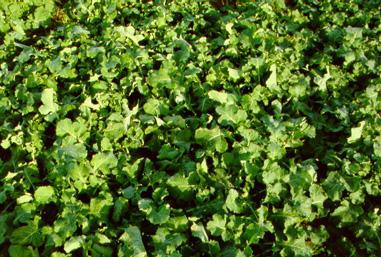
Canola seedlings normally develop quickly and compete well with annual weeds. Well-timed planting and good stand establishment promote rapid leaf canopy closure, which suppresses many weed species. Weed problems usually develop with late planting and poor stand establishment.
Several grass and broadleaf herbicides are currently registered for use in canola production in the PNW. Consult local weed control guides for information on application rates and timing.
Pest management
Diseases
Plant diseases are one of the most serious canola production problems. The two most important diseases are sclerotinia stem rot and blackleg.
Sclerotinia stem rot (or white mold) is caused by the fungus Sclerotinia sclerotiorum. Infection weakens the plant stem, causing losses from lodging and early ripening. This disease infects many other crops, including sunflower, potatoes, safflower, beans, peas and alfalfa.
Blackleg, the most serious disease of canola, is caused by the fungus Phoma lingum (Leptosphaeria maculans). This disease is carried over from season to season on infected stubble and spreads by airborne spores or through infected seed. Seed treatment with fungicides is very effective in controlling blackleg and is required on planting seed used in Oregon. Blackleg can cause yield reductions up to 50% due to premature ripening and lodging. In 2014, based on finds of blackleg in Oregon, the Oregon Department of Agriculture (ODA) imposed restrictions on seed treatments and disease-free certification requirements for all Brassica and related species. See the ODA website for current canola-related restrictions.
Several fungicides are currently registered for use in canola production in the PNW. Consult local disease control guides for information on diseases that may be controlled with fungicides and for application rates and timing. Since fungicides have limited effectiveness on many canola diseases, it’s important to practice a minimum 4-year crop rotation. For canola planting in Oregon, it is required to use seed stock that has been certified as being free of blackleg. Using resistant varieties will also help reduce disease problems as canola production increases.
Insect pests
Insects have been relatively minor pests in PNW canola production, but several insect pests have been identified in canola fields in Oregon.
Cabbage seedpod weevil (Ceutorynchus assimilis) is the most important insect pest of canola. Adult weevils lay eggs near young seedpods, and the larvae enter the pods to feed on developing seeds. Larval feeding can reduce yield by 20% to 30%. Field monitoring and proper timing of insecticide treatment are essential to achieve control.
Several species of aphids (cabbage aphid, turnip aphid and green peach aphid) are found on canola in the PNW. Aphid feeding on rosettes can reduce rosette size and vigor, adversely affecting winter survival and yield. Aphid feeding on floral parts can reduce seed set and yield.
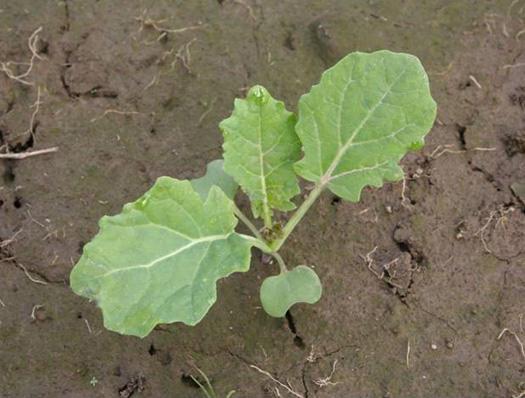
Adult flea beetles sometimes damage canola seedlings by feeding on cotyledons and young leaves, causing a shothole appearance. This usually occurs during warm, dry weather conditions shortly after crop emergence.
Several insecticides are currently registered for use in canola production in the PNW. Consult local insect pest control guides for information on insects that may be controlled with insecticides and for application rates and timing.
Harvest
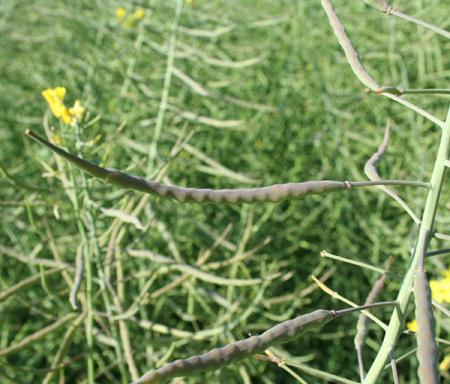
Proper harvest timing is critical with canola to attain high yield and oil quality. Early harvest leads to excessive green seed, reduced oil content and high seed moisture. Late harvest can result in severe crop losses due to shattering, because mature, dry canola pods open very easily.
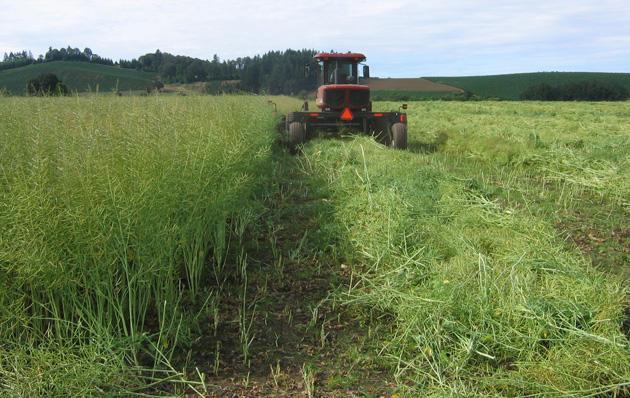
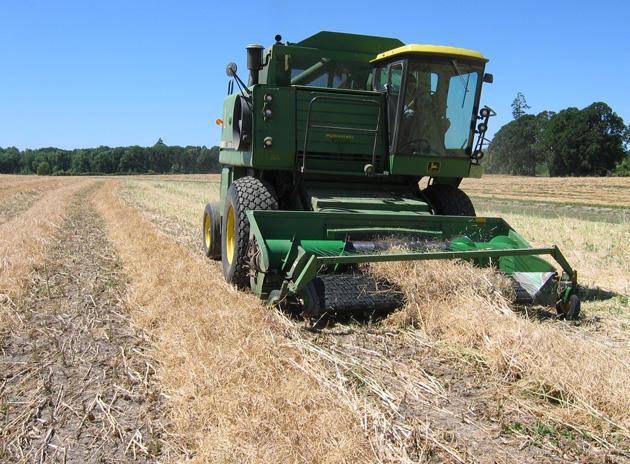
Harvest canola either by swathing, followed by combine pickup when the crop is dry or by direct combining. Timing of swathing is important to minimize seed loss. Because canola seeds on the bottom of the plant mature before those at the top, sample seed from pods on the lower third of the main stem when inspecting the crop for maturity. Begin swathing when seeds have turned brown on the lower third of the main stem.
Direct combining standing canola can be extremely risky, and seed losses can be very high when the pods are dry and brittle. In the Columbia Basin, growers have had good success using “canola pushers” prior to combine harvesting. The pushers bend the canola stems over just above the soil surface rather than cutting the stems with a windrower. This allows the crop to ripen while reducing stem movement and shattering by the wind. When mature, the canola is then direct combined traveling in the opposite direction of the pusher.
Fully mature canola seed is dark brown or black. Optimum seed moisture at harvest is 8% to 9%.
Yield
Canola yield varies widely depending on variety, time of planting, available moisture, soil fertility and harvest timing. Well-established winter canola tends to produce the highest seed yield.
Winter canola has yielded as much as 4,800 pounds of seed per acre in replicated Oregon trials in high-rainfall areas of the PNW. Spring canola tends to produce about half the yield of winter canola. Low-rainfall, dryland yields are typically half those obtained in high-rainfall or irrigated areas.
Limitations on canola production in Oregon
The Oregon Department of Agriculture has established protected districts that limit canola production. These include areas in:
- The Willamette Valley
- Central Oregon
- Northeast Oregon
- At the eastern edge of Malheur County, along the border with Idaho.
See the protected districts map.
See the ODA for more information on restrictions within Oregon.
Resources
Berglund, D.R. and Kent McKay. 2007. Canola Production. North Dakota State University Extension Circular A-686. Archived in NDSU library.
Franzen, D.W. and J. Lukach. 2013. Fertilizing Mustard and Canola. North Dakota State University Extension Circular SF-1122.
Oregon Department of Agriculture. 2013. Rapeseed Control Areas.
Related publications

