Plant description
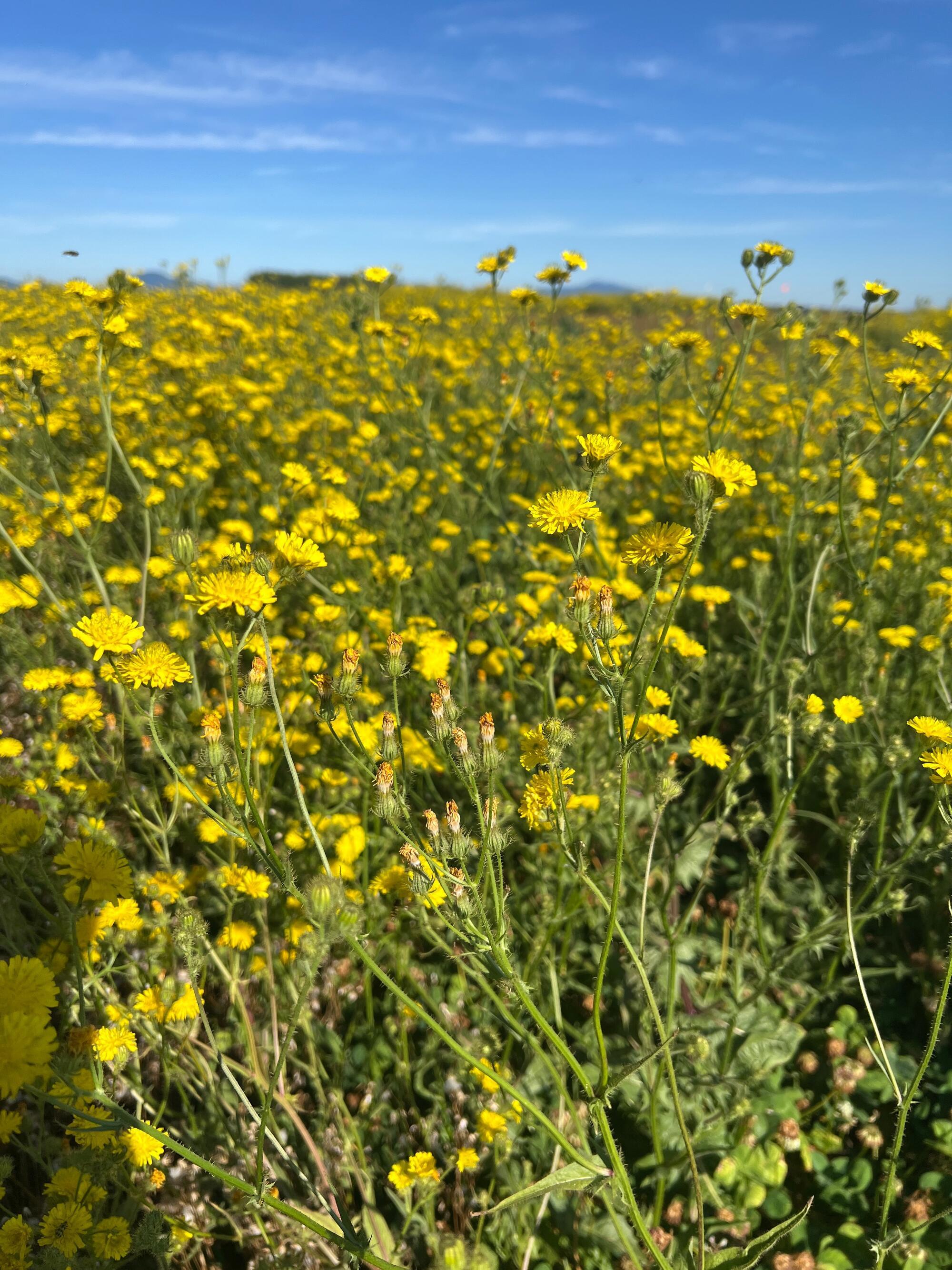
- Bristly hawksbeard is a fast-growing annual species with yellow flowers.
- The species belongs to the sunflower family (Asteraceae).
- The plant forms a basal rosette during early growth stages, reaching 16 inches in diameter. At later stages, stems emerge from the rosettes, and plants grow 1 to 2 feet tall.
- The lanceolate, lobed leaves clasp the stem.
Geographic distribution
- The species is native to western Asia and southeastern Europe.
- Bristly hawksbeard has been introduced on a wide geographic scale, including North and South America, Europe, Australia and New Zealand.
- In the United States, the species is common in California and Oregon.
In the Pacific Northwest
- Distribution occurs mostly west of the Cascade Mountains in Oregon and Washington.
- Infestations are common in the Willamette Valley, especially in open fields, and have been observed in clover seed production.
- Flowering occurs from late spring through summer and may extend into fall (May to November).
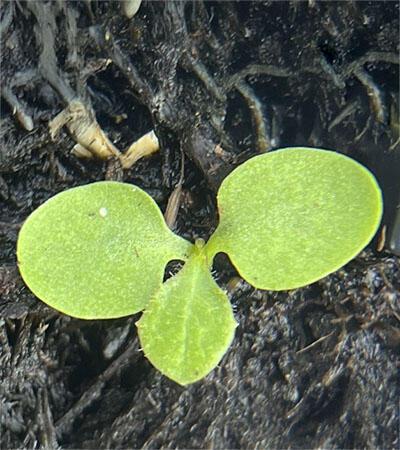
Seedlings
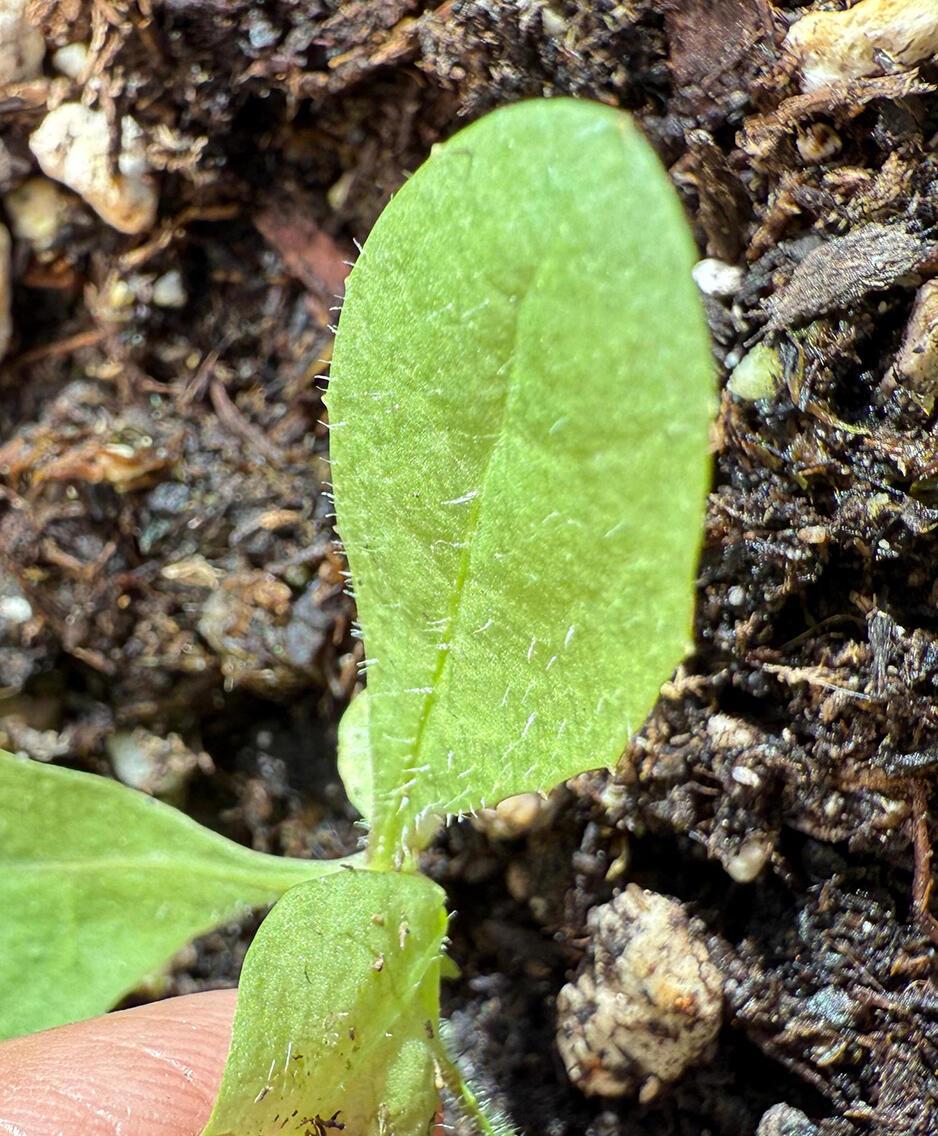
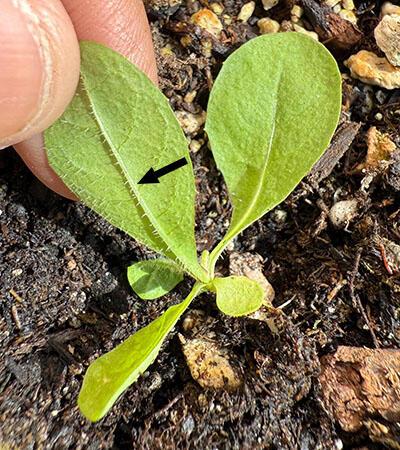
Cotyledons are round-shaped (1A). The first true leaves have short hairs (1B), and bristles are visible along the underside midvein (1C, arrow).
Leaves
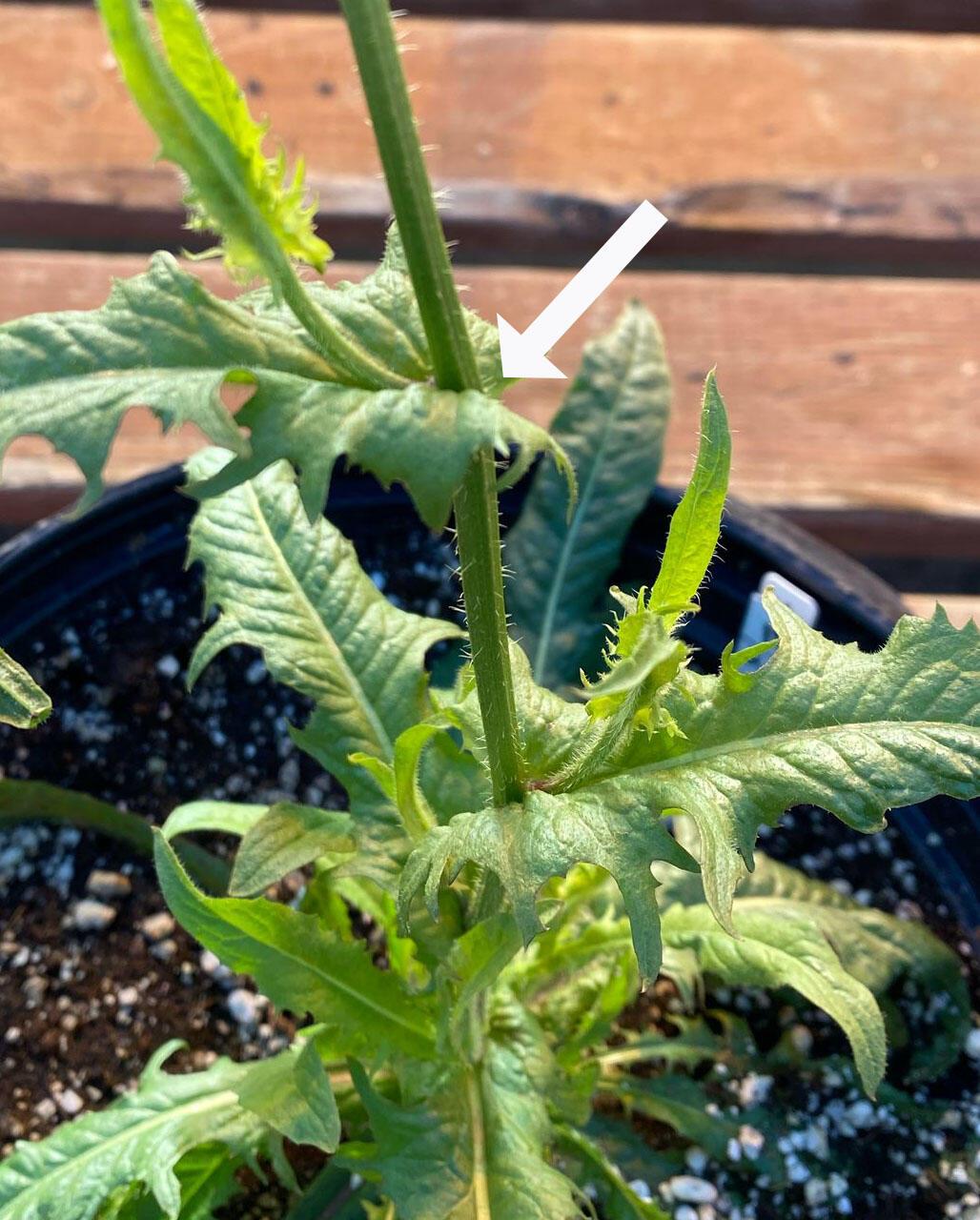
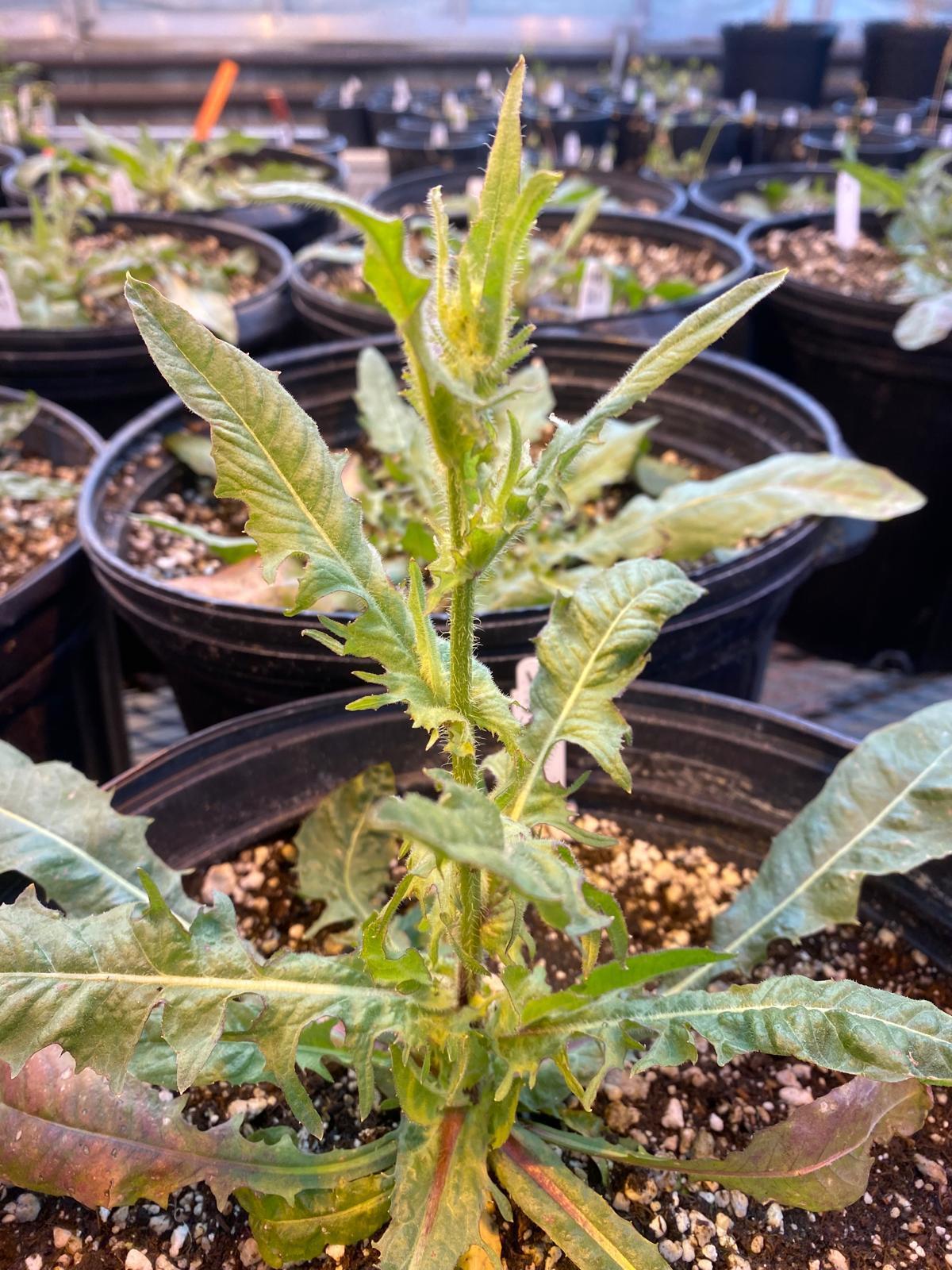
Stem leaves are alternate, arrow-shaped at the base, and triangular near the tip (2A). The upper leaves are sessile (without petioles) and clasp the stem (2B, arrow). Plants form basal rosettes during early growth stages, reaching 16 inches in diameter. At later stages, stems emerge from the rosettes, and plants grow 1 to 2 feet tall.
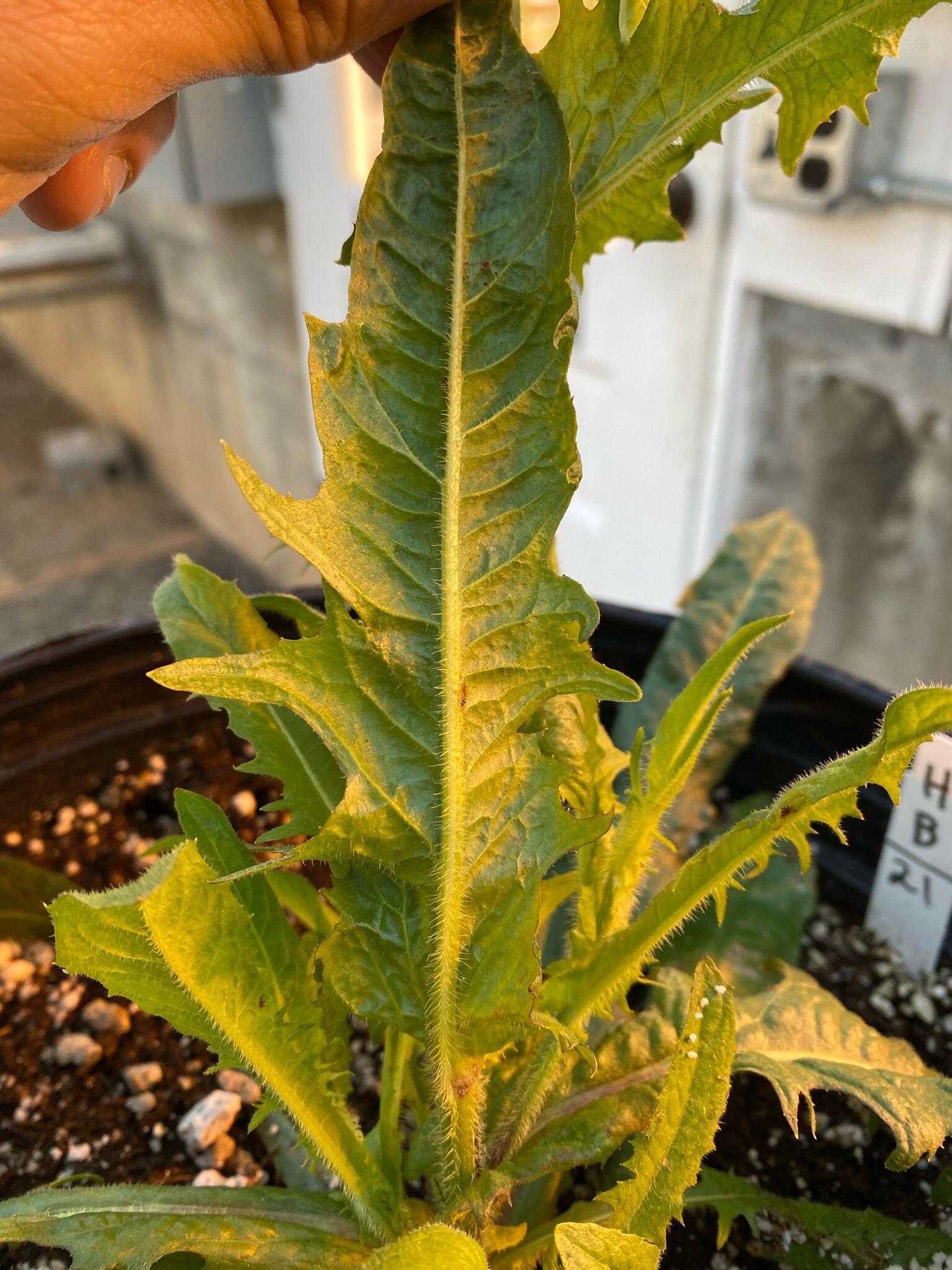
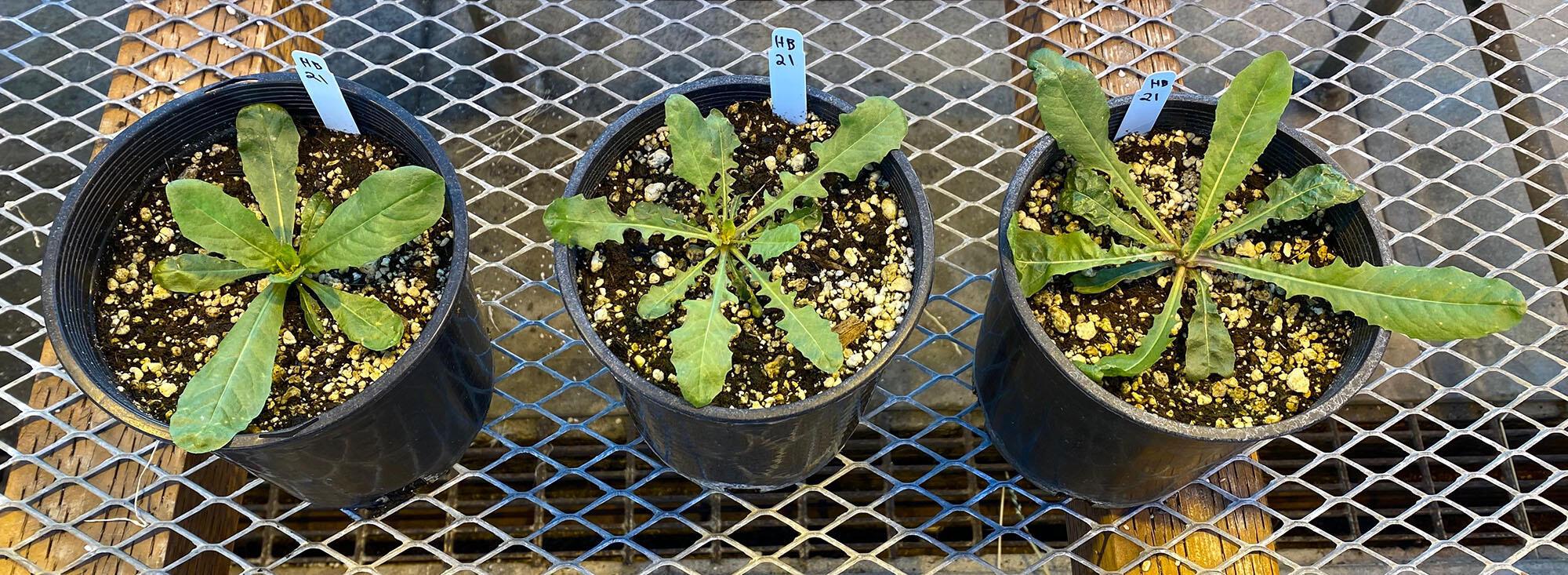
Basal leaves are narrow at the base and wider toward the tip, 2 to 12 inches, with entire, toothed or lobed margins (2C). The lobes are triangular or lanceolate, and the leaf tips are pointed to rounded. Leaf surfaces have fine, soft hairs, and the basal leaves are petiolate.
Stems
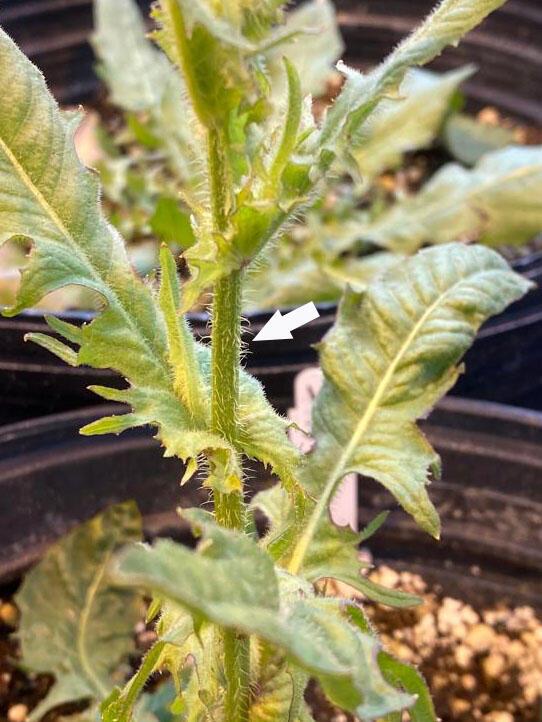
Stems are erect (3A), simple or branched, and covered with hairs that give them a rough, bristly texture, as the common name suggests (3B, arrow).
Flowers
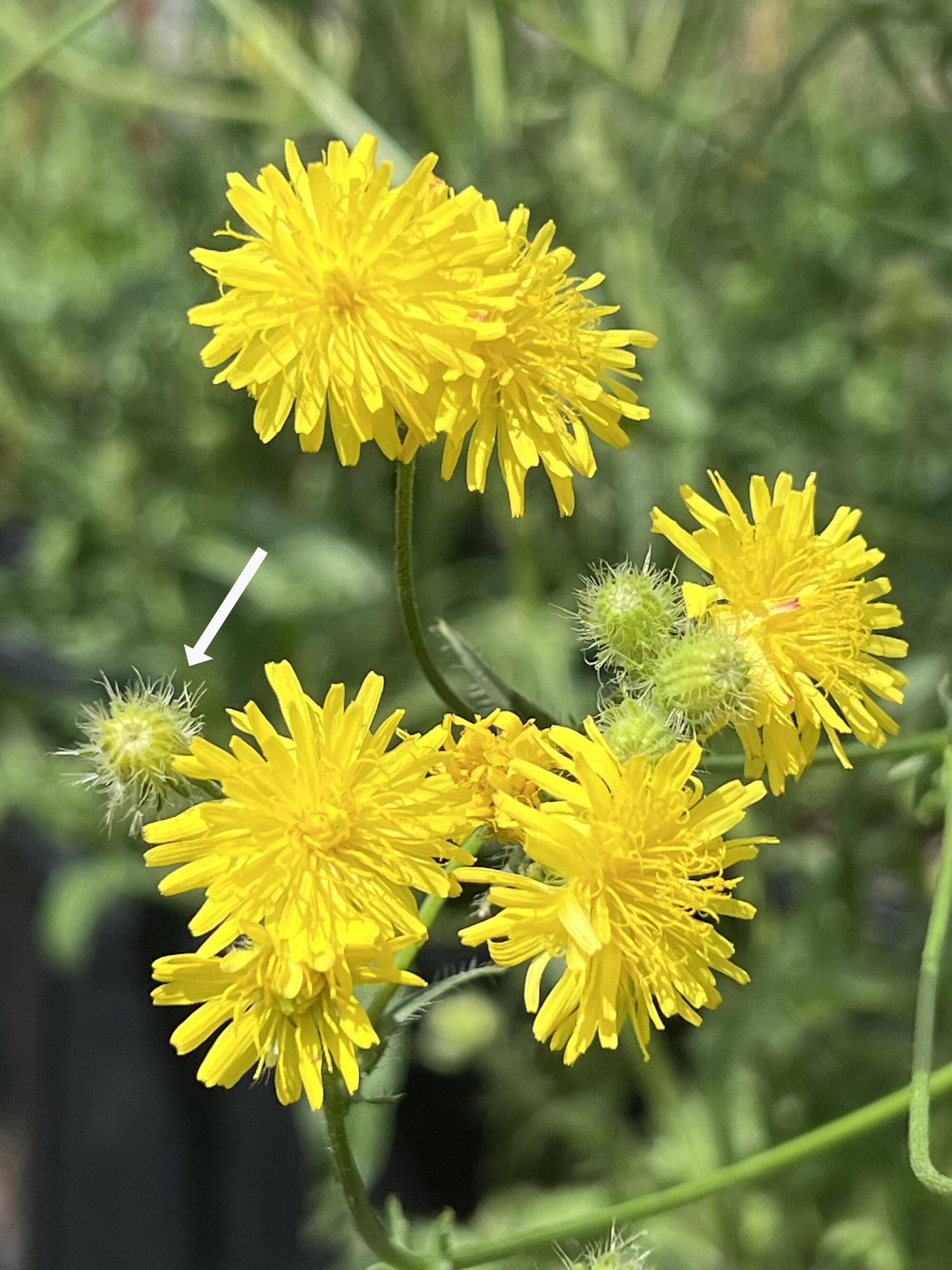
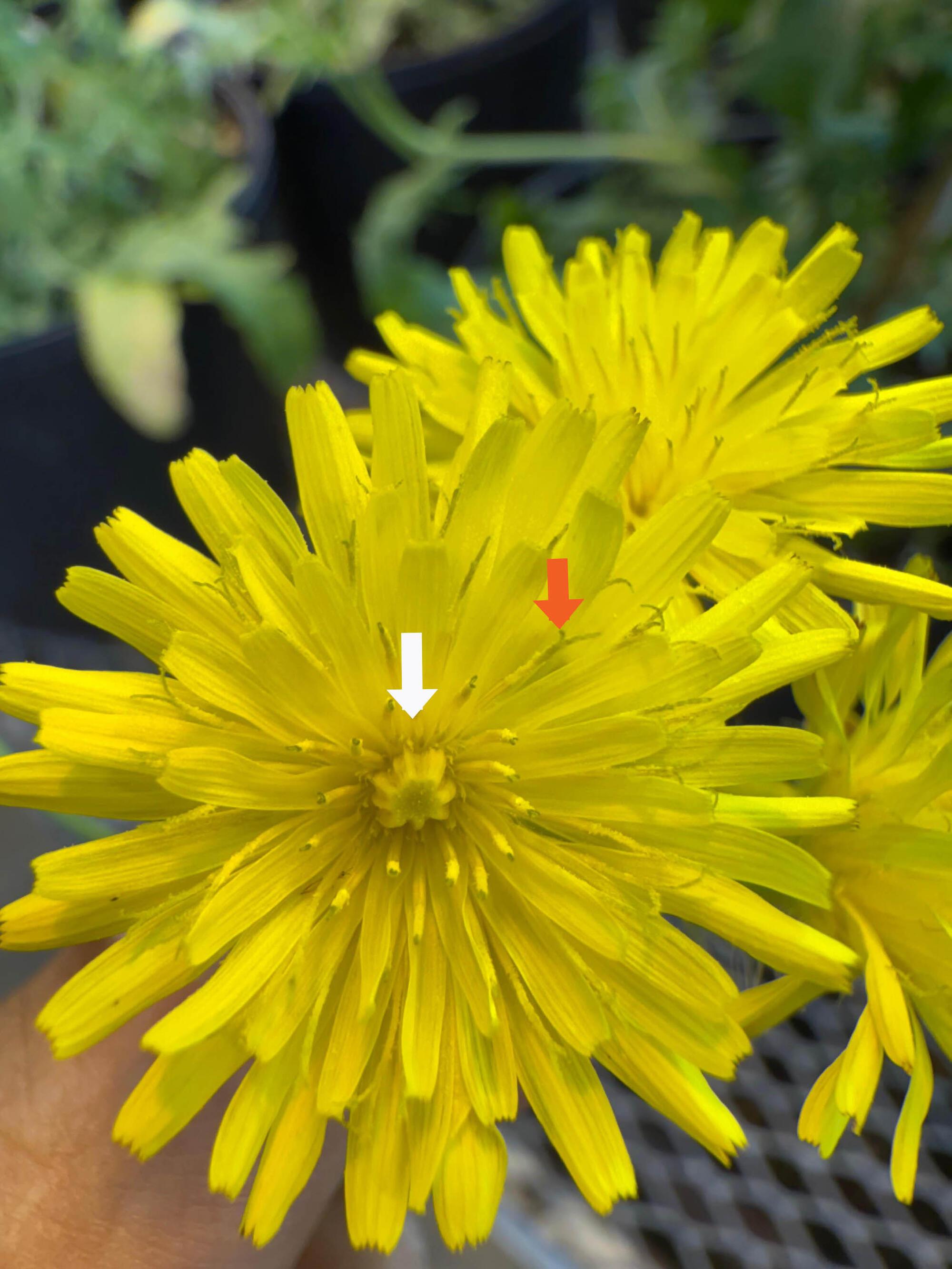
The plant produces several flower heads approximately 1 inch in diameter, composed of bright yellow, strap-shaped florets subtended by hairy bracts (4A, arrow). Each head contains a dense central cluster of tiny reproductive parts, including the pollen-bearing stamens (4B, white arrow) and the stigmas (4B, orange arrow).
Fruits
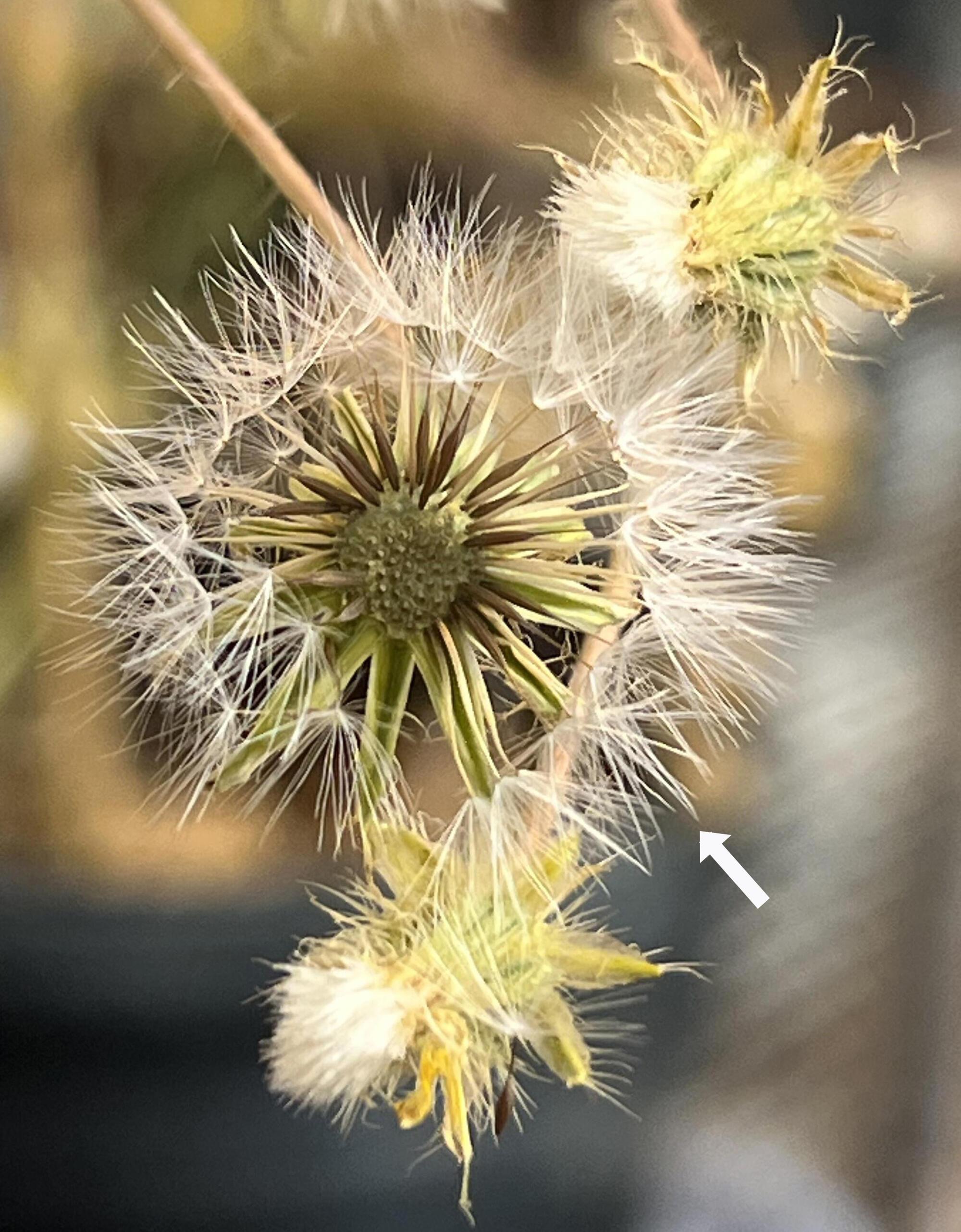
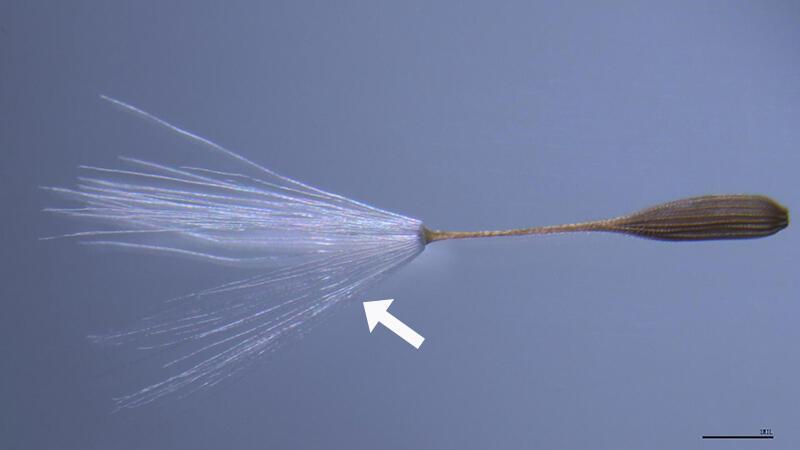
Bristly hawksbeard reproduces only by seed. The seeds are small, narrow, and ribbed, measuring 0.12 to 0.20 inches long, with a short beak at the tip (5A). Each seed is topped with a plumose structure (pappus) that allows it to be carried by the wind (5B, 5C, arrows). Wind dispersal enables the plant to spread rapidly across open or disturbed areas.

Similar species
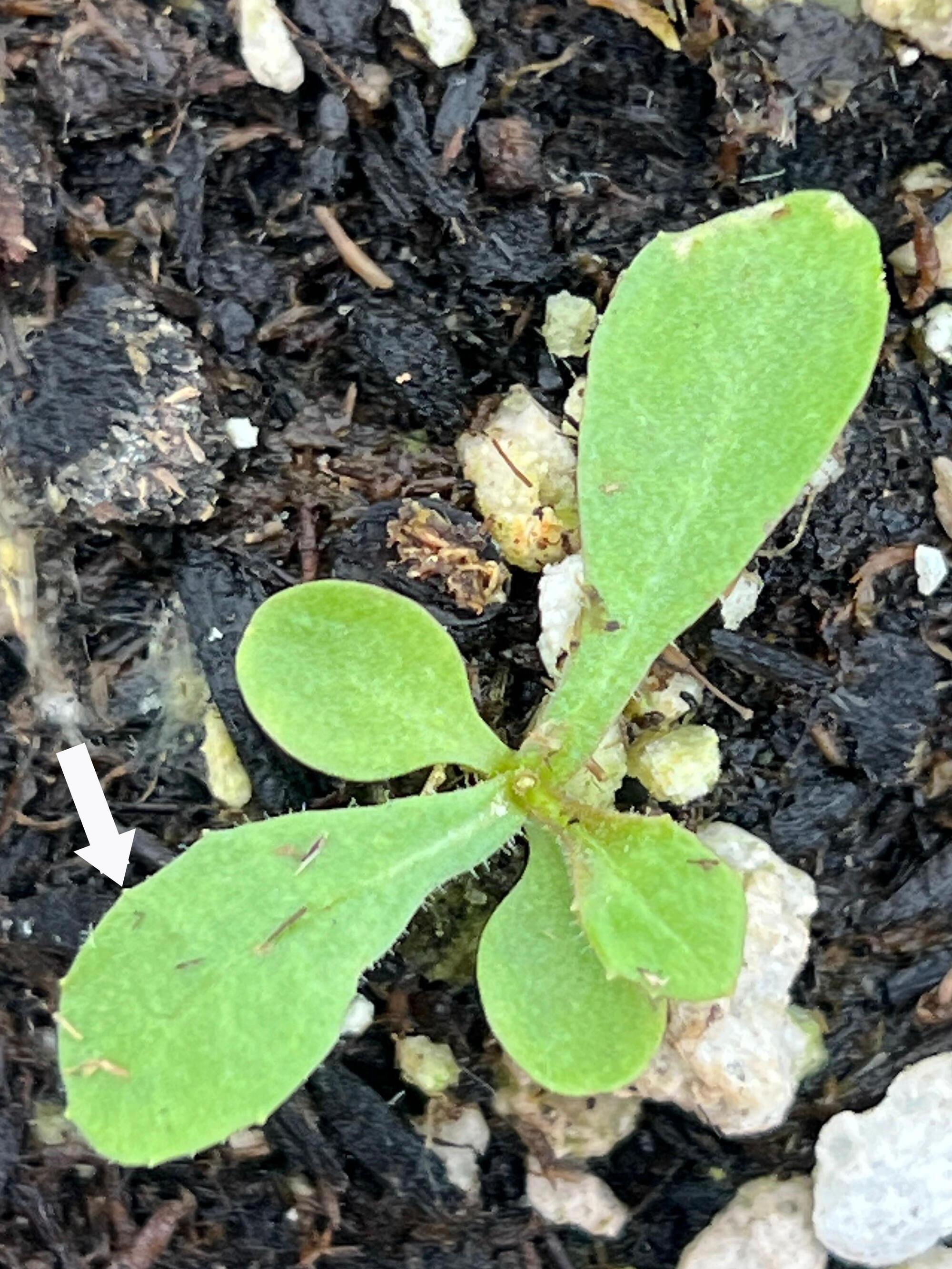
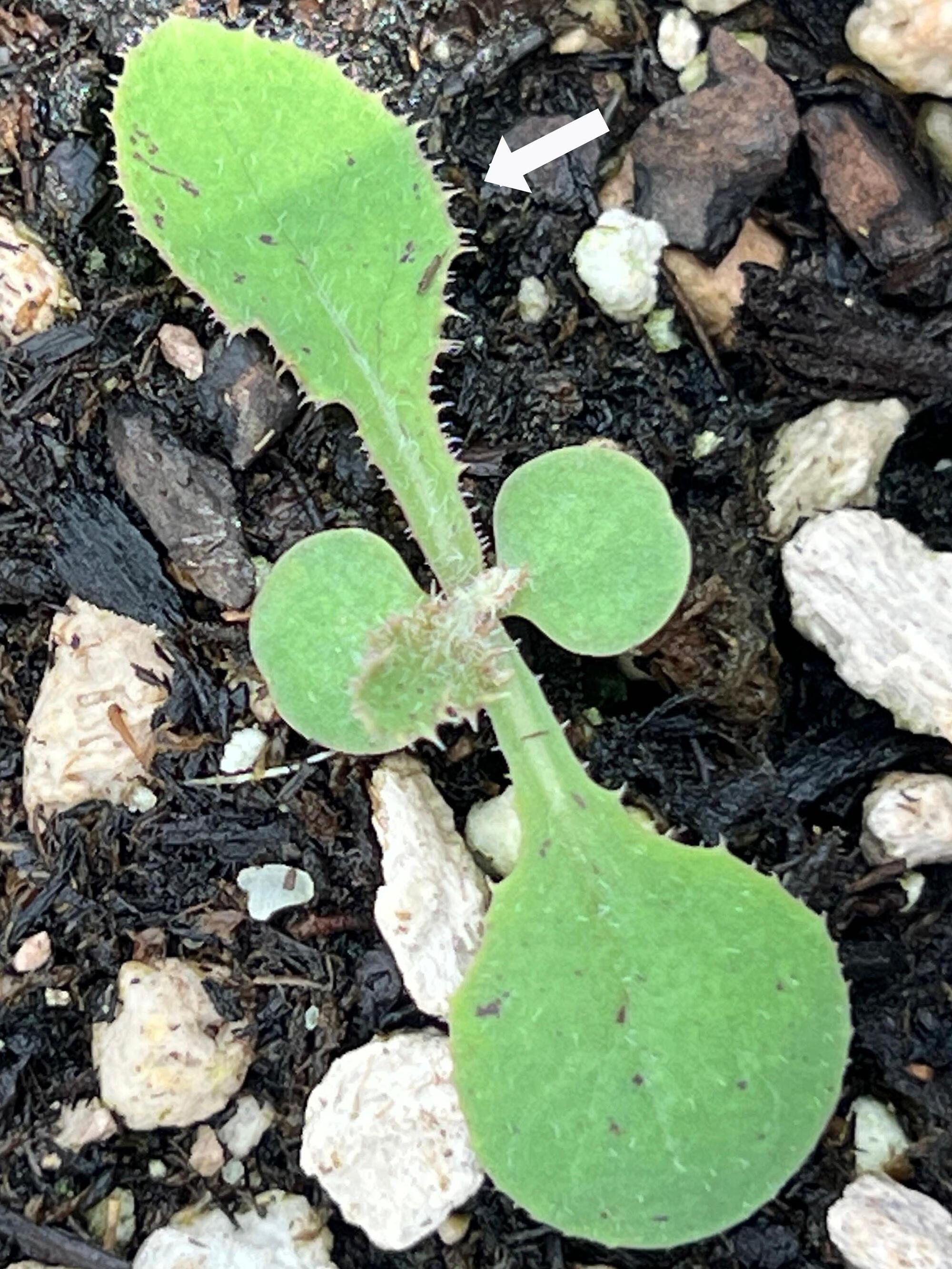
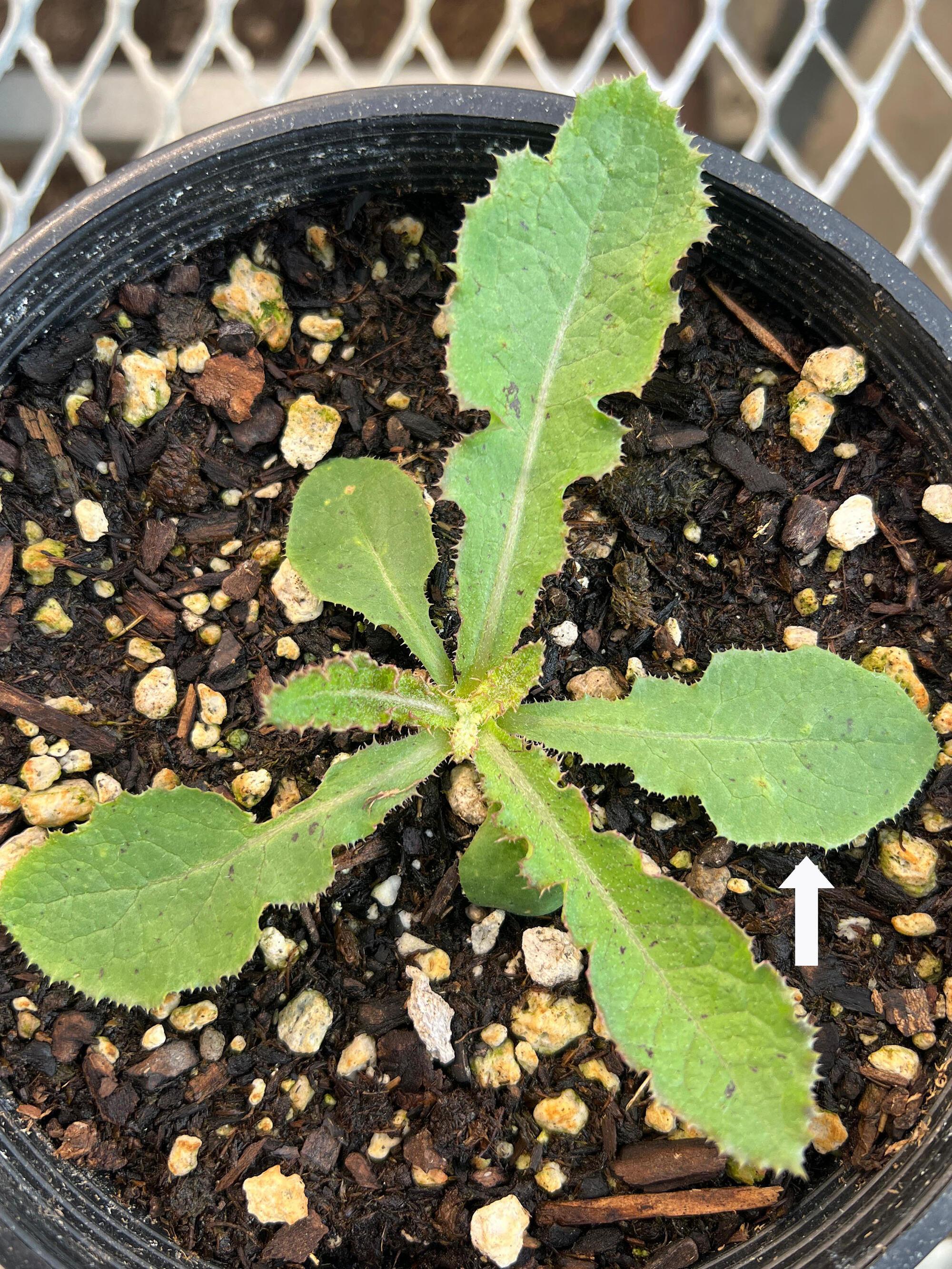
Bristly hawksbeard resembles other weed species, including prickly lettuce and spiny sowthistle. Here's how to identify and differentiate seedlings in the field.
Bristly hawksbeard (Crepis setosa)
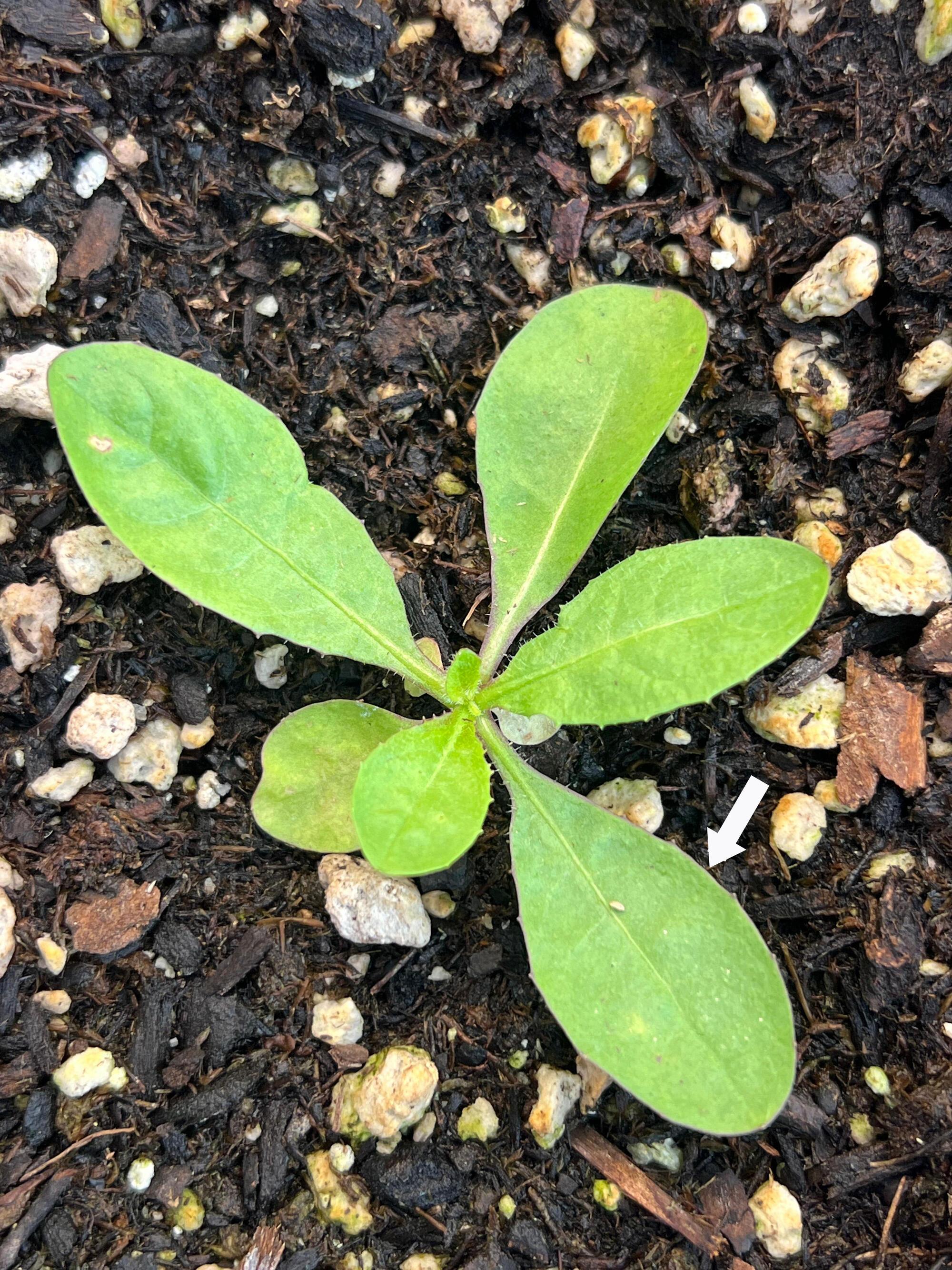

Prickly lettuce (Lactuca serriola)
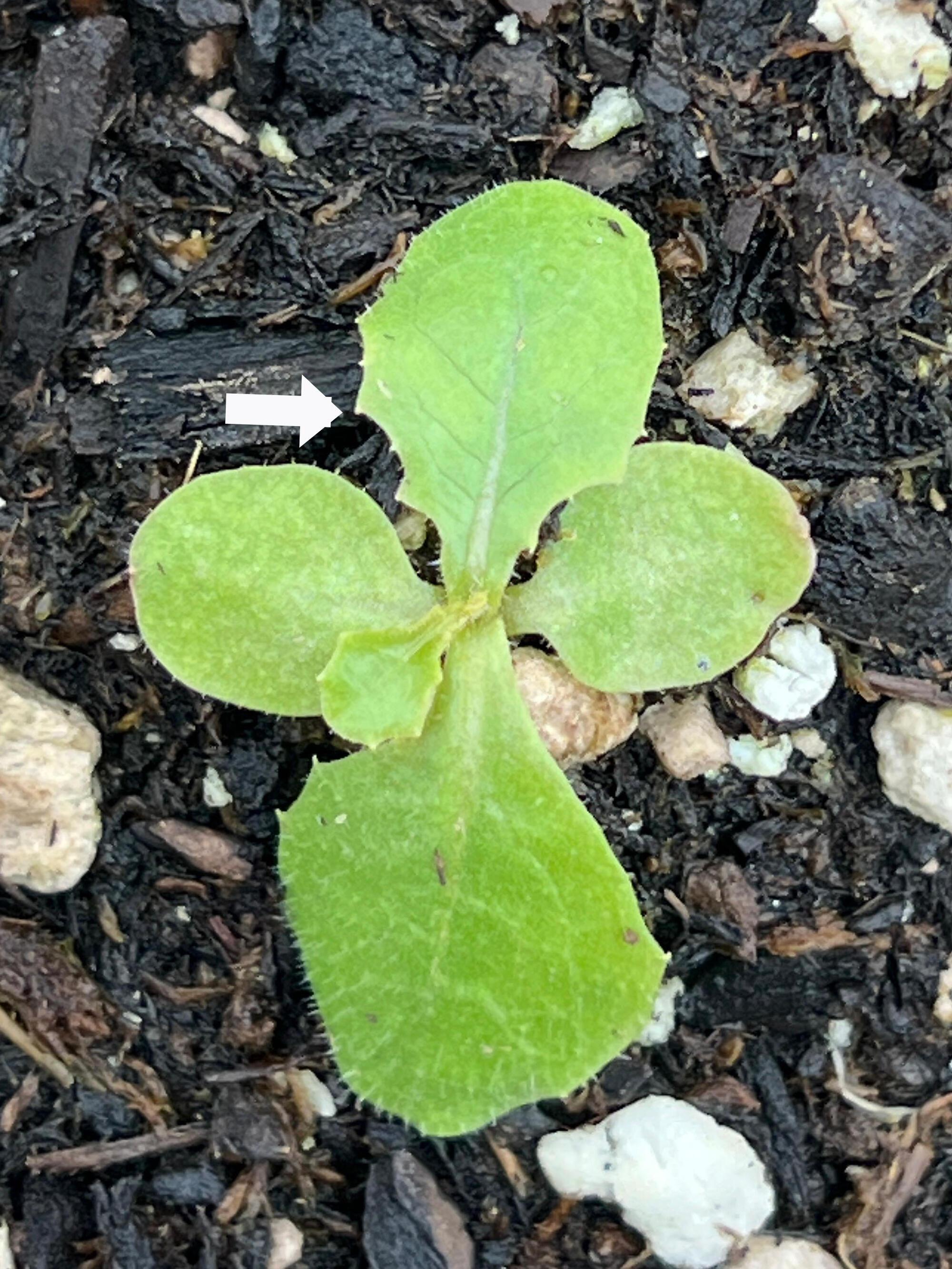
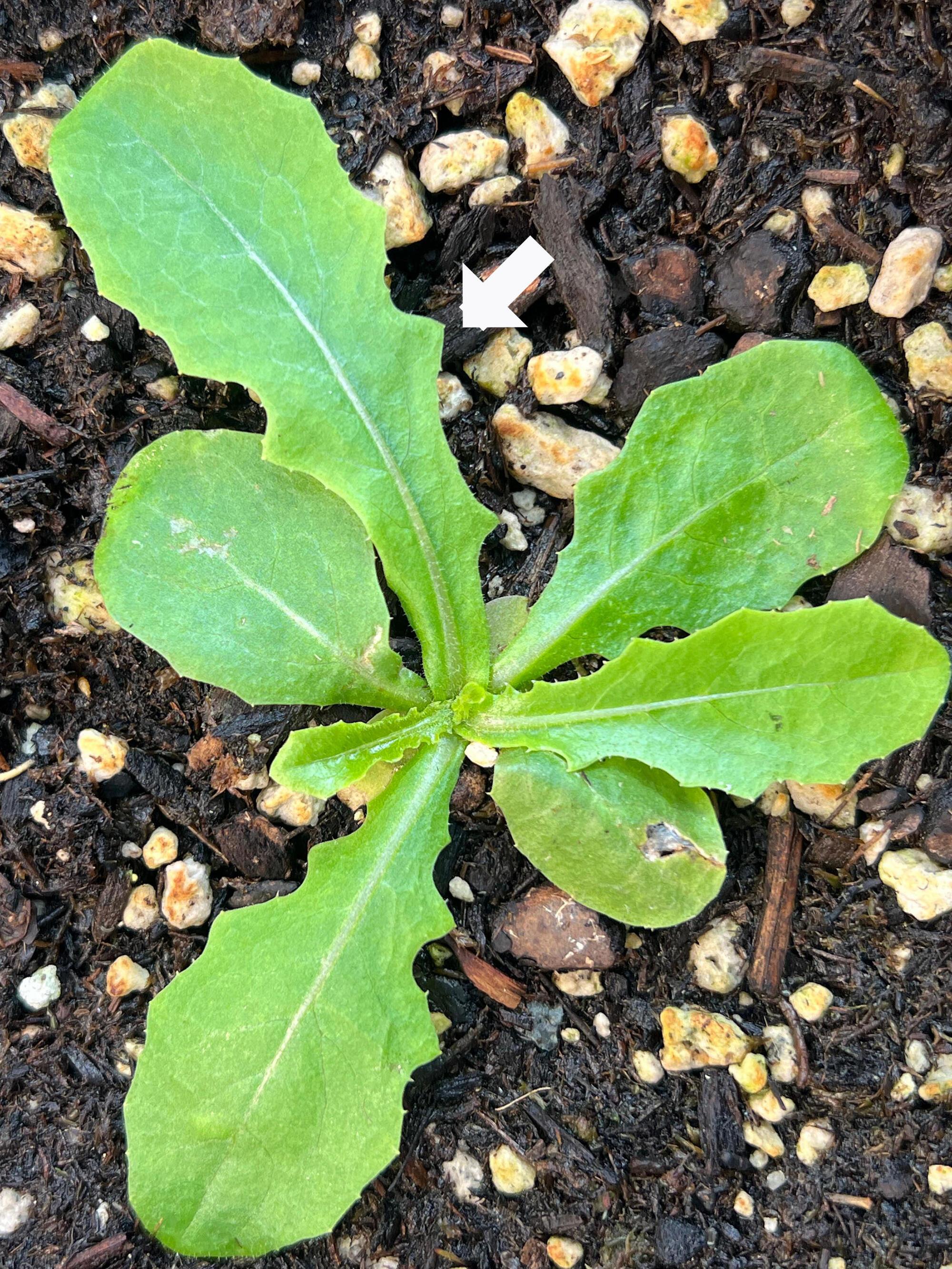

Spiny sowthistle (Sonchus asper)

About the authors