

Introduction
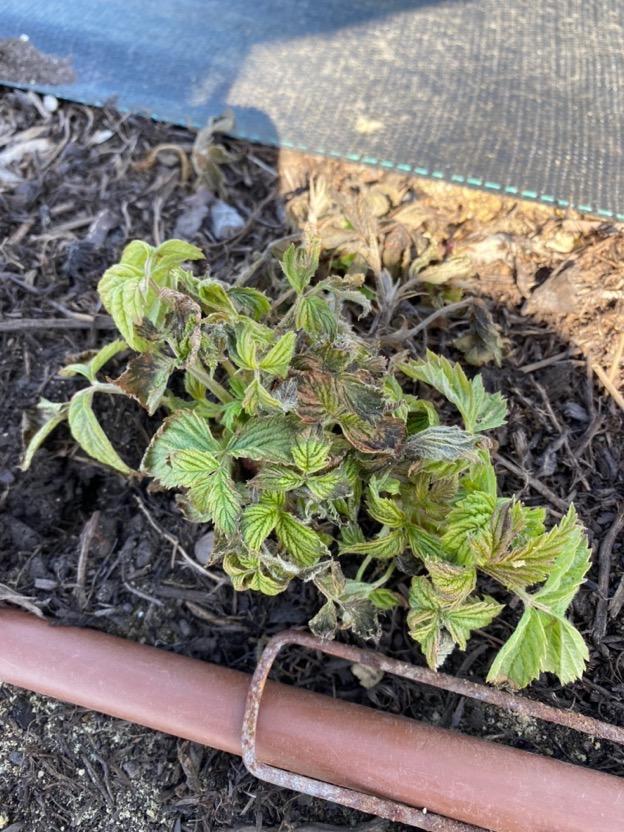
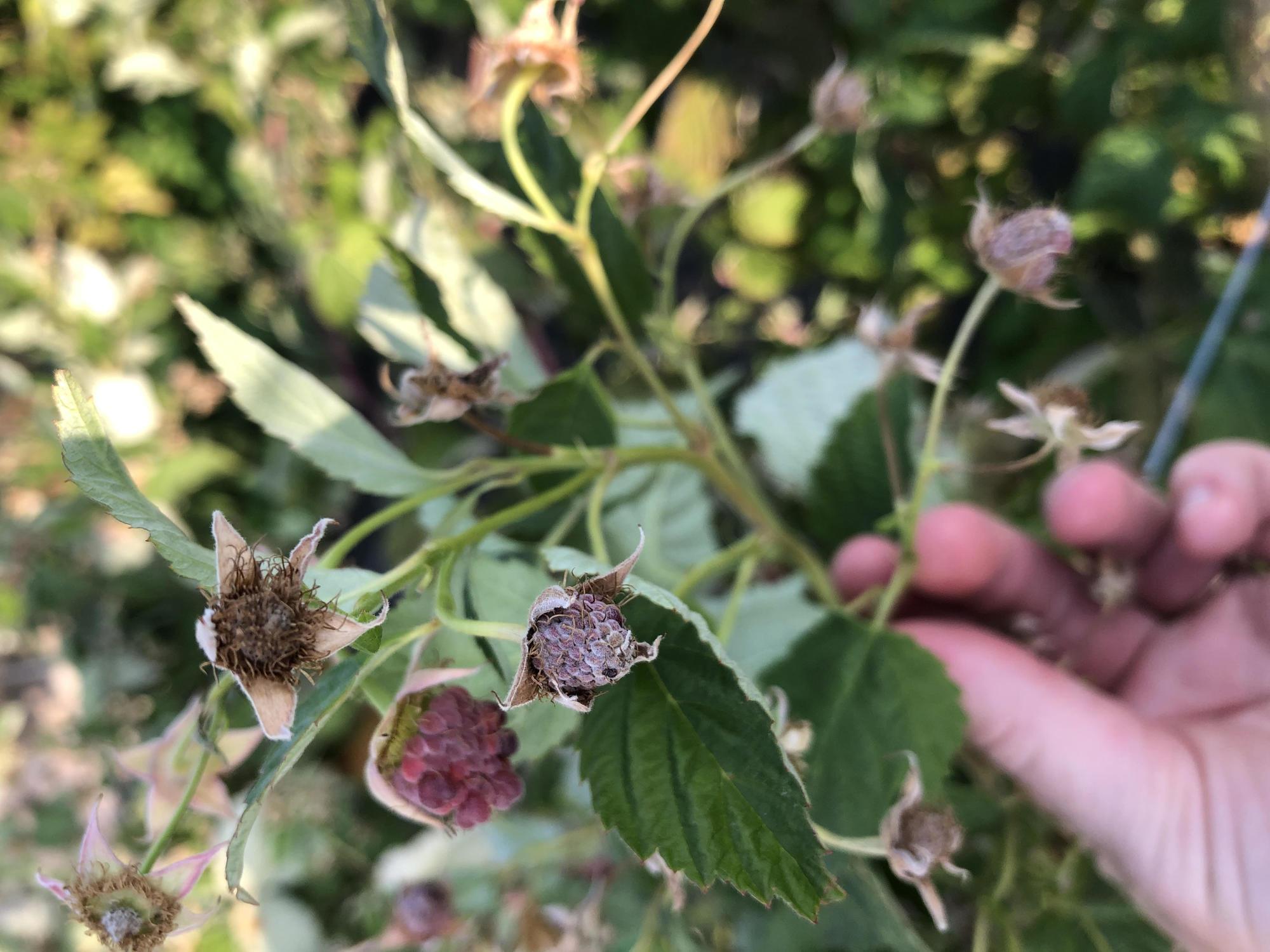
Red raspberries (Rubus idaeus) are a high-value crop for farmers markets throughout North America. However, the high desert region of Central Oregon can be a particularly challenging place to grow raspberries and other horticultural crops. The high elevation (2,000–4,200 feet above sea level), arid environment and extreme daily temperature fluctuations result in a short growing season of about 90 days. Hard freezes are common in May and October, and frosts can occur in summer. The spring and fall months have the most sudden temperature changes, resulting in damage to immature plant parts and ripe fruit (Figure 1A, 1B and 1C). Late-winter warm spells cause new canes or buds to emerge early, making them susceptible to late-spring frost damage and delayed harvest or crop loss. Early fall frosts can end the growing season while fruit is still on the plants (Figure 1). Despite these challenges, strong demand for locally grown crops has prompted some Central Oregon growers to explore using adapted cultivars and season-extension approaches to make raspberries a viable crop.
Contents

Of the caneberry species, red and yellow raspberries are the most cold-hardy. Raspberry plants are perennial, but the vegetative and fruit-producing canes are biennial. Due to differences in growth and fruiting habit of canes, raspberries are commonly categorized as either summer-bearing or fall-bearing (also known as everbearing). Summer-bearing raspberries can only produce fruit on second-year canes, called “floricanes,” and are often referred to as floricane-fruiting. Fall- or everbearing raspberries can produce late-season fruit on first-year canes, called “primocanes,” and are often referred to as primocane-fruiting. Both growth forms have certain advantages for production based on region. However, this publication will focus on primocane-fruiting raspberries. See “Selecting cultivars” below for more information.
Commercial producers in the region currently use cold-hardy species and frost protection (high tunnels, low tunnels and row covers) to successfully grow multiple vegetable crops. This publication explores how similar approaches could be adapted to growing primocane-fruiting raspberries commercially in Central Oregon. It highlights the results of a two-year research project on field and high tunnel production of four primocane-fruiting raspberry cultivars. This Central Oregon-based research applies to regions with similar growing conditions, such as the high-elevation valleys throughout the Intermountain West.
OSU Extension publications that explain raspberry production (including floricane-fruiting types) include:
- Growing Raspberries in Your Home Garden (EC 1306)
- Growing Berries on the Oregon Coast: Raspberries and Blackberries (EM 9180)
- Commercial Red Raspberry Production in the Pacific Northwest (PNW 598)
- Raspberry Cultivars for the Pacific Northwest (PNW 655)
- Raspberry Management for Utah, Cultivar Recommendations for Utah
Utah State University has resources on high desert raspberry production. You can find additional useful resources at Cornell University, including a High Tunnel Production Guide for Raspberries and Blackberries and a berry crop nursery guide to find sources for raspberry plants.
1. General raspberry management
Selecting cultivars
Seasonality and productivity differ between primocane-fruiting and floricane-fruiting raspberry, which also dictate management efforts. Pruning and training differences between the two raspberry types are important considerations for production in cold regions with short growing seasons.
- Floricane-fruiting raspberries (“summer-bearing”) only produce fruit on second-year primocanes. The first-year vegetative primocanes must survive the winter for floricane fruit production the following season. Each year both floricanes and primocanes must be managed within the row, and every winter, the floricanes that have produced fruit are removed and the primocanes trained (see “Trellising and Pruning” sections below). Floricane berries produce mid-summer and are less susceptible to early frosts.
- Primocane-fruiting raspberries (“fall-bearing” or “everbearing”) produce fruit at the top of first-year primocanes in the late summer/fall. They can be pruned in the winter to produce either a single- or double-crop the following year (see “Pruning and winter care”). The late harvest window of primocane-fruiting raspberries does make them susceptible to early fall frosts.
This publication focuses on primocane-fruiting production for the cold, high-desert region of Central Oregon due to their advantages:
- Raspberry canes do not need to survive the winter.
- They produce fruit on first-year primocanes.
- The pruning for a single fall crop is straightforward.
- They offer the farmer the option of double-cropping with overwintered canes.
Regardless of type, fresh-market raspberries should be cold-hardy, firm, disease resistant or tolerant, and have good yield of high-quality fruit. Growers should start with certified disease-free nursery stock from a reputable nursery to avoid introducing pathogens to their location. Nurseries often run out of stock for their best cultivars and only ship plants at certain times of the year. Plan and order in advance. Late summer and early fall are good times to order plants for the following year. Many cultivars are patented (also called “license contracts”), which prohibits propagating them without a license.
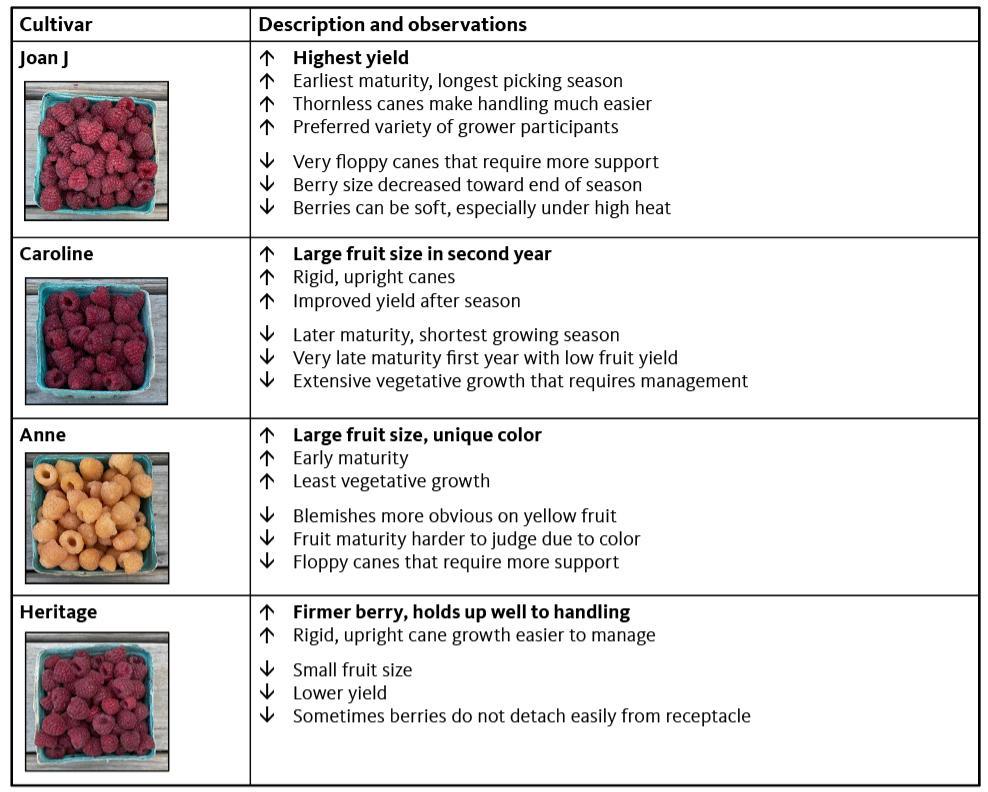
The second section of this publication presents the research results of four primocane-fruiting cultivars grown in Central Oregon. Table 1 provides a summary of the cultivar impressions based on our research.
Site selection and preparation
Raspberry plantings can be productive for up to 15 years, so proper site selection is critical to optimize the life of your planting. To achieve high yields and top-quality fruit, plants need full sun for at least part of the day but may benefit from some afternoon shade (or shade cloth) to reduce the risk of UV damage to fruit. Choose a location that is protected from strong winds to reduce the risk of winter injury from desiccation and berry drop during fruiting. Also, consider whether your site is sloped and north- or south-facing. North-facing slopes are generally the coldest and south-facing the warmest. If working on a slope, make use of row orientation to maximize sun exposure. Rows that are parallel to the slope allow cool air to pass the crop and pool in lower elevations.
Plants need well-drained soil at least 12 inches to 18 inches deep with moderate organic matter content (3–6% soil organic matter). This will optimize water- and nutrient-holding capacity for plant growth. Raspberry plants do not like “wet feet” and will deteriorate in soils that are waterlogged for several days. Take an advanced soil test, ideally one year before planting, to determine fertilizer and soil amendment needs. The native pH for many soils east of the Oregon Cascades is neutral to alkaline. The optimum soil pH for raspberries is 5.6–6.5. Soil should be amended with sulfur at least one year in advance if soil pH needs to be lowered. Watch for iron and zinc deficiencies in raspberries when soil pH is greater than 7. Primocane-fruiting raspberries require approximately 25–55 pounds of nitrogen per acre in the establishment year. Soil fertility and organic matter content will dictate how much nitrogen you need to apply. Apply organic preplant fertilizer well before planting so it will mineralize and be available for plant uptake. If using granular fertilizer, apply half of the required N before primocane emergence, and apply half four to six weeks post-emergence. Table 2 provides the recommended soil nutrient ranges for raspberries. See PNW publication Commercial Red Raspberry Production in the Pacific Northwest for specific recommendations.
Plantings are typically in the ground for many years, so start with a disease- and weed-free area. Many raspberry cultivars are susceptible to soilborne diseases, such as Phytophthora root rot (aggravated in heavy, wet soils) and Verticillium wilt. Verticillium wilt can persist in the soil for years and also infests tomatoes, potatoes, eggplant, strawberries and other plants. Avoid planting raspberries where these plants have been grown within the last five years. Use certified disease-free planting stock, and test soils for pathogens prior to planting. Viruses are a concern in raspberry plantings because they cannot be eliminated once a plant is infected. The most common virus in Oregon is raspberry bushy dwarf virus (RBDV), which causes fruit to become “crumbly.” Look for cultivars with RBDV resistance.
Spreading perennials such as quackgrass and bindweed are troublesome weeds in raspberry plantings. Make sure you have a plan for in-season weed control, such as the use of mulch or landscape fabric, cultivation, herbicides or removing weeds by hand. The mulch used cannot impede primocane emergence within the row, since you want emerging primocanes to form a hedgerow. A cover crop planted the previous year will help with soil fertility and weed suppression.
|
Soil nutrient |
Deficiency at less than (ppm) |
|---|---|
|
Phosphorus (P) Olsen test |
10–20 |
|
Potassium (K) |
150–350 |
|
Calcium (Ca) |
1,000 |
|
Magnesium (Mg) |
120 |
|
Boron (B) |
0.5–1.0 |


Planting and spring care
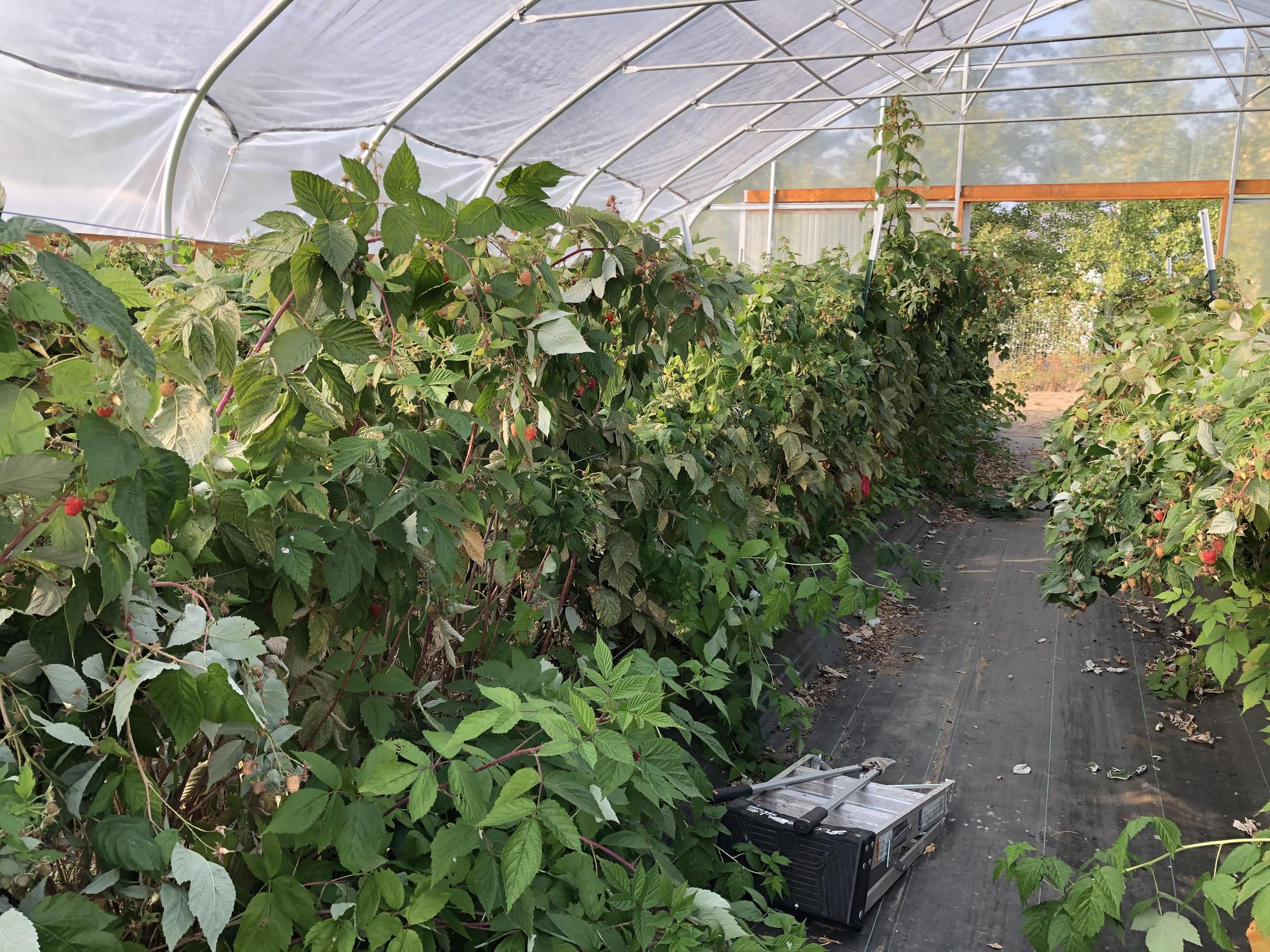
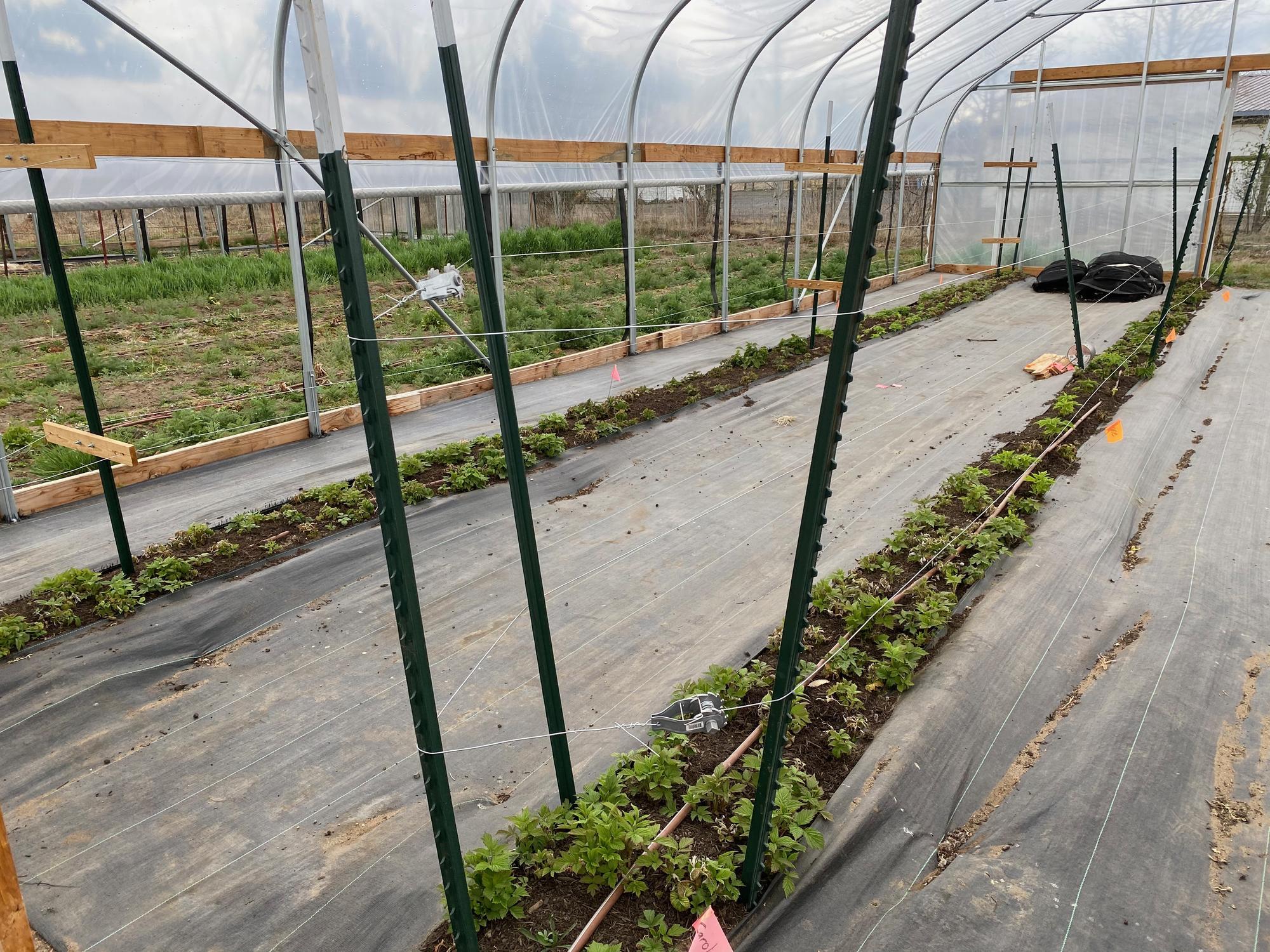
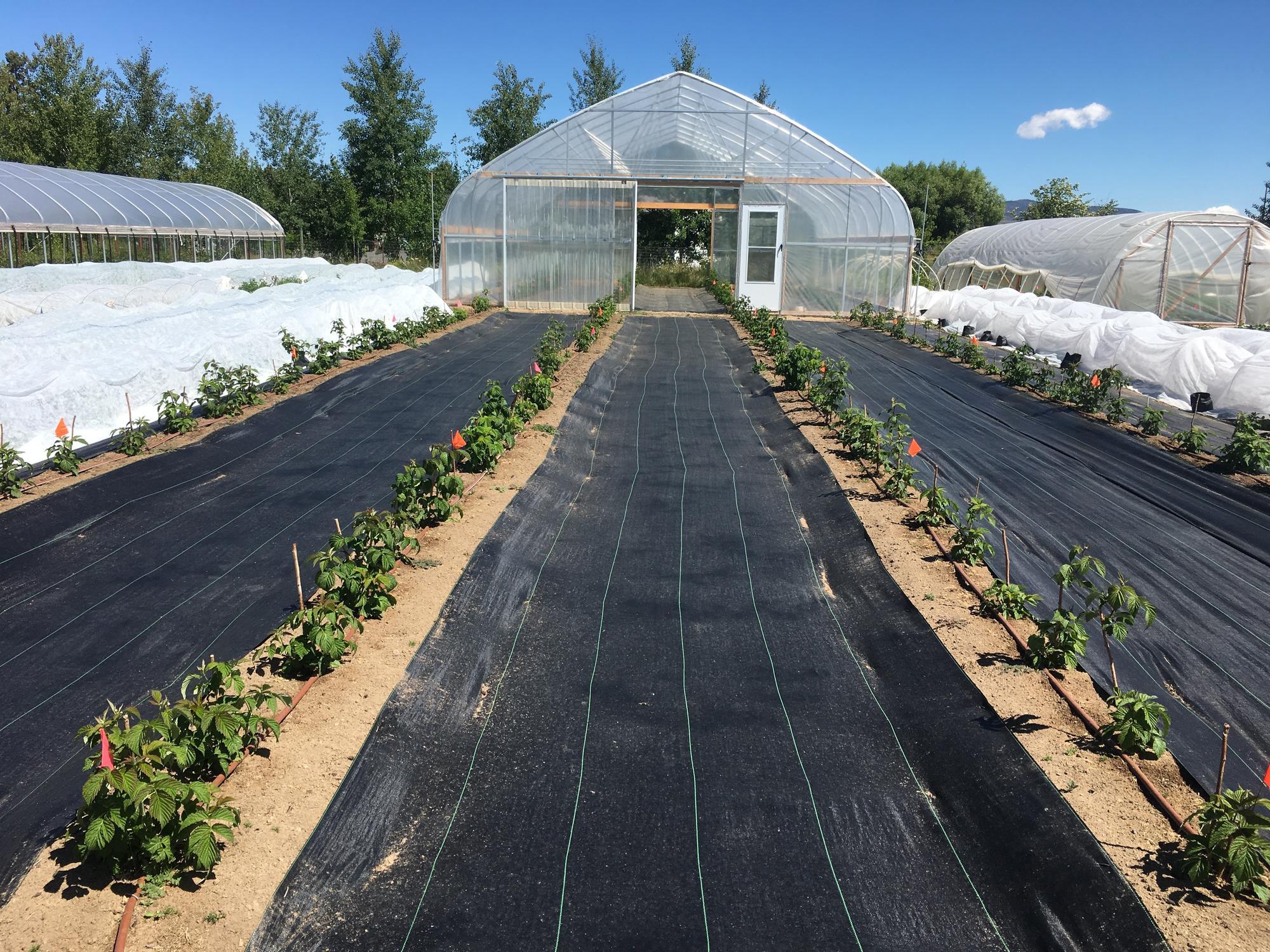
The spacing between raspberry rows depends on your equipment. Rows are typically set 8–10 feet apart. Primocane-fruiting raspberries are initially spaced 1.5–2 feet apart within the row, and then a hedgerow forms as new primocanes fill in quickly (Figure 2A and 2B). Plant dormant bare-root raspberry canes as early as the ground can be prepared in the spring and irrigation water is available. Soak the roots of the canes in water for several hours before planting or keep them in a bucket of water while you plant. To plant, spread the roots out flat in a shallow hole or furrow, then cover with soil until the roots and crown are 1–2 inches beneath the soil surface.
Trellising
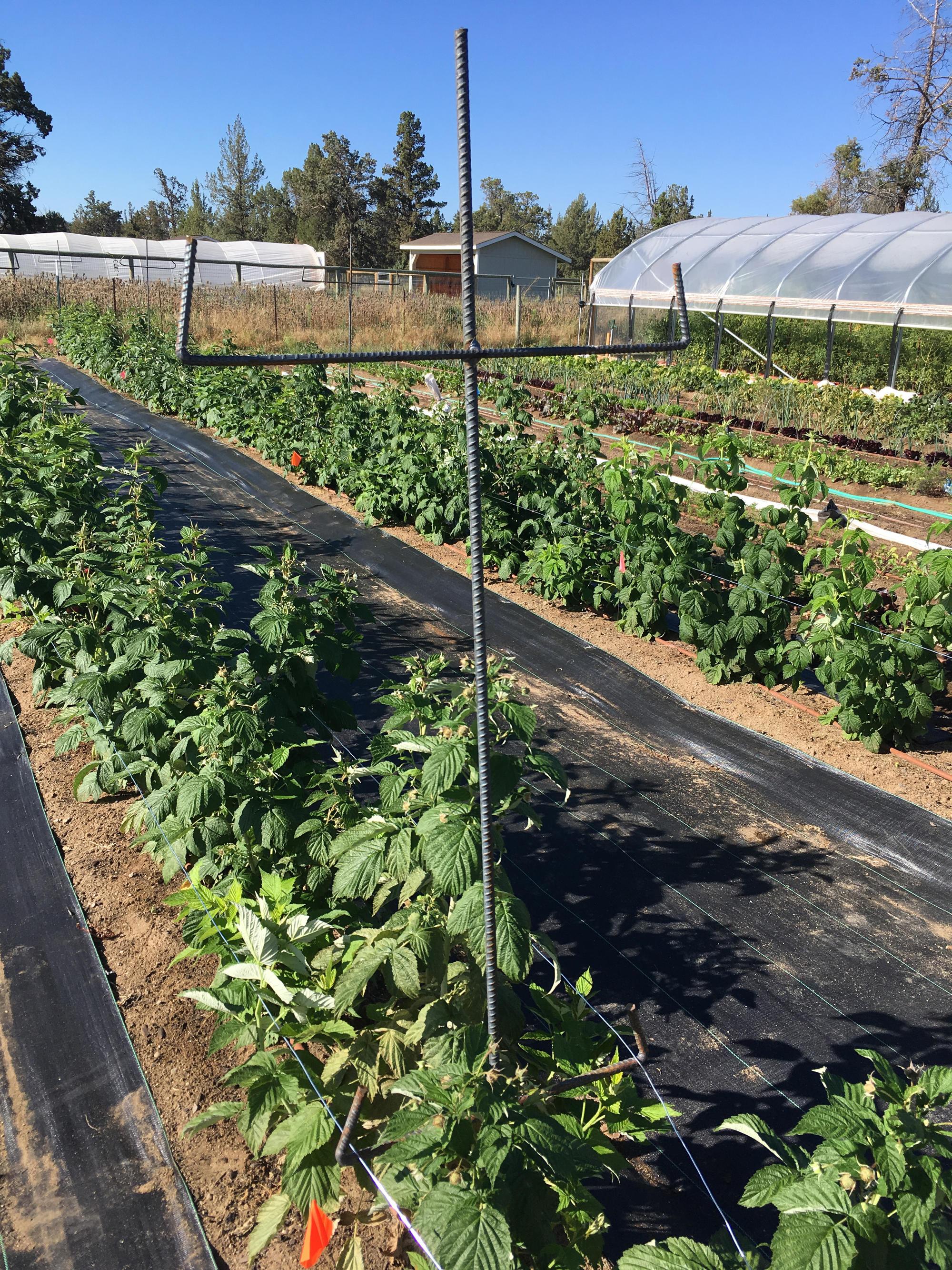
Trellising is necessary to protect the canes, keep the fruit off the ground, promote airflow and facilitate harvest. There are many forms of trellising — pick one appropriate for your farming situation. A simple T-trellis that consists of a vertical support post with a crossbar every 20–30 feet and wire or baling twine threaded down the row will work well for primocane-fruiting cultivars that are single-cropped (Figure 3A). Heavy baling twine is less expensive than trellis wire and it is easier to move out of the way when it comes time to prune the canes. Primocane height may reach more than 6 feet in the high tunnel (Figure 2), so plan the height of your posts accordingly. A T-trellis made of rebar can be easily removed in the winter to facilitate cane pruning by mowing.
Double-cropped primocane cultivars require greater support because there is more vegetation in the summer. A more robust T-trellis or a V-trellis may be used (Figures 3A, 3B, and 3C). For more information on trellising, see Commercial Red Raspberry Production in the Pacific Northwest (https://catalog.extension.oregonstate.edu/pnw598).
Temperature management
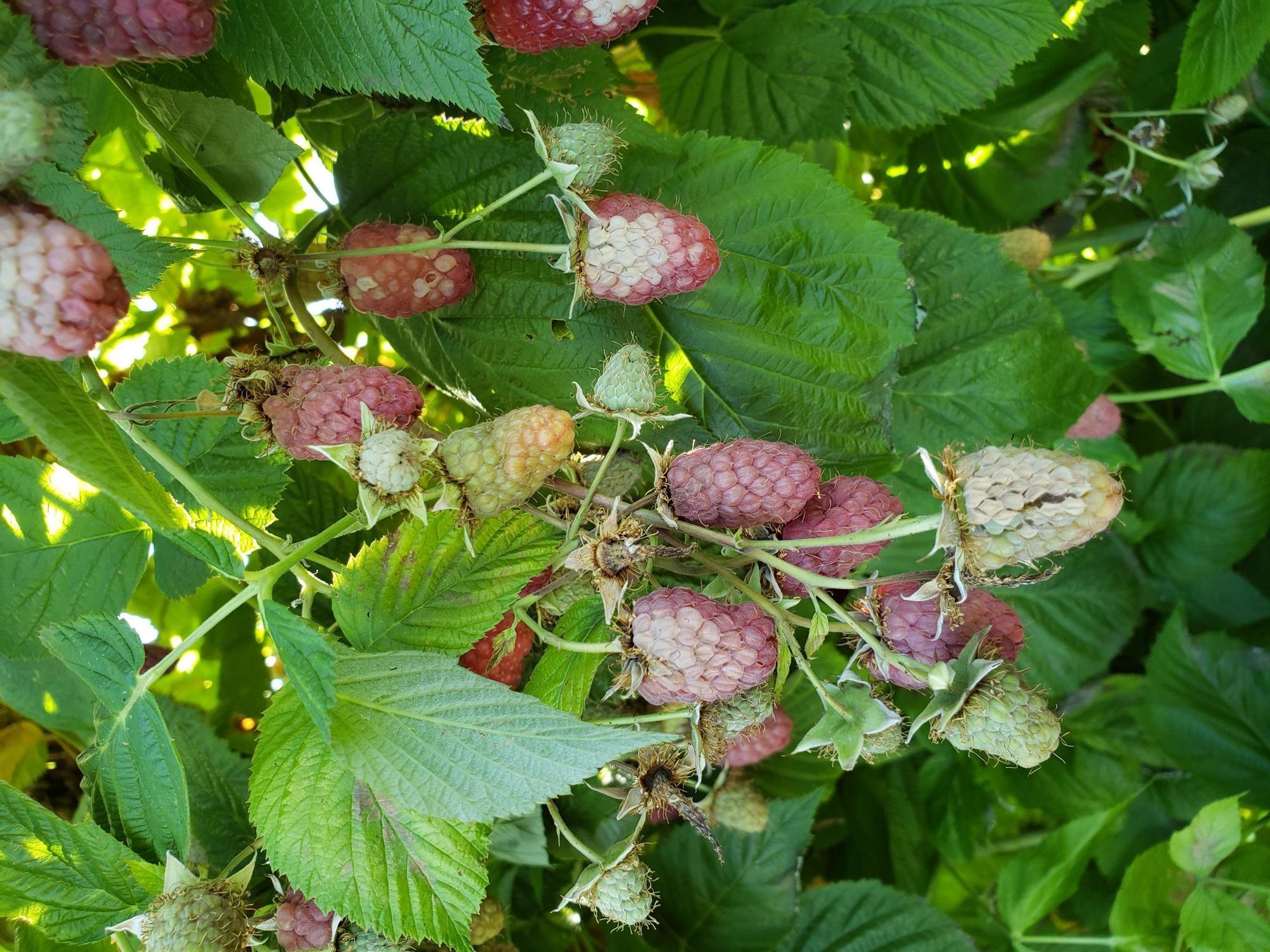
Raspberry canes begin growing above 40°F. Cold injury to actively growing tissue depends on the stage of crop development and the environment. Vigorously growing canes can die back due to spring frosts. Frost damage to canes is more common when a cold snap is preceded by several warm days. Open raspberry blossoms die below 32°F. Fruit can be damaged by high heat and intense ultraviolet light that causes sunburn (bleached berries; Figure 4) or dry drupelets. Berries can also freeze on the cane in the fall. Growers must first use temperature management to protect emerging canes in the spring and ripe fruit during harvest, and then provide optimal growing conditions for longer periods.
Frost protection — High tunnels (passively heated greenhouse-type structures), low tunnels and floating row cover (or crop blankets) can protect plants from frost in Central Oregon. These approaches provide about 3–4°F of protection. These approaches may need to be combined to protect buds, blossoms and fruit (for example, low tunnels for emerging primocanes inside high tunnels). Row covers can be used to warm the soil and advance primocane emergence but are not as effective once canes have emerged.
High tunnel management — In addition to frost protection, high tunnels allow you to start earlier in the spring, accelerate spring development and continue growing later in the fall. Raspberry plants grow optimally at 70–75°F. Plants grow slowly and do not flower above 90°F. Timely closing of high tunnels, ventilation and use of shade cloth (30%) will maintain optimal temperatures (Figure 5), as high tunnel temperatures swing drastically. Monitoring temperature is key in Central Oregon, where midsummer outdoor temperatures are 90–100°F. Even in cooler months, closed high tunnel temperatures can exceed 100°F. See Temperature Management in High Tunnels (https://digitalcommons.usu.edu/cgi/viewcontent.cgi?article=1736&context…) for more information.

Pollinators in high tunnels — Raspberries need pollinators to develop fruit, so when flowers emerge and temperatures support pollinator activity, open high tunnels to allow pollinator access. Bumblebees and flies pollinate when it’s sunny and over 45°F. Honey bees prefer temperatures above 55°F, but honey bees are poor pollinators inside tunnels. Plan to move and replace covers as needed. When it’s not feasible to open or close a high tunnel, stock it with commercially available bumblebee colonies (such as Bombus vosnesenskii). Open-field production of raspberries can be easily pollinated with honeybees. Plan to stock two honey bee hives per acre and adjust accordingly for field size.
Yearly care
Irrigation and plant nutrition
Established raspberries need 1–2 inches of water per week during the growing season. This may require irrigation three or more times per week. Consistent irrigation that meets evapotranspirative demand by the crop will minimize water stress during important growth and fruiting periods. Excess irrigation can promote unwanted soilborne diseases and leach nutrients away from the root zone. Raised beds can promote drainage if excess soil moisture is a concern. Drip irrigation using drip tubing placed above the soil surface or suspended on a lower trellis wire is ideal. Burying drip tubing can lead to root plugging and clogged emitters. Generally, a single line of drip tube per row with 0.5-gallon emitters spaced every 12–18 inches is sufficient for raspberry. You can also use the drip system to apply fertilizer, a process called fertigation. If you use overhead irrigation, water in the morning so the foliage dries and is less susceptible to foliar disease. High-desert raspberries typically have fewer diseases.
When established, primocane-fruiting raspberries need 40–60 pounds of nitrogen per acre (0.9–1.4 pounds nitrogen per 1,000 square feet) with an additional 20 pounds of nitrogen per acre (0.5 pounds of nitrogen per 1,000 square feet) applied six to eight weeks later. For more information, see Commercial Red Raspberry Production in the Pacific Northwest (https://catalog.extension.oregonstate.edu/pnw598).
Harvest and storage
Keep berries cool to extend their shelf life. Harvesting the fruit when the air temperature is cool, keeping it out of direct sunlight and quickly moving the fruit to coolers maintains postharvest quality. Pick the berries into shallow containers so the fruit does not crush.
The frequency of harvest will vary with cultivar and weather conditions but is typically every two to three days to maintain high-quality fruit. Harvest before rain or frost. Schedule your harvest according to when you sell the fruit. Raspberry shelf life is several days under ideal conditions, but most growers sell them within 24–48 hours of picking.
Pruning and winter care
Primocane-fruiting raspberries are pruned differently, depending on if they are single-cropped (only produce fruit on primocane) or double-cropped (produce early crop on the overwintered floricane and later crop on primocane; see Figure 6). For a single crop, cut all primocanes at ground level once they have gone dormant in the winter. With this method, the raspberry canes do not need to survive the winter (but the raspberry crowns do!). New primocanes will emerge in spring to yield a single crop in late summer/early fall.
For double-cropping, remove the spent floricanes as soon as they start to die in late summer/early fall, but do not prune the primocanes until the following March in Central Oregon (Figure 7). In March, keep four to six of the healthiest overwintering primocanes per row foot and cut all other canes to ground level. Prune the four to six over-wintered primocanes per foot below where they stopped flowering last fall. These canes will produce floricane fruit early in the summer, and new primocanes that emerge in spring (Figure 7) will produce fruit in late summer.
Whether pruning for a single or double crop, winter pruning is the time to narrow crop rows to 18 inches by removing primocanes from the inter-row area. To reduce the risk of disease, remove all pruned-out plant material. For more information on pruning raspberries, see Commercial Red Raspberry Production in the Pacific Northwest.
Water raspberry canes thoroughly before the soil freezes. Dry conditions in the high desert and under high tunnels can lead to winter desiccation. Snow cover protects crowns from mid-winter cold snaps, and clean straw mulch protects plants in snowless areas with sub-zero temperatures. In the spring, that straw mulch will cool the soil and delay primocane emergence. If you do not want to delay emergence, remove your straw mulch earlier.
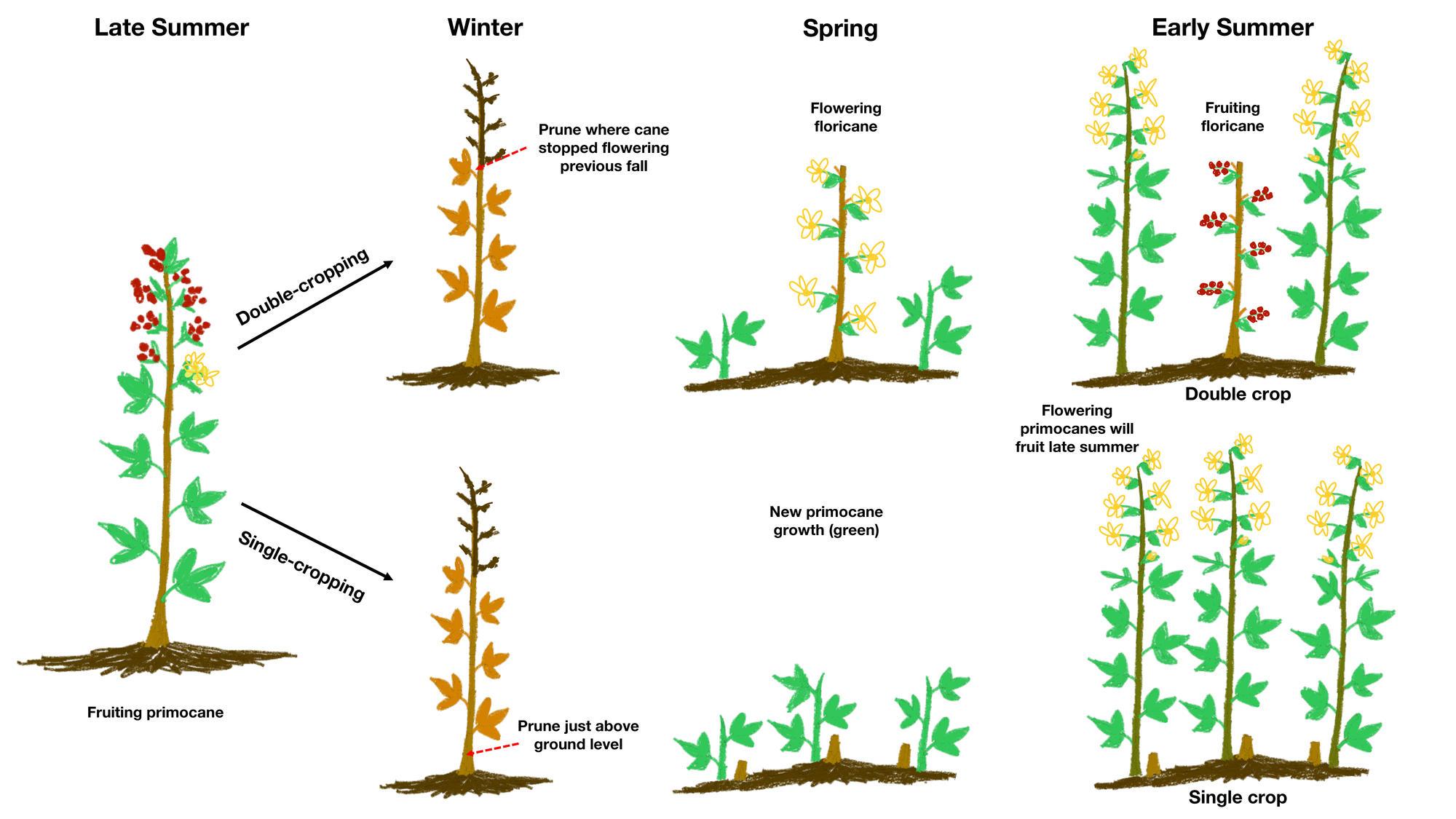

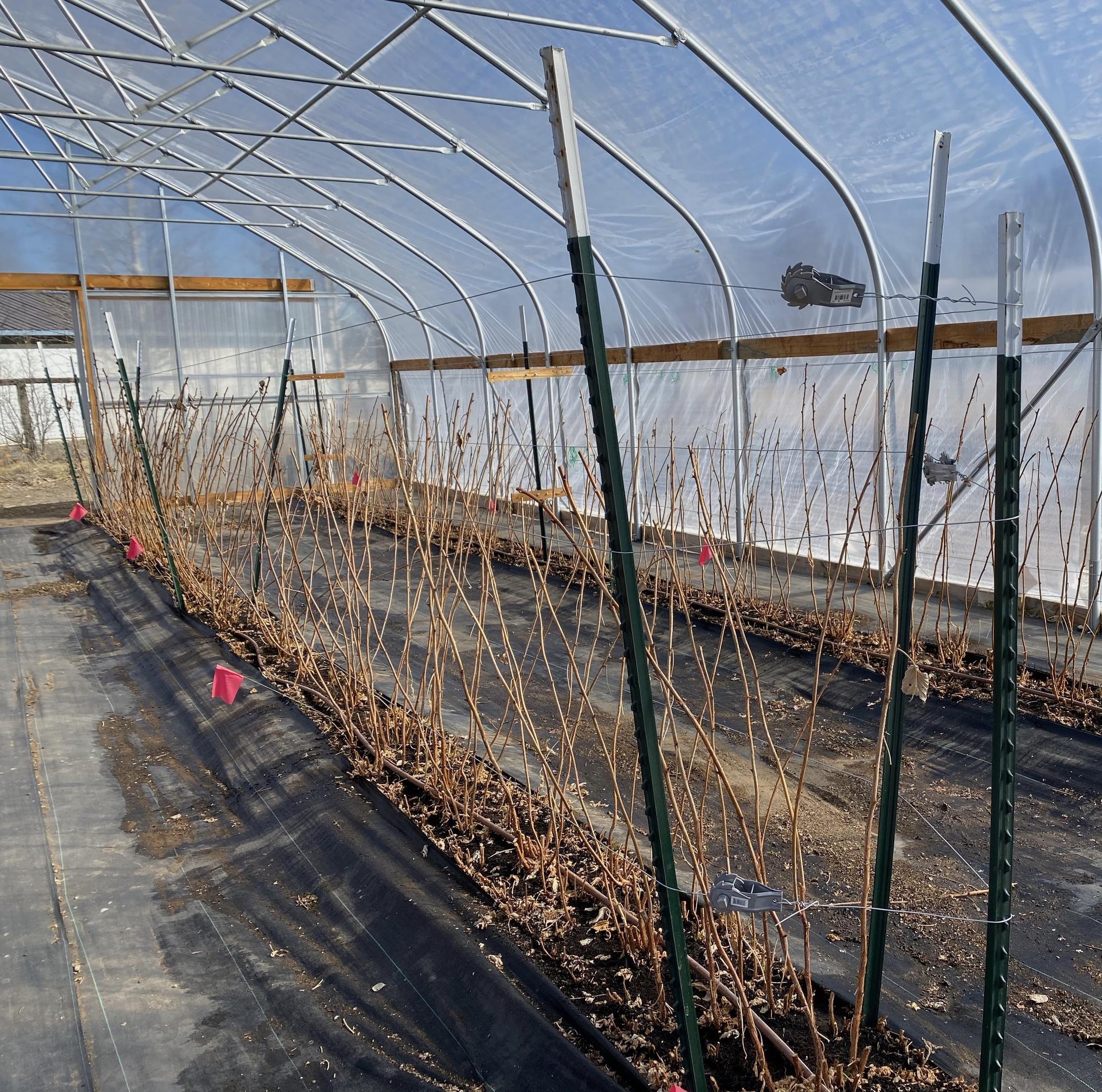

Figure 7. Overwintering primocanes before (Figure 7A) and after (Figure 7B) being pruned in March for double-cropping. Four to six primocanes per row foot were cut just below where they stopped flowering the previous fall, and all other primocanes were cut to the ground. Figure 7C was taken in May and shows budding floricanes that will produce fruit in summer and new primocane growth that will produce berries in early fall.
Pest management challenges
In addition to the need for careful temperature management and ensuring adequate harvest labor, raspberries must be monitored for pests. Heavy spider mite infestations are common in high tunnels, which can lead to defoliation of the plants and weak growth. Participants in our research trial (Section 2) used predator insect releases, neem and Cinnerate (Sym-Agro) for spider mite control. Bird damage can also lead to many in-season fruit culls, both in the field and in high tunnels. Netting can be used as a deterrent but can make harvest more difficult. In the field, deer can cause a lot of damage to new primocanes and even destroy a crop. Crumbly fruit on individual plants is also a common occurrence (as was experienced in our research), which is attributed to incomplete pollination that results in a reduced number of drupelets. Crumbly fruit can also be caused by viruses.
For comprehensive pest management information, refer to the Pacific Northwest Pest Management Handbooks and Spider Mites in Raspberry and Raspberry Management for Utah.
Economic considerations
We found through research (see Section 2 below) that primocanes and overwintering floricanes will not consistently survive outside in Central Oregon. Therefore, the economic considerations presented below are for high tunnel production only. It is important to keep in mind that both raspberry plantings and high tunnels are long-term investments. High tunnel budgets vary considerably based on the type of structure and difficulty of assembly. Growers need to consider their own costs, anticipated yields and prices to estimate whether high tunnel raspberry production is a viable option for their farm.
We can estimate the initial annual gross income for single-crop primocane raspberries based on the second-year data from our trial (see Results section below). We would expect yields and income to be higher once plants are mature after their third or fourth season. Averaged across all cultivars, the second-year marketable yield in our trial was 1.3 pounds per row foot. The marketable yield for ‘Joan J’ was 2.2 pounds per row foot. Based on these yields and our planting density (2-foot spacing within row, beds 8 feet on center), a couple of scenarios help illustrate economic considerations:
- A 100-foot bed (50 plants) of raspberries would produce 130 pounds (27 flats) of mixed cultivar berries and 220 pounds (46 flats) of ‘Joan J’ berries per season. These flat numbers are based on our average half-pint weight of 0.4 pounds per half-pint and 12 half-pints per flat. At $4/half pint (average 2020 farmers market sales price), that equates to roughly $1,300 per 100-foot bed for mixed berries, and $2,200 for ‘Joan J’.
- A 30-foot-96-foot high tunnel with four beds of raspberries (180 plants) would produce roughly 465 pounds (97 flats) of mixed berries, and 790 pounds (164 flats) of ‘Joan J’ berries per season. At $4 per half pint, that equates to roughly $4,650 per tunnel for mixed berries and $7,900 for ‘Joan J’.
These numbers are calculated based on live plants and total marketable yield from research experience. Plant loss and a shortened picking season would decrease yields. These calculations only reflect estimated gross income differences. Cornell University provides an in-depth example budget for high-tunnel raspberry production that includes a thorough list of the costs to consider. In the Cornell example, it would take seven years to break even on fall-fruiting primocane raspberry production in a top-of-the-line, 30-foot-by-96-foot high tunnel.
|
Cultivar |
Berry size |
Season |
Firmness |
USDA zone |
Notable trait |
|---|---|---|---|---|---|
|
‘Anne’ |
Large | Late | Firm | 4–7 | Yellow color fruit |
|
‘Caroline’* |
Medium | Mid | Moderate | 4–8 | Very vigorous |
|
‘Heritage’ |
Medium | Late | Firm | 4–7 | Heirloom |
|
‘Joan J’* |
Large | Early | Firm | 4–7 | Thornless canes |
*Cultivars under patent agreements.

2. Research in Central Oregon
Introduction
A research project evaluated the viability of primocane-fruiting raspberry production for Central Oregon to determine if high tunnels increased profitability and fruit quality. An OSU researcher and two farmers evaluated four primocane-fruiting raspberry cultivars (Table 3) in high tunnel and open-field plantings at three Deschutes County locations. Participants established the plantings in spring 2019 and evaluated them for two growing seasons (2019–2020). The WSARE Final Report contains full details.
Main research site
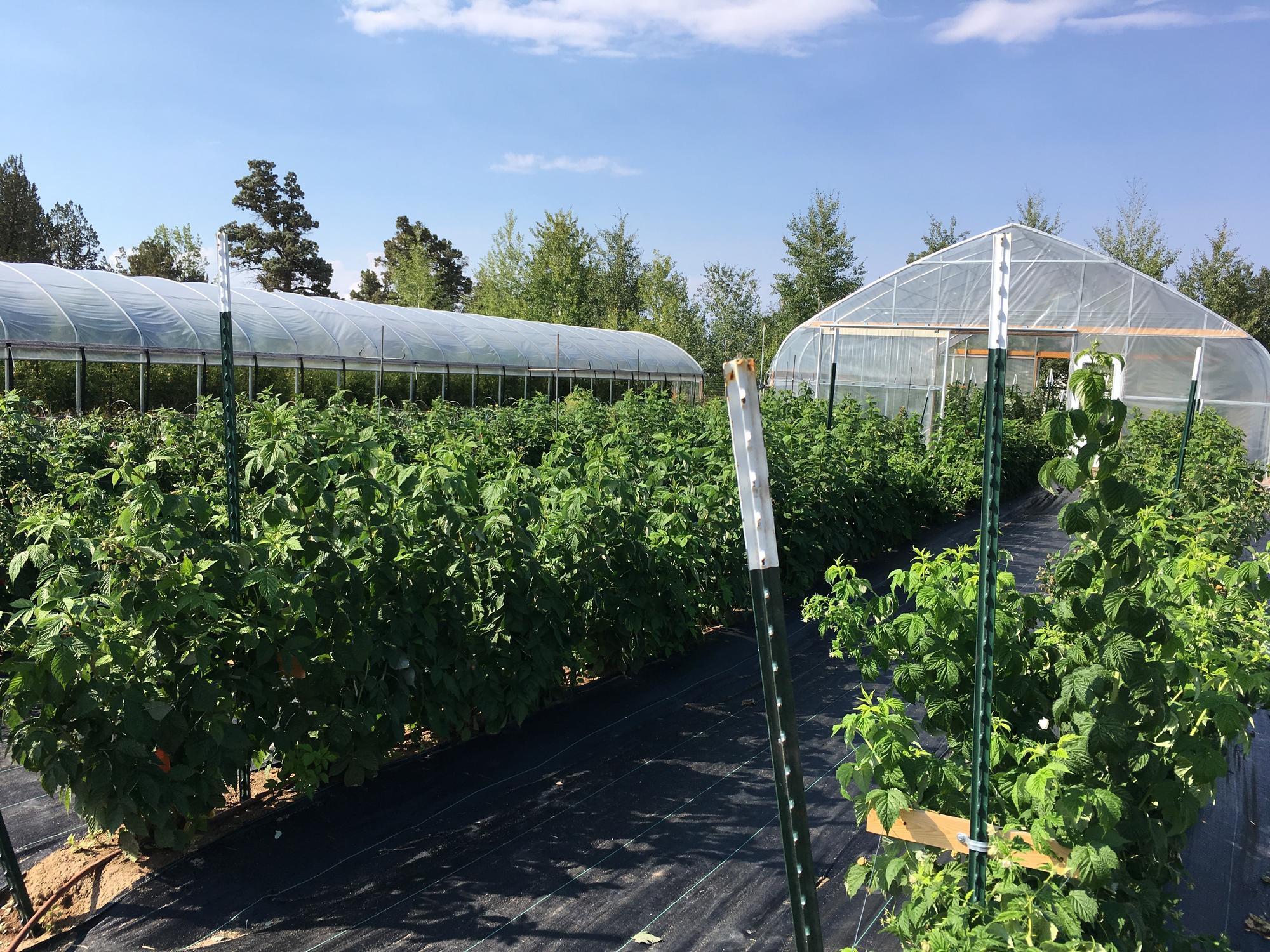
The main research site was on a small commercial farm near Alfalfa, Oregon, at an elevation of 3,400 feet above sea level. The trial replicated plots of each cultivar in a high tunnel and an open field (Figures 8A and 8B). The soil was a sandy loam with 2% organic matter and a soil pH of 6.6. We planted and managed the raspberries according to the recommendations presented in this publication. We applied preplant organic fertilizer and soil amendments according to the soil test results. The May 5, 2019, planting was later than optimal for primocane-fruiting cultivars but was dictated by the nursery’s shipping schedule. We irrigated every three days in the growing season using one line of irrigation drip tubes per row.
The high tunnel sides and end walls were opened and closed throughout the season for temperature management. Shade cloth (30%) was installed on the high tunnel once temperatures were consistently above 85°F (Figure 5). A simple trellis system made of metal T-posts, wooden cross arms and wire (Figure 3A) was installed to support the raspberries. We left the high tunnel doors open during December for the raspberries to enter dormancy. We pruned the primocanes to ground level in February 2020 during dormancy.
|
Month |
Average temp. |
Min temp. |
Max temp. |
|||
|---|---|---|---|---|---|---|
| Field | Tunnel | Field | Tunnel | Field | Tunnel | |
|
2019 |
||||||
|
June |
59 | 65 | 27 | 30 | 91 | 119 |
|
July |
64 | 68 | 32 | 36 | 95 | 101 |
|
Aug. |
66 | 69 | 34 | 37 | 98 | 102 |
|
Sept. |
54 | 59 | 27 | 30 | 89 | 108 |
|
Oct. |
40 | 47 | 3 | 4 | 77 | 101 |
|
2020 |
||||||
|
March |
35 | 45 | 6 | 9 | 71 | 109 |
|
April |
45 | 51 | 12 | 14 | 79 | 103 |
|
May |
53 | 57 | 19 | 22 | 93 | 104 |
|
June |
59 | 61 | 26 | 27 | 96 | 99 |
|
July |
66 | 68 | 30 | 33 | 100 | 104 |
|
Aug. |
65 | 67 | 31 | 32 | 100 | 103 |
|
Sept. |
58 | 59 | 26 | 28 | 100 | 98 |
|
Oct. |
46 | 48 | 3 | 8 | 90 | 90 |
Ripe berries were hand-harvested twice a week. The 2019 season consisted of 17 picks from Aug. 2 to Sept. 28 (ended with an early freeze). The 2020 season consisted of 19 picks between Aug. 8 and Oct. 21 (see “Production season” below). At each pick, berries were separated into “marketable” and “unmarketable” fruit, counted and weighed to determine yield and average fruit size. Fruit was rated as unmarketable (or “cull”) if there was insect or disease damage, or if the fruits were sunburned, misshapen or too small or soft. Total marketable yield was the accumulated yield over the growing season and reported as pounds per row foot.

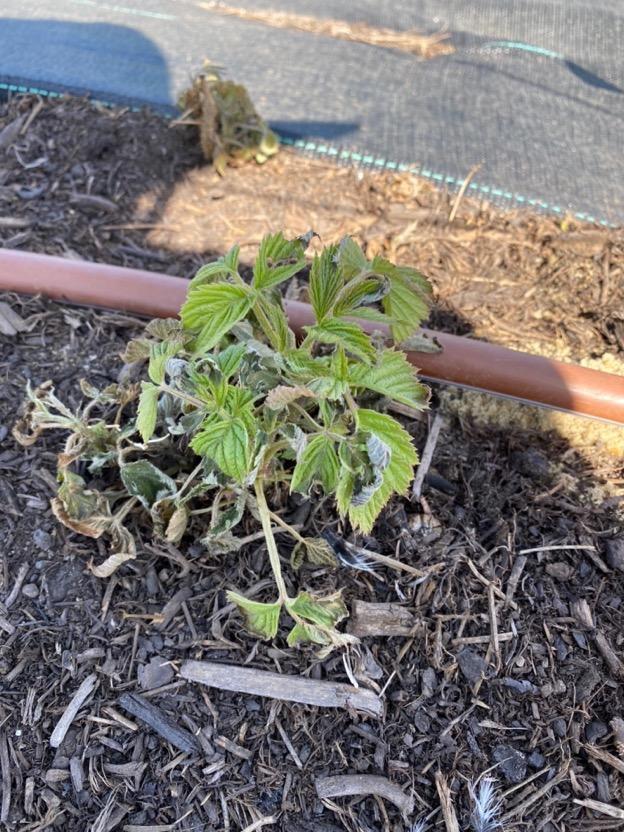
Figure 9. Frost damage to new primocane growth following frost events. Left image: Photo taken in high tunnel on April 24, 2020, after temperatures fell below 23°F inside the tunnel. Right image: Photo taken in field on May 7, 2020, after temperatures fell below 19°F.
Results
Temperature management — Tunnels kept minimum daily temperatures 2–3°F warmer than the open field (Table 4). The difference in minimum temperatures recorded early and late in the season (March and October) shows that the high tunnel was working appropriately. The high tunnel provided critical protection for spring primocane growth but did not extend the season later in the fall. Freezing temperatures destroyed the remaining fruit in the field and high tunnel (see “Production season” below). Temperature management was not optimal in this study. Temperature management requires careful attention to the conditions and period adjustments for tunnel ventilation, which was difficult to do in a research setting. Earlier installation of shade cloth would also have been helpful.
Plant survival — The coldest temperatures were recorded in November 2019 (-10°F in the field and 1°F in the high tunnel), but the raspberry crowns survived the winter. Primocanes emerged in early April in the high tunnel but did not emerge until the end of April in the field. Plants in the high tunnel showed signs of frost damage after April freeze events (Figure 9), but there was no plant loss. The temperatures in the high tunnel stayed above 22°F after April.
The field temperature fell below 20°F on multiple occasions in early May when new primocane shoots were only 2 inches tall (Figure 9), and the field trial experienced significant plant loss. Nearly 80% of the ‘Heritage’ plants died, and approximately 30% of the ‘Anne’, ‘Caroline’ and ‘Joan J’ plots died. No new primocanes emerged later in the season from the field plants that suffered dieback in May, and the growth of the surviving plants was stunted (Figure 10B). The result was nearly nonexistent field production for the 2020 season. The higher spring temperatures inside the tunnel most likely led to greater plant survival compared to the open field. This may be because the primocanes in the high tunnel emerged earlier and were more acclimated to the cold temperatures in April, or because the minimum temperatures inside the tunnel were at least 3°F higher during that period.

Yields — ‘Joan J’ was the highest-yielding cultivar across both seasons. ‘Joan J’ high tunnel yields exceeded the other cultivars by more than 250% in 2019, and more than 70% in 2020 (Figure 11). ‘Caroline’ remained mostly vegetative in the first year and was the lowest-yielding cultivar in 2019. ‘Heritage’ had the lowest yield in 2020. Tunnel-grown plants had higher total marketable yields than field-grown plants across all cultivars and for both seasons (Figure 11).
Yields in the establishment year are generally considered a bonus, but growers do expect their plants to yield in the second season. Field production was incredibly low in the second season due to plant loss and stunting, ranging from 0–0.2 pounds per row foot. Second-year marketable yields in the high tunnel ranged from 0.8 pounds per row foot (‘Heritage’) to 2.2 pounds per row foot (‘Joan J’). Anything over 1.5 pounds per row foot is considered commercially viable, and 2 pounds per row foot is considered a very good yield. Plantings in the high desert typically do not reach full production until the third or fourth year, so our 2020 yields are notable. For reference, 1 pound per row foot equals approximately 360 pounds (or 75 flats) of fruit from a 30-foot-by-96-foot tunnel at our planting density.
Production season — The fruit production season in the first year (2019) was short, and similar between the tunnel and the field. This is not surprising. Raspberries were not planted until May, berry production started slowly in mid-August, and was ramping up in late September when a hard freeze on Oct. 1 (17°F field, 21°F tunnel) froze the berries and flowers on the canes.
Due to field-grown plant loss in 2020, we only compared tunnel-grown cultivars for the 2020 season. Surprisingly, harvest in the high tunnel did not start earlier in the second season (2020) than the establishment year (2019). ‘Joan J’ started fruiting in mid-August, while the other three cultivars started producing in early September (Figure 12). Because the early season harvest was quite small (less than would be considered a commercially viable harvest), an “effective harvest season” was calculated to illustrate the main harvest season differences between cultivars. The effective harvest season started once 20% of the total yield was reached (“harvest start”) and ended on Oct. 22 when the temperature reached 17°F in the tunnel. The “harvest start” dates of the cultivars spanned four weeks: Sept. 4 for ‘Joan J’; Sept. 19 for ‘Anne’; Sept. 23 for ‘Heritage’; and Sept. 27 for ‘Caroline’.
Fruit quality — Fruit size and unmarketable fruit are reported only for the effective harvest season (Table 4). ‘Anne’ produced the largest berries overall, and ‘Heritage’ the smallest. Larger berries are generally considered more desirable for a grower since fewer berries are needed to fill a container. In 2019, berry size tended to be larger in the high tunnel than in the field (Table 4). The fruit size was quite large in 2019 (average 3.3 grams per berry), which is likely related to crop load. Fruit size tends to be abnormally large when plants are producing fewer berries (small crop load), and then fruit size tends to decrease as crop load increases. Fruit size in the high tunnel was smaller in 2020 than in 2019, and it was also smaller than field-grown fruit size in 2020 (Table 4). These size differences are also likely explained by crop load differences.
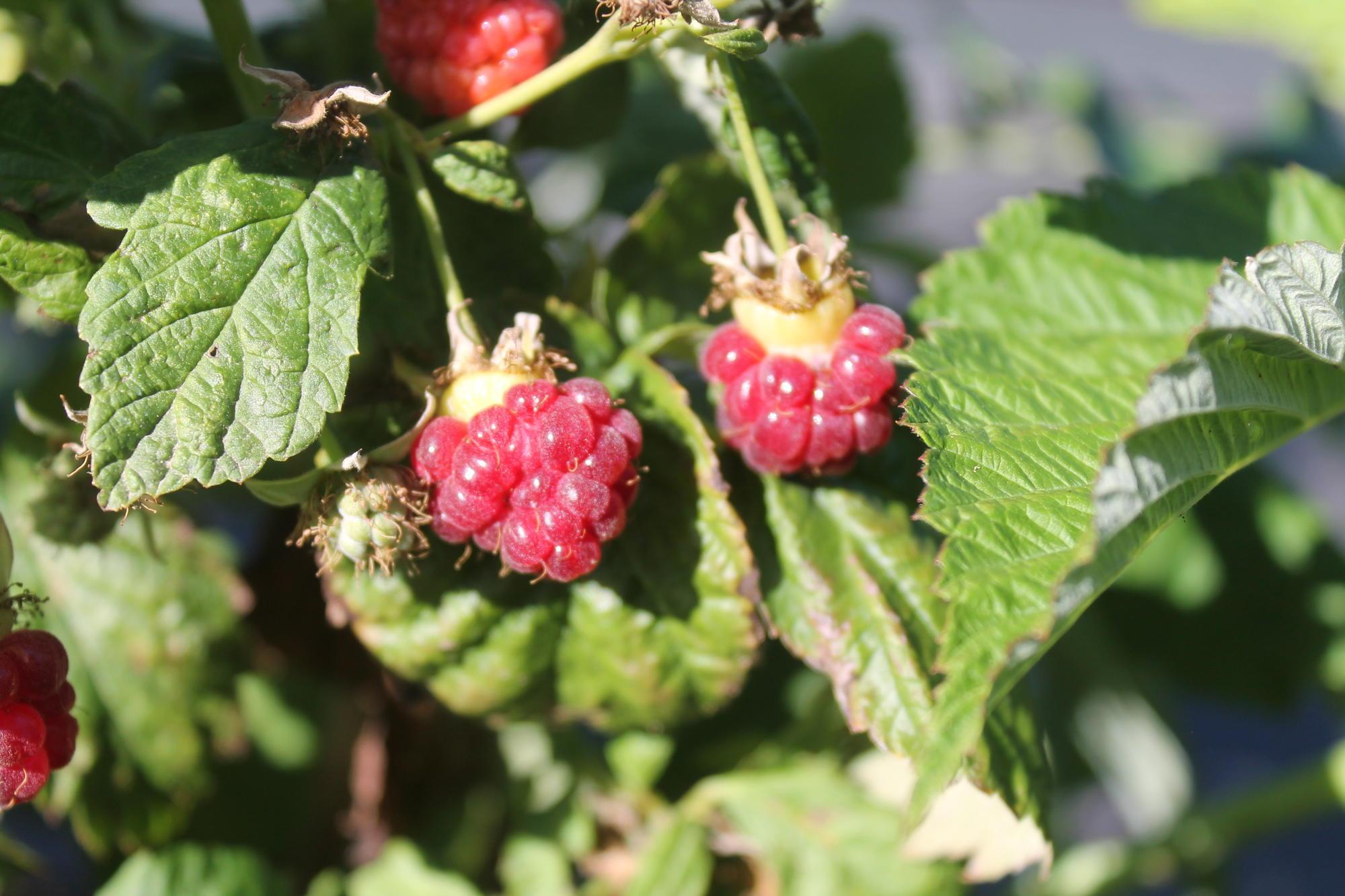
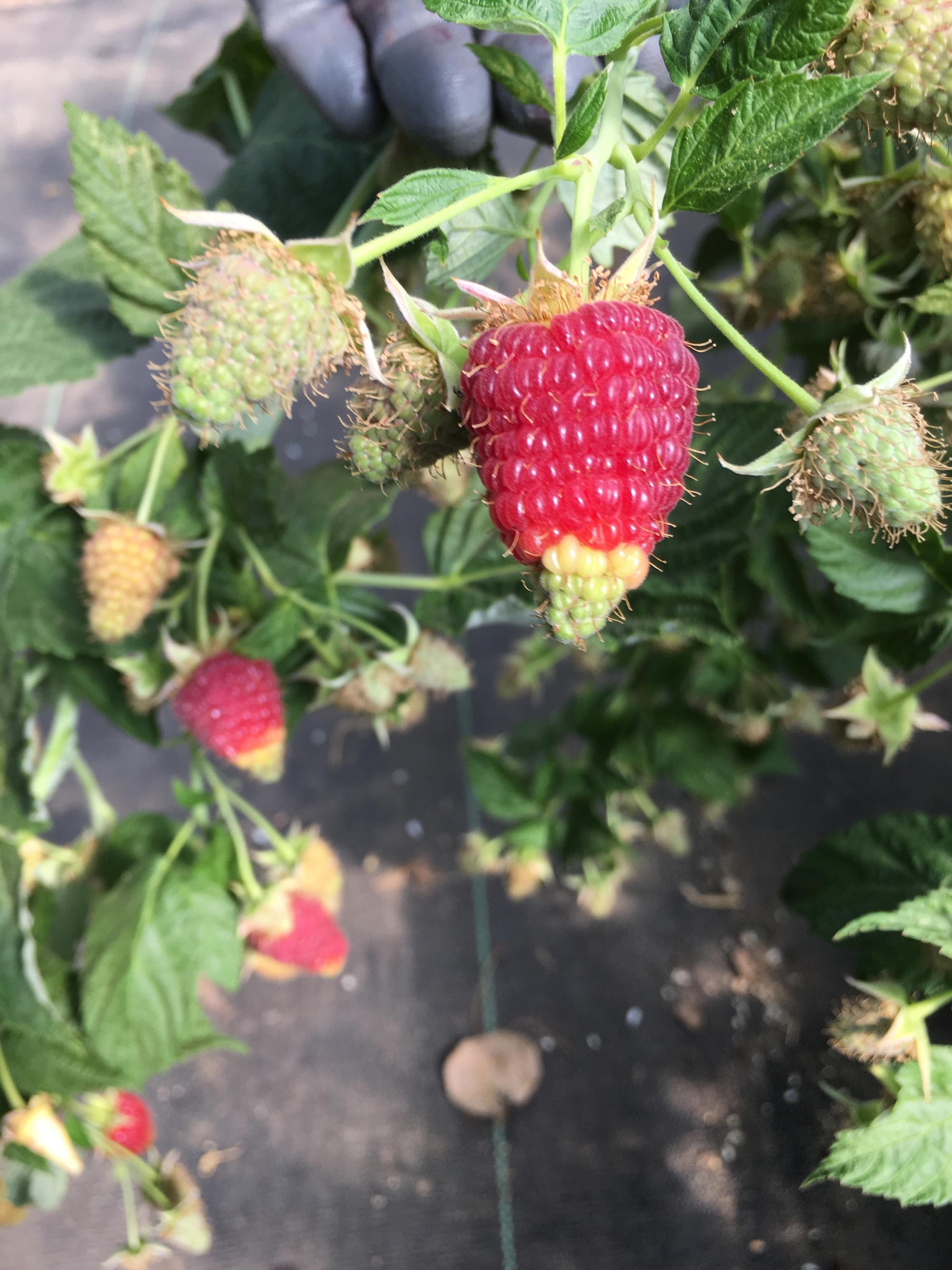
Cull rates were higher in the field than in the high tunnel (Table 5). The highest cause of cull in 2019 was “exposed seed,” which could have been caused by poor pollination or herbivory (Figure 13A). ‘Anne’s’ light-yellow berries were delicate and prone to being culled. ‘Joan J’ also had high cull rates in 2019. In the field, the ‘Joan J’ culls were attributed to crumbly fruit, which can be caused by poor pollination, mild frost or insect damage to the developing flower, raspberry bushy dwarf virus and other factors. In the high tunnel, berries sometimes did not fully ripen, leaving a green tip at the end (Figure 13C). In 2020, herbivory from insects and birds was the main cause of culling in the high tunnel, followed by poor pollination. ‘Joan J’ culls in the field were mostly attributed to crumbly fruit in 2020.


|
Year 1: 2019 |
||||
|---|---|---|---|---|
|
Cultivar |
Average fruit size (field) | Average fruit size (tunnel) | Unmarketable (field) | Unmarketable (tunnel) |
|
Anne |
4.2 gram/berry | 4.4 gram/berry | 17.30% | 11.70% |
|
Caroline |
3.2 | 4 | 13.2 | 6.6 |
|
Heritage |
2.3 | 2.5 | 8.5 | 5.2 |
|
Joan J |
3.8 | 4 | 19.8 | 9.7 |
|
Year 2: 2020 |
||||
|
Cultivar |
Average fruit size (field) | Average fruit size (tunnel) | Unmarketable (field) | Unmarketable (tunnel) |
|
Anne |
2.6 gram/berry | 2.9 gram/berry | 47.40% | 10.20% |
|
Caroline |
3 | 2.8 | 28 | 2.5 |
|
Heritage |
- | 1.9 | - | 1.6 |
|
Joan J |
3 | 2.5 | 46.2 | 4.6 |
Average fruit size and total percent cull calculated once yield reached 20% of season total.
3. Grower cooperator experience
The performance of ‘Anne’, ‘Caroline’ and ‘Joan J’ were compared in Quonset-style high tunnels and the open field at two cooperating farms near Bend, Oregon. As with the main trial, the bare-root raspberry canes were planted in early May 2019, and harvested yields were tracked over two years.
The growers preferred ‘Anne’ and ‘Joan J’ for production and flavor, and disliked ‘Caroline’ due to low production. ‘Caroline’ is marketed as an early producer, but it was a very vegetative cultivar in our trials and produced berries late in the season. In the first growing season, this was detrimental to ‘Caroline’s’ yield, but performance improved in 2020 with the longer growing season. ‘Joan J’ was the earliest to ripen and had the highest yields during both growing seasons.
Outdoor raspberry production was not very successful at either site. Deer severely damaged the new primocane growth at one site and no yields were recorded. At the second site, the grower chose to train their raspberry canes for double cropping (see “Double cropping” sidebar), and the majority of the outdoor floricanes did not survive the winter. The second-year outdoor yields were low and late in the season. However, the grower was pleased with their double-cropped raspberries in the high tunnel that started producing in July. The farm with deer pressure did yield berries in its high tunnel but was surprised by how late the raspberry season was in the second year.
Proper trellising and labor were the biggest challenges reported. The vegetative growth in the high tunnel was overwhelming (especially with double-cropping), and the growers had to adjust their trellis system midseason to accommodate the plant growth. The grower who chose to double-crop used a V-trellis to facilitate picking but still found it difficult to keep up with harvest as production increased. Picking stopped in early September to focus on other crops, even though berry production continued into October.
Growers reported enthusiastic consumer responses. The fruit sold easily at a good price even though it was later in the season than consumers expected. Raspberries from other regions arrived at farmers markets earlier in the summer.
Conclusions
It must be noted that this was a two-year research trial of a perennial crop, with the first year being the establishment year. Primocane-fruiting cultivars often do not reach full production until the third or fourth growing season. Longer-term studies would be needed before drawing definite conclusions on cultivar performance and the viability of high tunnel raspberry production in the region. However, the high yields in the second year may be evidence of the benefits of using a high tunnel where establishment year growth was greater than one would normally see.
Based on our research, high tunnels appear to be necessary for consistent raspberry production in Central Oregon because field production is too vulnerable to the elements. The high tunnels decreased plant loss and damage by protecting early primocane growth. That protection resulted in higher yields and higher quality of fruit compared to field production. However, the high tunnels did not successfully extend the harvest into the fall. Berry production did not ramp up until mid-September and freeze events that end high tunnel production are common by early October in the region. It may not be worth dedicating valuable high tunnel space for primocane production due to the short harvest window. Double-cropping primocane cultivars under high tunnel production may be a viable practice because the picking season is longer, but growers must be prepared for the added management. Work in Utah suggests that careful spring tunnel management, including the use of row covers, could advance single-cropped fall raspberries earlier in the season. However, this practice has not been tested under Central Oregon conditions.
‘Joan J’ was the best-performing cultivar in our trial due to its earliest maturity, highest yield, and thornless canes that eased handling. ‘Anne’ had large, yellow berries and produced fairly well, but the fruit was more delicate and prone to being culled. ‘Caroline’ and ‘Heritage’ had more upright growth habits that were easier to manage with a trellis, but they were both late-maturing and, therefore, not ideal options for Central Oregon. ‘Heritage’ is an heirloom variety and yielded lower than the other modern varieties due to its small fruit size and late maturity. Additional cultivar observations are provided in Table 1. Researchers in Utah have evaluated additional primocane-fruiting cultivars and found that ‘Polka’ was well-suited to high tunnel production. (See Fall-bearing cultivars: A high tunnel system for early production)
About the authors


