Download this publication as a PDF
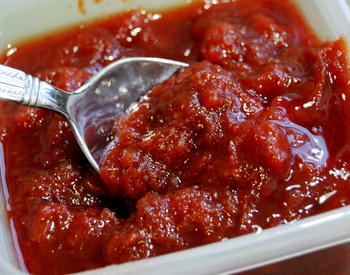
Sometimes, fruit spreads just don’t turn out right, and we need to try to figure out what happened to avoid the mistake in the future. Traditional fruit spreads require the right amount of pectin, sugar and acid to form a jell, so measuring accurately is important. Cooking the mixture too slowly can break down the pectin and weaken the jell. It is important to follow cooking instructions exactly for each kind of pectin you are using. Liquid pectin and powdered pectin each have their own method of cooking; interchanging can cause a failure. Doubling recipes and reducing sugar are also common causes for failures.
For low sugar products, do not follow recipes for high sugar products. Use a low sugar pectin product for making no and reduced sugar spreads.
Below are some common causes for failures for fruit spreads from the National Center for Home Food Preservation website.
Problem |
Cause |
Prevention |
|---|---|---|
| Formation of crystals | Excess sugar. | Use a tested recipe and measure ingredients precisely. |
| Undissolved sugar sticking to sides of saucepot. | Dissolve all sugar as jelly cooks. Wipe the side of pan free of crystals with damp cloth before filling jars. | |
| Tartrate crystals in grape juice. | Refrigerate grape juice overnight to settle crystals, then strain before use. | |
| Mixture cooked too slowly or too long. | Cook at a rapid boil and remove from heat at jellying point. Make small batches. | |
| Bubbles | Air became trapped in hot jelly. | Remove foam before filling jars. Fill quickly, holding ladle close to jar. Don’t allow gelling before jars are filled. |
| May denote spoilage. If bubbles are moving, do not use. | Follow recommended lid application and processing methods. | |
| Too soft | Overcooking fruit to extract juice. | Avoid overcooking; it lowers pectin’s jellying ability. |
| Using too much water to extract the juice. | Use only the amount of water suggested. | |
| Incorrect proportions of sugar and juice. | Follow recommended proportions. | |
| Undercooking causing insufficient sugar concentration. | Cook rapidly to the jellying point. | |
| Insufficient acid. | Add lemon juice if fruit is low in acid. | |
| Making too large a batch at one time. | Use only 4 to 6 cups of juice per batch. | |
| Moving product too soon. | Do not move jelly for at least 12 hours. | |
| Insufficient time before using. | Some jellies take up to 2 weeks to set fully. | |
| Syneresis or "weeping" | Excess acid in juice makes pectin unstable. | Maintain proper juice acidity. |
| Storage place too warm or unstable temperature. | Store in a cool, dark, dry place. Refrigerate after opening. | |
| Darker than normal color | Overcooking sugar and juice. | Avoid long boiling. Make small batches and cook rapidly. |
| Stored too long or at high temperature. | Store in a cool, dry, dark place and use within one year. | |
|
Cloudiness |
Green fruit (starch). | Use firm, ripe, or slightly underripe fruit. |
| Imperfect straining of homemade juice. | Let juice drip through jelly bag; do not squeeze. | |
| Jelly stood too long or was poured too slowly. | Pour into jars immediately at gelling point. Work quickly. | |
|
Mold or Fermentation (Denotes spoilage; do not use.) |
Yeasts and mold grow on jelly. |
Process in a boiling water canner. Test seal before storing. Pre-sterilize jars when processed for less than 10 minutes in boiling water. Use ¼ inch head space. |
|
Mold or Fermentation (Denotes spoilage; do not use.) |
Imperfect sealing. (Common also with paraffin-covered jellies.) |
Use new flat lids for each jar and make sure there are no flaws. Pretreat the lids per manufacturer’s directions. Use ring bands in good condition – no rust, no dents, no bends. Wipe sealing surface of jar clean after filling, before applying lid. |
|
Mold or Fermentation (Denotes spoilage; do not use.) |
Improper storage. |
Store processed jars in a dark, dry, cool place. Refrigerate after opening. |
|
Too stiff or tough |
Overcooking. |
Cook jelly mixture to a temperature 8°F higher than the boiling point of water or until it "sheets" from a spoon or sets up on a cold plate. |
|
Too stiff or tough |
Too much pectin in fruit. |
Use just ripe fruit. Decrease amount if using commercial pectin. |
|
Too stiff or tough |
Too little sugar which requires excessive cooking. |
When pectin is not added, try ¾ cup sugar to 1 cup juice for most fruits. |
Problem |
Cause |
Prevention |
|---|---|---|
|
Not a characteristic fruit flavor |
Overcooked or scorched. |
Should be stirred frequently when mixture begins to thicken to prevent sticking. Cook only to jellying point. |
|
|
Poor quality fruit used. |
Select only sound, good, flavored fruit of optimum maturity. |
|
Shriveled product |
Syrup is too heavy. |
Follow instructions for the type of fruit being preserved. |
|
Tough product |
Starting the cooking of fruit in syrup that is too heavy (too much sugar). |
Cook each fruit according to directions; by evaporation the syrup concentration will gradually increase. |
|
|
Not plumping fruit properly. |
Fruit should plump at least 24 hours covered in syrup before canned. |
|
|
Overcooking. |
Cook according to directions. |
|
Sticky, gummy product |
Overcooking. |
Follow recommended directions for each product. (Cook only until syrup is quite thick and fruit is fairly translucent.) |
|
Darker than normal color |
Cooking too large of quantities at one time. |
Cook no more than 2 to 4 pounds of prepared fruit at a time. |
|
Darker than normal color |
Cooked too slowly. |
A better color is usually produced if the product is cooked rapidly. |
|
Darker than normal color |
Overcooked. |
Cook only until syrup is quite thick and the fruit is fairly translucent. |
|
Loss of color |
Improper storage. |
Store processed jars in a dark, dry, cool place. |
|
Mold or fermentation. |
Imperfect sealing. |
Use new flat lids for each jar and make sure there are no flaws. Pretreat the lids according to the manufacturer’s directions. Use ring bands in good condition – no rust, no dents, no bends. Wipe sealing surface of jar clean after filling, before applying lid. |
|
Mold or fermentation. |
Yeast or mold growth. |
Process in a boiling water canner. Test seal before storing. Pre-sterilize jars when processed less than 10 minutes in boiling water. |
|
Mold or fermentation. |
Improper storage. |
Store processed jars in a dark, dry, cool place. Refrigerate after opening. |
This document was adapted from "So Easy to Preserve," 6th ed. Cooperative Extension Service, The University of Georgia, Athens.