Download this publication as a PDF
Tomatoes are a beloved crop of home gardeners, and they are the foundational ingredient of many different dishes, including salsas, sauces, and soups. Warm summers can bring a bountiful crop of ripe tomatoes of different colors, shapes, and flavors, and the home preserver must choose how to store their bounty. Here are some ideas for canning, freezing, or drying your crop if you have an abundance of tomatoes.
Canning
Tomatoes may be canned by themselves or in combination with other vegetables or meat (such as salsa, sauces and ketchup or spaghetti sauce). Because tomatoes are a borderline acidic food, with a pH often near 4.6, it is important to follow tested recipes when canning tomatoes and tomato products to keep them safe. Laboratory-tested methods destroy microorganisms that cause spoilage and illness.
When selecting tomatoes for canning, do not use overripe tomatoes or fruits from dead or frost-killed vines. These will result in a poor quality and potentially unsafe product. Any variety of tomato may be used in these canning recipes, including heirloom tomatoes or green tomatoes.
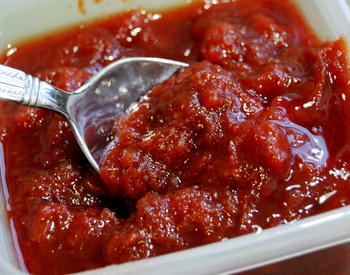
Tomato ketchup
(Yield: 6-7 pints)
- 24 lbs. ripe tomatoes
- 3 cups chopped onions
- ¾ tsp. ground red pepper (cayenne)
- 3 cups cider vinegar (5%)
- 4 tsp. whole cloves
- 1½ tsp. whole allspice
- 2 sticks cinnamon, crushed
- 3 Tbsp. celery seeds
- 1½ cups sugar
- ¼ cup salt
- Wash tomatoes. Dip in boiling water for 30 to 60 seconds or until skins split.
- Dip in cold water. Slip off skins and remove cores.
- Quarter tomatoes into 4‑gallon stock pot or a large kettle. Add onions and red pepper.
- Bring to boil and simmer 20 minutes, uncovered.
- Combine spices in a spice bag and add vinegar in a 2‑quart saucepan. Bring to boil. Turn off heat and let stand 20 minutes.
- Remove spice bag and combine vinegar and tomato mixture. Boil about 30 minutes.
- Press boiled mixture through a food mill sieve. Return to pot.
- Add sugar and salt, boil gently, and stir frequently until volume is reduced by one‑half or until mixture rounds up on spoon without separation.
- Fill pint jars, leaving ⅛‑inch head space. Adjust lids and process in a boiling water canner according to the chart.
- After processing, take canner off heat. Remove lid and wait 5 minutes before removing jars.
| Style of pack | Jar size | 0 - 1,000 ft | 1,001 - 3,000 ft | 3,001 - 6,000 ft | Above 6,000 ft |
|---|---|---|---|---|---|
| Hot | Pints | 15 min | 20 | 20 | 25 |
Source: So Easy to Preserve, 6th Edition (2014) University of Georgia
Tomato paste
(Yield: about 8 or 9 half-pint jars)
- 14 pounds Roma - or paste-type tomatoes (as purchased)
- 1 teaspoon citric acid
- 1 clove garlic (optional)
- 1 teaspoon canning or pickling salt (optional)
- 2 bay leaves (optional)
- Rinse tomatoes thoroughly under running water and remove cores; do not peel. Chop tomatoes into ½ to ¾ inch pieces.
- Place in stockpot; cover and bring tomatoes to a boil. Stir as needed to prevent burning. Reduce heat, remove lid and cook slowly (simmer) for about 1 hour until volume is reduced by half. Stir frequently to prevent sticking and burning.
- Press through a fine sieve (or food mill with fine blade). NOTE: Do not use a blender or food processor, as these will incorporate undesired air into the tomatoes.
- Return sieved tomatoes to stockpot. Stir in citric acid thoroughly. Add and stir in any or all of salt, bay leaves, and garlic clove (if desired).
- Continue cooking slowly on medium heat, uncovered, until thick enough to round up on a spoon and volume is reduced again by half (about 2 ½ hours).
- Stir frequently to prevent sticking and burning. Be careful of spattering which could burn your skin as you stir. Remove bay leaves and garlic clove if used.
- Fill hot paste in clean, hot half-pint jars, leaving ½-inch headspace. Remove air bubbles and adjust headspace if needed.
- Wipe jar rims with a clean dampened paper towel. Adjust lids and process in a boiling water canner according to the chart.
- After processing, take canner off heat. Remove lid and wait 5 minutes before removing jars.
| Style of pack | Jar size | 0 - 1,000 ft | 1,001 - 3,000 ft | 3,001 - 6,000 ft | Above 6,000 ft |
|---|---|---|---|---|---|
| Hot | Half-pints | 45 min | 50 | 55 | 60 |
Source: So Easy to Preserve, 6th Edition (2014) University of Georgia
Spicy chili sauce
(Yield: About 6 pints)
- 4 quarts peeled, cored, chopped red-ripe tomatoes (about 24 large)
- 2 cups chopped onions
- 1 ½ - 2 cups chopped sweet green peppers (about 3 medium)
- 1 ½ cups sugar
- 1 to 1 ½ cups vinegar (5% acidity)
- 1 tablespoon salt
- 1 tablespoon celery seed
- 1 teaspoon ground allspice
- 1 teaspoon ground cloves
- 1 teaspoon ground cinnamon
- 1 teaspoon ground ginger
- Combine all ingredients. Bring to a boil; simmer until thick as desired (about 2 to 2½ hours). Stir frequently to prevent sticking.
- Pour hot sauce into jars, leaving ½ inch head space.
- Wipe jar rims. Adjust lids and process in a boiling water canner according to the chart. After processing, take canner off heat. Remove lid and wait 5 minutes before removing jars.
| Style of pack | Jar size | 0 - 1,000 ft | 1,001 - 3,000 ft | 3,001 - 6,000 ft | Above 6,000 ft |
|---|---|---|---|---|---|
| Hot | Pints or Half-pints | 15 min | 20 | 20 | 25 |
Source: So Easy to Preserve, 6th Edition (2014) University of Georgia
Two-in-one barbecue sauce
(Yield: makes about 6 pints)
Create two different sauces using the same basic ingredients
- 16 cups puréed seeded peeled plum tomatoes (see tips at bottom)
- 2 ¼ cups puréed seeded green bell peppers (see tips at bottom)
- 2 cups puréed onions (see tips at bottom)
- 3 cloves garlic, finely chopped
- 2 Tbsp. mustard seeds, crushed
- 1 Tbsp. celery seeds
- 2 dried chili peppers, seeded and crushed
Stampede-style sauce
- ¾ cup mild-flavored or fancy molasses
- ¾ cup malt vinegar
- 1/3 cup Worcestershire sauce
- 2 Tbsp. chili powder
- 2 tsp. freshly ground black pepper
Sweet 'n' sour sauce
- 1 Tbsp. finely chopped gingerroot
- ¾ cup liquid honey
- ¾ cup cider vinegar
- ½ cup soy sauce
- 2 cups canned crushed pineapple, with juice
- To a large stainless steel saucepan, add half of the tomato purée. Over high heat, stirring frequently, bring to a full rolling boil. While maintaining the boil, gradually add remaining purée. Cook over high heat, stirring frequently until reduced by half, about 1 hour.
- Add puréed green peppers and onions, garlic, mustard seeds, celery seeds and chili peppers. Return to a boil over high heat.
- Reduce heat to medium and boil gently, stirring frequently, until peppers and onions are tender about 10 minutes.
- Divide mixture equally between two stainless steel saucepans.
- Add ingredients for Stampede-Style Sauce to one pan; ingredients for the Sweet 'n' Sour Sauce to the other. (If you prefer, you can double the ingredients of one variety and make six jars of that). Bring both mixtures to a boil over high heat, stirring frequently.
- Reduce heat and boil gently, stirring frequently, until mixtures are thickened to the consistency of a thin commercial barbecue sauce, about 45 minutes.
- Meanwhile, prepare canner, jars and lids.
- Ladle hot sauces into hot jars, leaving ½ inch headspace. Remove air bubbles and adjust headspace, if necessary, by adding hot sauce.
- Wipe rim. Center lid on jar. Screw band down until resistance is met, then increase to fingertip-tight.
- Place jars in canner, ensuring they are completely covered with water. Bring to a boil and process for 20 minutes. For elevations over 1,000 feet see times below. Remove canner lid. Wait 5 minutes, then remove jars, cool and store.
| Style of pack | Jar size | 0 - 1,000 ft | 1,001 - 3,000 ft | 3,001 - 6,000 ft | Above 6,000 ft |
|---|---|---|---|---|---|
| Hot | Pints | 20 min | 25 | 30 | 35 |
TIPS: To seed tomatoes, cut them in half and squeeze out seeds or scoop them out with a spoon or your fingers. To purée tomatoes, either press them through a food mill or purée them in a blender or food processor after they have been peeled and seeded. Use a food processor to purée the green pepper and onion.
Source: Ball Complete Book of Home Preserving, Kingery and Devine, 2020 Rubbermaid Inc.
Green tomato pie filling
(Yield: About 7 quarts)
- 4 qts. chopped green tomatoes
- 3 qts. peeled and chopped tart apples
- ½ cup vinegar (5%)
- 2½ cups white sugar
- 2½ cups brown sugar
- 1 cup bottled lemon juice
- 1 lb. dark seedless raisins
- 1 lb. white raisins
- 2 cups water
- ¼ cup minced citron, lemon or orange peel
- 1 tsp. ground nutmeg
- 2 Tbsp. ground cinnamon
- 1 tsp. ground cloves
- Combine all ingredients in a large saucepan. Cook slowly, stirring often, until tender and slightly thickened (about 35 to 40 minutes.)
- Fill jars with hot mixture, leaving ½-inch head space.
- Wipe jar rims. Adjust lids and process in a boiling water canner according to the chart. After processing, take canner off heat. Remove lid and wait 5 minutes before removing jars.
| Style of pack | Jar size | 0 - 1,000 ft | 1,001 - 3,000 ft | 3,001 - 6,000 ft | Above 6,000 ft |
|---|---|---|---|---|---|
| Hot | Pints | 15 min | 20 | 20 | 25 |
Source: National Center for Home Preservation
Stewed tomatoes
(Yield: About 3 pints)
- 2 quarts chopped tomatoes
- ¼ cup chopped onion
- ¼ cup chopped green pepper
- 2 teaspoons celery salt
- 2 teaspoons sugar
- ¼ teaspoon salt
- Wash tomatoes. Dip in boiling water for 30 to 60 seconds or until skins split. Dip in cold water. Slip off skins and remove cores.
- Combine all ingredients. Cover and cook 10 minutes, stirring occasionally to prevent sticking.
- Pour hot into hot jars leaving ½ inch head space. Remove air bubbles and wipe rims. Adjust lids and process in a pressure canner according to the chart. Follow the manufacturer’s directions for venting and operating the canner. After processing, allow canner to fully depressurize and wait an additional ten minutes before removing jars.
| Style of pack | Jar size | Processing time | 0-2,000 ft | 2,001-4,000 ft | 4,001-6,000 ft | 6,001-8,000 ft |
|---|---|---|---|---|---|---|
| Hot | Pints | 15 min | 11 lb | 12 lb | 13 lb | 14 lb |
| Hot | Quarts | 20 min | 11 lb | 12 lb | 13 lb | 14 lb |
| Style of pack | Jar size | Processing time | 0 - 1,000 ft | Above 1,000 feet |
|---|---|---|---|---|
| Hot | Pints | 15 min | 10 lb | 15 lb |
| Hot | Quarts | 20 min | 10 lb | 15 lb |
ody>
Source: So Easy to Preserve, 6th Edition (2014) University of Georgia
Easy hot sauce
(Yield: About 7 to 8 half-pint jars)
- 8 cups (64 ounces) canned, diced tomatoes, undrained
- 1½ cups seeded, chopped Serrano peppers*
- 4 cups distilled white vinegar (5%)
- 2 teaspoons canning salt
- 2 tablespoons whole mixed pickling spices
*Caution: Wear plastic or rubber gloves when handling, cutting and seeding hot peppers or wash hands thoroughly with soap and water before touching your face or eyes.
- Wash and rinse half-pint canning jars; keep hot until ready to use. Prepare lids according to manufacturer's directions.
- Place mixed pickling spices in a spice bag and tie the ends firmly. Mix all ingredients in a Dutch oven or large saucepot. Bring to a boil, stirring occasionally. Simmer another 20 minutes, until tomatoes are soft.
- Press mixture through a food mill. Return the liquid to the stockpot, heat to boiling and boil for another 15 minutes.
- Fill hot sauce into clean, hot half-pint jars, leaving ¼-inch headspace. Remove air bubbles and adjust headspace if needed. Wipe rims of jars with a dampened clean paper towel; apply two-piece metal canning lids.
- Process in a boiling water canner according to the recommendations in Table below. Let cool, undisturbed, 12-24 hours and check for seals.
| Style of pack | Jar size | 0 - 1,000 ft | 1,001 - 6,000 ft | Above 6,000 ft |
|---|---|---|---|---|
| Hot | Half-pints | 10 min | 15 min | 20 min |
Source: National Center for Home Food Preservation.
Freezing
Tomatoes may be frozen. They’re best when frozen whole, with skins on or removed (when slightly thawed, tomatoes pop out of their skins). Paste style tomatoes freeze best whole.
Tomatoes can also be frozen stewed or pureed. Select ripe tomatoes free from blemishes. Remove stem ends, peel, and quarter. Cook until tender. Cool within two hours by setting container in a pan of cold water or ice water. Pack into containers suitable for freezing.
If you plan to can tomatoes that have been previously frozen, include the thawed liquids from the frozen tomatoes in your recipe. Canning processing times for tomato products were not formulated for the denser product that would result from removing liquids after freezing.
For further information, refer to Freezing Fruits and Vegetables, PNW 214
Source: OSU Master Food Preserver Program
Drying
- Select ripe tomatoes of good color (meaty varieties work the best). Remove skins, if desired, by dipping in boiling water for 30 seconds. Chill in cold water.
- Cut tomatoes into ¼-⅓ inch slices or into sections no more than ¾-inch wide.
Note: If tomatoes blacken, heat slices first by steaming, blanching or heating in a microwave until heated throughout, but not cooked.
- Place on dehydrator trays. For seasoned tomatoes, sprinkle fresh slices with dried oregano, basil and/or garlic powder. Dry until leathery and crisp.
- Store dried tomatoes in a cool, dry, dark place in plastic or glass containers.
Tip: Tomato skins can also be dried until crispy and ground into powder to use for seasoning in soups and casseroles.
Pizza leather
- 1 can (15 oz.) stewed tomatoes, drained
- 1 can (8 oz.) tomato sauce
- 1 teaspoon sugar (optional)
- leaf oregano, leaf basil, and garlic salt
- Drain liquid from tomatoes. Blend drained tomatoes, tomato sauce, and sugar in a blender until smooth.
- Pour tomato puree on a plastic wrap lined drying tray. Sprinkle oregano, basil and garlic salt on top of puree. Dry 4-6 hours until leather is dry and no longer tacky.
- Pizza leather makes a great snack served with a square of cheese and sausage or ham. It can also be rehydrated and added to spaghetti sauces, Swiss steak, etc.
Source: OSU Master Food Preserver Program
Dried tomatoes in oil
Dried tomatoes preserved in oil are a delicious treat to add to pasta, pizza, and salads. Because fresh tomatoes are a borderline acidic food, with a natural pH near 4.6, storing them in oil can potentially create conditions ideal for the growth of harmful bacteria like Clostridium botulinum.
To ensure safety, tomatoes stored in oil must first be fully dried until leathery or crisp, with no residual moisture. To create a softer final product, the dried tomatoes may then be dipped briefly in bottled lemon or lime juice before placing them in the oil. No other liquid should be used for pre-treating than bottled lemon or lime juice at the risk of raising the pH. Pack tomatoes into a jar or storage container and cover completely with oil. Store in the refrigerator or in the freezer.
Dried tomatoes in oil should be stored in the refrigerator, where they can be kept for up to 6 months safely. For long term storage, they may be frozen. Cold storage is required for safety, but it will also delay the oil from becoming rancid. Many oils will solidify in the refrigerator, but they become liquid again when the product is cooked or returned to room temperature.
NOTE: If you add fresh garlic or herbs to your dried tomatoes-in-oil, the mixture must be refrigerated and used within 4 days or frozen for long term storage.
Dried tomatoes in oil can be used on pizza, pasta salads, appetizers, and Italian dishes. The oil can be used in vinaigrette dressing, or in a marinade sauce. It can also be used as a dip for French bread.
Source: OSU Master Food Preserver Program
Refer to these two publications for complete information on canning tomatoes: