Cyanide poisoning is a common cause of illness and death in pasture animals.
Many plants contain compounds called cyanogenic glycosides, which are converted to hydrogen cyanide or prussic acid when plant cells are damaged.
The concentration of these substances within a plant varies: Growth stage, moisture and time of day can all influence levels of cyanogenic glycosides. Fertilizing plants and applying herbicides can increase the concentration of cyanogenic glycosides.
Chronic cyanide poisoning from eating sublethal doses over time causes loss of nerve function. Acute cyanide poisoning causes sudden death. Take care to remove plants containing cyanogenic glycosides from pastures.
Common pasture plants affecting the nervous system include:
- Acroptilon repens (Russian knapweed)
- Apocynum cannabinum (Hemp dogbane)
- Centaurea solstitialis (Yellow star thistle)
- Cicuta douglasii (Western water hemlock)
- Conium maculatum (Poison hemlock)
- Daucus carota (Wild carrot)
- Delphinium spp. (Larkspur)
- Prunus spp. (Black cherry and chokecherry)
- Trifolium spp. (Clover)
- Triglochin spp. (Arrowgrass)
Russian knapweed
-
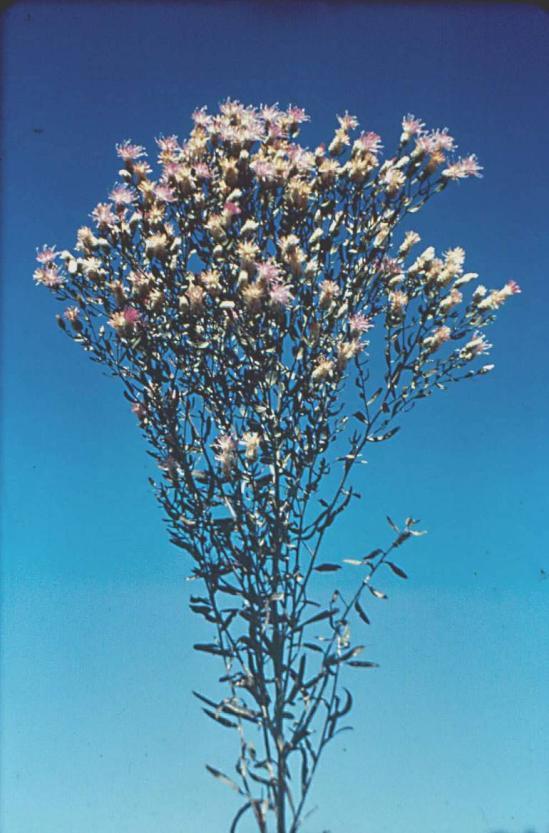 Photo: Russian Knapweed
 -
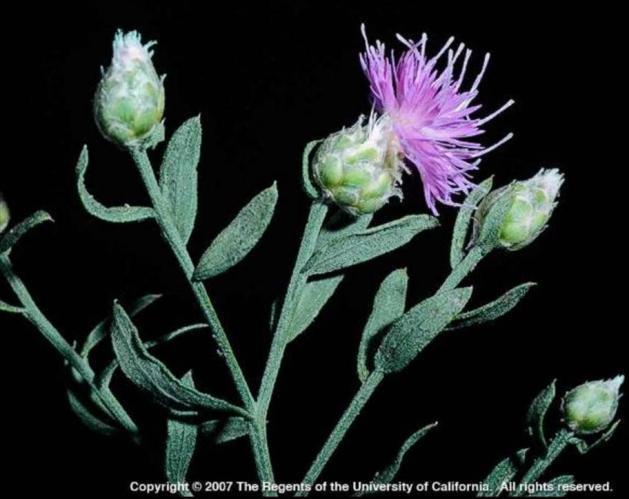
Russian knapweed flowers blooming.


Acroptilon repens
Identification: Creeping perennial with erect, branched stems from one to three feet. Young stems are softly pubescent. Lower leaves with toothed margins. Upper leaves with entire margins and stiff hairs. Lavender flowers in thistle-like heads with papery, spineless bracts. Whiteish seeds and papus remain in seed heads.
Habitat: Cultivated fields, pastures and roadsides
Animals affected: Horses
Toxin family: Sesquiterpene lactones (neurotoxin)
Other: Causes the formation of lesions and eventually affects horses’ ability to chew (“chewing disease”). Increased facial muscle tonicity causes horses to exhibit a wooden expression. A lack of coordination of chewing muscles can cause frothy saliva, resembling rabies. Symptoms are similar to yellow star thistle, but it appears Russian knapweed is more toxic, requiring a shorter feeding period to cause disease.
Hemp dogbane
-
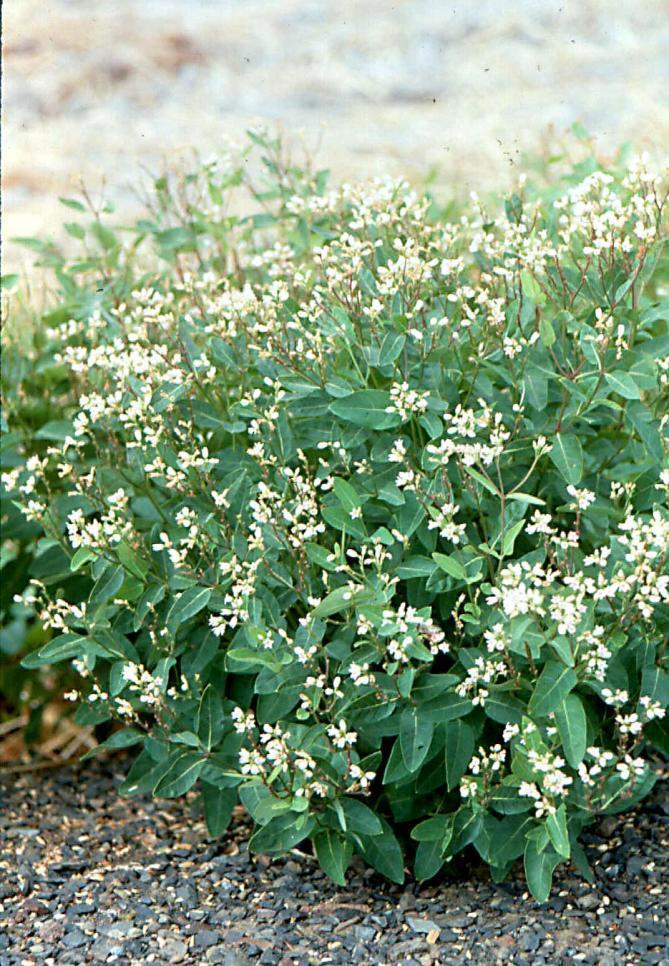
Hemp dogbane

Apocynum cannabinum
Identification: Perennial, growing up to 6 feet tall. Leaves opposite or whorled, oblong and entire. Stems often red and exude milky sap. Small white-ish flowers arranged in clusters at branch ends. Fruit is a long (3–8 inches), narrow pendulous pod, hanging in pairs, reddish-brown at maturity. Seeds have tufts of hair, similar to milkweed.
Habitat: Roadsides, waste areas, open spaces and non-cultivated agricultural lands; along streams and irrigation ditches.
Animals affected: Especially horses.
Toxin family: Dogbane contains the glycosides apocynin and cymarin in the milky sap (resin), contained in all plant parts.
Other: Can cause cyanogenic glycoside poisoning. Livestock are rarely poisoned by dogbane, and will eat it only when lacking other forages.
Yellow star thistle
-
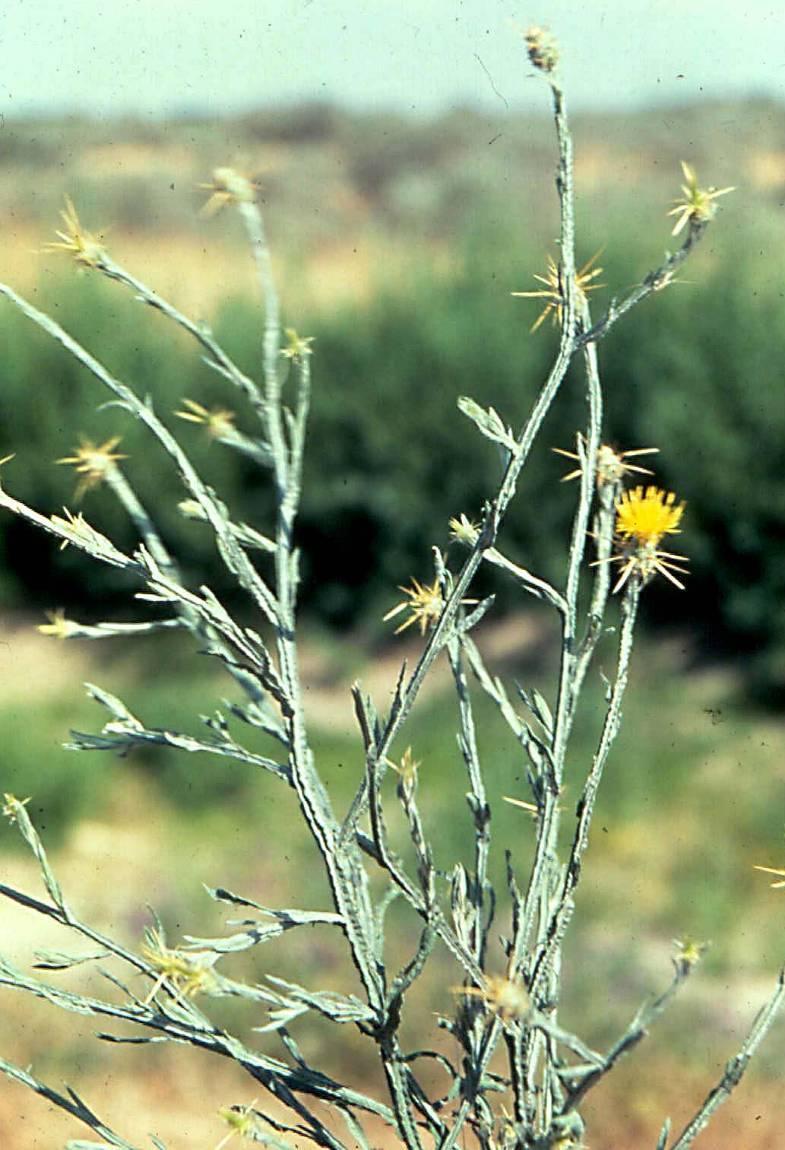
Yellow Star Thistle
-
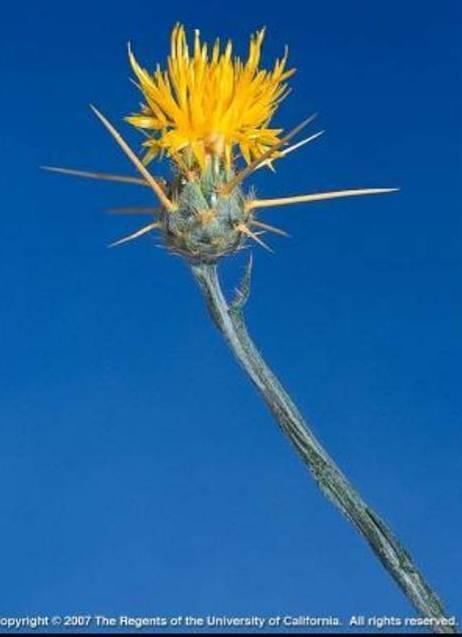
Yellow Star Thistle


Centaurea solstitalis
Identification: 2- to 3-foot-tall annual; flowers July-August. Rigid branching stems covered with cottony hairs. Lobed basal leaves. Stem leaves entire and covered with cottony hair. Yellow flowers; single at branch ends and with 3/4" thorny bracts. Germinates in fall and spring.
Habitat: Grasslands, rangelands, pasture, crop edges, roadsides and disturbed areas.
Animals affected: Horses.
Toxin family: Neurotoxins.
Other: Horses get "chewing disease" (inability to chew). Plant is toxic when green and dried, and horses will develop a preferential liking for the plant. Horses must eat large quantities for toxins to take effect. The plant is not toxic to sheep or cattle, which can be used for control.
Western water hemlock
-
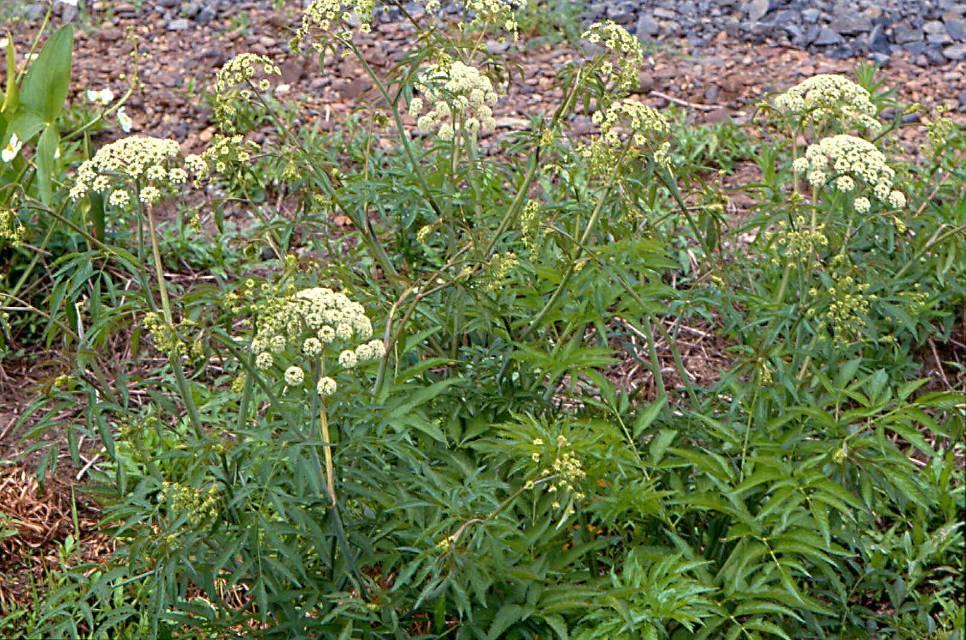
Western Water Hemlock flowers
-
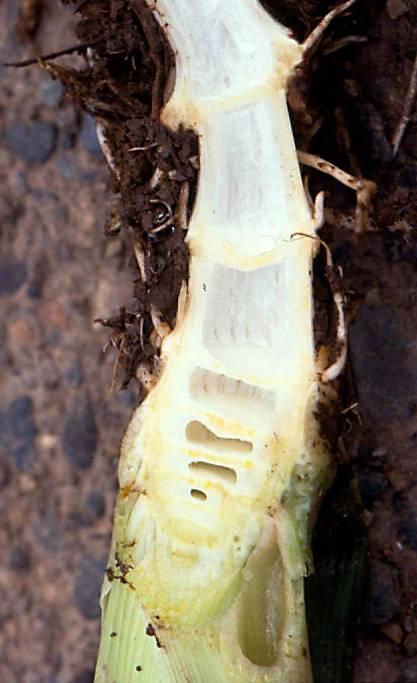
Western Water Hemlock


Cicuta douglasii
Identification: Perennial up to 2 meters tall. Stems with purple blotches. Stems are hairless and hollow, with compartments near the base. Alternate compound leaves, leaflets with toothy margins. Flowers in white-greenish umbrella-shaped umbels.
Habitat: shallow ponds, swamps and marshes, irrigation ditches.
Animals affected: Humans and all livestock, but primarily cattle.
Toxin family: Cicutoxin (a neurotoxin) contained in all plant parts: leaves and stems highly toxic in spring, decreasing as plant matures. Root is especially toxic always.
Other: Causes rapid onset of muscle tremors and convulsions. Death occurs within hours of consumption. One of the most poisonous plants in North America; removal of Western water hemlock from pastures should be a priority. Plants are generally easily removed by pulling and should be burned. Remove plants before they set seed, as that is their primary reproductive tactic. Spraying can increase palatability before plant dies.
Poison hemlock
-
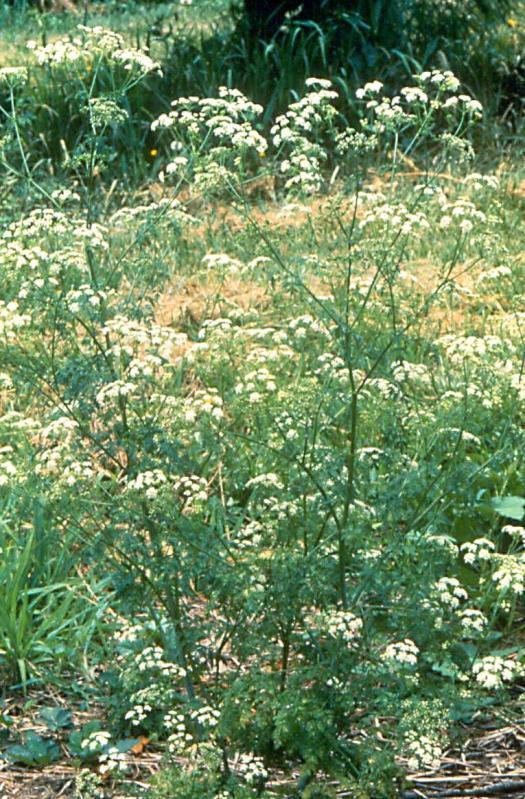
Poison hemlock.
-
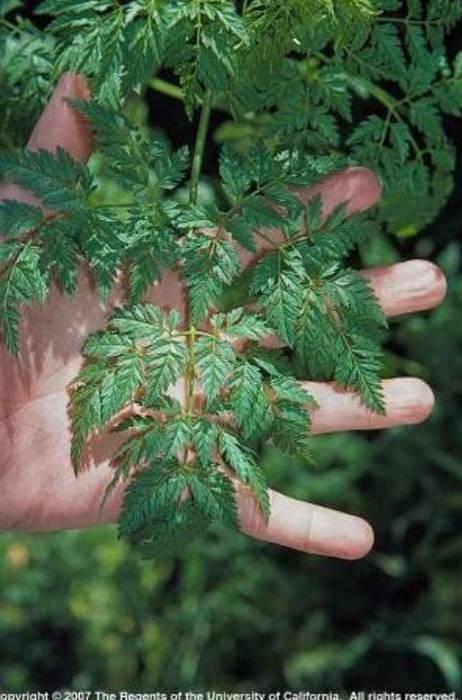
A handful of poison hemlock leaves.
-
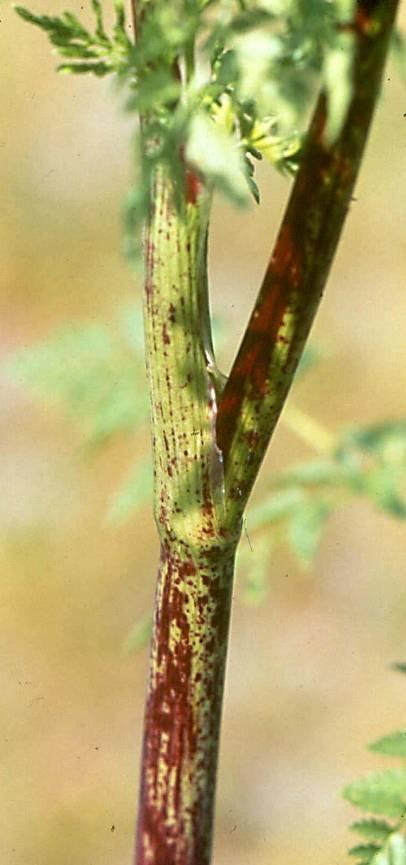
Poison hemlock stem.



Conium maculatum
Identification: 3- to 7-foot-tall biennial. Blooms early summer. Erect hollow branching stems, alternate leaves, pinnately dissected and fern-like. Flowers in compound, flat-top umbel. Enlarged taproot. Reproduces prolifically by seed.
Habitat: Waste areas, roadways, ditches, pastures and edges of cultivated fields
Animals affected: Humans and all livestock
Toxin family: Piperdine alkaloids (neurotoxins); all plant parts are poisonous.
Other: Causes repertory failure and paralysis, leading to coma and death. Can cause skeletal defects in calves if eaten in small amounts by pregnant cows. Strong odor prevents palatability unless no other forage available.
Wild carrot
-
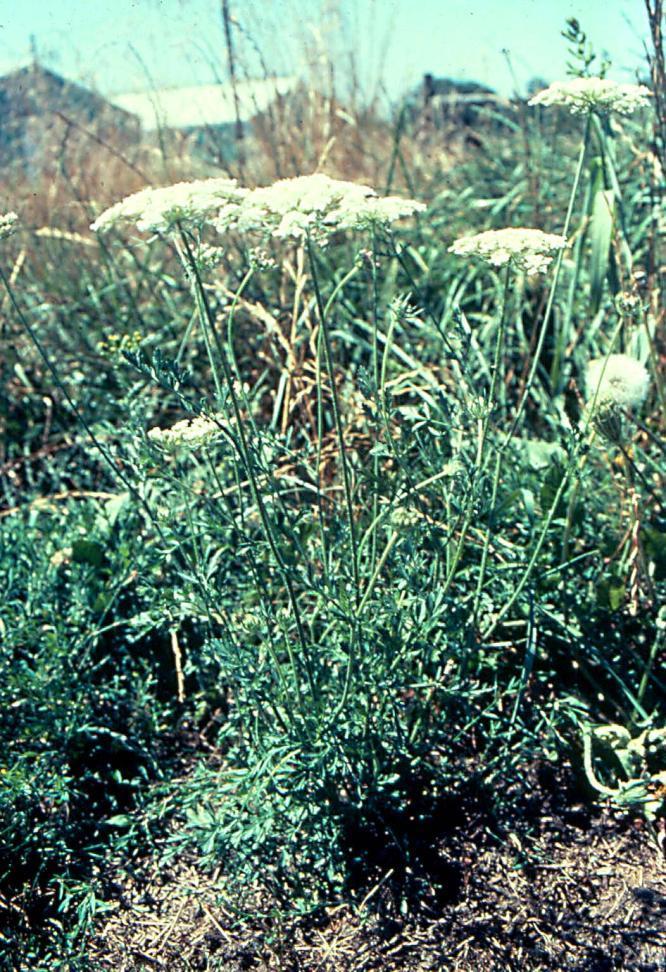
Wild carrot flowers.

Daucus carota
Identification: 2- to 4-foot biennial. Remains a rosette the first year and flowers the second. Stems are erect and hollow, with stiff hairs. Leaves are alternate, stalked near base and sessile above; twice-pinnately compound with short hairs. Tiny white flowers grow in flat-topped umbels. Strong carrot odor.
Habitat: Roadsides, pastures, waste areas.
Animals affected: All livestock.
Toxin family: Neurotoxin, photosensitization.
Other: Toxic only if large quantities are eaten. May be a skin irritant also. Graze infested areas only if abundant forage is available or late in the season, and avoid grazing during the “toxic window.”
Larkspurs
-
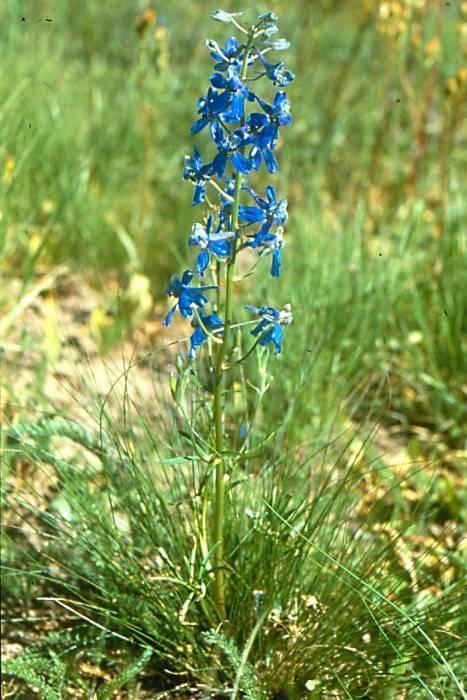
Larkspurs
-
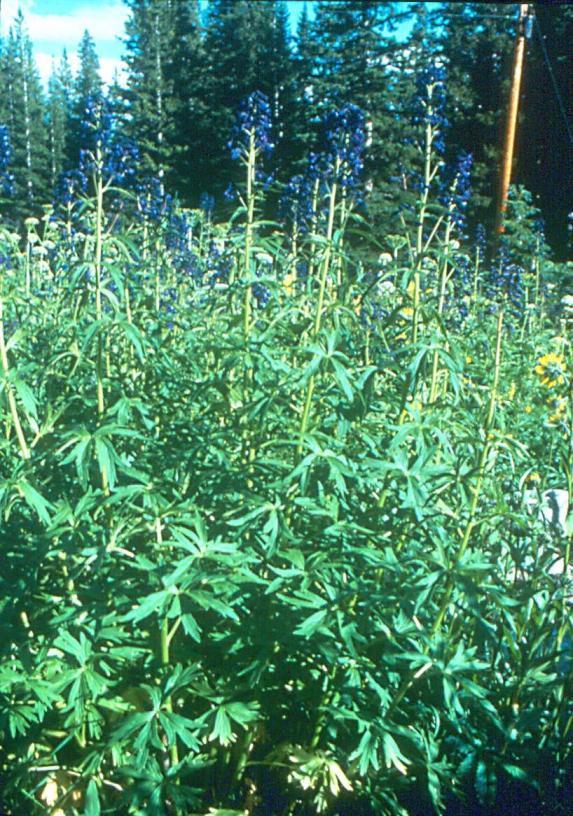
Larkspurs
-
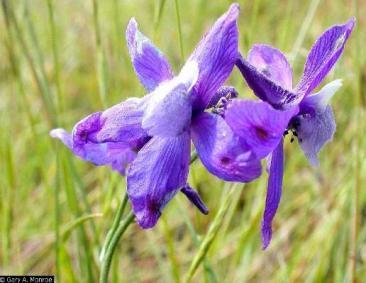
Larkspur flowers.



Delphinium spp.
Identification: At least 60 species exist in the West, from Alaska to Mexico. Assume all are toxic. Generally, palmately-lobed leaves are clustered around the base. Hollow stems. Showy flowers, generally blue to purple with a distinct, prominent spur, are produced on terminal, erect racemes.
Habitat: Pastures, rangeland,
Animals affected: Cattle, horses and sheep are affected if they consume vast quantities and are under stress.
Toxin family: Diterpenoid alkaloids. Most toxic early in the season, and young leaves are palatable.
Other: Tall larkspur becomes more palatable once the stem elongates and flowers are produced. (Toxin is reduced later in the season, though seeds remain highly toxic.) A “toxic window” occurs between stem elongation and seed set — plants are palatable and still toxic. Low larkspurs are most palatable early in spring, when they are most toxic. By the time low larkspur flowers, there is enough other forage to reduce cattle’s interest. Poisoning leads to muscle weakness and paralysis. Cattle experience rapid bloating; often, they fall down with their heads pointed downhill. Death is rapid. Graze infested areas only if abundant forage is available or late in the season. Avoid grazing during the “toxic window.” Larkspurs cause more fatalities of cattle in the western U.S. than any other native plant.
Black cherry and chokecherry
-
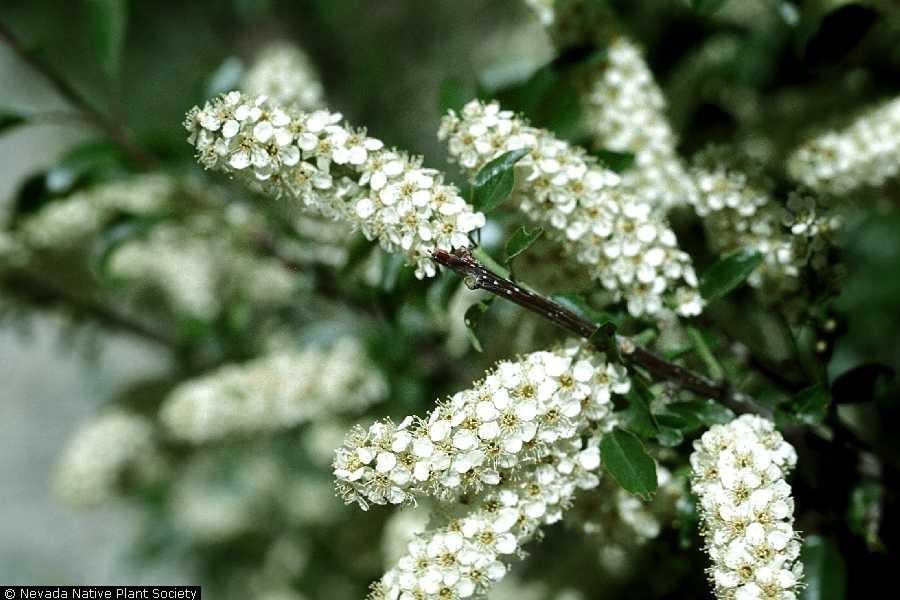
Chokecherry flowers.

Prunus spp.
Prunus serotina — Black cherry
Identification: Woody shrub or small tree with gray bark and obvious horizontal lenticels. Leaves are dark green and shiny above, paler below. They are finely serrated, oblong to lance-shaped, with small, inconspicuous glands on the petiole. Leaves usually have a dense yellowish-brown, sometimes white, pubescence along the midrib. Small, white flowers in drooping raceme. Edible dark purple to black fruits. Seeds are toxic.
Prunus virginiana — Chokecherry
Identification: Woody shrub or small tree with gray bark and obvious lenticels. Leaves ovate, finely toothed and rounded at the tip with glands on the petiole. Inflorescence is a cylindrical raceme of white, fragrant flowers. Edible dark purple to black fruits. Seeds are toxic.
Habitat: Forest edges, clearings, draws.
Animals affected: Ruminants.
Toxin family: Cyanogenic glycosides found in seeds, leaves, bark and shoots.
Other: Causes cyanide poisoning. Largest succulent leaves are most toxic. Wilted leaves and new growth are also highly toxic. Do not plant near animal enclosures.
Arrowgrass
-
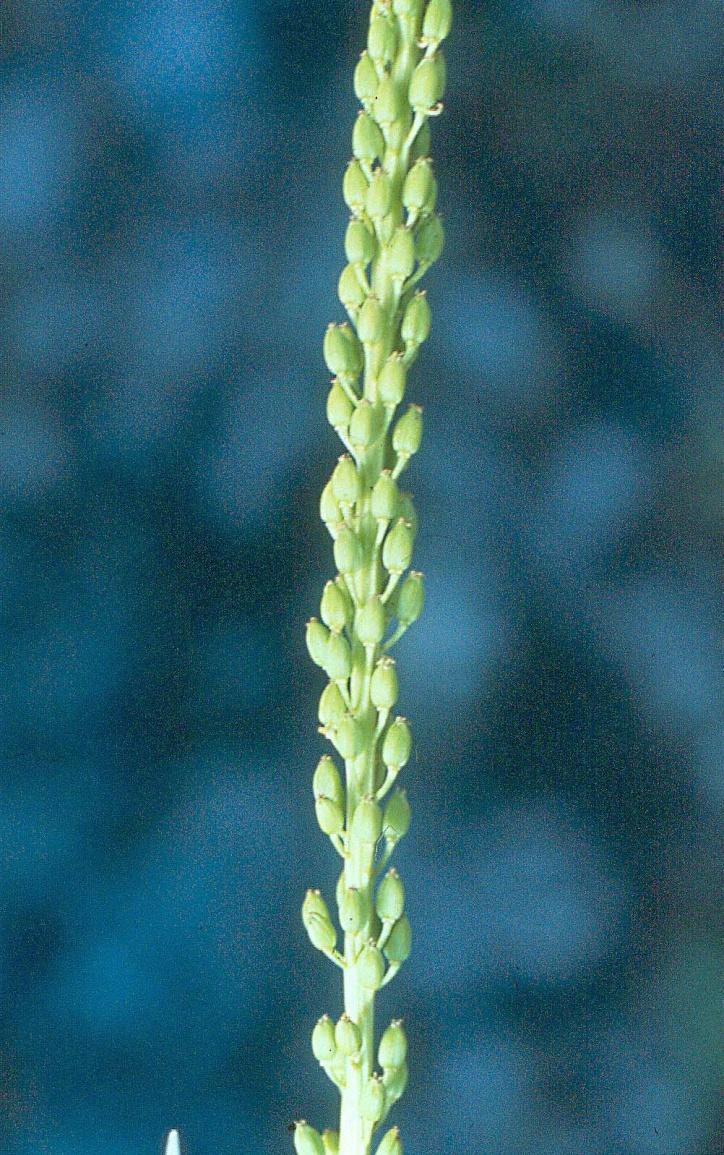
Arrowgrass spike.

Triglochin spp.
Identification: Succulent, fleshy perennial “grass-like” plant. Long, linear basal leaves. Small, inconspicuous greenish-white flowers in a terminal pedicelled raceme, appearing as an unbranched flower spike. Fruit is a three- to six-celled golden pod that splits when mature.
Habitat: Marshes, wet alkaline areas, native meadows, irrigated pasture.
Animals affected: Primarily cattle and sheep.
Toxin family: Cyanogenic glycosides.
Other: Symptoms include respiratory failure. All plant parts are toxic when green. Toxins are especially concentrated in the leaves under drought conditions and in early spring. Fresh hay is toxic but loses toxicity with increased storage. Highly palatable.