This article is part of a publication series based on the Northwest Plant Evaluation Program at Oregon State University. This research program has evaluated flowering shrubs for their suitability in landscapes in western Oregon since 2000. These publications highlight plants that were successfully grown without irrigation in the trials as well as techniques for growing and establishing drought-tolerant plants in the landscape.
The research trial evaluating rockroses occurred during 2004 to 2010 at OSU’s North Willamette Research and Extension Center in Aurora. The trial compared 98 accessions of Halimium and Cistus, which were irrigated only during establishment in the summer of 2004, and were not pruned or fertilized. Information collected about the plants included bloom time, size and cold-hardiness. We have selected the top five performing plants for Western Oregon landscapes based on our research and describe them below.
Overview of rockroses
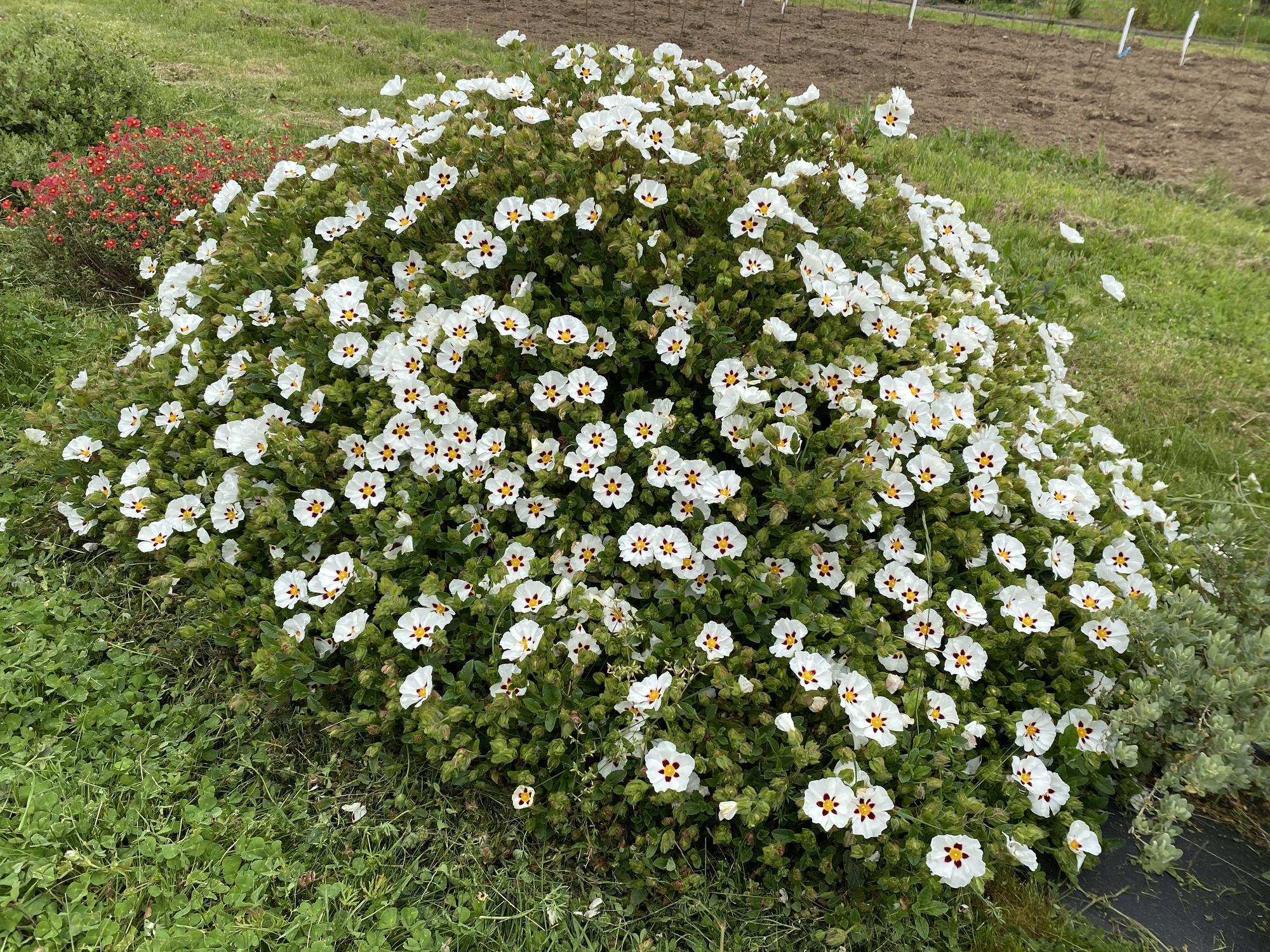
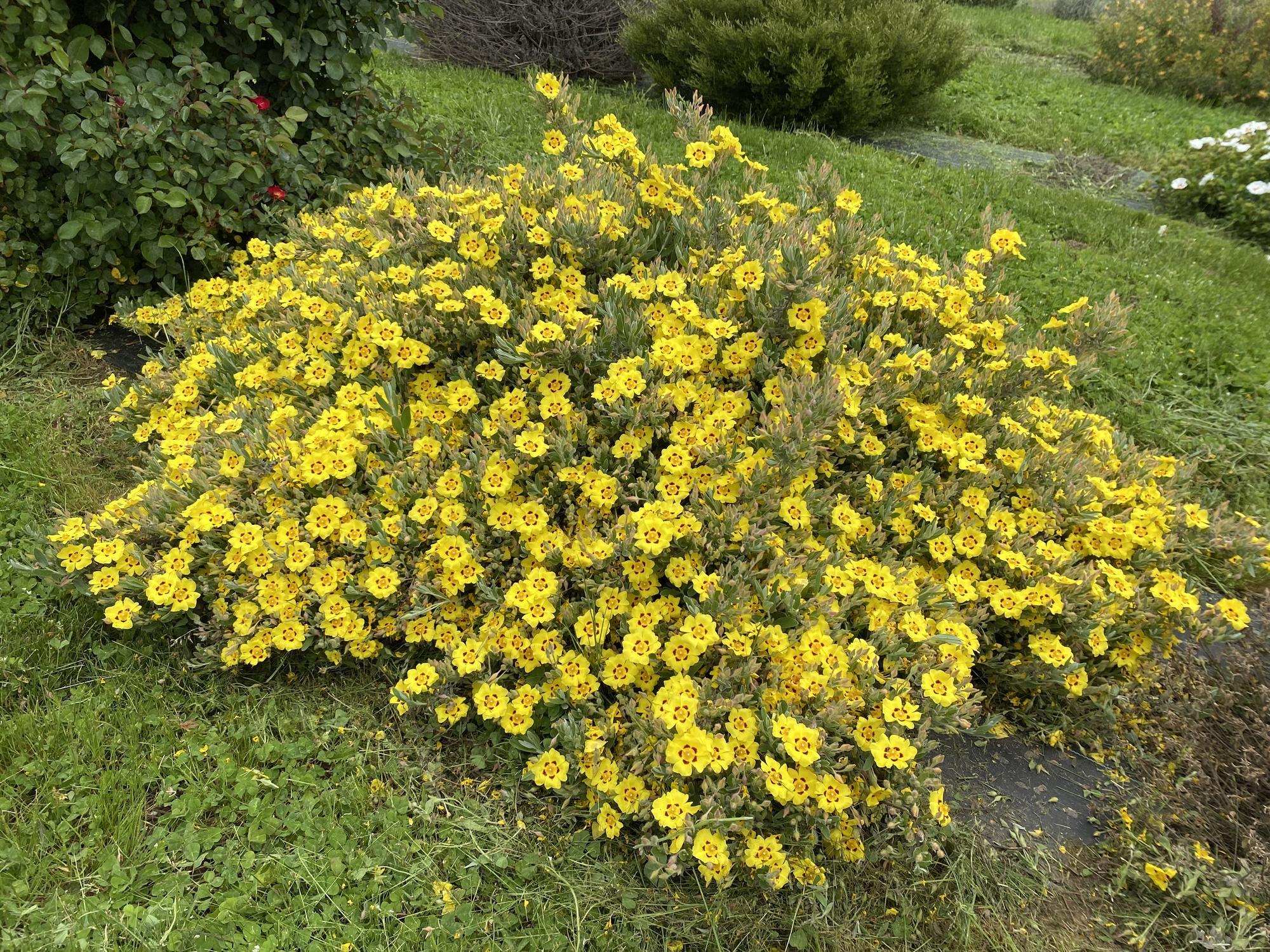
Rockroses (Cistus and Halimium spp.) are evergreen shrubs of Mediterranean origin, ranging from the Canary Islands through the Mediterranean basin to the Caucasus Mountains. The name rockrose is attributed to the resemblance of the flowers to old-fashioned, single roses and for the preferred habitat of the plants, which is rocky, relatively poor soil. There are about 21 species of Cistus, the name of the genus being derived from the Greek word kisthos or kistos, classical names for various species. There are also seven species of Halimium, although it’s worth mentioning that recently all of these were reclassified as Cistus and may be found for sale as that.
Cistus are a diverse group ranging from very dwarf plants, only a foot tall, to some that exceed 7 feet in height.
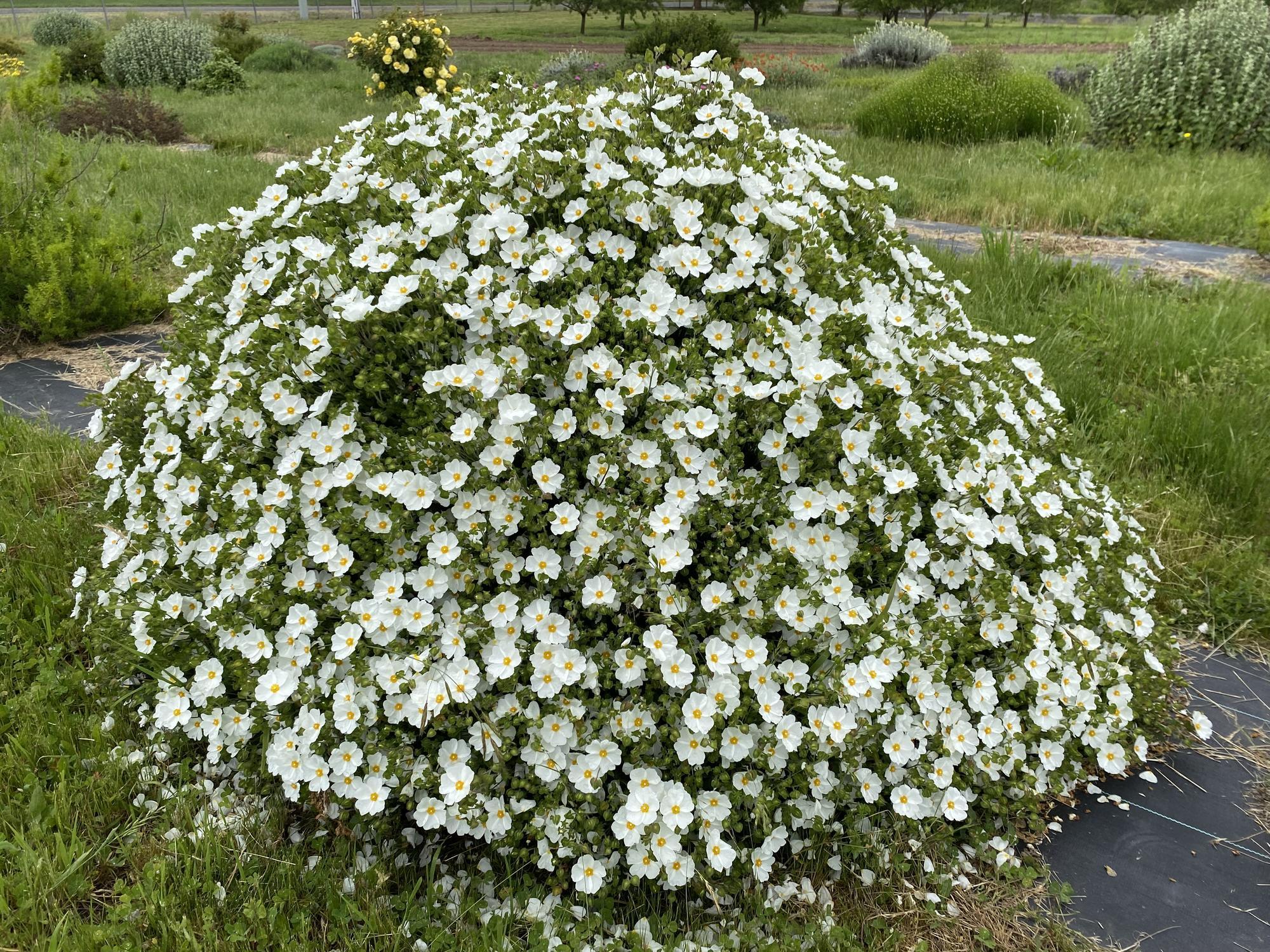
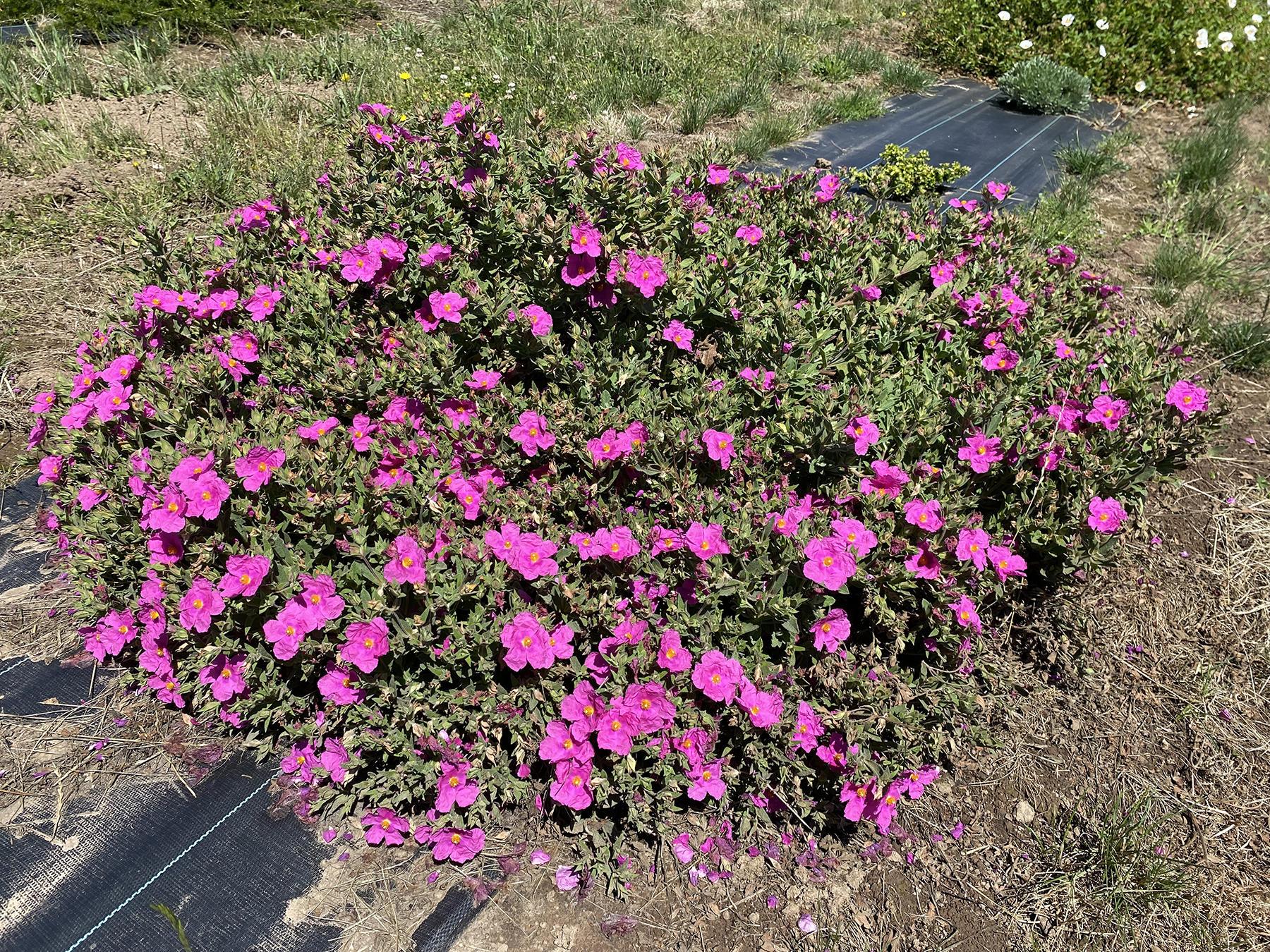
Cistus are a diverse group ranging from very dwarf plants, only a foot tall, to some that exceed 7 feet in height. The growth habit varies from flat and spreading, to mounding, or in a few cases upright. All have opposite leaves, which may be middle to dark green or very commonly grayish. Much like other Mediterranean herbs such as rosemary or lavender, the foliage is often quite aromatic, a characteristic which is particularly noticeable on warm days and makes the plants appealing even after the flowers are finished. The leaves of some species produce an aromatic substance called ladanum in abundance, which gives a shiny appearance to the entire plant and makes the leaves and stems noticeably sticky.
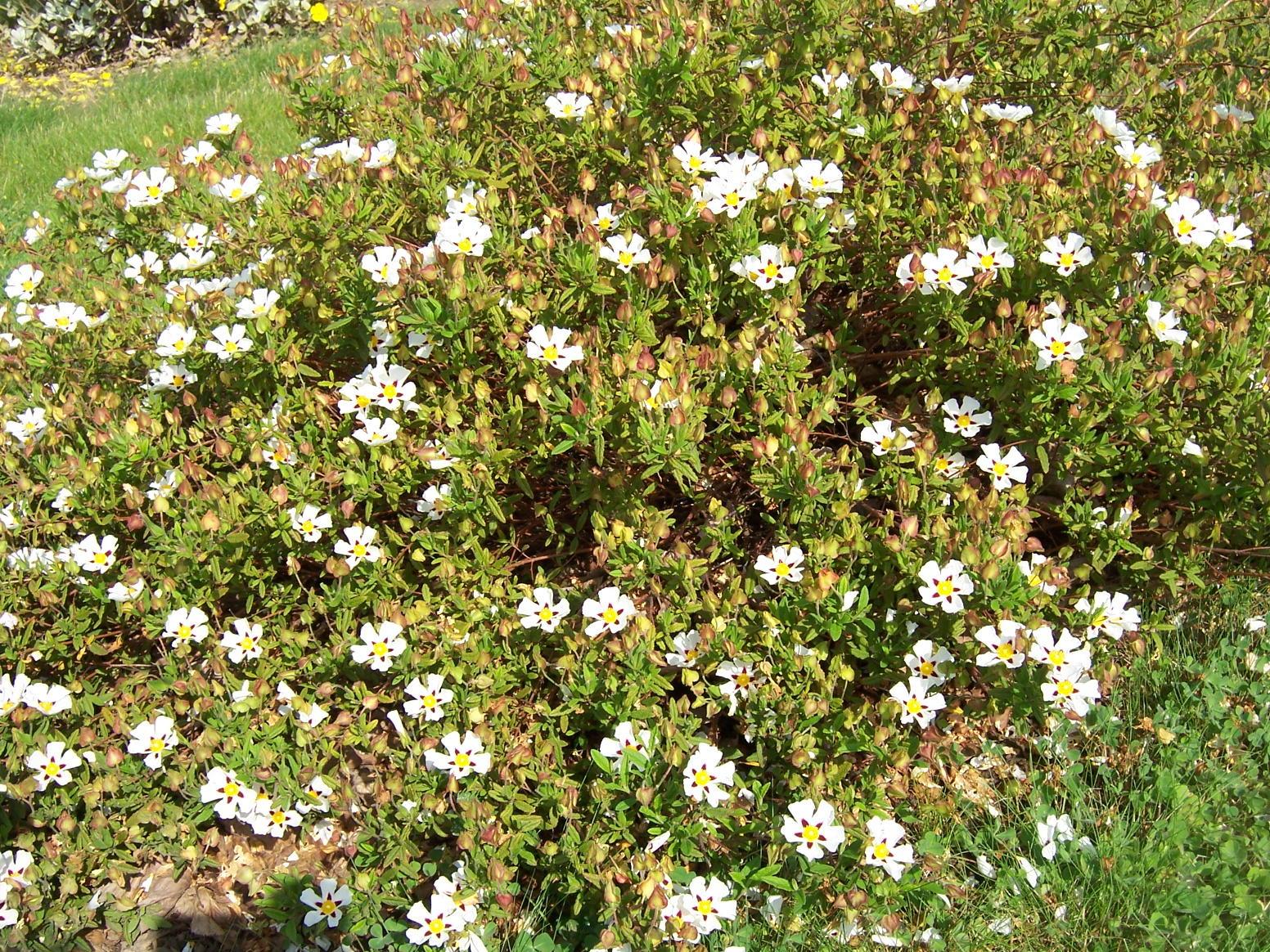
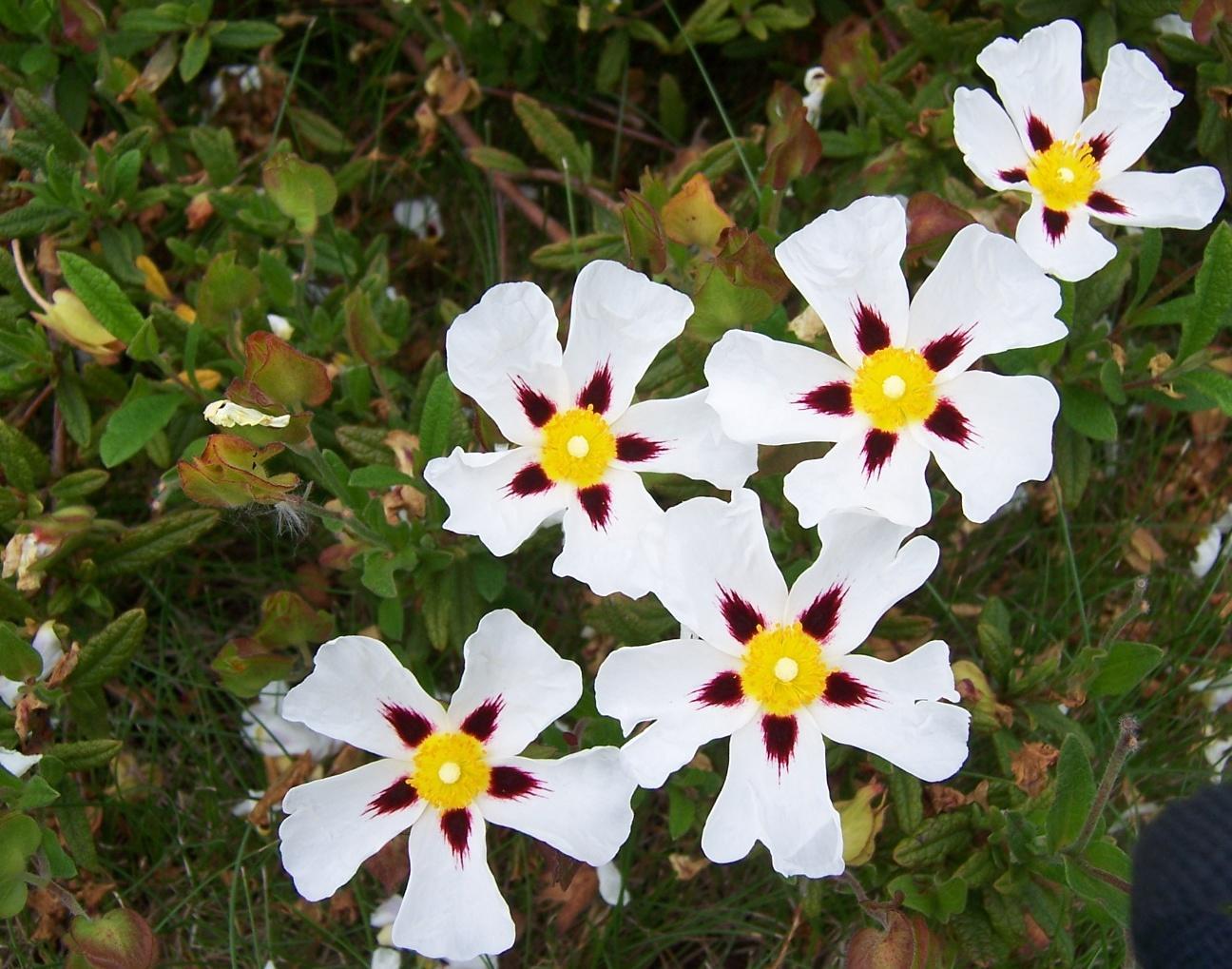
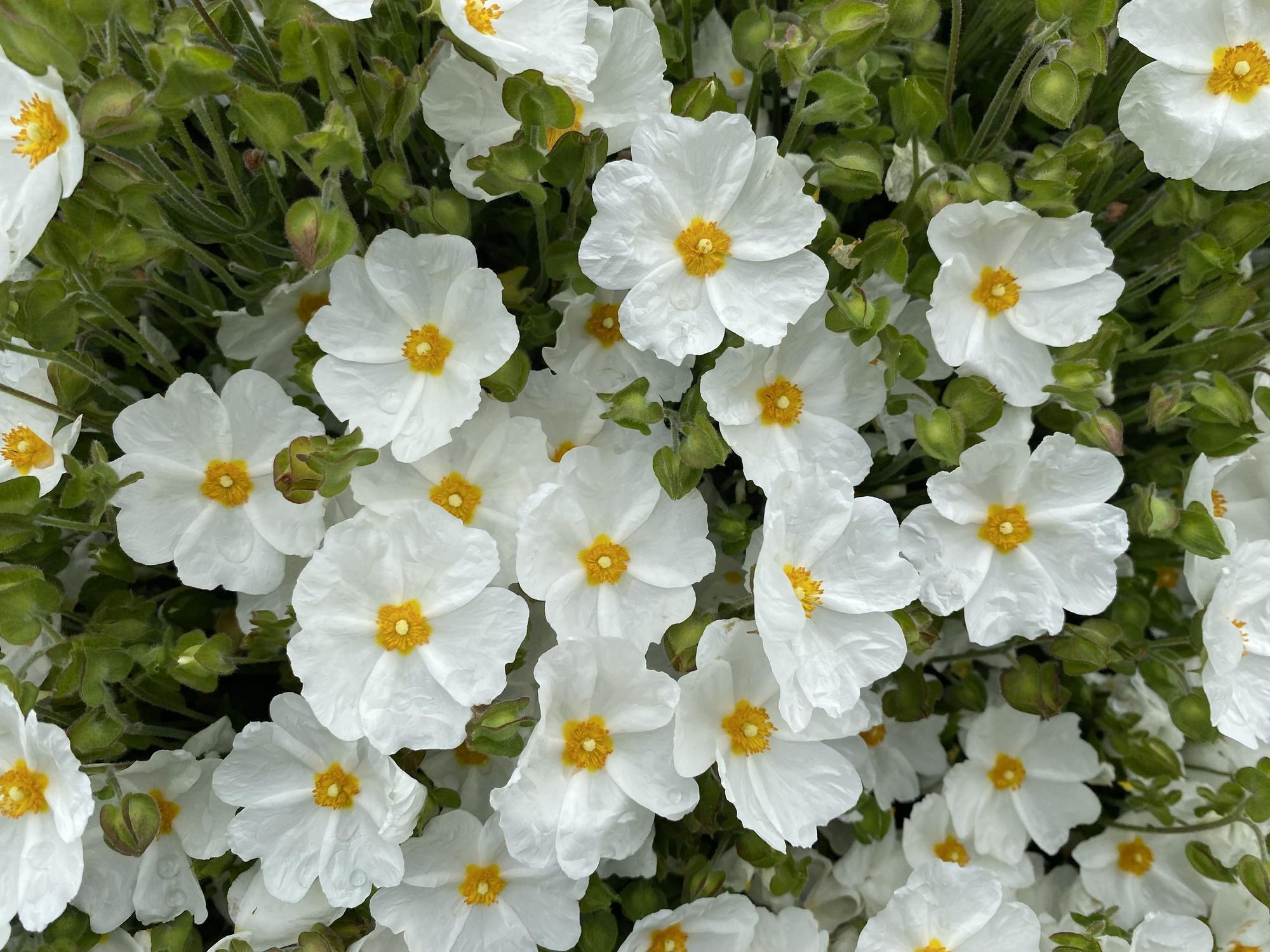
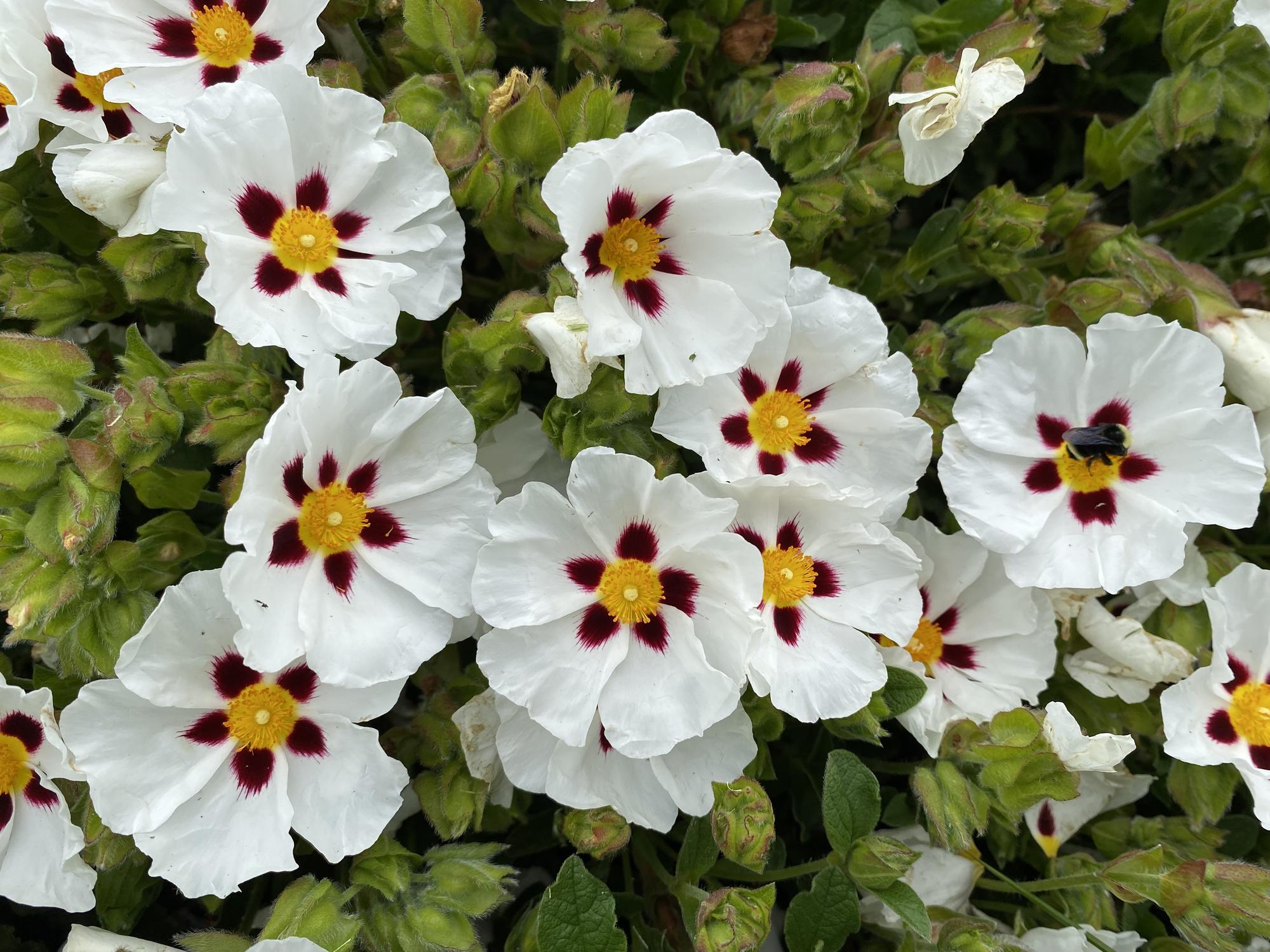
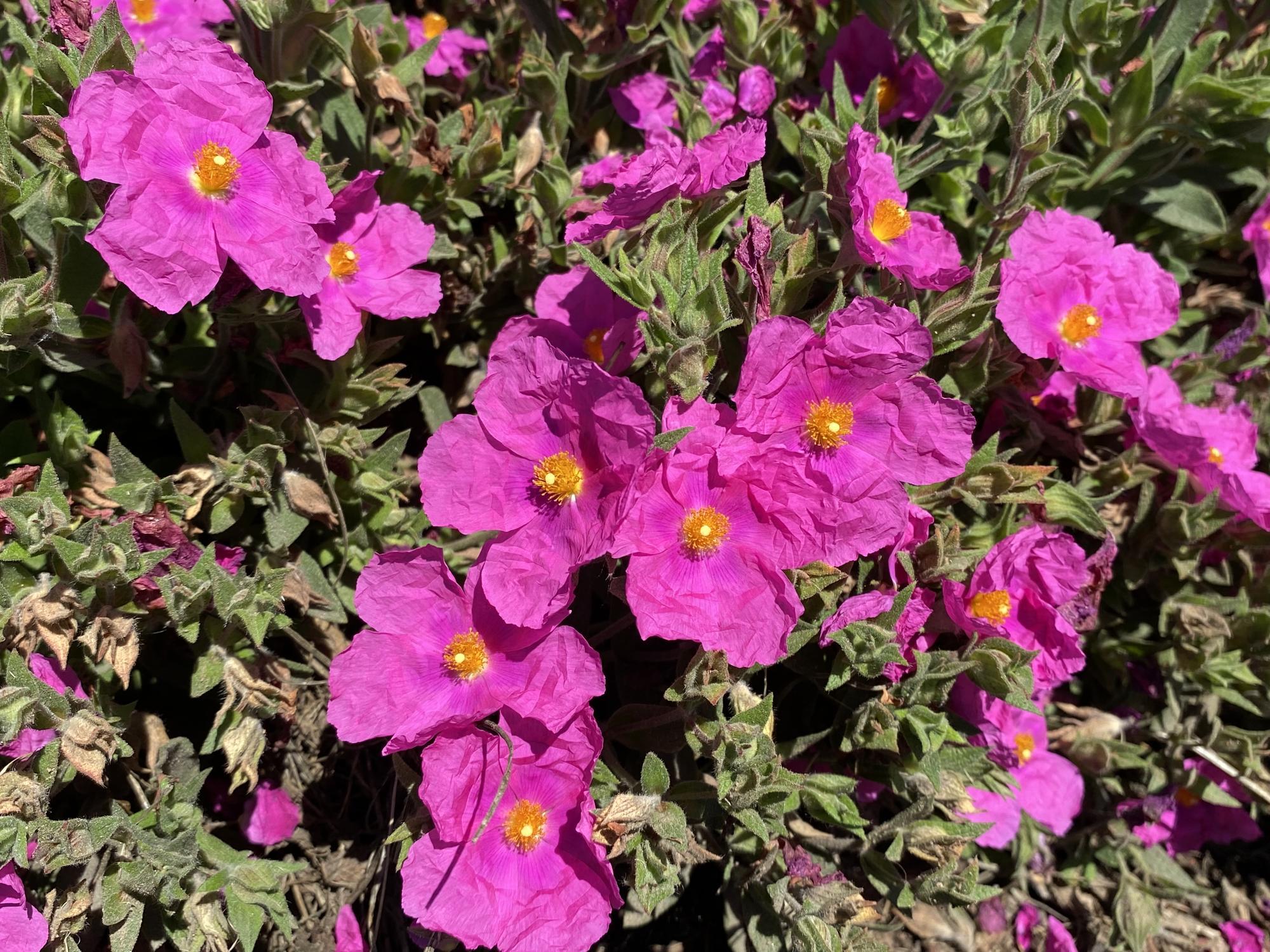
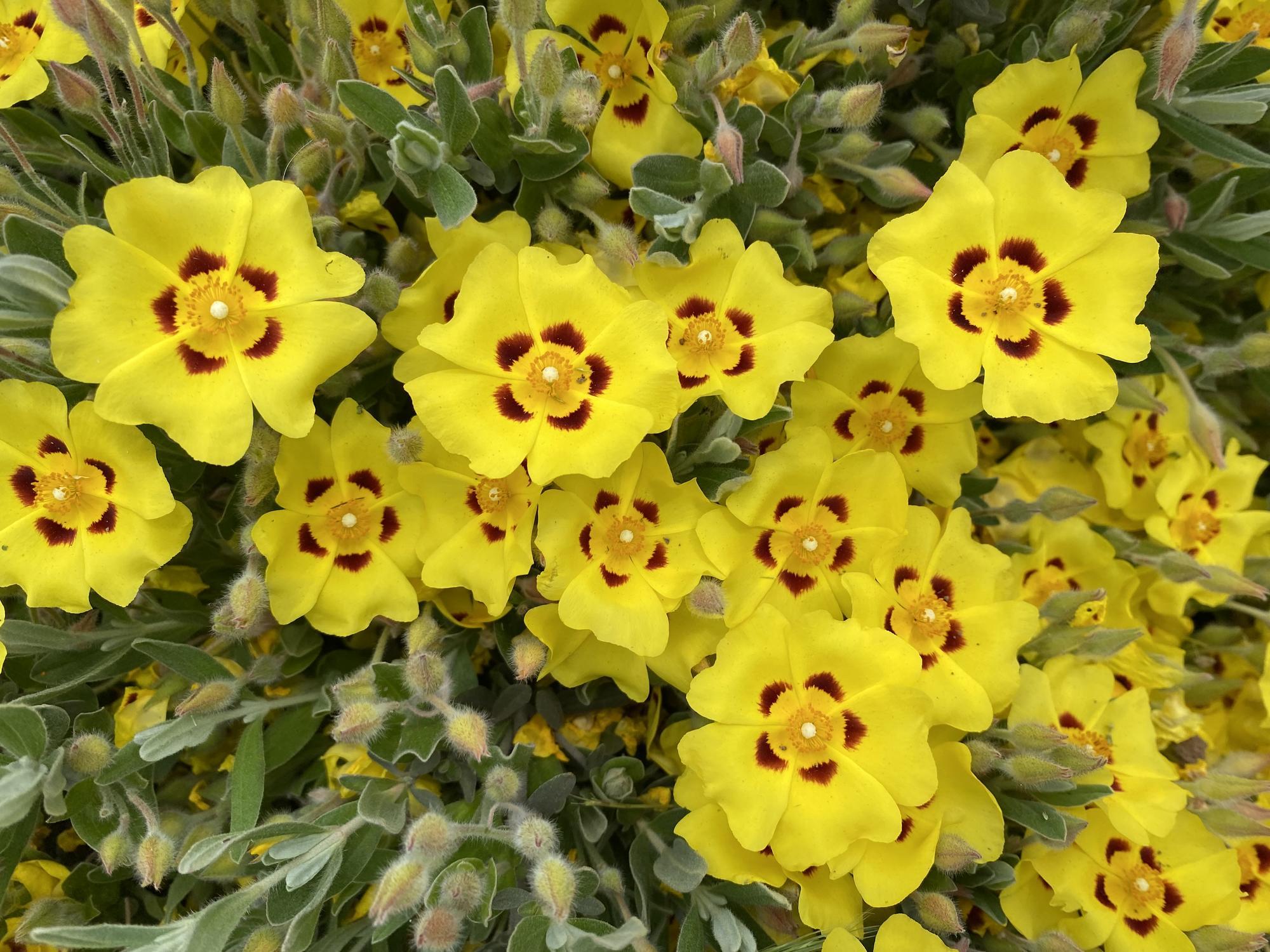
The flowers are distinctive, having delicate, often crinkled petals which open in the morning and usually drop after being open a few hours. The following morning, a new group of flowers will open, and in most rockrose the flower show will carry on this way for a month or more. The flowers are unscented and are usually white, pink or purplish. The flowers of some cultivars may also have a reddish or brown blotch at the base of each petal, which makes those flowers quite unique.
In the landscape, rockroses are best planted in full sun, where they will receive no summer water.
In the landscape, rockroses are best planted in full sun, where they will receive no summer water. South- or west-facing walls or dry banks are perfect locations, assuming water drains freely from the soil year-round. Watering them in the summer — especially regularly — is undesirable as it typically produces a huge flush of unwanted growth and may predispose the plants to root or crown diseases. These shrubs form a flat or rounded shape by themselves without any pruning. So, pruning, especially hard pruning, should be avoided as they often do not recover from cutting back to bare stems. A light trim after blooming is finished is all that should ever be necessary. Natural companions for these plants are other Mediterranean-climate plants like rosemary or lavender, although they also combine naturally with informal drought-tolerant Northwest natives such as oceanspray, Callifornia lilac and manzanita.