CORVALLIS, Ore. — Oregon State University honored the winners of the 2025 Engagement Awards today at the annual OSU Engagement Conference, recognizing work in global service-learning, post-wildfire restoration and humanitarian engineering.
“Each of these projects demonstrates what community engagement at Oregon State is all about — building authentic partnerships, co-creating knowledge and delivering meaningful results with communities,” said Marina Denny, OSU associate vice provost for engagement. “Our faculty, staff and students are working alongside nonprofits, government agencies, Tribal nations, and industry and local organizations to address real needs and create lasting impact. Their commitment reflects the very best of OSU’s land-grant mission.”
The annual awards celebrate faculty, staff, students and community partners whose work demonstrates the principles of engaged scholarship and shared impact. The 2025 Engagement Conference was held at the CH2M Hill Alumni Center.
The 2025 winners are:
Community Engaged Scholarship Team Award
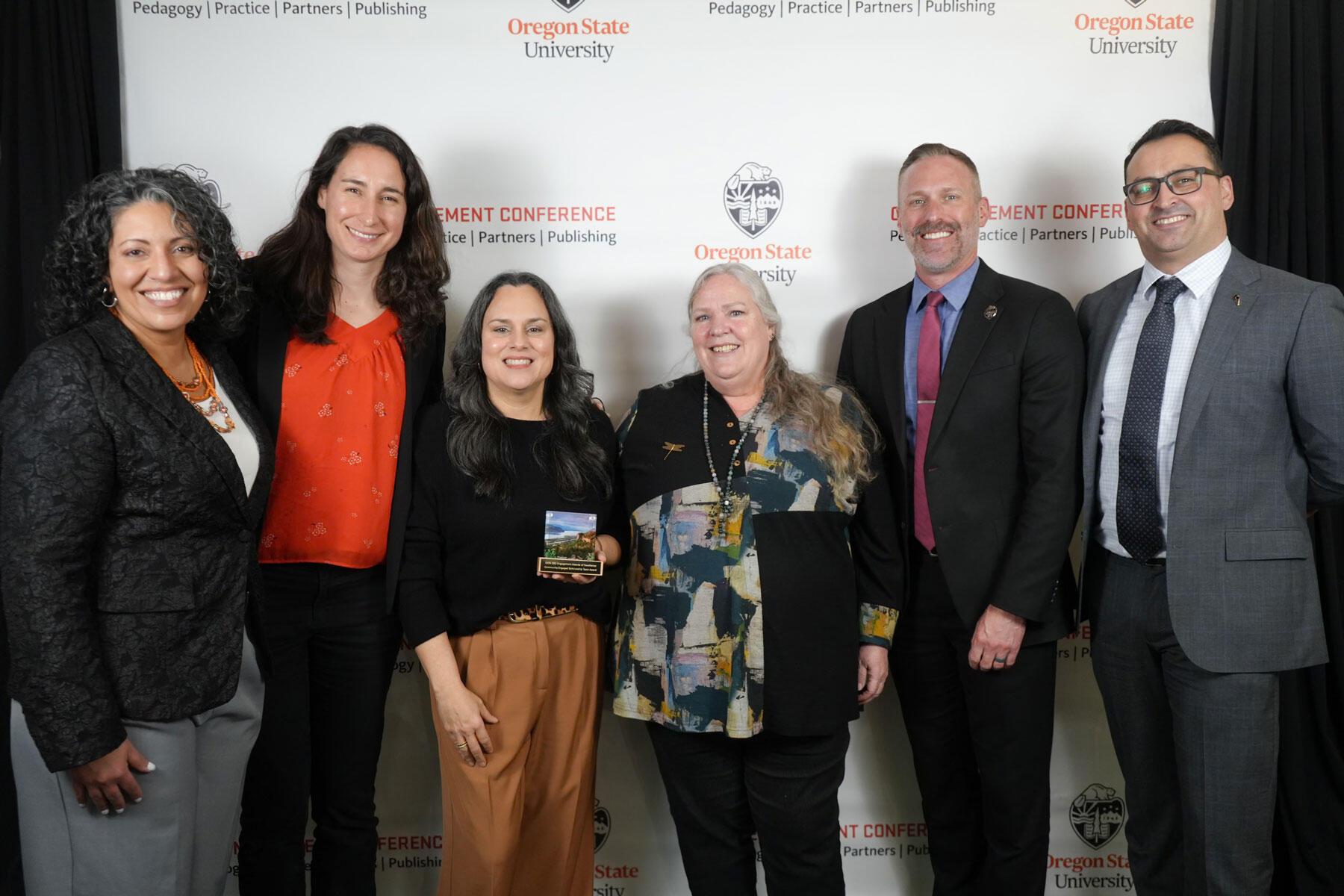
OSU’s Puerto Rico Service-Learning Initiative, which has connected students with community organizations across the island through multi-year, faculty-led courses, is the winner of the Community Engaged Scholarship Team Award.
Held in 2016, 2018, 2022, 2024 and 2025, the study abroad program centers immersive projects in ecological restoration, sustainable agriculture and environmental education.
Puerto Rico’s unique status as a culturally rich, ecologically diverse U.S. territory facing poverty and climate vulnerability provides a powerful setting for place-based learning. Students work alongside local partners on projects such as mangrove restoration, school gardens, water quality monitoring and health education.
Many participants are Spanish-speaking, first-generation or from historically underrepresented backgrounds. They consistently report growth in leadership, cross-cultural communication, civic engagement and career readiness.
The partnership is reciprocal and community led. Puerto Rican organizations help define priorities and co-design project “wish lists,” while OSU faculty align course design and logistics with those goals.
Supporting recruitment, mentoring and academic integration are collaborations with the College of Agricultural Sciences, College of Health, OSU Precollege Programs, OSU Global Opportunities, and student chapters of Minorities in Agriculture, Natural Resources, and Related Sciences (MANNRS) and Society for Advancement of Chicanos/Hispanics and Native Americans in Science (SACNAS),
Initially funded through departments and student fundraising, the program has expanded with grants from the U.S. Department of Agriculture’s National Institute of Food and Agriculture. These investments broaden access, increase student participation and support undergraduate research presentations at campus and national venues.
Taken together, the initiative demonstrates how universities and communities can co-create inclusive, high-impact global learning experiences while advancing OSU’s land grant mission and engagement goals.
Team leads:
- Rachel Jones, director of student engagement, College of Agricultural Sciences
- Wanda Crannell, advisor and instructor, BioResource Research, College of Agricultural Sciences
- Doris Cancel-Tirado, associate dean for student services and well-being, College of Health
OSU–Community Partnership Engagement Award
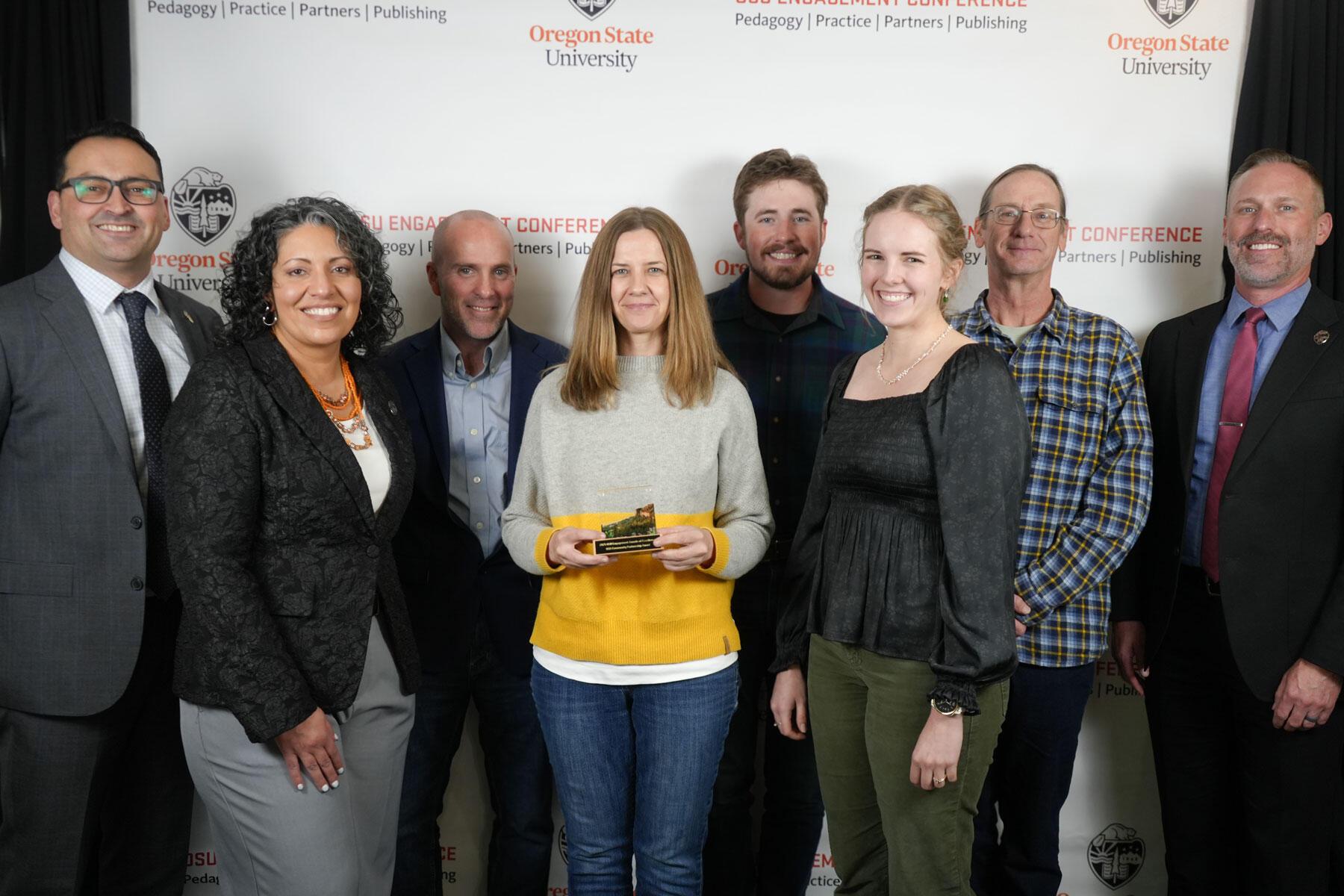
The East Cascades Native Plant Hub, which is tackling a national shortage of native plant materials essential for post-wildfire restoration and ecological recovery, is the winner of the OSU-Community Partnership Engagement Award.
Formed in 2022, the Hub partners with five federal agencies, Tribal nations, private landowners and conservation organizations to collect, cultivate and distribute regionally appropriate native seeds.
The Hub supports the National Seed Strategy by restoring degraded rangelands and sagebrush-steppe ecosystems across Oregon, Idaho and California. Projects include native seed production fields with private growers, restoration efforts in national parks and Bureau of Land Management districts, and youth training through Tribal Youth Corps programs.
Partnerships are reciprocal. Agencies contribute restoration and monitoring expertise. Tribal partners share cultural knowledge and traditional stewardship practices. Landowners provide farming experience, land and equipment. Oregon State University – Cascades offers scientific capacity, plant materials and student talent.
More than 50 OSU-Cascades undergraduates have participated in Hub projects, gaining hands-on experience in seed collection, propagation, restoration planning and science communication.
Initial support from the National Park Service has grown to more than $6.8 million in federal and state funding. These investments enable large-scale seed propagation, multi-state restoration projects and applied research on seed transfer zones and climate resilience.
Through technical reports, conference presentations and practitioner-focused syntheses, the Hub shares lessons broadly. The partnership has elevated OSU-Cascades as a leader in community-engaged restoration science grounded in place, people and long-term collaboration.
Team members:
- Matt Shinderman, associate professor of teaching, OSU-Cascades and College of Agricultural Sciences
- Hannah Johnson, biological science research technician, HERS Lab
- David Cevallos, postdoctoral researcher, HERS Lab
- Emily Zamarripa, plant propagation specialist, HERS Lab
- Matt Van Ess, restoration project coordinator, HERS Lab
- Noah Koker, lead field technician, HERS Lab
- Tom Rodhouse, former ecologist, National Park Service
OSU Extension and Engagement Award
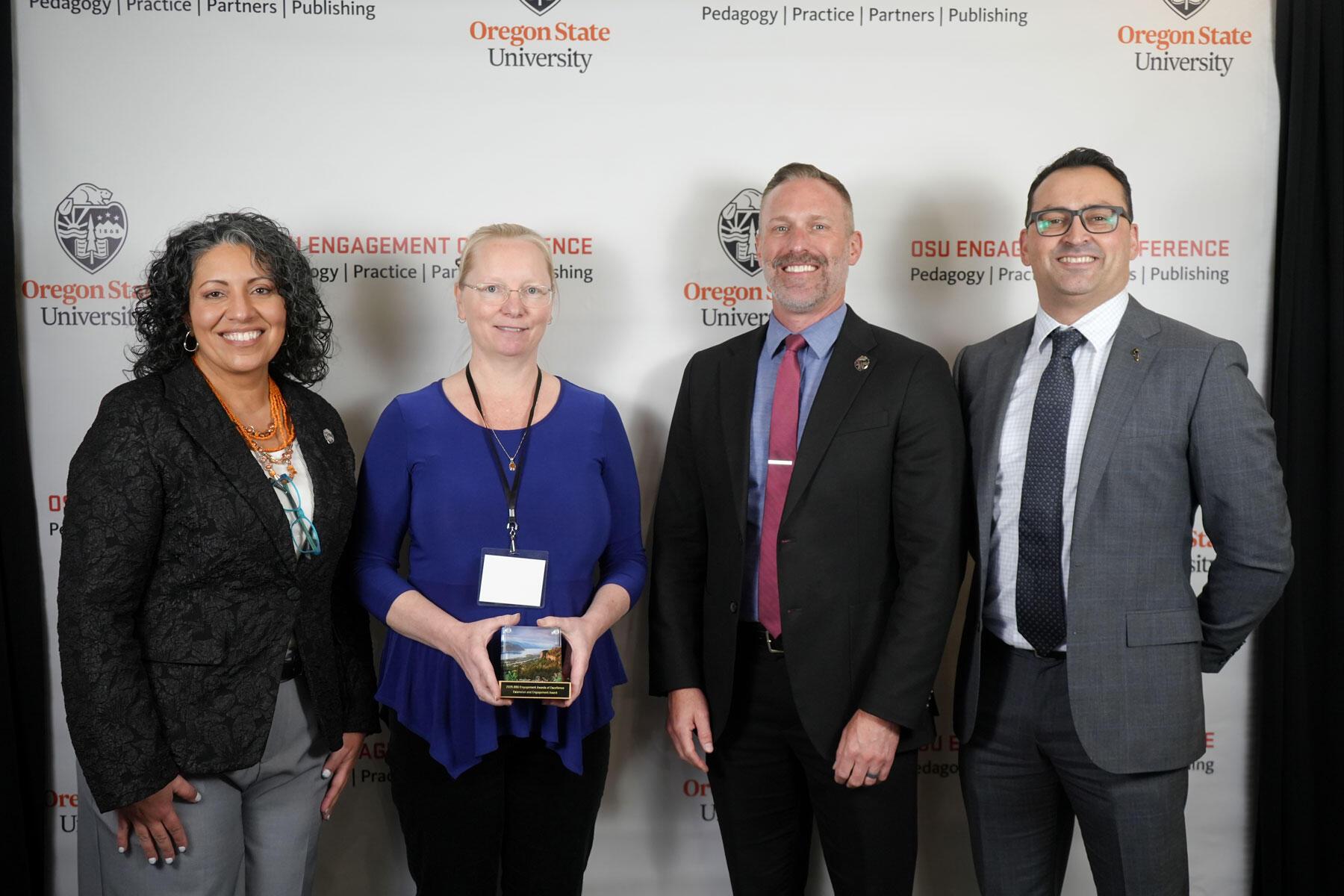
Nordica MacCarty, associate professor and Richard and Gretchen Evans Professor in Humanitarian Engineering, College of Engineering, is the winner of the OSU Extension and Engagement Award.
Since joining OSU in 2015, MacCarty has developed an internationally recognized program addressing energy poverty, climate resilience and social equity. Her work focuses on cleaner, more efficient technologies for the 40% of the world’s population that relies on biomass fuels for cooking and heating.
Through action research and global partnerships, MacCarty and her students collaborate with organizations across Africa, Asia and Latin America. Together, they design and evaluate cleaner cookstoves, develop measurement tools that support carbon financing, and share open-source innovations to reduce smoke emissions and improve health.
She leads OSU’s Humanitarian Engineering Program, which offers an undergraduate minor, online certificate, community-based capstones and global research opportunities. Thousands of students have been introduced to humanitarian engineering through her courses, first-year seminars and study-abroad programs.
MacCarty’s leadership extends to directing the Aprovecho Research Center, co-advising Engineers Without Borders, and helping convene international practitioner networks. Her collaborative research has produced new testing protocols, cross-cultural studies on technology adoption and peer-reviewed publications with partners worldwide.
Her work shows how universities can co-create sustainable, community-driven solutions while preparing students to address emerging global challenges.