HOOD RIVER, Ore. — Tree fruits are in Ed Ing’s blood.
He grew up living and working in an orchard and after college he settled in Hood River and managed the Hood River Valley orchards owned by his father, George, who managed Mt. Adams Orchards in White Salmon, Washington, for 29 years. George Ing also led the Washington Tree Fruit Research Commission for 32 years.
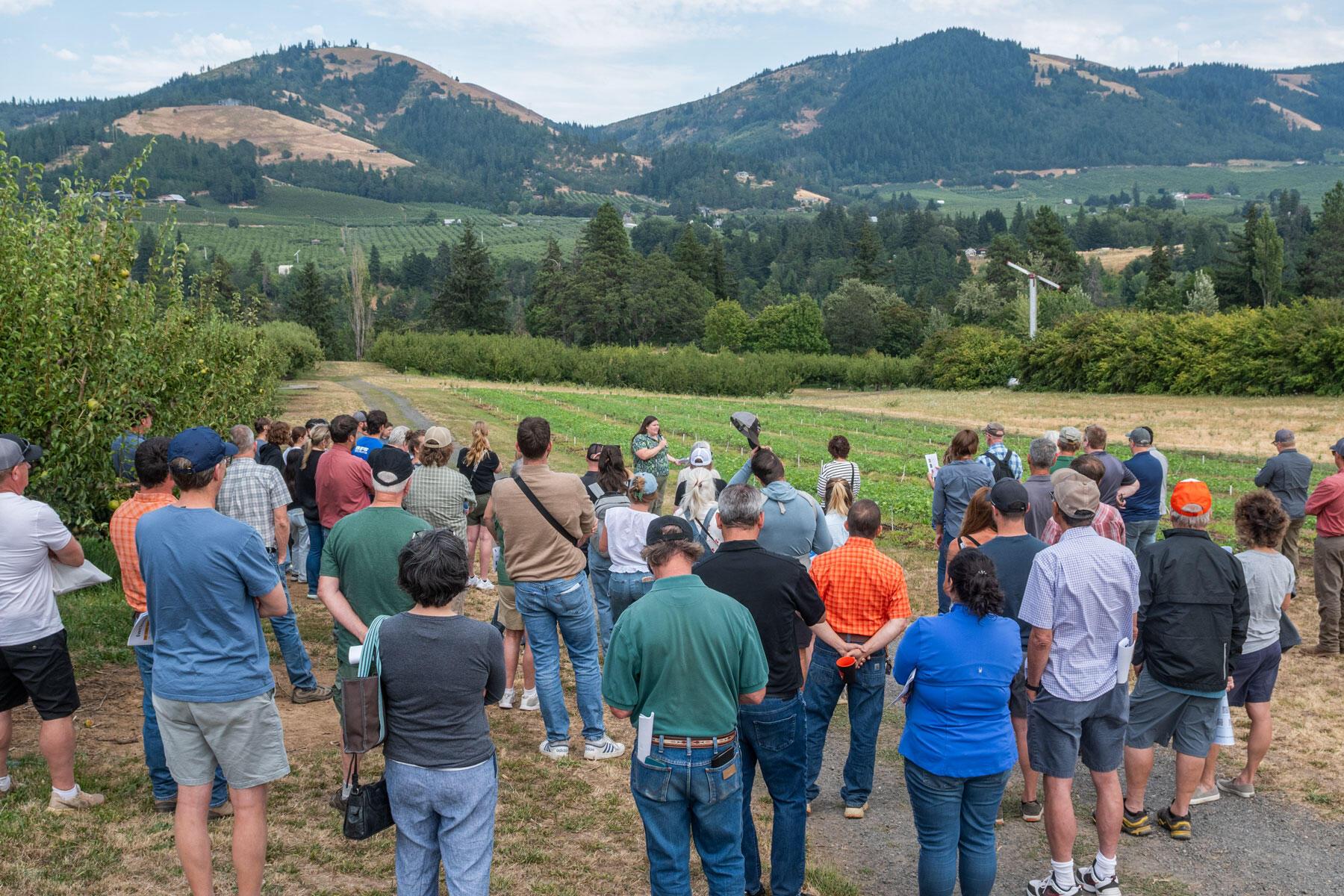
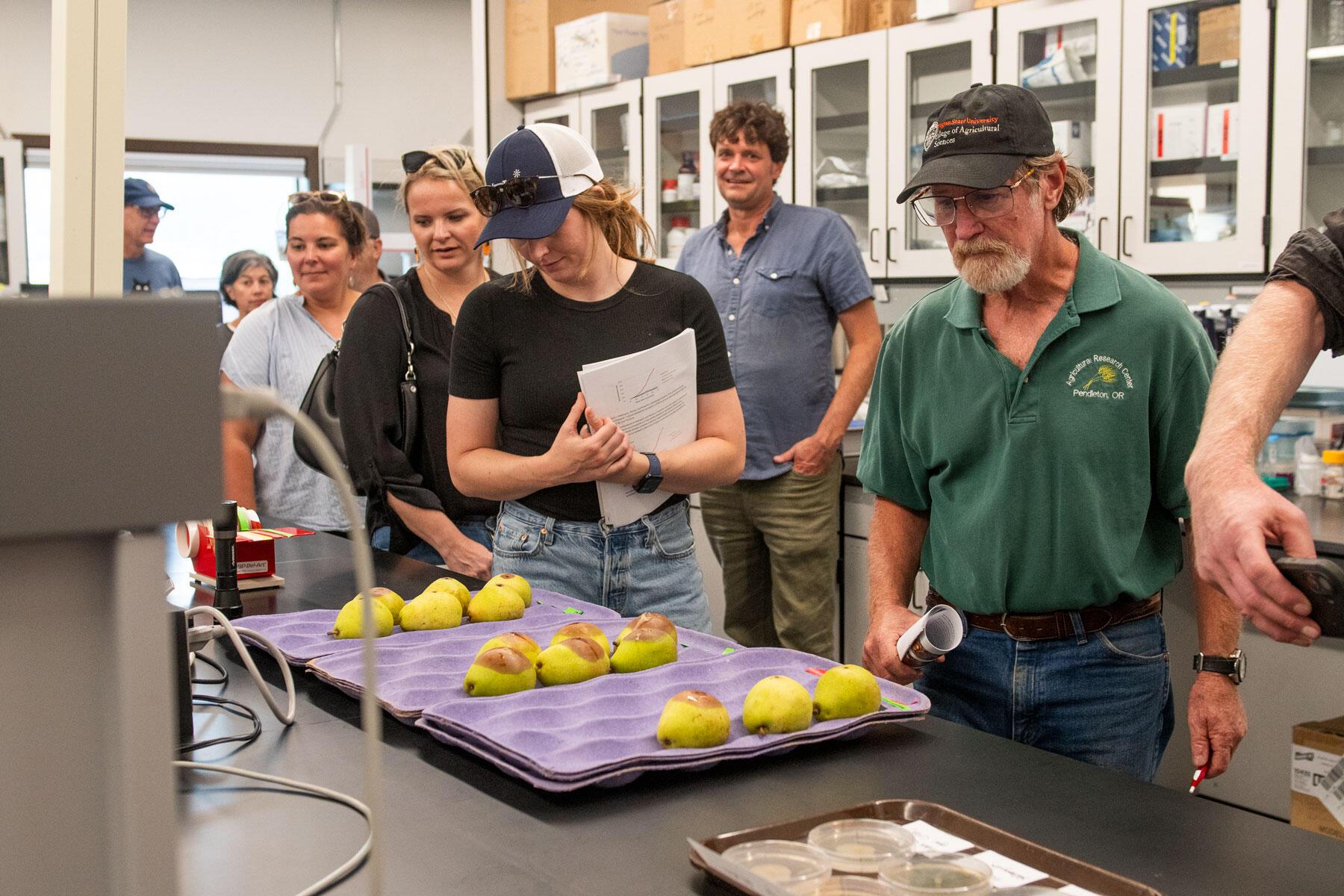
So it made sense that Ed Ing, who serves as director of product for Mount Adams Fruit, a major fruit packing operation in the United States, attended the Mid-Columbia Agricultural Research and Extension Center Field Day on July 30, hosted by Oregon State University and the U.S. Department of Agriculture’s Agricultural Research Service.
“Everybody kind of knows each other in this valley. It’s very tight knit. Attending a field day or tour is part of fruit growing. You want to see what your fellow fruit growers are doing.”
As a member of the Columbia Gorge Fruit Growers research committee, Ing helps review research funded by the association that is conducted at the research and Extension center, known as MCAREC.
“It’s good to see the results,” Ing said. “I want to be here to take a look and talk to the researchers about how it’s going.”
He’s also interested in the conversations he has with fellow growers.
“Everybody kind of knows each other in this valley,” he said. “It’s very tight knit. Attending a field day or tour is part of fruit growing. You want to see what your fellow fruit growers are doing.”
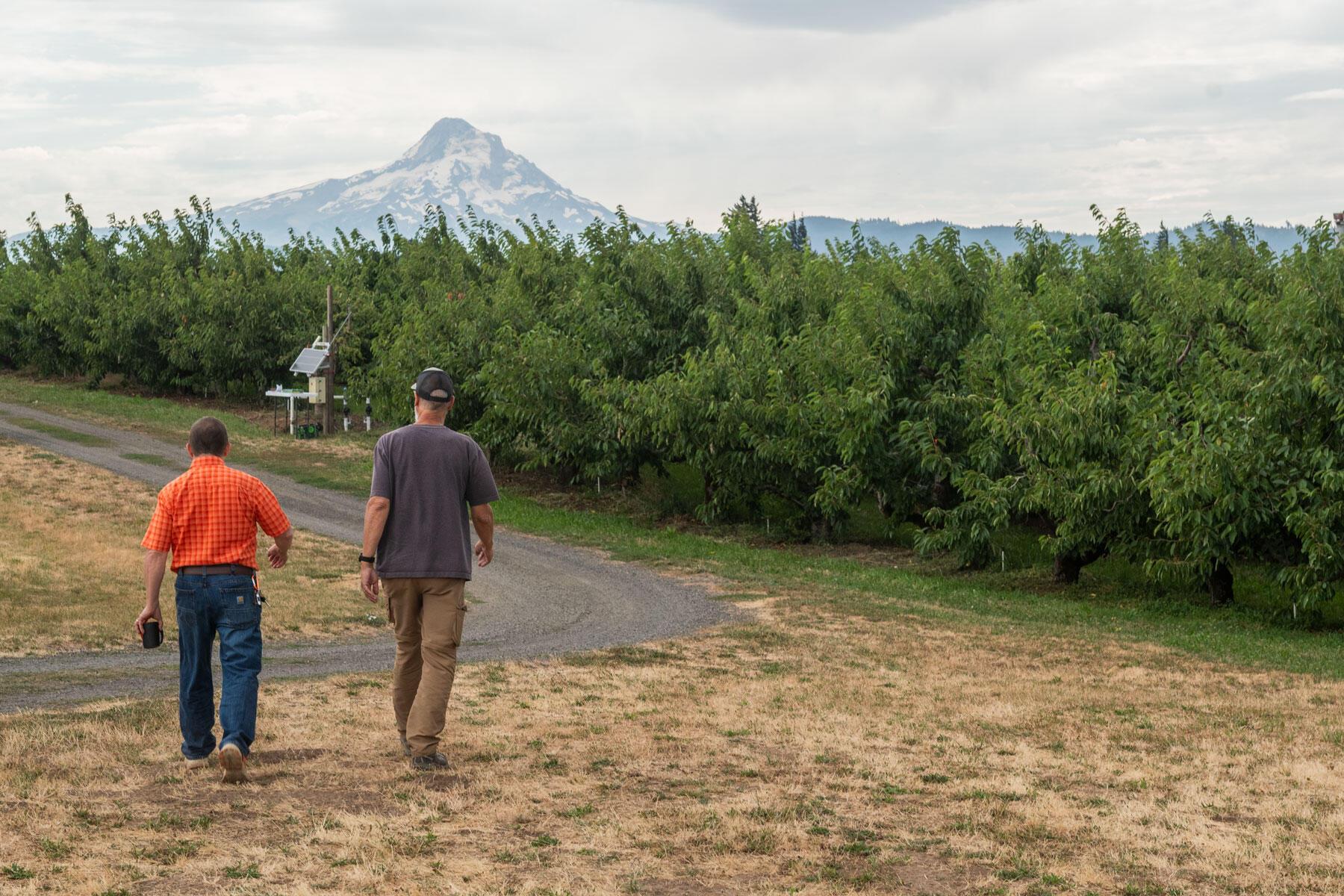
Tree fruit is the backbone of the Columbia Gorge agricultural economy. More than 22,000 acres of orchards in Hood River and Wasco counties produce over 450 million pounds of pears, cherries and apples each year, generating more than $200 million in revenue.
Supporting that industry is the Mid-Columbia Agricultural Research and Extension Center — one of 14 branch stations of the Oregon Agricultural Experiment Station, the research arm of the OSU College of Agricultural Sciences — and MCAREC’s partnership with the U.S. Department of Agriculture’s Agricultural Research Service.
Together with grower associations such as Columbia Gorge Fruit Growers, the Oregon Sweet Cherry Commission and the Washington Tree Fruit Research Commission, Oregon State and USDA scientists provide research and Extension programs in pest management, irrigation, fruit quality and new variety development.
Progress on SWD control
Chris Adams, assistant professor and Extension entomologist in the College of Agricultural Sciences, shared updates on controlling spotted wing drosophila, or SWD, a fruit fly and persistent pest of cherries and soft fruits. Adams explained that growers often spray pesticides weekly to suppress infestations, but the flies remain active after harvest and seek out overwintering habitats.
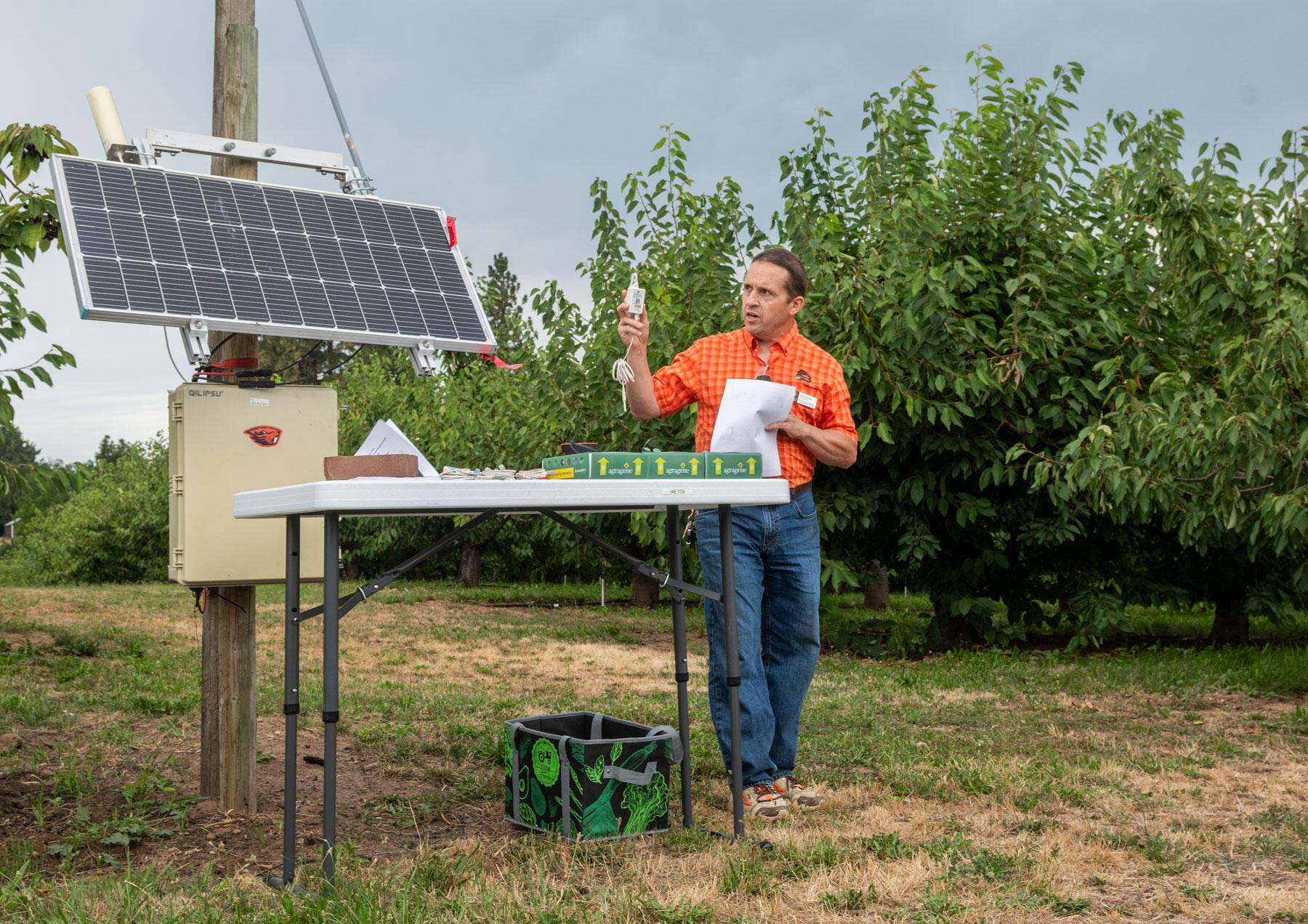
To better understand this cycle, Adams’ team partnered with M3 Agriculture Technologies to install a grid of microclimate sensors and monitoring traps. The data revealed SWD leaving orchards and surviving in nearby pine and oak fragments well into December and January. This opens the door to targeting overwintering populations with food bait and insecticides to reduce pressure in spring.
Adams also reported progress in biological controls, including parasitoid wasps that attack SWD in blackberry habitats, and non-pesticide approaches. His lab is testing a CRISPR-based sterile insect release strategy and Parka skin thickener, which showed promise in reducing egg-laying in lab trials.
“A multifaceted strategy targeting this pest at every stage of its life cycle is needed,” Adams said.
Establishing quince rootstock for high-density pears
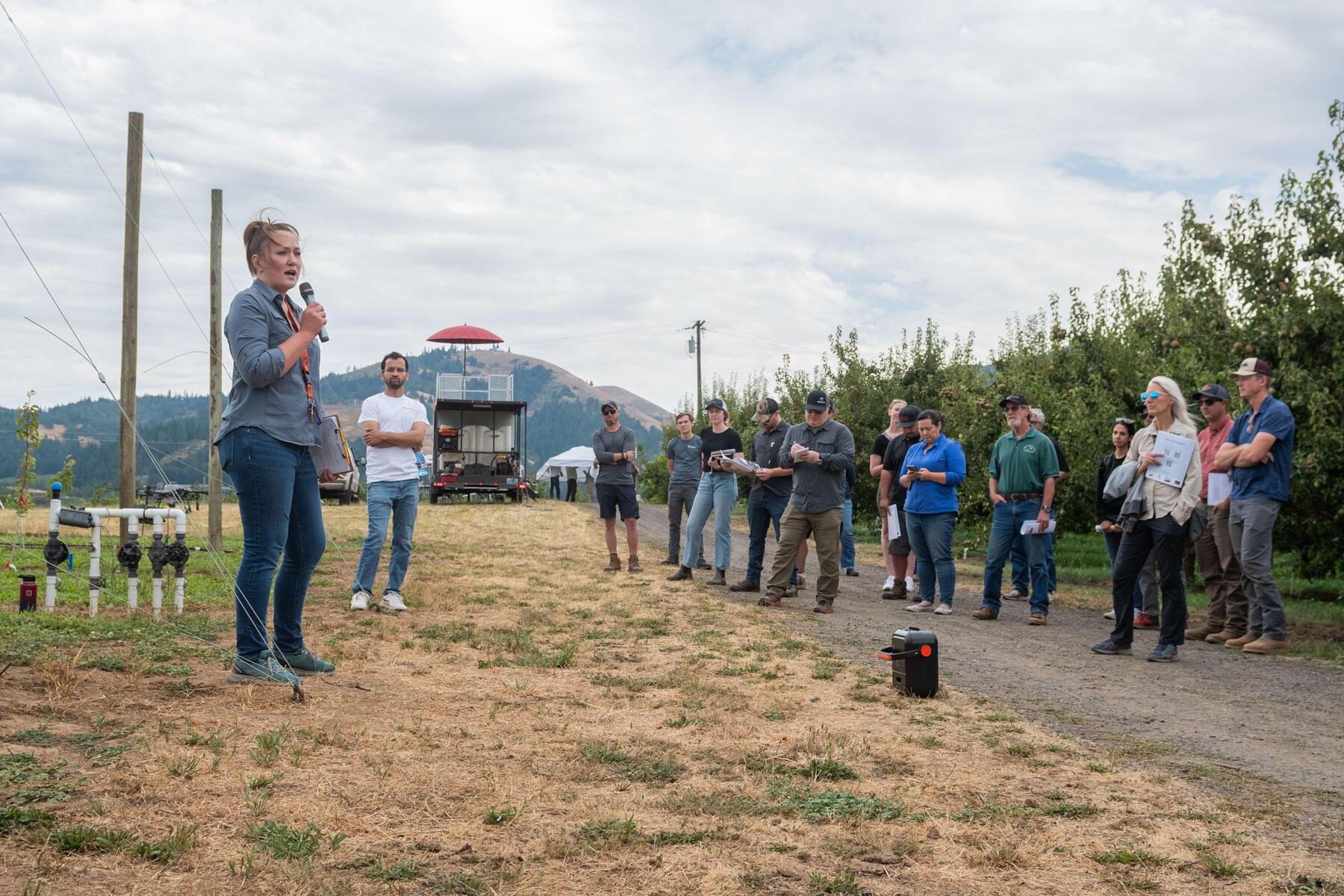
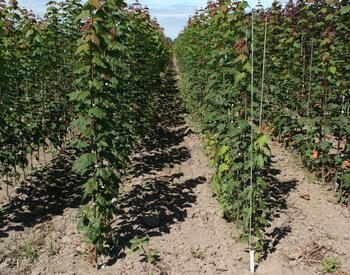
Kelsey Galimba, assistant professor and tree fruit horticulturist in the College of Agricultural Sciences, presented research on Quince Eline, a dwarfing rootstock widely used in northeastern Europe but not yet established in Oregon.
To test establishment practices, Galimba and her team planted a new orchard block at MCAREC this spring. Trials compared soaking durations of up to 96 hours before planting, as well as irrigation schedules ranging from weekly to daily.
Early data showed that longer soaks improved tree rehydration, though growth differences have not yet emerged. More frequent irrigation reduced tree stress at certain points, suggesting potential benefits.
“We’ll be monitoring growth, bloom and stress over the next three years to determine the best practices for this rootstock in our climate,” Galimba said.
New pear varieties reflect strong grower interest
Ashley Thompson, associate professor and Extension horticulturist in the College of Agricultural Sciences, introduced a new pear variety demonstration block designed to meet strong grower interest in alternative cultivars.
In a 2024 survey, 75% of orchardists indicated they wanted to test new varieties with better flavor, storage ability and resilience. Six experimental pears, including ‘Bell,’ ‘Bay 6467’ and ‘Salsa,’ were planted alongside standard varieties ‘Bartlett,’ ‘D’Anjou,’ ‘Gem’ and ‘Easter.’
Researchers will track growth, yield and fruit quality while working with federal partners on postharvest evaluations.
“Growers want pears that taste great off the tree and can stand up to modern markets,” Thompson said.
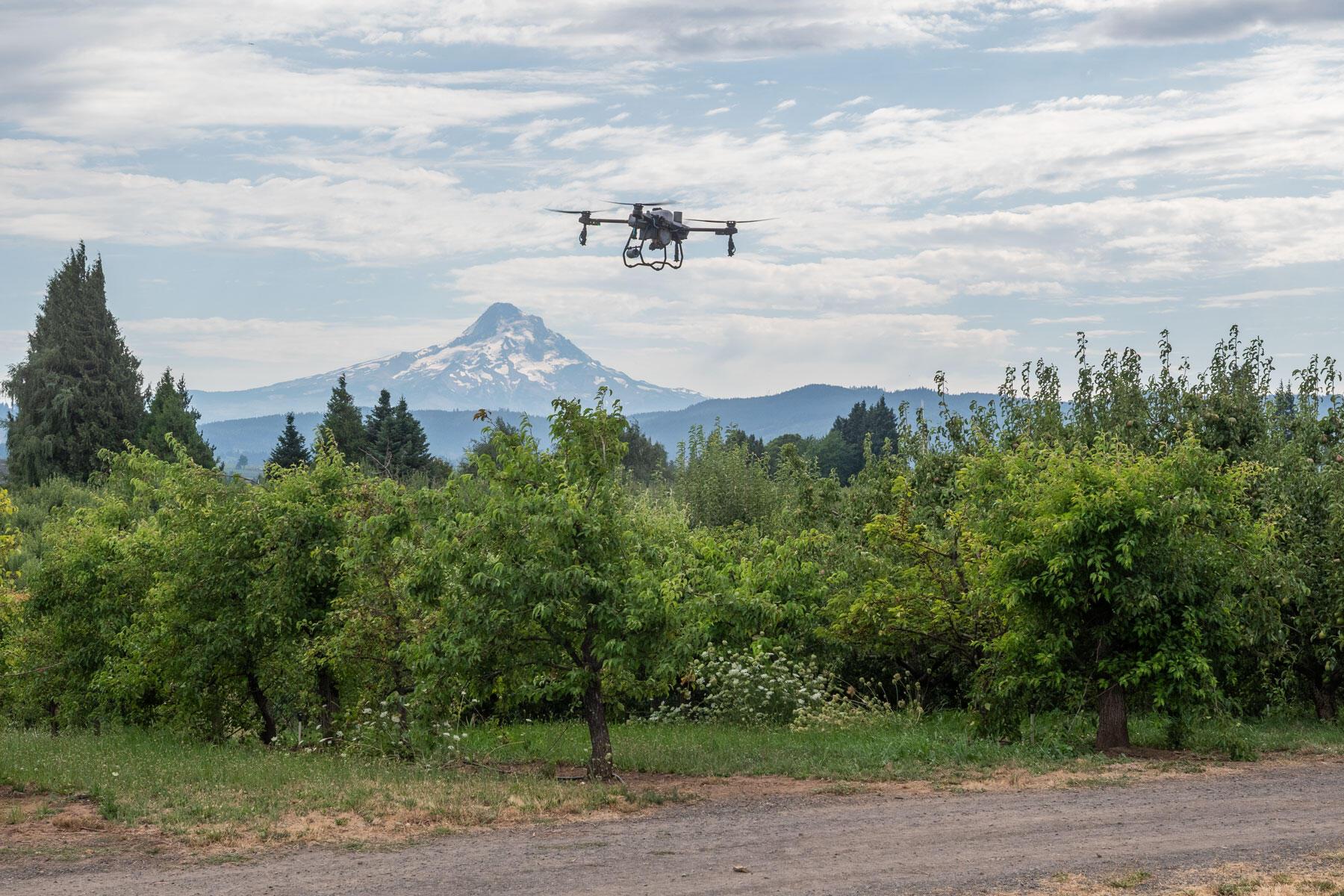
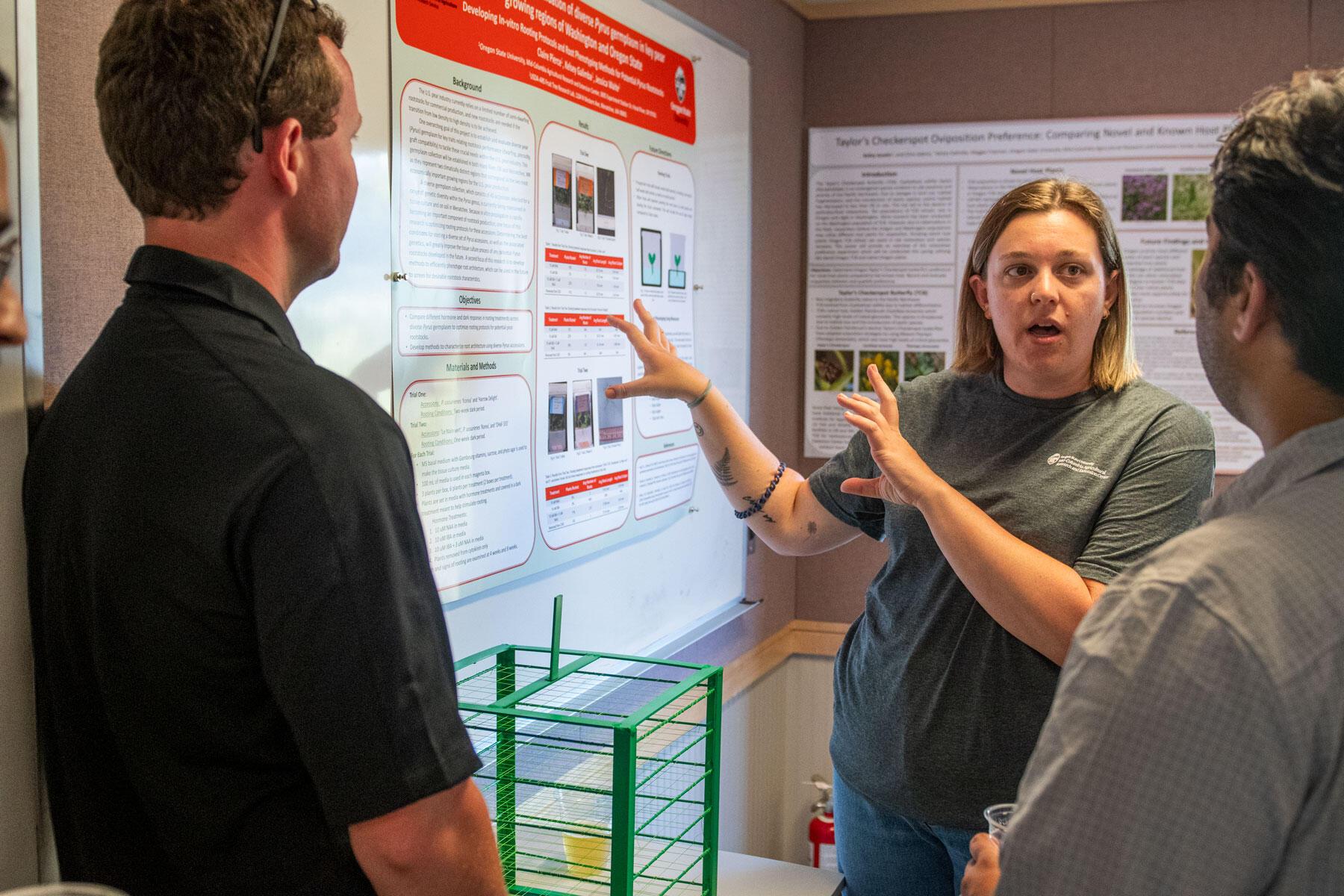
The field day also featured a precision agriculture drone demonstration by Mike Davis of Columbia Gorge Community College, plus a poster session in which Oregon State graduate students described their research.
The research at MCAREC ensures that Gorge orchardists have the tools they need to adapt to changing markets, pests and climate while sustaining the region’s fruit-growing legacy, according to center Director Brian Pearson.
“This field day underscores how science, innovation and grower engagement continue to drive the Gorge’s fruit industry forward,” Pearson said.