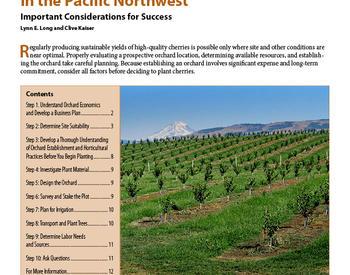
CORVALLIS, Ore. — Late winter, just before spring, is the best time to prune apple trees. When trees are dormant, the worst of the cold weather has passed, reducing the risk of frost damage to fresh cuts while allowing gardeners to influence spring growth.
“Pruning when the tree is dormant gives you the best chance to shape it for strong, healthy growth,” said Nicole Sanchez, horticulturist with the Oregon State University Extension Service.
There are several main goals when pruning an apple tree, Sanchez said:
- Control tree height so fruit remains within reach.
- Develop strong limb structure for better fruit production and overall health.
- Encourage new limb growth, which begins bearing fruit in its second year.
- Remove damaged or diseased wood to maintain plant health.
- Open the canopy to improve airflow and reduce disease risk.
- Promote new spur growth, since most apples grow on spurs formed on younger wood.
Tree size depends on rootstock and natural vigor. Most apple trees are grafted onto dwarf or semi-dwarf rootstock, which helps control height. Pruning young trees provides the best long-term control over size and shape.
Shaping young trees
“As the tree grows, monitor its height so it doesn’t outgrow your space or become too tall to harvest,” Sanchez said. “Once it’s as tall as you want it, prune the central ‘leader’ — the main upright limb — back to a lateral branch, then maintain that height year by year.”
Don’t expect significant fruit for the first four or five years. During this time, pruning should focus on establishing a strong framework rather than encouraging fruit production. “In the long run, the tree will do better if it puts its energy into root and limb growth early on,” Sanchez said.
How to prune
The ideal angle between the central leader and lateral branches is about 60 degrees. Limbs that form too narrow (acute) or too wide angles can weaken the tree. Acute angles trap bark and may split later; wide angles are structurally weak and encourage unproductive “water sprouts,” which should be pruned out each summer.
Encourage branches to grow outward rather than inward. Remove limbs that cross, compete, or shade the center of the tree. This allows air and light to reach interior branches, helping prevent disease and improving fruit ripening.
Different apple varieties produce fruit differently. Most modern varieties are spur-bearing, while many older types are tip-bearing.
“This distinction is important so you don’t accidentally prune away your fruiting wood,” Sanchez said. “If you know your tree’s variety, you can check with your local nursery or look it up online.”
Maintaining mature trees
Once a tree begins bearing, new branches will produce best for three to five years before tapering off. Prune out older, less productive branches to stimulate new growth and maintain a steady crop.
Tie flagging tape around underperforming branches during the growing season, then prune them out in winter. Summer is also a good time to remove diseased or damaged limbs — prune these as soon as you notice signs of decline.
Learn more
For more information, visit OSU Extension’s educational resources:
- Pruning with the Pros (video series)
- Pruning to restore an old, neglected apple tree
- Training and pruning your home orchard
Previously titled Apple trees benefit from proper pruning