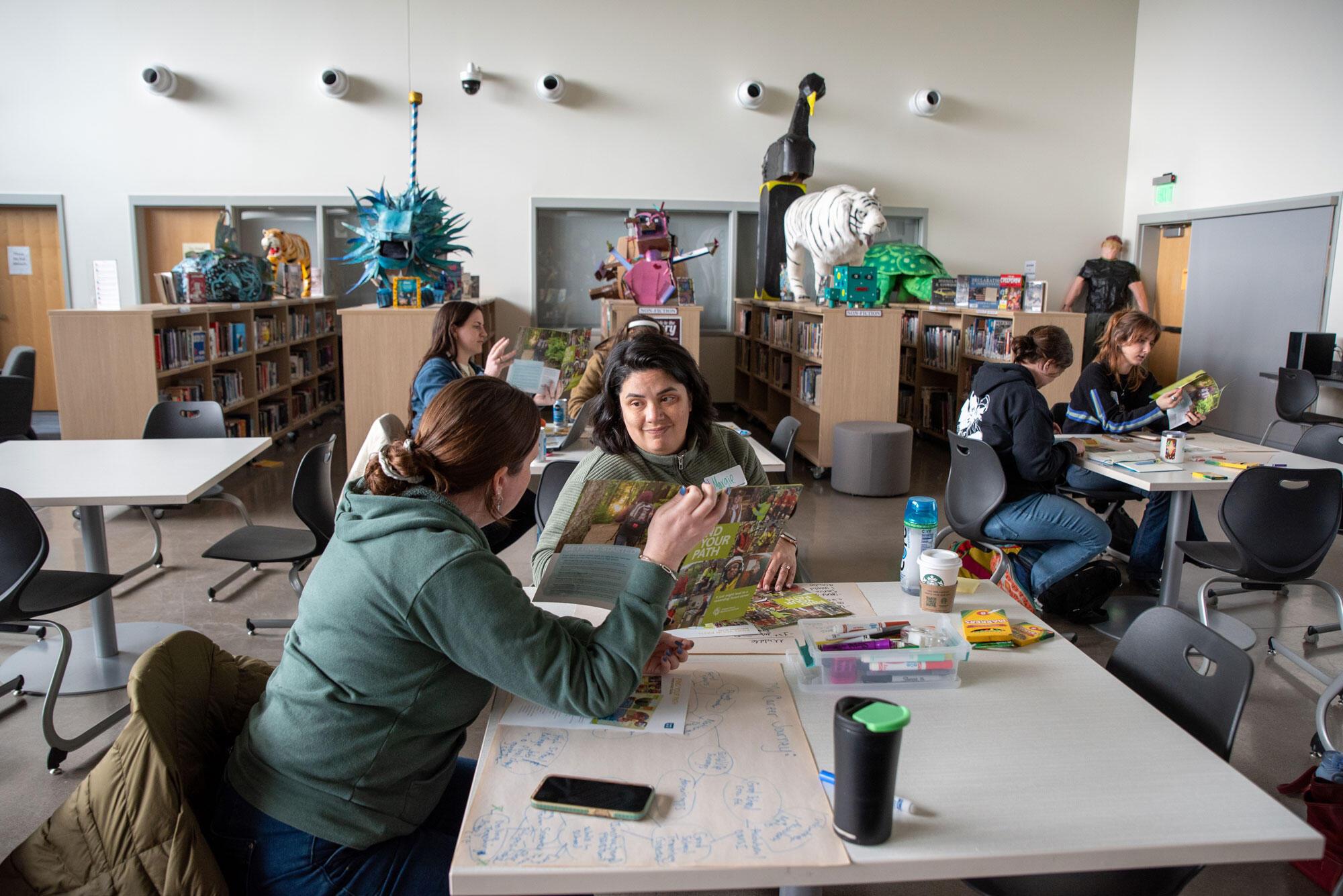
JUNCTION CITY, Ore. — In the library at Junction City High School, participants picked up markers and began sketching their career paths — winding, nonlinear journeys shaped by chance, opportunity and personal passion.
For some, the lines looped back on themselves. For others, they stretched across schools, camps and future ambitions.
“Students don’t always realize there are real careers outdoors. Helping them see that connection is where it begins.”
Shyla Chambers, who is from Grants Pass, traced a path that began at outdoor school as a fifth and sixth grader, continued through years as a high school student leader and led to work as a camp counselor.
“My first job was as a youth coach at the YMCA,” Chambers said. “That really sparked my love for teaching kids.”
Now preparing to attend Western Oregon University, Chambers plans to become a high school math teacher — while continuing to find opportunities to teach and work outdoors.
“I want to continue doing things that I love, and I love to teach,” Chambers said.
The exercise wasn’t just reflective — it set the tone for a workshop focused on helping students see that careers, especially in the outdoors, rarely follow a straight line.
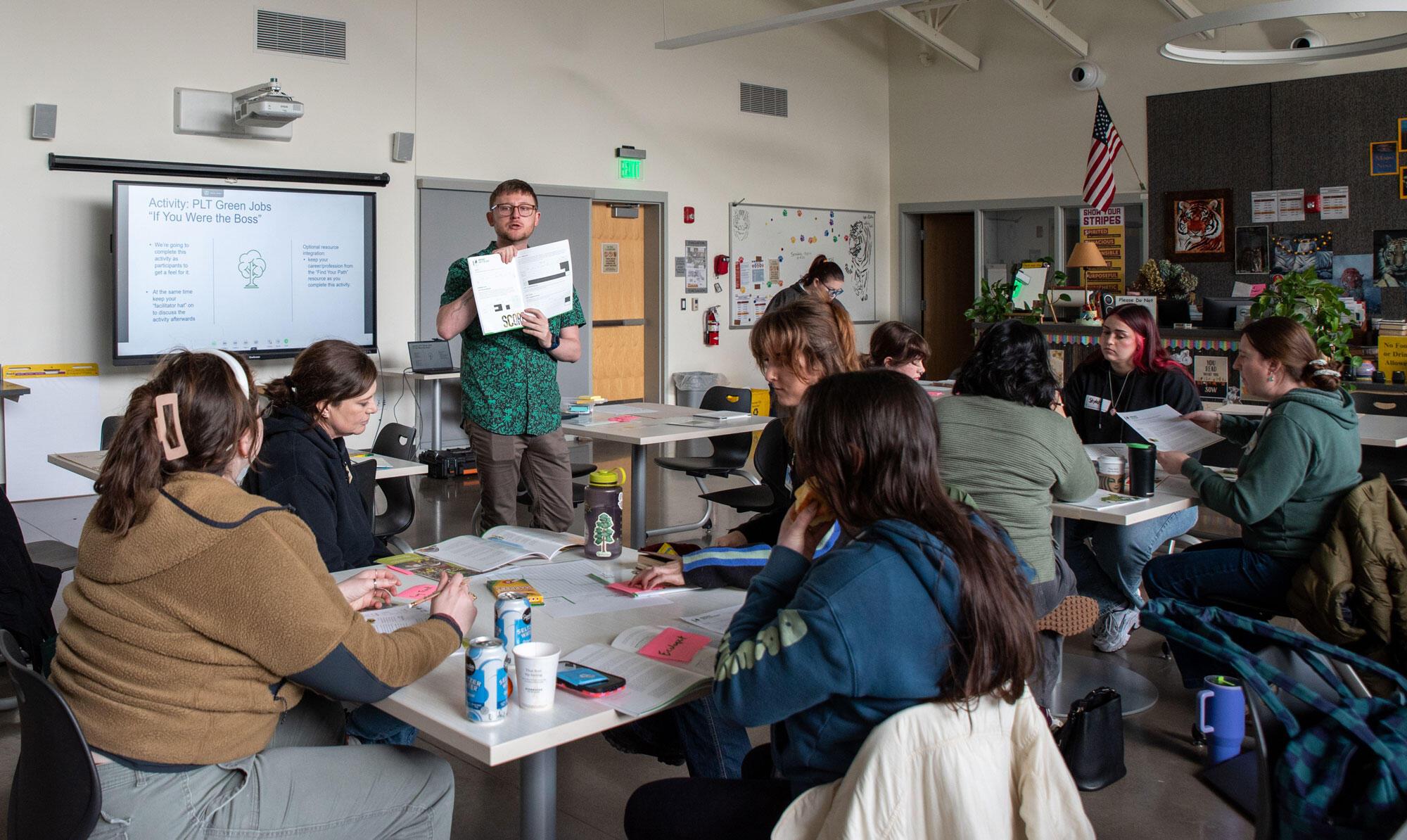
The workshop in March was co-hosted by two statewide Oregon State University Extension Service programs: the Oregon Natural Resources Education Program in the College of Forestry, known as ONREP, and the OSU Extension Service Outdoor School Program.
The workshop was led by Elliot Drake-Maurer, an ONREP facilitator and OSU Extension youth event coordinator; and Terah Stuve, an ONREP facilitator, principal at Territorial Elementary School and assistant principal at Junction City High School. It brought together educators, OSU Extension faculty and others from across Oregon.
The workshop highlighted how statewide OSU Extension programs and partner organizations can work together to make career exploration more accessible.
Connecting students to opportunity
The group discussed how to connect high school students with careers in forestry, natural resources and outdoor education.
As workforce needs shift and new career paths emerge, participants discussed the role adults play in helping young people understand what’s possible.
“How you think about education is different,” Stuve said. “The kind of work young people want to do — and the life they want to live — is changing.”
She emphasized that many of today’s career opportunities — particularly in outdoor and natural resource fields — weren’t widely known when current educators were in school.
“Youths are excited about hands-on learning,” she said. “Camp counselor jobs, outdoor school internships and guest speakers are all ways we can connect students to outdoor careers.”
That connection is increasingly important as Oregon’s outdoor recreation sector continues to grow and employers look to replace retiring workers across forestry, conservation and related fields.
“Outdoor jobs are in demand,” Stuve said. “There are also people retiring from these roles, and those jobs need to be filled.”
The power of opportunity knowledge
A central theme of the workshop was what Stuve calls “opportunity knowledge” — helping students understand not just what careers exist, but how to access them.
“I had a very limited view of what careers were out there,” Stuve said. “I was well into adulthood before I even knew what a silviculturist was, and I thought, ‘Wow, I would have loved to do that.’”
The workshop encouraged participants to use tools such as career pathway guides, guest speakers and personal storytelling to expand students’ understanding of available careers.
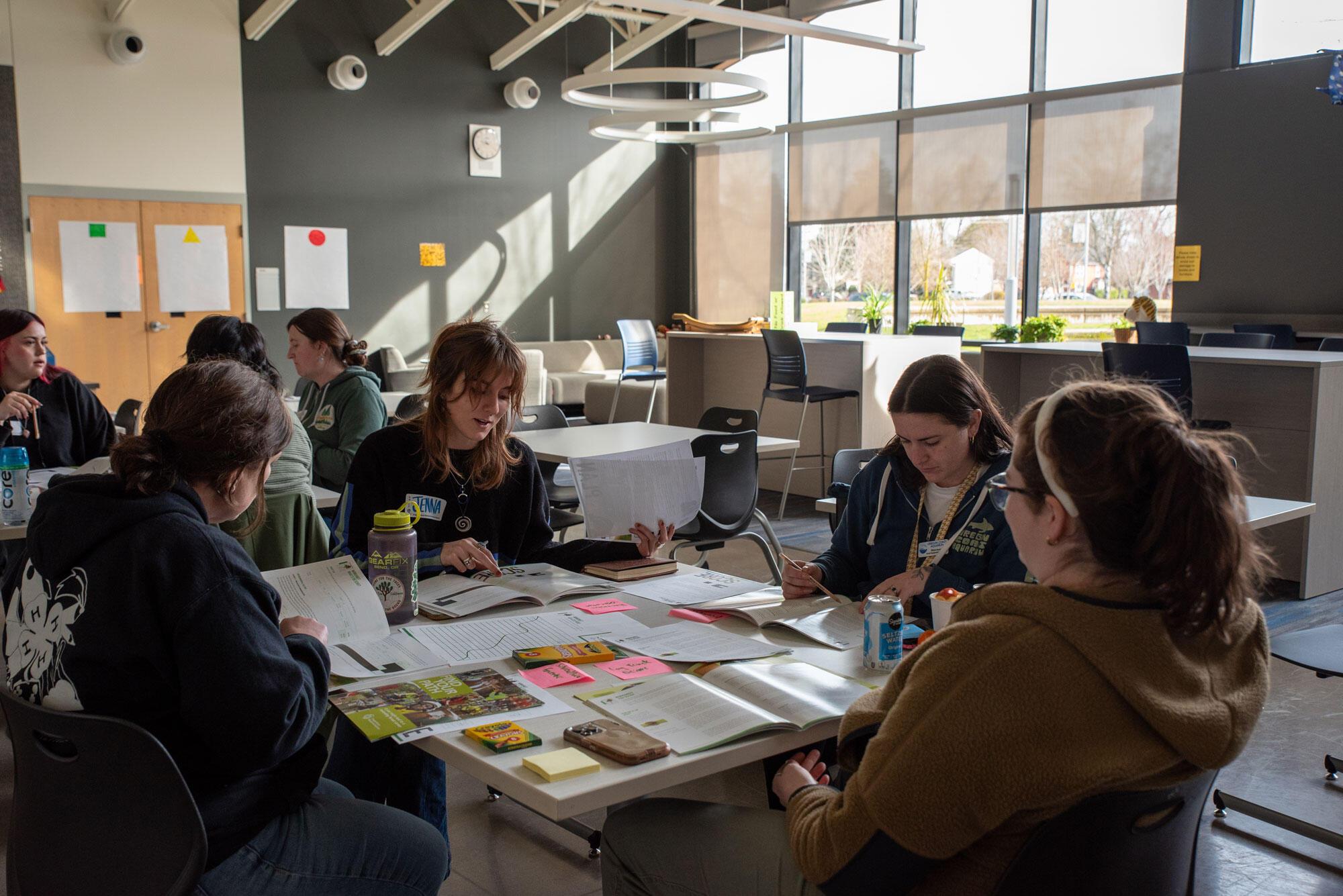
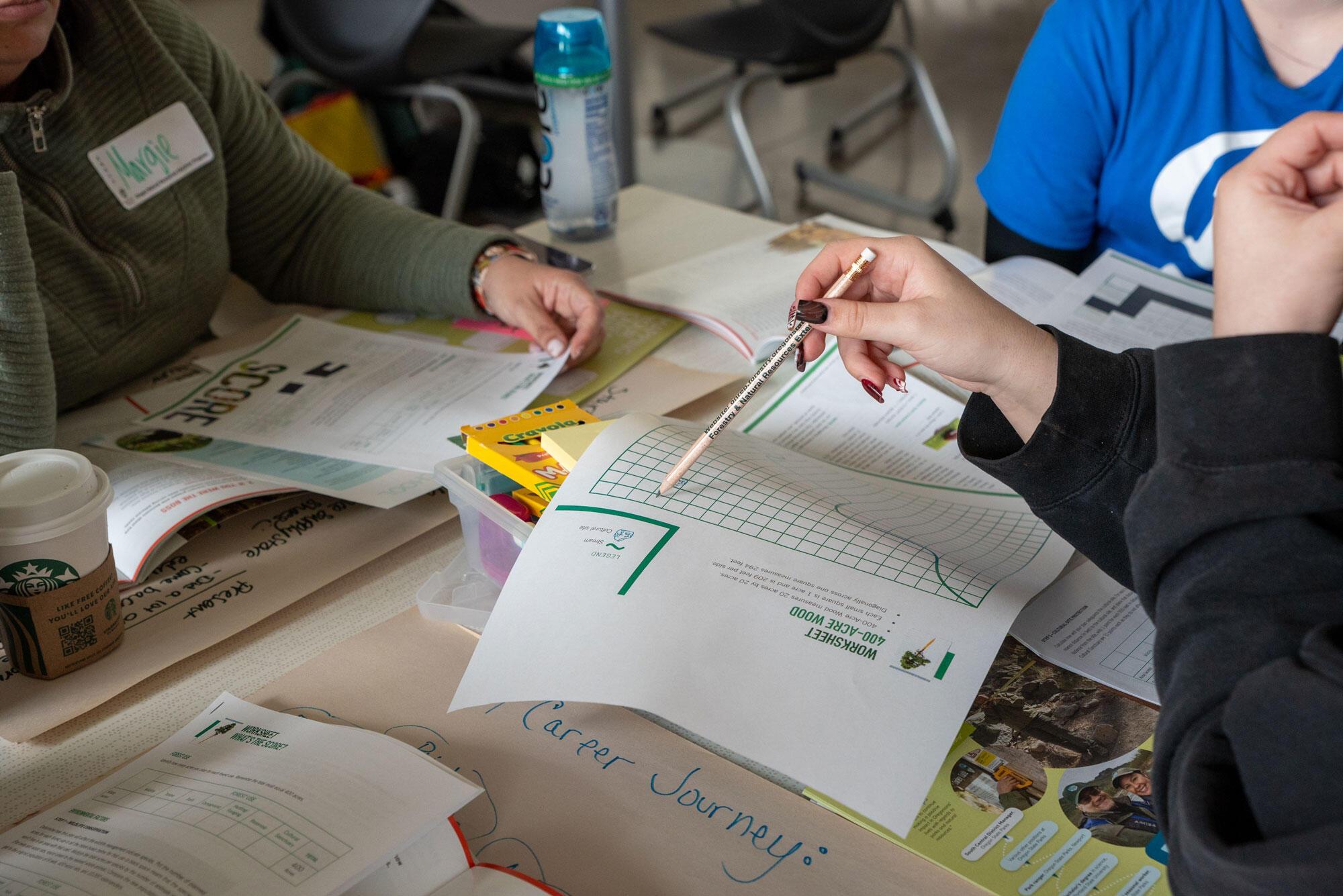
Participants engaged with several career exploration resources during the workshop, including Oregon Forest Resources Institute’s Find Your Path, a guide to the wide range of employment opportunities in Oregon’s forest sector and Project Learning Tree’s Green Jobs: Exploring Forest Careers Educator Guide, which includes four hands-on activities to help youths research forestry jobs and practice managing and monitoring forest resources.
They also reviewed the OSU Extension Service Outdoor School Program’s Career Skills Reflection Guide, developed for outdoor school educators and staff to help student leaders build real-world career skills through reflection and mentorship.
Hands-on learning builds engagement
Throughout the day, participants explored curriculum materials and shared strategies for integrating career exploration into their programs.
Stuve said hands-on, outdoor experiences are especially effective.
“Once students are outside, they’re usually very engaged,” she said. “Engagement is key.”
Those experiences can help students connect their interests — such as a love of the outdoors — to real career possibilities.
“We have a lot of students who are interested in the outdoors,” Stuve said. “But that needs to be connected to opportunity knowledge.”
Participants bring ideas back to students
For attendees like Margie Welty, the workshop provided both practical tools and new ideas to bring back to students.
Welty, a high school success specialist at Evergreen Virtual Academy, works with students across Oregon to explore career and college pathways.
“We’re looking for more opportunities for our students, especially internships,” she said.
Welty attended the workshop with Marissa Dey, who teaches career and technical education in forestry and natural resources at Virtual Career Academy. Together, they aim to expand students’ exposure to those fields.
“I really loved the pamphlet with information about community colleges and natural resource careers,” Welty said. “This booklet will be really helpful for giving students more information and exposure to different careers — and the different paths people take to get there.”
Dey also noted that resources such as OFRI’s Find Your Path help make those connections clearer for students by outlining real-world career options and education routes.
She said her program continues to grow.
“Our program really started because of student interest,” she said. “We’re one of the first virtual natural resource programs in the state.”
Both said the opportunity to learn from peers — including OSU Extension faculty and other partners — was just as valuable as the materials.
“The information you get from other educators is invaluable,” Dey said. “I’ve gotten ideas for pathways, internships and field trips.”
Building the next generation of stewards
For Stuve, the workshop’s goal goes beyond career awareness — it’s about preparing students to take on critical roles in the future.
“We need good stewards,” she said.
In communities like Junction City, where agriculture and forestry are part of the local economy, those careers may feel familiar. But Stuve said that isn’t the case everywhere.
“The more we can expose students to these opportunities, the more likely we are to find the next forest steward or water steward,” she said.
Expanding that awareness, she added, is essential for building a strong workforce and addressing future challenges.
“Getting more youths into these careers will help build a better future,” Stuve said.
And it starts with helping students see what’s possible.
“Students don’t always realize there are real careers outdoors,” she said. “Helping them see that connection is where it begins.”