
Livestock producers constantly face the challenge of managing manure and meeting environmental regulations. Composting is one strategy for handling manure. The benefits include reduced volume, enhanced soil fertility and texture, and reduced environmental risk.
The process
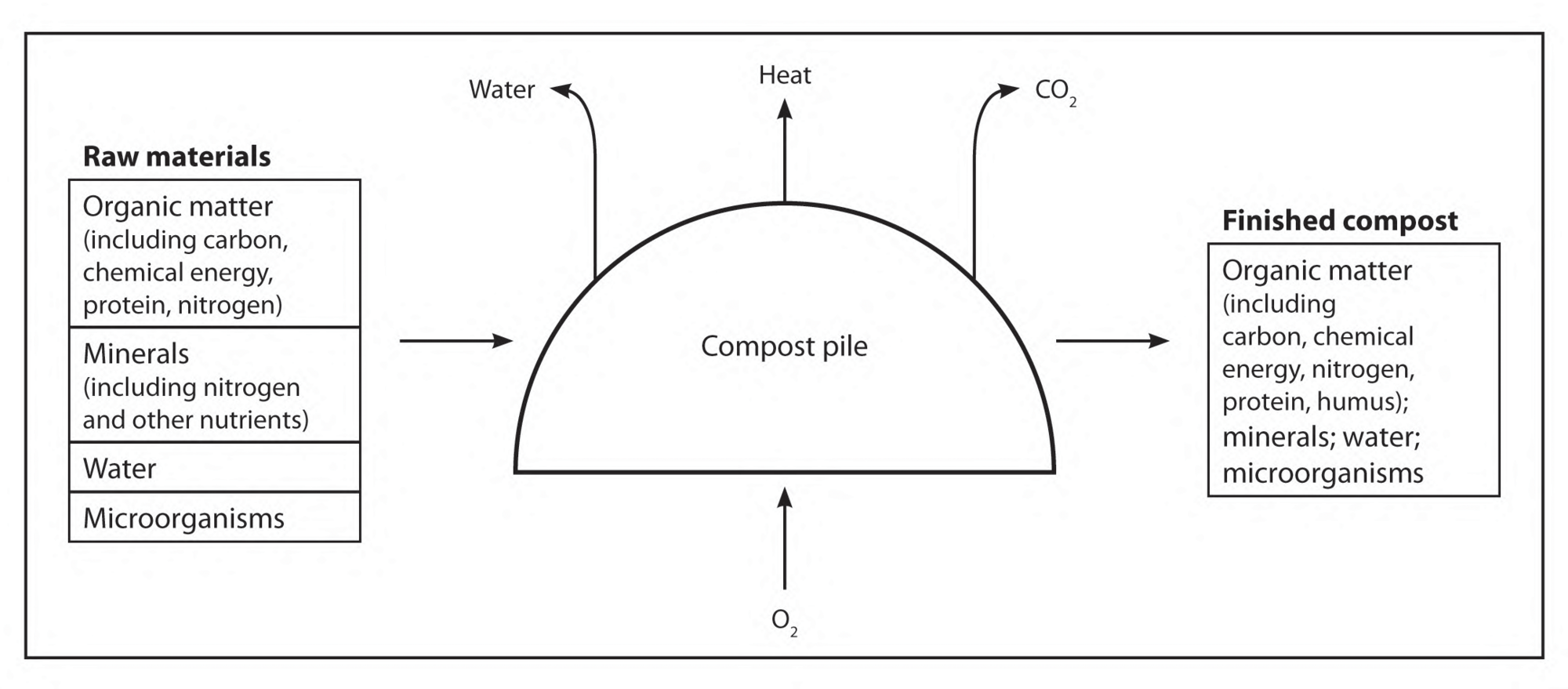
Composting begins as soon as organic waste is compiled. Organisms immediately begin to digest the materials and consume available oxygen. Byproducts of this process are carbon dioxide, water vapor and heat (Figure 1).
Composting is more than just piling the material and letting it sit, however. Composting is the active management of manure and bedding to aid the decomposition of organic materials by microorganisms under controlled conditions. Effective composting is affected by four major factors:
- Aeration
- Nutrient balance
- Moisture content
- Temperature
If these four factors are properly controlled, composting will take place at a rapid pace.
Aeration is the key element in efficient composting. Aerobic composting requires plenty of oxygen, more rapidly reduces material volume and stabilizes material and emits fewer noxious odors. Air can be provided by stirring or mixing the pile or forced in with fans or blowers (see “Equipment and Strategies”).
Turning promotes aeration of windrows without forced air. It restores pore space so that air can move through the pile more easily. It also mixes in the sections of the pile that have not reached the desired temperature.
Nutrient balance is determined by the ratio of carbon to nitrogen (C:N) in the compost pile. Composting usually is successful when the pile contains 20 to 40 parts of carbon per part of nitrogen. The ideal ratio is 25:1 to 30:1. If the ratio is too low, excess nitrogen is converted to ammonia and escapes into the atmosphere, causing undesirable odors. If the ratio is too high, the composting process proceeds more slowly.
Ideally, the moisture content of the compost pile should be about 60% after the original mixing. The general recommendation is to keep moisture content between 40% and 65%. Oxygen movement is inhibited when the moisture content exceeds 60%, and the process becomes anaerobic. Below 40% moisture, the rate of decomposition decreases rapidly. It may be necessary to add water if the compost becomes too dry or to cover the compost if it is too wet. As a rule, compost with 50% moisture will feel damp to the touch, and you will be unable to squeeze more than a few drops from a handful.
Compost pile temperature should increase due to heat given off by microorganisms as they metabolize the raw materials and increase in population. The pile will begin at ambient temperature and can reach as high as 160 °F in less than two days. Optimum composting occurs between 110°F and 150°F.
Turning the piles frequently ensures that all parts of the pile are exposed to these temperatures. Pathogen and weed seed reduction occur when compost remains at 131 °F or above for three days. Bacteria that can tolerate temperatures of 170 °F and higher can slow the process and leave byproducts that harm plant roots.
Composts rich in manure as a starting material tend to have a high pH at the beginning of the composting process, and drop toward neutral as composting is completed. Composts rich in plant materials tend to have a low pH at the beginning of the compost process and rise toward neutral as composting is completed.
Table 1 provides a summary of the recommendations for efficient composting.
|
Condition |
Reasonable range1 |
Preferred range |
|---|---|---|
|
Carbon to nitrogen (C:N) ratio |
20:1–40:1 | 25:1–30:1 |
|
Moisture content |
40%–65%2 | 50%–60% |
|
Oxygen concentration |
Greater than 5% | 12%–20% |
|
Particle size (diameter in inches) |
0.12–0.5 | Varies2 |
|
pH |
5.5–9.0 | 6.5–8.0 |
|
Temperature (°F) |
110–150 | 130–140 |
1 These recommendations are for rapid composting. Conditions outside these ranges also can yield successful results.
2 Depends on the specific materials, pile size and weather conditions.
Manure solids from a mechanical liquid–solid separator can be composted without additional material. It is often necessary to add bulking agents to manure for effective composting. Bulking agents can be added to adjust moisture content, texture or the C:N ratio. They provide structure to the pile, maintain pore space and encourage aeration. Common bulking agents are straw, spoiled hay, shavings or dry leaves. Chopping materials to a smaller particle size increases the surface area available to microbes, which speeds up the composting process. Excessive chopping can reduce airflow within the pile and should be avoided.
Curing is the final stage of composting. When available carbon sources have been consumed, bacterial activity decreases and the curing stage begins. Provided moisture levels are adequate, at this stage the compost will heat very little after turning. Compost used for livestock bedding or gardening, or compost packaged for sale should be cured for four to six weeks. If feasible, cover curing piles to reduce exposure to wind-blown weed seed. Compost applied to fields as fertilizer requires no curing.
Equipment and strategies
There are several methods of composting. This publication discusses the two most practical for livestock operations: turned windrows and aerated piles. Table 2 displays the processing times for these composting strategies.
|
Method |
Materials |
Active composting time (range) |
Typical active composting time |
Curing time |
|---|---|---|---|---|
|
Windrow—infrequent turning1 |
Leaves, manure + amendments | 6 months–1 year | 9 months | 4 months |
|
Windrow—frequent turning2 |
Manure + bulking agents | 1–4 months | 2 months | 1–2 months |
|
Aerated static pile |
Sludge + wood chips | 3–5 weeks | 4 weeks | 1–2 months |
1 For example, with a bucket loader.
2 For example, with a special windrow turner.
Turned windrows are long, narrow piles, which are agitated or turned on a regular basis (Figure 2). Eight weeks is the common period for complete composting with windrows in dairy operations, with the piles being turned at least five times.
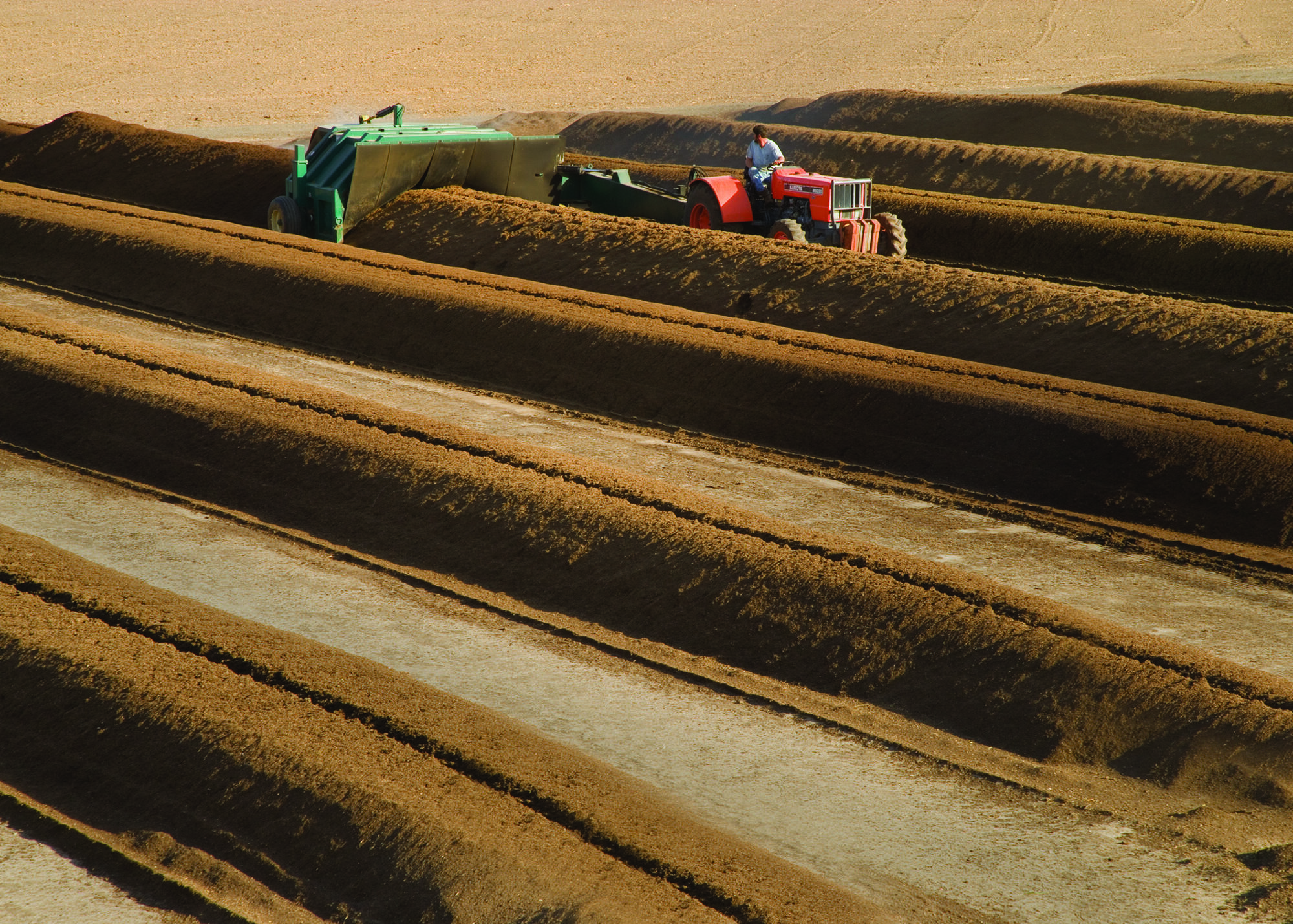
Equipment choice and the starting materials will dictate the size of the windrows. If the windrow is too large, the center of the pile will be anaerobic and bad odors will be released when the pile is turned. If the windrow is too small, it may lose heat too quickly and the pile will not achieve temperatures high enough to evaporate moisture and kill pathogens and weed seeds.
Frequent turning of windrows maintains the desired porosity and releases trapped heat and gases. Turning also exchanges the material so that all of it can be exposed to high temperatures. When the temperature drops below 110°F, the microbial activity has declined and the pile should be turned. When the temperature doesn’t increase after turning, the composting process is complete, provided moisture content is adequate.
For small amounts of material, a front-end loader or tractor with a bucket can be used to turn the windrows. For large amounts of compost, it may be more efficient to purchase special equipment, which will create neat windrows and bring the bottom of the pile to the top. Machines vary dramatically in size, efficiency, and cost.
A second composting method uses static (unturned) aerated piles that are not moved until the process is complete. A pipe or pipes running through or beneath the pile provide aeration. An air supply is hooked up to the pipe to blow or suck air through the pile, maintaining a constant supply of air. This process allows composting to be completed in three to five weeks. The odors are minimal, but holes in the pipe commonly clog. It's essential to monitor compost moisture levels when running a constant air supply.
Windrow composting is fairly labor intensive and requires frequent attention. Aerated piles require most labor when they are created or removed. Aerated piles occupy less land area and may be covered with a roof, if necessary.
Composting to dispose of dead animals
It is legal to compost livestock mortalities in Oregon; however, if you have a permitted confined animal feeding operation (CAFO), you must have a composting plan on file with the Oregon Department of Agriculture. The plan must include a drawing of your composting area, a description of how runoff from the compost piles will be contained, a description of the composting process you will use, and a description of how the compost will be used on the farm.
Composting of animal carcasses must be done on concrete or a similar impervious surface that prevents nutrient leaching. In Western Oregon, it is wise to have a roof to protect the pile from rainfall. Bins or walls around the compost pile make turning the compost easier.
The basic composting process is relatively straightforward. Lay the carcass on a 12-inch layer of dry straw or dry manure solids. A small opening in the body cavity will prevent bloating. Cutting open the body cavity and large muscle groups speeds decomposition; however, it is not necessary. Cover the carcass with 3 feet of manure solids.
Maintain the moisture content of the pile similar to silage: damp but not wet. Add manure solids to maintain coverage and water as needed. The pile should be turned every four weeks for five turns. It must heat to above 131°F for three days following each turning to reduce pathogens dangerous to humans. The carcass should be fully composted in about 150–180 days. Bone residue should be minimal. The compost can be spread on crop fields at agronomic rates.
Applying this compost to crops directly consumed by people is not recommended. It should only be applied to hay, corn, winter wheat, tree plantations, forestland and similar land uses.
Regulations
If all of your compost material is generated on the farm, none of it leaves the farm and you do not operate a confined animal feed operation on the site, you are not required to have a compost management plan on file with the Oregon Department of Agriculture.
Confined animal feeding operations operating under Oregon CAFO general or CAFO individual permits must include their composting operation in their animal waste management plan. CAFO permits are issued by the Oregon Department of Environmental Quality. Details of animal waste management plan requirements and assistance are available from ODA.
All composting operations that compost 100 or more tons of feedstock per year, or more than 20 tons per year of animal carcasses or meat waste, must submit screening information to the Oregon Department of Environmental Quality. The regional DEQ office can help you determine the size of your facility and assemble the required screening information.
Uses for compost
Two common uses for compost in livestock operations are as fertilizer or for livestock bedding. The stable forms of nutrients in composted manure are released more slowly to plants than are the nutrients in fresh manure. Typically, only about 15% of the nitrogen in the compost will be in plant-available forms the first year. Soil microbes play a key role in changing the molecular form of nutrients in compost into plant-available forms. This slow release will be beneficial in the long run, as the material will continue to release nitrogen to crops in succeeding years. The material is low in odor, and relatively free of pathogens and weed seeds. Applied in moderation, it does not cause leaching problems.
Many dairy farmers have questioned the value of compost as a bedding material. They are concerned that the material will be contaminated with bacteria and cause mastitis or other health concerns. However, if properly composted so the material has been heated and dried, compost is no more risky than any other plant-based bedding such as sawdust. The materials are available on the farm and provide a comfortable bedding for cows.
Compost can be sold bagged or in bulk to nurseries, garden stores and gardeners.
Advantages and drawbacks of compost
Advantages of composting include soil conditioning, a marketable product, improved manure handling (reduced volume), lower risk of pollution and nuisance complaints, pathogen destruction, and possible bedding for animals.
- Compost adds organic matter to pasture soils and can reduce the need for fertilizers. It reduces the potential for soil erosion. The nitrogen in compost is less susceptible to leaching than the nitrogen in manure. Some ammonia is lost during the composting process, but less than is lost after fertilizing with manure. Properly prepared compost has fewer viable weed seeds than manure.
- Composted manure is easier to handle than other forms of manure. The volume and weight of the material are reduced because of the loss of moisture. Compost can be easily stored and applied as needed.
- Composting can reduce odor complaints, runoff into streams and flies.
- Proper composting will reduce pathogens.
- Compost is a safe and effective bedding material for livestock, including milking cows.
- One of the greatest advantages may be the potential for a marketable product. Buyers could include gardeners, landscapers, vegetable farmers, turf growers, golf course operators and ornamental nurseries. The price will depend on the demand in your area and the quality of the product. Selling compost may require you to file a compost management plan with ODA.
Drawbacks of composting include time, space, and money requirements; odor; the need for protection from rain; increased salinity; herbicide carryover; potential loss of nitrogen; and slow release of nutrients.
- Composting requires equipment, labor, and management. The initial investment may be low if existing farm equipment can be used. But extensive composting may require special equipment, which can be expensive.
- Extensive composting may occupy a large area. In high-rainfall areas, a roof may be required.
- Composted manure contains less readily-available nitrogen than fresh manure. Either material will lose nitrogen if stored uncovered.
- As manure and wastes are composted and dried, the salt concentration increases. Some plants are very sensitive to soil salinity and may be damaged by excess compost applications. Seek advice from a local crop advisor if soils are high in salts.
- Composting does not break down some herbicide residues. Herbicide residues persisting in compost can harm crops. Seek advice from a local crop advisor if you observe crop damage consistent with herbicide residues.
- Most of the nutrients in compost must be mineralized in the soil before they become plant-available. Often, less than 15% of the nitrogen is plant-available in the first season after application. This might be a problem if fields are very nitrogen deficient; however, the nutrients will become available in future years.
Conclusion
Composting is a natural process that can be accelerated by proper management. The result is a stable, volume-reduced product that can be sold, applied to fields, or used as livestock bedding.
The land area, type of equipment already available, market potential in the area, available labor, and many other factors play a role in determining the best composting system. Explore the different options and talk with others who are familiar with composting. Read the regulations section of this publication carefully to determine whether you should consult with the Oregon Department of Agriculture or the Oregon Department of Environmental Quality.
For more information
On-Farm Composting Handbook. NRAES-54. (1992) Ithaca, NY: Plant and Life Sciences Publishing (formerly Northeast Regional Agricultural Engineering Service), Cornell University Cooperative Extension.
Oregon Department of Agriculture, Natural Resources Division
Oregon Department of Environmental Quality
Related publications


