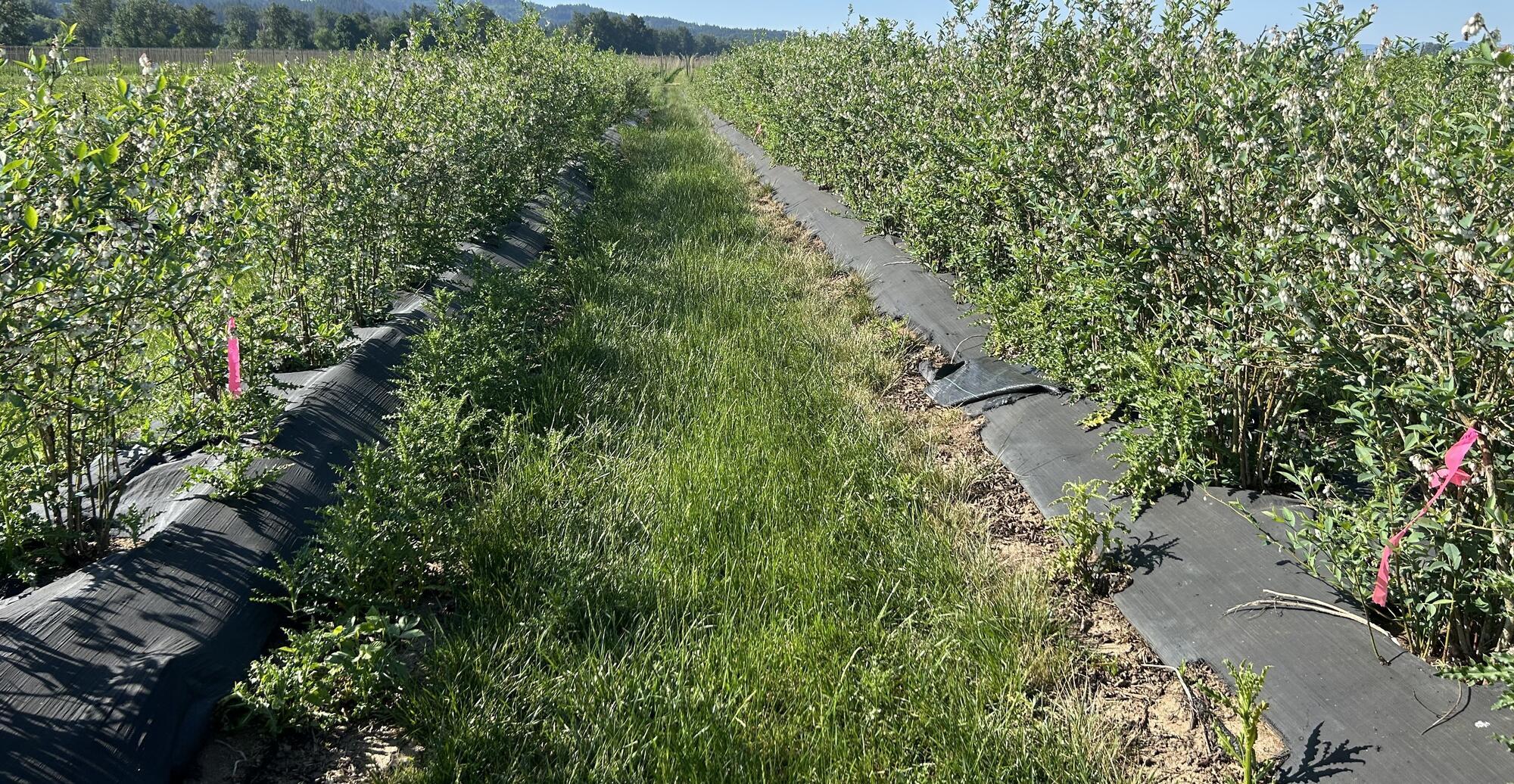
Every organic blueberry grower in the Pacific Northwest knows this midseason moment: The canopy looks great, fruit is setting, and then the understory explodes with Canada thistle, field bindweed and other deep-rooted perennial weeds pushing through mulch and into the row.
Hand crews can’t keep up, cultivation is risky near shallow feeder roots and drip lines, and the next flush of weeds arrives before the last one can be contained. Traditional methods, such as hand-weeding, cultivation and mulching, are costly and often fail to control deep-rooted perennial weeds.
Field studies by Oregon State University weed scientists evaluated electrical weed control as a nonchemical tool that can complement organic weed management programs by using electricity to injure and kill weeds. From 2022 to 2024, our team conducted five on-farm studies in commercial, certified organic blueberries to answer the questions growers ask first:
- How slow is “slow enough”?
- Do multiple passes help?
- What does it cost in energy to hold control through the season?
We found that a slower, single application 0.3–0.6 mph (0.5–1 km/h) delivers strong, reliable control, while strategic, faster passes 1.2–2.5 mph (2–4 km/h), tested in multiple applications two or four weeks apart, kept weed pressure low throughout the season.
Why consider electrical weed control?
Weeds are a persistent challenge in organic blueberry production. Some perennial weed species, like Canada thistle or field bindweed, regrow from underground structures, making it difficult to suppress with standard organic practices. Techniques like flaming, steaming or mulching can reduce weed pressure, but high costs, shallow penetration and the need for repeated applications limit their effectiveness.
Electrical weed control offers an alternative nonchemical method that delivers high-voltage electricity through the weed’s tissue. The energy travels down into the roots, heating cell contents and breaking plant cell walls.
Compared to other heat-based weed control methods, electrical weed control requires significantly less energy to achieve the same results. For example, flaming or steam treatments usually achieve the same results but demand 10 to 20 times more energy. In our blueberry trials, electrical weed control provided over 80% weed control using only a small fraction of the energy used by those methods. This is because electricity moves directly through the plant, heating it from the inside out, instead of just burning or scalding the surface contacted by the flame or steam.
Our field studies in growers’ organic blueberry fields have shown that electrical weed control consistently reduced weed growth and helped manage tough perennial species without herbicides.
Any new technology comes with both strengths and challenges. Understanding these factors can help growers determine whether electrical weed control is a suitable fit for their operation.
Advantages:
- Works on both annual and perennial weeds.
- Compatible with organic certification.
- No chemical residues or reentry restrictions.
- Safe for mature blueberry plants when applied correctly.
Limitations:
- High initial investment for equipment ($80,000–$150,000).
- Potential for fire risk in dry conditions.
- Slightly moist soil provides better conductivity. Efficiency can drop if the soil is too dry or too wet.
How does electrical weed control work?
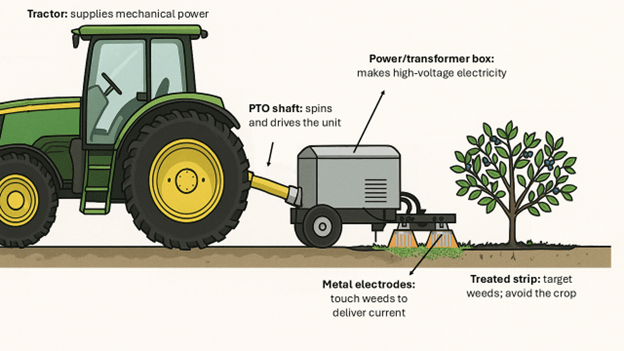
The electric weed control unit consists of two components: a transformer and an applicator. The transformer is driven by a power take-off: It converts mechanical energy from the tractor’s power take-off into high-voltage electricity.
The electricity flows to metal electrodes on the applicator. As the electrodes contact a weed, the current flows through the plant, into its stems and roots. The circuit is completed when the current returns to the electrode. As internal moisture heats up, plant cells expand and rupture, leading to plant death.
To protect the crop, shielding prevents the electrodes from touching blueberry crowns or canes themselves, allowing them to touch only weeds in the strip next to the row.
Good contact between the electrode and the weed foliage is essential for effective weed control. Electric weed control operators should adjust the height and angle of the electrodes to match the height of the weed canopy.
Our fieldwork showed that a slower ground speed provides greater electrode-weed contact time. The result is deeper injury to the weed plants.
We tested electrical weed control in five commercial organic blueberry fields in the Willamette Valley from 2022 to 2024. All sites were certified for organic production and mulched with sawdust and plastic weed mat.
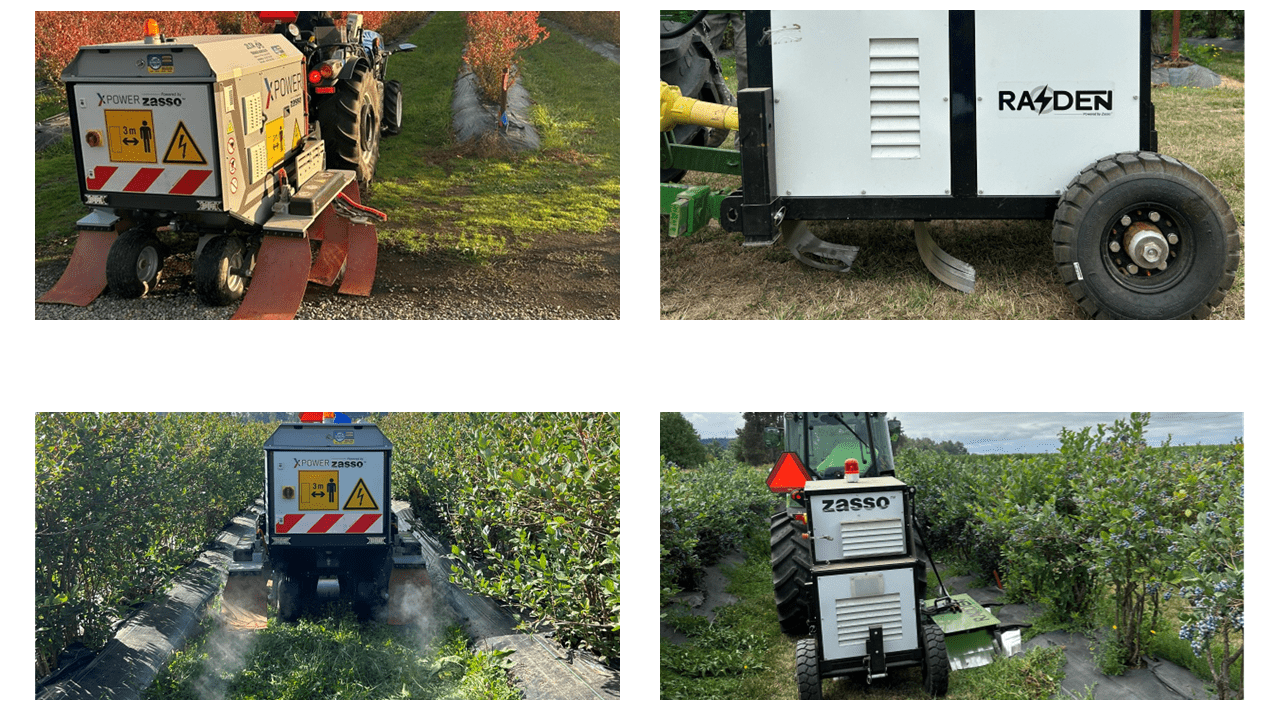
We tested two commercial tractor-mounted EWC systems from Zasso Group AG:
- Raiden unit (6 kW) — Compact system for small plots.
- XPower XPS (24 kW) — Commercial system for orchards.
Treatments included:
- Tractor speeds ranging from 0.3–2.5 mph (0.5 to 4 km/h).
- One, two or three passes, two weeks apart.
- Combinations of mowing and electrical weed control.
Each treatment was applied along blueberry rows and compared to a nontreated control. We visually assessed weed control and quantified weed biomass for up to eight weeks post-treatment.
Findings from work in organic commercial fields
Slower speeds mean better weed control
In our field studies, slower driving speeds (0.3–0.6 mph, 0.5–1 km/h) provided the best results, with weed control reaching up to 89%. At faster speeds (1.2–2.5 mph; 2–4 km/h), control was reduced because the electrodes had less time to transfer energy into the plants. Some weeds recovered when electrical weed control was applied at faster speeds.
If time and field conditions allow, operating at a slower speed for the first application can help ensure a deeper, more effective kill of both above- and below-ground weed tissues.
Two passes at moderate speed work as well as one slow pass
In our studies, making two passes at 1.2–2.5 mph (2–4 km/h) provided the same, or even better, weed control than a single slow pass. Sequential passes are especially useful for perennial weeds that tend to regrow, since the second treatment targets any shoots that emerge after the first application.
Mowing before EWC improves efficacy
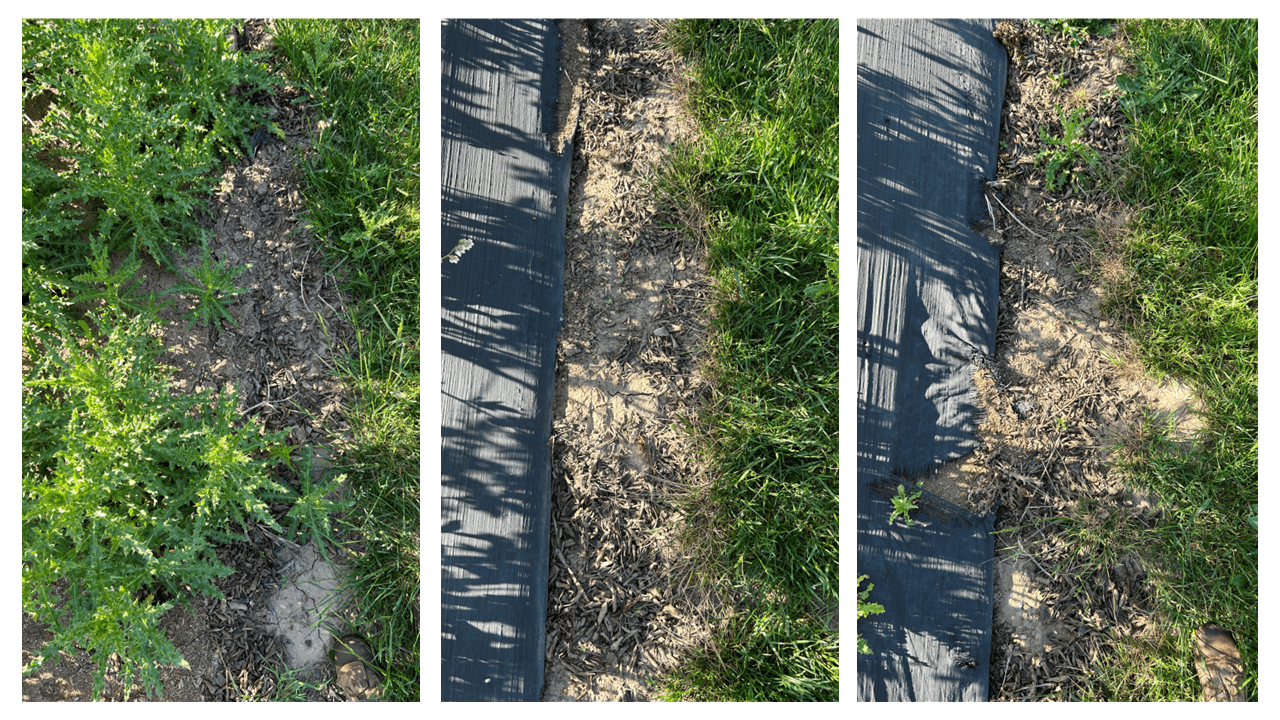
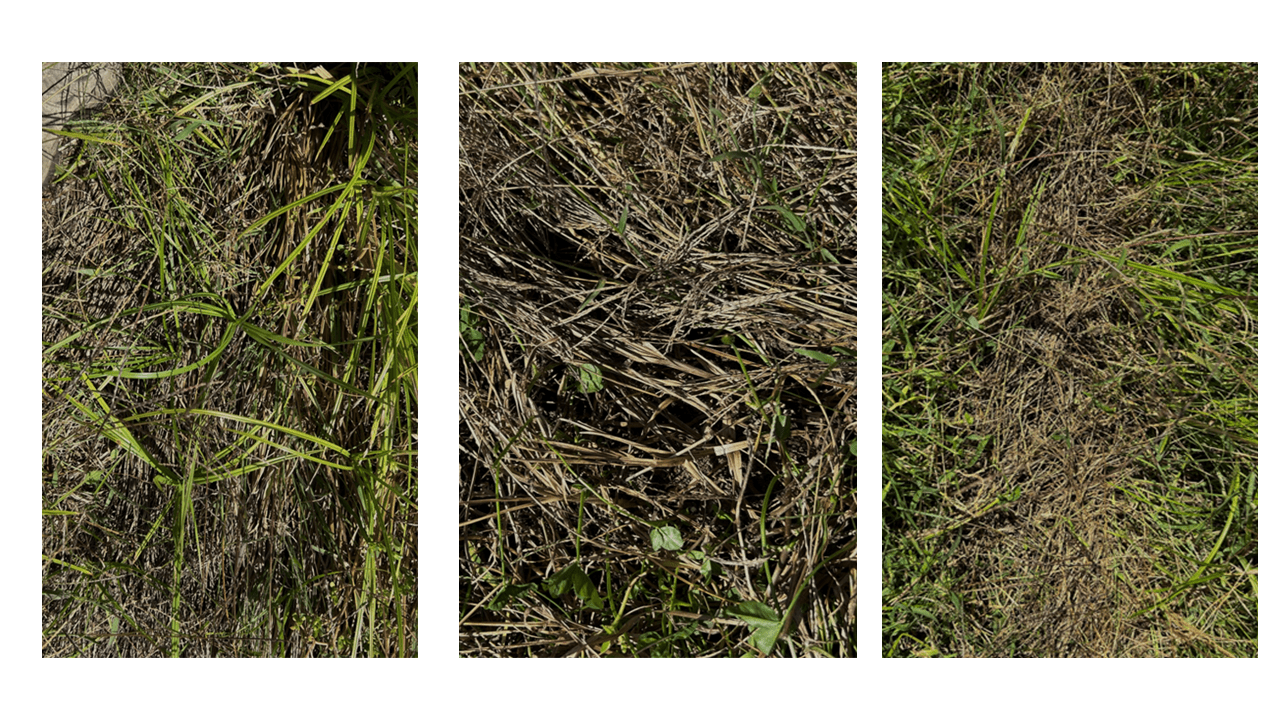
In fields with dense or tall weed growth, mowing before electrical weed control can make a big difference. Our field studies showed that mowing before treatment with electricity improved energy contact with the weeds and increased control, reducing weed biomass by about 72%. Mowing after electrical weed control did not improve results.
When weeds are tall or densely clustered, their height and density can prevent the electrodes from making good contact with the lower foliage and stems, where the electric current needs to pass to reach the roots. An initial mowing exposes new growth and reduces shading, allowing the electrodes to reach the base of the plants more evenly. This is especially helpful in perennial or mixed stands, where thick weed canopies can otherwise limit treatment effectiveness.
Species-specific results
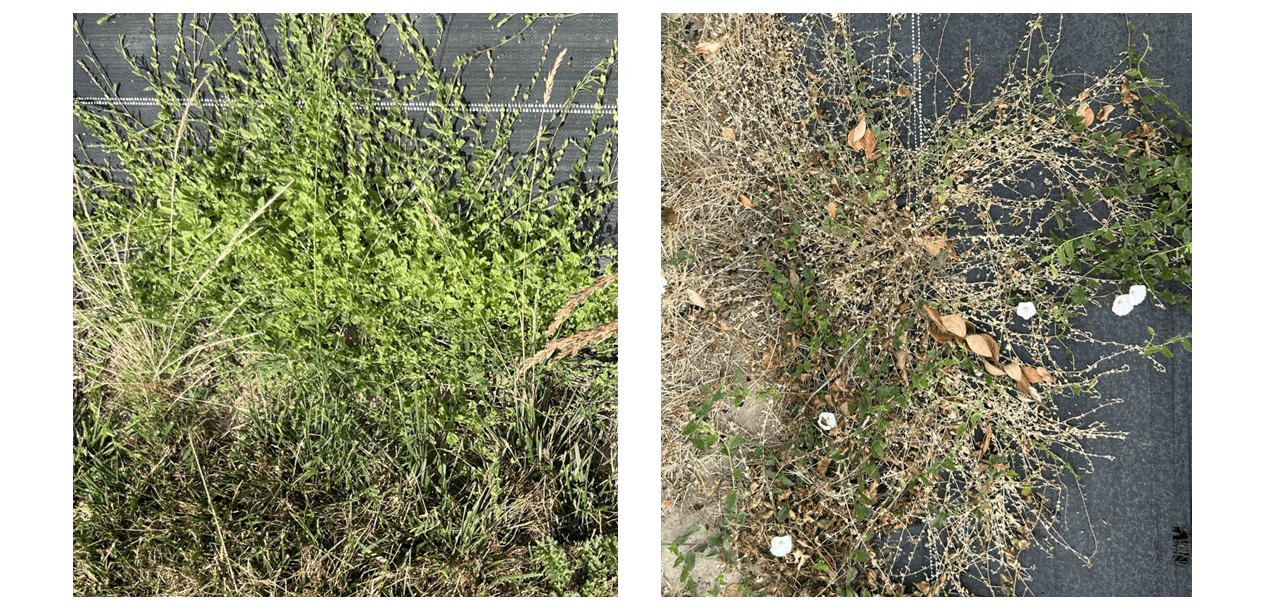
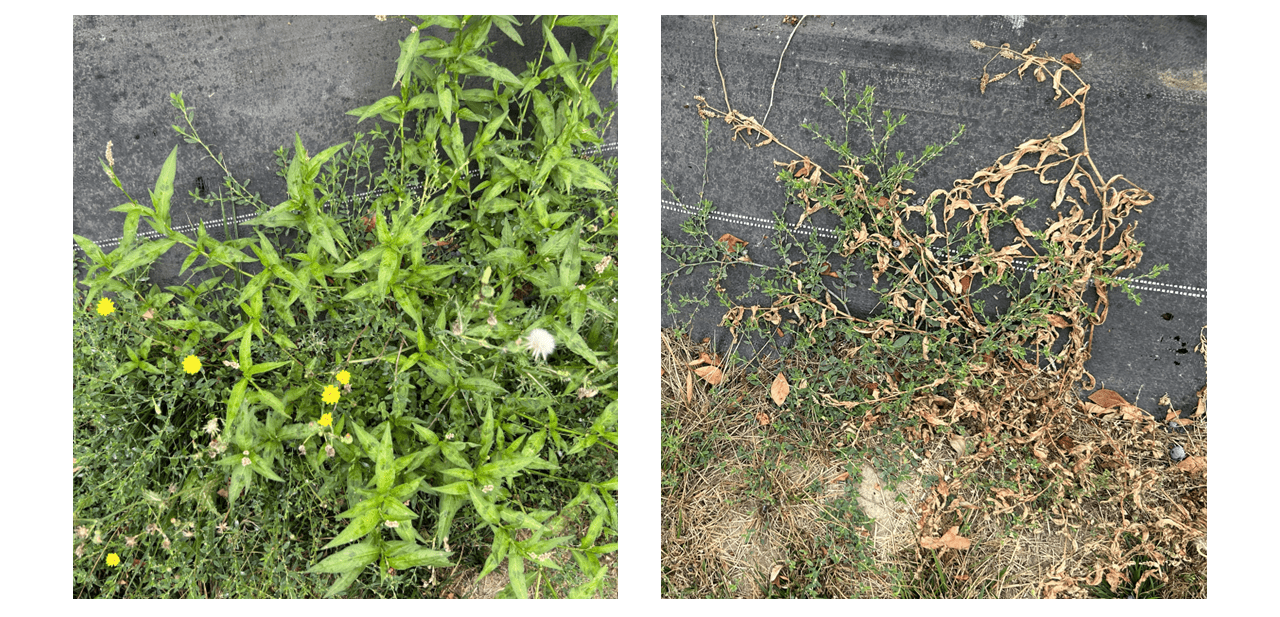
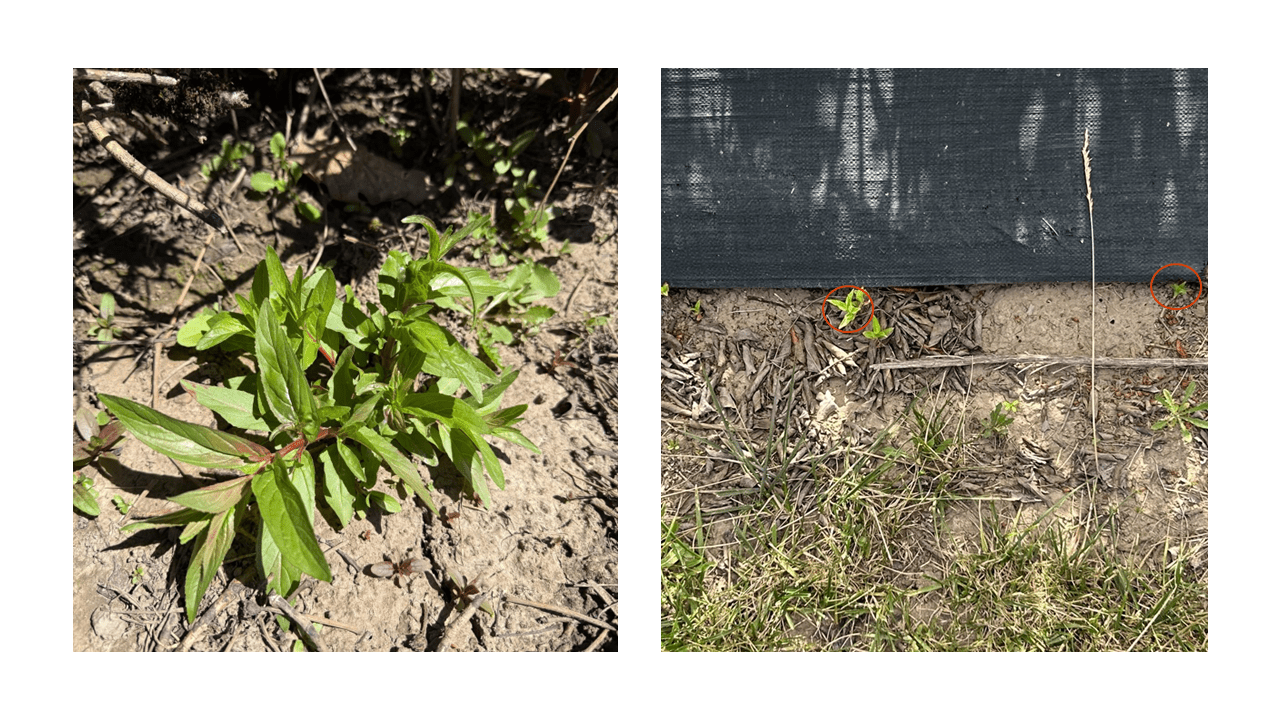
Not all weeds responded the same way to electrical weed control. Its success depends on the type of weeds present in the field. Some broadleaf species, such as willowherb (Epilobium ciliatum) and smartweed (Persicaria pensylvanica), were highly sensitive. Electrical weed control achieved over 95% control of those species in most studies.
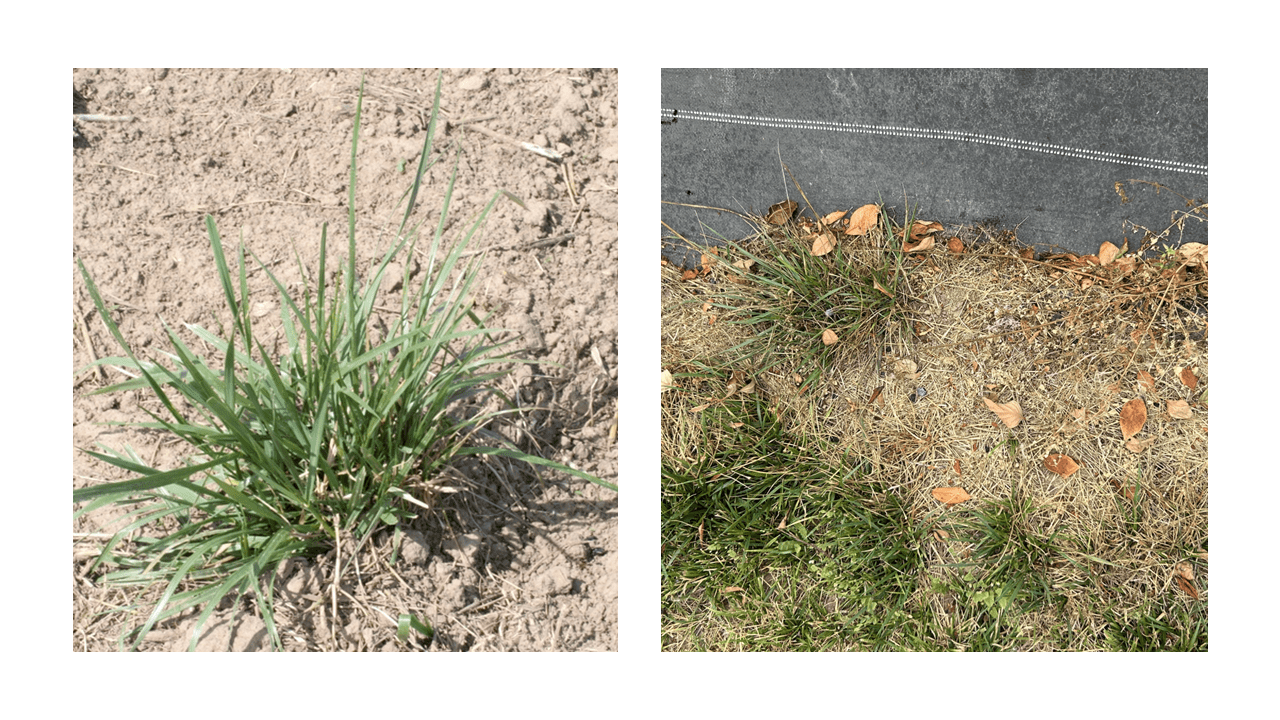
Others species, such as sharppoint fluvellin (Kickxia elatine) and tall fescue (Festuca arundinaceum), were harder to control and required multiple passes to achieve good results.
When using electrical weed control, growers can expect better results on upright broadleaf weeds, such as willowherb and smartweed. They should plan for additional passes or slower speeds when targeting grasses or prostrate species like tall fescue and fluvellin.
Safety and practical tips
- Avoid applying electricity directly over dry vegetation or on windy, hot days.
- Keep electrodes away from crop stems and irrigation lines.
- Slightly moist soil will provide better electrical conductivity.
- Periodically inspect electrical cables, grounding and connections.
Economic considerations
Electrical weed control offers relatively low operational costs compared to other nonchemical methods. The speed of operation plays a key role in efficiency: At slower speeds, treatment is more effective but covers less area, while faster speeds allow growers to treat a larger area per day, depending on weed density and field layout.
Because electrical weed control is generally more effective than mowing, it can also reduce the number of mowing passes needed during the season. In addition, since electrical weed control uses much less energy than steam or flaming systems, it can be a more cost-efficient long-term option for organic farms. Over time, electrical weed control may help lower labor expenses by reducing the need for hand weeding.
The initial investment in the equipment is the chief barrier to electrical weed control adoption. The equipment ranges from about $80,000 to $150,000, depending on the model and power capacity. However, in some regions, equipment loan programs are available through local suppliers, making it easier for growers to try the technology before making a financial commitment.
Electrical weed control is a promising new tool for organic blueberry growers. Slow or repeated passes are key for consistent control. Mowing before treatment improves effectiveness. No crop injury was observed when the electrodes were kept away from the crop. Electrical weed control can reduce herbicide dependence and labor costs while maintaining compliance with organic certification standards.
References
Ascard, J. Thermal weed control by flaming: biological and technical aspects. 1995. 188-pp.
Diprose, M.F., and F.A. Benson. 1984. Electrical methods of killing plants. Journal of Agricultural Engineering Research, 30, 197-209.
Kolberg, R.L., and L.J. Wiles. 2002. Effect of steam application on cropland weeds. Weed Technology, 16(1), 43-49.
Slaven, M.J., M. Koch and C.P. Borger. 2023. Exploring the potential of electric weed control: a review. Weed Science, 71(5), 403-421.
About the authors