
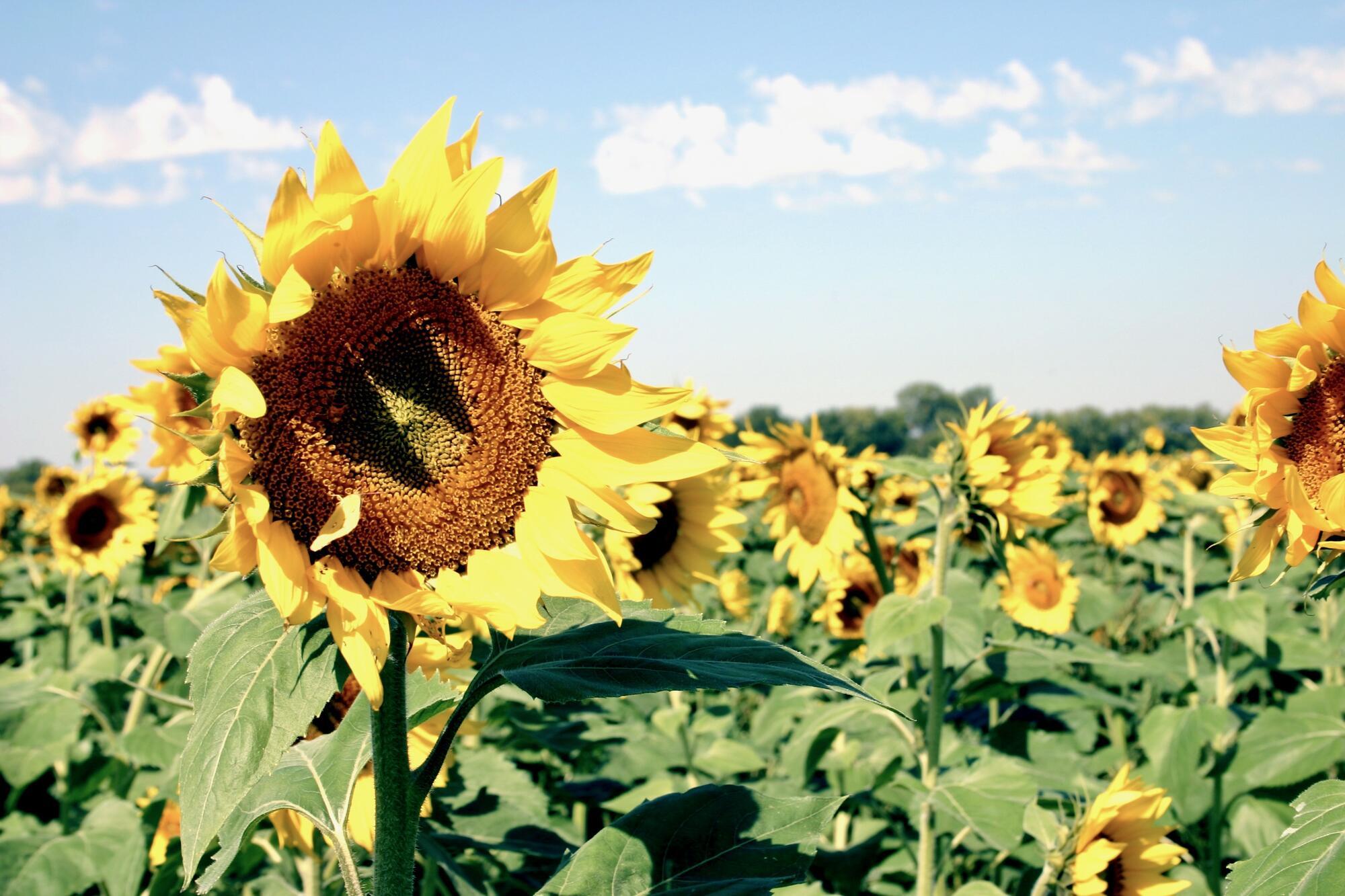
Sunflowers (Helianthus annuus) are a favorite among Oregon gardeners for their bright color, easy care and value to wildlife. Their tall stems and cheerful blooms bring life to any garden while attracting bees, butterflies and other pollinators. The seeds can be roasted for a healthy snack, shared with birds or saved for planting the following season.
Adaptable to Oregon’s diverse climates, including Central Oregon’s high desert, sunflowers thrive in full sun and well-drained soil with a slightly acidic to near neutral pH (6.0 to 7.5). Seeds germinate quickly and plants grow rapidly, making them a rewarding choice for both beginner and experienced gardeners.
In addition to their beauty and seed harvest, sunflowers can provide shade for smaller plants, act as natural “living fences” and enrich school or community gardens as a hands-on example of pollination and seed development. Their versatility makes them an ideal addition to gardens that blend charm, productivity and learning.
Sunflower uses
There are many reasons to grow sunflowers, including for their beauty as an ornamental or cut flower, for practical purposes as a local or commercial food crop and for a variety of ecological benefits for pollinators and other wildlife.
Ornamental
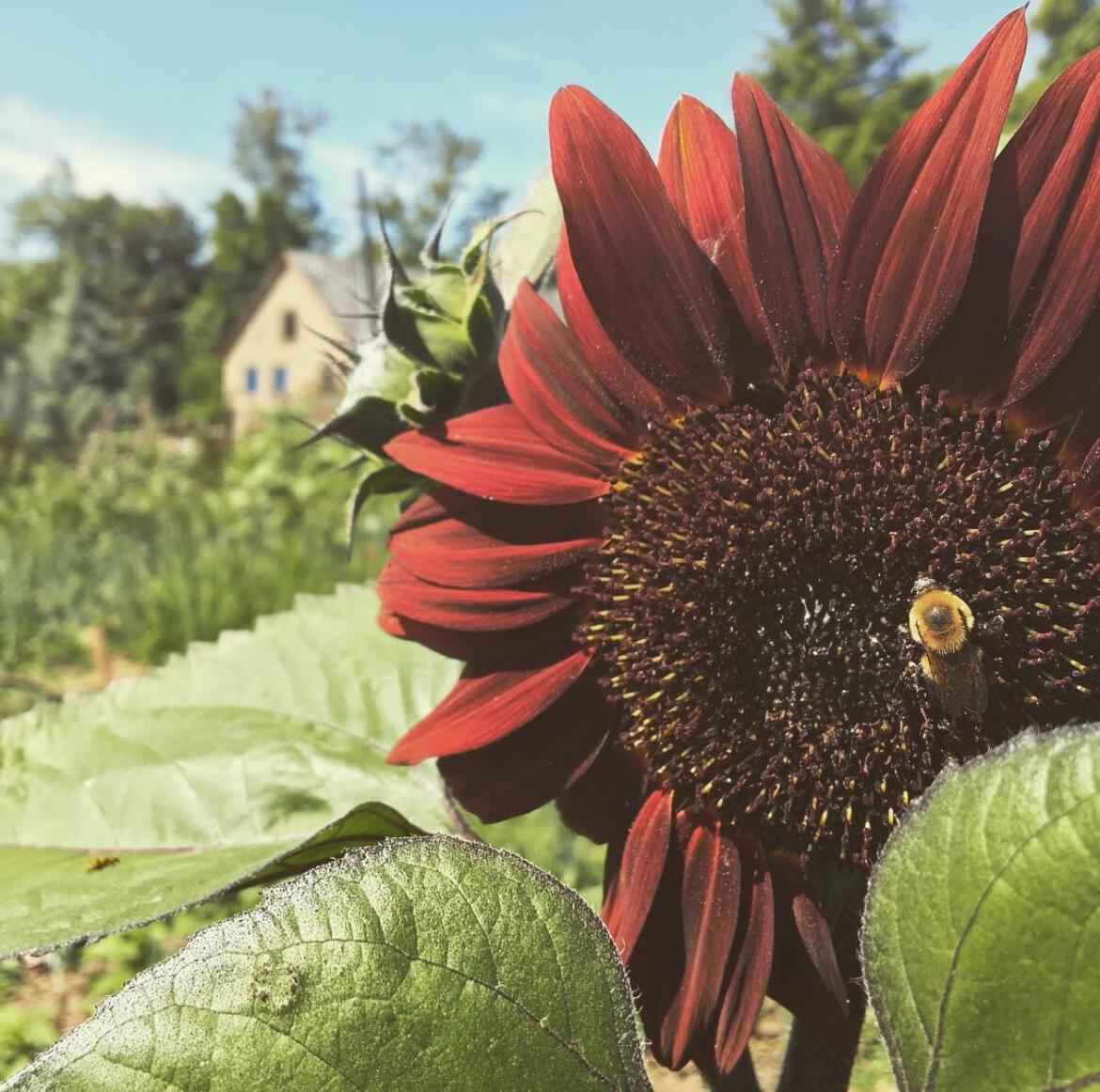
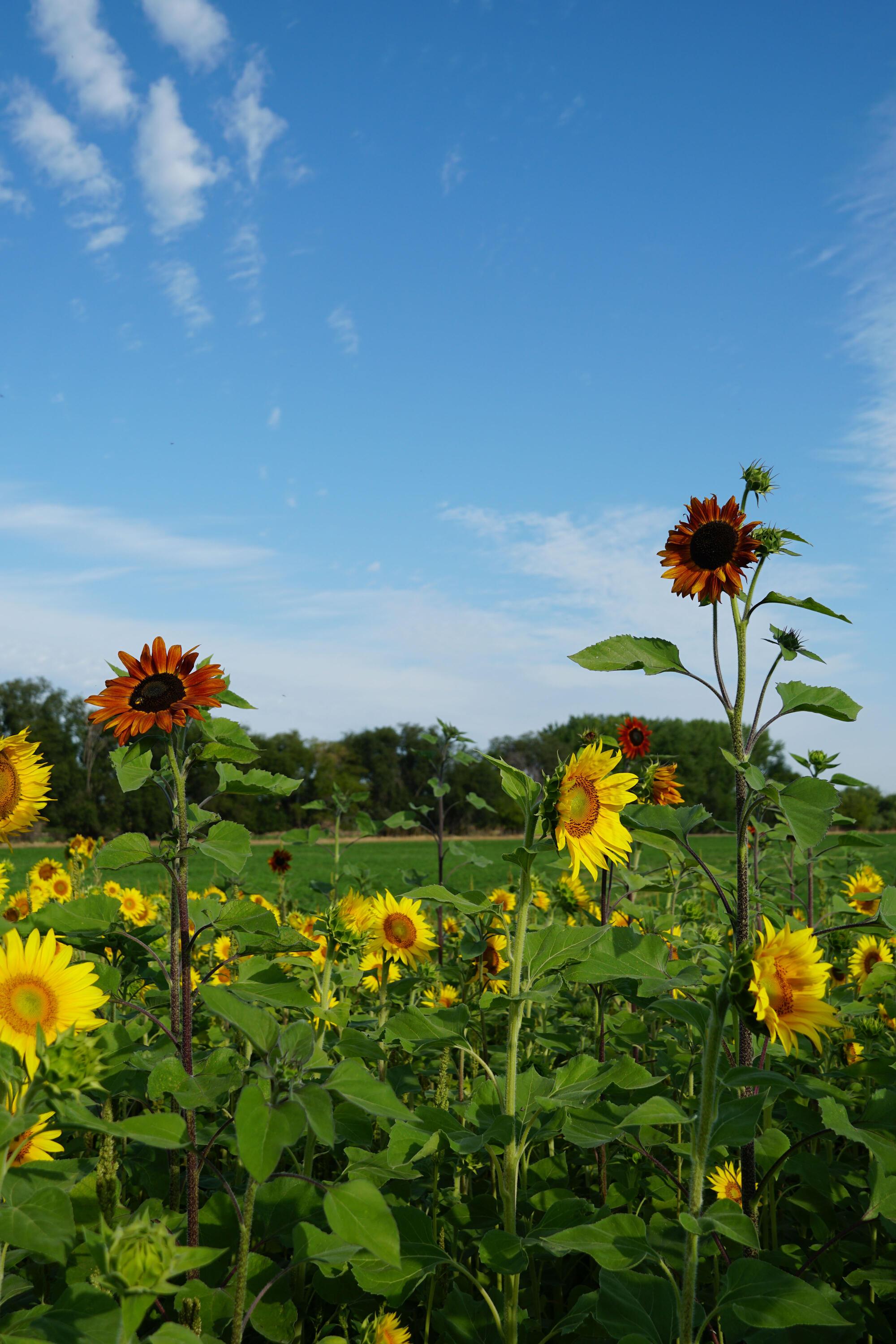
Ornamental sunflowers display a wide range of petal colors, including cream, yellow, orange, red, burgundy and purple, and vary in flower form from single large blooms to multi-branching types, offering versatility for gardens and landscaping.
Cut flower
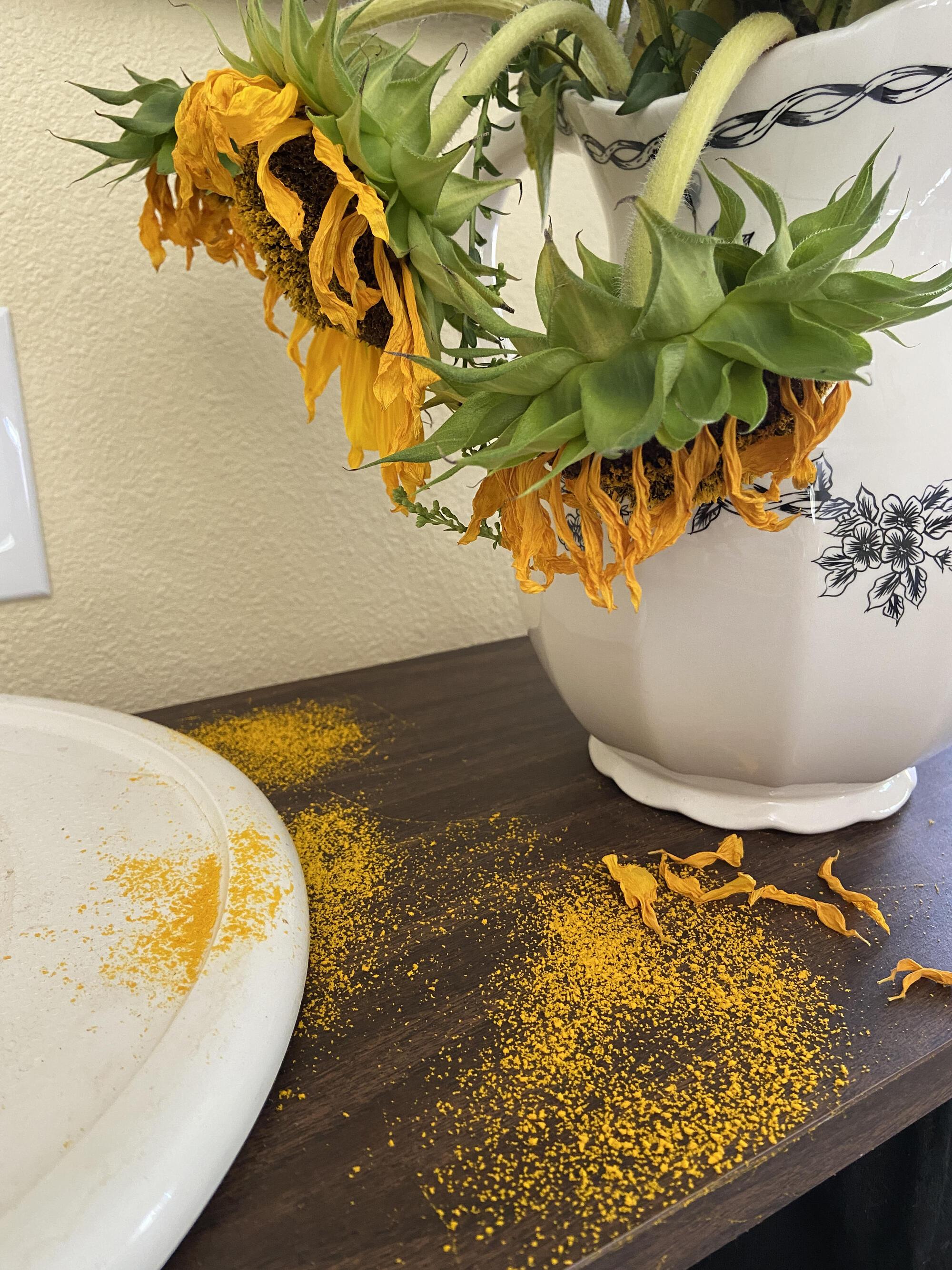
Sunflowers are considered one of the easiest cut flowers to grow, bringing a pop of color to a mixed bouquet or looking beautiful in a vase on their own. The largest varieties should be avoided for use as cut flowers since their size can make cutting difficult and be impractical in bouquets and normal vases. Pollen-free varieties such as ProCut® and Sunrich™ have been bred to avoid dropping pollen in the house and are preferred for cut flowers because of their long vase life. Sunflowers generally perform best as fresh cut flowers, but certain varieties such as Sunbright are also good for drying.
Food
Sunflower seeds are edible both raw and roasted. Sunflower seeds can also be grown in trays, with young seedlings harvested as microgreens to include in salads and sandwiches.
Pollinator benefits
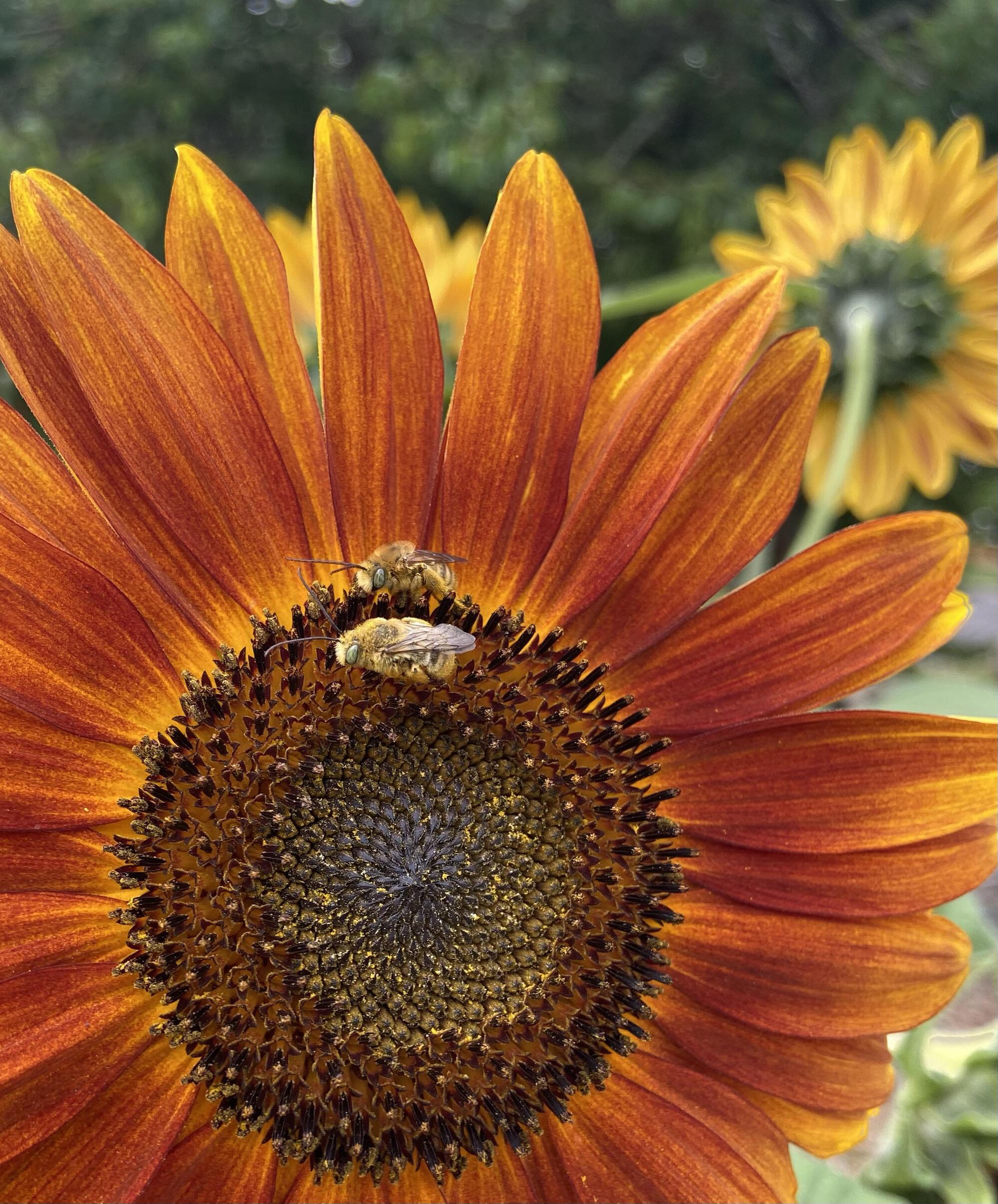
Sunflowers attract a diverse array of pollinators with their large flowers, ultraviolet patterns and accessible nectar. The vibrant colors and patterns – some of them detectable only with UV sight – are a way of helping pollinators like bees find nectar. Common sunflower visitors in Oregon include honeybees (Apis mellifera), long-horned bees (Melissodes spp.), metallic sweat bees (Agapostemon spp.) other native bees, butterflies and beneficial insects, such as parasitoid wasps and predatory beetles. These natural enemies contribute to the suppression of pest populations, making sunflowers a potential tool in integrated pest management strategies for gardens.
Wildlife benefits
Birds, deer, rodents and squirrels will eat sunflower seedheads. Allowing the seed heads to remain standing through autumn and winter is an easy way to provide a continuous food source. Maximilian sunflowers (Helianthus maximiliani) also offer valuable habitat for ground-dwelling wildlife such as small mammals and ground-nesting birds like quail. They provide cover and overhead screening that helps protect wildlife from predators. Additionally, harvested sunflower seed can be placed in bird feeders for wildlife in the off-season.
Cover crops
Cover crops are grown to improve soil characteristics, such as organic matter, fertility and structure, rather than for the purpose of harvesting a crop. Sunflowers are an excellent addition to a warm season cover crop mix. They thrive during the warmest part of the year and provide strong pollinator benefits. Their deep taproot also helps loosen compacted soils, enhancing aeration and water infiltration. Additionally, incorporating sunflower residue into the soil at the end of the season by tilling, loosening the soil with a garden fork or letting it break down naturally contributes organic matter to the soil and can improve fertility.
Agritourism
Many small farms plant multiple rows and cultivars of sunflowers to attract visitors. Consider visiting one of the many sunflower festivals hosted by Oregon farms annually in late summer to explore new varieties and capture some stunning photographs.
Commercial uses
Worldwide, the largest market of sunflowers is for vegetable oil production. Sunflower seeds contain 40%–45% oil by weight. Sunflower oil is considered a relatively healthy oil due to its low saturated fat content. Once the oil has been squeezed out of the seedheads, the remaining seed meal is typically sold for incorporation into livestock feed.
After sunflower oil, most commercial sunflowers are grown for the bird seed industry or to be incorporated into other human food products, such as salted seeds, breads and crackers. Commercial sunflower production is uncommon in Oregon due to the vast amount of acreage needed to make production economical, as well as an absence of processing facilities.
Terms to know when choosing sunflowers for your garden
Single-stem vs. multi-stem (branching)
Single-stem varieties produce one large bloom, whereas multi-stem or branching varieties produce many smaller blooms. Multi-stem varieties have a longer flowering period than single stem varieties as the blooms open in succession.
Open-pollinated vs. hybrid
Open-pollinated varieties, including heirloom varieties, retain their characteristics if they continue to be pollinated with the same variety. If you’d like to save seed to grow next year, you’ll want to save seed from open-pollinated varieties so that they stay true to type. Sunflowers are insect-pollinated, so they can cross-pollinate if you grow multiple varieties within close range, which can be a fun experiment.
In contrast, hybrid varieties are created by crossing plants of two different varieties, which means that they will not necessarily create offspring with the same traits as the parent plant. Saving seed from hybrid sunflower cultivars is not ideal because many of the seeds may not be viable.
Pollen-producing vs. pollen-free varieties
Pollen-producing varieties are essential for pollinators and seed production but may shed pollen indoors if used as cut flowers. Pollen-free varieties are preferred for use as cut flowers because they don’t produce pollen, meaning they make less of a mess and tend to have longer vase lives.
Annual vs. perennial
Helianthus is a large genus with many species. Most garden sunflowers are Helianthus annuus and are annuals. Other species of sunflowers may be perennial and will return each spring. A common example is the Maximilian sunflower (Helianthus maximiliani), a tall, clump-forming perennial often found in prairies and conservation plantings.
While perennial sunflowers offer benefits such as long-term stand persistence, soil stabilization, wildlife habitat and late-season pollinator resources, they are not typically used in the same ways as annual sunflowers grown for seed, silage or oilseed production. Helianthus annuus is still the primary choice for agricultural uses and most cover crop plantings because of its large seedheads, predictable growth cycle and ease of termination.
Perennial species are more commonly used for habitat plantings, native restorations and ornamental borders rather than for large-scale seed or biomass production.
Recommended sunflower cultivars
Sunflowers come in a wide range of sizes, colors and forms, making them a versatile choice for gardens, farms and floral uses. Below are several cultivars that perform well in Oregon and the Pacific Northwest, organized by type:
Giant sunflowers
These towering varieties (10–16 feet) make a dramatic statement and are often grown for competitions, edible seed harvest, privacy screens or agritourism.
- American Giant Hybrid: Can reach up to 16 feet tall; strong stalks.
- Mammoth Grey Stripe: 10–12 feet tall with large heads and edible seeds; a traditional favorite.
- Taiyo: 5-7 feet tall; Japanese variety with fuzzy chocolate-colored centers and flower head that can be up to 12 inches across.
- Kong: 8–15 feet tall; can be pinched for branching growth, making a living hedge.
Branching sunflowers
These produce multiple blooms per plant, offering extended bloom periods and abundant flowers.
- Autumn Beauty: 5–7 feet tall; a mix of yellow, bronze and purple shades, with some bicolor.
- Moulin Rouge: 5–7 feet tall; deep red petals, pollen-free (great for cut flowers).
- Florenza: Striking red-and-yellow bicolor, open-pollinated.
- Soraya: Orange petals with dark centers; branching habit, good cut flower (an All-America Selections winner).
Dwarf and container-friendly sunflowers
Compact varieties (1–3 feet) are ideal for borders, containers or small gardens.
- Sunspot: 2–3 feet tall; large (up to 10”) golden blooms.
- Teddy Bear: 2–3 feet tall; double, fluffy blooms (less attractive to pollinators).
- Little Becka: 3–4 feet tall (semi-dwarf); red-and-yellow bicolor flowers.
- Big Smile: Only 1–2 feet tall; fast-blooming; excellent for pots.
Pollen-free/cut flower favorites
Bred for the floral industry, these cultivars produce uniform, long-lasting blooms without pollen drop.
- ProCut® Series: Widely used by cut flower growers; available in a range of colors (yellow, red, bicolor, white, lemon).
- Sunrich™ Series: Consistent, uniform flowers in multiple vibrant colors; excellent vase life.
- Helios Flame: Bicolor (gold petals with red ring), single-stemmed, pollen-free.
- Buttercream: Pale lemon flowers, pollen-free; blends well in pastel arrangements.
|
Cultivar name |
Height (feet) |
Flower Color |
Single stem or branching? |
Pollen or pollen-free? |
Hybrid Status |
Days to Maturity |
Bloom Diameter (inches) |
Other Notes |
|---|---|---|---|---|---|---|---|---|
|
Giant sunflowers |
||||||||
|
American Giant Hybrid |
Up to 16 | Yellow | Branching | Pollen | Hybrid | 65-75 | Up to 10 | Strong stalks |
|
Mammoth Grey Stripe |
10-12 | Yellow | Branching | Pollen | Open-pollinated | 60-80 | 8-12 | Delicious seeds; traditional favorite |
|
Taiyo |
5-7 | Golden-yellow with chocolate-colored center | Single stem | Pollen | Open-pollinated | 70-90 | 10-12 | Japanese variety with fuzzy centers |
|
Kong |
8-15 | Yellow | Branching | Pollen | Hybrid | 70-90 | Up to 10 | Pinch for branching growth |
|
Branching sunflowers |
||||||||
|
Autumn Beauty |
5-8 | Mix of yellow, bronze and purple shades, with some bicolor | Branching | Pollen | Open-pollinated | 60-85 | 6-8 | Good for bee forage; edible flowers |
|
Moulin Rouge |
5-7 | Deep red | Branching | Pollen-free | Hybrid | 65-80 | 5-7 | Somewhat short-lived blooms |
|
Florenza |
4-5 | Striking red and yellow bicolor | Branching | Pollen | Open-pollinated | 70-80 | 5-6 | Mild chocolate fragrance |
|
Soraya |
4-6 | Orange petals with dark centers | Branching | Minimal pollen | Open-pollinated | 85-95 | 4-6 | May yield as many as 20-25 stems/plant |
|
Dwarf and container-friendly sunflowers |
||||||||
|
Sunspot |
2-3 | Golden | Branching | Pollen | Hybrid | 60-70 | Up to 10 | Good option for small hedges |
|
Teddy Bear |
1-2 | Deep yellow | Branching | Minimal pollen | Open-pollinated | 65-75 | 3-6 | Double, fluffy blooms less attractive to pollinators |
|
Little Becka |
3-4 | Red and yellow bicolor | Branching | Pollen-free | Hybrid | 55-60 | 4-5 | Low maintenance; ideal for beginner gardeners |
|
Big Smile |
1-2 | Golden-yellow with black center | Branching | Pollen | Open-pollinated | 50-60 | 3-6 | Fast blooming; day neutral |
|
Pollen-free/cut flower favorite sunflowers |
||||||||
|
ProCut® |
5-6 | Range of reds, yellows, and whites available | Single stem | Pollen-free | Hybrid | 50-65 | 4-6 | Widely used by cut flower growers |
|
Sunrich™ |
4-5 | Range of colors available (e.g., orange) | Single stem | Pollen-free | Hybrid | 60-70 | 4-6 | Consistent, uniform flowers; excellent vase life |
|
Helios Flame |
5-6 | Gold petals with red ring | Single stem | Pollen-free | Hybrid | 45-50 | 4-6 | Sturdy stems; great vase life |
|
Buttercream |
4-5 | Pale, butter-yellow with brown centers | Branching | Pollen-free | Hybrid | 50-60 | 3-5 | Blends well in pastel arrangements |
Growing sunflowers
Site selection
Choose a place in the garden that receives full sun (6–8+ hours per day). Sunflowers grow best in well-draining soil, so avoid low areas where water puddles. Heavy clay soil can reduce sunflower growth. Before planting, amend the soil with 1-2 inches of compost and mix to a depth of 12 inches using a digging fork or broadfork.
Watering and fertilizing
Sunflowers are drought-tolerant once the plants have an established root system. Flowering and seed production will be best when the plant receives regular watering.
Sunflowers do best with a balanced fertilizer (for example, NPK = 10-10-10). Avoid high nitrogen fertilizers as these promote leaf growth rather than flower formation. Remember to apply organic fertilizers a few weeks ahead. These fertilizers need time to interact with soil bacteria for the nutrients to become available. You can use a conventional slow-release fertilizer or split a quick-release fertilizer application by applying half at planting and then another application when the plants have two sets of leaves.
Planting
Sunflowers can be grown either by direct sowing or as transplants. If direct sowing, wait until after the last frost when soil temperatures have reached at least 50°F. The best time to direct seed sunflowers is usually from April to June for the Willamette Valley and the Coast, and June for Central and Eastern Oregon.
Plant seeds about 1 inch deep and keep the soil moist until the seeds have germinated. Sunflowers can also be started indoors and then transplanted into the garden starting in May or June depending on location. Sunflowers grow quickly, so don’t start seeds too early or the plants may become rootbound in pots. Larger, branching varieties should be spaced 18 to 24 inches apart, while single stem varieties can be spaced as close as 4 to 6 inches apart.
Tips for growing in containers
Choose shorter or dwarf cultivars that have a maximum height of 3 feet for container plantings. The seed packet or plant catalog will tell you the predicted height. Dwarf cultivars are less likely to become top-heavy and tip over. Use a large container for planting sunflowers. A 5-gallon bucket with holes drilled in the bottom or a similar-sized pot will provide enough space for the roots to grow. Choose a well-draining potting soil mix to fill the container. You will need to irrigate containers more frequently than in-ground plantings. Fertilize with a balanced fertilizer as described above.
End of season cleanup
Consider leaving the dried plants and seed heads for birds and squirrels to feed on during the winter. Remove and compost after all seeds are gone. You will likely have volunteer sunflowers grow from fallen seed the next spring. These are easy to remove if you don’t want sunflowers in that area.
Possible problems
Sunflowers are generally an easy-to-grow plant with few problems, but there are a few issues that may occur.
Seeds do not germinate, or seedlings are damaged
- Check the age of the seeds by looking at the date on the seed packet. If the seed is more than a few years old, then try replanting with seed packed for this growing season.
- Weeds can compete with seedlings. Hand weed the garden bed or container to reduce competition with the young plants.
- Slugs and snails are a common pest of tender young plants. Use a molluscicide with the active ingredient iron phosphate or use a trap (try the OSU recommended DIY bread dough trap).
- Cutworm feeding can damage seedlings. Remove weeds in and around the garden bed to remove their hiding places. In the evening, pick the caterpillars from the plants.
- Birds and squirrels can dig up newly planted seeds and feed on the seedlings. Use bird netting to protect the garden bed. Just remember to remove the netting when the plants outgrow the seedling stage. Distraction devices like reflective types or spinners can also help scare birds away.
Leaves are damaged
- Sunburn can occur on sunflower leaves, appearing first as pale or yellow patches that later turn brown. To reduce the risk, make sure plants receive adequate water during heatwaves.
- Caterpillars and beetle feeding may be a problem in some years. If you can, remove these pests by hand. Pesticide sprays are usually not needed.
- Leaf spots on lower leaves indicate a foliar disease. This problem is usually not severe enough to require a pesticide treatment. Powdery mildew is a common disease that may develop by the end of season in areas with high humidity and will cause white powdery growth on leaves. At the end of the growing season, remove all affected plants to limit the amount of disease that overwinters in the garden.

Flowers are damaged
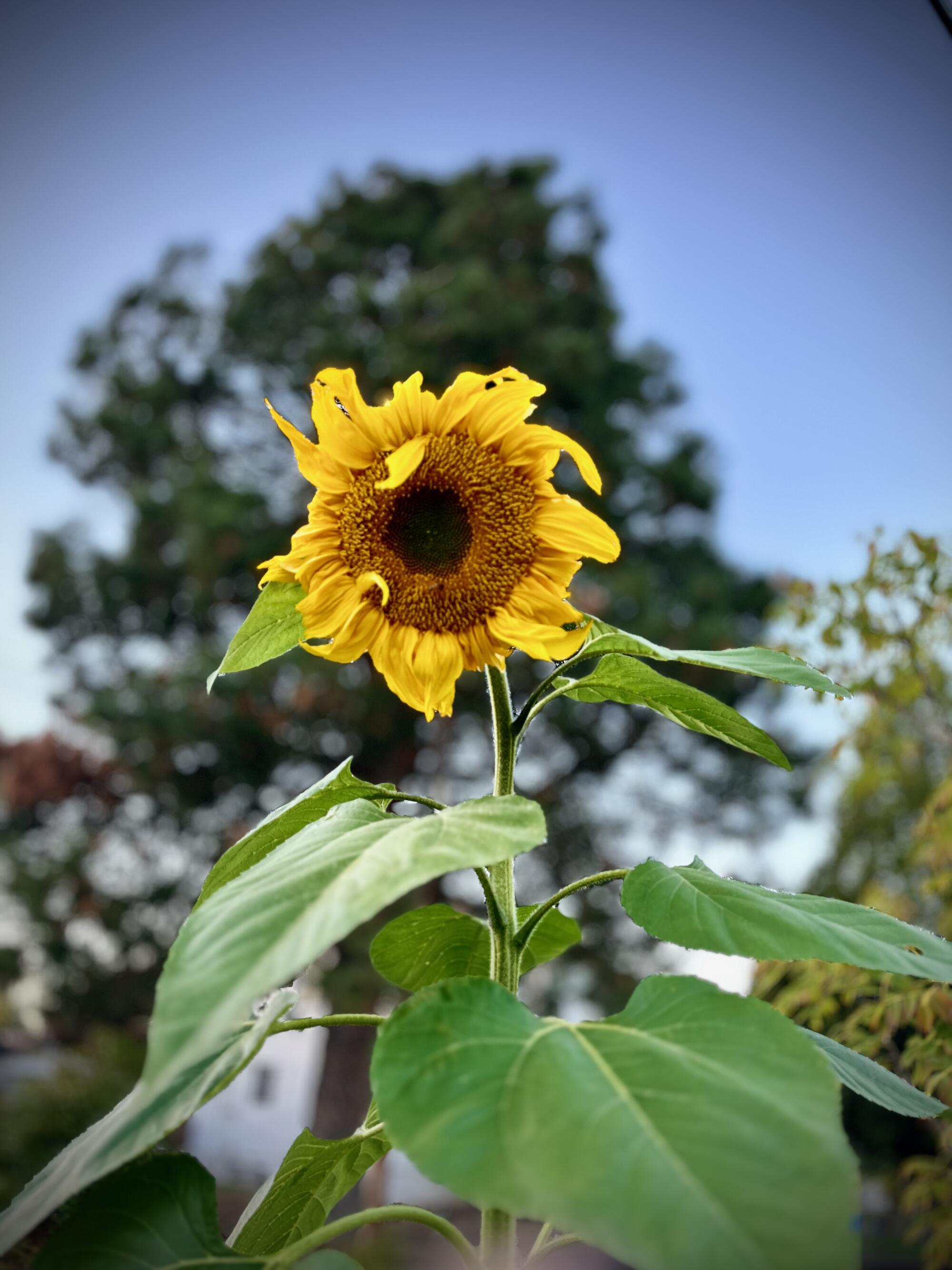
- Stink bug or beetle feeding can cause some distortion as the flowers develop. Generally, no management is needed for these occasional insect pests. Instead encourage beneficial insect (for example, ladybug and lacewing) populations in your garden to keep the pest population in check.
- A fungal disease called Sclerotinia rot can cause brown rot that starts at the base of the flower, stem rot and wilting plants. Check with your county Master Gardener Program or horticultural Extension program for help with diagnosis. This is a hard-to-manage soilborne disease.
Plants falling over (lodging)
- Constricted root growth can make the plants top-heavy and more prone to lodging. In future seasons, check that the planting spot is large enough and that the soil is not compacted.
- Sclerotinia rot can cause wilting and a brown rot at the base of the main stem. Check with your county Master Gardener Program or horticultural Extension program for help with diagnosis. This is a hard-to-manage soilborne disease, meaning the fungus survives in the soil for long periods and can infect plants when conditions are favorable.
-
High winds can blow over sunflowers, especially very tall cultivars. Staking can be helpful.
-
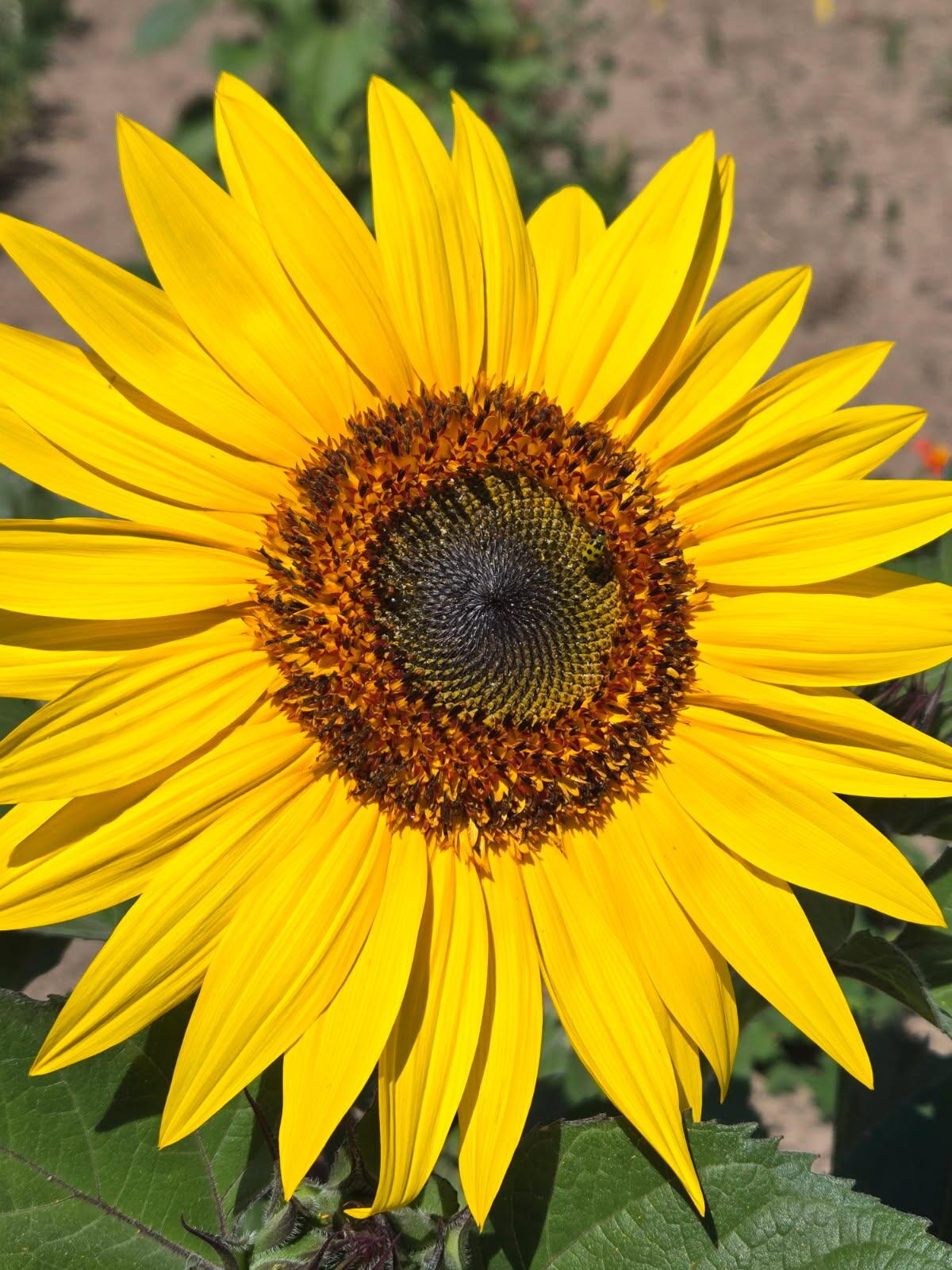
Sunflowers are annuals and will show normal decline as the flower matures. Flower heads tip, the main stem begins to decay, and leaves turn yellow and fall off.
Seed heads are missing or damaged
- Deer and squirrels may gnaw off and carry away entire flowers to feed on. Try distraction devices to keep squirrels away. Consider adding a squirrel feeding station in another part of the garden away from the sunflowers.
- Birds feeding on the developing seeds can also be an issue if you are growing sunflowers for their seeds. Protect the heads by covering with a fine mesh netting before the seeds mature. Choose a mesh size small enough to prevent birds from getting tangled. Distraction devices, such as reflective types or spinners, can also help scare birds away. Bird feeders in other parts of the gardens can make your sunflowers less attractive.
If you are experiencing problems with your sunflowers that are not listed here or need additional assistance, please contact your county Extension office for assistance.
