
Contents
- Benefits of inspecting and maintaining your irrigation system
- Inspecting the intake system and pump
- Inspecting your electrical connections
- Mainline inspection
- Sprinkler system inspection and maintenance
- Common spring and fall maintenance
- Signs your irrigation system needs maintenance
- Inspection and maintenance worksheet
- Appendix 1: Irrigation system inspection checklist
- Appendix 2: Center pivot operation and evaluation field checks
- Appendix 3: Drip irrigation inspection checklist
- References and resources
Summary
Annual inspection and maintenance are essential for maintaining irrigation system efficiency, preventing costly repairs and ensuring that water is applied uniformly across the field. Regular inspections allow producers to identify mechanical, hydraulic and electrical issues before they become major failures.
A complete irrigation system inspection typically includes evaluating the water intake structure; pump and motor assembly; electrical components; pipelines; and irrigation distribution equipment (sprinklers, pivots or drip systems). Maintaining irrigation equipment in proper working condition helps ensure the system delivers the water required for crop growth while minimizing water losses and energy costs.
Routine maintenance is an important component of good irrigation water management and contributes to improved system performance, water conservation and long-term equipment reliability.
Benefits of inspecting and maintaining your irrigation system
Regular inspection and maintenance can:
- Keep irrigation equipment in proper working condition and reduce leaks.
- Maintain system performance and application efficiency.
- Reduce energy use and pumping costs.
- Prevent costly mechanical failures and emergency repairs.
- Reduce water waste, runoff and deep percolation losses.
- Improve water application uniformity and support optimal crop growth and yield.
Inspecting the intake system and pump
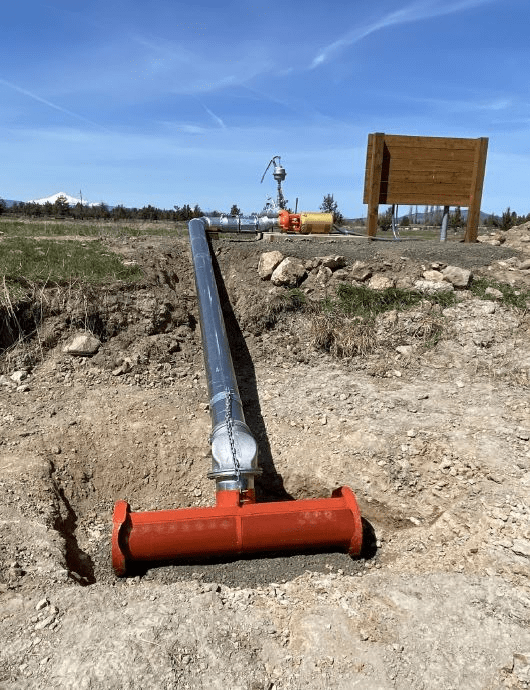
Generally, the intake line should provide smooth water flow with the least number of fittings, since these can cause obstruction, water turbulence and loss. Disconnect and examine the intake line and trash screen each fall to ensure they are clear of debris and that the fittings are in good condition.
When inspecting the pumping assembly, think of it as two parts: the pump and the motor. The impeller on the pump needs to rotate freely in the housing. The bearings need to be in good condition, and the shaft needs to be aligned with the motor.
A common mistake is failing to remove the pump drain plug after the irrigation season or failing to reinstall it before the next season. Water left in the pump to freeze over winter can cause serious damage.
The intake system and pump are critical components of an irrigation system. Proper inspection and routine maintenance help ensure that water enters the system efficiently and that the pump operates at the designed flow rate and pressure. Regular inspection also helps prevent mechanical failures, reduces energy losses and extends the life of the pumping equipment.
Common pump components include the impeller, pump casing, shaft, bearings, mechanical seal and the electric motor that drives the pump. Wear or damage to any of these components can reduce pumping efficiency and system performance.

Routine inspection and maintenance should include:
- Inspecting and cleaning strainers and filters to remove debris that may restrict water flow.
- Checking for leaks around seals, gaskets and pipe connections.
- Lubricating bearings according to the manufacturer’s recommendations.
- Inspecting and cleaning the pump impeller to ensure it remains free of debris and operates at the intended flow rate.
- Checking motor-to-pump alignment to prevent premature bearing wear and mechanical failure.
- Monitoring vibration and unusual noise levels. Excessive vibration may indicate worn bearings, impeller damage, cavitation or misalignment between the motor and pump.
A qualified pump technician should inspect irrigation pumping systems every three to five years to verify pumping efficiency and identify potential mechanical issues before they result in costly repairs.

Inspecting your electrical connections
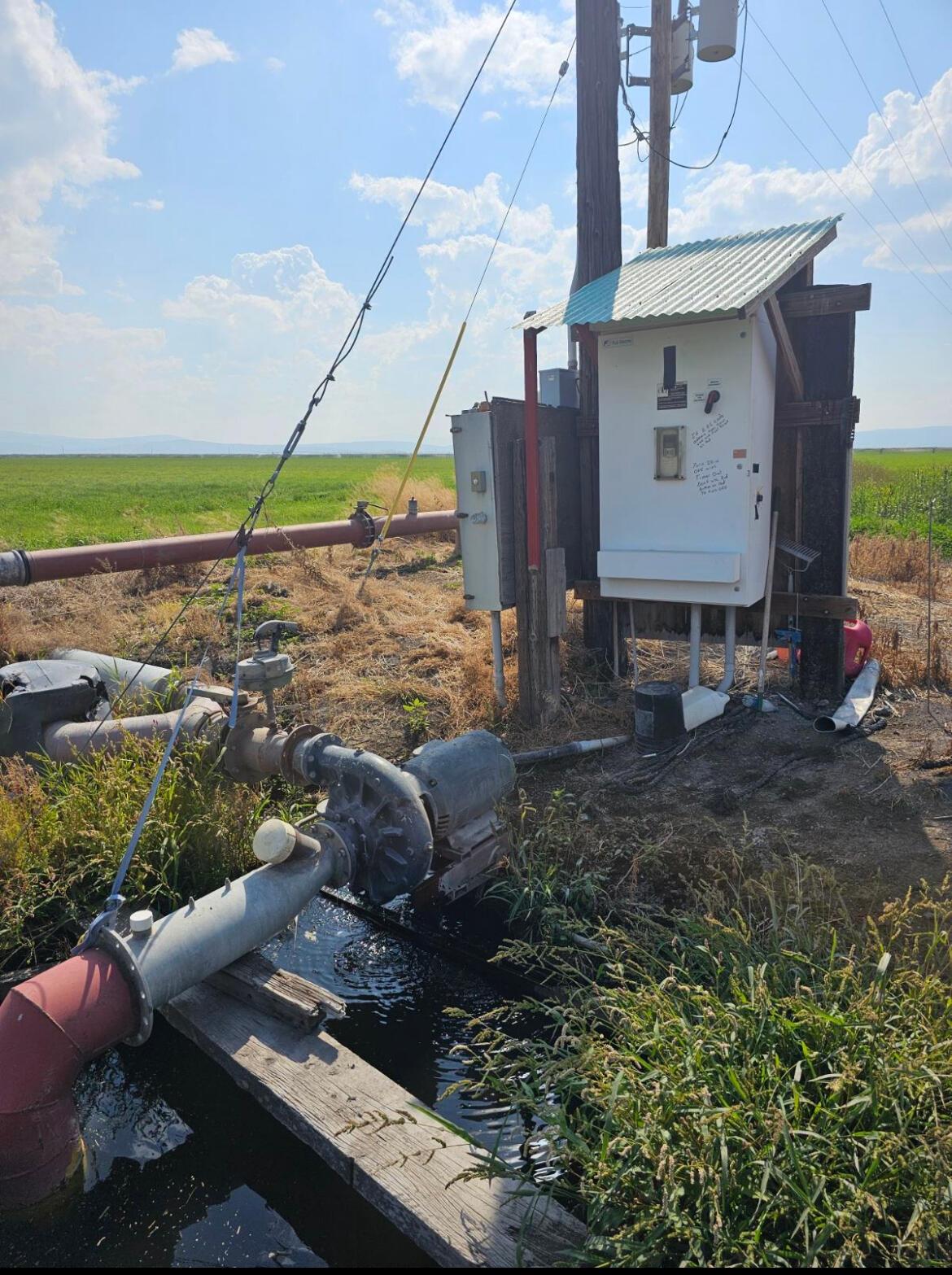
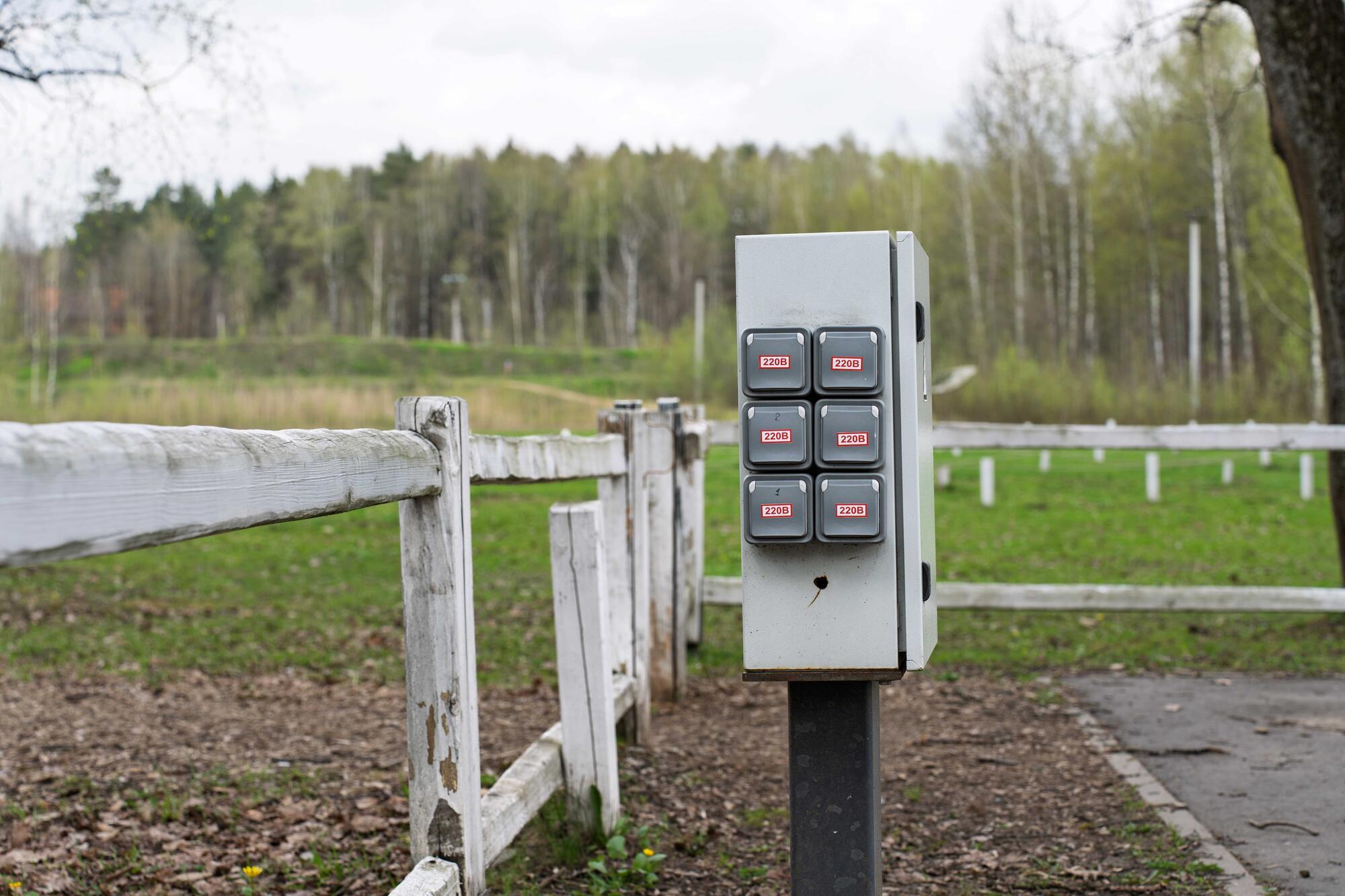
Electrical safety should always be the highest priority when inspecting irrigation systems. Electrical currents as low as 15 milliamps can cause serious injury. Irrigation systems include many electrical components, from pump motors and control panels to electrical drives that power center pivot or lateral-move irrigation systems.
When in doubt about the safety of your irrigation electrical system, have a qualified electrician perform inspections and repairs. Before servicing any electrical component, always ensure that power is completely disconnected.
Routine electrical inspections should include:
- Removing debris, dust, insects or rodents from electrical panels.
- Sealing openings or gaps that could allow moisture or animals to enter electrical enclosures.
- Repairing frayed wiring or loose wire connections.
- Ensuring electrical connections in service panels and pivot or lateral-move control boxes are secure.
- Inspecting conduit and cable shielding to confirm they remain in good condition.
- Checking that electrical panels are properly grounded.
- Inspecting circuit breakers to ensure they are functioning properly.
- Looking for signs of overheating, corrosion or discoloration that may indicate electrical problems.
Mainline inspection
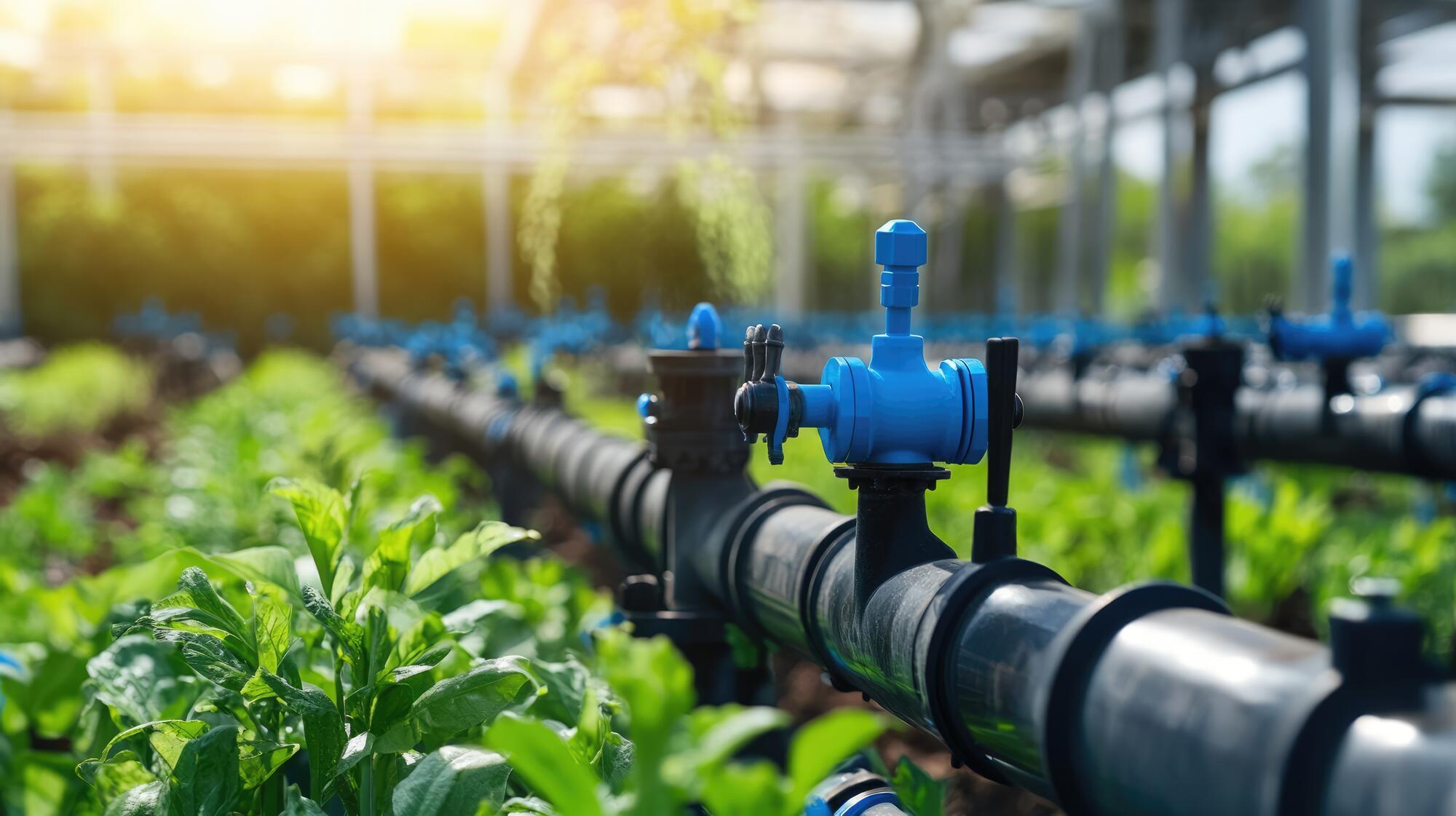
The mainline is responsible for conveying water from the pump to the irrigation distribution system. Regular inspection of the mainline helps prevent water losses, pressure drops and system inefficiencies.
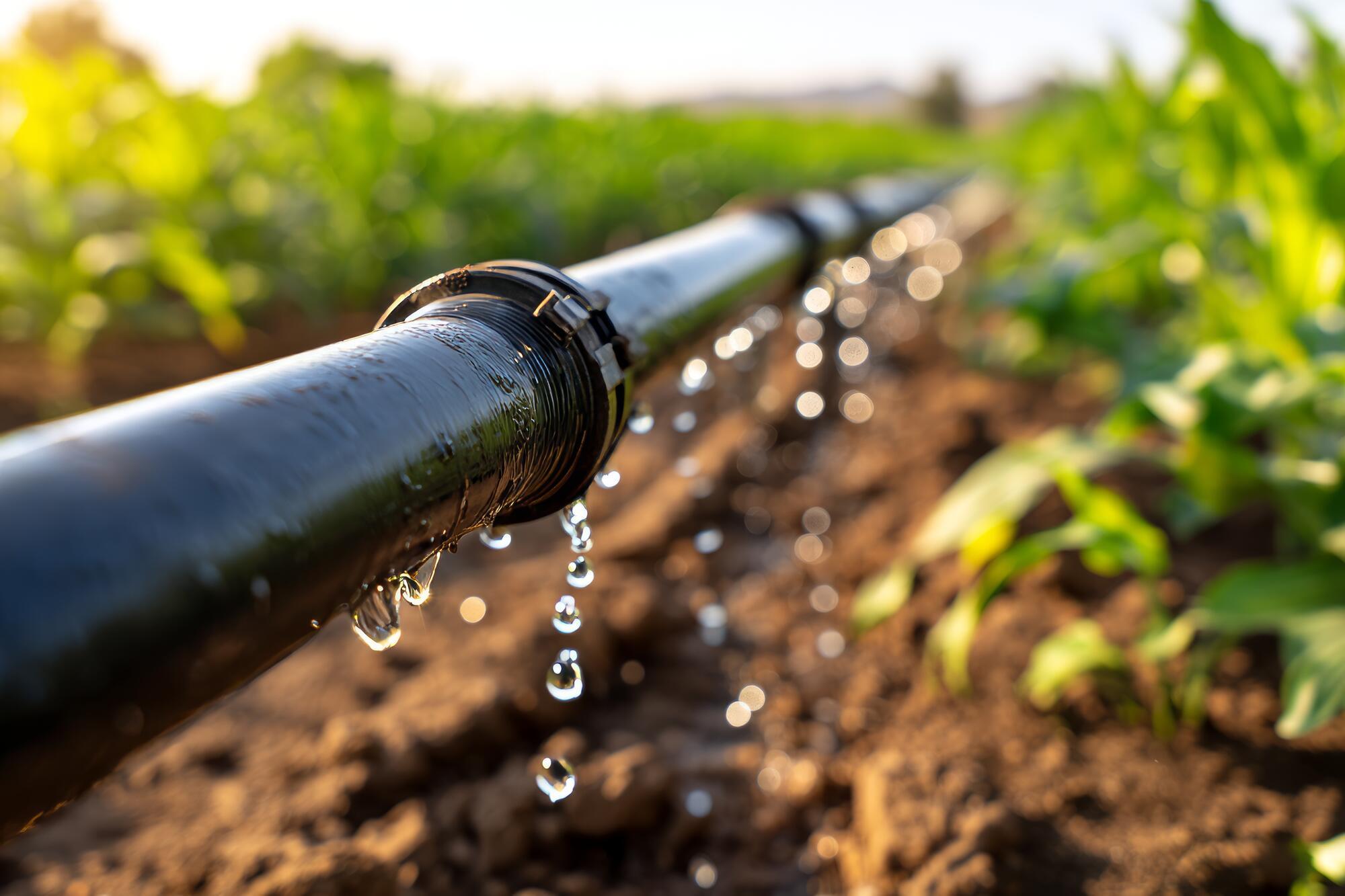
Mainline inspection is generally straightforward and involves visual observation while the system is operating. Look for leaks, seepage or wet spots along the pipeline that may indicate pipe failure or loose fittings.
Common maintenance actions include:
- Replacing worn gaskets, valves, couplings or plugs.
- Tightening fittings and connections.
- Repairing or replacing damaged sections of pipe.
- Ensuring valves operate smoothly and fully close when needed.
- Inspecting valves and air-release valves to ensure they operate properly without leaking. Air valves prevent vacuum collapse in pipelines.
- Verifying pressure gauges are functioning correctly and replacing gauges that appear damaged or inaccurate. Pressure gauges often fail.
Prompt repair of leaks helps maintain system pressure, reduces water losses and improves overall irrigation efficiency.
Sprinkler system inspection and maintenance
Sprinkler irrigation systems include a variety of designs and components. Each system type requires routine inspection and maintenance to ensure proper operation and uniform water distribution, which is critical for efficient irrigation and consistent crop growth.
Understanding how your irrigation system operates will help you identify potential problems and perform necessary maintenance.
Common sprinkler irrigation systems include:
- Handline
- Pod
- Wheel line (side-roll)
- Fixed or solid-set
- Traveling gun
- Center pivot
- Lateral-move (linear)
- Microirrigation (drip or microsprinklers)
Routine inspection of these systems typically focuses on pipes, fittings, sprinkler heads, nozzles and moving mechanical components to help maintain uniform water application.
Low pressure → poor coverage.
High pressure → excessive misting and evaporation.
Handline irrigation
What it is
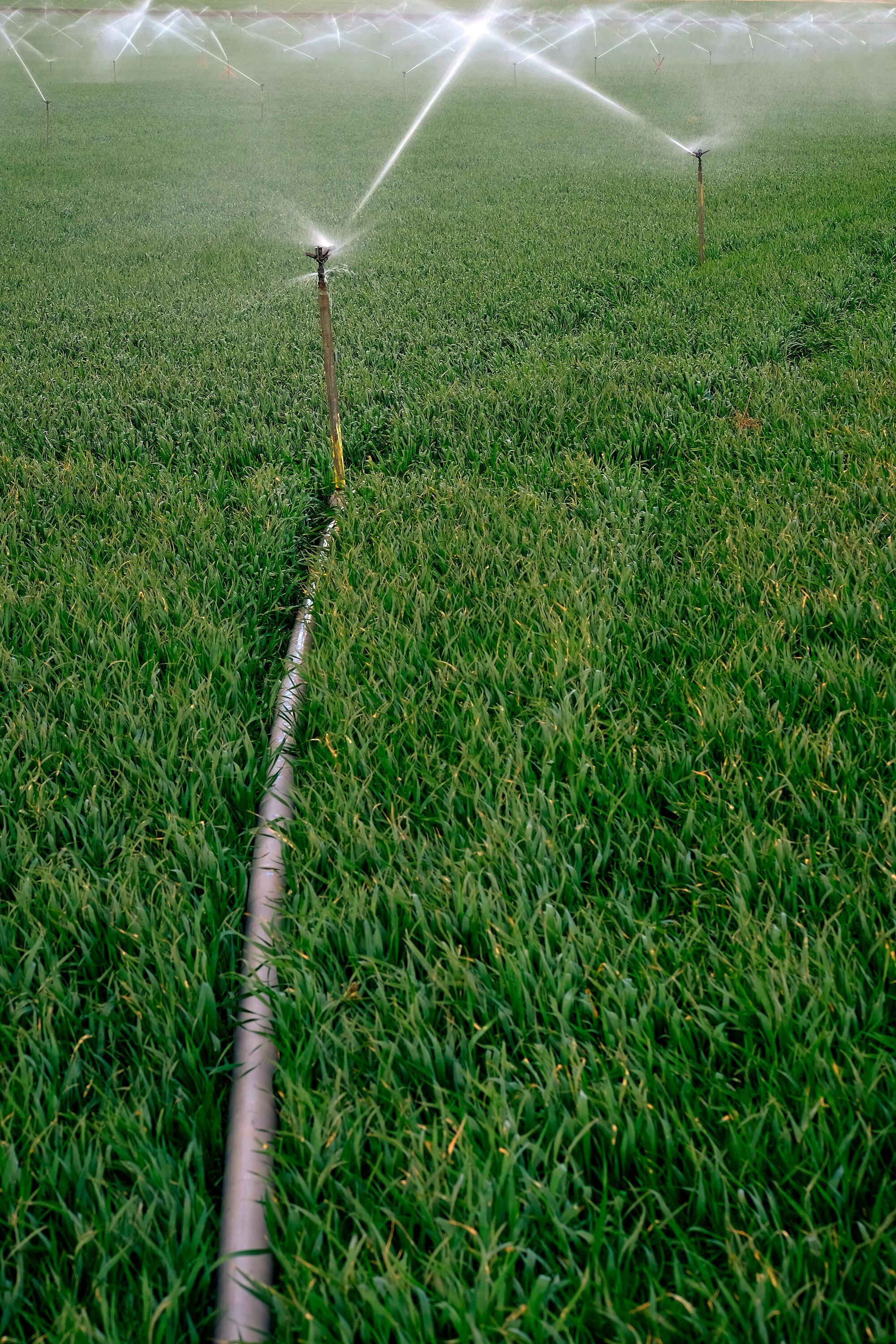
Handline sprinkler systems consist of sections of pipe connected by gasket couplings, with sprinkler heads mounted on risers (typically about 3 feet high). These systems are commonly used for irrigating pasture, hay and small field crops.
How it works
Water flows through the pipe sections to sprinkler heads spaced along the line. After irrigating one area, the pipe sections are manually moved to the next section of the field.
Key components
- Portable lateral pipes
- Gasket couplings connecting pipe sections
- Sprinkler risers (commonly 3 feet high)
- Sprinkler heads and nozzles
- Flexible supply hose or mainline connection
Advantages
- Relatively low equipment cost
- Simple mechanical system with minimal moving parts
- Flexible placement for irregular field shapes
- Suitable for small to medium-sized fields
Limitations
- Labor-intensive because pipe sections must be moved manually.
- Irrigation timing depends on available labor.
- Wind can affect sprinkler distribution uniformity.
- Couplings and gaskets may wear over time and cause leaks.
Inspection and maintenance
Routine inspection and maintenance should include:
- Inspecting pipes for damage, cracks or splits and replacing damaged sections.
- Checking couplers and gaskets for wear and replacing them if leaks occur.
- Inspecting sprinkler risers for cracks, bends or structural damage.
- Checking sprinkler head connections and replacing worn gaskets or damaged sprinklers.
- Inspecting sprinkler nozzles and replacing worn or damaged nozzles. Over time, nozzle wear can increase flow rate and reduce irrigation uniformity.
- Ensuring all nozzles are the same size and type to maintain uniform water distribution.
- Checking for clogged nozzles and cleaning them if necessary.
Pod
What it is
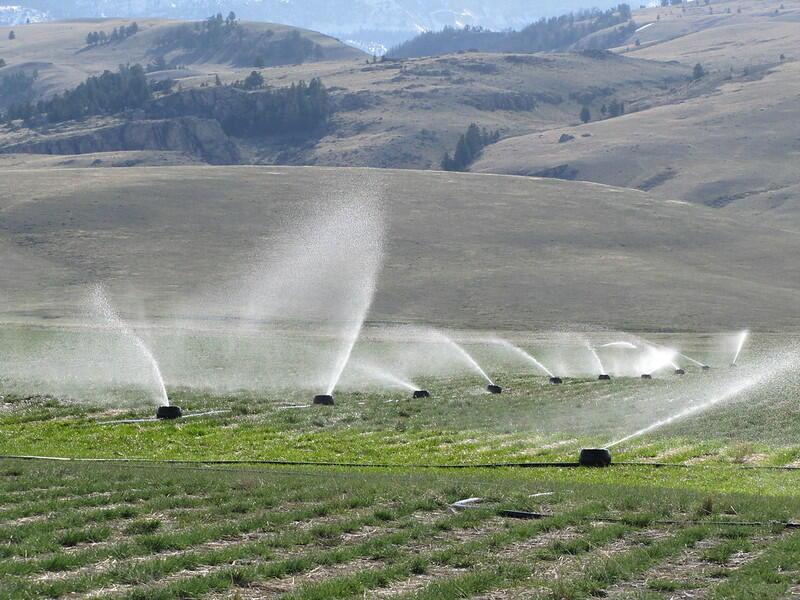
A pod irrigation system consists of flexible polyethylene (poly) tubing connected to individual sprinkler assemblies housed inside durable plastic casings called pods. As in handline systems, pods are typically spaced 40–50 feet apart, depending on sprinkler design and operating pressure. Pods are moved between irrigation sets using a motorized vehicle, commonly an all-terrain vehicle.
How it works
Water flows through flexible poly tubing to sprinkler assemblies contained within the pods. Each pod applies water to a localized area around the sprinkler. After irrigating a set area, the pods are repositioned across the field to irrigate the next section.
Key components
- Flexible polyethylene (poly) lateral tubing
- Pod housing (protective casing)
- Sprinkler assembly or saddle
- Sprinkler heads and nozzles
- Couplings and adapters connecting tubing sections
Advantages
- Relatively simple irrigation system with few mechanical components
- Flexible system layout suitable for irregular field shapes
- Lightweight components that are easier to move than handline pipe
- Lower initial cost compared with some mechanized irrigation systems
Limitations
- Requires labor to move pods between irrigation sets.
- Flexible tubing may be susceptible to wear, punctures or damage.
- Wind can affect sprinkler distribution and irrigation uniformity.
- Requires careful management to maintain uniform spacing and pressure.
Inspection and maintenance
General routine inspections and maintenance should include:
- Checking the poly tubing for cracks, wear or punctures. Replace sections of tubing if damaged.
- Ensuring couplings and adapters are securely fastened and leak-free. Replace damaged fittings.
- Inspect sprinkler assembly (saddle) for cracks or leaks. Replace if damaged.
- Checking sprinkler head connections and ensuring sprinklers rotate smoothly. Replace sprinkler heads if broken or not rotating correctly.
- Inspecting sprinkler nozzles and replacing worn or damaged nozzles.
- Ensuring all nozzles are the same size and free of debris or plugging to maintain uniform water application.
Proper maintenance of pod systems helps maintain uniform water application and prevents pressure losses along the irrigation line.
Wheel line
What it is
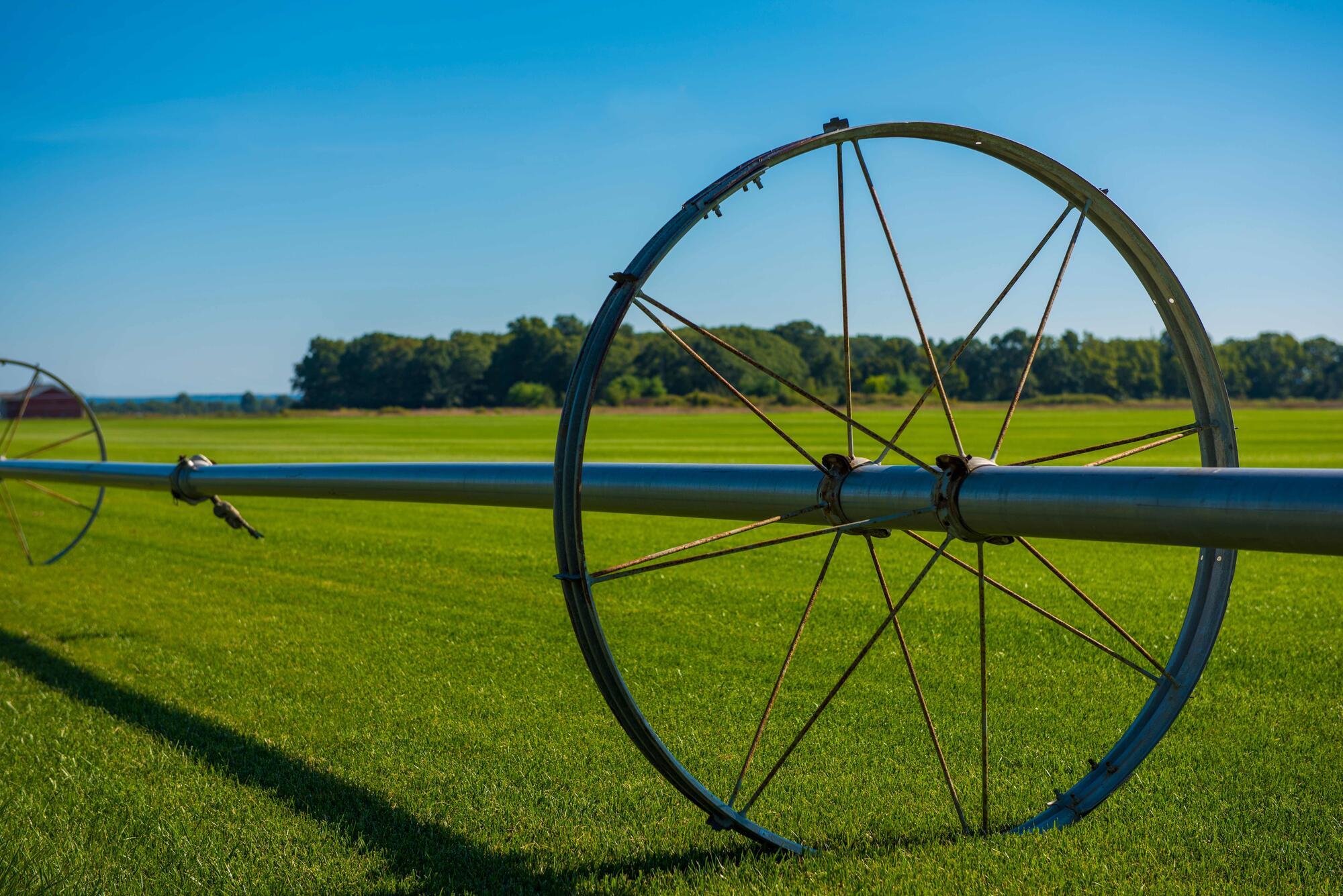
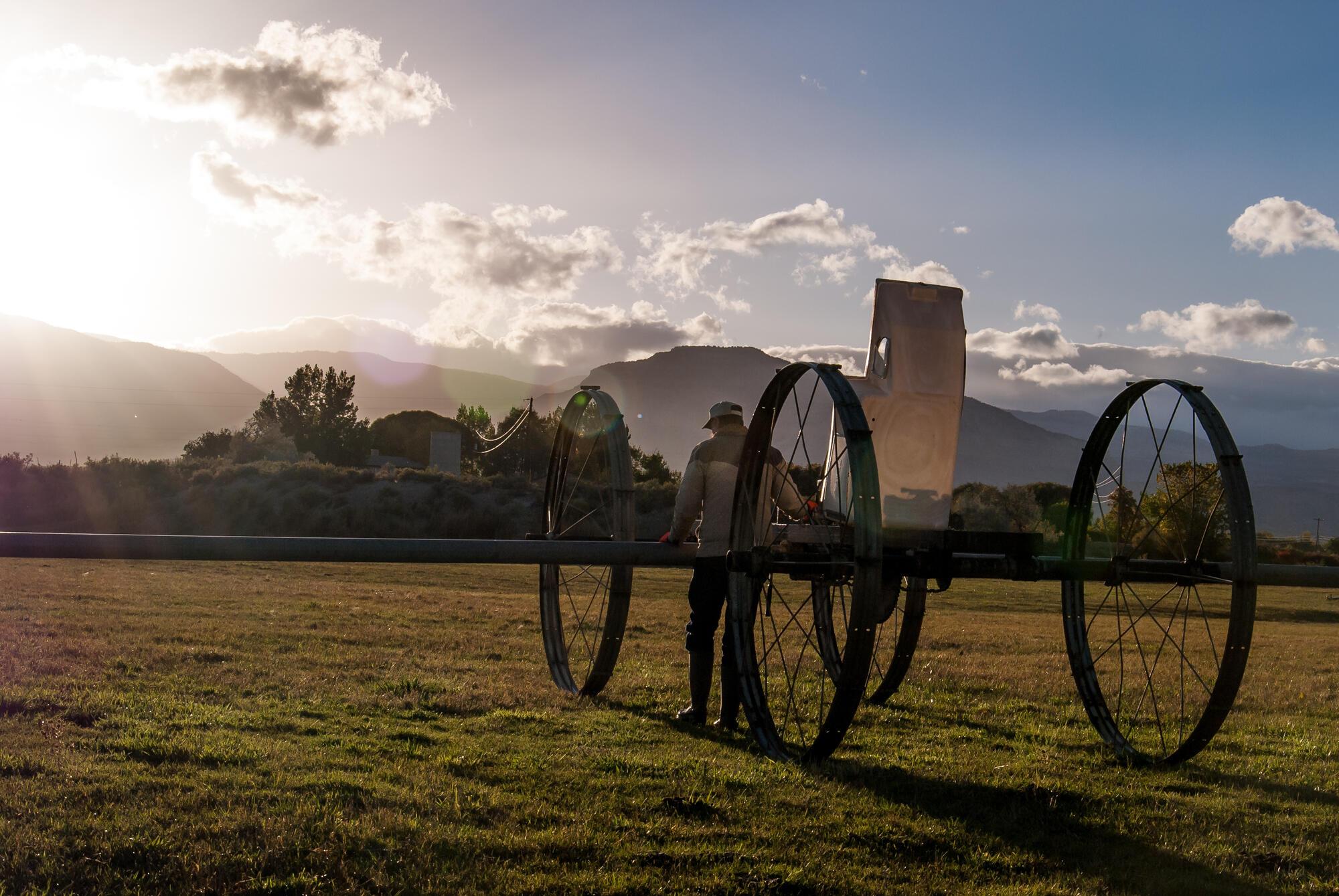
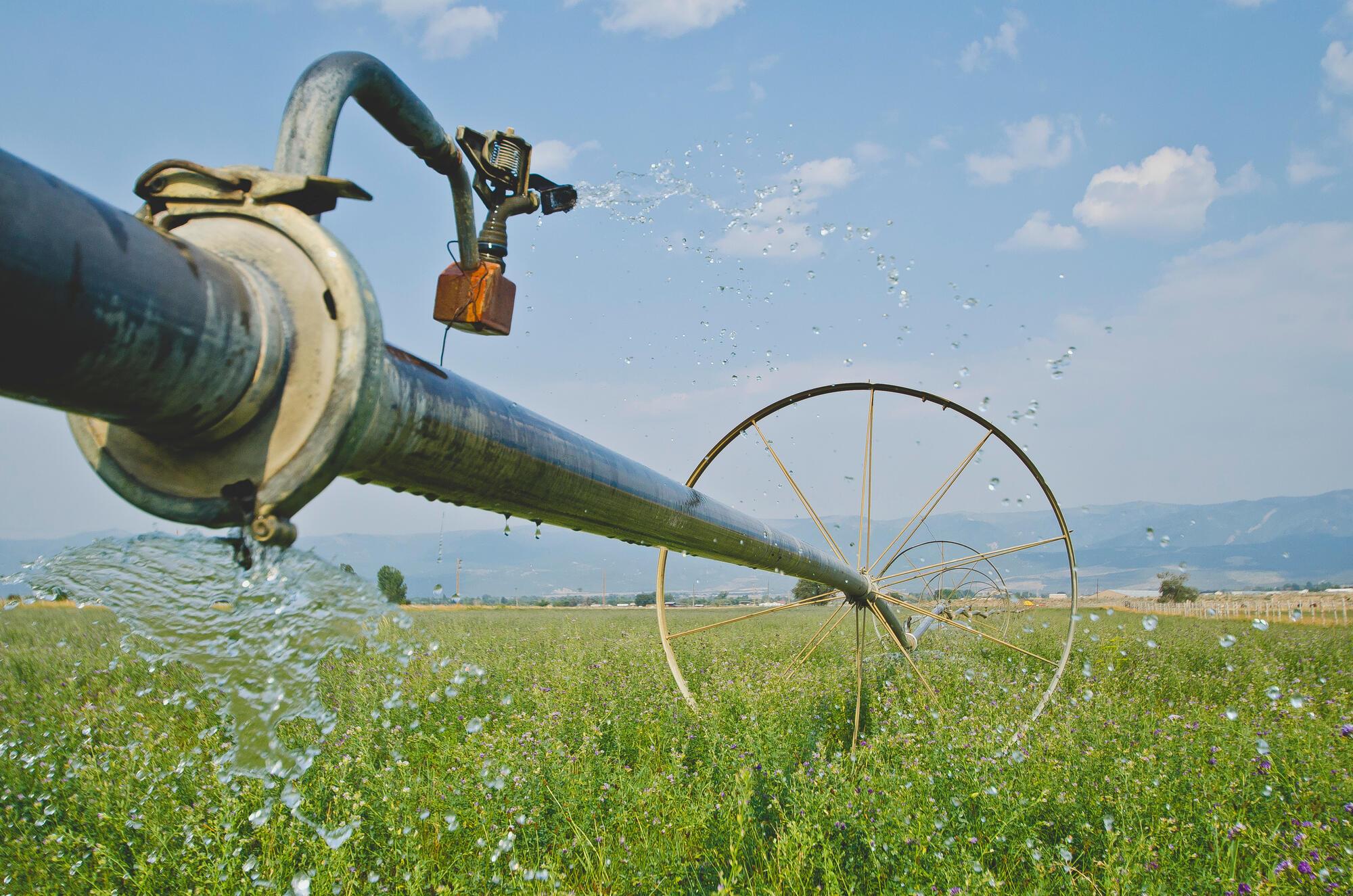
A wheel line irrigation system, also called a side-roll system, consists of a pipeline mounted on large wheels that rotate to move the irrigation system across the field. Wheel lines are commonly used for irrigating pasture, forage crops and small grain fields.
How it works
Water flows through the lateral pipeline to sprinkler heads spaced along the pipe. The pipeline is supported by wheels attached to the pipe. An engine-powered mover rotates the pipeline, allowing the system to roll across the field to irrigate the next set.
Key components
- Engine-powered mover (drive unit), an engine-powered drive unit that rotates the pipeline to move the system across the field
- Lateral pipeline that conveys irrigation water
- Wheels attached to the pipeline
- Sprinkler heads and nozzles, typically spaced about 40 feet apart
- Couplers and connectors
- Flexible supply hose connecting the wheel line to the mainline
- Self-levelers that maintain sprinkler alignment
Advantages
- Relatively low equipment costs compared with mechanized irrigation systems
- Simple mechanical design with minimal electronics
- Suitable for many field crops and moderately sized fields
- Can be used on fields where center pivots are not practical
Limitations
- Requires labor to move the system between irrigation sets.
- Uneven terrain may affect system movement and alignment.
- Wind can affect sprinkler distribution and irrigation uniformity.
- Mechanical components such as chains and gearboxes require maintenance.
Inspection and maintenance
General inspections and maintenance consist of:
- Inspecting the mover drive mechanism
- Lubricate the chain and gears annually and ensure the drive chain is properly aligned.
- Grease wheel axles and bearings according to the manufacturer’s recommendations.
- Checking engine components, including oil, hydraulic transmission fluid, air filter and fuel system
- Replace fluids annually or as recommended by the manufacturer.
- Inspecting the entire wheel line pipeline and ensuring that connections are secure and leak-free when the system is pressurized
- Replace sections of pipe if damaged, cracked or bent.
- Inspecting the condition of the wheels and ensuring they rotate freely without excessive wear or wobbling
- Checking the flexible supply hose for cracks, wear or leaks and replacing it if damaged
- Checking sprinkler head connections and replacing worn gaskets or damaged sprinklers
- Inspecting sprinkler nozzles and replacing worn nozzles, which can increase flow rates and reduce irrigation uniformity
- Ensuring all nozzles are the same size and free of debris or plugging to maintain uniform water distribution
- Inspecting self-leveler connections to ensure they swing freely and are not worn or damaged
Important notes
Nozzle wear can increase discharge by 10%–20% over time, which can:
- Reduce irrigation uniformity
- Increase runoff
- Increase pumping energy
Regular inspection and replacement of worn sprinkler nozzles are important for maintaining proper irrigation performance and water-use efficiency.
Fixed or solid set
What it is
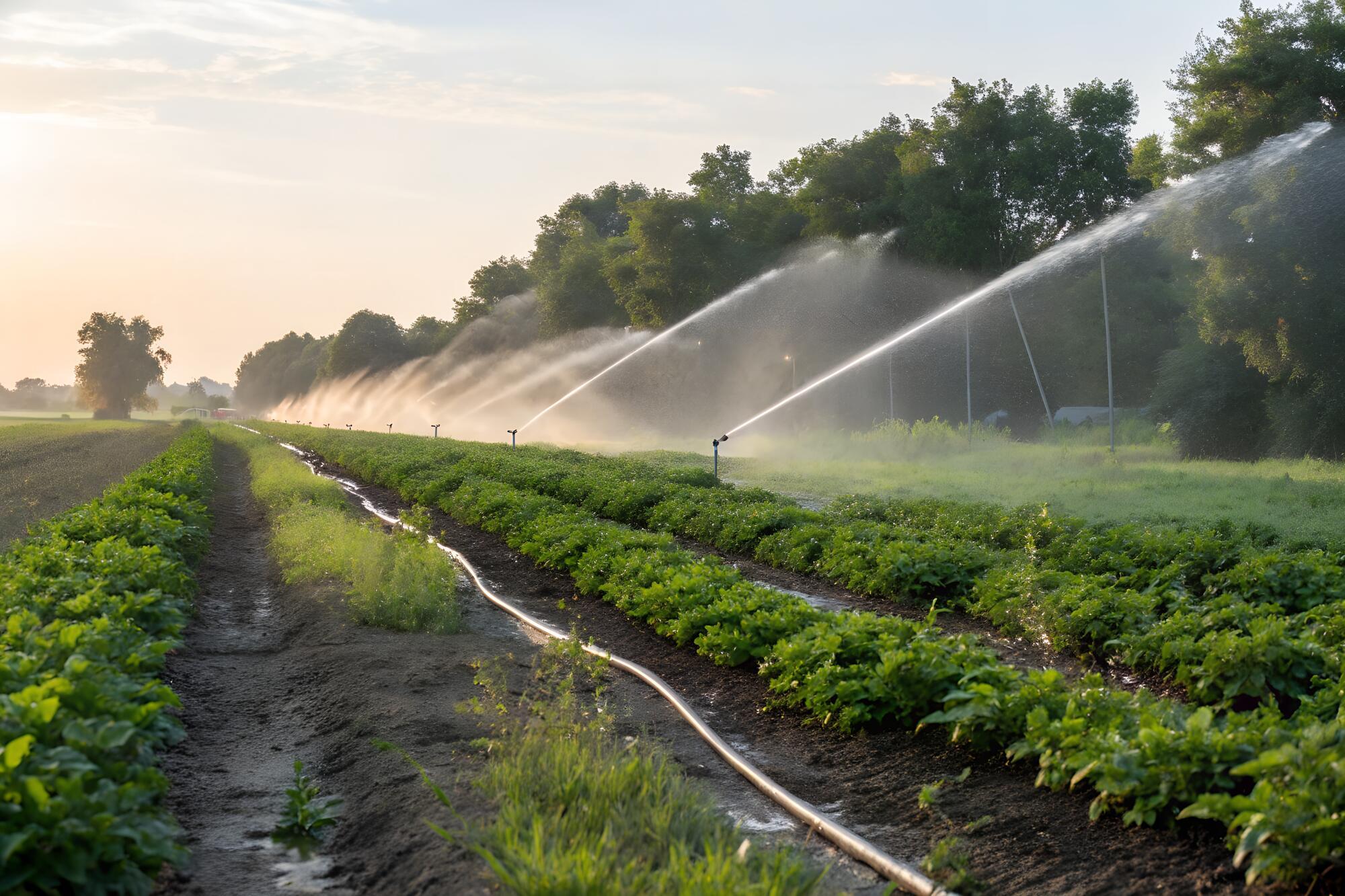
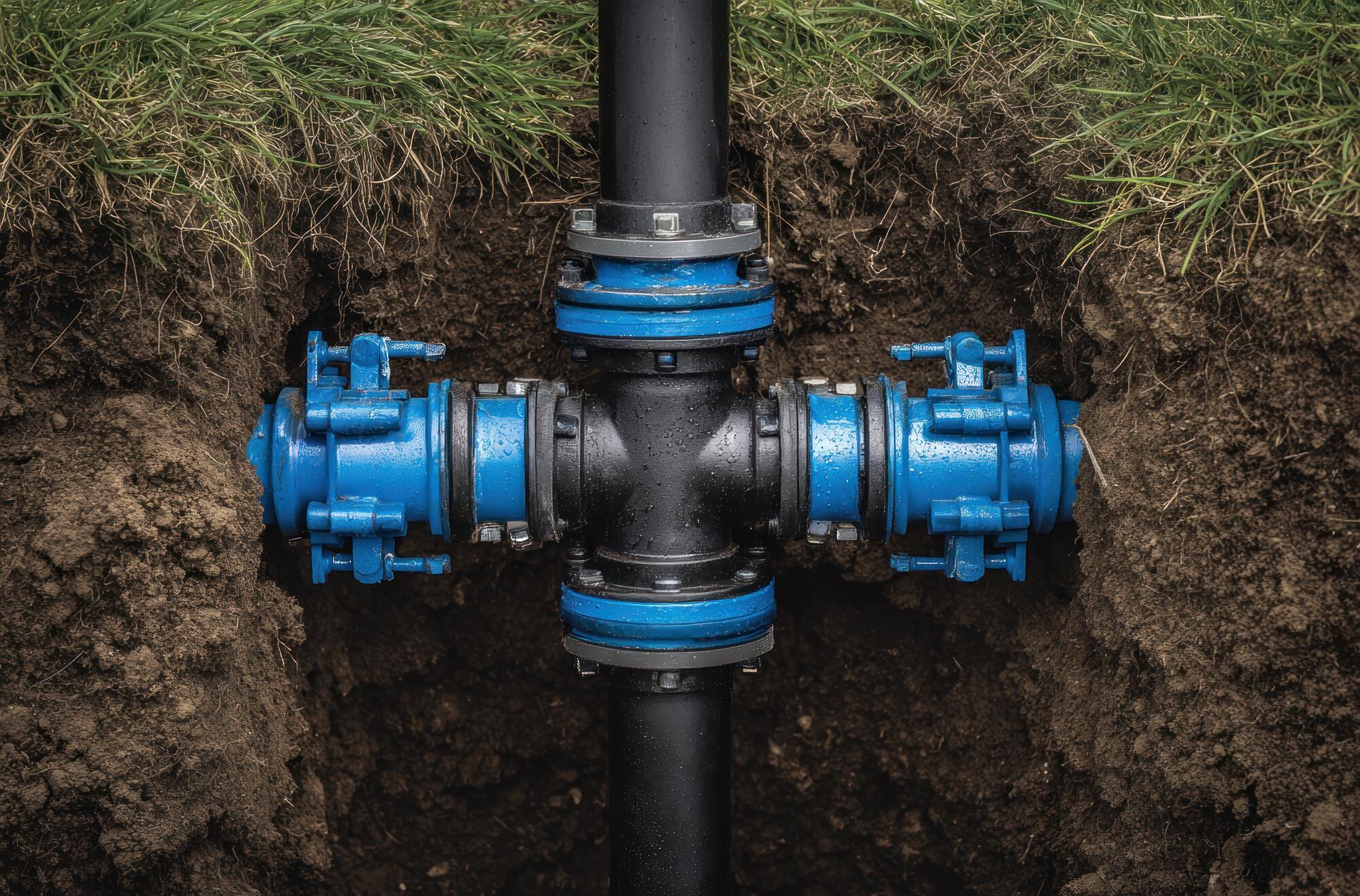
A solid set sprinkler system is a stationary irrigation system in which sprinklers remain permanently installed in the field. These systems may be installed above or below ground and are commonly used in orchards, vineyards, nurseries and high-value crops where permanent irrigation infrastructure is practical.
How it works
Water is delivered from a pump through a mainline pipeline to manifolds that distribute water to irrigation zones. Laterals connected to the manifold carry water to sprinklers spaced throughout the field. Valves and controllers regulate irrigation timing and duration for each zone.
Key components
- Mainline pipeline delivering water from the pump to the irrigation blocks.
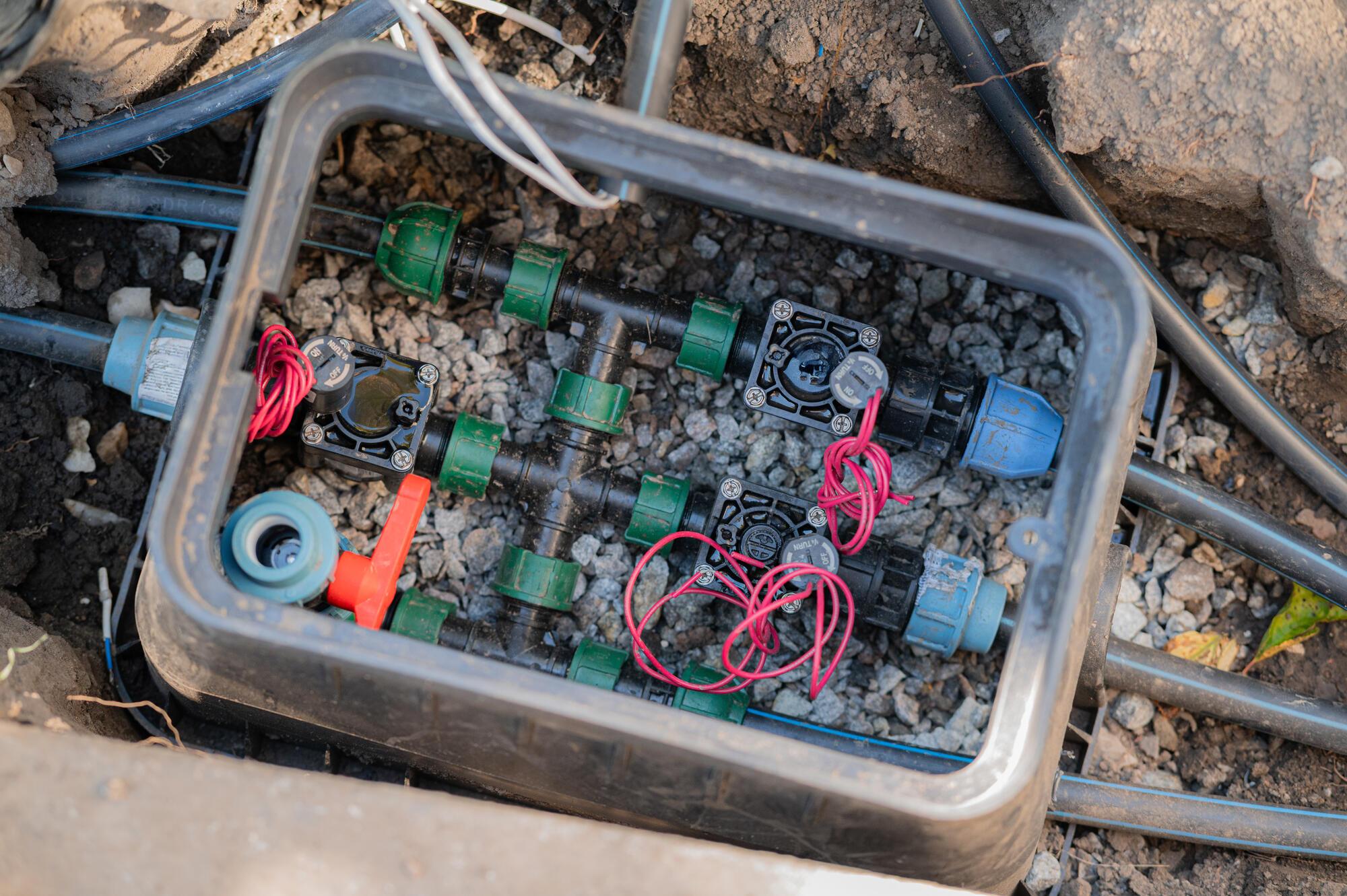
- Manifold distributing water to different irrigation zones. These often contain electrically controlled valves that regulate irrigation timing and duration.
- Laterals carrying water from the manifold to the sprinklers. These are typically spaced 50–60 feet apart.
- Sprinklers, usually spaced about 40 feet apart, which may be installed above or below ground and may include impact or rotator sprinklers.
- Control valves and solenoids.
- Valve boxes and irrigation controllers.
Advantages
- Permanent installation reduces the labor required to move equipment.
- Suitable for orchards, vineyards and specialty crops.
- Can be easily automated for irrigation scheduling.
- Provides consistent irrigation coverage when properly designed.
Limitations
- Higher installation cost compared with portable systems.
- System repairs may require excavation or access to buried components.
- Sprinkler heads may be obstructed by vegetation if not maintained.
- Requires periodic inspection to maintain uniform water distribution.
Inspection and maintenance
General inspections and maintenance should include:
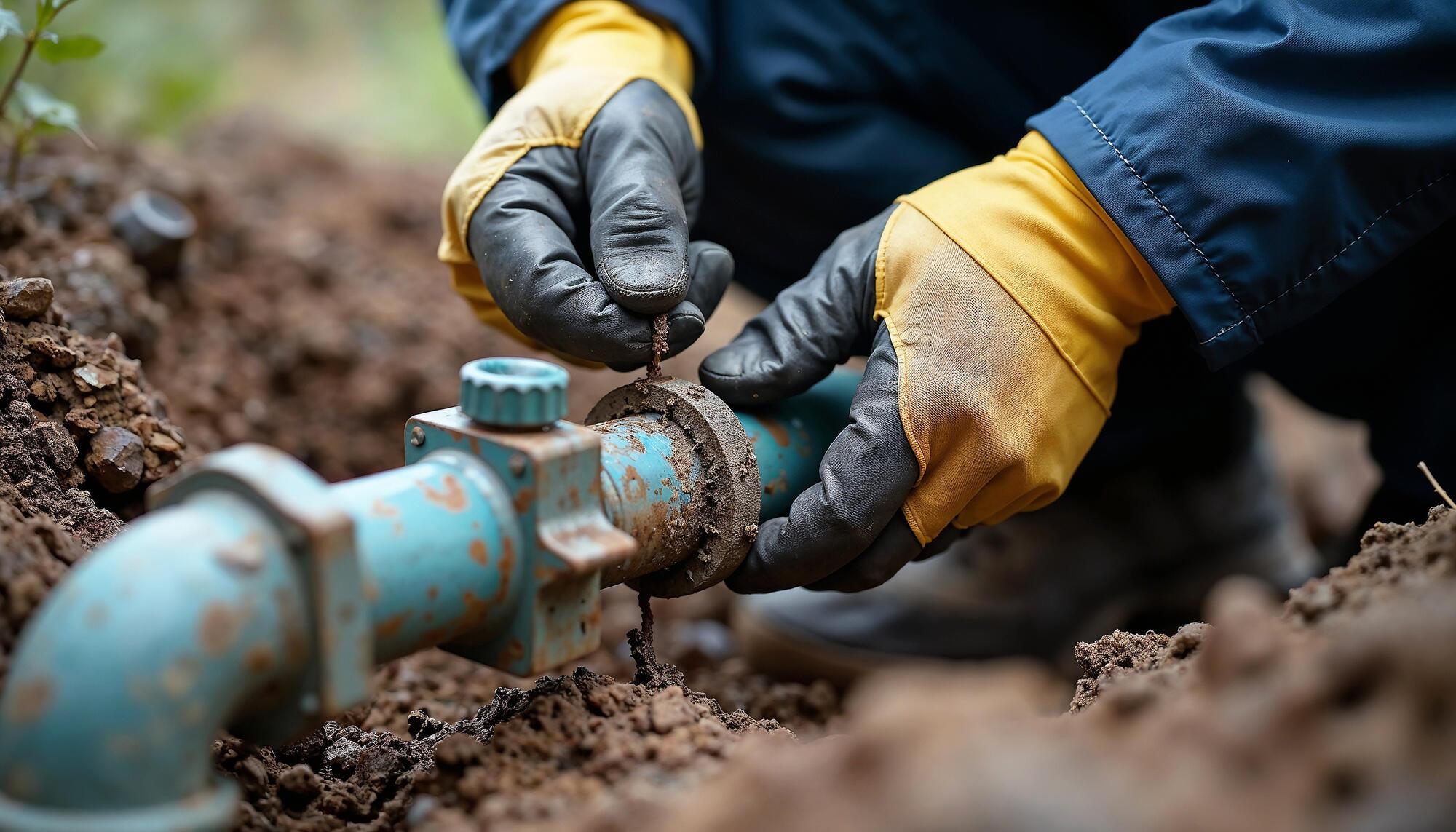
- Inspecting pipe connections to the manifold and replacing connections if they are cracked, broken or leaking.
- Inspecting irrigation valves and replacing valve gaskets if leaking around the housing, or replacing the valve if damaged or worn.
- Checking the condition of the valve box, ensuring it is free of soil, debris, insects or rodents, and that the lid fits securely.
- Inspecting manual valve switches or solenoids and replacing valves that are not functioning properly.
- Checking wiring and electrical conduit associated with automatic valves and controllers. Replace wiring if frayed, broken or exposed.
- Checking sprinkler head connections and replacing worn gaskets or leaking sprinklers.
- Inspecting sprinkler nozzles and replacing worn nozzles to maintain proper flow rates and uniform water application.
- Ensuring all nozzles within a zone are the same size to maintain irrigation uniformity.
- Checking sprinkler rotation and spray pattern to ensure sprinklers rotate freely and are not obstructed by debris or vegetation.
Periodic evaluation of sprinkler operating pressure and distribution uniformity can help identify performance problems and improve irrigation efficiency.
Traveling gun
What it is
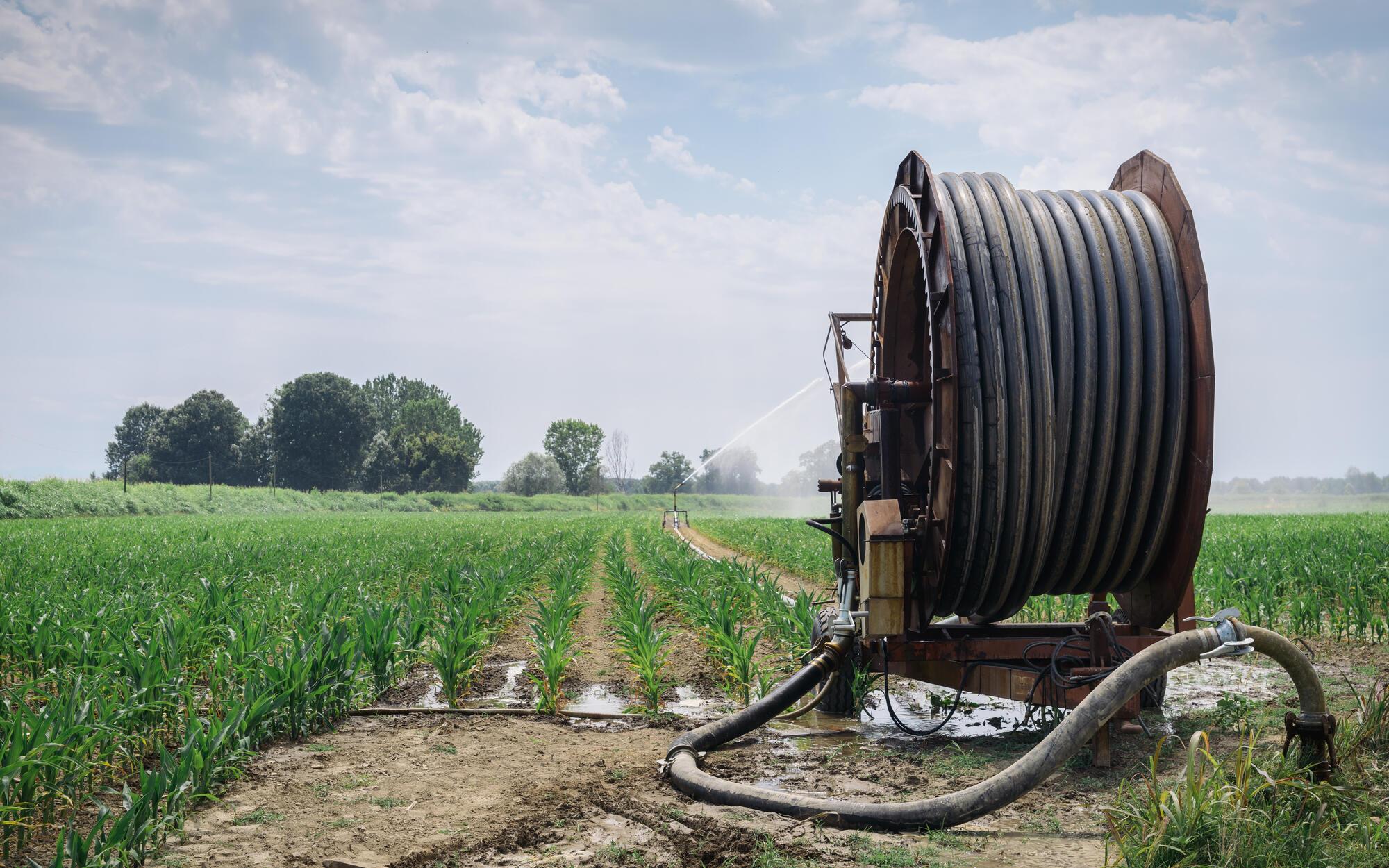
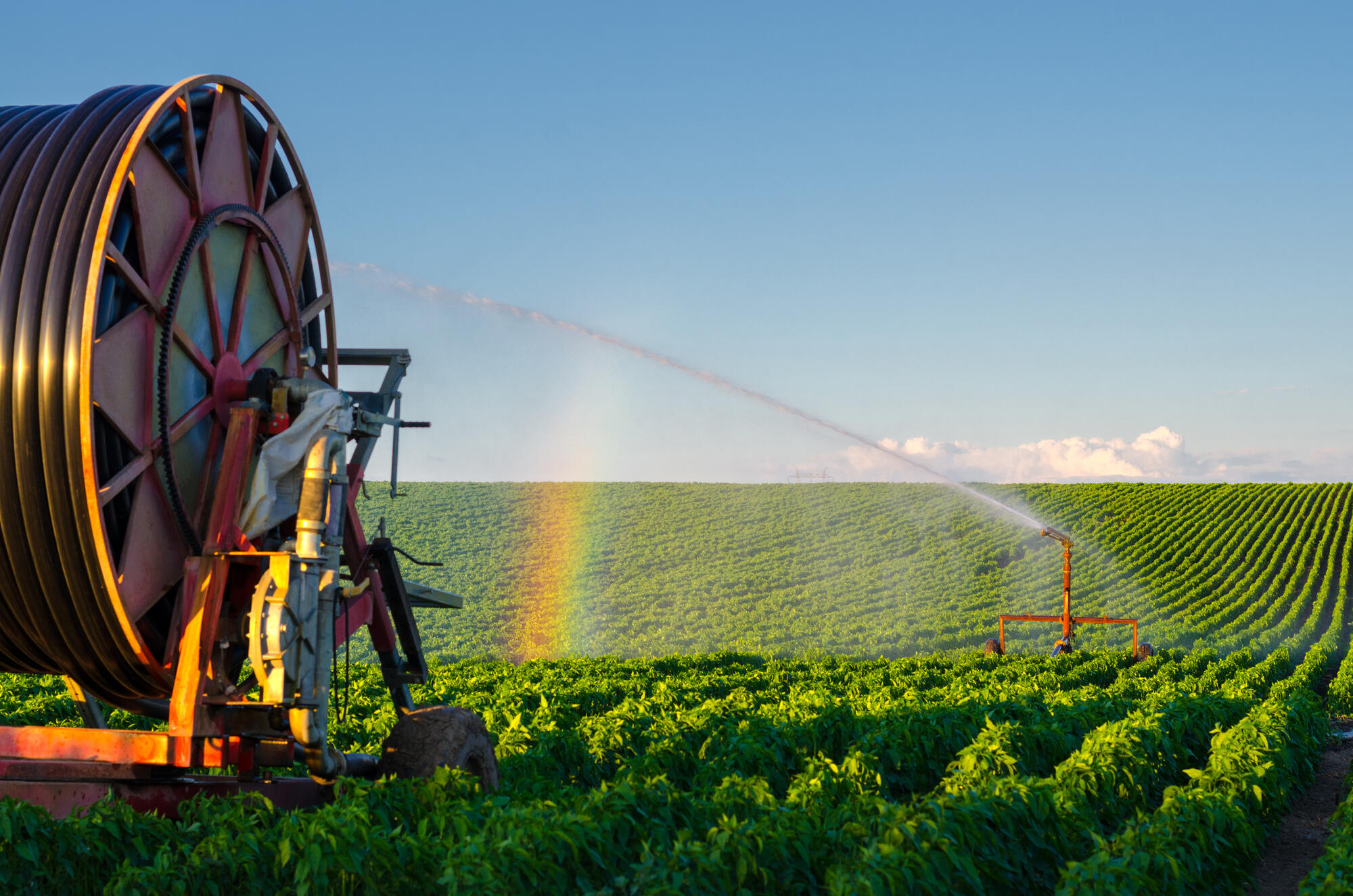
A traveling gun irrigation system, also called a hose reel irrigation system, consists of a hose reel machine that pulls a sprinkler gun cart across the field as it applies water. The sprinkler gun operates at relatively high pressure and discharges large volumes of water, typically 100–600 gallons per minute (gpm). The system irrigates an area with a radius of approximately 80–250 feet, depending on nozzle size, pressure and operating conditions.
How it works
Water is pumped through a large, flexible hose connected to a hose reel. As water flows through the machine, a turbine or hydraulic drive mechanism powers the reel, slowly retracting the hose and pulling the sprinkler cart across the field. The sprinkler gun applies water in a wide spray pattern while the cart travels along a designated lane.
Key components
- Hose reel machine
- Flexible high-pressure irrigation hose
- Traveling sprinkler gun cart
- Turbine or hydraulic drive mechanism
- Sprinkler gun and nozzle
- Flexible supply line connecting the system to the water source
Advantages
- Can irrigate irregularly shaped fields
- Requires fewer permanent installations than fixed systems
- Flexible irrigation coverage across large areas
- Can apply large volumes of water quickly
Limitations
- Requires relatively high operating pressure.
- Higher pumping energy requirements compared to some irrigation systems.
- Wind can significantly affect sprinkler distribution.
- Requires management of travel lanes to avoid soil compaction.
Inspection and maintenance
General routine inspection and maintenance should include:
- Inspecting the reel hose for cracks, wear, kinks or punctures. Replace the hose if damaged.
- Ensuring couplings, adapters and fittings are secure and not leaking. Replace components if worn or broken.
- Checking the sprinkler gun and nozzle. Replace worn nozzles, which can alter flow rate and spray pattern.
- Inspecting the turbine or drive mechanism and lubricating bearings and gears according to manufacturer recommendations. Replace worn components as needed.
- Inspecting hydraulic drive components (if equipped) and ensuring hoses and fittings are free of leaks.
- Inspecting the sprinkler cart wheels, greasing wheel axles and bearings annually and maintaining recommended tire pressure.
- Checking the travel speed control mechanism to ensure the reel retracts at the correct rate for uniform irrigation application.
Because traveling guns operate at high pressure and high flow rates, they typically require more pumping energy than other sprinkler systems. This makes proper maintenance and pressure regulation key to improving efficiency and maintaining uniform water application.
Pivot and lateral-move (linear) irrigation systems
What it is
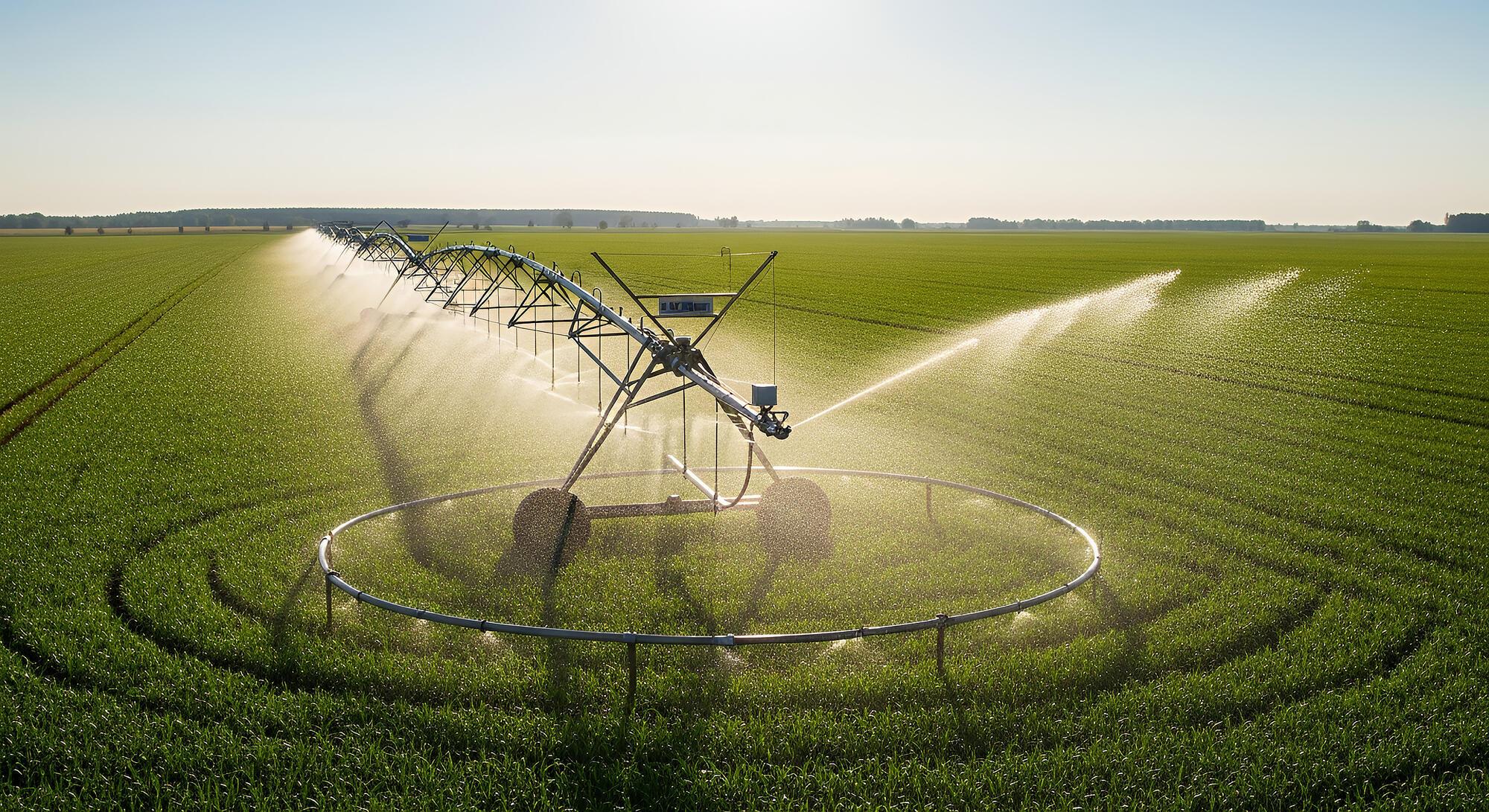
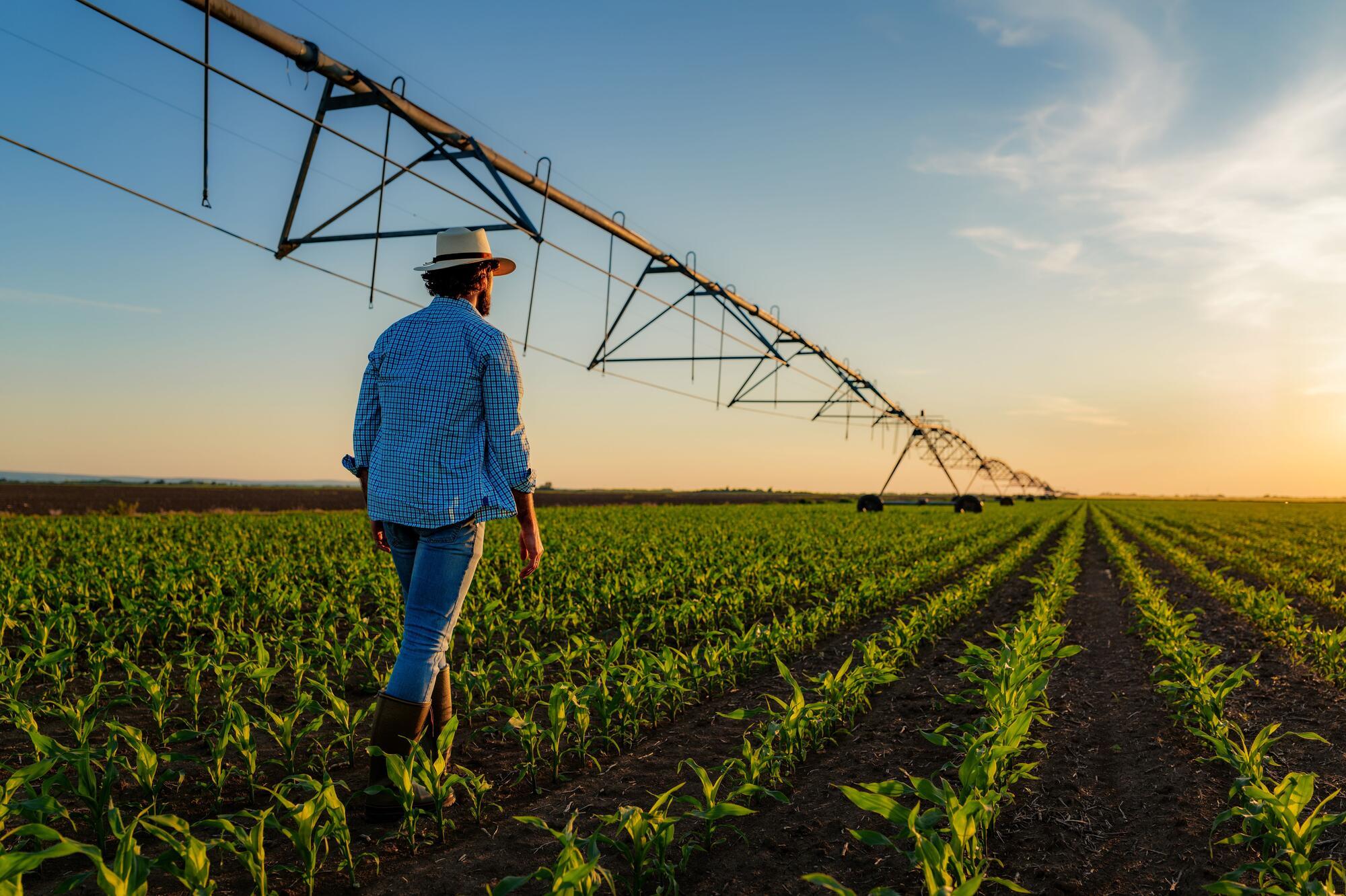
A center pivot irrigation system applies water in a circular pattern around a central pivot point. These machines are typically powered by electric motors using alternating current (commonly 120- or 480-volt systems) that drive the towers and control system movement.
How it works
Water is pumped into the pivot point and distributed through the pipeline spans. Electric motors at each drive tower move the machine across the field while sprinklers apply water at a controlled rate determined by pivot speed and nozzle configuration.
Key components
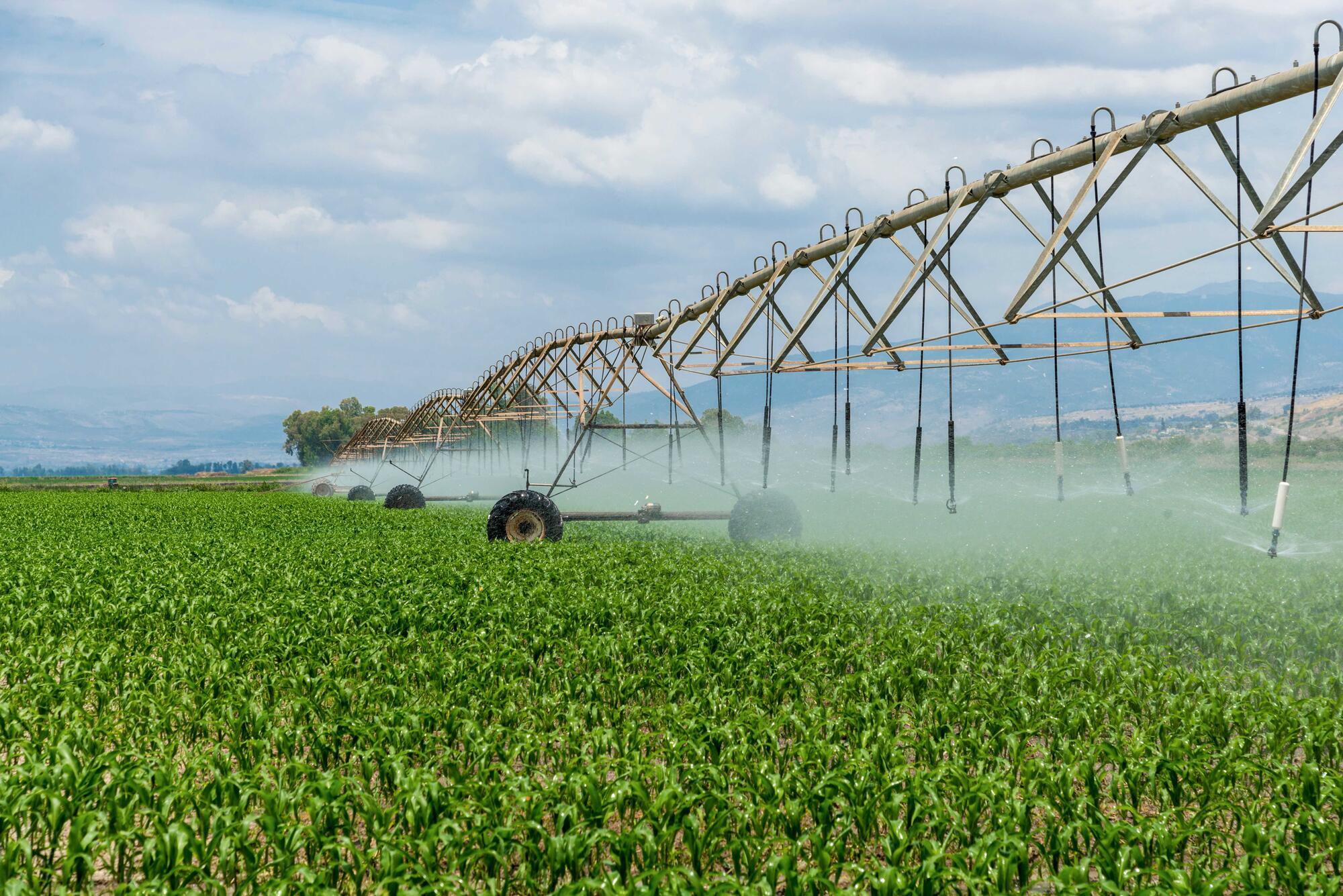
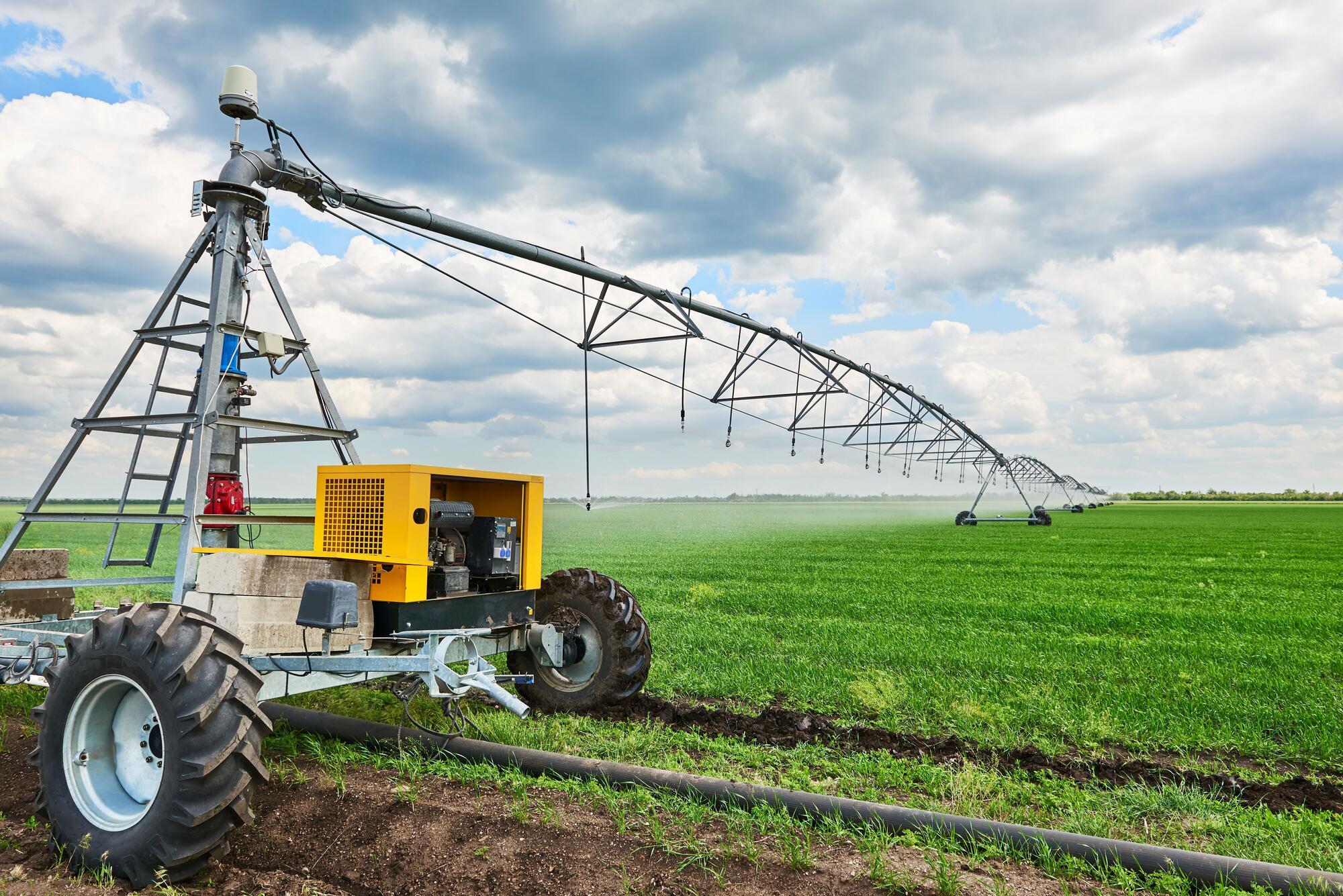
A center pivot system consists of several key components:
- Pivot point: The central structure where the machine is anchored and where irrigation water enters the system. The pivot point also houses the main control panel and electrical connections.
- Control panel: The main controller used to program pivot speed, irrigation timing and water application rate.
- Drive towers: Structural towers equipped with electric motors, gearboxes and wheels that move the pivot around the field.
- Spans: The pipeline sections between drive towers that support the structure and deliver water to the sprinkler package.
- Drop-down sprinklers: Sprinklers attached to flexible hoses suspended from the span, designed to apply water closer to the crop canopy to reduce evaporation and wind drift.
- Tower control boxes: Electrical control units on each tower that coordinate tower movement and maintain system alignment.
Advantages
- Highly automated and labor efficient
- Capable of irrigating large areas with relatively uniform water distribution
- Compatible with advanced irrigation technologies such as variable rate irrigation, or VRI
- Adaptable to multiple sprinkler packages including low-elevation spray application (LESA), low-energy precision application (LEPA) and mobile drip irrigation (MDI)
Limitations
- Circular irrigation pattern may leave corners of square fields unirrigated.
- Initial equipment cost can be high.
- Performance may be affected by wind drift or nozzle wear.
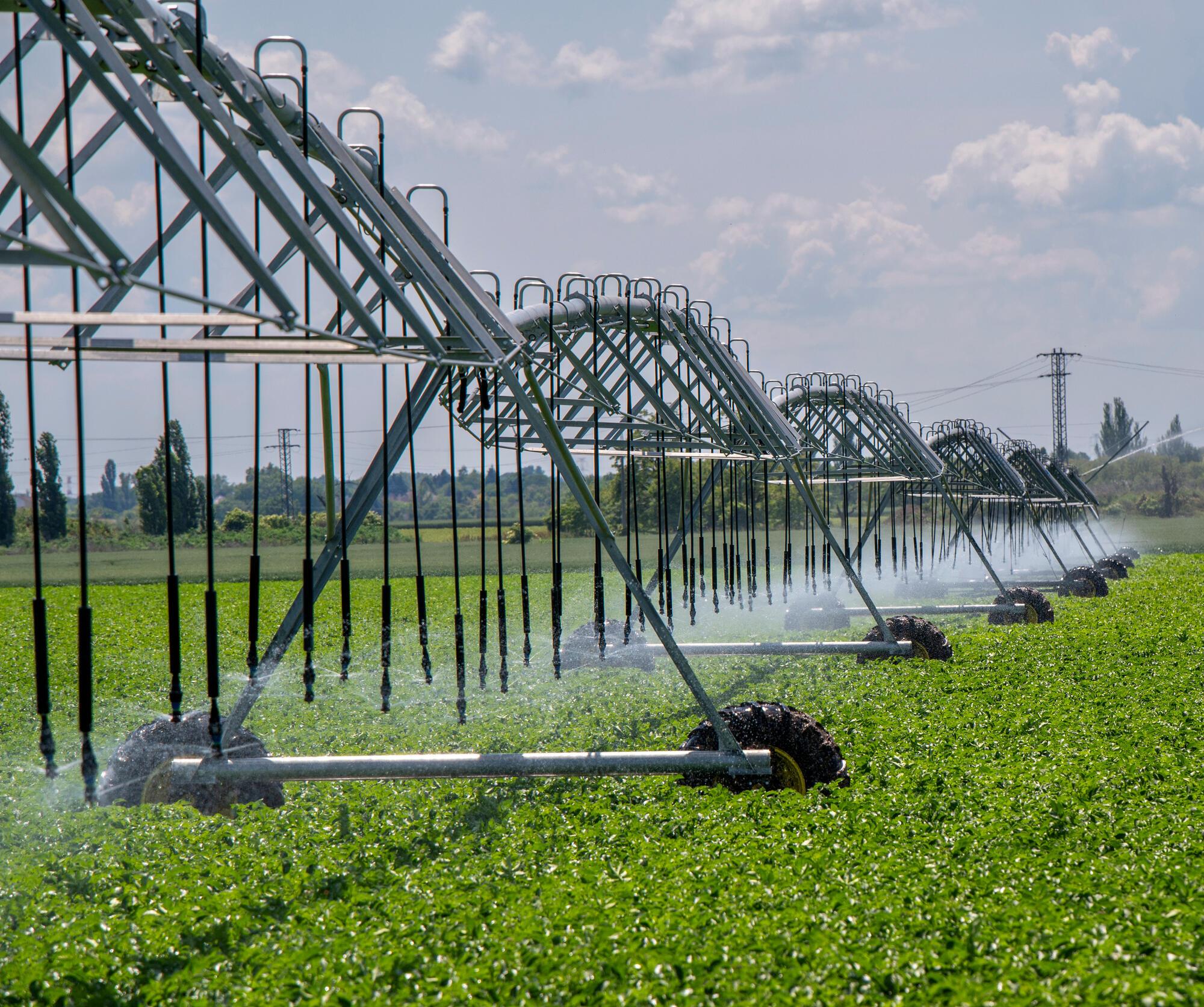
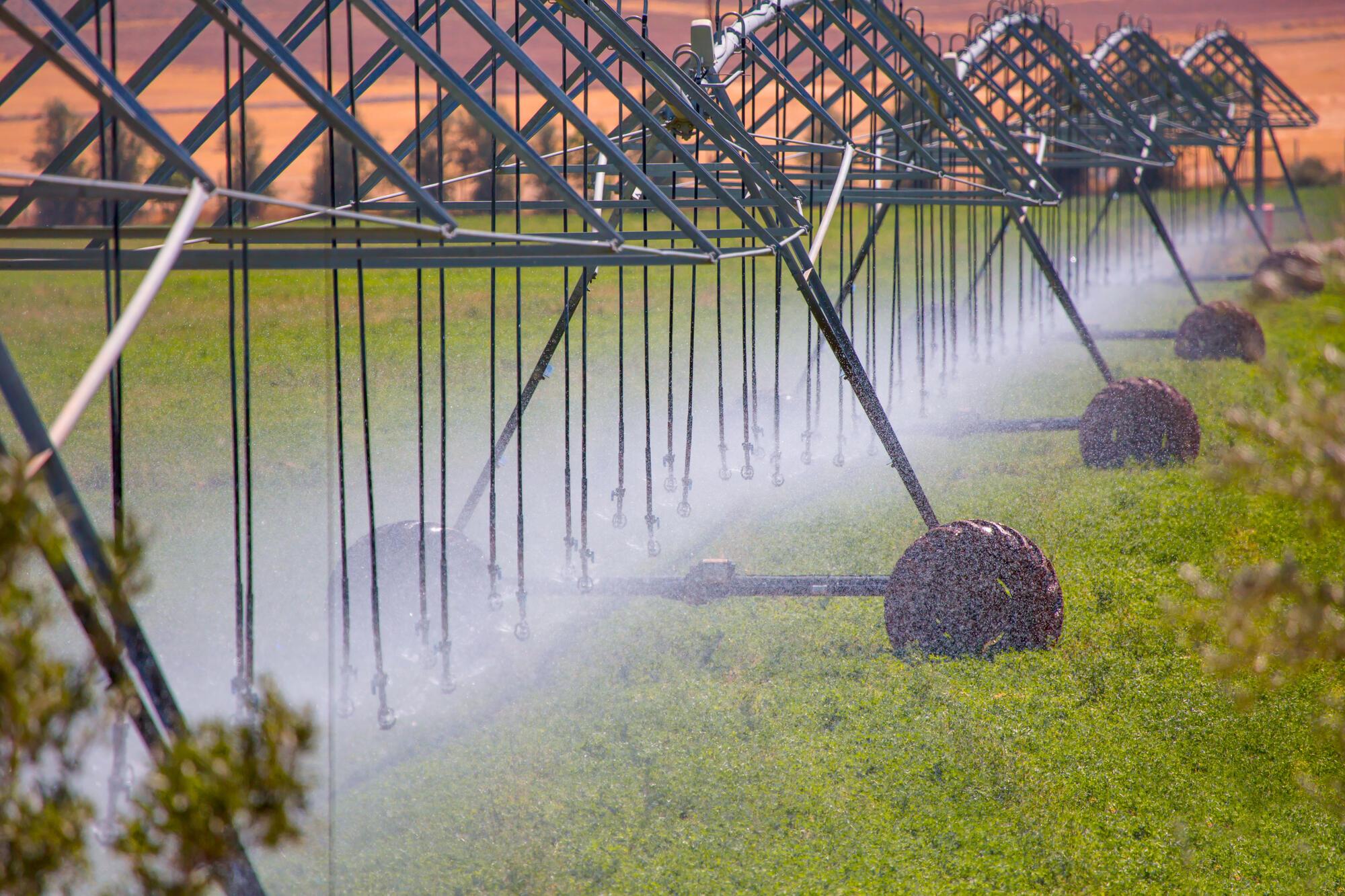
A lateral-move or linear irrigation system contains many of the same components as a center pivot system. However, instead of rotating around a fixed point, the entire machine moves in a straight line across the field. Water is typically supplied through a ditch, buried pipeline or hydrant system, often connected through a flexible hose to the moving machine. The system travels at a controlled speed to apply a uniform irrigation depth across rectangular fields.
Inspection and maintenance
General inspection and maintenance should include:
- Inspecting the pivot point assembly, including connections, bearings and seals, to ensure there are no leaks
- Grease bearings annually and tighten loose connections.
- Replace worn seals as needed.
- Inspecting drive towers and spans to ensure structural connections are secure
- Tighten bolts and fittings and repair or replace damaged joints, couplings and seals.
- Inspecting tower gearboxes and drive mechanisms
- Lubricate moving parts and check that gearbox oil is clean and at the proper level.
- Replace oil if contaminated with water or debris.
- Checking that all drive safety shields and guards are in place
- Replace damaged or missing shields to prevent accidents and protect moving parts.
- Inspecting wheel alignment and tire condition
- Ensure lug nuts are tight and tires are inflated to the manufacturer’s recommended pressure.
- Proper alignment helps prevent excessive wear and structural stress.
- Checking sprinkler nozzles and pressure regulators
- Ensure nozzles match the manufacturer’s sprinkler package chart and replace worn or damaged nozzles to maintain proper water distribution.
- Inspecting end guns (if installed) to ensure they operate correctly
- Repair damaged components and remove debris that may obstruct the nozzle or rotation mechanism.
- Inspecting drop hoses and flexible supply hoses for cracks, wear or leaks
- Replace damaged or deteriorated hoses.
- Inspecting pressure regulators and sprinkler bodies for wear
- Regulators and nozzles typically require replacement every five to seven years to maintain proper irrigation uniformity.
Mobile drip irrigation
What it is
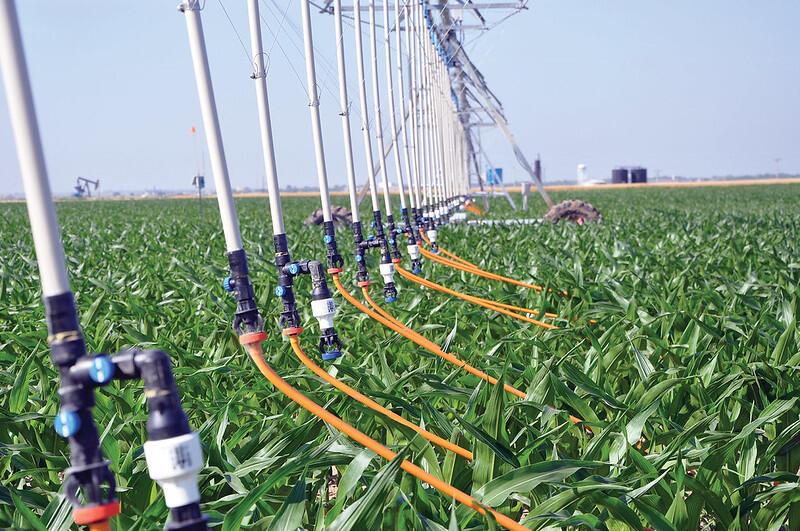
Mobile drip irrigation, or MDI, is a modification of a center pivot irrigation system in which water is applied directly to the soil surface through drip emitters attached to hoses suspended from the pivot spans.
How it works
Unlike traditional pivot sprinklers that apply water through the air, mobile drip irrigation delivers water directly to the soil surface, reducing evaporation losses, wind drift and surface runoff. A mobile drip system uses the pivot structure to distribute water but replaces conventional sprinklers with drip components.
Key components
- Pivot or lateral-move irrigation machine — provides structural support and conveys water through the spans
- Drop hoses — flexible hoses suspended from the pivot spans that convey water to the soil surface
- Drip tubing (emitter lines) — tubing attached to the drop hoses that distributes water along the soil surface
- Emitters — pressure-compensating or non-compensating outlets that regulate water discharge
- Pressure regulators — devices that maintain consistent pressure to ensure uniform emitter flow
- Filtration system — required upstream to prevent emitter clogging caused by sediment or debris
Advantages
- Reduces evaporation losses compared with sprinkler application
- Minimizes wind drift
- Improves infiltration and reduces runoff
- Often operates at lower pressures than conventional pivot sprinklers
Limitations
- Drip tubing may be susceptible to damage from rodents or field equipment.
- Requires filtration to prevent emitter clogging.
- May require additional management to maintain proper tubing placement.
Inspection and maintenance
Routine inspections should include:
- Inspecting drop hoses and drip tubing for cracks, leaks or excessive wear. Replace damaged tubing to prevent water loss and maintain uniform irrigation.
- Checking emitter outlets to ensure they are not clogged by sediment, algae or mineral buildup. Clean or replace emitters if clogging occurs.
- Inspecting pressure regulators to ensure they maintain the proper operating pressure recommended by the manufacturer. Replace regulators if they are damaged or not functioning properly.
- Inspecting filtration systems regularly and cleaning or replacing filters as needed to prevent emitter clogging.
- Ensuring drip lines are properly positioned on the soil surface and not tangled, buried or damaged by field equipment.
- Checking connections between drop hoses and drip tubing to ensure fittings are secure and not leaking. Replace worn fittings as necessary.
- Regularly inspecting drip lines for damage caused by rodents or wildlife, which can puncture tubing and cause leaks.
Important notes
- Mobile drip irrigation systems are increasingly used to improve irrigation efficiency and reduce evaporation losses compared to traditional sprinkler systems.
- Because mobile drip systems apply water through emitters located at the soil surface, maintenance focuses on protecting emitters and drip tubing from clogging, damage and misplacement.
- Because emitters have very small openings, proper filtration and periodic inspection are critical to maintaining uniform water application in mobile drip systems.
- Mobile drip irrigation systems typically operate at lower pressures than conventional pivot sprinklers, which can reduce pumping energy requirements.
Microirrigation systems
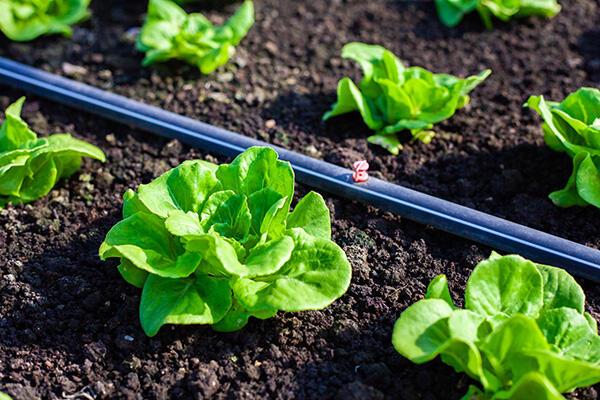
Microirrigation, often referred to as drip irrigation, is a low-pressure irrigation method that applies water slowly and directly to the plant root zone through a network of pipes, lay-flat hoses, tubing, valves and emitters. These systems deliver small, frequent applications of water near the crop roots, reducing evaporation and minimizing runoff compared with conventional irrigation methods. Because water is applied precisely where plants need it, microirrigation systems can significantly improve water-use efficiency and support more uniform soil moisture conditions in the root zone.
Microirrigation systems typically operate at lower pressures and smaller flow rates than traditional sprinkler systems, which can reduce pumping energy requirements. By delivering water directly to the soil near the crop roots rather than spraying it into the air, these systems also reduce evaporation losses and wind drift.
Microirrigation includes several types of water applicators, such as:
- Drip emitters
- Microsprays or microsprinklers
- Bubblers
- Subsurface drip irrigation, or SDI
These applicators distribute water across the soil surface or belowground, allowing water to infiltrate and move through the soil profile where plant roots can extract it. Proper system design ensures that application rates remain below the soil infiltration rate to prevent runoff and maintain efficient water use.
Key components
- Mainline and submain pipelines
- Laterals (drip tubing or microtubing)
- Emitters or microsprinklers
- Filtration system (screen, disc, or media filters)
- Pressure regulators
- Control valves and flushing valves
Advantages
- Very high irrigation efficiency
- Minimal evaporation and wind drift losses
- Precise water delivery to the crop root zone
- Compatible with fertigation and automation systems
Limitations
- Emitters are susceptible to clogging if filtration and maintenance are inadequate.
- Installation cost may be higher than some sprinkler systems.
- System performance depends on proper pressure regulation and filtration.
Inspection and maintenance
For this type of system, regular inspection of the filtration system is top priority because even small amounts of debris can clog the emitters. Other general inspections and maintenance consist of:
- Inspecting the condition of the hoses for visible leaks. Replace hoses if damaged, cracked or split.
- Checking for loose connections. Tighten or replace broken couplings and fittings.
- Inspecting the condition of the pipe connections to the manifold. Replace connections if they are broken or cracked.
- Inspecting the condition of the tubing and emitters. Visually inspect for leaks, and repair or replace damaged tubing and malfunctioning emitters.
- Inspecting the function and condition of the filters during each operation. Check the pressure within the filter. A significant pressure drop indicates the filter is plugging. Clean screen filters and flush sand media filters to reduce clogging and maintain system performance. If the microirrigation system has an automatic flush, then periodically check the filter after each operation to confirm it is working properly.
- Checking pressure regulators to ensure they are set to the manufacturer’s recommendations.
- Check pressure at the lowest pressure emitter to ensure pressures meet the manufacturer's recommendations.
- Periodically flush pipelines to remove sediment and debris that may clog emitters or microsprinklers.
Maintaining proper filtration, pressure regulation and periodic flushing is essential to long-term emitter performance and uniform water application.
Common spring and fall maintenance
Routine maintenance before and after the irrigation season helps prevent costly repairs, ensures proper system operation and improves irrigation efficiency. Irrigation systems should be inspected at the end of the irrigation season before winter conditions occur and again in early spring before the system is placed back into operation. Early inspections allow time to complete necessary repairs before irrigation is needed.
Fall maintenance
- Clean and inspect filtration systems.
- Flush pipelines to remove sediment, algae or debris that may accumulate during the season.
- Drain or blow out irrigation pipelines to prevent freezing damage.
- Remove drain plugs and drain water from pumps and exposed pipelines.
- Leave valves slightly open to prevent cracking caused by ice expansion.
- Inspect pumps, motors and electrical connections for wear or damage before winter storage.
- Repair leaks in pipelines, valves and fittings before the next irrigation season.
Spring maintenance
- Reinstall pump drain plugs and ensure all drain valves are properly closed.
- Inspect valves and pipelines for cracks or freeze damage.
- Grease pumps, motors and mechanical fittings according to manufacturer recommendations.
- Grease pivot gearboxes and inspect drive components.
- Inspect sprinkler nozzles and replace worn or damaged nozzles.
- Inspect and replace worn gaskets, couplings and fittings.
- Inspect and replace worn or damaged pressure regulators.
- Check nozzles for wear or plugging and ensure all nozzles are the correct size.
- Flush pipelines to remove debris that may have accumulated during winter.
- Check system pressure and verify proper operation before starting full irrigation schedules.
Signs your irrigation system needs maintenance
Changes in system performance or crop response often indicate that maintenance is needed. Regular inspection can help identify problems early and prevent water loss, reduced irrigation uniformity and increased energy costs.
Common signs include:
- Uneven crop growth or irregular crop development patterns in the field
- Low pressure at sprinklers or emitters
- Excessive runoff, ponding or poor water infiltration
- Frequent nozzle or emitter clogging
- Leaking pipelines, valves or fittings
- Unusual pump vibration, noise or overheating
- Increased pumping energy use or reduced irrigation coverage
Early identification and correction of these issues can improve irrigation uniformity, reduce water and energy waste and help maintain optimal crop growth.
Proper irrigation system maintenance, combined with efficient system design and good irrigation management practices, can significantly improve water-use efficiency, reduce energy consumption and support long-term agricultural productivity.
Helpful checklists for your irrigation system
Appendix 1: Irrigation system inspection checklist. This checklist can be used for most sprinkler systems.
Appendix 2: Center pivot operation and evaluation field checks. This checklist can be used for pivots and lateral moves (linear).
Appendix 3: Microirrigation inspection checklist for agriculture. This checklist can be used for some types of microirrigation systems.
References and resources
Agricultural Water Quality Alliance. SOP 23: Evaluation of design and operation of overhead sprinklers, 2010 Irrigation Assessments.
Agrithing.com. 2023. Maximizing Efficiency with Drip Irrigation.
AGRIVI. Center Pivot Irrigation: From Dust Bowl to Modern Era Methods.
Beard, F. Richard, Robert W. Hill and Boyd Kitchen. 2000. Maintenance Of Wheelmove Irrigation Systems. ENGR/BIE/WM/05, Logan UT: Utah State University Extension Service.
CRI Pumps Private Limited. The Ultimate Guide to Pump Maintenance: Ensuring Optimal Performance and Efficiency
Evans, Robert, and R.E. Sneed. 1996. Selection and Management of Efficient Hand-move Solid Set and Permanent Irrigation System. Raleigh, NC: NC State University A&T Cooperative Extension.
Kelley, Lyndon, and Younsuk Dong. 2023. Irrigation season: Start with inspections and repairs. East Lansing, MI: Michigan State University Extension Service.
Lamont, Bill. 2018. Maintaining drip irrigation systems. The Vegetable & Small Fruit Gazette, Vol. 16, Issue 6. Penn State Horticulture and Extension.
Ley, Thomas W., and Brian Leib. 2003. Irrigation System Evaluation. EM4822, Pullman, WA: Washington State University Extension Service.
Marek, Thomas, and Dana Porter. 2018. Think You Understand Center Pivot Safety and Maintenance — Really? Annual Central Plains Irrigation Conference, Colby, Kansas.
Mohamed, Abdelmoneim Z, R. Troy Peters and Don McMoran. 2020. Management of Traveler Gun Irrigation Systems in the Pacific Northwest. FS348E, Pullman, WA: Washington State University Extension.
Natural Resources Conservation Service. Irrigation System Evaluations, Chapter 4.
Yergeau, Steve. 2018. Drip Irrigation Inspection Checklist for Agriculture FS1292, New Brunswick, NJ. Rutgers New Jersey Agricultural Experimental Station.
Acknowledgments
This material is based upon work supported by the National Institute of Food and Agriculture, U.S. Department of Agriculture, under award No. 2021-38640-34695 through the Western Sustainable Agriculture Research and Education program under project number WPDP22-020. USDA is an equal opportunity employer and service provider. Any opinions, findings, conclusions or recommendations expressed in this publication are those of the authors and do not necessarily reflect the view of the U.S. Department of Agriculture.
Contributors included Jon Chilcote, National Resources Conservation Service; Robert Wallace, Wy'East Resource Conservation and Development; and Justin Frazer, Thompson Pump and Irrigation). Reviewers included Matthew Alongi, NRCS State Irrigation Engineer; Mylen Bohle, Associate Professor, Emeritus, Oregon State University; Troy Peters, Professor and Extension Irrigation Engineer, Irrigated Agriculture Research and Extension Center, Washington State University; Rex Barber of Big Falls Ranch, Terrebonne, Oregon; Mike Macy of Macy Farms, Culver, Oregon; Patrice Spyrka of Tumalo Alpen Ranch, Tumalo, Oregon; Greg Mohnen of Triple S Ranch; and Darrell Abby of Rock Island Ranch.
About the authors

