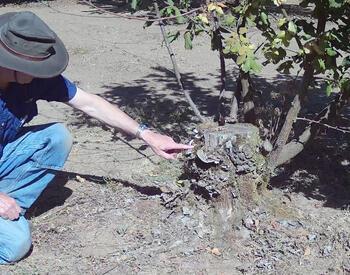
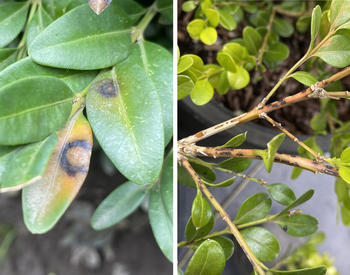
Grapevine trunk diseases threaten vineyard productivity by damaging the woody parts of grapevines. These diseases can reduce yields, weaken vines and increase the cost of disease management for wine grape growers.
This research could help growers manage grapevine trunk diseases more effectively while supporting long-term vineyard productivity.
Botryosphaeria dieback is one of those diseases. It can infect pruning wounds and contribute to long-term vine decline, creating an ongoing challenge for growers who need effective management options that work in Oregon’s climate.
Biological control agents, including beneficial fungi and bacteria, have shown potential for suppressing grapevine trunk disease pathogens. But their effectiveness can depend on environmental conditions. A product that performs well in one region may not work as well during the cooler pruning-season conditions common in the Pacific Northwest.
In response, researchers Joseph DeShields and Achala KC of Oregon State University, along with James Woodhall of the University of Idaho, collected dormant grapevine spur samples from 200 vines across eight vineyards in the Willamette and Rogue valleys.
The research team isolated naturally occurring microbes from the samples and tested them in the lab against Dothiorella iberica, a fungus associated with Botryosphaeria dieback. The tests measured how well different microbes inhibited the fungus at temperatures ranging from 50°F to 80°F.
Promising results
The work focused on finding native biological control candidates that may be better adapted to cooler Pacific Northwest conditions.
The researchers found several kinds of naturally occurring microbes on Oregon grapevines that may help protect vines from disease.
Two types of bacteria stood out: Bacillus subtilis and Bacillus velezensis. In lab tests, some native Oregon strains did a better job of slowing the growth of the disease-causing fungus than a commercially available product used as a comparison.
The native strains worked well across all temperatures tested, including 50°F. That matters because pruning often happens in cooler weather, when available disease-management products may be less effective.
The results suggest that bacteria already found in Oregon vineyards could one day help growers manage Botryosphaeria dieback in ways that are better suited to the region’s climate.
Joseph DeShields is a faculty research assistant and graduate student at the OSU Southern Oregon Research and Extension Center (SOREC) in Central Point. Achala KC is an associate professor and Extension specialist in the Department of Botany and Plant Pathology in the College of Agricultural Sciences, based at SOREC. James Woodhall is an associate professor and Extension specialist in plant pathology.
Public value
Oregon’s wine grape industry depends on healthy, productive vineyards. By identifying biological control candidates already adapted to Oregon growing conditions, this research could help growers manage grapevine trunk diseases more effectively while supporting long-term vineyard productivity.
The findings are an early step toward new disease-management tools that could reduce crop losses, improve the reliability of biological control in cool-climate vineyards and strengthen the economic resilience of Oregon wine grape production.
The work also shows the public value of sustained research funding. Support from the Northwest Center for Small Fruits Research allowed Oregon State researchers to investigate a disease-management challenge with direct implications for growers, vineyard longevity and regional agricultural competitiveness. That investment helps move practical, science-based solutions closer to the producers who need them.
The researchers also acknowledge Pacific Crest Vineyard Services, Rogue Valley Winegrowers Association and Results Partners for their collaboration.