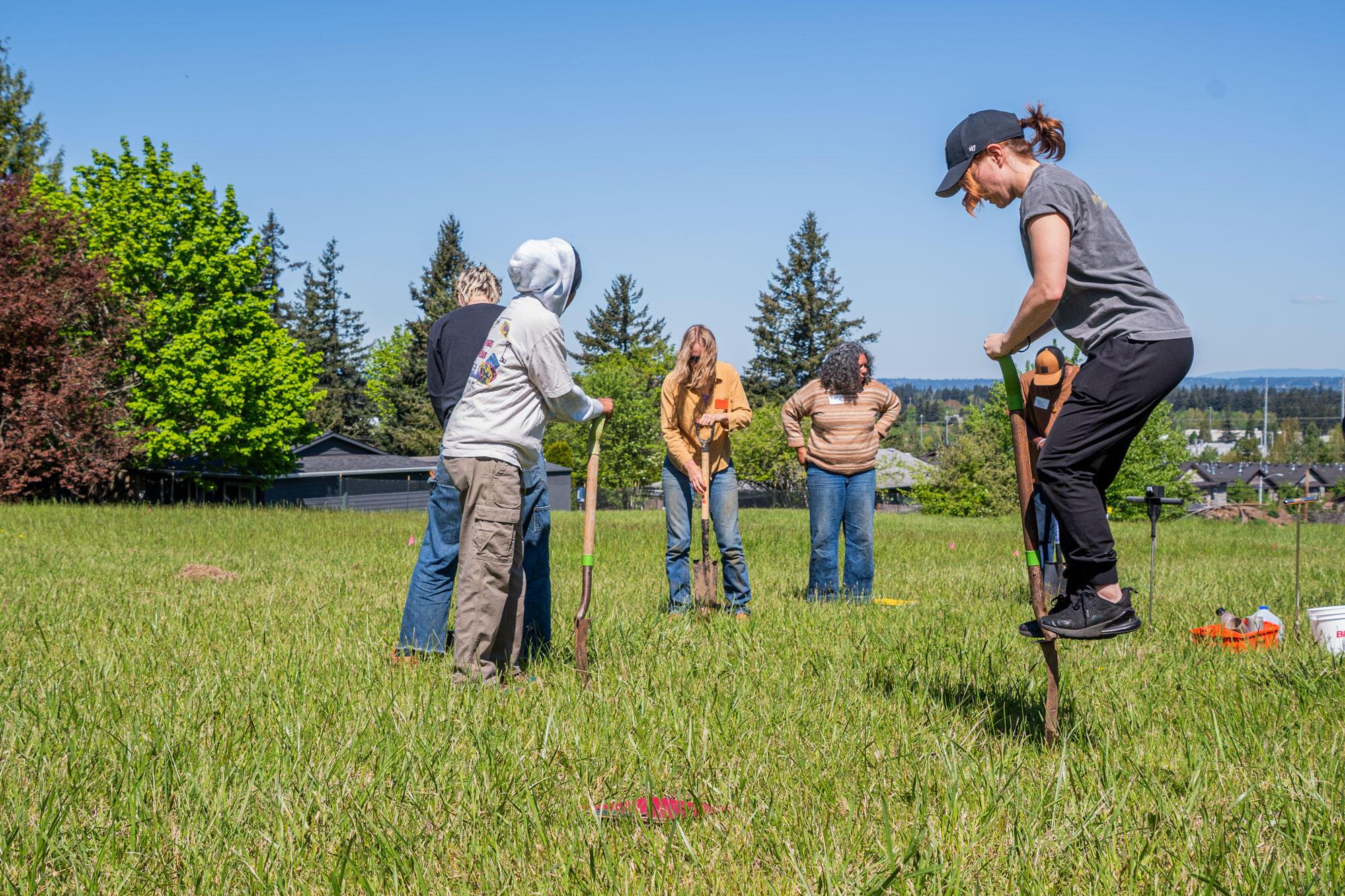
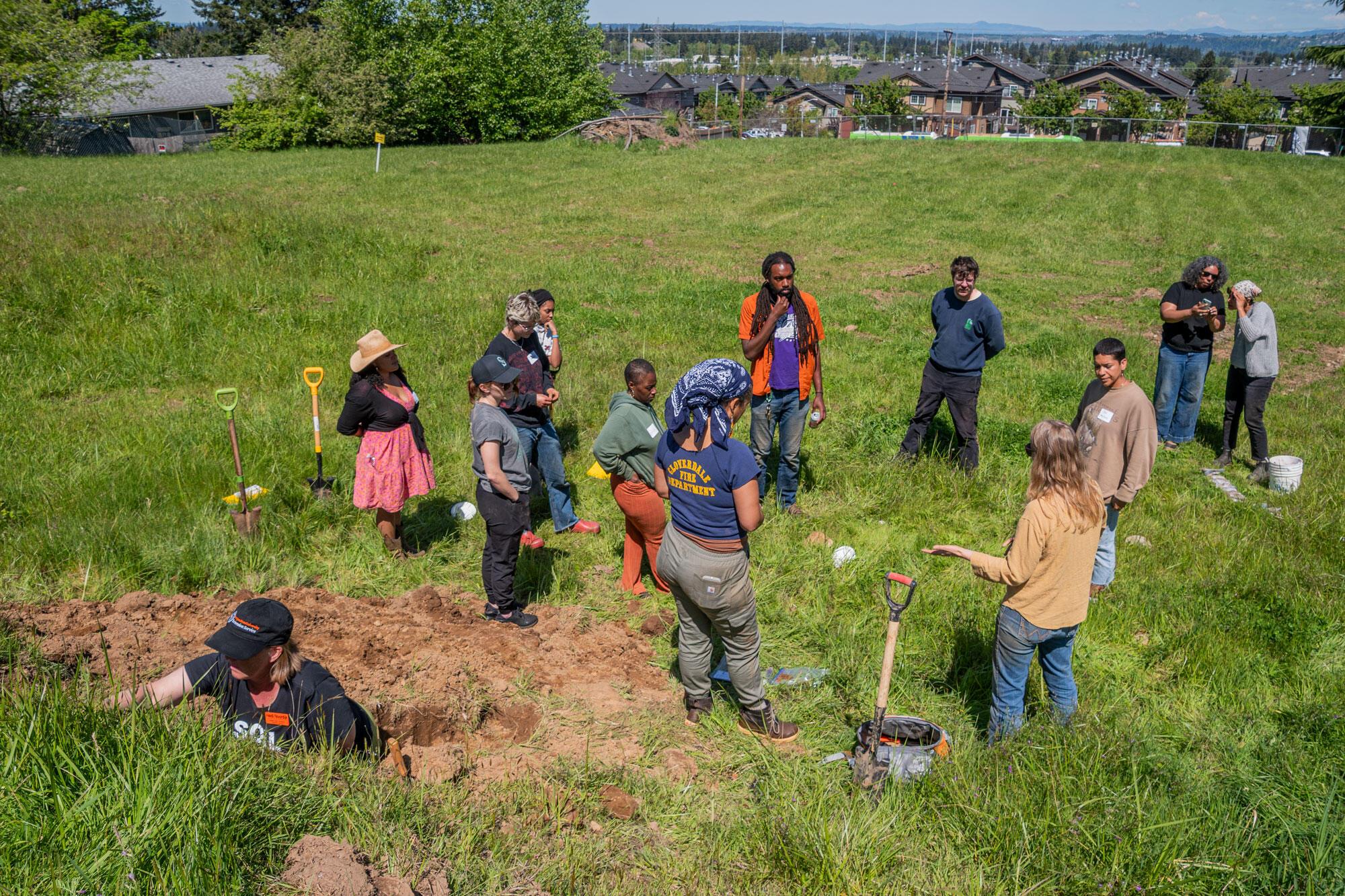
GRESHAM, Ore. — Participants pressed their shoes onto long, narrow sharpshooter shovels, rocking them back and forth to drive the blades six inches into the ground in a grass field.
“We look at this land as an opportunity for us all to create a learning lab to learn about the soil, building out a food forest, and sharing information out to a community that has interest in growing food for themselves and their families, and farmers as well."
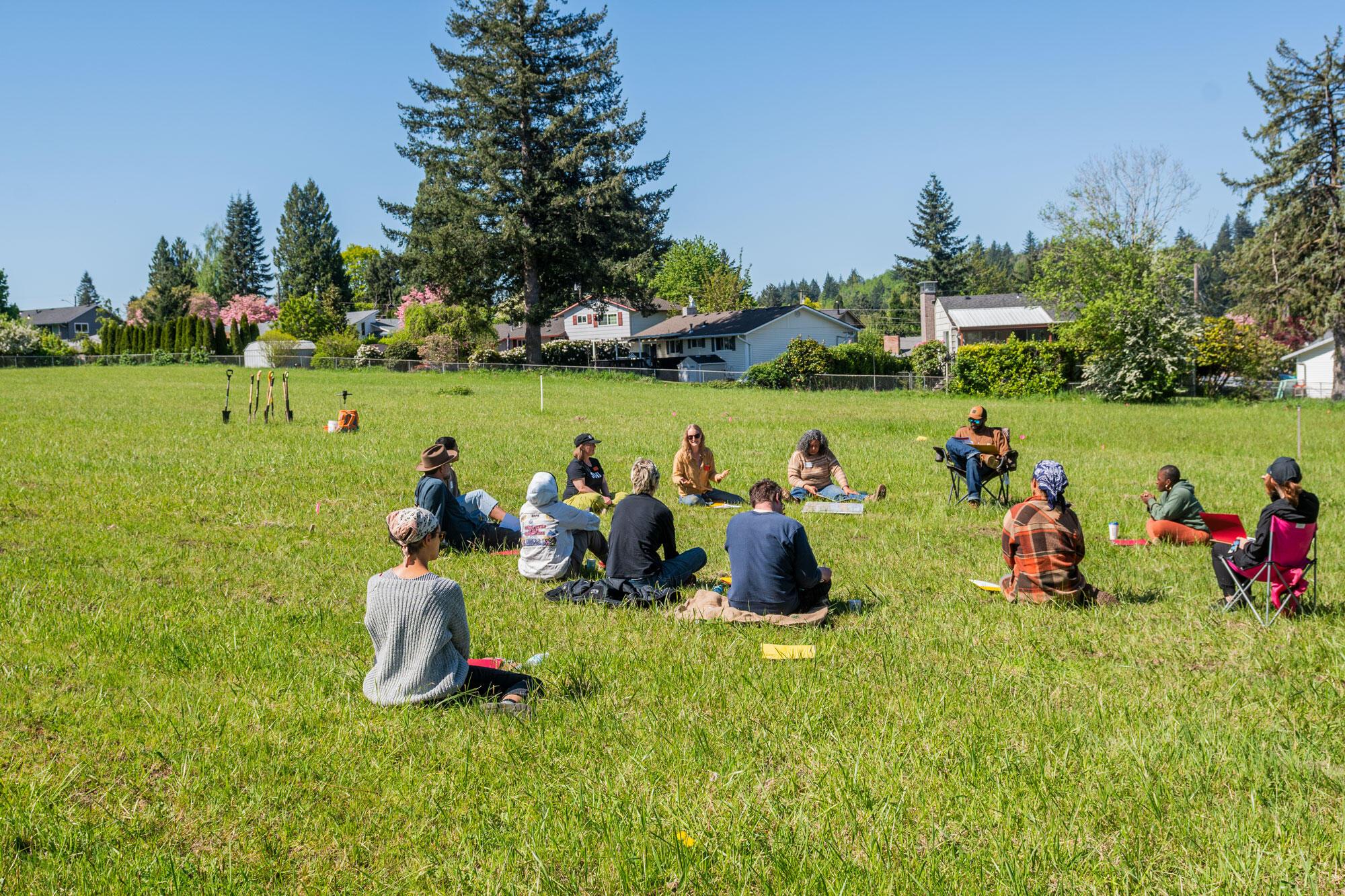
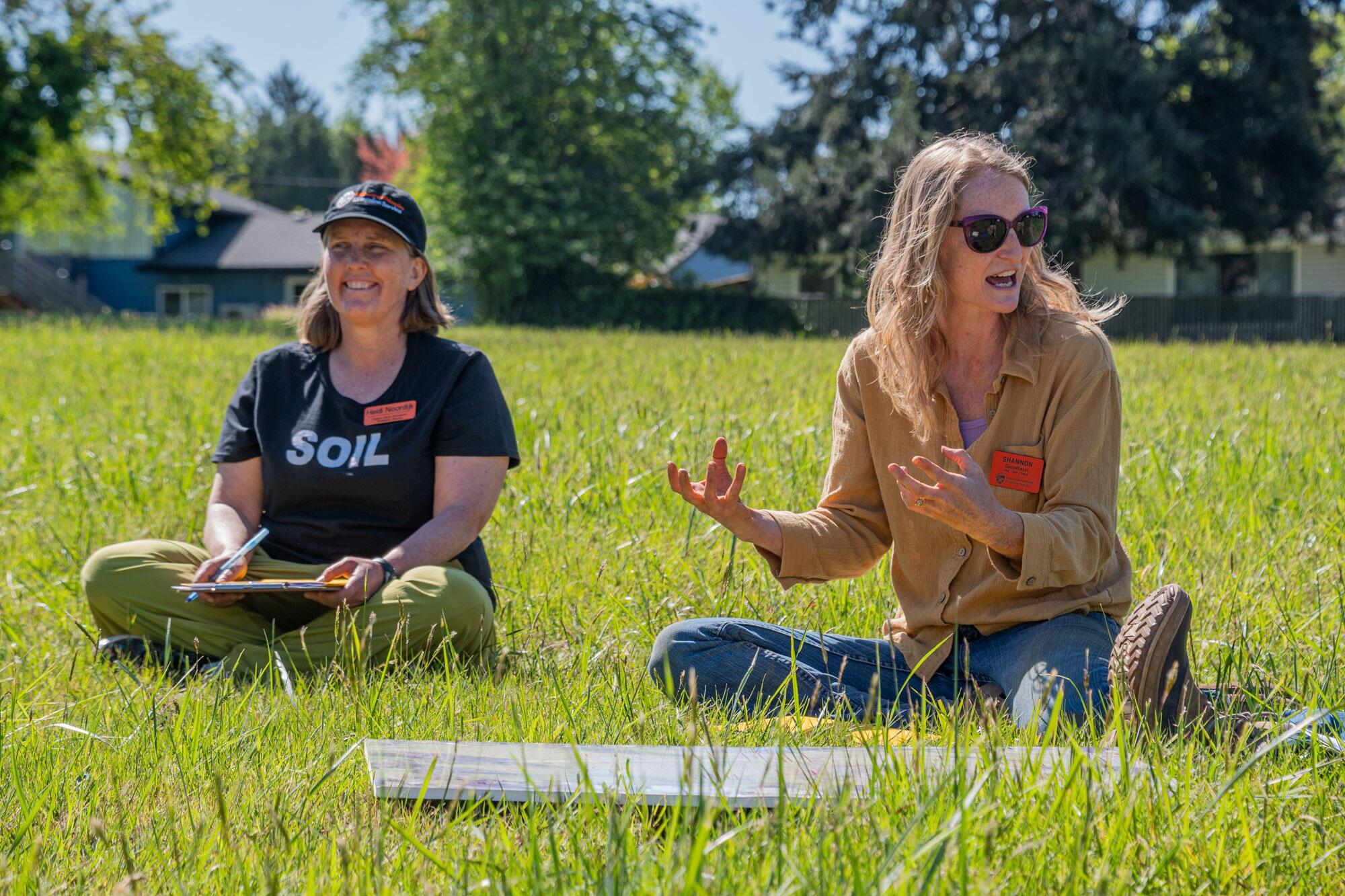
“Jump on it,” Oregon State University Extension Service soil health specialist Shannon Cappellazzi called out as a circle of community members laughed and leaned their weight into the tools.
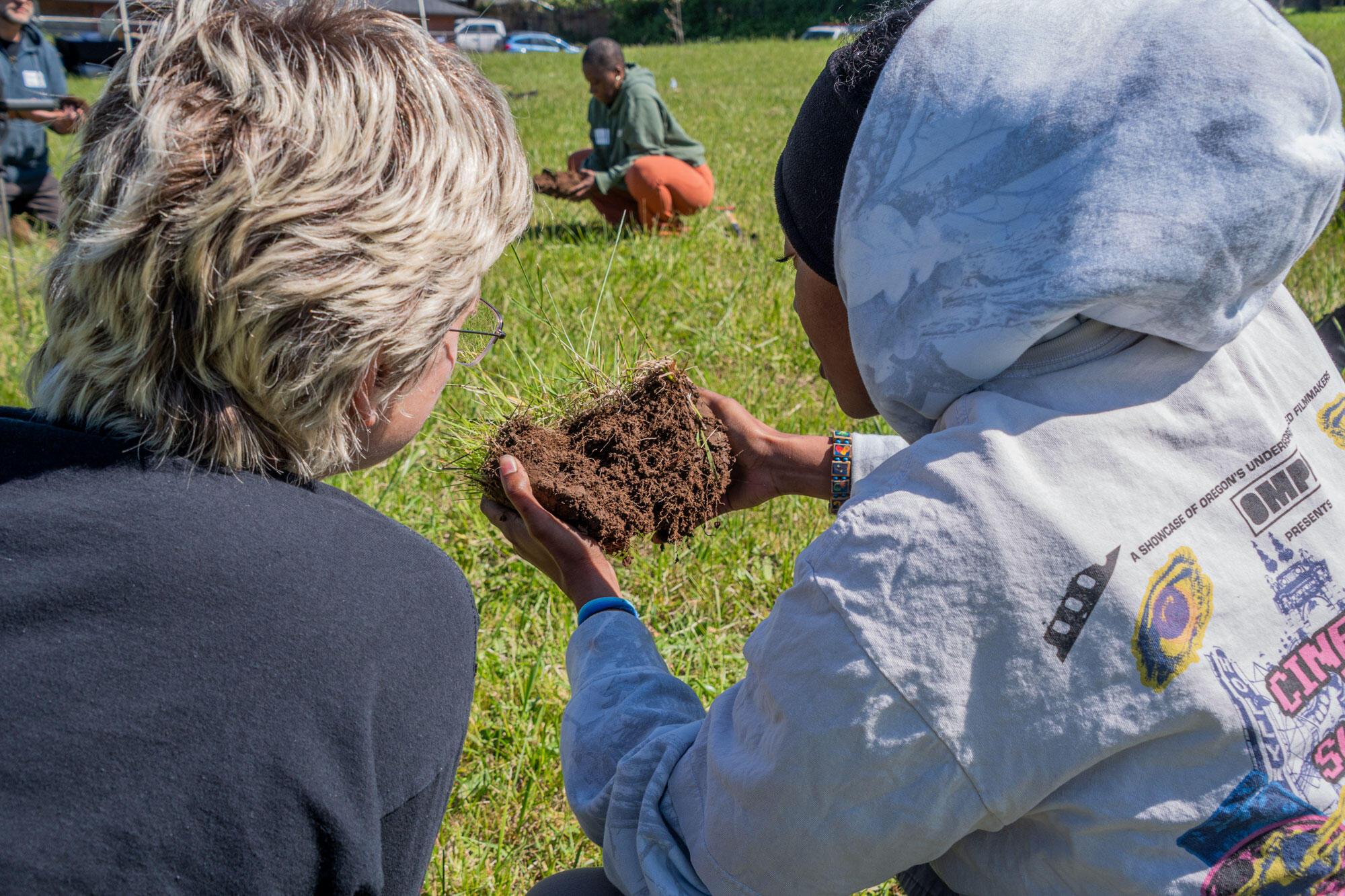
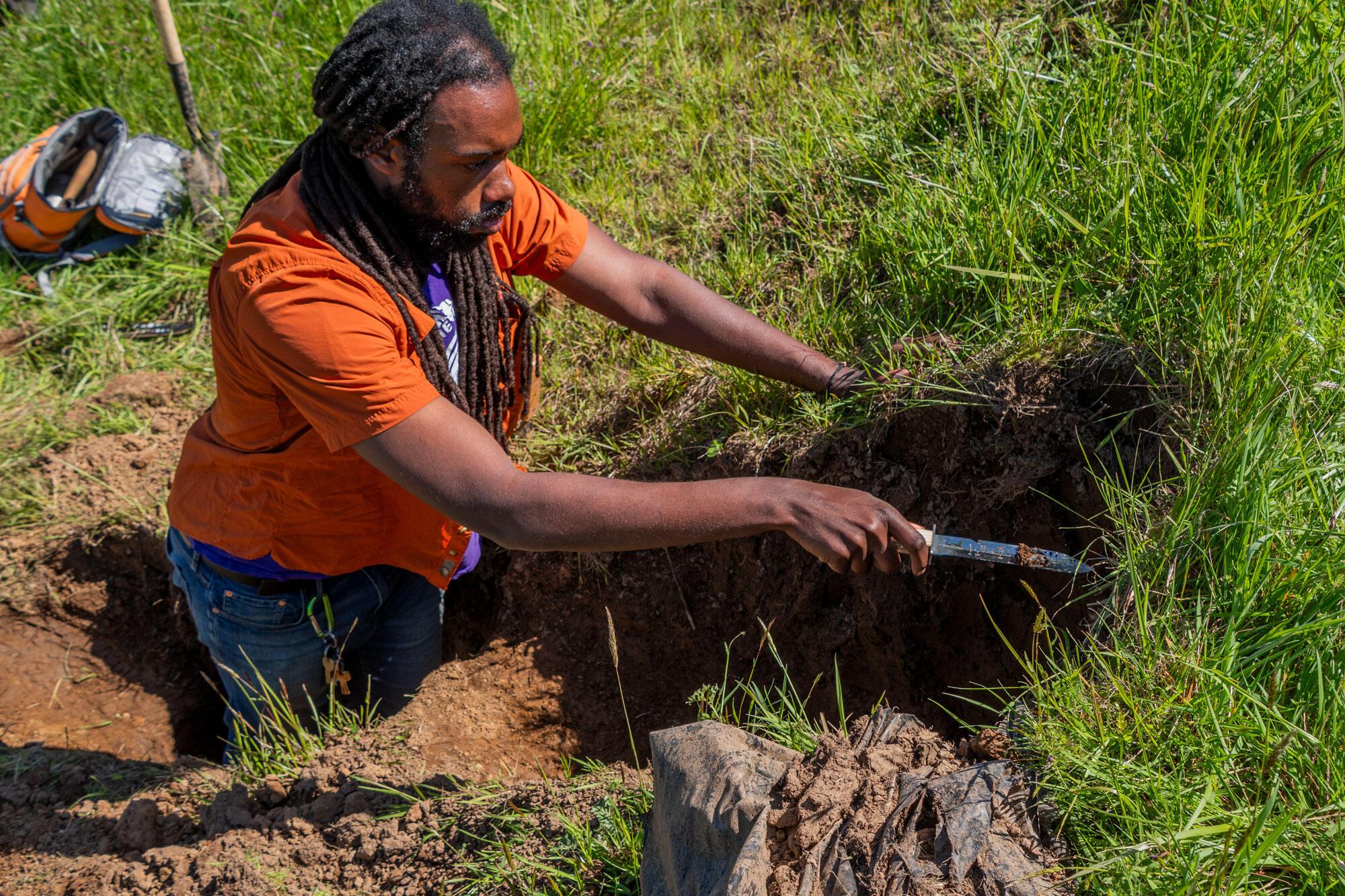
Once the cuts were made, they crouched in the grass, prying loose chunks of earth with their hands, tearing them open to look for roots, fungal threads and clumps of soil called aggregates. Some lifted the soil to their noses.
“I see some people smelling it already,” Cappellazzi said. “I love that.”
The group was digging six inches deep — the standard depth for evaluating soil health — at the future home of Feed’em Freedom Foundation’s Black Community Food Hub and Food Forest, a 4.9-acre site in Gresham where community members, the foundation and OSU Extension are working together to build a long-term space for food production, education and community gathering.
Supported by Multnomah County funding, the partnership pairs Feed’em Freedom’s vision for a Black-led community farm and food hub with OSU Extension’s technical expertise in soil health, site planning, irrigation, postharvest handling and educational programming.
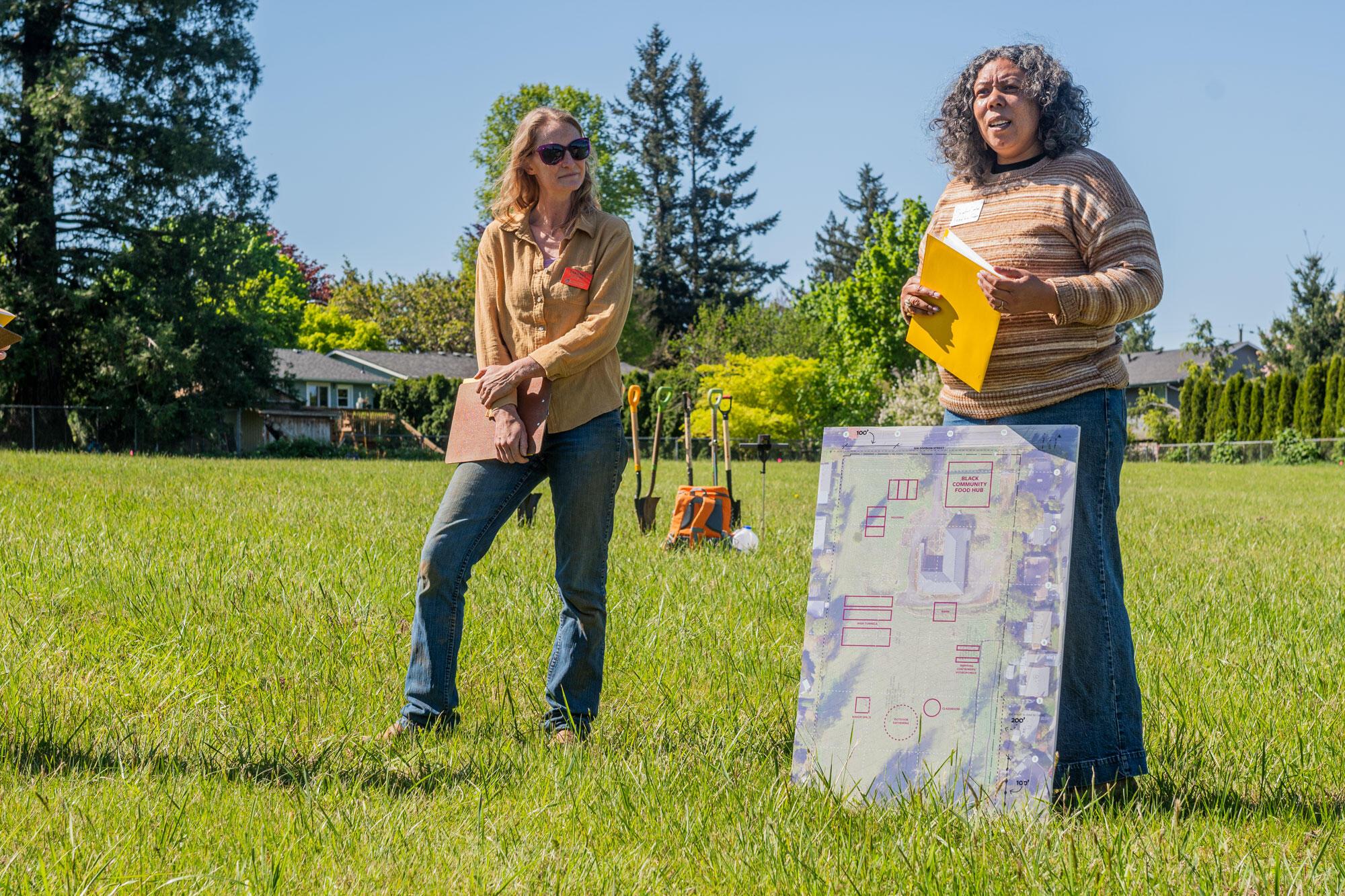
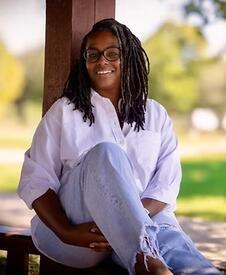
For Shantae Johnson, executive director of Feed’em Freedom Foundation and co-founder of Mudbone Grown, the project is designed as a learning space for everyone involved.
“We look at this land as an opportunity for us all to create a learning lab to learn about the soil, building out a food forest, and sharing information out to a community that has interest in growing food for themselves and their families, and farmers as well,” Johnson said. “It’s been highly beneficial to Oregon State and to us, to bring people and community together in that way.”
Building the vision
The partnership is part of a renewed investment in OSU Extension’s work in Multnomah County. In June 2025, the Multnomah County Board of Commissioners voted unanimously to approve $40,000 in funding for OSU Extension as part of the county’s fiscal year 2026 budget, restoring a cooperative funding partnership that ended in 2002.
Through that investment, OSU Extension entered into an Intergovernmental Agreement with Multnomah County to provide technical assistance for Feed’em Freedom Foundation’s Community Farm and Food Hub.
For 2025-26, the county asked OSU Extension to focus on increasing support for Multnomah County farmers, working with partners including Feed’em Freedom Foundation, Black Oregon Land Trust, Black Futures Farm and Outgrowing Hunger.
The county’s investment supports whole-site assessment, technical planning, farmer training and community-engaged education, with a focus on strengthening local food systems and supporting Black, Latino, Indigenous and immigrant growers.
Heidi Noordijk, OSU Extension Metro Small Farms coordinator, has been working with Johnson and Arthur Shavers of Feed’em Freedom as they develop the site. Originally, the plan was to host a single “Reading the Farm” workshop, but after early conversations, the team shifted to bringing in specialists for each stage of the planning process to better support the project’s long-term goals.
The first major step was developing a site profile. Noordijk compiled historic satellite images showing past buildings and plantings, helping the team identify possible locations for crop production and future infrastructure.
Soil sampling followed, with Nate Stacey, assistant professor of practice who coordinates the Extension Small Farms Program, demonstrating how to collect samples from six areas across the property. Lab results showed no major nutrient deficiencies or heavy metal concerns, allowing the team to move forward with planning.
Consultants and instructors in agroforestry and permaculture also developed written recommendations for food forest design, perennial planting systems, plant guilds and early site preparation.
Feed’em Freedom’s first major installation will be a food forest — a space designed not only for growing fruit and food crops, but also for medicine, learning, creativity, healing and connection. Plans include agricultural housing, greenhouse space, workshops and community features such as ADA-accessible raised beds, gathering spaces, a cob oven, farmers market opportunities and places for youths and families to learn together.
The project is now moving from planning into implementation, with irrigation installation and the first phase of the food forest planned for spring and summer once water access is confirmed.
“A lot of urban farmers don’t know that Extension has a wealth of knowledge and opportunities for people to ask questions and be curious,” Johnson said. “We’ve had support with soil tests, plant tissues, water testing for our well — those are the kinds of things Extension can support within the city.”
Learning together
Among those attending the April soil health workshop was Nikiea Pankey, who lives nearby in Gresham and has turned much of her quarter-acre property into a productive garden.
“I have grapes, kiwis, blueberries, strawberries, raspberries, artichokes, asparagus — a bunch of vegetables,” Pankey said.
She said attending workshops through Feed’em Freedom and Black Futures Farm has helped her build practical knowledge as she works toward her long-term goal of owning a farm with a restaurant.
“I’m a vegan chef,” she said. “One day I do hope to have a farm too, just like them — but mine’s going to have a restaurant on it.”
The workshop began with a review of the site’s history. Once agricultural land, the property later became home to a school and then a church before sitting vacant for years. An environmental site assessment found no major contamination concerns, and previous remediation work addressed an underground oil tank removed in 2018.
Participants also revisited ideas gathered during a March community design workshop, where community members helped shape the vision for the future food forest.
That vision extends well beyond crops. Community members described the future site as a place for care, culture, healing, learning and connection between people and the land — with room for youths, elders, intergenerational families, Indigenous communities, immigrant growers and neighbors to gather.
They imagined orchards, medicinal herbs, cooking classes, volunteer planting days, quiet walking spaces, cultural gatherings and opportunities to grow crops such as okra, indigo, berries, fruit trees and pollinator plants.
“This is more than growing food,” Johnson said. “It’s about growing community.”
Additional workshops are planned for May 23 on irrigation installation and June 27 on planting annuals, alley cropping and site maintenance.
Soil as the foundation
Cappellazzi, an assistant professor of practice in Oregon State’s Organic Agriculture Program in the Center for Resilient Agriculture and Food Systems, told participants that healthy soil is the foundation for everything else on the site.
“Soil is sustaining life,” Cappellazzi said. “Plant health, animal health, human health, water quality — it all starts here.”
She explained how floods from ancient Lake Missoula helped shape the soils of the Willamette Valley and Columbia Gorge, leaving layers of sand, silt and clay that still influence how land holds water and nutrients today.
Repeated tillage, she said, can create a hard, compacted layer called a plow pan that limits root growth and makes it harder for crops to access water, nutrients and oxygen.
Understanding those conditions before planting helps growers make better long-term decisions.
Getting their hands dirty
Participants moved from listening to digging.
Using sharpshooter shovels, they cut neat squares into the ground, then angled the blades underneath to pop out chunks of soil for inspection.
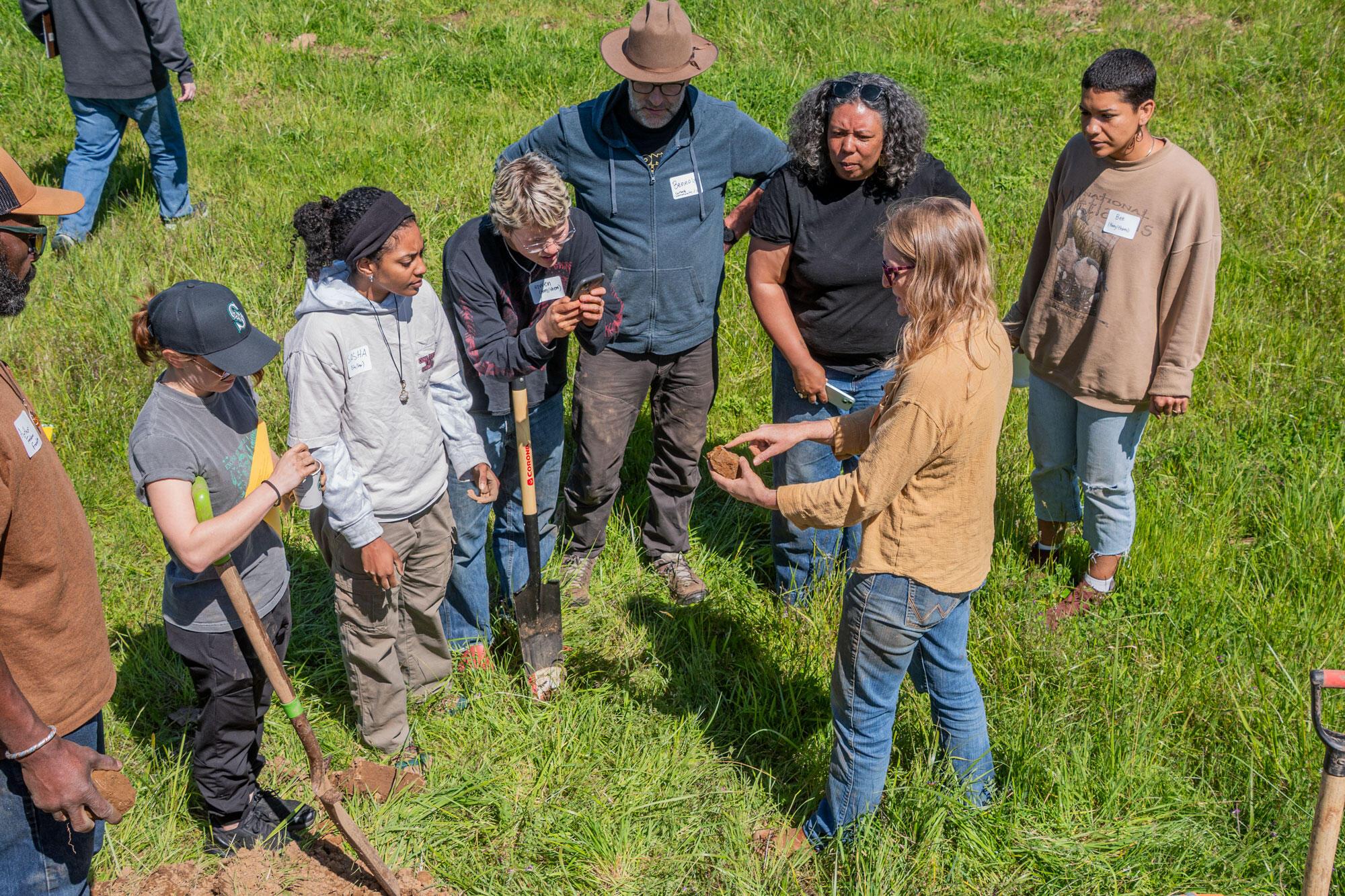
Cappellazzi asked them to feel how hard the soil was to break apart, look for roots holding it together and notice the smell.
Healthy soil, she explained, is darker, softer, rich-smelling and full of life. Poorer soil is often pale, compacted and harder to work.
“When we crack it open, we see what that soil structure looks like,” she said. “You see those roots in there. You might see some fungal mycelium — tiny white thread-like things.”
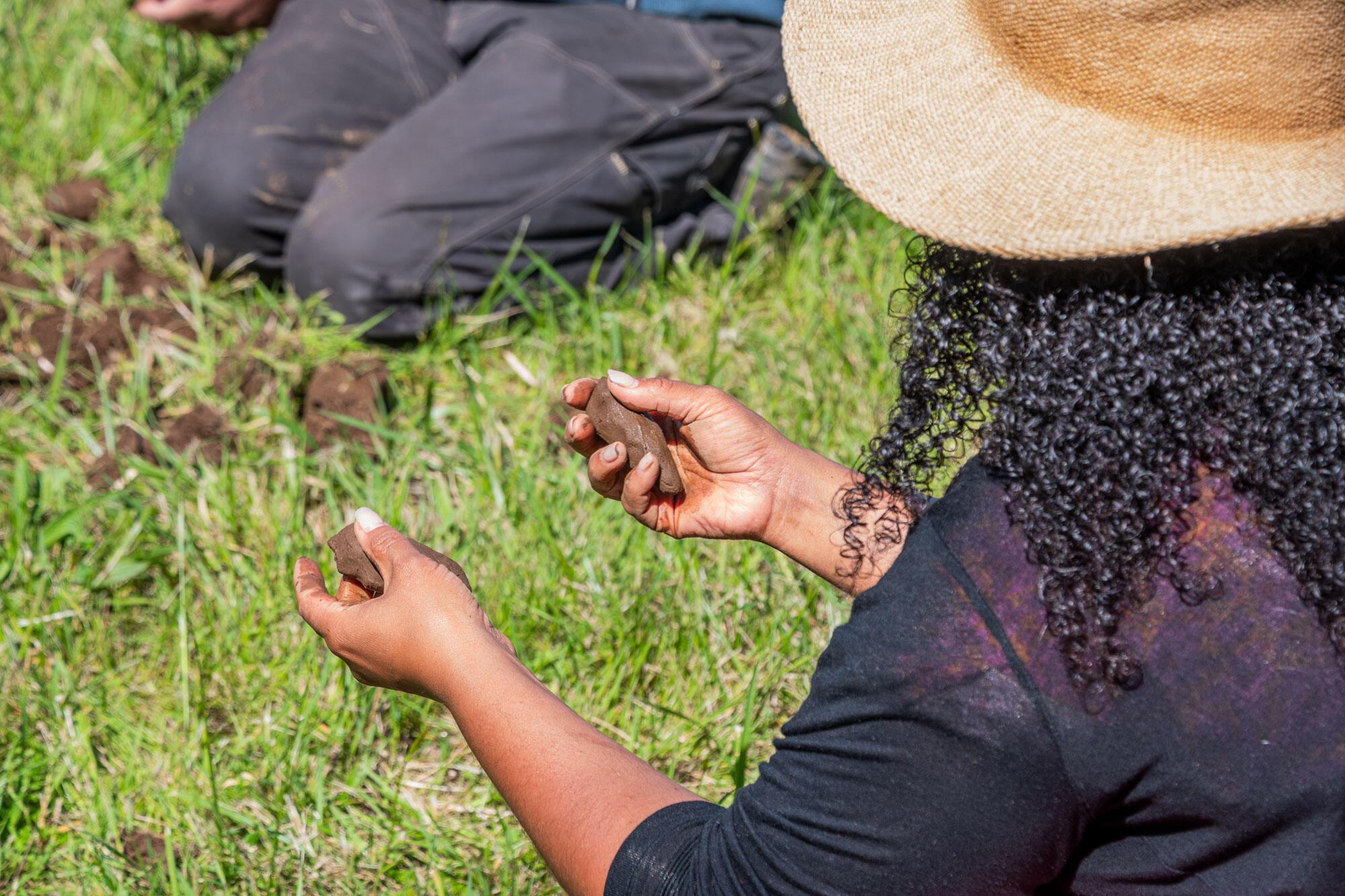
She showed participants how to rub the soil between their fingers to estimate the balance of sand, silt and clay — a simple test that helps determine how well the land will hold water and support crops.
For Johnson, that kind of hands-on learning is exactly the point.
“We are scientists and this land is our lab,” she said. “Hopefully the inquisitive nature of things never leave us.”