CORVALLIS, Ore. — Rhododendrons say spring as loudly as football says fall.
Most weevils emerge from the soil from late May through the end of June. The C-shaped larvae are legless, white with tan heads and up to one-half inch long.
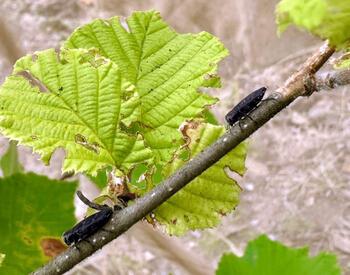
The tiny insects that feed on them — root weevils — can frustrate gardeners who do not know how to defend their plants. Rhododendrons are a favored target of black vine root weevils, but several weevil pests occur in Oregon landscapes, including strawberry root weevils. All are beetles with root-feeding larvae and leaf-feeding adults.
Most weevils emerge from the soil from late May through the end of June, according to Robin Rosetta, retired entomologist with Oregon State University Extension Service. The C-shaped larvae are legless, white with tan heads and up to one-half inch long.
During the day, the reddish-brown to black beetles hide under moist mulch or debris around plant bases. At night, adults climb up and chew notches along leaf margins of rhododendrons and other woody ornamentals.
“Adult root weevils walk easily through a landscape and find new hosts, even though they cannot fly,” Rosetta said.
All adult beetles are females. They lay eggs in or on the soil from June through September. After hatching, larvae move into the soil and begin feeding on roots. They overwinter in the soil, resume feeding in spring, pupate and emerge as adults in late spring to begin the cycle again.
How to spot damage
One way to check for root weevils is to look for fresh notches on leaf edges, especially on tender new leaves.
“The current year’s damage can be distinguished from previous years by looking at the new growth,” Rosetta said. “Last season’s growth often has brown edges along the notching.”
Watch for these signs:
- Notches on lower leaves early in summer
- Notching that moves upward over the season
- Wilting or decline from root injury
Although the notched leaves are most visible, the root-feeding larvae do most of the harm and can girdle plants at the base, sometimes killing them.
Chemical control is one option
Root weevils can be managed by applying a chemical insecticide, including some products approved by the Organic Materials Review Institute, to foliage when adults are feeding in late May through June.
For details on products and application, contact your local Oregon State University Extension Master Gardener help desk at your county Extension office. For more background on root weevils, see the Pacific Northwest Pest Management Handbook and the American Rhododendron Society website.
Beneficial nematodes are the least toxic method
“The least toxic method is to treat them in the larval stage using beneficial nematodes,” Rosetta said.
There are two good application windows:
- Late spring to early summer when soil is about 55 degrees or warmer and larvae are in late stages.
- Late summer to early fall (August through early October) when soil is warm and young larvae are present.
Pulling back mulch and leaf debris can help nematodes reach the root zone, she said.
“This special strain of nematode, or microscopic worm, attacks only soil insect larvae,” Rosetta said. “These nematodes are non-toxic to plants and other animals and are very effective against root weevil larvae.”
Nematodes sold at garden centers and online are mixed with water and applied according to package directions. Apply when soil is moist and above 55 degrees, and do it on a cloudy day or early or late in the day because nematodes are sensitive to ultraviolet light.
The nematodes do not usually survive the winter.
“But the good news is that if you do a thorough job of control, you probably will not have your weevil pests back, at least for a few years,” Rosetta said. “The one advantage we have with root weevils is that they do not fly as adults. We can clean up an area and then diligently guard our borders for intruders.”
Previously titled Control sneaky root weevils with beneficial nematodes