Lynn Long

Tenga en cuenta que es posible que esta persona no hable español.

Retired

Content by Lynn Long

A PNW Extension Publication

Sweet cherry rootstocks for the Pacific Northwest

Lynn Long, Clive Kaiser and Ashley Thompson
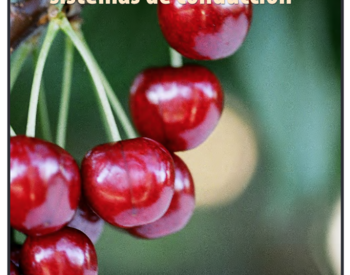
two types of cherry rootstocks in an orchard
PNW 619
Cherry growers have many options when it comes to choosing rootstocks. Here are some guidelines that can help.
Cherry growers have many options when it comes to choosing rootstocks. But growers need to consider soil fertility, scion choice and training systems when choosing rootstocks. Here are some guidelines that can help.
Cherry growers have many options when it comes to choosing rootstocks. The combination of new dwarfing rootstocks with high-density training systems leads to earlier production. But growers need to consider soil fertility, scion choice and training systems when choosing rootstocks. Here are some guidelines that can help.
View now

© 2021 Published and distributed in furtherance of the Acts of Congress of May 8 and June 30, 1914, by the Oregon State University Extension Service, Washington State University Extension, University of Idaho Extension and the U.S. Department of Agriculture cooperating. The three participating Extension services offer educational programs, activities and materials without discrimination on the basis of race, color, national origin, religion, sex, gender identity (including gender expression), sexual orientation, disability, age, marital status, familial/ parental status, income derived from a public assistance program, political beliefs, genetic information, veteran’s status, reprisal or retaliation for prior civil rights activity. (Not all prohibited bases apply to all programs.)

Accessibility: This publication will be made available in an accessible alternative format upon request. Please contact [email protected] or 541-737-3311.

A PNW Extension Publication

Sweet cherry cultivars for the fresh market

Ashley Thompson, Matthew Whiting and Lynn Long
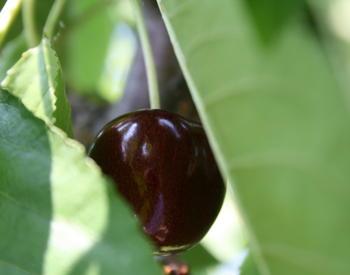
Cherry harvest.
PNW 604
Compare sweet cherry cultivars by ripening time, size, firmness and yield.
Looking to grow sweet cherries in the Pacific Northwest? This guide compares dark red and blush cultivars for fruit size, harvest timing, firmness and more. Includes pollinizers, rootstocks and photos.
Explore sweet cherry cultivars for the Pacific Northwest, including harvest timing, firmness, size, yield and pollinizers. This publication describes dark red and blush types with color photos.
View now

© 2021 Published and distributed in furtherance of the Acts of Congress of May 8 and June 30, 1914, by the Oregon State University Extension Service, Washington State University Extension, University of Idaho Extension and the U.S. Department of Agriculture cooperating. The three participating Extension services offer educational programs, activities and materials without discrimination on the basis of race, color, national origin, religion, sex, gender identity (including gender expression), sexual orientation, disability, age, marital status, familial/ parental status, income derived from a public assistance program, political beliefs, genetic information, veteran’s status, reprisal or retaliation for prior civil rights activity. (Not all prohibited bases apply to all programs.)

Accessibility: This publication will be made available in an accessible alternative format upon request. Please contact [email protected] or 541-737-3311.

Oregon State University Extension Service

Understanding and Preventing Sweet Cherry Fruit Cracking

Clive Kaiser, Lynn Long and Linda Brewer
EM 9227
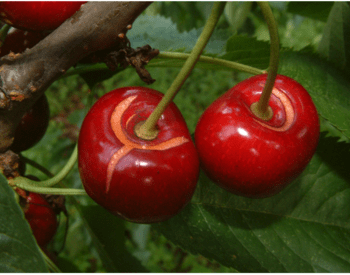
Fruit cracking in sweet cherries can have a severe economic impact in the Pacific Northwest, even with new optical sorters. This publication helps growers understand the causes of cracking and describes cultural practices that can minimize cracking.
View now

© 2019 Oregon State University. Extension work is a cooperative program of Oregon State University, the U.S. Department of Agriculture, and Oregon counties. Oregon State University Extension Service offers educational programs, activities, and materials without discrimination on the basis of race, color, national origin, religion, sex, gender identity (including gender expression), sexual orientation, disability, age, marital status, familial/parental status, income derived from a public assistance program, political beliefs, genetic information, veteran’s status, reprisal or retaliation for prior civil rights activity. (Not all prohibited bases apply to all programs.)

Accessibility: This publication will be made available in an accessible alternative format upon request. Please contact [email protected] or 541-737-3311.

Oregon State University Extension Service

Sweet Cherry Orchard Establishment in the Pacific Northwest

Lynn Long and Clive Kaiser
sweet cherries on a tree
PNW 642
Regularly producing sustainable yields of high-quality cherries is possible only where site and other conditions are near optimal. Properly evaluating a prospective orchard location, determining available resources, and establishing the orchard take careful planning. Because establishing an orchard involves significant expense and long-term commitment, consider all factors before deciding to plant cherries.
View now

© 2013 Oregon State University. Extension work is a cooperative program of Oregon State University, the U.S. Department of Agriculture, and Oregon counties. Oregon State University Extension Service offers educational programs, activities, and materials without discrimination on the basis of race, color, national origin, religion, sex, gender identity (including gender expression), sexual orientation, disability, age, marital status, familial/parental status, income derived from a public assistance program, political beliefs, genetic information, veteran’s status, reprisal or retaliation for prior civil rights activity. (Not all prohibited bases apply to all programs.)

Accessibility: This publication will be made available in an accessible alternative format upon request. Please contact [email protected] or 541-737-3311.

A PNW Extension Publication

Sweet Cherry Orchard Establishment in the Pacific Northwest

Lynn Long and Clive Kaiser
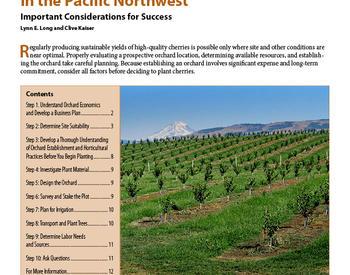
Image of Sweet Cherry Orchard Establishment in the Pacific Northwest publication
PNW 642
Regularly producing sustainable yields of high-quality cherries is possible only where site and other conditions are near optimal. This publication summarizes factors to consider when establishing a cherry orchard including orchard economics, site selection and optimization, plant material, orchard design, fertilization and irrigation, and labor. Also lists additional resources.
View now

© 2013 Published and distributed in furtherance of the Acts of Congress of May 8 and June 30, 1914, by the Oregon State University Extension Service, Washington State University Extension, University of Idaho Extension and the U.S. Department of Agriculture cooperating. The three participating Extension services offer educational programs, activities and materials without discrimination on the basis of race, color, national origin, religion, sex, gender identity (including gender expression), sexual orientation, disability, age, marital status, familial/ parental status, income derived from a public assistance program, political beliefs, genetic information, veteran’s status, reprisal or retaliation for prior civil rights activity. (Not all prohibited bases apply to all programs.)

Accessibility: This publication will be made available in an accessible alternative format upon request. Please contact [email protected] or 541-737-3311.

Oregon State University Extension Service

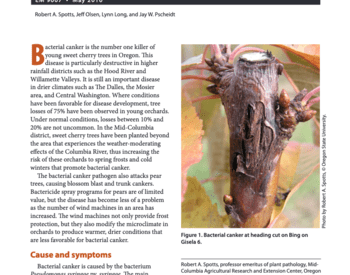
Bacterial Canker of Sweet Cherry in Oregon

Robert A. Spotts, Jeff L. Olsen, Lynn Long and Jay W. Pscheidt
Publication cover
EM 9007
Bacterial canker is the number one killer of young sweet cherry trees in Oregon. This publication covers cause and symptoms, disease cycle, and disease management.
Click the "view it now" button to view or download a print-friendly, page-size PDF (8.5 x 11 inches). Use the supplemental file link below to access a mobile-friendly (smaller page size) PDF.
View now

© 2010 Oregon State University. Extension work is a cooperative program of Oregon State University, the U.S. Department of Agriculture, and Oregon counties. Oregon State University Extension Service offers educational programs, activities, and materials without discrimination on the basis of race, color, national origin, religion, sex, gender identity (including gender expression), sexual orientation, disability, age, marital status, familial/parental status, income derived from a public assistance program, political beliefs, genetic information, veteran’s status, reprisal or retaliation for prior civil rights activity. (Not all prohibited bases apply to all programs.)

Accessibility: This publication will be made available in an accessible alternative format upon request. Please contact [email protected] or 541-737-3311.

Report ID:
Report ID: