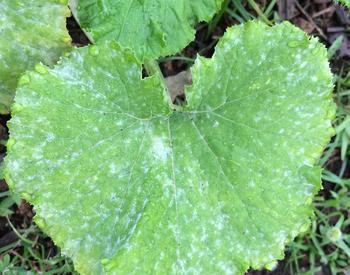
How to treat powdery mildew on squash and cucumber plants? Most of our squash plants have powdery mildew. Some of the leaves have died and crumbled. We had same problem last year. I regret not removing all the infected plants before tilling the soil last year. How can we eradicate this mildew and keep it from coming back next year? I cut off some of the leaves, but felt it may be too big of a shock to the plant.
Powdery mildew is a fact of life in the Willamette Valley. It shows up every year because we have the type of climate that favors its growth. It shows up towards the end of summer. You can't eradicate it as the spores blow in from elsewhere. But you can put the vines in the yard debris bins and you can practice crop rotation. A 3 or 4 year rotation is very helpful in reducing disease pressure not only on your cucurbits but also all other vegetables as well.
Here's a link to the Oregon State University PNW Plant Disease Handbook for "Squash Powdery Mildew".
This next link is also to the PNW Plant Disease Handbook for "Squash Varieties Tolerant to Powdery Mildew". There is also a listing of chemicals which can be sprayed on the plants earlier in the season. This listing is for farmers as well as home gardeners. You will be able to purchase items followed by an "H", which means "home gardener".
At this point just keep your squashes well watered. The plants should stay alive until frost, they just won't look very good. They'll look like they have worked hard to produce the wonderful squash which you'll enjoy all winter.
Related content
¡Use los pesticidas con seguridad!
- Póngase ropa de protección y equipo de seguridad según las recomendaciones de la etiqueta. Báñese después de cada uso.
- Lea la etiqueta del pesticida—aunque lo haya usado antes. Siga al pie de la letra las indicaciones de la etiqueta (y cualquiera otra indicación que Ud. tenga).
- Tenga precaución al aplicar los pesticidas. Conozca su responsabilidad legal como aplicador de pesticidas. Usted puede ser responsable de heridas o daños resultantes del uso de un pesticida.