
Contents
- What is an irrigation water management plan?
- Why does irrigation planning matter today?
- Benefits of creating your plan
- A living document
- About these Management Technical Guides
- Creating your plan
- General information, water rights and water quality concerns
- Plan map
- Divide your property by land use
- Climate data
- Using the Management Technical Guides
- Resources and references
- Acknowledgments
Water is one of the most valuable and limited resources in agriculture. Across the Western United States, increasing drought, variable water allocations, rising energy costs and environmental concerns are changing how irrigation must be managed.
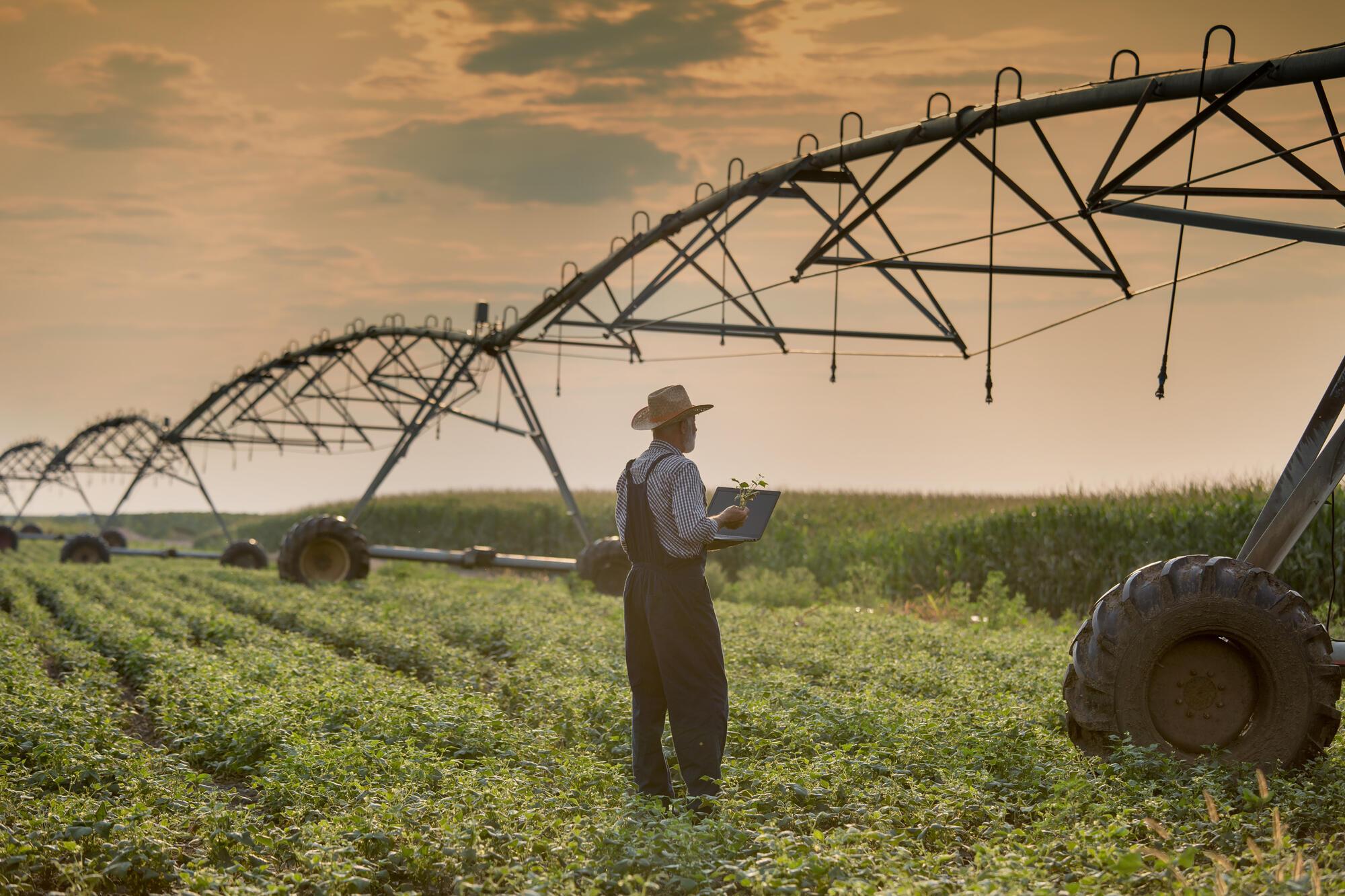
An irrigation water management plan provides a structured and science-based approach to help producers apply the right amount of water, at the right time, in the right place. When implemented effectively, irrigation planning can improve crop productivity, reduce water waste, protect water quality and lower energy costs.
This resource guide and template provide guidance for developing an irrigation water management plan tailored to your farm or ranch. The supporting management technical guides provide in-depth information on why irrigation planning is important, how it supports efficient and sustainable crop production, and which key elements — such as water rights, soil and climate data, system evaluation, and scheduling tools — are needed to develop an effective plan.
What is an irrigation water management plan?
An irrigation water management plan is a practical and adaptive decision-making tool that guides how irrigation water is measured, scheduled and applied to maintain optimal soil moisture for crop growth while minimizing water loss.
The core objectives of a plan are to:
- Improve crop productivity
- Optimize water use to match crop water requirements
- Improve water quality by reducing runoff and leaching
- Minimize irrigation-induced soil erosion
- Reduce energy consumption associated with pumping and water delivery
Irrigation water management planning integrates information about water sources, irrigation systems, soils, climate conditions and crop water requirements to support better irrigation decisions.
Why does irrigation planning matter today?
Across much of the Western United States, persistent drought, declining groundwater levels and reduced surface-water availability are increasingly pressuring agricultural water users. Many irrigation districts now impose reduced allocations or stricter delivery schedules.
Several factors are increasing the importance of effective irrigation planning:
- Increasing drought frequency
- Reduced water allocations
- Rising energy costs for pumping
- Greater concern for water quality and watershed health
An irrigation water management plan helps you make informed, data-driven decisions to adapt to these changing conditions and ensure that every gallon of water delivers the greatest possible benefit to their operation.
These challenges are affecting farms of all sizes, from small, diversified operations to large commercial agricultural systems.
In this context, irrigation efficiency is no longer optional — it is essential for both farm profitability and long-term water resource sustainability.
An irrigation water management plan helps you make informed, data-driven decisions to adapt to these changing conditions and ensure that every gallon of water delivers the greatest possible benefit to their operation.
Benefits of creating your plan
An irrigation water management plan helps producers:
- Understand current water use. Developing an irrigation water management plan begins with collecting baseline information on your irrigation system, water use and management practices on your farm or ranch. This includes evaluating system performance, including water distribution and application efficiency, as well as delivery volumes and irrigation scheduling. This information can reveal inefficiencies such as nonuniform water distribution or overapplication, which can reduce yield and increase costs.
- Clarify irrigation management goals. Clearly defined goals — such as reducing water use, preventing runoff, saving energy or improving yields — provide a framework for selecting appropriate tools and technologies. These may include soil moisture sensors, automated scheduling tools, improved irrigation methods or upgrades in irrigation systems.
- Prioritize actions for maximum impact. An irrigation water management plan helps identify the most cost-effective improvements, from upgrading pumps to adopting precision irrigation systems. These improvements can increase water-use efficiency while reducing energy consumption and operating costs.
Even small improvements in irrigation efficiency can reduce water use and pumping costs while maintaining or improving crop yields.
- Improve resilience and adaptability. By documenting current practices and performance, your plan becomes a foundation for adapting to future changes, whether that involves shifting to a different crop type, irrigation technology or irrigation schedule due to lack of water availability. This forward-looking approach supports long-term productivity under variable climate and market conditions.
Together, these benefits support more efficient, profitable and sustainable irrigation management. Even small improvements in irrigation efficiency can reduce water use and pumping costs while maintaining or improving crop yields.
A living document
Irrigation water management plans combine scientific principles with practical on-farm experience. Because conditions such as climate, water availability and crop selection can change year to year, your irrigation water management plan should be flexible and regularly updated.
Rather than a onetime report, think about your plan as an active management tool — a recordkeeping system that supports ongoing decision-making and drives continuous improvement.
- Update annually. Review your plan after each growing season to compare water use, yields and system performance against your management goals.
- Track system changes. Document maintenance, equipment upgrades, and technology trials to evaluate which changes improve irrigation efficiency and performance.
- Integrate new data sources. Incorporate updated soil moisture measurements, ET estimates and weather data into your irrigation scheduling decisions.
- Adapt to change. If drought intensifies, water allocations shift or new technology becomes available, update your plan to respond effectively and maintain productivity.
Maintaining your irrigation water management plan as a living document helps ensure that irrigation decisions remain responsive, efficient and aligned with both production and resource conservation goals.
About these Management Technical Guides
This publication is part of a series of Management Technical Guides developed through the Irrigation Technology and Management Professional Development Project. The series is designed for agricultural producers, technical service providers and natural resource professionals to improve on-farm irrigation water management.
This guide provides the foundation for developing an irrigation water management plan. Additional Management Technical Guides in this series provide detailed information on key components of irrigation management, including soil–plant–water relationships, irrigation scheduling, irrigation system evaluation, soil moisture monitoring and irrigation technologies.
Together, these guides are intended to support data-driven decision-making, improve irrigation efficiency, and promote long-term water and energy sustainability in agricultural systems.
Together, these guides are intended to support data-driven decision-making, improve irrigation efficiency, and promote long-term water and energy sustainability in agricultural systems. The series also supports Extension education, training programs and on-farm implementation of improved irrigation management practices.
While examples in this guide draw from Central Oregon’s climate, soils and cropping systems, the core planning principles apply broadly across irrigated agricultural systems. The approach aligns with established best management practices in irrigation system evaluation, scheduling and resource conservation described in national and international literature.
Creating your plan
Begin by reviewing the irrigation water management plan template provided with this guide. As you work through the template, you will build a comprehensive understanding of how water moves through your system — from source to soil to crop.
An effective irrigation water management plan integrates multiple components that together support informed, data-driven decision-making. These components include:
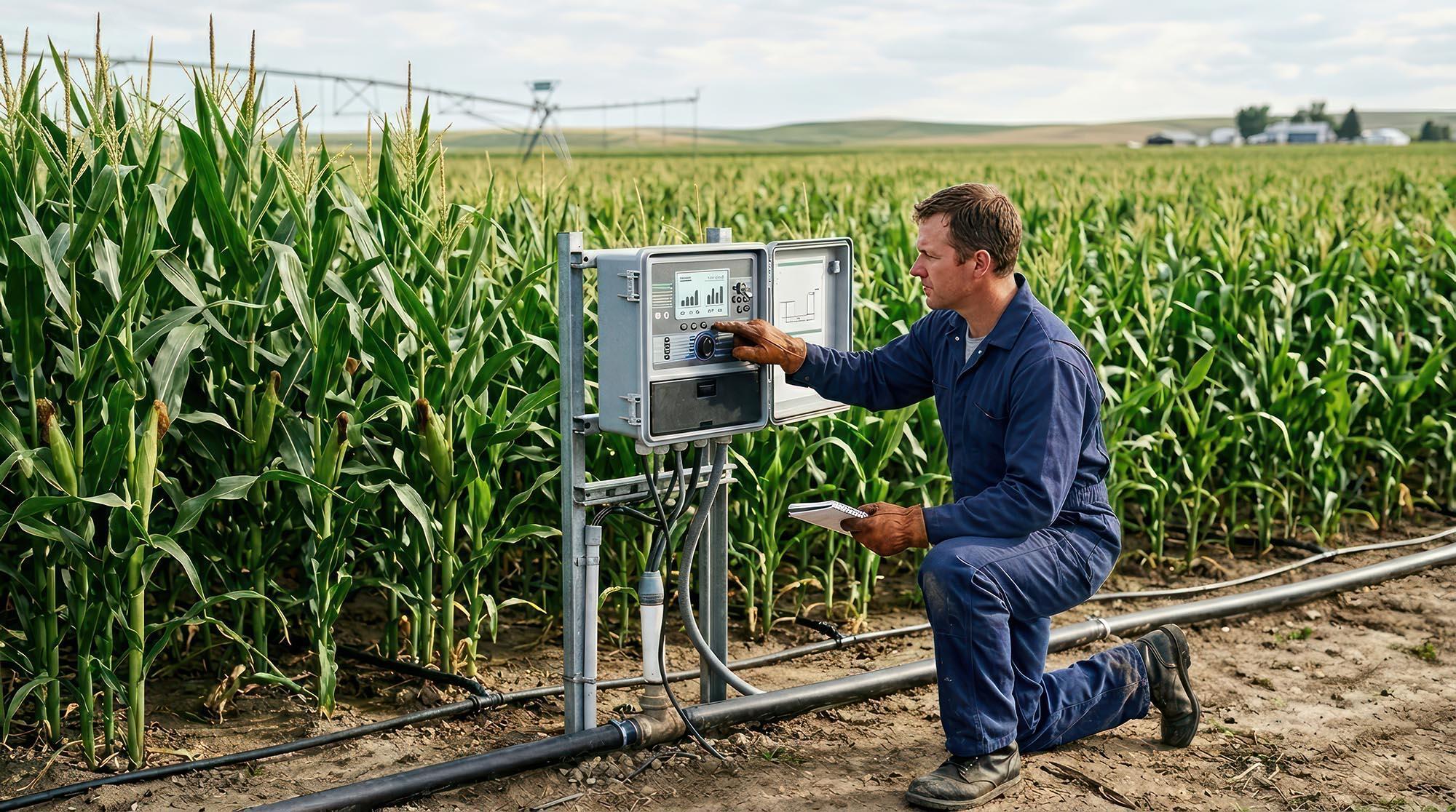
1. Farm and water resources
- General information about your farm and irrigation water management objectives
- Assessment and knowledge about water rights, water sources and delivery systems
- Potential water quality concerns affecting your operation
2. Maps and soil characteristics
- A plan map including fields, irrigation infrastructure (for example, the location of irrigation ditches and ponds, pumps, mainlines and laterals, irrigation systems) and soil moisture sensors (if applicable)
- A soils map including soil type, texture, depth and available water-holding capacity
3. Irrigation system and water delivery
- Evaluation of irrigation system performance, including pressure and water distribution
- Measurement of irrigation water delivered to the property
- Assessment of pumping systems and associated energy consumption
4. Crop, climate and irrigation scheduling
- Crop type and water requirements
- Climate data and evapotranspiration
- Current irrigation schedule and planned improvements
5. Monitoring, maintenance and technology
- Soil moisture monitoring methods
- Irrigation system inspection and maintenance practices
- Adoption of new or improved irrigation technologies
6. Action planning and recordkeeping
- A prioritized action plan to improve irrigation performance and efficiency
- Recordkeeping tools to track irrigation events, water use and system performance
Each of these components contributes to a more complete understanding of your irrigation system and supports continuous improvement in water management, energy use and crop productivity.

General information, water rights and water quality concerns
The first section of the irrigation water management plan focuses on understanding your farm’s water resources and constraints. This information provides the foundation for making informed irrigation management decisions.
Key information to collect includes:
- Total irrigated acreage and field locations
- Water sources (surface water, groundwater or delivered water)
- Water rights, delivery schedules and allocation limits
- Potential water quality concerns such as salinity, nutrients or sediment
- Energy sources and utility providers associated with irrigation
Much of this information can be obtained from your irrigation district, the Oregon Water Resources Department or your utility provider. If water is supplied from groundwater or surface sources, additional records may be available through state agencies or title documents.
Understanding these factors helps you identify constraints on water availability, opportunities to improve efficiency, and potential impacts on surrounding properties and watershed conditions. A topographic map can further support this process by illustrating water flow patterns across your property.
Plan map
A plan map (see the plan template) is key to understanding how water moves across your property and through your irrigation system. It provides a visual representation of your fields, infrastructure and water pathways, helping you identify opportunities to improve irrigation efficiency and reduce water losses.
A well-developed plan map should include:
- Field boundaries and land use areas
- Irrigation infrastructure (ditches, ponds, pumps, mainlines, laterals and irrigation systems)
- Water delivery points and conveyance pathways
- Drainage areas where water may accumulate or leave the property
- Locations of monitoring tools, such as soil moisture sensors (if applicable)
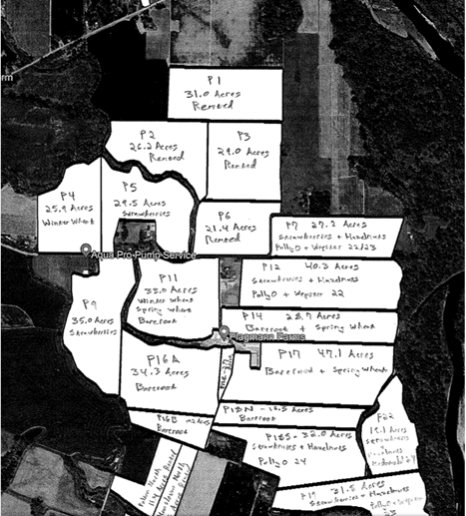
Developing a plan map helps you visualize irrigation water distribution, identify potential inefficiencies or runoff risks, and support more effective irrigation management decisions.
To create a plan map, use a current or recent aerial image that clearly shows your property boundaries. You can use online mapping tools such as Google Maps or GIS-based platforms to create and annotate your map. Additional mapping resources are listed in the resources section of this guide. Your county assessor’s office may also provide useful base maps.
Developing a plan map helps you visualize irrigation water distribution, identify potential inefficiencies or runoff risks, and support more effective irrigation management decisions.
Divide your property by land use
Dividing your property into distinct land use areas is an important step in developing an effective irrigation water management plan. Different land uses often have different water requirements, soil characteristics and management practices.
Delineating these areas on your plan map helps improve irrigation scheduling, water allocation and system management across your operation.
You can use aerial imagery and online mapping tools such as Google Maps or GIS platforms to outline land use areas. While these tools may require some initial learning, they provide valuable insight into field variability and irrigation management needs.
Common land use categories include:
- Irrigated cropland or pastureland
- Non irrigated cropland or pastureland
- Orchards
- Vineyards
- Forestland
- Farmstead or nonagricultural areas
Identifying land use differences allows you to manage irrigation more precisely by matching water applications to the specific needs of each area.
Soil map
A soil map (see the template) helps you identify the dominant soil types across your fields and understand how those soils influence water storage and movement.
Understanding these soil characteristics helps improve irrigation scheduling by better matching water applications to the soil’s ability to store and supply water to crops.
Soil information can be obtained using online tools such as SoilWeb from the University of California, Davis, which provides field-level soil data and interpretations that are useful for irrigation management.
Developing and interpreting a soil map allows you to identify differences across fields, adjust irrigation practices accordingly and improve overall water use efficiency.

Climate data
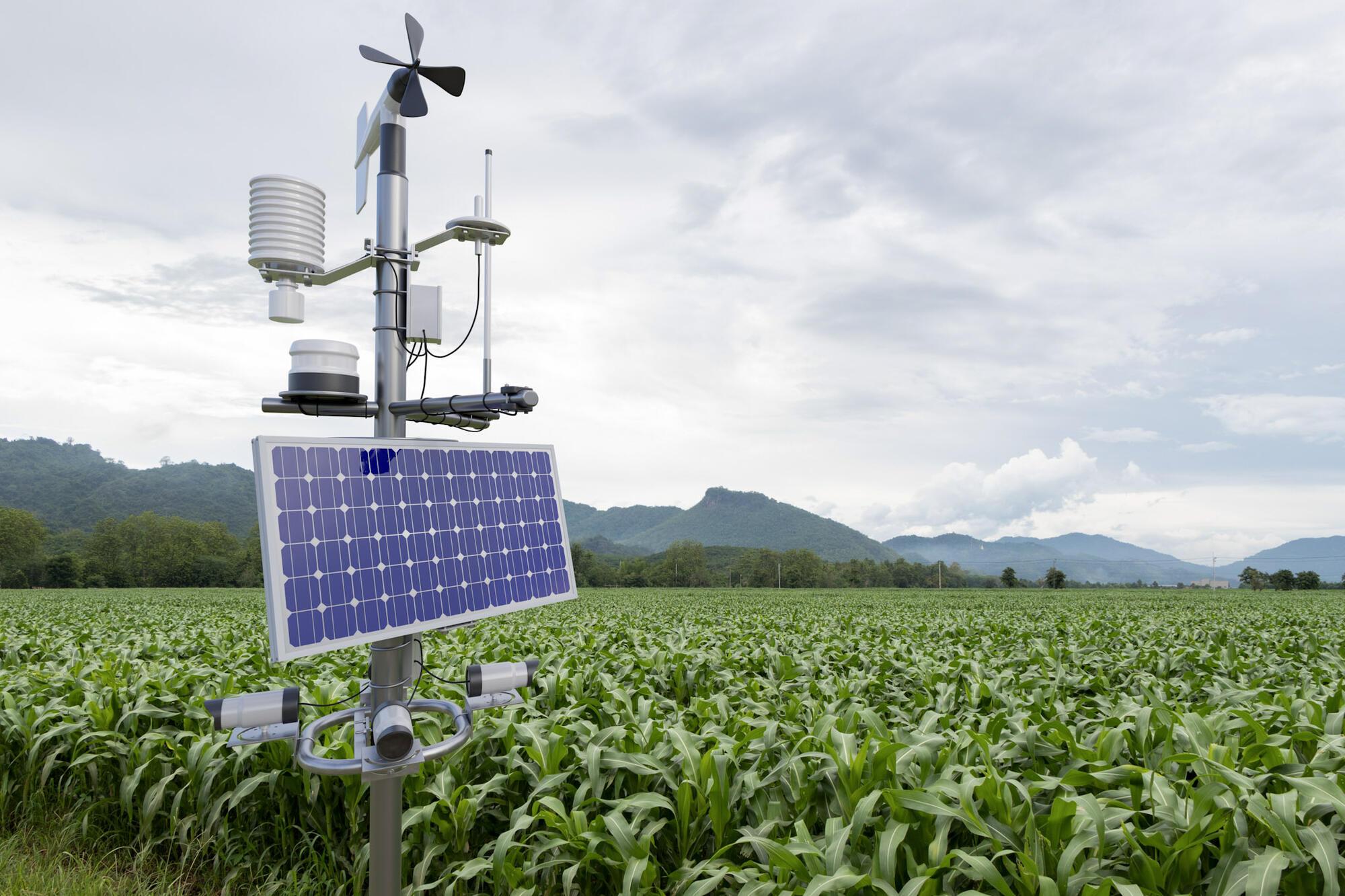
Understanding how to access and use climate data near your farm (see the template) is essential for estimating crop water use and making informed irrigation decisions.
ET represents the combined water loss from soil evaporation and plant transpiration. ET is a key factor in determining how much water a crop uses and how much irrigation is needed to maintain optimal growth.
Weather stations, such as those in the Bureau of Reclamation AgriMet network, provide the data needed to estimate reference evapotranspiration (ETo) using measurements of temperature, humidity, solar radiation, wind speed and precipitation. These ETo values can be combined with crop-specific coefficients to estimate crop water use.
Using climate-based ET estimates allows producers to:
- Schedule irrigation more accurately
- Match water applications to crop demand
- Reduce over- or underirrigation
- Improve water-use efficiency and crop performance
AgriMet stations provide real-time and historical weather data across the region and are a valuable resource for irrigation management.
In addition to ground-based weather stations, satellite-based platforms such as OpenET provide spatial estimates of evapotranspiration that can support field-level irrigation management decisions.
Using the Management Technical Guides to build your irrigation water management plan
Assessment summaries
The Management Technical Guides combine topic-specific information with assessment worksheets designed to help you evaluate your current irrigation practices and identify opportunities for improvement.
Each assessment guides you through key questions about your irrigation system, water use and management strategies. The information you gather from these assessments will be used to develop and refine your irrigation water management plan.
Completing the guides and assessments will help you:
- Evaluate the current condition of your irrigation management practices.
- Improve irrigation timing, duration and frequency to better match crop water needs.
- Identify opportunities to improve irrigation system performance and efficiency.
- Recognize potential water quality concerns.
- Access additional tools and resources to support improved irrigation management.
Develop an action plan and timeline
See the template to identify and prioritize actions to improve your irrigation system and management practices. These actions should be based on the information gathered from your assessments and reflect the areas with the greatest potential for improvement.
Potential actions may include installing a flow meter, upgrading irrigation nozzles, improving system pressure regulation, adopting variable frequency drives or adjusting irrigation timing and application intervals.
An effective action plan should:
- Identify specific improvements or changes to be implemented.
- Prioritize actions based on impact, cost and feasibility.
- Define a realistic timeline for implementation.
- Assign responsibility for each task.
- Identify required resources (equipment, funding or technical support).
Developing a clear and prioritized action plan helps ensure that improvements are implemented efficiently, and that progress can be tracked over time. The example below illustrates how to organize and document your action plan.
|
Priority action/ objective |
Project description (specifically, what will be done?) |
Start date |
Target completion date |
Who will do it |
Resources needed (funds, equipment or technical assistance) |
|---|---|---|---|---|---|
|
Upgrade irrigation nozzles on all of my wheel lines |
Replace sprinklers to Nelson Windfighter 3 sprinkler heads on one wheel line in the front pasture. Goal: Replace 33 sprinklers on a ¼-mile wheel line. Steps
|
Fall 2026 | Spring 2027 | Landowner |
|
Operation, maintenance and monitoring are key!
Once your irrigation water management plan and action plan are in place, you have a framework to guide irrigation decisions and improve system performance over time. Ongoing operation, maintenance and monitoring are essential to achieving your water management goals.
Regular monitoring helps you:
- Track how much water is applied and when.
- Evaluate whether irrigation is meeting crop water needs.
- Identify inefficiencies or system issues.
- Adjust irrigation practices based on field conditions and weather.
Recording irrigation events and system performance improves your ability to make informed decisions. Tools such as the checkbook method (see the template) or online scheduling applications such as the Irrigation Scheduler Mobile can support this process.
Irrigation management is dynamic. Weather variability, water availability and economic conditions may require adjustments throughout the season. Your plan should serve as a flexible guide to support decision-making as conditions change.
Documenting changes and outcomes is also critical. Photo monitoring, production records and water use records can help track improvements over time and refine your management approach. Over time, this process builds confidence and supports continuous improvement in irrigation efficiency and crop performance.
Resources and references
Irrigation water management plan
Creating a map of your land
- How to Create a Property Map with Google Maps, a tutorial by Amy Grotta.
- Web Soil Survey
- Oregon Explorer, Natural Resources Digital Library
Climate data
Monitoring
Acknowledgments
This material is based upon work supported by the National Institute of Food and Agriculture, U.S. Department of Agriculture, under award number 2021-38640-34695 through the Western Sustainable Agriculture Research and Education program under project number WPDP22-020. USDA is an equal opportunity employer and service provider. Any opinions, findings, conclusions, or recommendations expressed in this publication are those of the authors and do not necessarily reflect the view of the U.S. Department of Agriculture.
Reviewers included Mylen Bohle, Associate Professor, Emeritus, Oregon State University; Leslie Clark, Central Oregon Irrigation District; Jeremy Giffin, Carolyn Sufit and Rachel Lovellford, Oregon Water Resources Department; Gen Hubert, Deschutes River Conservancy; Troy Peters, Professor and Extension Irrigation Engineer, Irrigated Agriculture Research and Extension Center, Washington State University; Rex Barber of BigFalls Ranch, Terrebonne, Oregon; Mike Macy of Macy Farms, Culver, Oregon; and Patrice Spyrka of Tumalo Alpine Ranch, Tumalo, Oregon.
About the authors


Related publications


