
Overview
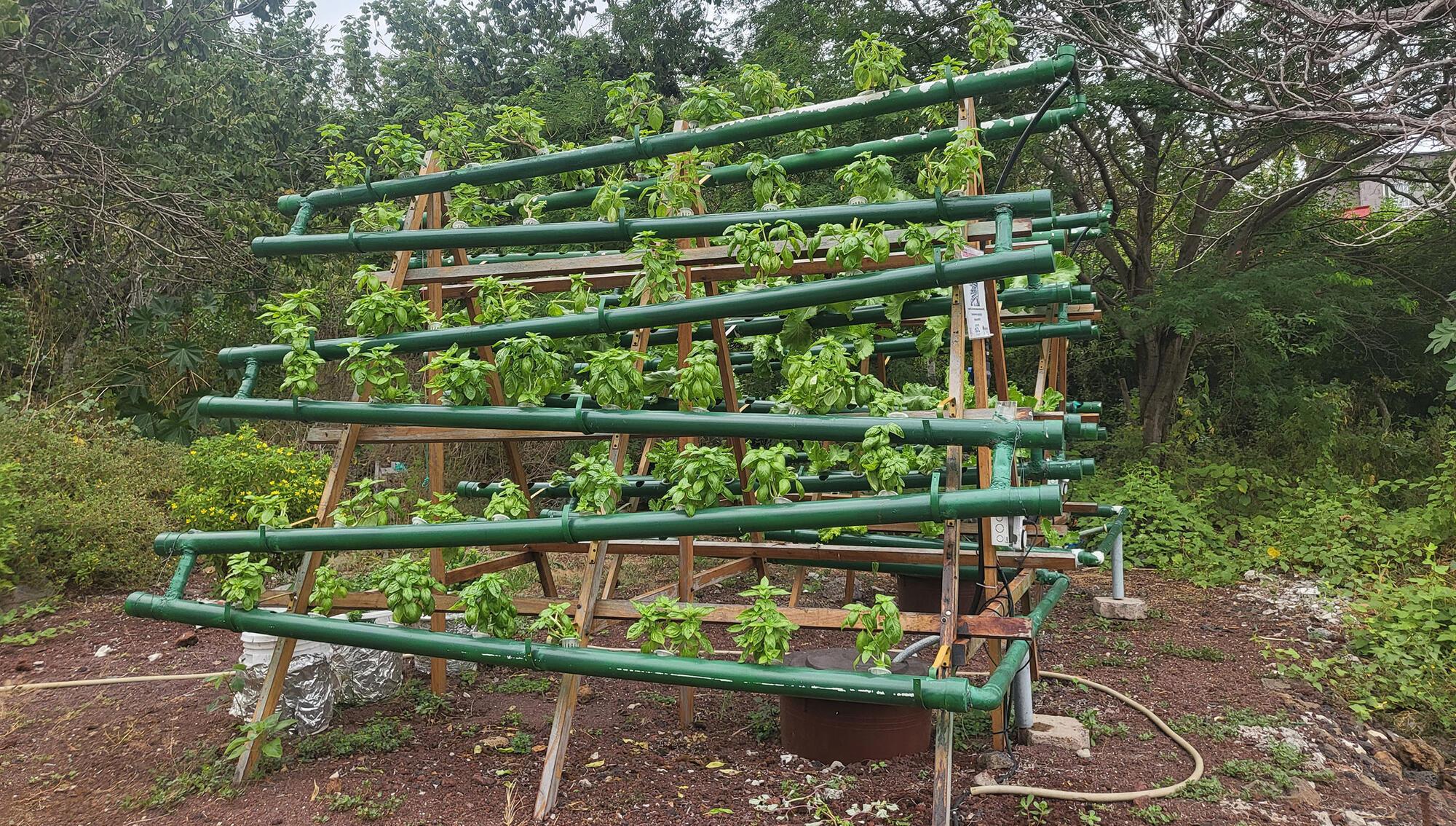
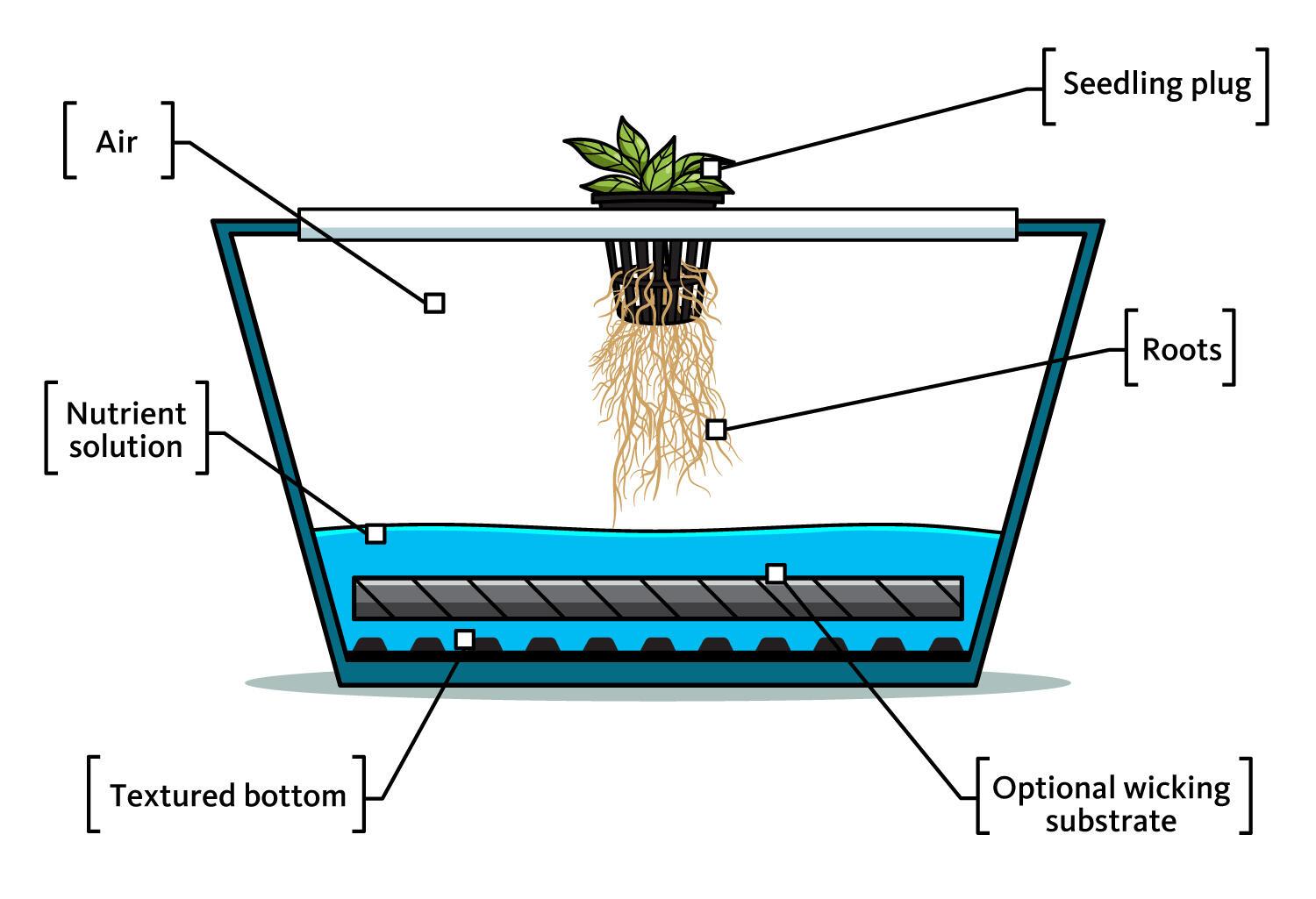
Nutrient film technique is a hydroponic method that uses a thin, continuous film of nutrient-rich solution to nourish plants. This innovative system allows plants to grow with their roots bathed in a shallow stream of water, providing them with a consistent supply of nutrients and oxygen.
NFT systems are known for their water and space efficiency, as they use less water than traditional methods and can be easily scaled up or down depending on the grower’s needs.
The lightweight, modular design of NFT systems makes them versatile and adaptable, suitable for both small-scale and larger operations. While NFT is ideal for fast-growing, shallow-rooted crops like lettuce and herbs, systems require regular monitoring and maintenance to ensure the nutrient film is flowing properly and to prevent issues such as clogs or nutrient imbalances.
Here are tips for NFT hydroponics.
System design and setup
- Orientation and layout: NFT systems can be arranged either horizontally or vertically. Horizontal systems are generally easier to set up and maintain and can be elevated to hip height for better ergonomics and access. Vertical systems, while more complex, can significantly increase crop density.
- Scalability and space efficiency: NFT systems are known for their vertical scalability, allowing for high production potential in a compact footprint. This makes them ideal for maximizing space, though it is important to consider that adding more vertical levels will increase shading. This may require using low-light crops or providing supplemental lighting.
- Channel design and crop suitability: NFT channels offer limited rooting space, making them best suited for short-lived or small-rooted crops such as herbs and leafy greens. Channels may also have textured bottoms or woven material to help distribute the nutrient film more effectively.
- Water storage and structural integration: Storing most of the nutrient solution in a separate tank can help integrate NFT systems into rooftop or building façade setups without exceeding structural weight limits.

Maintenance and operation
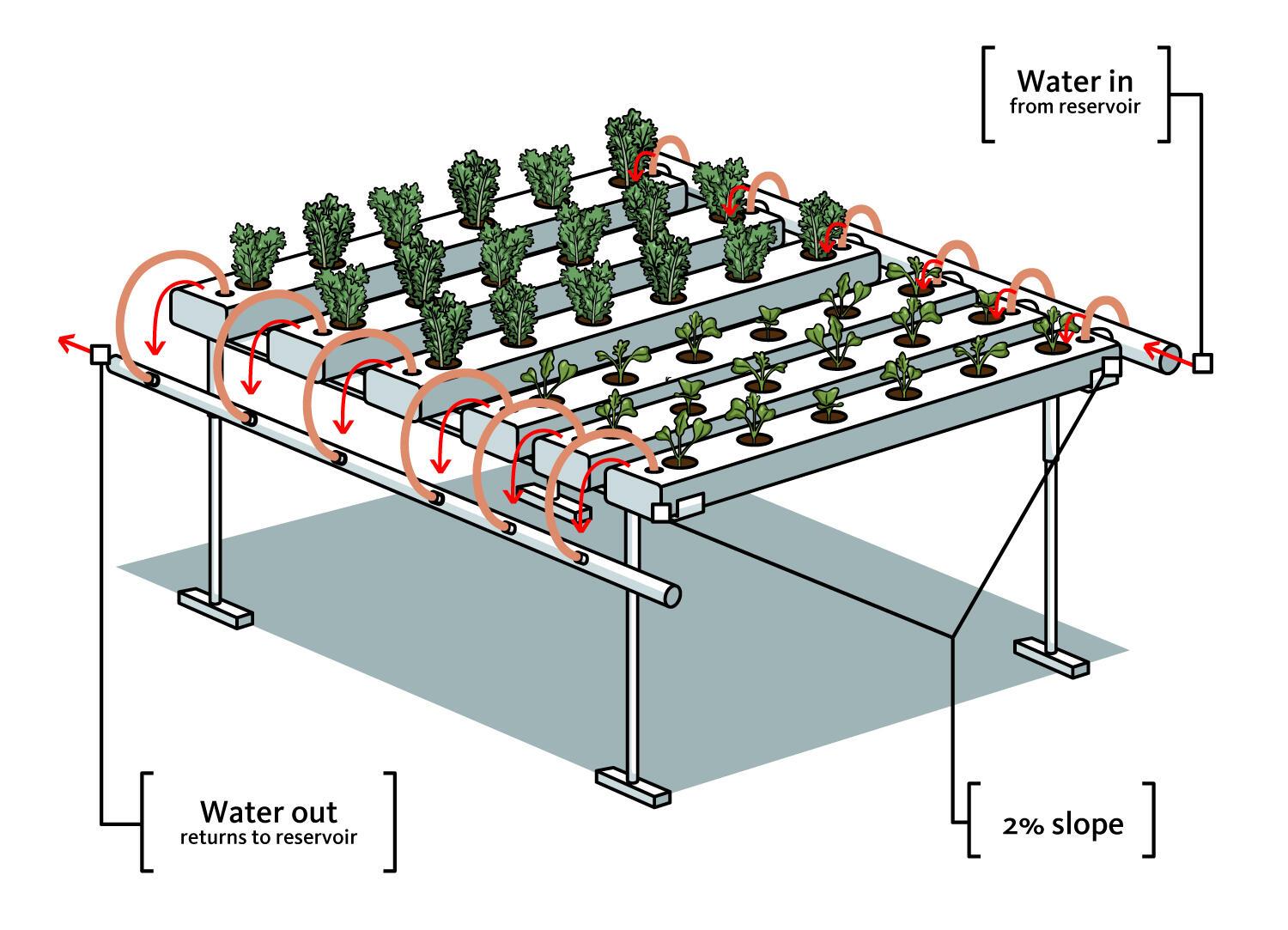
- Water flow management: Maintaining a minimum 2% slope in horizontal NFT channels ensures proper nutrient film flow. Regularly check and maintain the slope to prevent flow issues.
- Backup systems: Given the NFT system’s reliance on a thin nutrient film, backups for power and pumps are crucial. Power loss or pump failure can lead to immediate plant wilting due to the cessation of the nutrient film.
- Temperature control: The shallow channels in NFT systems are sensitive to ambient temperature changes, which can cause nutrient imbalances and plant stress. Mitigate temperature fluctuations by increasing slope, shortening channel lengths and using larger stock tanks.
Common crops
- Lettuce: Popular for its fast growth and shallow root system.
- Herbs: Basil, cilantro, mint and parsley.
- Spinach: Grows well in the shallow, nutrient-rich film.
- Arugula: Another leafy green suited to the conditions of NFT.
- Kale: Can be successfully cultivated in NFT systems.
- Swiss chard: Tolerates the conditions of NFT and grows well.
- Mustard greens: Fast-growing and suitable for NFT.
- Strawberries: Certain varieties can be perennial fruiting crops in vertical or horizontal systems.


Related publications


