
Overview
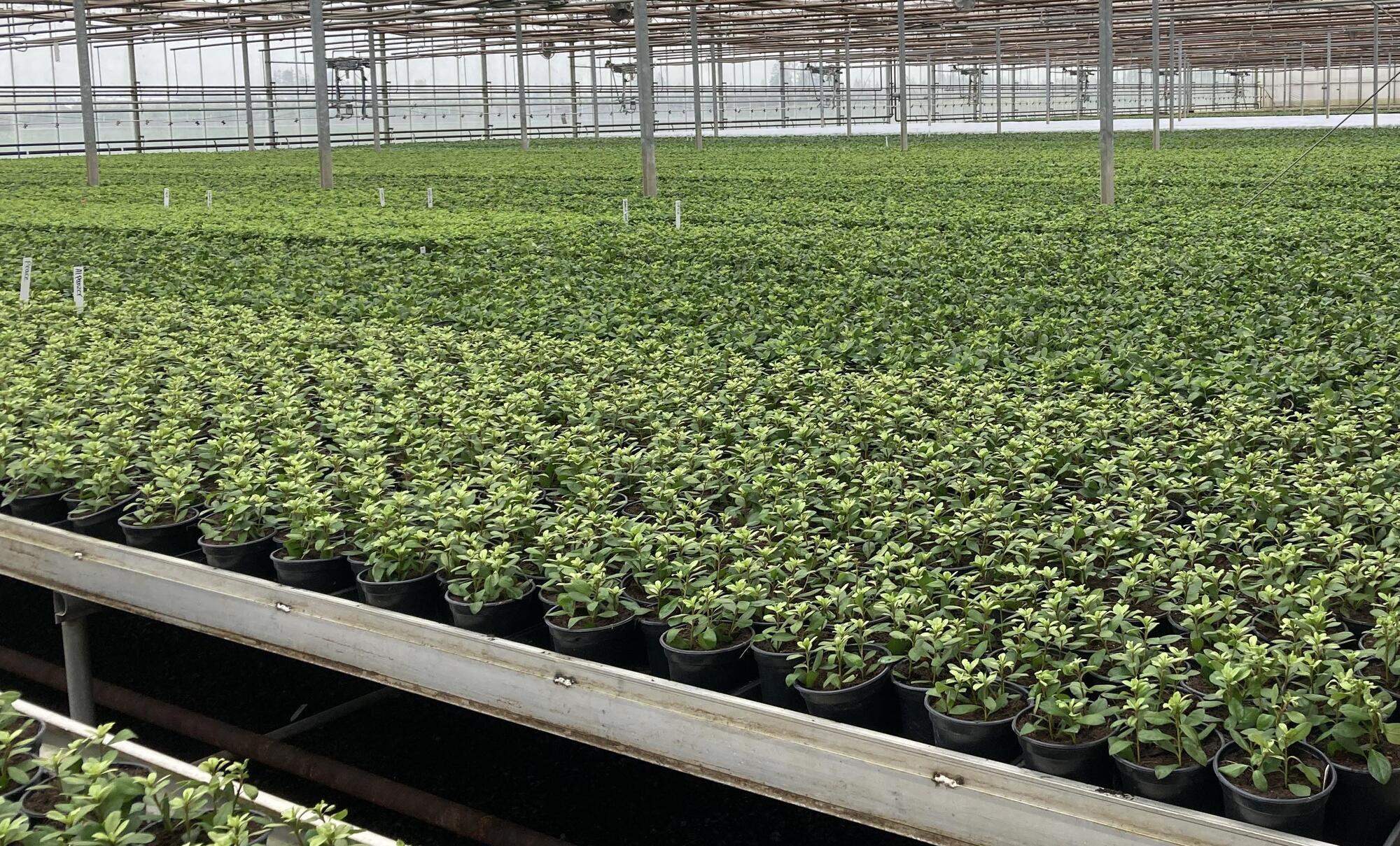
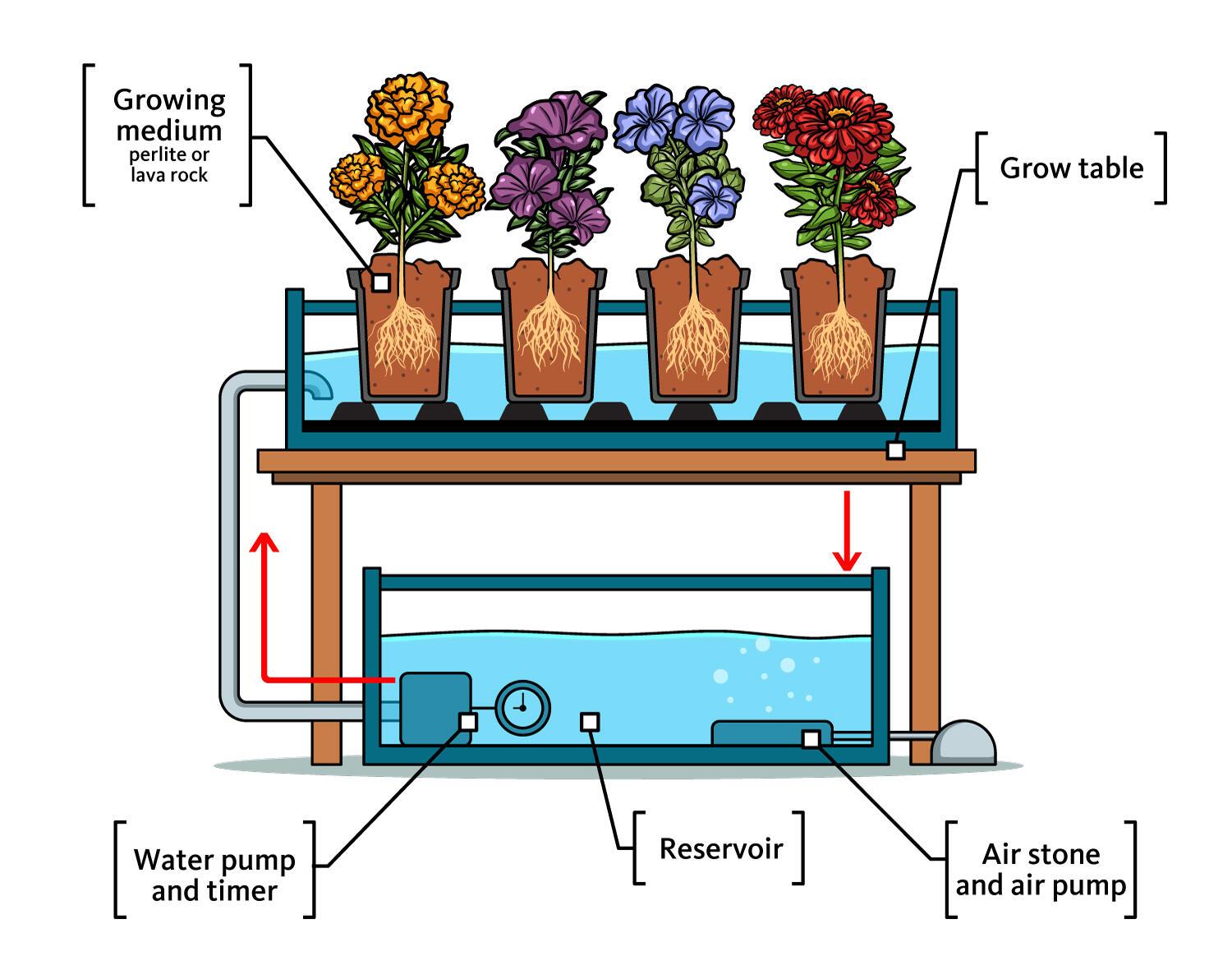
Ebb and flow, also known as flood and drain, is a hydroponic system where plants are grown in trays that periodically flood with nutrient-rich water and then drain back into a reservoir. This system consists of flood trays, a nutrient reservoir, a pump and a timer.
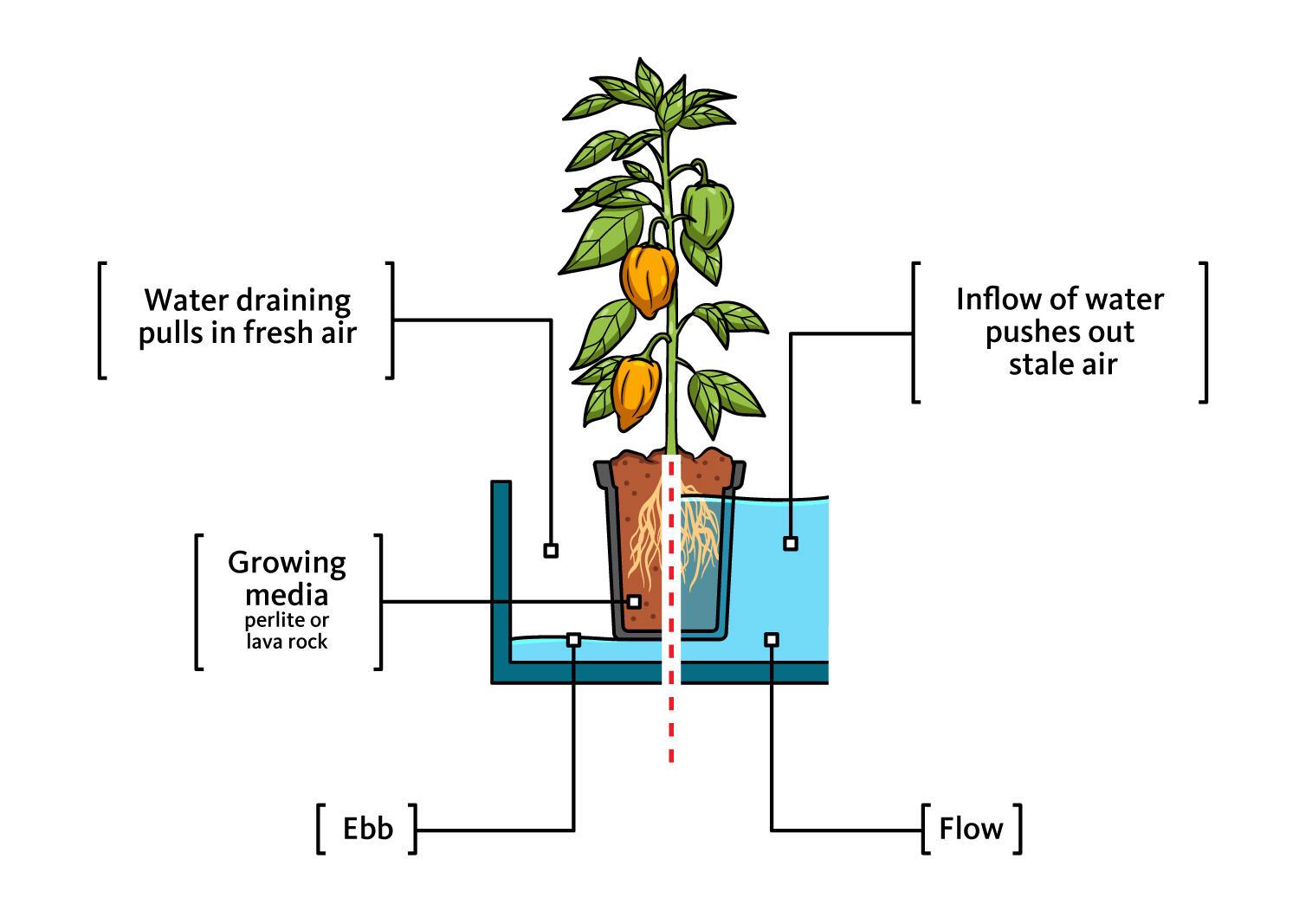
The timer controls the pump, which floods the trays with the nutrient solution, allowing the plants' roots to absorb the nutrients. After the flooding cycle, the solution drains back into the reservoir, leaving the plants' roots exposed to air and allowing them to oxygenate.
This approach is versatile, allowing for various growing media such as fabric pots, expanded clay pellets or rock wool. The system offers several advantages, including effective nutrient and oxygen delivery to plants, scalability for larger setups and flexibility in plant growth. However, it requires a reliable timer to ensure consistent flooding and draining cycles. Growers must carefully manage the water and nutrient solution to maintain optimal plant health.
Here are top tips about ebb and flow hydroponics:
System basics
- Simple and compact: Ebb and flow is a straightforward and compact hydroponic method ideal for seedling production.
- Versatile media use: This system supports a variety of growing media. Growers can use containers filled with different media — like potting media, bark, coir and other substrates — allowing for flexibility in plant growth.
Flooding and draining
- Effective flooding: Ebb and flow systems flood trays with nutrient solution and then drain it away. This method allows for efficient bottom-watering and stimulates healthy root growth by pulling air into the growing media during the drainage phase.
- Flood cycle management: Adjusting the depth of the flood and the timing between cycles can help manage plant health and control pests. For instance, decreasing flood depth or increasing the delay between cycles can help dry out the substrate and reduce pest problems.
- Control salt buildup: Shallow flood cycles help prevent salt accumulation near the base of plants. Using pure water, such as distilled or reverse osmosis water, during some flood cycles can help rinse out salt buildup from the media.
Design considerations
- Grow media depth: Deeper growing media allow for longer flood cycles, supporting larger crops like tomatoes or saplings by providing more root space.
- Table design: Using a flood table with ridges or channels can improve drainage, ensuring that residual nutrient solution is more effectively removed from the base of the growing media between cycles.
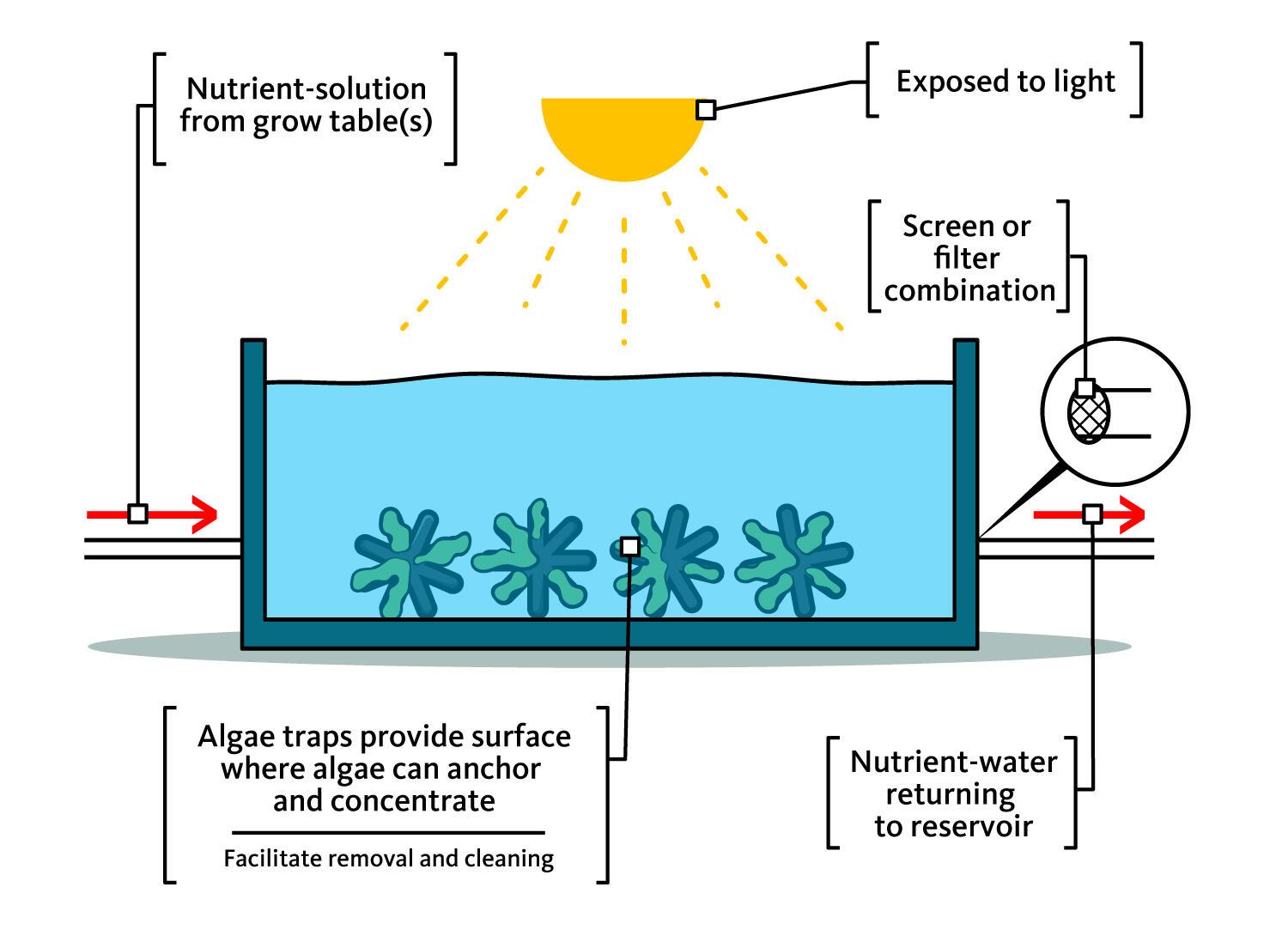
- Algae control: Incorporating an “algae trap” — a chamber designed to encourage algae growth away from the main production area — can help manage algae issues within the system.
Timing and execution
Simple timing plan: To maintain effective irrigation, follow these steps:
- Flood to about an inch below the top of the media.
- Drain once the media is fully soaked. Media will be glistening.
- Flood again before the media begins to dry out and contract. If media dries out and withdraws from the side of the container, or the plant is wilting, you are too late.
Common crops
- Peppers: Benefit from the oxygenation provided by the ebb and flow method.
- Herbs: Basil, cilantro and mint do well in this system.
- Radishes: Adapt to the temporary flooding and draining cycles.
- Leafy greens: Spinach, Swiss chard and arugula grow efficiently.
- Annual flowers: Marigolds, petunias, zinnias and pansies can adapt well to this system.
- Cannabis: Is often commercially grown in pots on ebb and flood because irrigation schedules can be adapted to different growing stages.
About the authors


Related publications


