Clatsop County’s timber and forest products industries remain an important part of the local economy, supporting jobs, contractors, mills and related businesses. Clatsop County and its service districts receive significant revenue from timber harvests on nearby state forests, particularly the Clatsop State Forest, so decisions about forest management and wildfire resilience affect that sector and the communities that depend on it.
By bringing elected officials and other leaders into working forests, OSU Extension and its partners improved understanding of the real-world tradeoffs involved in forest management and strengthened relationships needed for future collaboration.
Elected officials, education leaders and economic development partners help shape public conversations and policy decisions affecting forests, wildfire preparedness and the regional wood products economy.
Without direct exposure to forestry operations, community leaders might have limited understanding of how public agencies, private landowners and contractors work together to manage forests, respond to wildfire and sustain working lands.
Forest management decisions often involve economic, environmental and public safety considerations that are difficult to understand from meetings alone.
These needs created an opportunity for field-based education that could build knowledge, trust and more informed community dialogue.
As a member of the Clatsop Forestry and Wood Products Economic Development Committee, commonly known as the CFEDC, Oregon State University Extension Service worked with partners to plan and deliver the 2025 Annual Community Leaders Tour.
The six-hour field tour benefited city, county and state elected officials, education leaders, economic development agencies and other community partners.
CFEDC committee members, including OSU Extension, Oregon Department of Forestry, Hampton Lumber, Mason, Bruce & Girard, Warrenton Fiber and Nygaard Logging, coordinated logistics, transportation and educational content. Aaron Groth, OSU Extension Fire Program north coast regional fire specialist, played a central role in planning, facilitation and evaluation.
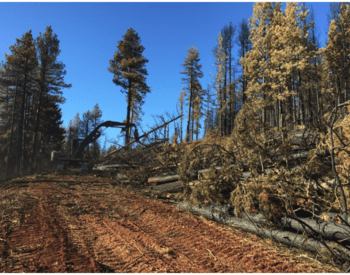
The tour began at Hampton Lumber’s Big Creek Tree Farm and included three forestry sites. At the PH Timber, LLC-Broken Gate fire site, presenters explained the consequences of a human-caused wildfire, the risks posed by unburned slash piles and the work involved in salvage harvesting and replanting.
Oregon Department of Forestry staff also described multiagency wildfire response systems and the South Fork Forest Camp’s role in fire protection. South Fork houses supervised work crews (adults in custody) who are trained to support forestry and fire operations.
At the Shingle Knob timber sale, Nygaard Logging demonstrated a cable logging operation in the Clatsop State Forest. Participants learned about harvest planning, timber markets and the balancing of economic, ecological and social goals within state-managed forests.
The final stop, Hampton’s harvest operation on Shingle Mill Road, highlighted coordination between private landowners and Oregon Department of Forestry on road access, maintenance and operational timing. Presenters described this as Clatsop County’s model of “competitive symbiosis,” in which landowners, agencies and contractors cooperate while pursuing their own goals.
Throughout the tour, Groth and other CFEDC members facilitated discussion and created opportunities for participants to ask questions. Extension also designed and administered a Qualtrics survey to measure learning and identify future educational needs.
Tour builds understanding
The tour gave participants a clearer view of how forestry operations, wildfire response and collaborative land stewardship work in Clatsop County.
Survey responses showed increased knowledge across major topics, including wildfire risk, timber harvest planning, cable logging systems and the economic, environmental and social roles of state forests.
Participants said they were struck by the speed at which wildfires can spread, the complexity of multiagency fire response and the economic ripple effects of timber operations. Many also said that seeing replanting efforts and young saplings helped them better understand forestry as a long-term cycle of harvest and renewal.
The field format helped community leaders observe the challenges and tradeoffs involved in forest management firsthand, rather than hearing about them only in meetings or reports.
New connections support collaboration
The tour also strengthened relationships across sectors. Twelve participants said they met someone they would contact for future information, and 19 identified potential opportunities for collaboration.
Those connections matter in a county where effective forest management depends on coordination among agencies, landowners, contractors and community stakeholders.
Participants also said they valued the transparency of the tour and the opportunity to engage directly with forestry professionals. For some, the experience helped dispel misconceptions and gave needed context for complex management decisions.
Public value
This tour was designed to help community leaders make better-informed decisions about forestry, wildfire resilience and the regional economy.
By bringing elected officials and other leaders into working forests, OSU Extension and its partners improved understanding of the real-world tradeoffs involved in forest management and strengthened relationships needed for future collaboration.
That kind of field-based education supports better public dialogue, stronger trust and more informed policy development in Clatsop County.
These CFEDC members played a key role in shaping the tour and interacting with community leaders during the tour:
- Brad Catton, operations coordinator, ODF, chair
- Kevin Leahy, Clatsop Economic Development Resources (CEDR)/Clatsop Community College (CCC)/ Clatsop Small Business Development Center (SBDC), vice chair
- Lindsay Davis, Hampton Lumber, secretary/treasurer
- Courtney Bangs, Clatsop County commissioner
- Dan Goody, district forester, ODF
- John Nygaard, Warrenton Fiber/Nygaard Logging
- Aaron Groth, regional fire specialist, Oregon Coast, OSU Extension Fire Program
- Brent Keller, region manager, Mason, Bruce, & Girard
- Trinity Steele, Pulp and Paper Workers Resource Council
- Steve Keniston, area manager, Weyerhaeuser
- Fridtjof Fremstad, Nuveen Natural Capital
- Tom Scoggins, Society of American Foresters Tillamook-Clatsop Chapter
- Bill Young, small woodland owner