Washington County faces increasing wildfire risk as development expands into fire-prone areas, fuels accumulate and climate conditions change.
These efforts reduce the likelihood and severity of future wildfire impacts, helping communities avoid costly damage and disruption. They also improve coordination among agencies, utilities and local partners, making wildfire mitigation efforts more efficient and effective.
Areas such as Henry Hagg Lake — a popular destination for fishing, boating and hiking and a key regional water source — are especially vulnerable during dry summer months. Repeated wildfires have occurred around the lake in recent years, underscoring the need for preparedness.
At the same time, many residents lack practical knowledge about how to reduce wildfire risk around homes and properties. Concepts such as defensible space, home hardening and forest management strategies can be difficult to apply without hands-on guidance.
Communities also benefit from stronger connections with the agencies, utilities and professionals responsible for wildfire preparedness and response. Without those connections, it can be difficult for residents to access resources, understand local risk or take coordinated action.
These needs created demand for accessible, research-based education that combines practical skills, real-world demonstrations and direct engagement with wildfire professionals.
Events build knowledge
To address this need, Aaron Groth, north coast regional fire specialist in Oregon State University Extension Service’s Fire Program, worked with a broad network of partners to deliver Wildfire Ready! programming in Washington County, targeting areas of the county identified as most at risk.
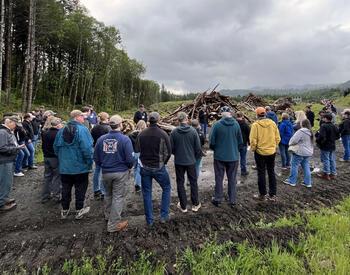
An initial Wildfire Ready! event in June 2024 near Hagg Lake brought together 15 agencies, service districts, organizations and businesses. The free event featured demonstration stations, information tables and presentations focused on preparing homes, properties, families and communities for wildfire.
Participants rotated through stations on fire season equipment, home hardening, defensible space and fuels management. They also learned about the roles of different agencies and funding opportunities available to support risk reduction practices.
The event drew strong participation from the targeted watershed, with 42% of attendees coming from priority areas identified by organizers.
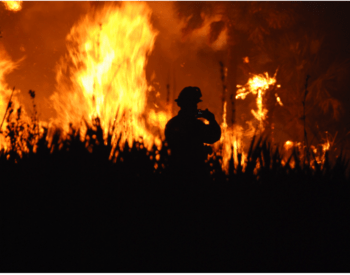
After the 2024 event, the Lee Falls Fire on Aug. 8, 2024, burned about 290 acres near Gaston and the community of Cherry Grove, south of Henry Hagg Lake. At its peak, about 600 people were forced to evacuate as conditions caused the fire to spread quickly.
With a clear demand for continued engagement, Wildfire Ready! 2025 expanded into a three-part educational series organized by Tualatin Soil & Water Conservation District in partnership with OSU Extension and eight other partners: Oregon State Fire Marshal, Oregon Department of Forestry, Metro, Trout Mountain Forestry, Pacific University, Washington County Emergency Management, Portland General Electric and Bintel Inc.
The series reached 138 residents, with 14 attending all three events.
The first session, a film screening and panel discussion held at Pacific University in Forest Grove and hosted by the Tualatin Soil & Water Conservation District, featured the documentary Built to Burn and a panel of experts from Oregon Department of Forestry, Oregon State Fire Marshal and Portland General Electric. The discussion helped participants understand local fire history, emergency response systems and preparedness efforts. OSU Extension staffed an information table and contributed to responses during the question-and-answer portion.
The second session, a home hardening workshop in Gaston, focused on practical steps to reduce home ignition risk. Jen Warren, Oregon State Fire Marshal fire risk reduction specialist, presented on home hardening. Oregon State Fire Marshal, OSU Extension and Tualatin Soil & Water Conservation District then facilitated three breakout groups for homeowners. Washington County Emergency Management and Bintel Inc. provided updates on the Community Wildfire Protection Plan.
The final session, a guided forest tour at Chehalem Ridge Nature Park, connected forest health and management to wildfire resilience. Participants completed a 1.5-mile hike with demonstrations on pruning, weed management, defensible space and fire-resilient vegetation. Metro and Trout Mountain Forestry staff discussed forest planning, while a local landowner shared experience with oak restoration and vegetation management.
Learning drives action
Participants across both the 2024 event and 2025 series reported increased understanding of wildfire risk and greater confidence in taking action.
Survey responses from the 2024 event showed high satisfaction, with participants rating the program 4.88 out of 5 and reporting increased confidence in preparedness. Many also identified local agencies and organizations they could turn to for support.
Participants gained practical knowledge about creating defensible space, reducing flammable materials, managing forests, maintaining firefighting equipment and understanding wildfire risk.
Many planned to take immediate action, including creating a five-foot vegetation-free zone around homes, clearing debris and improving property maintenance.
The 2025 series reinforced and expanded on those outcomes. The home hardening workshop helped participants identify specific improvements they could make, while breakout discussions encouraged peer learning and neighborhood-level planning.
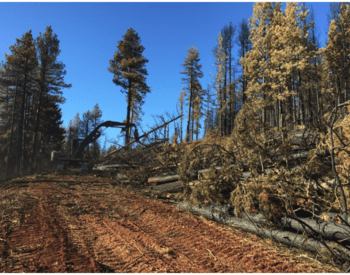
The forest tour provided hands-on learning that made wildfire mitigation strategies more tangible. Seeing thinning, pruning, slash management and vegetation treatments in practice helped participants understand how these actions contribute to fire-resilient landscapes.
Participants also built relationships with agency staff, utility representatives and land managers, improving communication and awareness of available resources.
Feedback highlighted strong demand for continued programming, including interest in fire-resistant plant selection, invasive weed management, site-specific guidance and long-term strategies related to drought and climate conditions.
Public value
This work helps residents reduce wildfire risk and better protect homes, property, infrastructure and natural resources.
By combining research-based education, hands-on demonstrations and coordinated partnerships, OSU Extension helps increase local capacity for wildfire preparedness and response.
These efforts reduce the likelihood and severity of future wildfire impacts, helping communities avoid costly damage and disruption.
They also improve coordination among agencies, utilities and local partners, making wildfire mitigation efforts more efficient and effective.
Together, these outcomes improve the return on public investment by lowering long-term wildfire costs while building safer, more resilient communities in Washington County.
Partners in Wildfire Ready! events in Washington County include:
- OSU Extension Fire Program
- OSU Extension Oregon Naturalist program
- Tualatin Soil & Water Conservation District
- Bintel Inc.
- Clean Water Services
- Forest Grove Fire & Rescue
- Gaston Rural Fire Protection District
- Joint Water Commission
- Metro
- Oregon Department of Forestry
- Oregon State Fire Marshal
- Pacific University
- Portland General Electric
- Stimson Lumber
- Trout Mountain Forestry
- USDA Natural Resources Conservation Service
- Washington County Emergency Management
- Washington County Parks
- Washington County Small Woodlands Association
- West Oregon Electric Cooperative Inc.