During the COVID-19 pandemic, Oregon’s agricultural operations faced heightened pressure to maintain food safety while adjusting to evolving health regulations. As an essential industry, farms remained open, but the need to protect both workers and consumers added complexity to daily operations. Training seasonal workers — who are responsible for harvesting, handling and transporting fresh produce — became even more critical.
Yet few food safety training programs were designed to meet the needs of Oregon’s multilingual, multicultural agricultural workforce. Many workers weren't included in formal education systems, and limited access to training in Spanish created additional barriers to consistent food safety practices.
By quickly adapting to a virtual format, the workshops continued to strengthen food safety knowledge, support public health, and enhance the capacity of Oregon’s farms and workforce
To ensure continued education during the pandemic, Oregon State University’s Healthy Plants and Bilingual Education Program transitioned its Train the Trainer Food Safety Workshops to a virtual format. The program, based at OSU's North Willamette Research and Extension Center in Aurora, is led by Luisa Santamaria, Extension nursery pathology and bilingual educator.
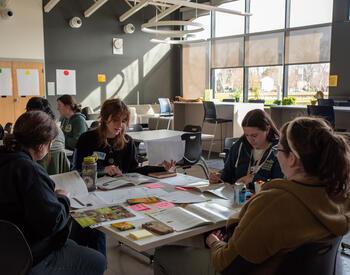
The curriculum, which focuses on good agricultural practices and food safety fundamentals, was adapted for online delivery using Zoom. In 2020, 10 three-hour workshops were offered — five in English and five in Spanish. Sessions included interactive activities using breakout rooms and updated content related to pandemic-era workplace guidelines.
The Oregon Blueberry Commission, a long-standing supporter of the program, helped promote the workshops and encouraged participation among berry growers and labor contractors preparing for harvest.
Despite the challenges of the pandemic, 169 individuals participated in the virtual workshops in 2020. Attendees included growers, supervisors, crew leaders and labor contractors — many of whom served as the primary food safety trainers on their farms.
Most participants reported that they would go on to train 50 or more seasonal workers each, with some estimating they would reach over 1,000 during the May to August harvest season. Based on a conservative average, more than 8,000 agricultural workers were likely trained using the research-based guidelines shared through the program.
The workshops are voluntary and not legally required, yet participation remains strong year after year. Since its launch in 2013, the program has filled a critical education gap by offering culturally relevant, bilingual training that reaches frontline agricultural workers. The Spanish-language sessions ensure that language is not a barrier, helping expand access to essential food safety practices.
By quickly adapting to a virtual format, the Train the Trainer Food Safety Workshops continued to strengthen food safety knowledge, support public health, and enhance the capacity of Oregon’s farms and workforce — even during an unprecedented public health crisis.