Este contenido ha sido traducido automáticamente. El servicio de Extensión de Oregon State University (OSU) no garantiza la exactitud del texto traducido. Consulte la versión original en inglés para confirmar la información.
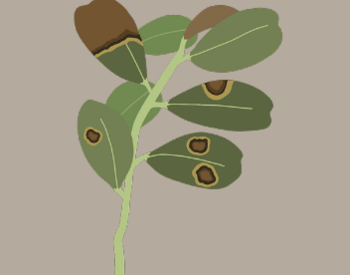
Boxwood blight is a fungal disease caused by Calonectria pseudonaviculata that thrives in cool, humid conditions and spreads through water, tools and infected plant material, leading to leaf spots, stem lesions and rapid defoliation.
Luisa Santamaria |
Jan 2026 |
Collection
Credit: Oregon State University (Cropped from original)
Scratch cooking, kitchen swarming, and heart-led leadership—Greg Christian shows how joyful teamwork can transform school cafeterias into efficient, good-food powerhouses.
Michelle Markesteyn, PhD, Rick Sherman |
Jan 2026 |
Podcast episode
Photo: Carrie Cantrell, Kara Baylog (Cropped from original)
Tracheal mites (Acarapis woodi) infest and breed in the tracheae of honey bees. (Tracheae are fine tubes in the insect’s body that convey air to the tissues.) It’s not possible to diagnose a tracheal mite infestation ...
Ellen Topitzhofer, Carolyn Breece, Ramesh Sagili |
Dec 2025 |
Video
El tizón de boxwood es una enfermedad fúngica destructiva que afecta al boxwood en viveros comerciales. Se propaga rápidamente en condiciones húmedas y templadas, y causa manchas en las hojas, lesiones en los tallos y una rápida caída de las hojas.
Luisa Santamaria |
Dec 2025 |
OSU Extension Catalog
P: I have many Douglas fir seedlings that sprout up on my property and I hate to pull them out. I also have a few that are a foot or two tall now. Would it be beneficial to anyone if I donated the seedlings/trees? I have maybe 12–24 or more per year, and so do my neighbors.
Welcome to the Winter 2026 edition of Canopy View News! We’re excited to share our most recent publication on coast redwood and giant sequoia, two species that many landowners are growing on their Oregon properties.
Alicia Christiansen, Lauren Grand |
Dec 2025 |
Newsletter issue