PORTLAND, Ore. — Ask anyone to name a vegetable and “corn,” “broccoli” or “carrots” might come to mind.
Microgreens? Not so much — especially for second graders.
“Who’s heard about microgreens before?” asked Vera Skovierova in Irene Peterson’s class at Woodlawn K–5 School in Portland.
Silence.
“This might be a new word for you,” said Skovierova, one of two Oregon State University Extension Service nutrition educators delivering the lesson. “Can you say microgreens?”
“Microgreens,” the children replied, pausing between the “o” and the “g.”
“All right! You will learn about microgreens today,” Skovierova said.
Seed-starting kits meet nutrition lessons
It was the second planting day in April for Woodlawn second graders, one of hundreds of Oregon classrooms that received seed-starting kits through the Grow This! Oregon Garden Challenge, OSU Extension’s statewide seed giveaway.
The challenge is led by Food Hero, a statewide initiative of the Oregon Supplemental Nutrition Assistance Program Education (SNAP-Ed) developed by OSU Extension in English and Spanish. Classroom kits include seeds, soil, spray bottles and containers.
At Woodlawn, Skovierova and Extension nutrition educator Rebecca Marson paired the Grow This! kits with Growing Healthy Kids, a garden-themed nutrition curriculum developed at Oregon State for second and third grades. Together, the programs let students plant seeds, learn basic plant parts and try a variety of fruits and vegetables.
Planting day: radishes and microgreens
Students planted radishes on April 12. A week later, the seedlings had already popped up when Marson and Skovierova returned to introduce microgreens — nutritious baby plants harvested at 2–3 inches tall.
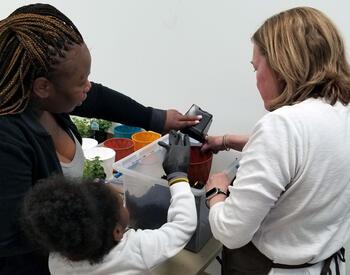
“You have a scoop in your soil,” Marson said. “We’re going to take turns scooping soil into your container up to the black line. Grab your cup of seeds and take a look. What do you notice?”
“There’s a lot of different seeds,” a student answered.
“Yeah, there’s a variety,” Marson said. “We’re planting a bunch of different kinds of microgreens.”
In about 20 minutes, each student had seeded an individual container. Marson and Skovierova collected the cups and placed them on a cart at the back of the classroom alongside the radishes.
The teacher said she appreciates the additional learning OSU Extension brings to her students.
“In second grade, we have a lot of science and health standards,” she said. “Health around nutrition and science around plants and seeds and seeing things grow and change. This gives them a real hands-on experience about nature and growing and also learning new foods that they can eat.”
When plants don’t cooperate
The plan was to harvest the microgreens on May 3. Unfortunately, they didn’t grow as well as hoped.
“We’re putting together little kits with seeds, a container, some soil and a Food Hero microgreens planting tip sheet for students to try again at home,” Marson said. “Gardening is a fun experiment. Sometimes it works, sometimes it doesn’t.”
Previously titled OSU Extension garden-themed nutrition lesson teaches second graders how to plant healthy vegetables