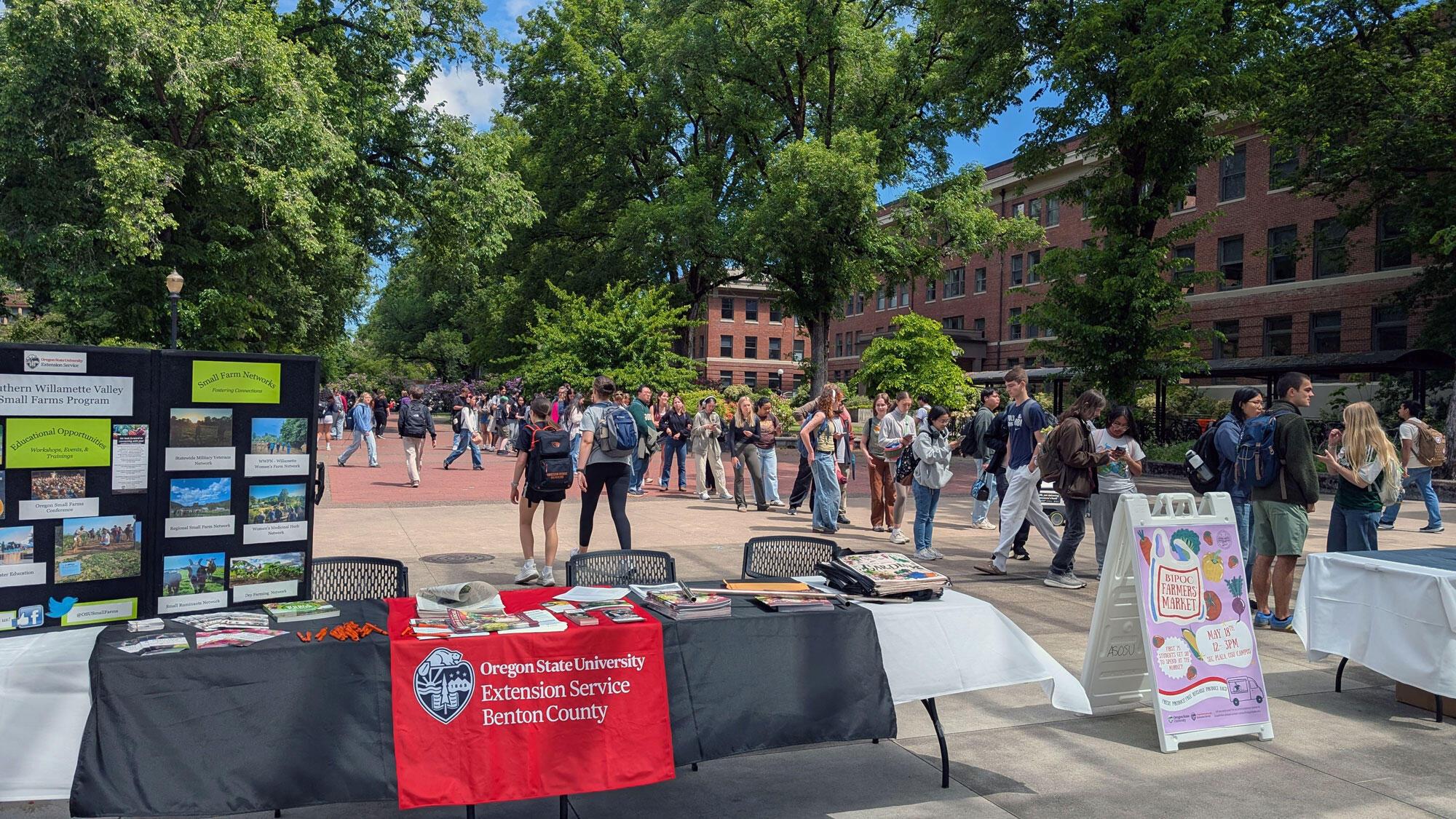
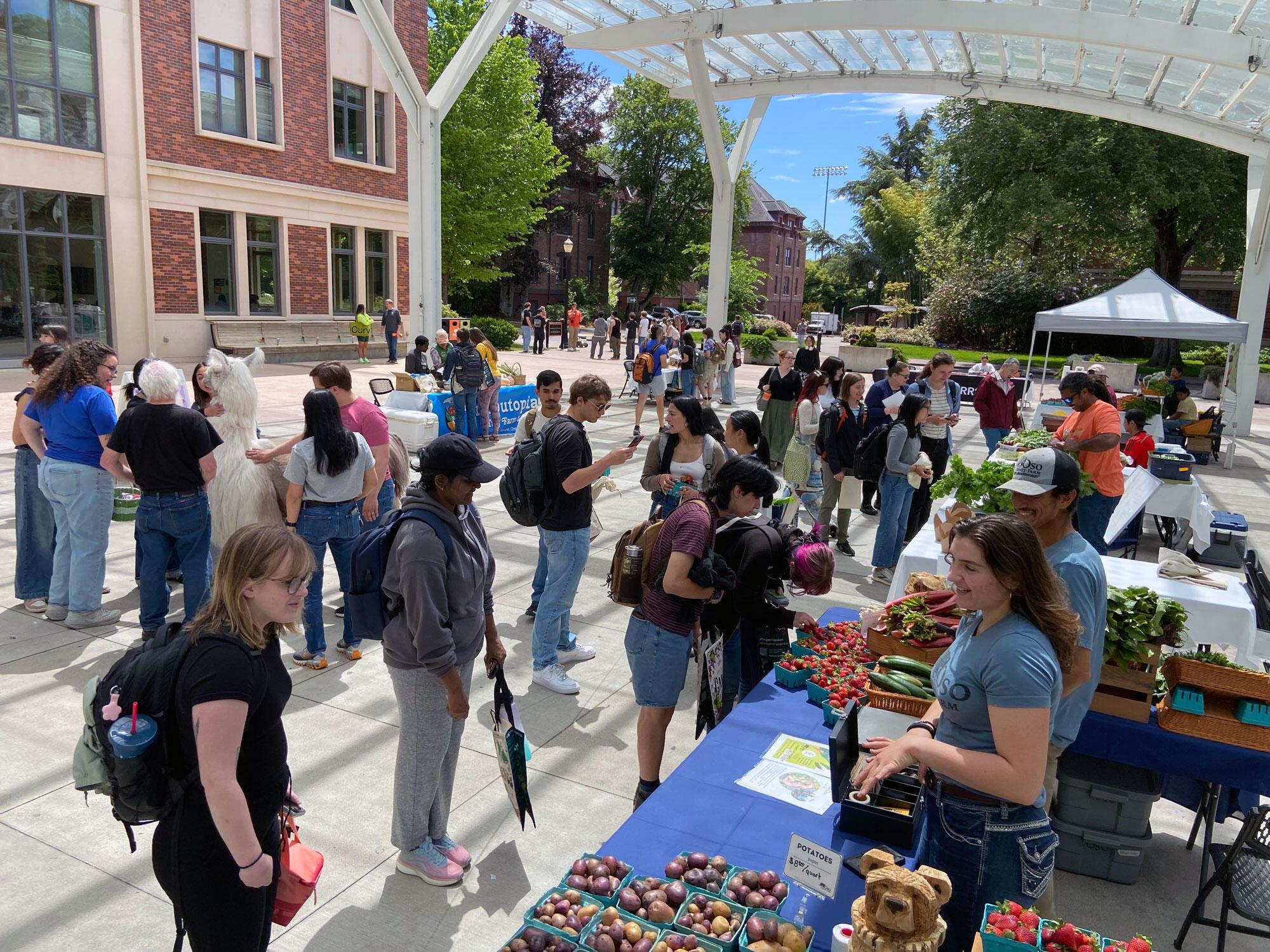
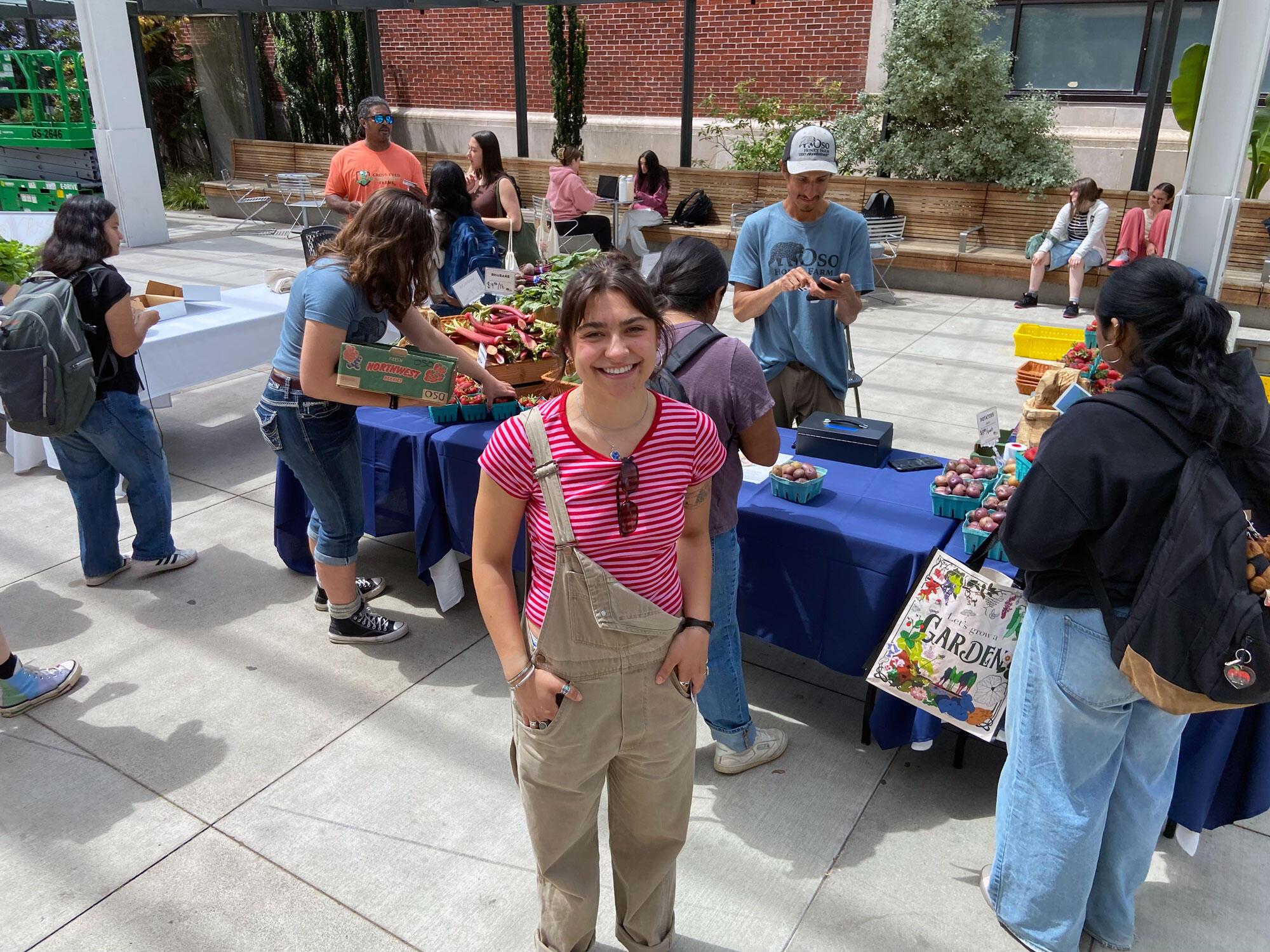
CORVALLIS, Ore. — A line of Oregon State University students formed north of SEC Plaza on a sunny spring afternoon, waiting for fresh produce and flowers and a chance to spend $10 between classes.
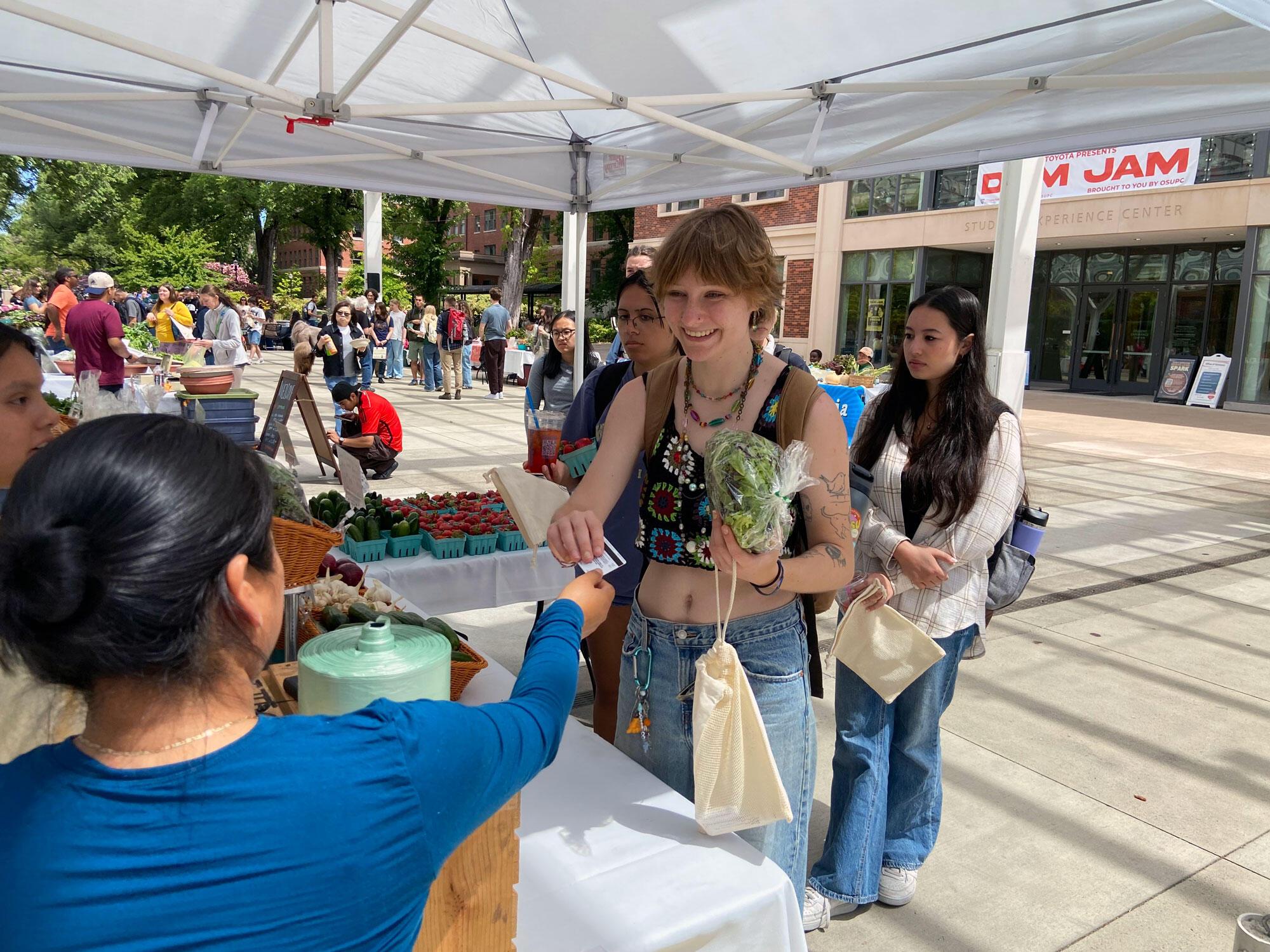
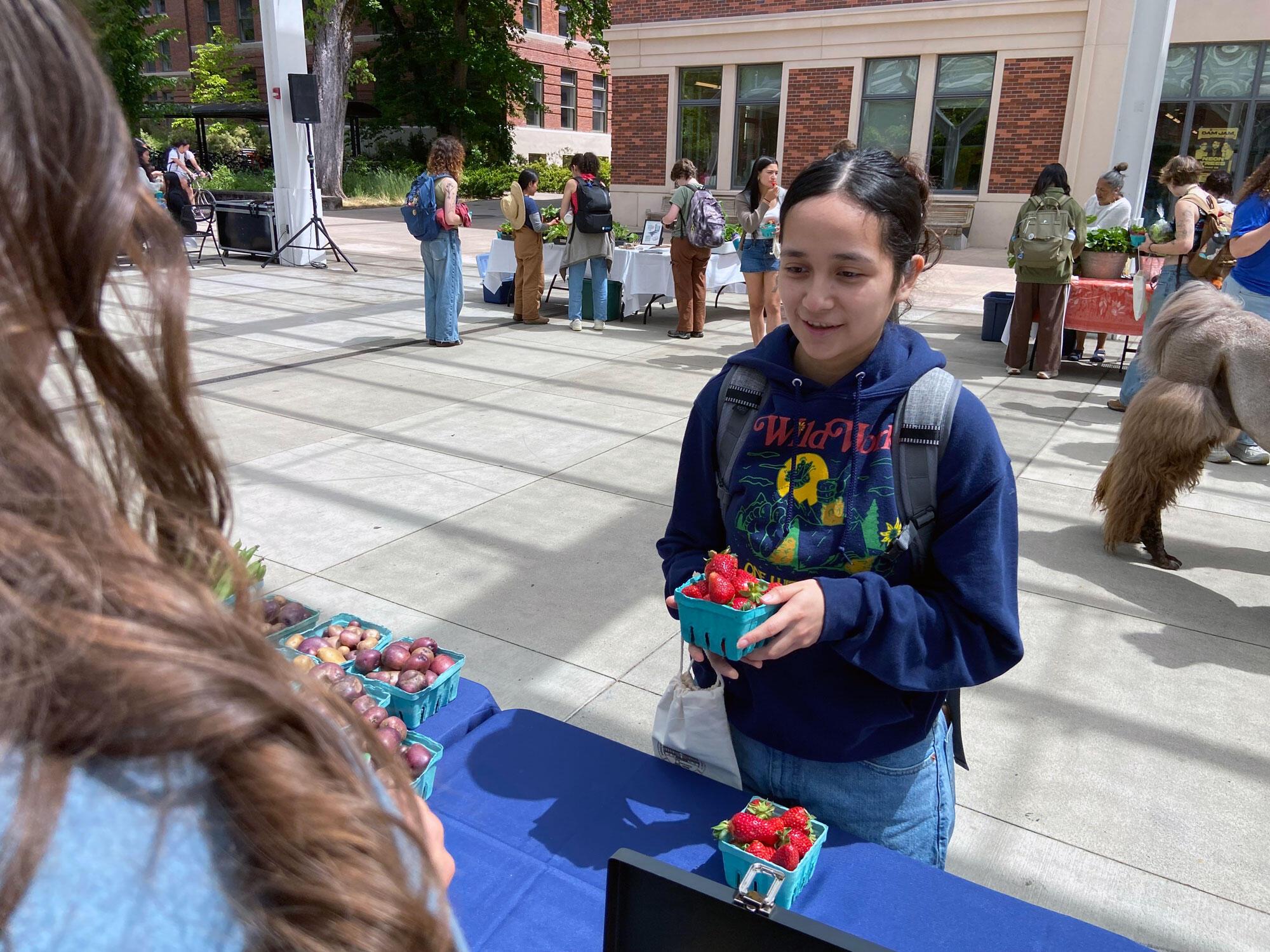
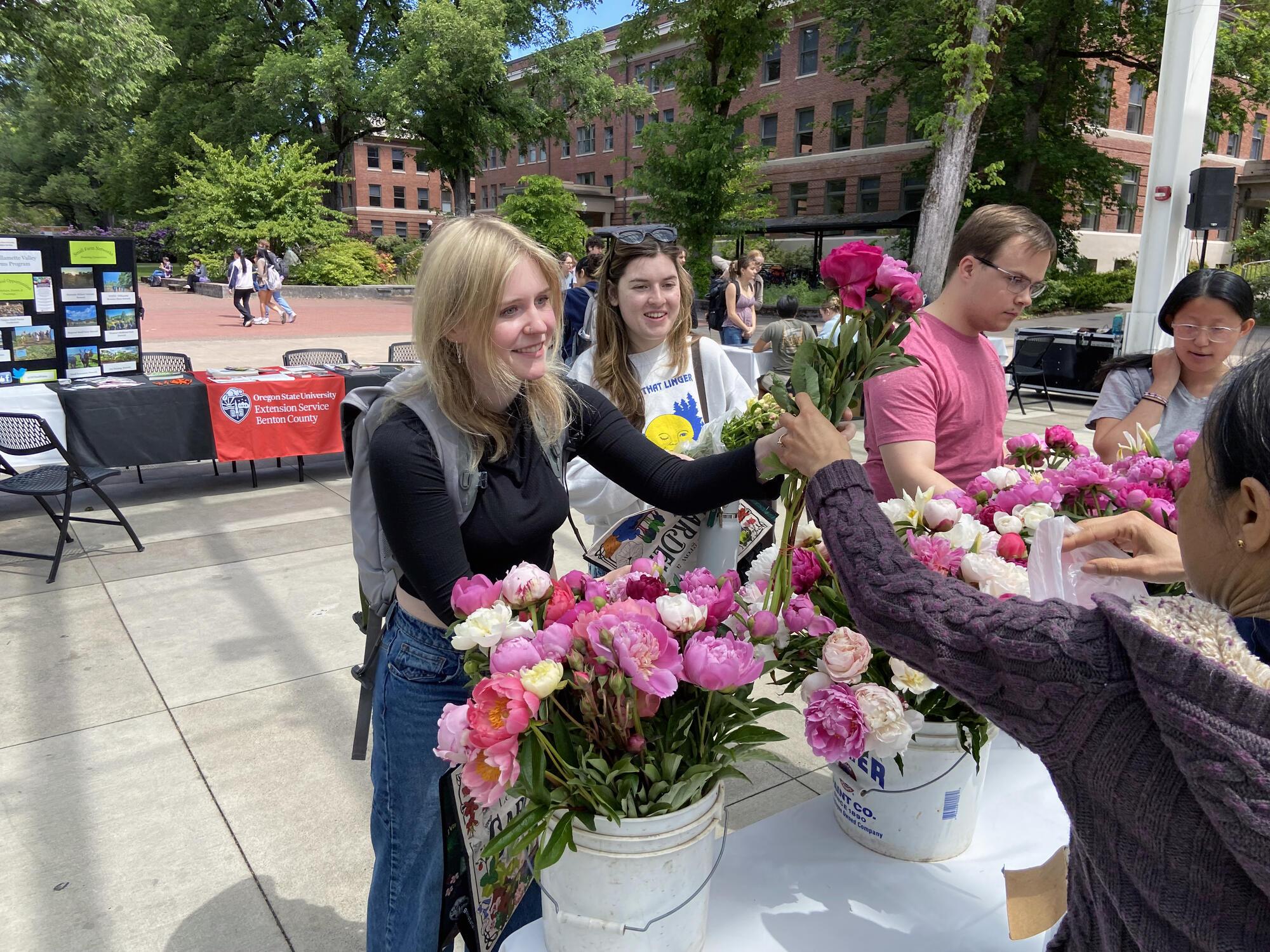
At the front of the line, students picked up reusable produce bags and moved toward tables filled with baskets of strawberries, buckets of peonies, greens and other farm products.
“I was passing through, and I thought, ‘Oh my goodness, a farmers market,’ which got me very excited. I love fresh produce when I can get it."
Some had planned to stop by. Others, including Oregon State student Micah Apple, came across the market while walking through campus.
“I was passing through, and I thought, ‘Oh my goodness, a farmers market,’ which got me very excited,” said Apple, a third-year student majoring in education and creative writing. “I love fresh produce when I can get it.”
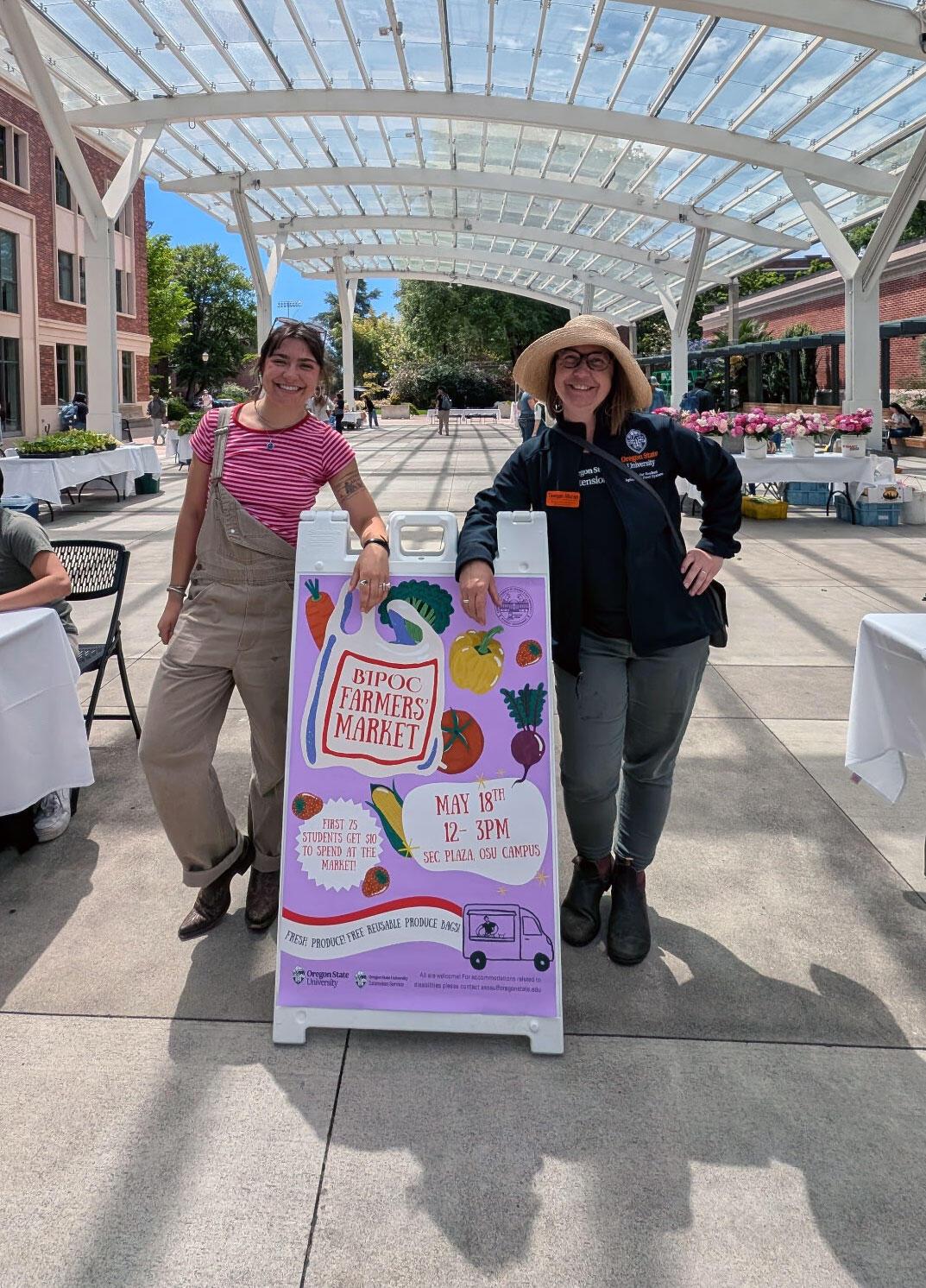
The inaugural BIPOC Farmers Market, held May 18, was hosted by the Associated Students of OSU and the OSU Extension Service Small Farms Program. The Oregon State student chapter of Minorities in Agriculture, Natural Resources, and Related Sciences was an invited guest.
The event connected students with local small-scale farmers from various racial and ethnic backgrounds in the mid-Willamette Valley — BIPOC stands for Black, Indigenous and people of color — and brought fresh produce and flowers into one of the busiest areas of campus.
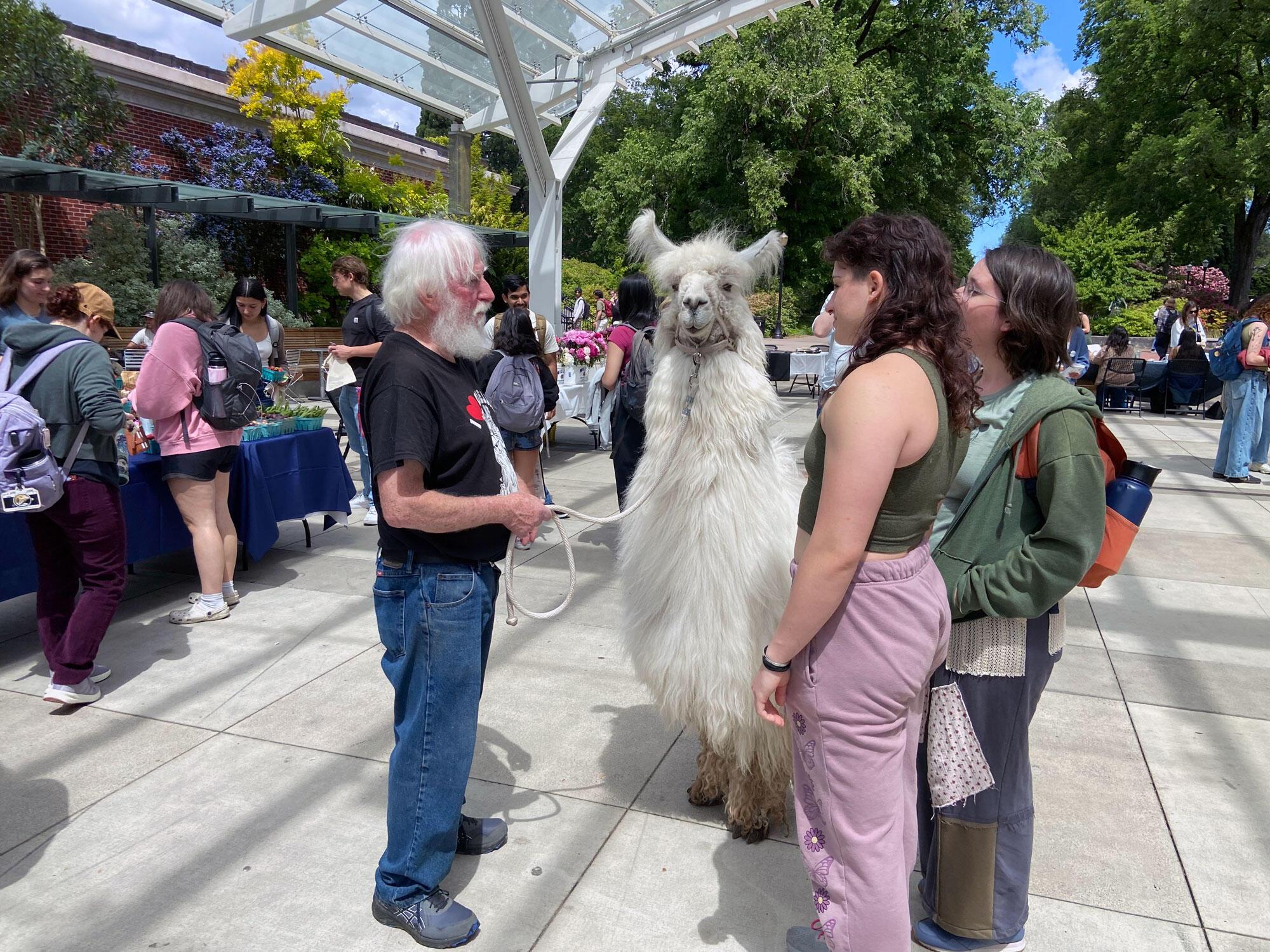
The first 75 students received $10 to spend at the market, funded by ASOSU student fees. Attendees also received free reusable produce bags. The event featured eight vendors and a visit from Caesar the No Drama Llama.
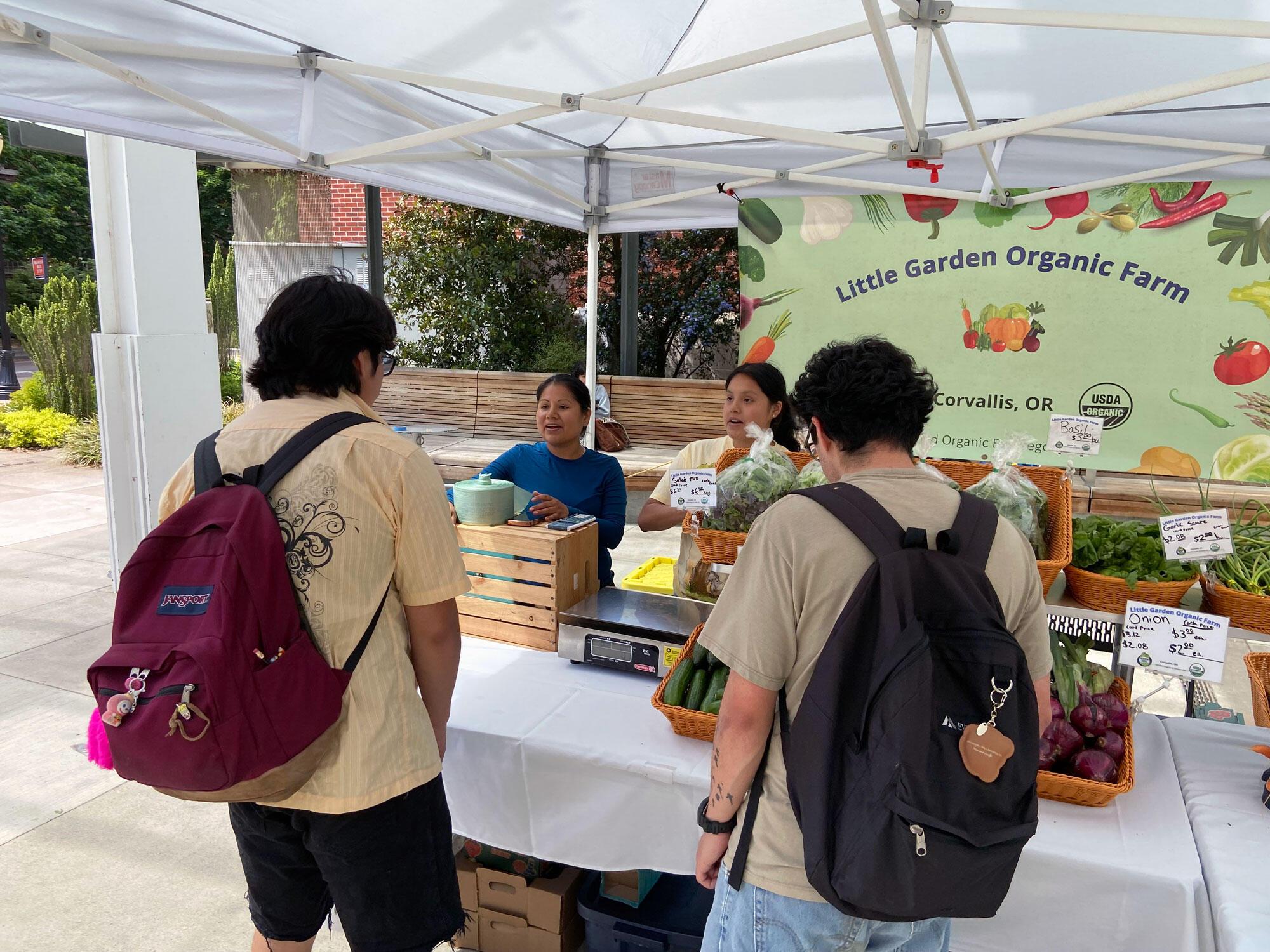
For Apple, the $10 incentive made the decision easy. Apple bought mixed greens from Little Garden Organic Farm.
“I’m making myself a salad tonight,” Apple said. “I’m having good food.”
Student idea grows into partnership
The market began with an idea from Ainsley McCollum, a senior majoring in environmental science with a focus in environmental agriculture and the grassroots advocacy coordinator for ASOSU.
McCollum said food security has been her focus throughout college. After stepping into the ASOSU role in January, McCollum wanted to create an event that would connect students with local farmers whose backgrounds and experiences are often underrepresented in Oregon agriculture.
“I want to bring all the BIPOC farmers onto campus and have the student body connect with everyone, because I think it’s super important,” McCollum said.
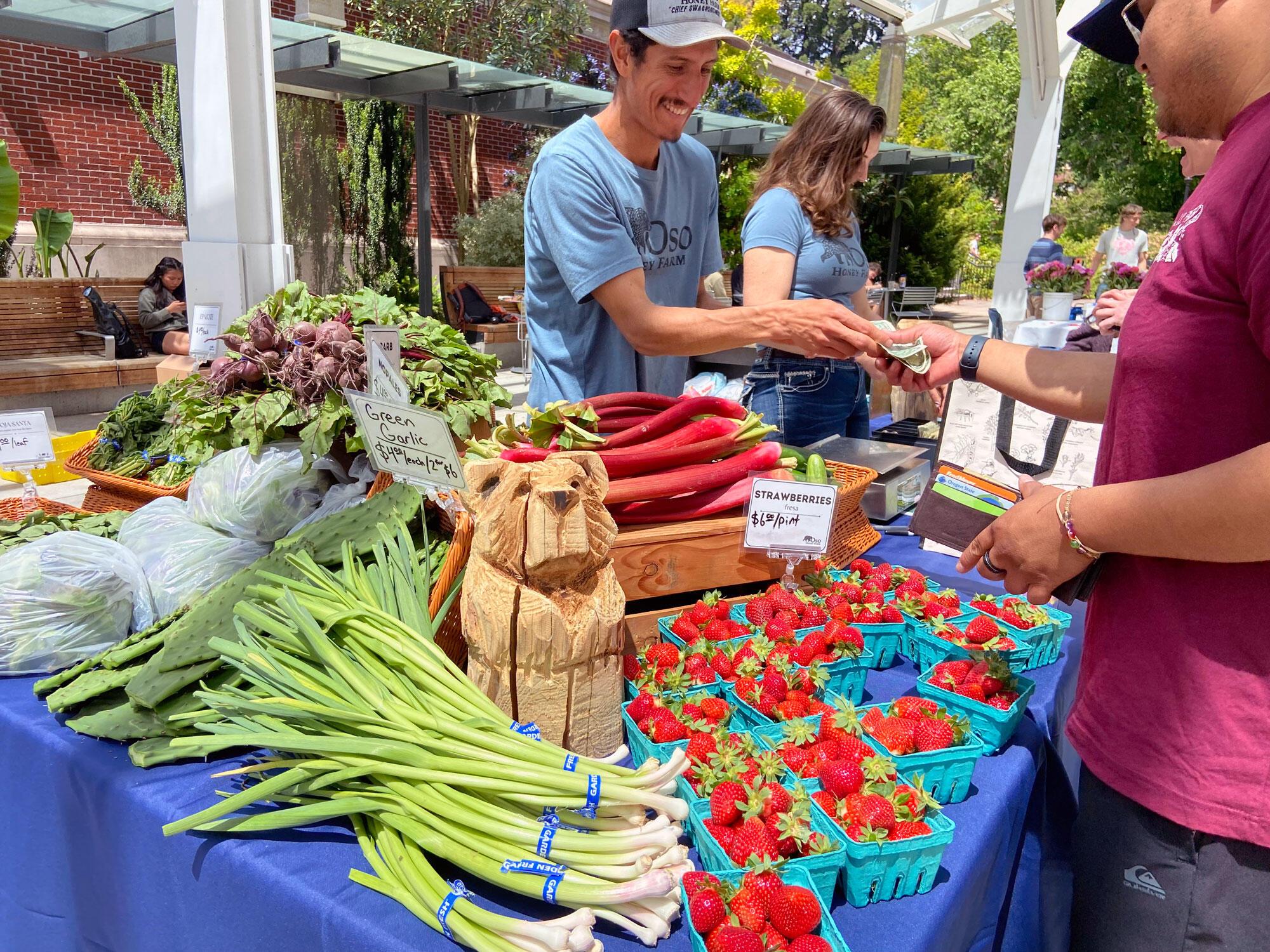
McCollum had already met some of the producers through previous work and relationships, including Ejido Oso, the produce-growing side of Oso Honey Farm in south Corvallis. But planning a campus farmers market required help with producer outreach, logistics and making sure the event would be useful for farmers as well as students.
That is where OSU Extension came in.
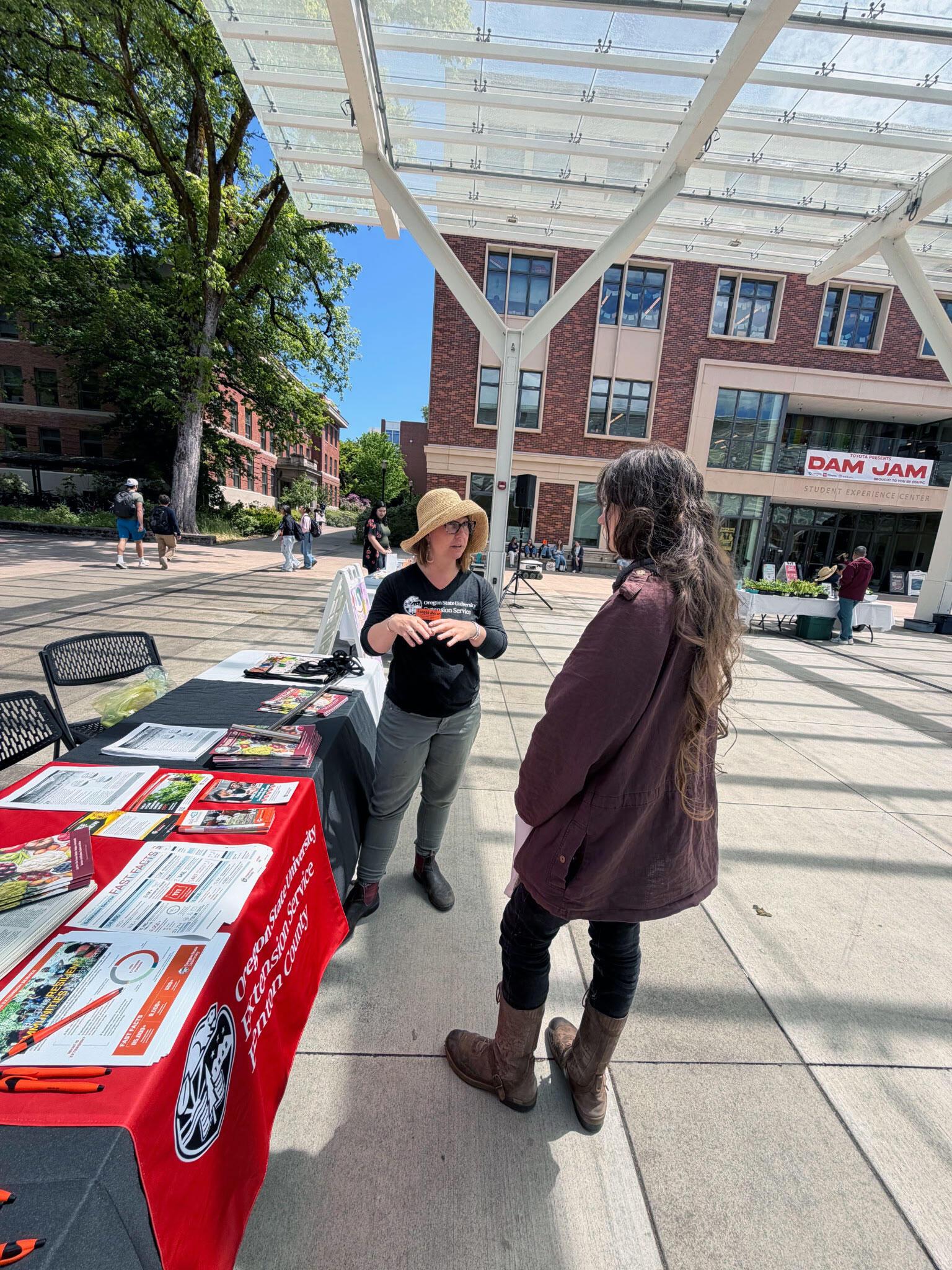
Teagan Moran, agricultural program coordinator in the OSU Extension Small Farms Program serving Benton, Lane and Linn counties, helped connect ASOSU with local producers and think through the details of hosting a farmers market on campus. The Small Farms Program is in the Center for Resilient Agriculture and Food Systems in the College of Agricultural Sciences.
“This was an exciting partnership, because it really was student-led,” Moran said. “They had the vision, but they didn’t have connections with BIPOC producers in the area.”
Moran said Extension helped identify and contact potential farmers, think through site needs and table space, and consider what would make the event worth the time and risk for producers trying something new.
“This was a pretty dreamy example of how Extension can come in and support an effort like this,” Moran said.
Students meet farmers on campus
By early afternoon, students were still walking into the market. Some stopped for produce. Others bought flowers or paused to talk with vendors.
Kelton Zeulner, a senior majoring in biohealth sciences, had just finished a midterm when the market caught her attention. Zeulner bought peonies after walking into the plaza with a friend.
“It adds a little pep to your step through the day,” Zeulner said. “I definitely feel like I got rewarded for my midterm.”
At the Ejido Oso table, baskets of strawberries drew a steady stream of students. Kevin Cruz, part of the Ejido Oso team, said the event was a good fit because the farm team is majority BIPOC and wanted to collaborate with Oregon State.
“It just seemed like a cool opportunity,” Cruz said.
Cruz said students brought the same enthusiasm that vendors see at other markets, even if some were less familiar with certain products. Strawberries, however, needed little explanation.
“Everyone loves strawberries,” Cruz said.
Alli Donahue of Ejido Oso is enrolled to begin at Oregon State in fall. Donahue said the campus market was more “chill” than a traditional farmers market, and it offered a chance to meet people and get a feel for the campus.
McCollum said the response from students was encouraging, especially because the participating farms were from nearby communities, including Corvallis, Albany and Monroe.
“A lot of them have farm stands, so I’m hoping students are feeling inclined to go visit those,” McCollum said.
Market shows value of connection
For Moran, the event showed a different side of Extension’s role in the community. Instead of bringing university information out to producers, Extension helped bring producers to the university.
The market also connected with broader food systems work, including ongoing efforts to bring more local farms into OSU dining and increase student access to fresh food on campus.
Moran said a next step will be evaluating the event from the producer perspective: whether it was worthwhile, what connections farmers made and how future markets or partnerships could better support both students and vendors.
For students, the value was immediate. Apple said the market made fresh local food easier to reach without having to leave campus.
“It’s fantastic, because it’s super accessible,” Apple said. “I’m already on campus, so it’s so easy.”