
Fish
Fish
What is a fish?
Fish are cold-blooded animals that live in water and breathe through gills. Typically, they have fins to help them swim and scales covering their bodies. Most fish lay eggs.
Chinook salmon, Oncorhynchus tshawytscha
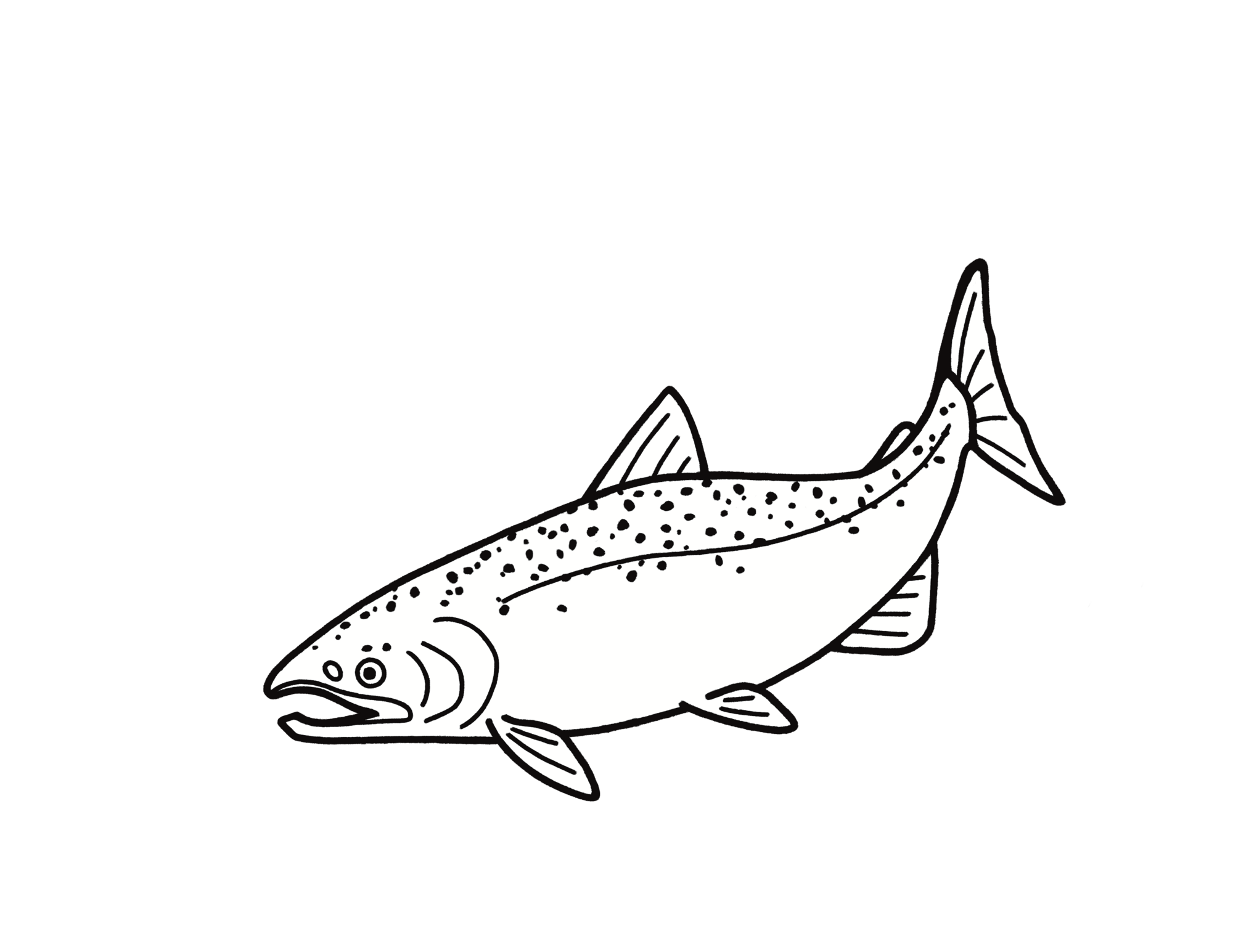
The official Oregon state fish, Chinook salmon — also called king salmon — are famous for their long migration. They start life in gravel-bottomed streams, swim to the ocean to grow and return later to streams to spawn (lay eggs). Some stay in the ocean just one year, while others stay up to seven, so their size varies a lot. They are the largest of the Oregon salmon species. Several populations are listed as endangered or threatened.
Learn more about the chinook salmon!
Willamette River Fishes (Oregon Sea Grant)
(Watch) Spawning Chinook salmon (Fishbio)
(Watch) Salmon jumping a waterfall (World of Science)
Fishing in Oregon (Oregon Department of Fish and Wildlife)
Pacific lamprey, Entosphenus tridentatus

Lampreys are older than dinosaurs—yep, they’ve been around for hundreds of millions of years! These eel-like fish live in Oregon’s rivers and streams and even make their way to the ocean. Like salmon, they start life in gravel-bottomed streams, spending 3‒7 years slowly growing while filter-feeding (straining microscopic food particles from the water). Once they reach the ocean, lampreys switch things up and live as parasites for 1‒3 years, feeding on fish and other marine animals. After that, they return to streams to spawn and complete their incredible life cycle. Why do they matter? Lampreys help improve stream habitats for other species, provide food for wildlife. These ancient creatures need our help to keep thriving.
Learn more about the Pacific lamprey!
Willamette River Fishes (Oregon Sea Grant)
Shortfin mako shark, Isurus oxyrinchus
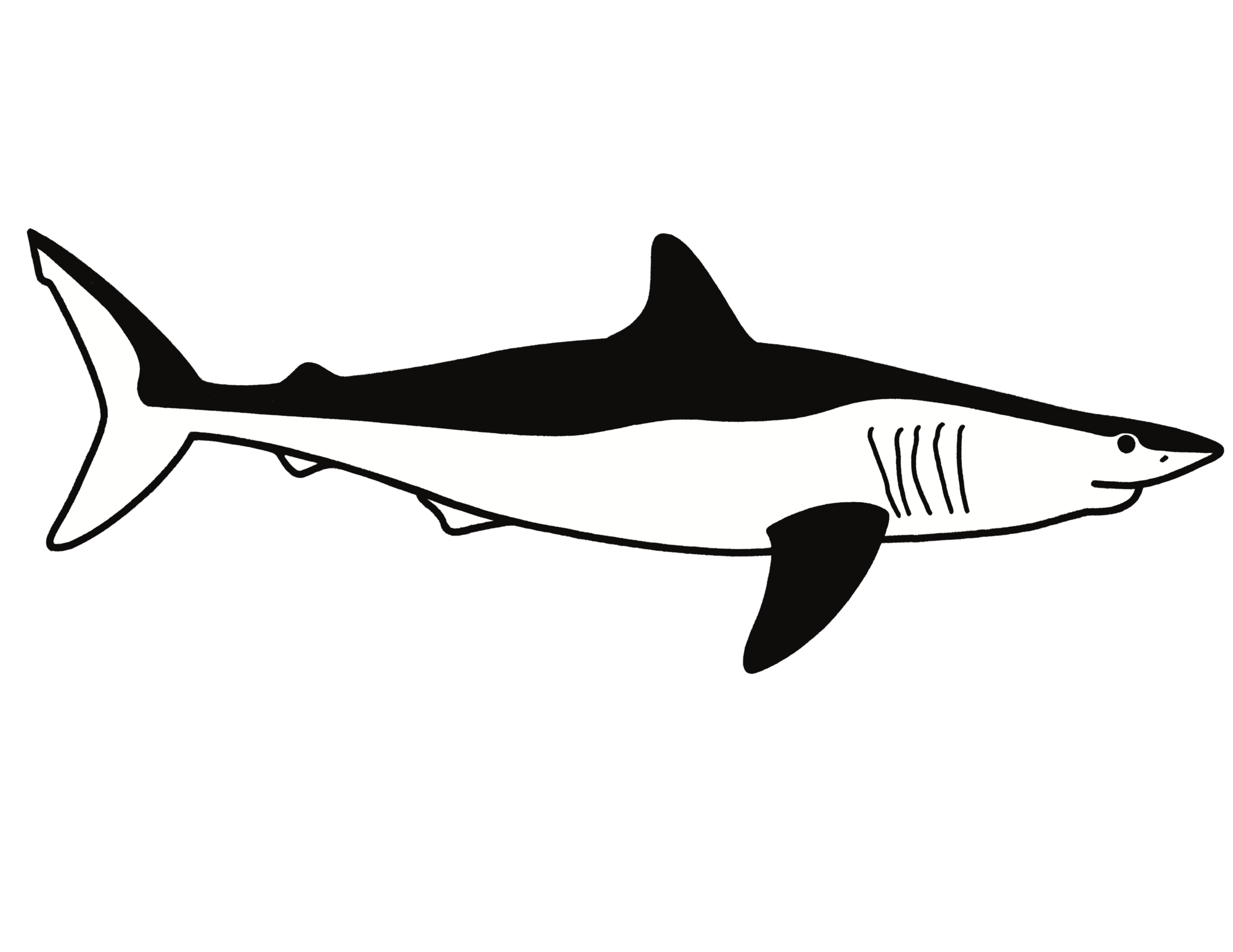
Did you know sharks don’t have bones? Instead, their skeletons are made of flexible cartilage! The shortfin mako is the fastest shark in the world, reaching speeds of over 40 miles per hour in short bursts. These sleek predators have a pointed snout, a shiny metallic blue back and a silver belly. They’re also incredible jumpers, sometimes leaping 20 feet out of the water while chasing prey — a move called breaching. They grow and mature slowly and don’t have many babies even though they live up to 30 years. They face big challenges. Too much fishing and getting caught by accident in nets meant for other fish are threats to their survival.
Learn more about the shortfin mako shark!
Sharks of Oregon poster – Order your copy ($8)
Report shark sitings https://marineresearch.oregonstate.edu/big-fish-lab/webform/report-shar…
(Watch) What makes Mako sharks the fastest sharks in the Ocean (National Geographic)
Oregon State University’s Oregon Big Fish Lab
Support the OSU Big Fish Lab’s work through Oregon’s sharkthemed license plate
White sturgeon, Acipenser transmontanus
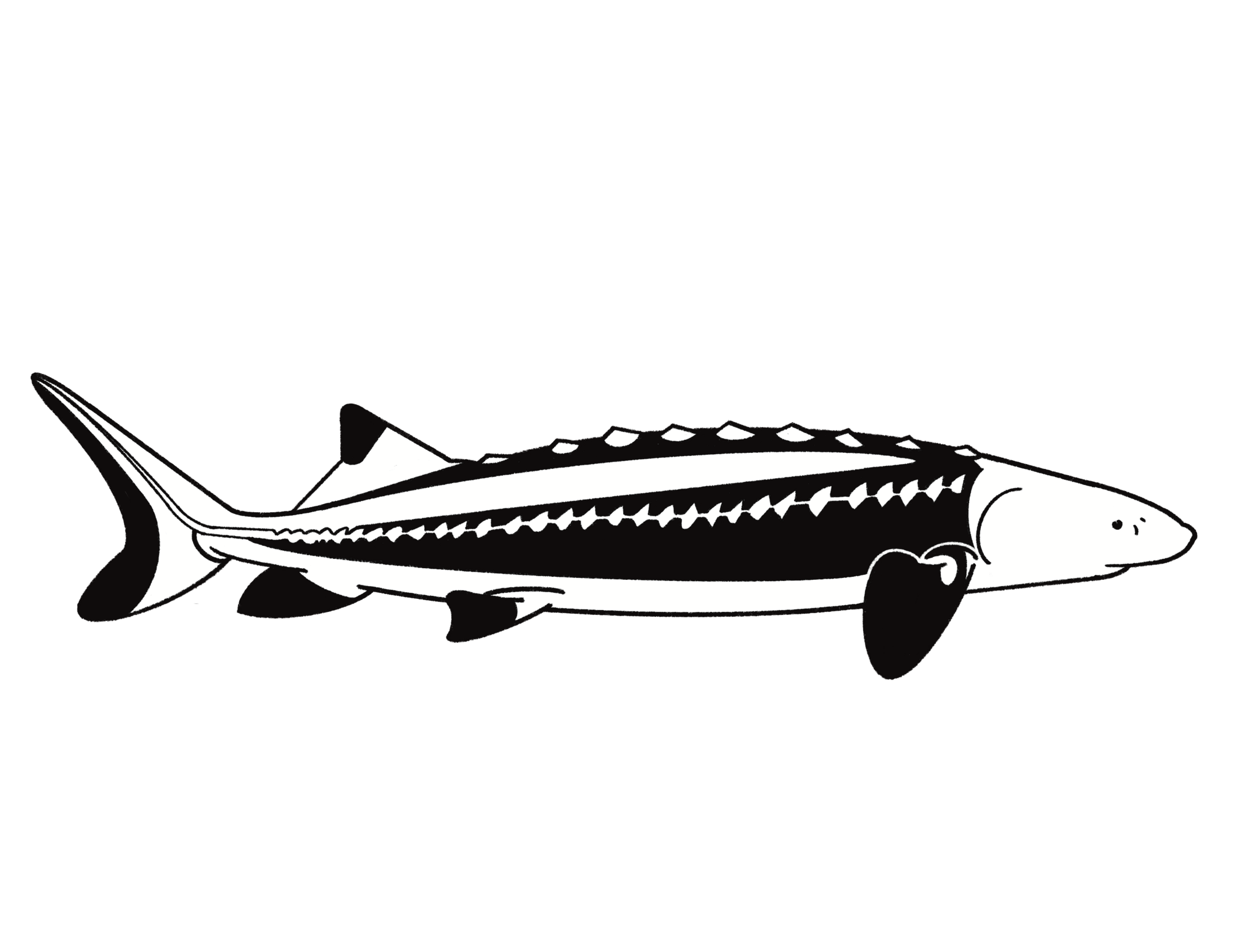
Meet the largest freshwater fish in North! These incredible fish can grow up to 20 feet long (that’s longer than the average car!), though most are under 10 feet. They live mainly in the Columbia River and its tributaries, and some even travel between the ocean and freshwater, but their migration patterns are a bit of a mystery. White sturgeon are true living fossils — they’ve been around since prehistoric times and can live for over 100 years! They grow slowly and don’t reach adulthood until they’re about 25 years old. People value sturgeon as sport fish, and their eggs (called roe) make up caviar, a delicacy around the world.
Learn more about the white sturgeon!
Willamette River Fishes (Oregon Sea Grant)
Fishing in Oregon (Oregon Department of Fish and Wildlife)