
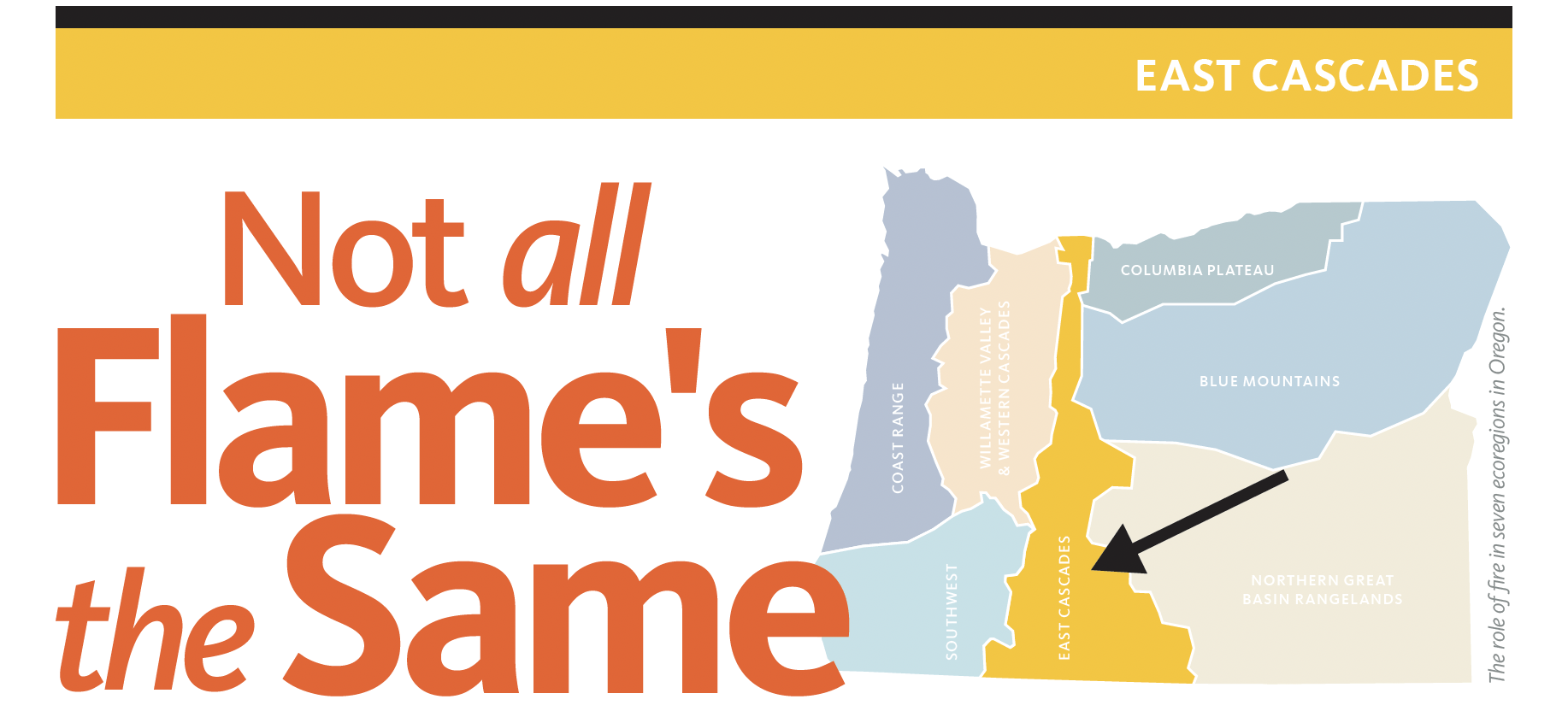
Explore how fire and people’s relationship with it have shaped diverse ecosystems across Oregon.
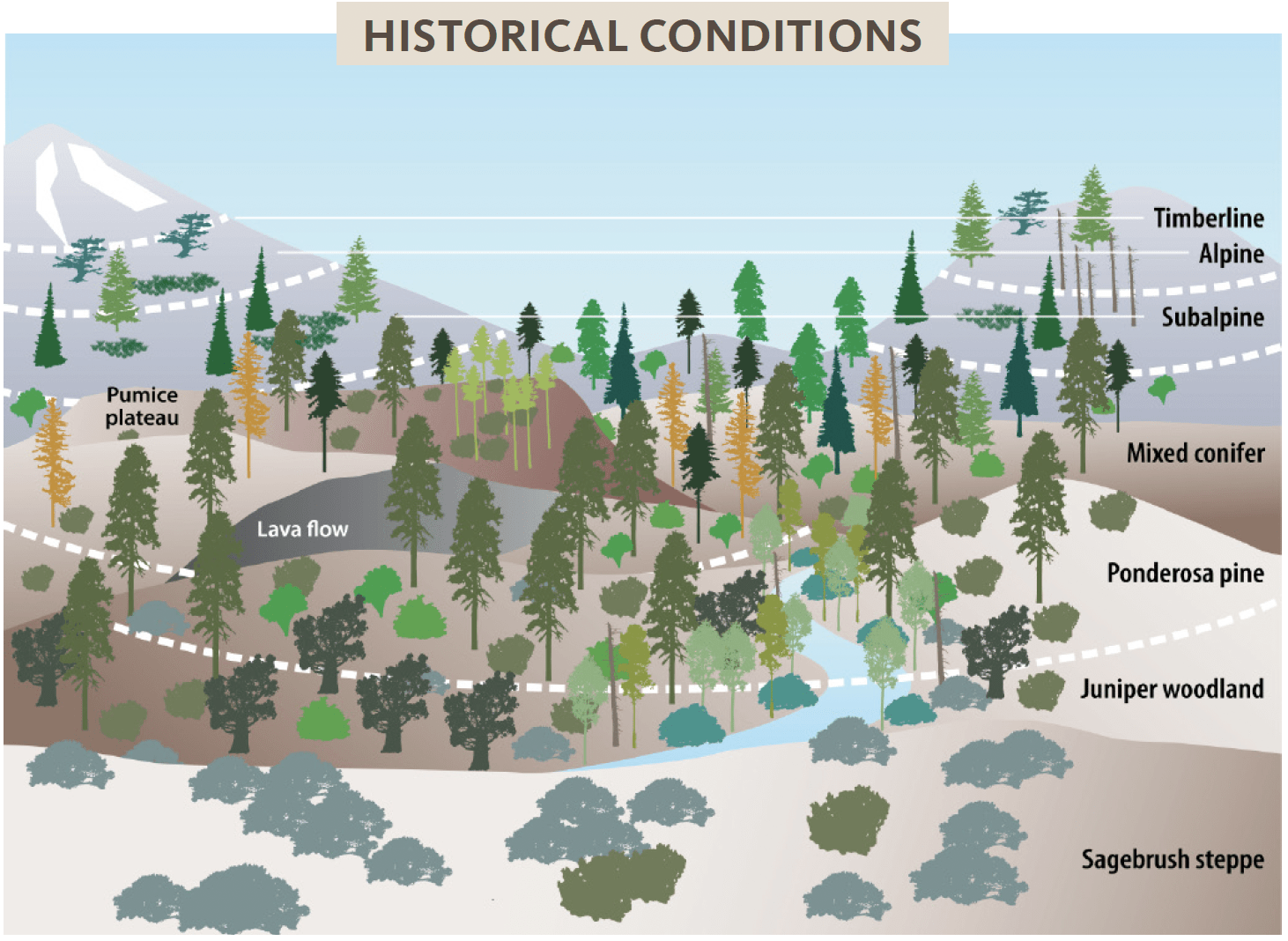
How fire historically shaped the East Cascades
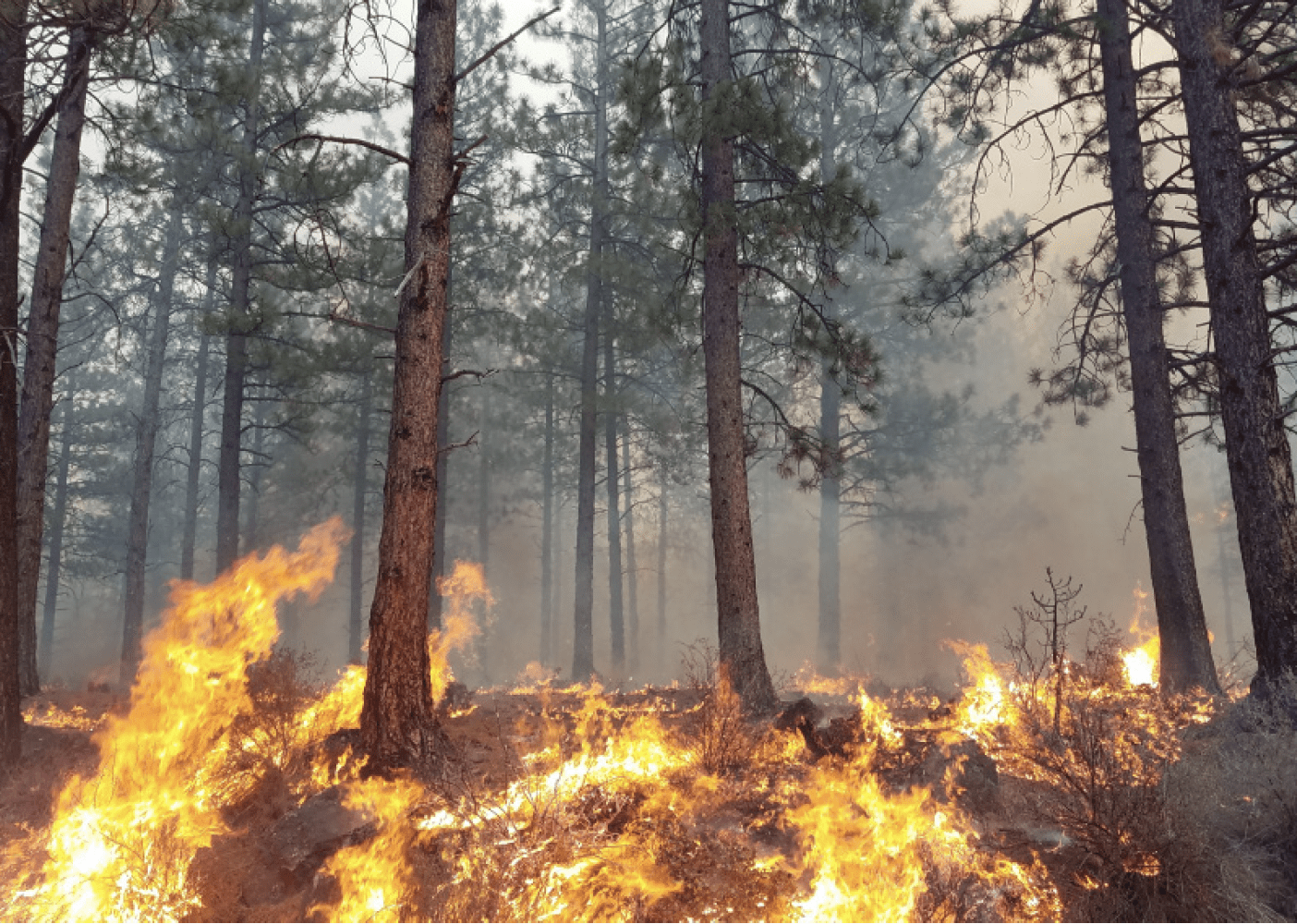
Fire from lightning and Indigenous land management practices helped remove dead vegetation and weakened and diseased trees, allowing more air flow through stands. Airflow helped to move low-severity fire through stands and reduce bark beetle pheromones that build up with infestation. Trees had space between them and shrubs remained small, keeping fire on the ground and out of tree canopies. This allowed larger trees to survive fires. Fire triggered thicker bark growth and increased resin production, both components of ponderosa pine’s natural immune system, which helps them resist impact from fire and fend off insects and disease. Fire also contributed to the natural cycling of nutrients in the soil. Low-severity fire was the primary disturbance in dry mixed conifer and ponderosa pine forests. Fires of mixed severities (low to high) were common in other forest types like moist mixed conifer, moist lodgepole and juniper. Higher elevation forest types experienced higher severity fire with stand-replacing results.
Changes to East Cascades fire patterns
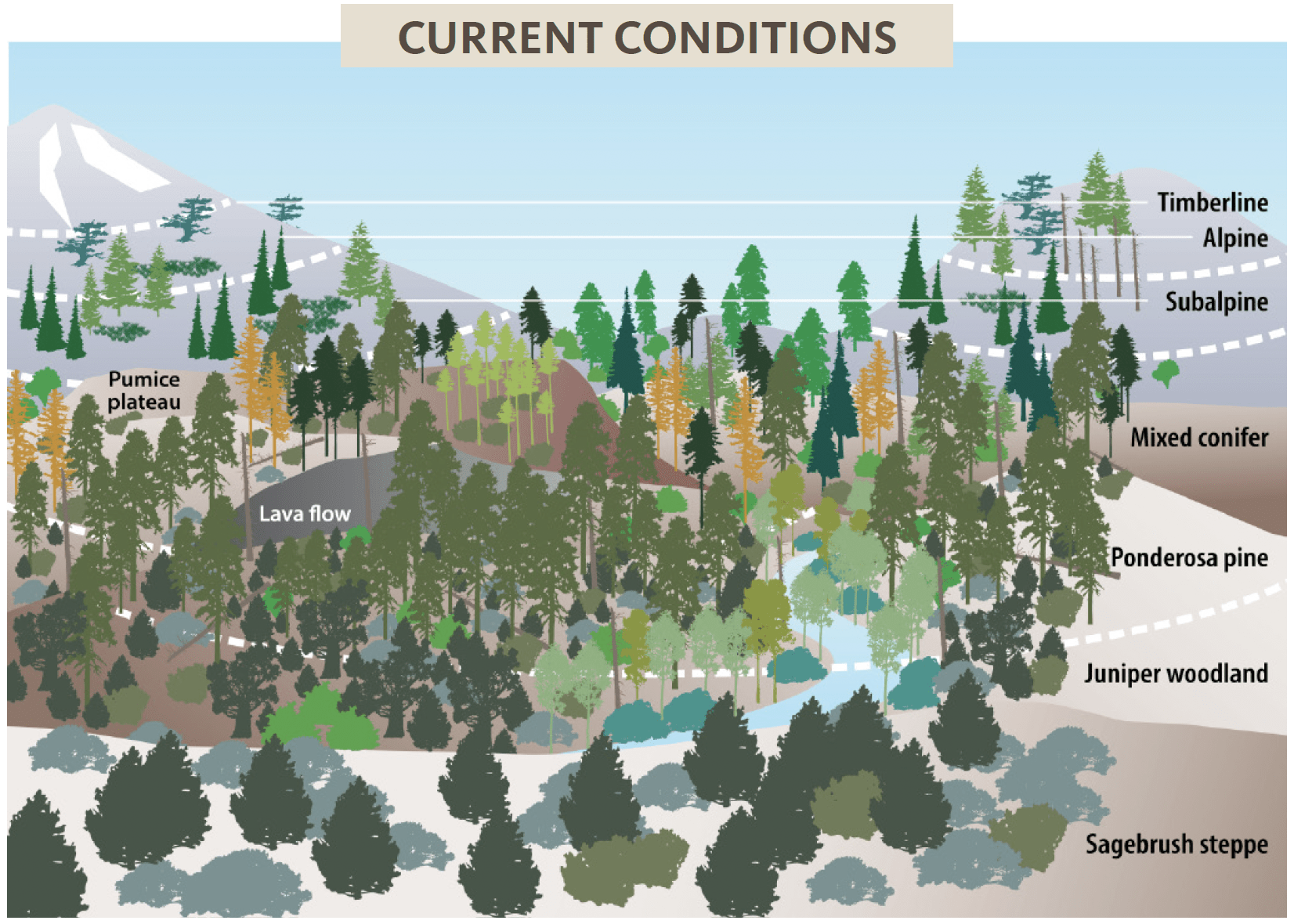
Over the past century, fire suppression, climate change and human activities have dramatically altered East Cascades forests. The absence of low-severity fires has led to denser forests with abundant fuel for wildfires. Fire exclusion and overgrazing have reduced the size and health of ecologically important aspen stands. Drought and decreasing snowpack have made vegetation more dry and fire-prone, and past logging practices have decreased the number of fire-resistant trees. Development and land-use changes have further complicated the increased threat of wildfire by serving as sources of human-caused ignitions and building in areas at risk to wildfire. Invasive plants have also facilitated fire spread between structures and native vegetation. The loss of Indigenous fire practices has further disrupted traditional ecological stewardship of this land. The health of forests is threatened by tree stress, as fire-damaged trees struggle to recover in harsh conditions, while seedlings face challenges in establishing amidst diseases, insect infestations and invasions by non-native plants.
How fire shapes the East Cascades today
Fuels are dense and the vertical and horizontal distribution of understory and overstory vegetation more abundant, allowing fire into the canopies of trees. Once fires reach the canopies, they can produce more embers, easily carried by stronger winds produced by warming temperatures. Changes in climate have dried fuels, allowing them to catch and spread fire more quickly making them harder to control. As population has grown, more homes are in the path of fire and there are increased sources of fire starts by humans. It has become increasingly difficult to control and respond to wildfires once multiple homes and locations are burning at the same time, leaving many communities vulnerable with little response possible in those moments.

Not all flame’s the same
Fire has played a significant role in shaping landscapes throughout history, sparked by both lightning and the intentional use of fire by Indigenous peoples. Fire enabled people to manage and adapt to their local ecosystems, helping them produce food, tools, materials and medicines, as well as maintain prairies, clearings and travel routes. It also helped reduce the risk of larger, more destructive fires by preventing the accumulation of excess fuel. Beyond human use, fire serves vital ecological functions, such as clearing dead vegetation, recycling nutrients, creating habitats for plants and animals, promoting germination and new growth and controlling insects and diseases.
Oregon is a very diverse state from the coast to the Cascade Mountains and the Great Basin. Because of this, it makes sense that the way fire behaves also varies across the state. In other words, fire happens in different patterns and has different effects. This resource explains the role of fire in seven ecoregions of Oregon.
Ready to learn more? https://beav.es/NAFTS.
This publication was made possible with funding from the Oregon Forest Resources Institute in cooperation with the Forestry and Natural Resources Extension Program at Oregon State University.
About the authors

