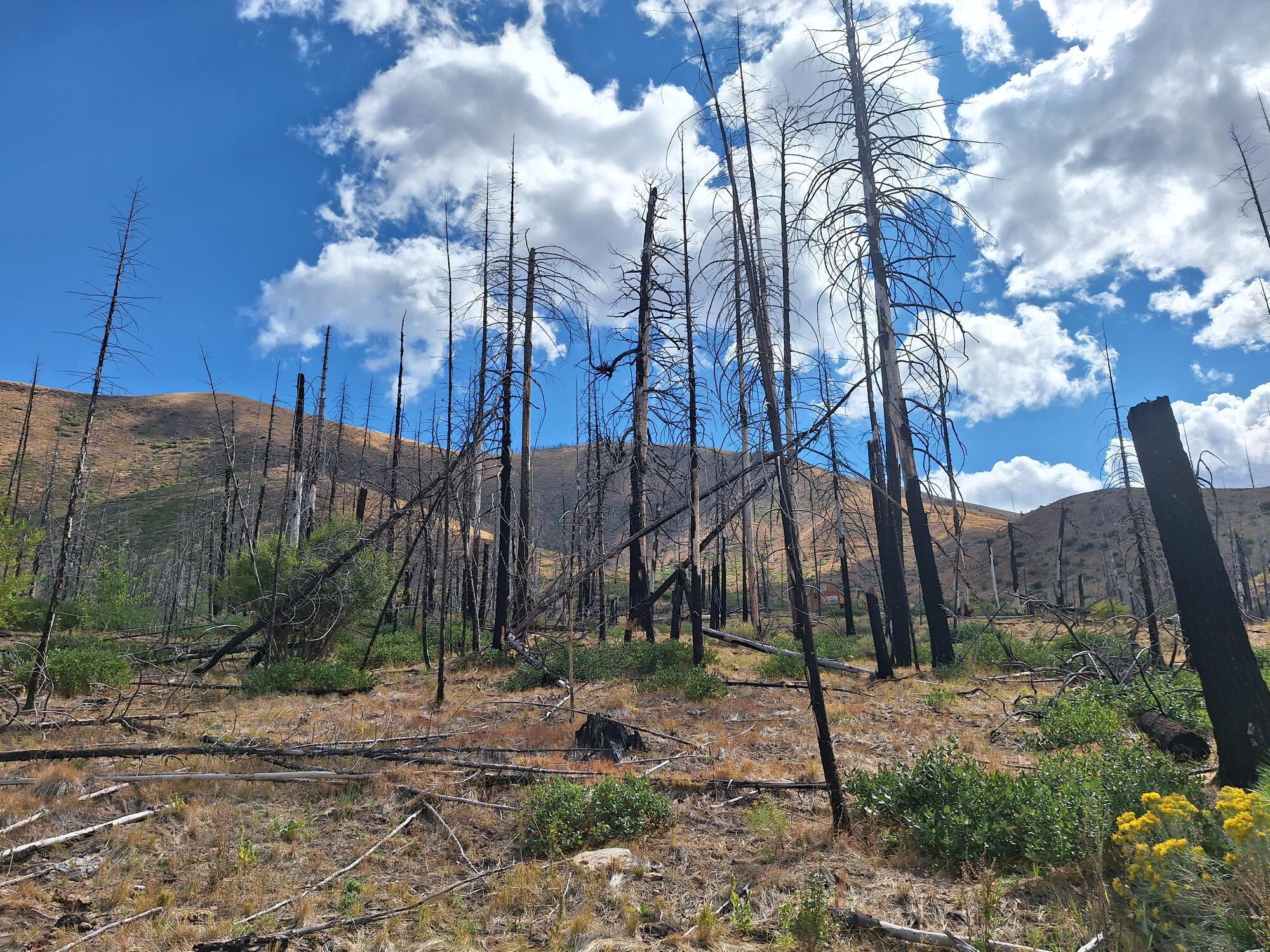
Results demonstrated an incredible resilience in woodland owners. Regardless of how severely their lands were impacted or even if their home burned due to the fire, they were more interested in their woodlands after fire. However, it also revealed several challenges they faced in the recovery process, such as a lack of technical or educational information and funding, and heavy seedling mortality following post-fire planting. Overwhelmingly, when landowners were more likely to accomplish work on the ground when engaged with a supportive organization or agency, like their local soil and water conservation districts, Oregon Department of Forestry (ODF) or OSU Extension.
Using the results of the study and with a small working group of representatives from soil and water conservation districts, local restoration groups and ODF, a template and template guide was developed for site assessments following wildfire. The LEAF Site Assessment Template was designed for local organizations such as soil and water conservation districts for initial site visits to fire impacted private non-industrial woodlands. It is formatted to capture needs and opportunities on the property, help landowners prioritize work to be done, and connect them to resources and financial assistance that can help them accomplish their goals on the ground.