Oregon has about 44,000 private woodland owners managing 3.5 million acres of forestland. These lands make up 12% of the state’s forests and contribute to economic vitality and environmental health.
The program equips landowners with practical skills for managing their forests while multiplying Oregon State University Extension Service’s impact through volunteer leadership.
Many landowners face mounting challenges: complex regulations, wildfire risk, invasive species and economic pressures. Smaller owners often lack the resources available to complete larger operations. These barriers make it harder to adopt best practices and keep forests resilient.
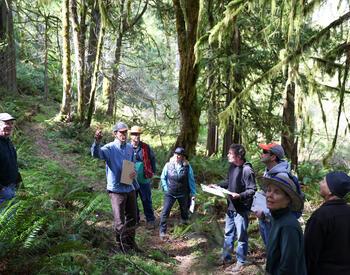
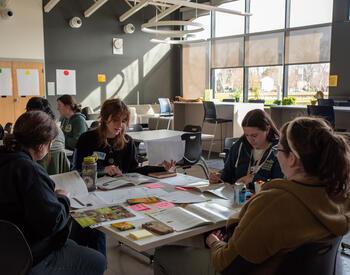
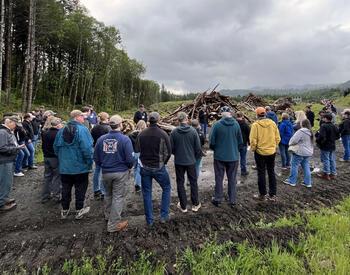
Since the early 1980s, Oregon State University Extension Service’s Forestry and Natural Resources Program has offered the Master Woodland Manager program to help fill this gap. Participants complete 60 hours of advanced training in forest planning, reforestation, wildlife, fire, harvesting and watershed ecology. In return, they commit to 40 hours of volunteer service assisting others.
More than 600 Master Woodland Managers are now active across 18 counties. In 2024, they reached nearly 33,000 Oregonians through almost 7,800 hours of education and outreach. Many also serve in leadership roles with local groups and community science projects, extending the program’s reach far beyond what professional staff alone could achieve.
An analysis of the results of a statewide survey published in the Journal of Extension confirmed the program’s value. Ninety-one percent of respondents described the training as “very valuable,” and 90% planned to continue volunteering. Nearly 80% said they increased active management of their own forestland, and 75% had created or were creating management plans — far above the statewide average of 18%.
Curriculum updates have strengthened outcomes over time. After 2010, new modules on watersheds, stream ecology and taxes boosted participants’ confidence in complex topics. In 2017, a hybrid model blended online and in-person learning, reducing travel barriers and adding more field-based practice. Volunteers trained after these updates reported feeling more prepared to answer community questions.
Survey results also highlighted needs for ongoing improvement. Volunteers felt best prepared in forest health, fire, wildlife and reforestation — the issues they are asked about most often. They felt less confident with taxes, business and marketing, areas where fewer landowners seek guidance. Time was the most common barrier to completing volunteer hours, though nearly all respondents remained committed to service.
The analysis was authored by Extension foresters Alicia Christiansen, Lauren Grand and Norma Kline, and former Master Woodland Manager coordinator Tiffany Hopkins.
The outcome is clear: the Master Woodland Manager program equips landowners with practical skills for managing their forests while multiplying Oregon State University Extension Service’s impact through volunteer leadership. By cultivating both expertise and community service, the program strengthens Oregon’s ability to meet today’s forestry challenges.
Ongoing evaluations ensure the curriculum adapts to new issues, from climate change to invasive species. Together, trained volunteers and Extension professionals are building a future where Oregon’s forests remain healthy, resilient and productive for generations to come.