More than 79,000 family forest landowners manage approximately 3.6 million acres of private forestland in Oregon. Oregon State University Extension Service’s Tree School offers a valuable opportunity for these land stewards to build skills, gain knowledge, access support, and explore new ideas across a wide range of forestry and natural resource topics.
The event serves as a catalyst for locally informed, sustainable land management practices across the region.
Tree School, a core initiative of the Extension Forestry and Natural Resources Program, began in Clackamas County in 1991 as a mini-college-style event. Designed to attract a broad audience, the program offers diverse educational sessions to help forest landowners address local goals and challenges.
Tree School East, a regional offering of Tree School, typically takes place every two years in either Baker City or La Grande. The last event was held in 2018; the 2020 event was canceled due to the COVID-19 pandemic.
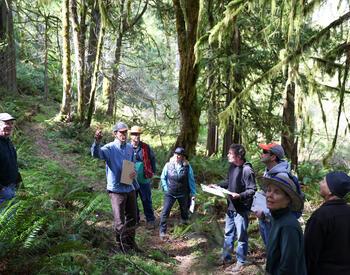
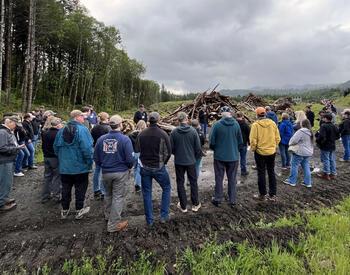
In June 2023, Tree School East returned, welcoming forest landowners from Eastern Oregon. The program featured 27 classes, live demonstrations, and continuing education opportunities. Most classes qualified for continuing forestry education credits through the Society of American Foresters, Oregon Pro Logger credits through Associated Oregon Loggers, and several offered Oregon Department of Agriculture Pesticide Recertification Credits.
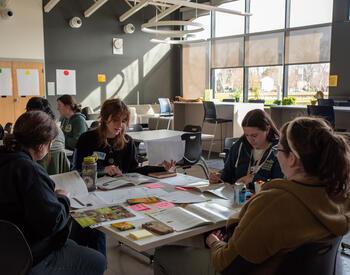
Classes were held at Baker High School in Baker City and addressed topics relevant to Central and Eastern Oregon. These topics supported land stewardship goals and addressed a variety of landowner objectives. Major subjects included:
- Stream restoration
- Wildlife
- Forest health
- Rangeland management
- Grazing
- Fire risk reduction
- Ecology
- Planning
- Pollinators
The event attracted 125 attendees, including participants, instructors, exhibitors and volunteers. Of the 40 participants who completed a post-event survey, 29 indicated they owned and/or managed forested property — collectively impacting 23,947 acres of forestland in Oregon.
On a scale of one to five, with five being “excellent,” respondents rated their overall experience at 4.71.
Twelve survey respondents reported that they planned to apply practices or make positive management changes as a result of attending Tree School East. These responses highlight the value of Tree School East in equipping landowners in Eastern Oregon to improve forest health and resilience. The event serves as a catalyst for locally informed, sustainable land management practices across the region.