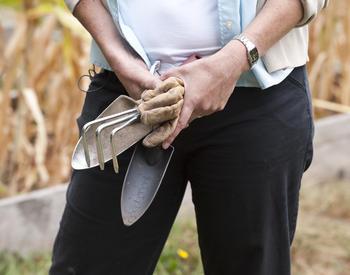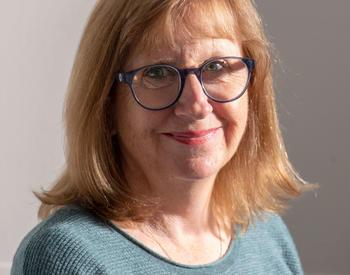
CORVALLIS, Ore. – As a child, Sherrie Deaton didn’t participate in 4-H. She didn’t show animals, create static exhibits or shoot archery. As an adult Oregon State University Extension 4-H Youth Development club leader, however, Deaton has been involved in all of those activities and more.
Far from being a burden, Deaton said the time she dedicates to 4-H “is a gift.”
“You gain more than you give,” she said.
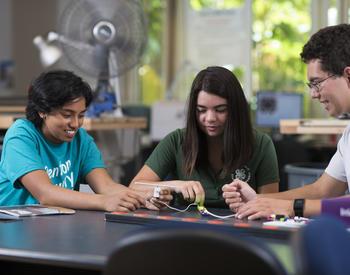
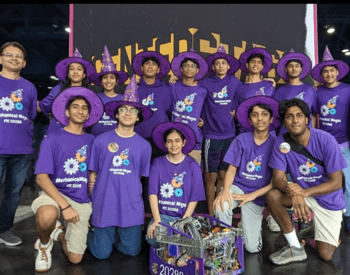
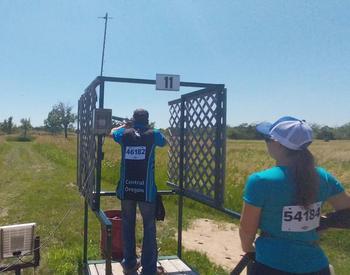
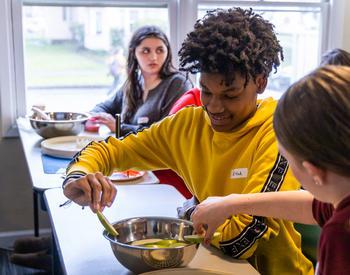
Today, Deaton, a mother of two teenagers, is a 4-H leader for three Benton County clubs: Creations, a club centered on cooking, sewing and art; Howling Hawks, a club that explores STEM (science, technology, engineering, and math); and Power Paws, a club that works with dogs. And over the past nine years, she’s helped lead clubs in archery, sheep, pigs, horses and more.
Like many 4-H club leaders, Deaton didn’t set out to be one of the thousands of volunteers that serve OSU Extension 4-H each year. It was her children’s interest that got her involved, starting with her daughter Shelzza’s interest in horses.
“We started with horse, and then we did ‘cooking and sewing.’ So, those were our first two clubs,” Deaton said.
Shortly after, Deaton was encouraged to take the 4-H leader training. Soon she was a club leader for a horse project club and the Creations Club. Two years later, her son, James, joined 4-H with an interest in archery and pigs and Deaton branched into new fields.
“It’s a gift to be able to do it,” she said. “I’m lucky. My husband makes enough at his job that I don’t have to work full time, so I can put my time into this. I love the people I’ve gotten to know, both the other leaders, the parents, and the kids. And this gives me the opportunity to teach and watch kids ‘get’ a concept. I’m the one gaining from this because I get to do new things and meet people from all over the state and watch kids shine.”
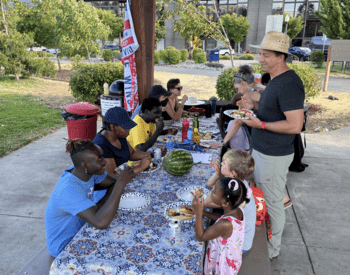
Known as America’s largest youth-development organization, 4-H, which is open to all youths between the ages of 5 and 19, serves more than 6 million kids annually across the United States. Closer to home, Linn and Benton County 4-H programs reach approximately 5,000 youths annually through community clubs, school programs and summer activities. About 1,000 youths are directly enrolled in 4-H in the two counties. They are served by four 4-H youth development Extension faculty (two in each county) and approximately 300 volunteers.
“Volunteers are the backbone of the program,” said Abby Johnson, 4-H faculty for OSU Extension in Linn County. “Our program would not exist without them.”
“We are extremely appreciative of all the time and energy our volunteers give to the program to help our 4-H members thrive,” added Carolyn Ashton, 4-H faculty for Extension in Benton County.
Most volunteers commit to a couple of hours a month over the course of a year, and a few extra hours during the summer fair season. Then there are the exceptions. Deaton estimates she puts in 200 hours a year working with multiple clubs.
Helping, if only a few hours a month
Deaton, who holds a master’s degree and is a former grade-school teacher, said it is not necessary to be an expert in a field to be a club leader. She knew next to nothing about farm animals before serving as club leader for pigs and sheep, she said. And Deaton was never into sewing before becoming club leader in a Creations Club that works with sewing.
“I’m terrible at sewing, but I’m learning. Every year I learn something new,” she said.
“My teaching background helps,” she added, “because if I don’t know the answer to a question, I know how to find it. But really, you end up being more of an organizer than anything else. And you can put in as much time as you have available. If you only have two hours to commit a month, there’s still a way you can help and be involved. If you have 200 hours, that will work too.
“And the same thing is true for kids,” Deaton said. “We have some kids who just want to go to a few meetings and meet people. Then we have kids that go full in and take advantage of the full breadth of opportunities available in 4-H.”
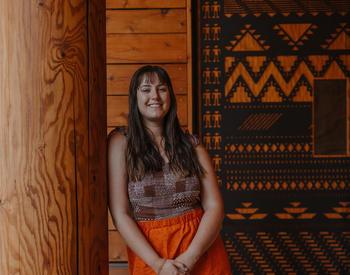
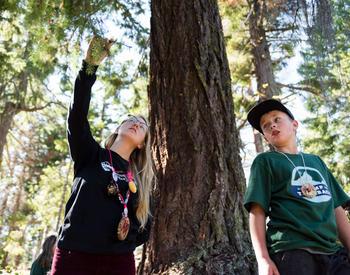
Deaton’s children fall into that latter category. Shelzza, who graduated from Monroe High School this year, has been involved in several 4-H clubs during her high school career and was able to go to Atlanta in November for National 4-H Congress, to Washington, D.C., in April for the National 4-H Conference, and during spring break, she went to Salem to talk with Oregon legislators on behalf of 4-H. And James Deaton, a sophomore in high school who is involved in two 4-H clubs, went to Japan in June as part of the 4-H Outbound program.
“If you have a passion, there is a way to grow that passion in 4-H,” Deaton said. “There is so much you can do.”
And, Deaton said, 4-H provides an opportunity for volunteers to grow their passion, as well. “It is a great way for volunteers to get to practice your passion and teach it to other people and watch them grow and develop in it, and to learn more about your passion,” Deaton said. “I definitely would encourage people to get involved and become leaders.”
People interested in volunteering for 4-H are encouraged to contact their local Extension office.
“With so many kids interested every year, we can never get too many volunteers,” Johnson said. “Especially in areas like food, sewing and clothes, we have a really low number of volunteers, as well as in Cloverbuds: We really need some more volunteers for our youngest age group.”
This story originally appeared in GROWING, a publication of OSU Extension Service in Linn and Benton counties.