Transcript
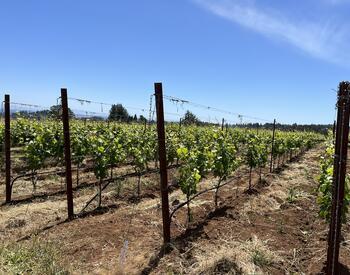
so we're in an old P Noir block here at the
OSU research Vineyard near opine Oregon
and I'm going to show you some what that
looks like inside of these trunks the
reason is a lot of the old Vines
uh in Oregon tend to get trunk disease
with time and this block is 30 plus
years old and likely to have trunk
disease what I've already done is cut
apart cut off the canes that were pruned
and cut into different areas at the top
of the head here but then we cut further
down already below this knobby head to
reveal what the wood would look like
underneath with just a hand saw here and
if you want to look here on the cut
surface you can see this black area this
is a canker uh and this is essentially
not
productive it's actually a warm sunny or
a warming sunny day here in Winter and
this you can actually see some um xylm
sap starting to come up through this cut
surface what's white or like light
colored tan here is healthy still but
the black is basically non-productive
Ive canker tissue this could be
suggested that um there's a trunk
disease already in this wood typically
comes from these cut areas up here
infections during pruning or can come in
at other times of the year fungal
pathogens can land on here and cause
these what we know as trunk disease
trunk diseases and they typically move
their way down through the wood tissue
of the trunk and can get into the roots
but this is definitely
uh a a Vine that is showing some of
those caners there we would have to send
this off to a testing lab or Diagnostic
lab to determine what specific fungal
pathogen uh is uh infected this plant
usually it's multiple different fungal
pathogens there are over a hundred
different species of trunk
diseases this Vine didn't necessarily
have any issues that were visible uh
before we did this investigation we just
knew it was an older Vine
P Noir tends to be a cultivar that shows
fewer symptoms of trunk disease and
possibly because these are own rooted
Vines and under relatively cool climate
conditions don't weren't stressed enough
to show symptoms and they were
functioning just fine but essentially on
a reduced uh trunk capacity because all
of this area here was what was
conducting tissues the other thing to
note here if we come closer to this
canopy or to the trunk is that there is
an area of this of this this trunk that
did have damage on it and we can see
here's another example over here where
there was some damage uh cut away and
then we can see it originates there
that's probably where the infection came
in and then started working down the
trunk uh to create um necrotic tissues
Grapevine trunk diseases can cause a decline in vine vigor and health over time. The best way to determine if your vineyard has trunk disease is to cut into the vine and look for cankers. This video shows you how to look for the cankers during the dormant season while pruning.
- Cut into the one-year old canes and inspect the wood, starting from the distal portions of the cane and move toward the top of the trunk (head of the vine). Cut into the head of the vine and inspect the wood for cankers. Make incremental cuts as you go down the length of the trunk, inspecting the wood for signs of trunk disease.
- Signs of the disease include dark brown/black colored wood. Healthy tissue will be creamy tan in color.
- To determine which grapevine trunk disease has infected the vines, send a whole vine sample or all of the sections that you cut, to a disease diagnostic lab to confirm the type of trunk disease infecting the vine.
- The Oregon State University Plant Clinic can run diagnostics for Oregon and elsewhere. However, check with your state’s land grant university to see if they have a plant diagnostic lab.

Want to learn more about this topic? Explore more resources from OSU Extension:
Wine grapes