
Summary
Farmers and gardeners in Western Oregon and Washington have successfully grown winter vegetables for decades. Markets for locally grown winter vegetables are increasing, and farmers and gardeners are exploring innovative methods to increase their production.
Locally grown winter vegetables are fresh and delicious, and although they can be more challenging to grow than summer vegetables, they are usually very productive west of the Cascades. Parts of Europe and Asia with similar climates to the Pacific Northwest’s maritime region produce more winter vegetables than PNW growers, suggesting there is an opportunity to increase production for local markets.
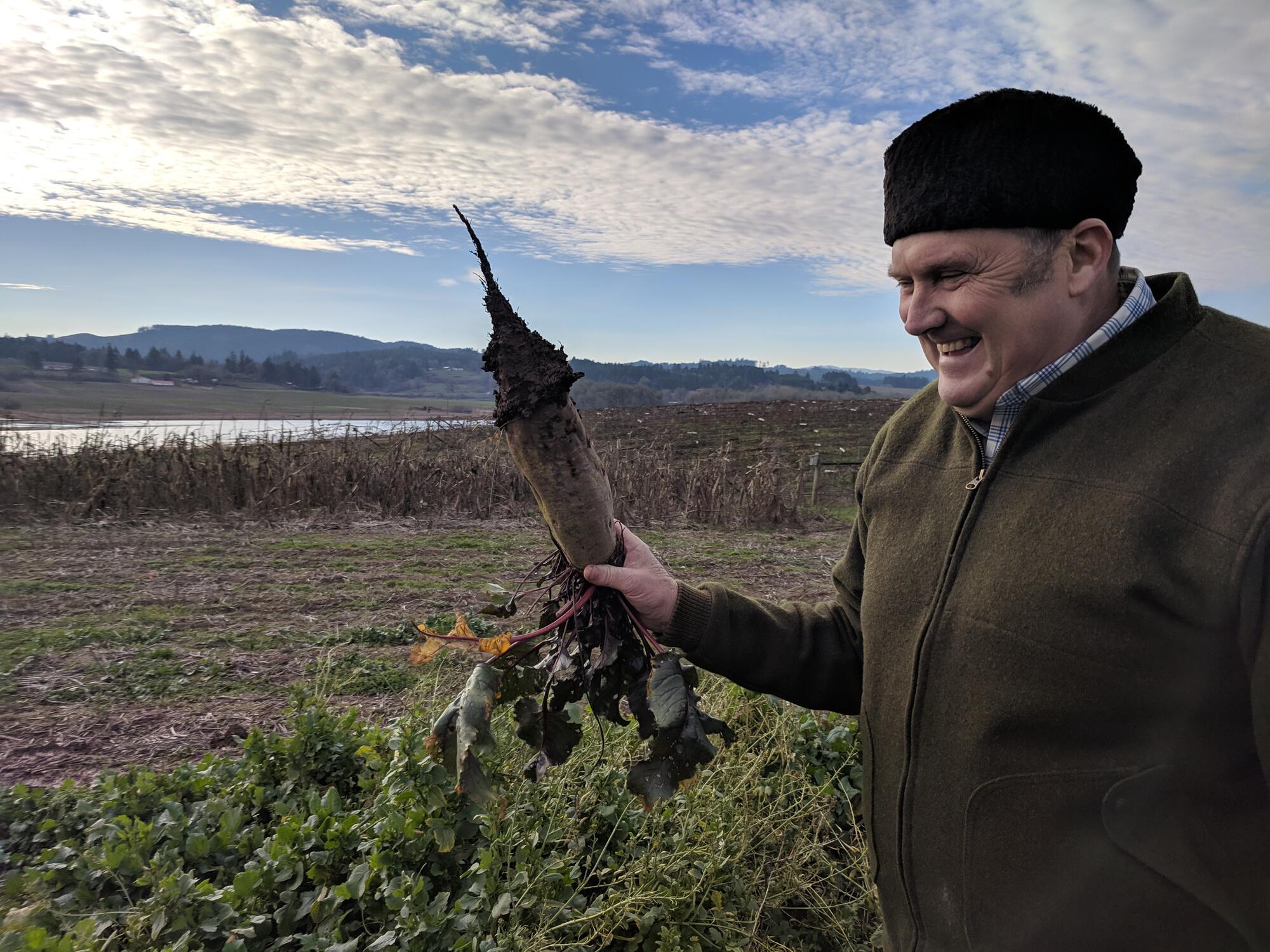
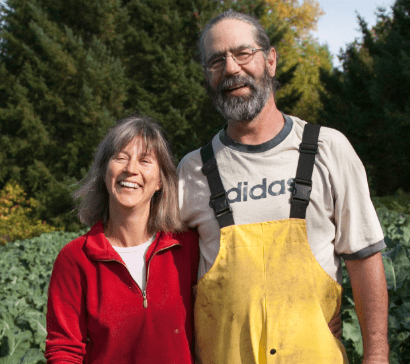
Growers pushing the envelope
A North Plains couple sells vegetables through their CSA year-round.
This publication explores how to choose a site, manage your fields and crops, and plant and harvest at the best time. It also shares how two Willamette Valley farms manage their winter vegetable operations. In addition, we describe the culinary qualities of many winter vegetables and provide nutritional information that farmers can share with customers, and gardeners can use in the kitchen.
We don’t address high tunnel production or summer-grown crops like potatoes, winter squash or dry beans that can be stored and sold throughout the winter. Winter vegetable production is complex, but it can be rewarding. We hope this publication will help you grow, sell and eat more winter vegetables.
Introduction
The mild climate west of the Cascades allows farmers and gardeners to grow many winter-hardy crops in the field for harvest in winter and spring. A wide range of alliums, leafy greens, brassicas and root crops do well. For gardeners, these winter vegetables provide fresh, nutritious, homegrown produce from November to April. For farmers, winter vegetable production can provide cash flow outside the normal summer cropping season, more consistent work for employees, and year-round relationships with direct-market customers.
Farmers may offer year-round or winter community supported agriculture (CSA) subscriptions, or sell into co-ops, restaurants, or year-round farmers markets. Some seed companies and produce distributors have supported winter vegetable production in Western Oregon and Washington for many years. Buyers and distributors who primarily source produce nationally or internationally are often not as receptive to locally grown winter vegetables. Western Oregon and Washington farmers typically sell their winter vegetables directly to local customers.
Winter weather, with occasional cold snaps, heavy rain, mud and reduced sunlight, makes raising and harvesting winter vegetables challenging. Site selection, field preparation, crop and cultivar selection, planting and harvest timing, irrigation, and pest management all contribute to your success. Although little research has been done on winter vegetable production in the Pacific Northwest, we based the recommendations in this publication on insights from local farmers, seed company representatives and Extension faculty. For each topic, we provide references for more detail, and the Resources section lists additional resources.
Choosing a location
Many sites west of the Cascades are suitable for winter vegetable production. Look for sites with full sun and well-drained soil, which are essential for success. To check whether your site is sunny enough in winter, map your location with a sun path chart and consider shade cast by tall trees or buildings.
Soil
Soils with good structure and adequate drainage can absorb rain and resist puddling and standing water. Well-drained soils can reduce mud during harvest, and are sometimes dry enough to cultivate after winter dry spells.
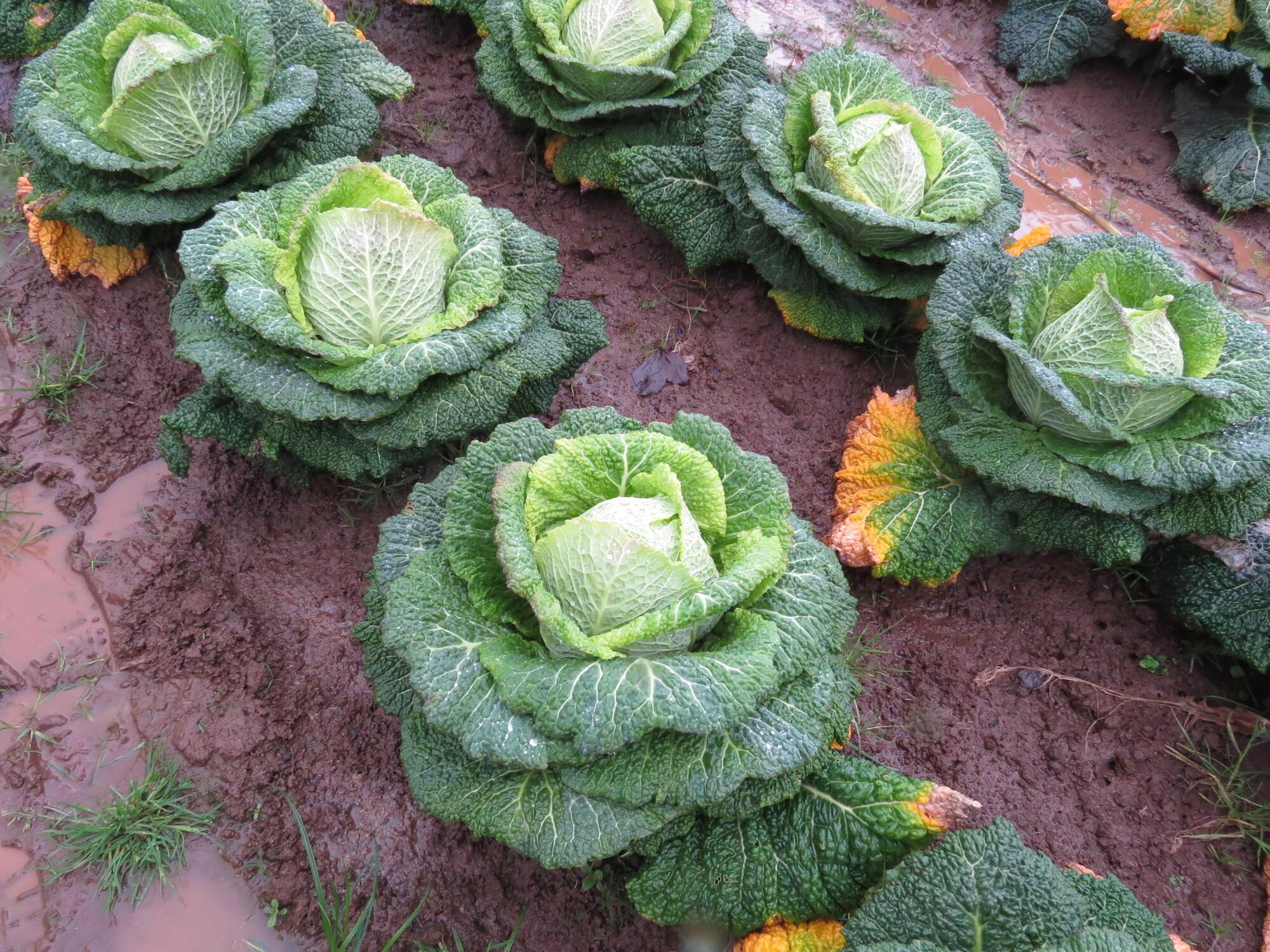
The winter before you plant, you can scout potential sites after heavy rain to check for water erosion and standing water, and to see if the site is accessible to people and equipment during wet weather (Figure 1). Flood water from nearby rivers, lakes or streams can cause complete crop loss. If the edible portion of your crops come into contact with flood water, it is considered adulterated food by the FDA and should not be sold or eaten. See Food safety for flooded farms for more information.
The US Department of Agriculture’s Natural Resources Conservation Service’s online Web Soil Survey identifies the soil type, drainage class and flooding or ponding frequency of a field. The Natural Resources Conservation Service’s SoilWeb app for Android phones and iPhones helps you assess winter ponding or flooding risk.
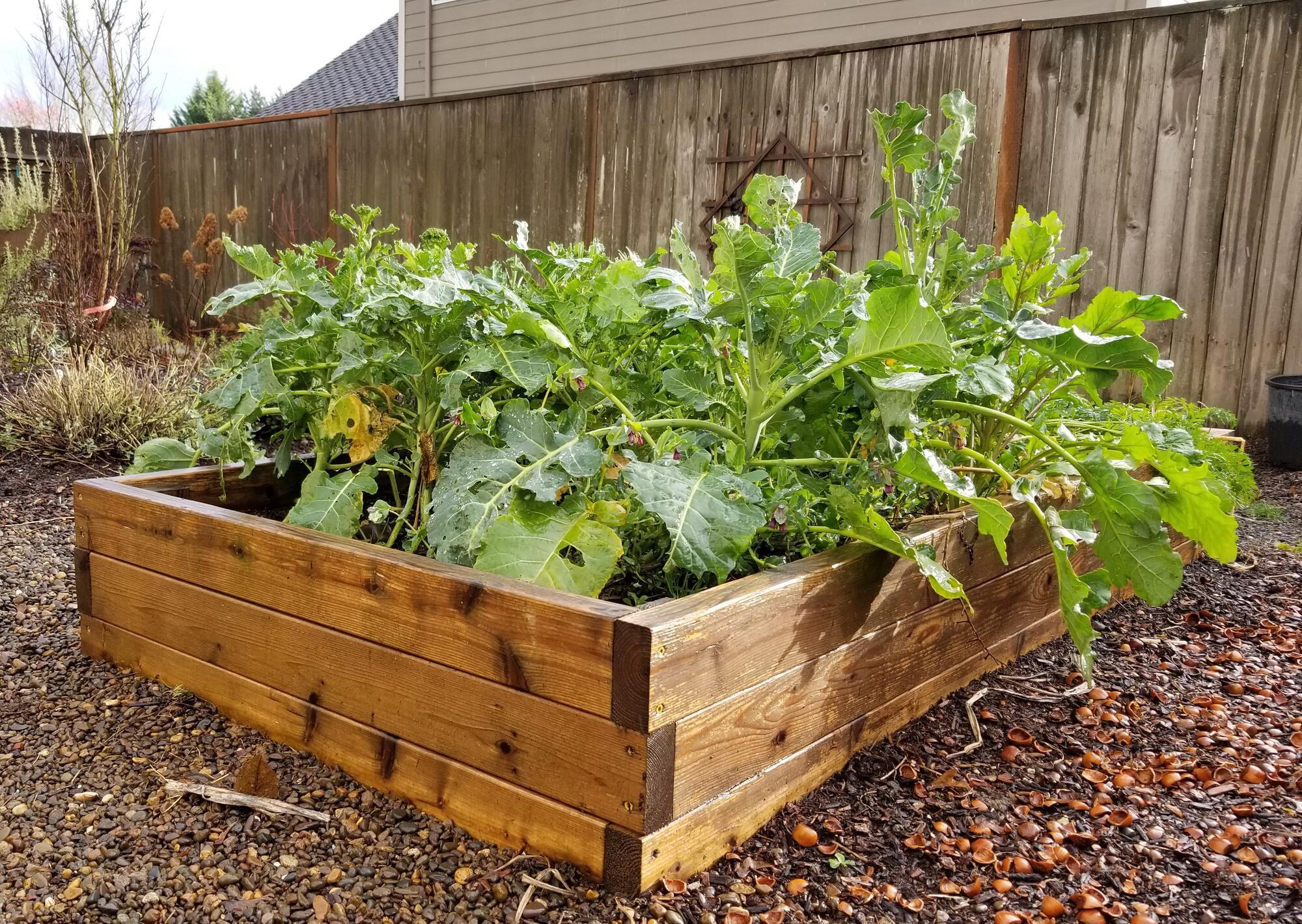
In gardens with poorly drained soils, raised beds can improve drainage (Figure 2). However, raised beds can also make crops more susceptible to cold injury. For more information on building and using raised beds, see Raised bed gardening (FS 270).
Climate and weather
The maritime climate of the valleys and coastal regions of Western Oregon and Washington has heavy winter precipitation and relatively mild temperatures that are often above freezing in winter. These conditions make winter vegetable production possible in the field.
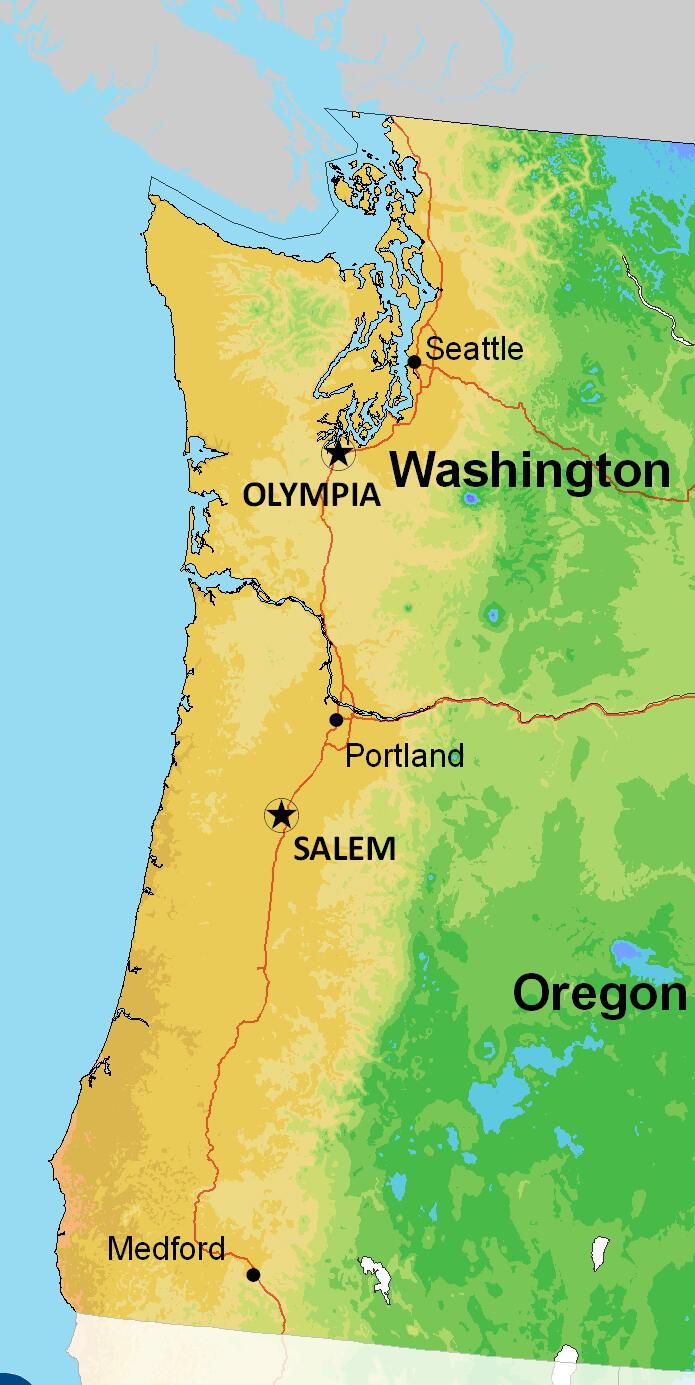
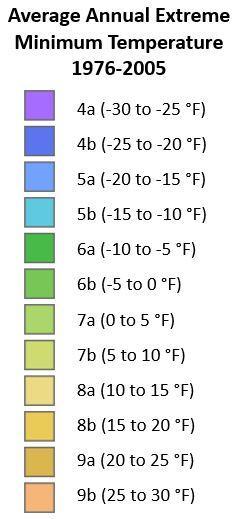
USDA hardiness zones show the average low temperature on the coldest night in the winter. The lowest winter temperatures determine whether a crop can survive over the winter in your area without protection. Different hardiness zones are color-coded. The USDA map is online in a static or interactive format.
The interactive version allows for navigation around the map to confirm specific hardiness zones (see Figure 3.) The USDA updated its hardiness zones in 2012. Table 1 provides more information on the cold hardiness of different winter vegetables.
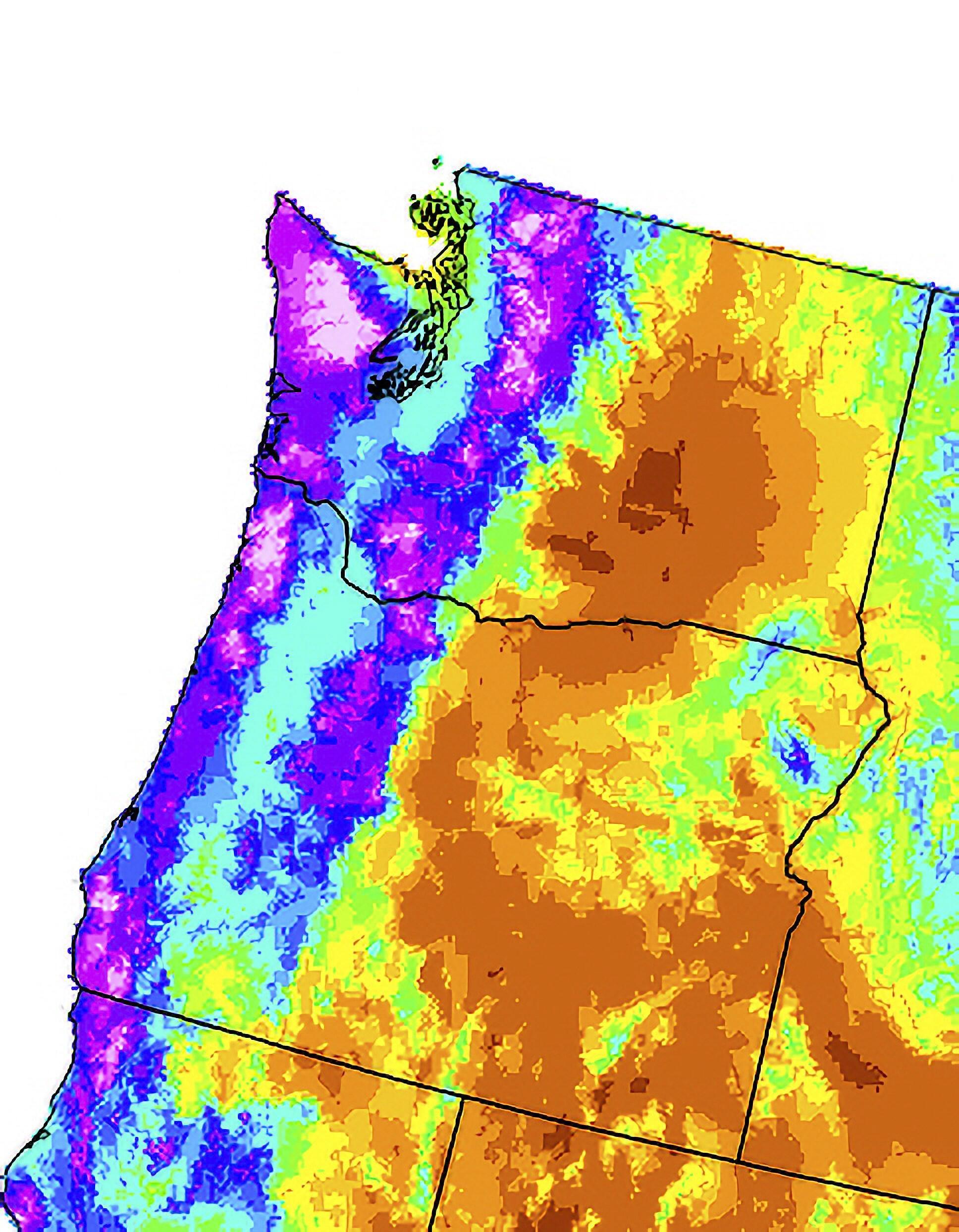
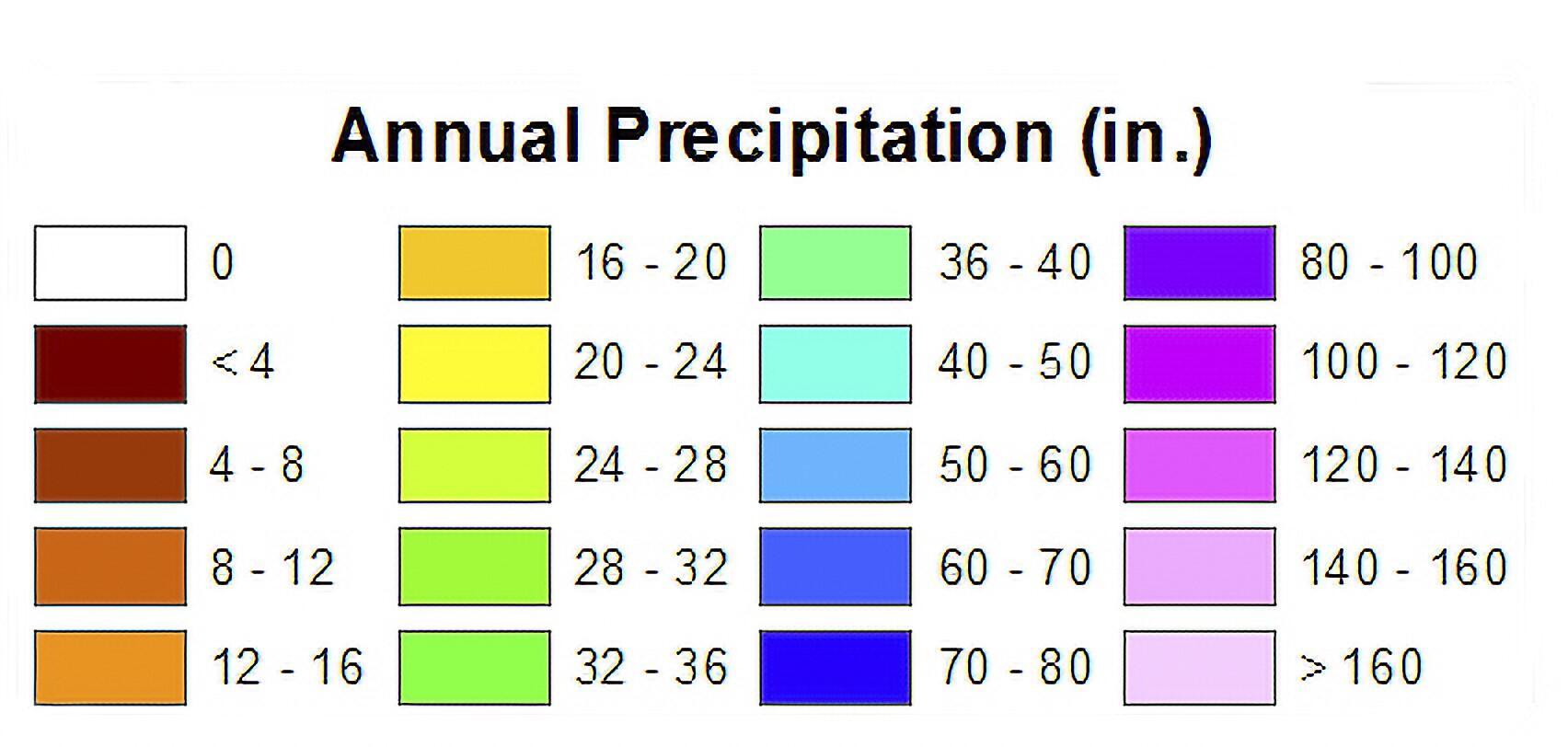
About 75% of annual precipitation typically occurs from October to March. The Cascade and Olympic mountain ranges dramatically affect rainfall and temperature patterns in the region. Ocean moisture arrives as rain or snow. As weather systems move east over the mountains, they cause heavy winter rain and occasional snow west of the mountains and drier “rain shadows” east of the Cascade and Olympic mountain ranges. Figure 4 shows average annual precipitation from 1981 to 2010.
You can find historical weather data such as high and low temperature and precipitation at the National Oceanic and Atmospheric Administration or other weather-forecasting websites. You can also download local weather station data from the Agrimet website. Agrimet allows you to view historical data on a site’s precipitation, air temperatures, soil temperatures, degree-days, wind speeds and more. This data can help you choose a site or crops and is particularly helpful in developing a commercial winter vegetable enterprise.
Keep an eye on the weather forecast to anticipate weather-related challenges. Precautions, such as installing row covers, might be needed during cold spells. See the “Cold weather protection” section of this publication for more information.
Temperature and plant growth
Many winter vegetables are established in the summer or early fall. They don’t grow much from November through February. Each crop responds differently to winter temperatures, and crop development rates are mainly determined by genetics, temperature and time.
Degree-days
Plants are ectotherms. Their metabolism doesn’t maintain consistent body temperatures like endotherms (warm-blooded animals, for example). As a result, the plant temperature is always close to the ambient air temperature. Plants develop and grow more quickly at warm temperatures (70–90 degrees Fahrenheit) compared to cold temperatures (32–50 degrees), assuming they have enough water and nutrients.
Degree-days or heat units measure temperature over time. They usually predict crop growth stages more accurately than time alone. Different crops and cultivars develop at different rates depending on their response to degree-days and their base temperature for growth.
There are no degree-day models available for local winter vegetable varieties. But the concept of degree-days (time, temperature and base temperatures) helps us understand crop development rates. See Vegetable degree-day models: An introduction for farmers and gardeners (EM 9305) for more information.
Microclimates
Microclimates also play a role with winter vegetables. When warm air rises, cold air flows downhill, so gentle slopes allow cold air to drain away from the slope and settle below. Avoid planting at the bottom of hills or slopes where colder air may collect. South- or west-facing slopes receive the most heat in winter. Sites within 20 feet of a structure may have a warmer microclimate than those farther away.
Choose a sheltered site. Winter winds can damage crops and make harvest work more difficult. You can plant windbreaks to protect crops and improve working conditions, however. Trellises that support summer vining plants can be left in the field or garden as a windbreak.
Field management
This section provides general information on field management that is applicable to all winter vegetables. Crop-specific growing information is in the individual crop management profiles that follow.
People
Harvesting winter vegetables can be cold, wet work. Avoid the worst weather and make sure you and your crew wear raingear and waterproof, insulated gloves and boots.
Harvesting in wet, muddy conditions can damage soil structure, especially in fine-textured silty or clayey soils, and leave your crop contaminated with mud. Cleaning muddy vegetables is time-consuming.
Use solid bottom harvest containers and avoid placing slotted harvest containers on muddy ground. Interseeded cover crops can reduce mud contamination by providing more ground cover. Consider planting fewer beds and increasing paths or roadways to improve access to winter vegetables in wet conditions. Designate plenty of “landing sites” to drop off harvest totes. These sites reduce walking distance and can be used for field trimming and cleaning harvested vegetables before storage.
Soil and nutrient management
Soil testing
Regular soil testing and interpretation helps you manage soil acidity and nutrients. Anticipate pH or nutrient management problems rather than trying to respond to them quickly in an emergency. By the time nutrient deficiencies appear, some crop quality and yield has already been lost. Basic soil sampling guidelines for routine soil analysis are available in A guide to collecting soil samples for farms and gardens (EC 628). Fields or gardens with different soil textures or management histories may have different nutrient requirements. If this is true for your property, divide your fields into different management units that reflect these differences and sample each unit separately. This approach is described in Monitoring soil nutrients using a management unit approach (PNW 570).
A diverse farm with a history of soil management practices that differ between field sections may benefit from a special approach to sampling. Grouping samples from smaller zones with a known management history within your larger management units may provide more reliable results. This approach is described in detail in the Washington State University publication Soil testing: A guide for farms with diverse vegetable crops (EM 050E).
Soil organic matter
Soil organic matter can release plant nutrients, buffer soil pH, improve water infiltration and drainage, and improve the ability of soil to store water during droughts. Increasing soil organic matter typically improves your soil.
In a routine soil test report, the percentage of soil organic matter approximates total soil organic matter. Cover crops and bulk organic amendments increase biologically active organic matter in soil, releasing nutrients and providing other benefits to farms and gardens. The biologically active portion is usually a small fraction of the total organic matter and is difficult to quantify. However, if using these types of amendments, the need for nitrogen and other fertilizers is likely reduced (see nitrogen section below).
For more information, see Soil organic matter as a soil health indicator: Sampling, testing and interpretation (EM 9251).
Soil pH
Soil pH doesn’t change quickly. In most soils west of the Cascades, soil pH gradually drops over time. If left unmanaged, it can be around 5.5. Rainfall and nitrogen fertilizer tend to cause soil pH to drop. Soil organic matter buffers pH, and fields with high organic matter levels may not need to be amended with lime as often. Gardens where large amounts of compost is added annually will likely have a soil pH greater than 6.0.
Lime application rates are determined by soil testing and lime requirement tests, such as the Shoemaker, MacLean and Pratt (SMP) test, and the Sakora buffer test, which is replacing the SMP. For more information, see Applying lime to raise soil pH for crop production (Western Oregon) (EM 9057), but use the Updated lime requirement recommendations for Oregon to interpret the SMP and Sakora buffer tests and ask your lab which lime requirement test they use.
Brassicas are susceptible to the disease clubroot (Plasmodiophora brassicae), which thrives at pH levels below 6.5. Apply lime to increase pH above 7 to manage this disease. For more information about clubroot, see the brassicas section.
General nutrient management
The following nutrient management publications are updated based on new research and provide applicable information.
- Soil fertility in organic systems: A guide for gardeners and small acreage farmers (PNW 646) discusses many types of fertilizers, nutrient availability, and introduces organic nutrient management.
- Nutrient management for sustainable vegetable cropping systems in Western Oregon (EM 9165) explains how to interpret soil test results and determine fertilizer rates and nutrients needed for a wide range of vegetable crops west of the Cascades. The publication emphasizes summer vegetables, but nutrient management for winter vegetables is similar for soil pH, phosphorus, potassium and most other nutrients except nitrogen.
- Manure, compost and other bulk amendments increase soil health and fertility. If repeatedly overapplied, they can cause excessive soil nutrient levels (nitrogen and phosphorus, for example) and increase water contamination risk. If using these types of amendments, Fertilizing with manure and other organic amendments (PNW 533) can help determine application rates based on amendment nutrient content.
Nitrogen
Nitrogen fertilizer is an expensive input, especially for organic farmers, and is often needed in the largest quantity. Your crop and field management history determine optimum nitrogen application rates for winter vegetables.
For winter vegetables that mature in the fall or early winter and put on little to no additional growth in the spring, follow the approach described on pages 15–20 of Nutrient management for sustainable vegetable cropping systems in Western Oregon (EM 9165). Winter vegetables that continue to grow in the spring may benefit from supplemental nitrogen fertilizer in early spring when soil nitrate levels are low. Spring nitrogen applications benefit many heading brassicas and leafy greens, such as collards and kale.
Repeated applications of organic amendments such as compost, leaf mulch, manure, and robust cover crops can increase soil nitrogen released by soil organic matter. High biomass cover crops with legumes in the mix, various livestock manures and other bulk organic amendments can provide significant amounts of plant-available nitrogen for the following crop.
See Estimating plant-available nitrogen release from cover crops (PNW 636) to learn how to predict the nitrogen fertilizer value of your cover crops. By estimating nitrogen release from these nonfertilizer sources (that is, soil organic matter, bulk amendments and cover crops), the amounts of nitrogen fertilizer as a supplement can be reduced. This can save money while protecting the environment.
Nitrogen monitoring is useful for winter vegetables, especially in fields with high organic matter and other nonfertilizer nitrogen sources. In crops planted after mid-June, pre-plant soil nitrate tests can determine nitrogen rates during bed preparation. For spring-planted crops, midseason nitrate-N monitoring (at four or five true leaves, for example) can detect potential deficiencies later in the season. Soil nitrate monitoring can help you improve nitrogen management for all vegetables on your farm, not just winter vegetables. For more information, see Soil nitrate testing for Willamette Valley vegetable production (EM 9221).
Irrigation
Winter vegetables are planted in the summer and need consistent irrigation during establishment. Most winter vegetables are not heat- or drought-tolerant, and they are sometimes transplanted at the hottest and driest time of the year in the Pacific Northwest. Avoid drought stress during establishment. West of the Cascades, winter vegetables don’t need irrigation after fall rains begin, which usually occurs in mid-September to mid-October.
Cold weather protection
Row covers are made from lightweight, spun-bonded polyester fabric and are sometimes used to protect field-grown winter vegetables from cold weather. They come in varying thicknesses. Thicker covers provide more temperature protection but less light transmission than thinner row covers. Medium-weight covers (0.50–0.55 ounces per square yard) can provide up to 4°F of protection with 85% light transmission. Heavyweight covers (0.90–2.0 ounces per square yard) can provide 4°–8°F of protection with 30% to 50% light transmission.
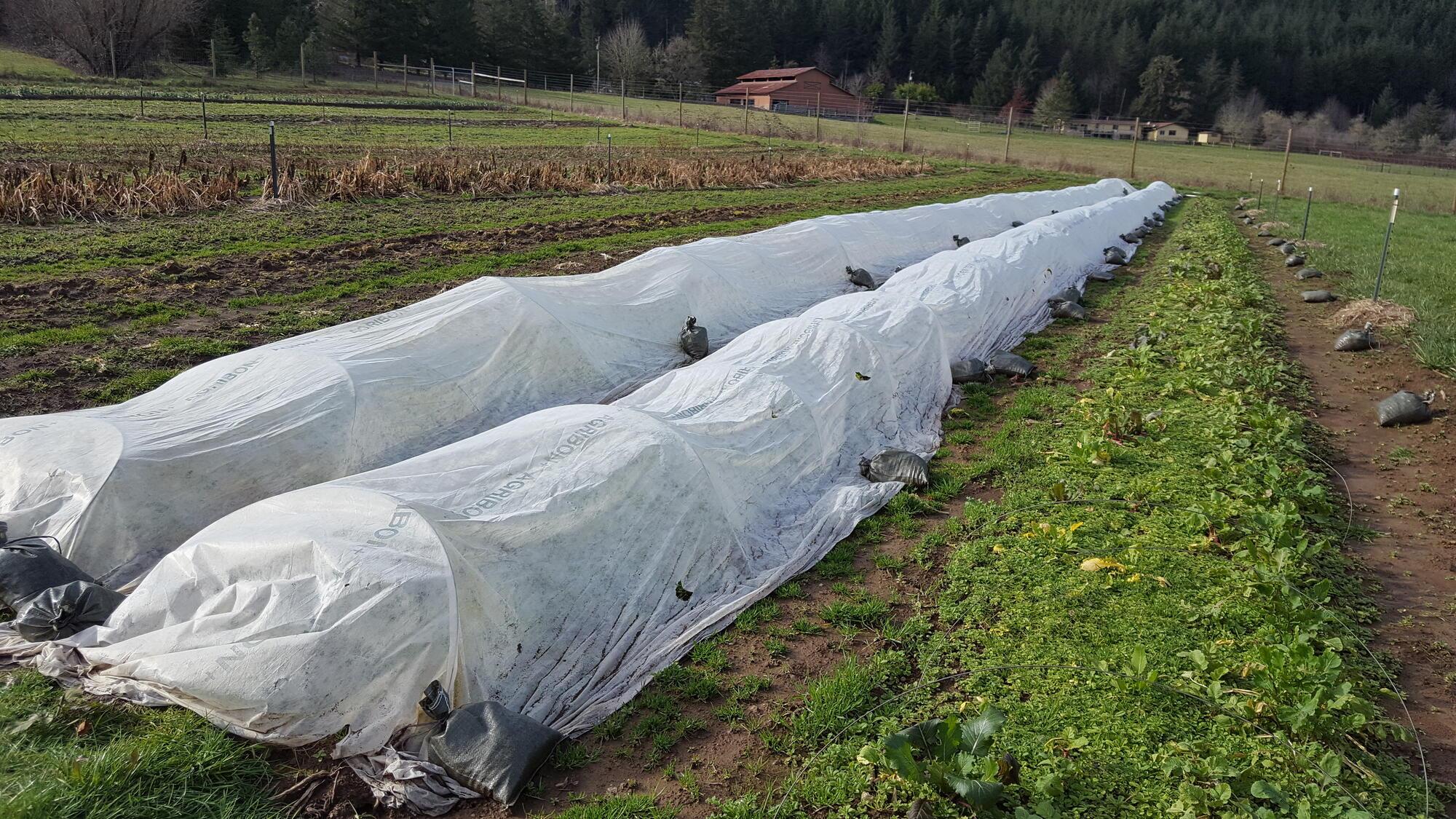
Row cover material is breathable, permeable to moisture and can be used through the winter season to add protection. It can be placed lightly over the crop and held in place with staples, soil or sandbags as a floating row cover to protect crops from low temperatures (Figure 5).
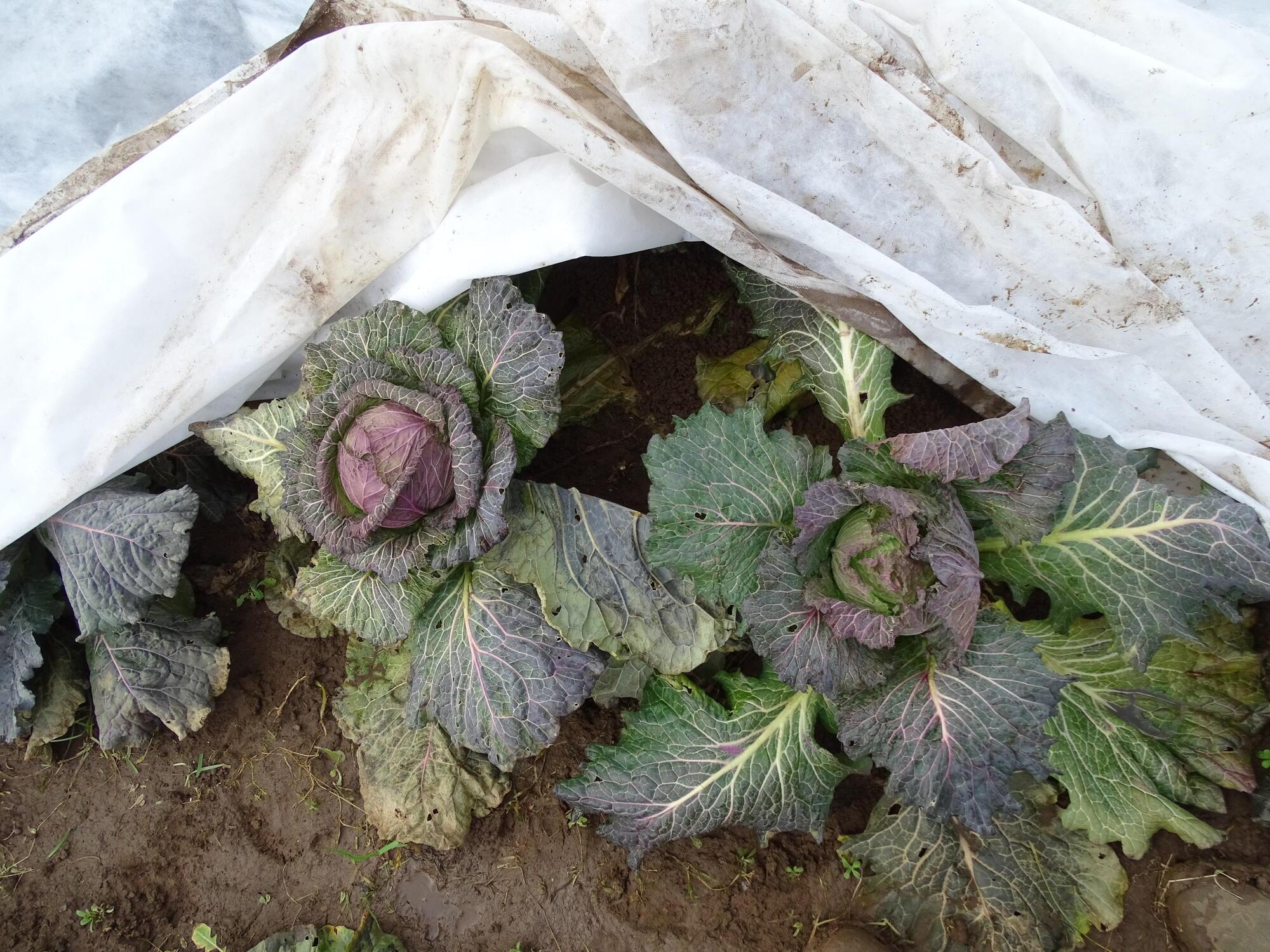
Be aware that floating row covers can stick to the crop if freezing temperatures follow precipitation. See Washington State University’s How to install a floating row cover (FS 089E) for more information.
Small hoops can be used to create a low tunnel a few inches over the crop and reduce the risk of row covers sticking to the crop (Figure 6). For more information see Low tunnels for season extension in Oregon: Design, construction and costs (EM 9333).
In gardens, cloches can be installed as more permanent structures. They are described in How to build your own raised-bed cloche (EC 1627). On warm, sunny days, heat can build up in cloches or under row covers and stress crops. They can also create a good habitat for insects, diseases and weeds. Monitor them and ventilate as needed.
Crop rotation
Rotating different crops helps reduce soilborne diseases and manage weeds, nutrients and some arthropod pests. When planning rotations, consider the site’s objectives and the pest lifecycle or nutrient cycle relevant to those objectives. Pay special attention to the biology of soilborne diseases in the farm or garden.
Rotations can vary depending on the crop, pest biology and nutrient cycling. Brassicas are important winter crops, and they nicely illustrate crop rotation considerations. Many vegetable farms and gardens already have a lot of Brassicas in their summer rotation. A short rotation between Brassica crops increases the risk of clubroot (Plasmadiophora brassicae).
Winter brassicas transplanted in July or August are easy to cultivate; for this reason, they can help to manage summer weeds after difficult-to-cultivate crops where weeds may have recently gone to seed. Brassicas also use a lot of nitrogen, so they can utilize residual nitrogen left over from a previous crop or nitrogen mineralized by a soil with high organic matter content.
It is difficult to incorporate all potential considerations in rotation decisions. Start by focusing on factors of greatest concern at a particular site. For more information about crop rotation planning, see the USDA Sustainable Agriculture Research and Education book Crop Rotation on Organic Farms: A Planning Manual.
Cover crops
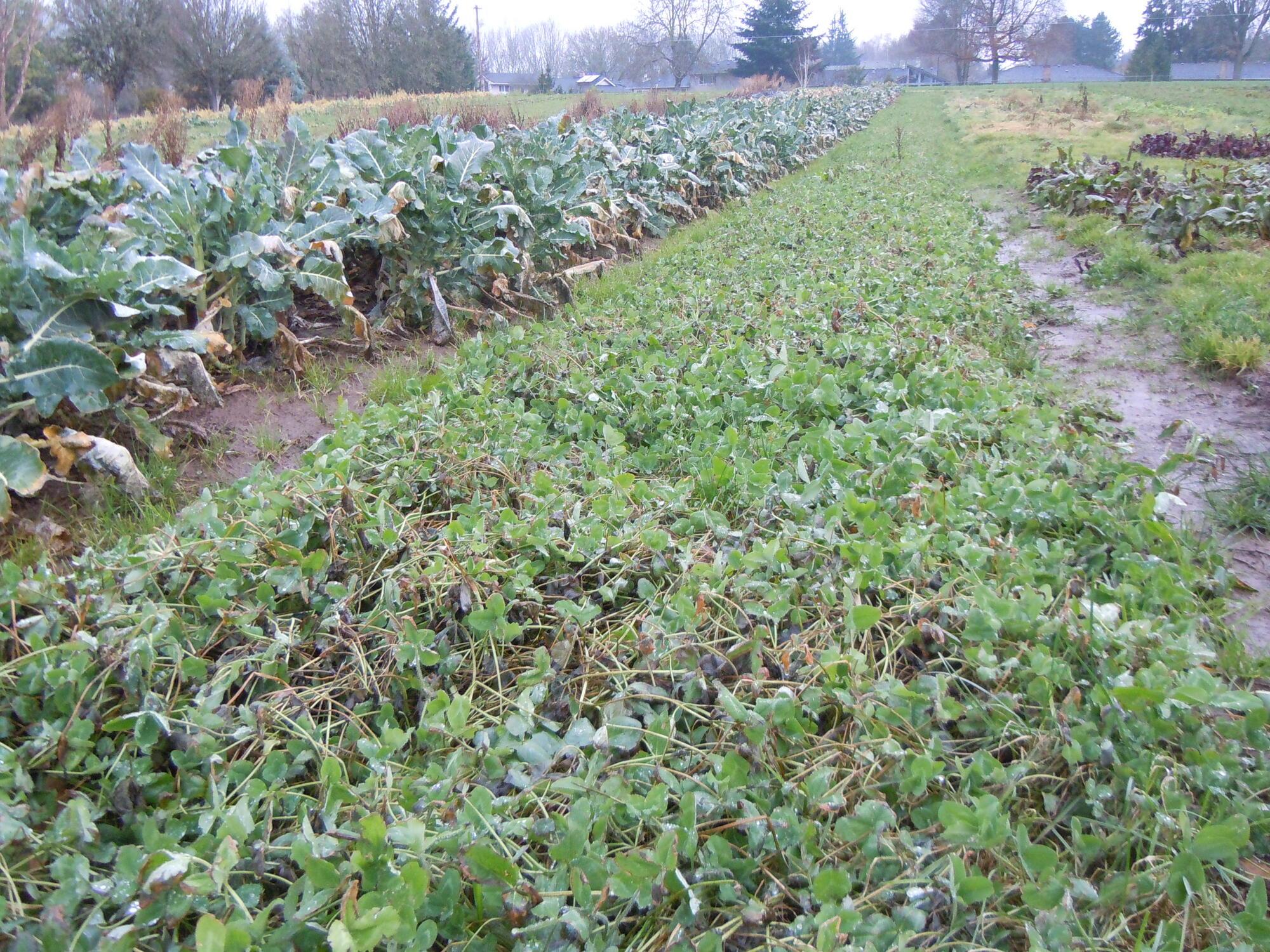
Cover crops protect soil from erosion, improve soil health, compete with weeds and provide various other benefits. The wet and mild winter climate in the maritime Pacific Northwest is well-suited to cover crops, and winter vegetables can benefit from their use. When cover crops provide soil cover, they can help reduce soil compaction and mud contamination during harvest.
Consider interseeding cover crops into winter vegetables (Figure 7). The best timing for interseeding depends on the crop and production system but is typically done at the last mechanical weed cultivation and before crops shade the soil surface and inhibit cover crop establishment.
Overwintered annual cover crops establish in summer and fall, cover the soil over the winter, grow vigorously from March through May and produce flowers in May or June. Your soil benefits from large cover crops (such as those with high biomass when terminated), and beneficial insects (such as natural enemies and pollinators) can benefit from flowering cover crops.
For information about nitrogen contributions from legume cover crops, see the nitrogen section above. For general information about cover crops, see the USDA Sustainable Agriculture Research and Education book Managing Cover Crops Profitably (3rd Edition).
General pest management
The Pacific Northwest Handbooks for Insect, Disease and Weed Management identify pests, describe their life cycles and types of crop damage, and explain cultural, chemical and biological control options, including pesticide information. Always apply pesticides according to the label instructions. The label provides safety precautions to protect you, others and the environment. Read the label before buying or opening the container. Reread before mixing, storing or throwing the product away.
This section describes general pests that damage many different winter vegetables. Individual crop management sections discuss more host-specific diseases and pests, and some crop-specific weed management considerations. The disease sections discuss fungi, bacteria, viruses and nematodes. The pest sections include pests in the Kingdom Animalia, except for nematodes.
Local Extension services and plant diagnostic clinics, such as the OSU Plant Clinic and WSU Plant Pest Diagnostic Clinic, can help you diagnose unfamiliar plant health problems.
Diseases
Wet weather and saturated soils are favorable conditions for some winter vegetable diseases. Management practices include:
- Clean seed or planting material.
- Crop rotations that reduce disease pressure.
- Crop monitoring and treatment as needed.
Many plant pathogens are introduced on seed and can be difficult to manage once introduced. Using clean seed prevents these problems, but vegetable seeds are not universally tested for seedborne diseases. Most seed treatments are not allowed in organic agriculture, but hot-water seed treatment is often an effective alternative.
Organic Seed Treatment and Coatings from eOrganic and Washington State University explains seed priming, pelleting and some organically allowed seed treatments, including a table of time and temperature requirements for hot water treatment of different vegetable seeds. ODA Black Leg Rule and Small-Scale Hot Water Seed Treatment explores low-cost and reliable hot-water seed treatments developed by Wild Garden Seed and High Mowing Organic Seeds. These techniques are practical for small-scale farmers and gardeners.
White mold
Sclerotinia sclerotiorum is a soilborne fungus that can damage many vegetables. It develops distinct white mold on plants and plant debris, and forms small black overwintering structures called sclerotia in the soil. When temperatures rise in the spring, the sclerotia eject spores into the air, most land nearby unless carried by wind.
Winter vegetable hosts include plants in the Amaryllidaceae (such as onions, garlic, chives), Brassicaceae (cabbage, kale, broccoli, cauliflower, mustard greens), Fabaceae (fava beans) and Apiaceae (carrots, parsnips, celery, parsley) families. Its host range also includes many summer-grown vegetables, such as tomato, potato, pepper, cucumber, zucchini, squash, peas, snap bean and sunflower. For a more complete list of hosts, see Plants Susceptible to Sclerotinia sclerotiorum.
Avoid growing winter vegetables in fields heavily affected by white mold. Crop rotation isn’t usually a management option on vegetable farms because of the fungi’s broad host range and ability to survive for years in the soil, but rotation to non-host crops such as sweet corn and grains may reduce the amount of pathogen in the field over time.
Increased spacing to allow good airflow and avoiding excess nitrogen fertilizer and dense canopies can reduce disease risk. Organic pesticide options are limited; Contans is an organically approved biological fungicide (Coniothyrium minitans) that can be effective. For more information see What is Contans and how can it be used in Western Oregon to control white mold?
White rot is a more host-specific disease of alliums that is caused by a different pathogen (S. cepivorum), and is discussed in the allium crops section.
For more information about white mold, see the Pacific Northwest Pest Management Handbook section for Kale — Sclerotinia Stem Rot (White Mold).
Refer to the “Crop management” section for information about more host-specific diseases.
Pests
This section discusses pests in the Kingdom Animalia that damage a wide range of winter vegetables. More crop-specific pests are discussed in the ”Crop management” sections.
Garden symphylans
Scutigerella immaculata is a serious pest of brassicas, leafy greens, alliums and root crops. Fava beans appear to be relatively tolerant but are also hosts. Symphylan populations can be monitored with potato traps and reduced by rotating to potatoes or with intensive tillage immediately before planting. For more information on biology, monitoring and management, see Biology and control of the garden symphylan, and Symphylans: Soil pest management options.
Wireworms
Wireworms are the larvae of various species of click beetles; native and invasive species are present in the Pacific Northwest. Adults don’t cause crop damage, but the larvae feed on seeds, roots and tubers and can live for two to five years.
They can attack a wide range of crops, including winter vegetables, and root crops can suffer extensive damage. For more information, see Vegetable crop pests — wireworm and Wireworm: Biology and nonchemical management in potatoes in the Pacific Northwest (PNW 607) for information on wireworm biology, monitoring techniques and a range of management strategies.
Slugs
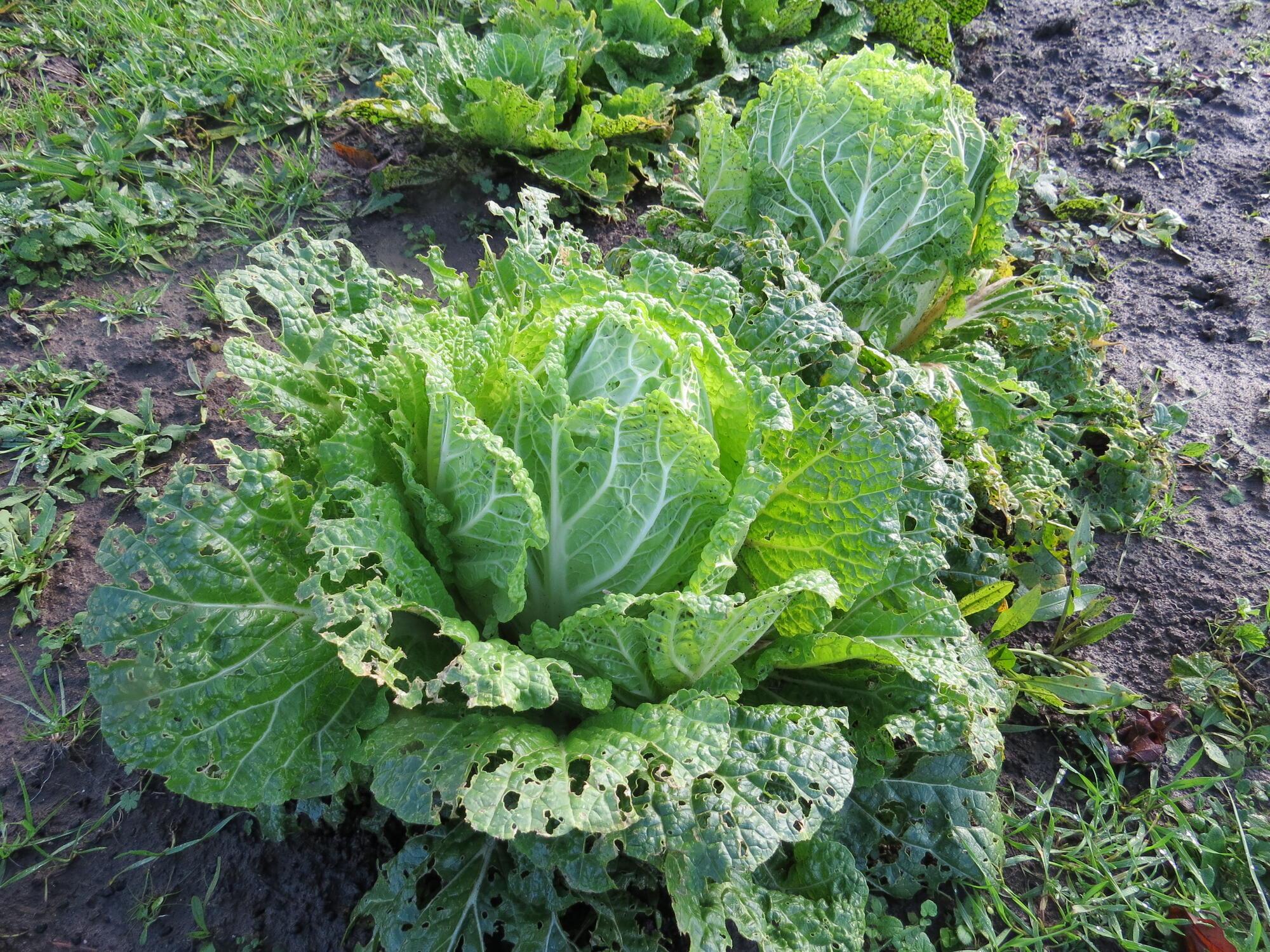
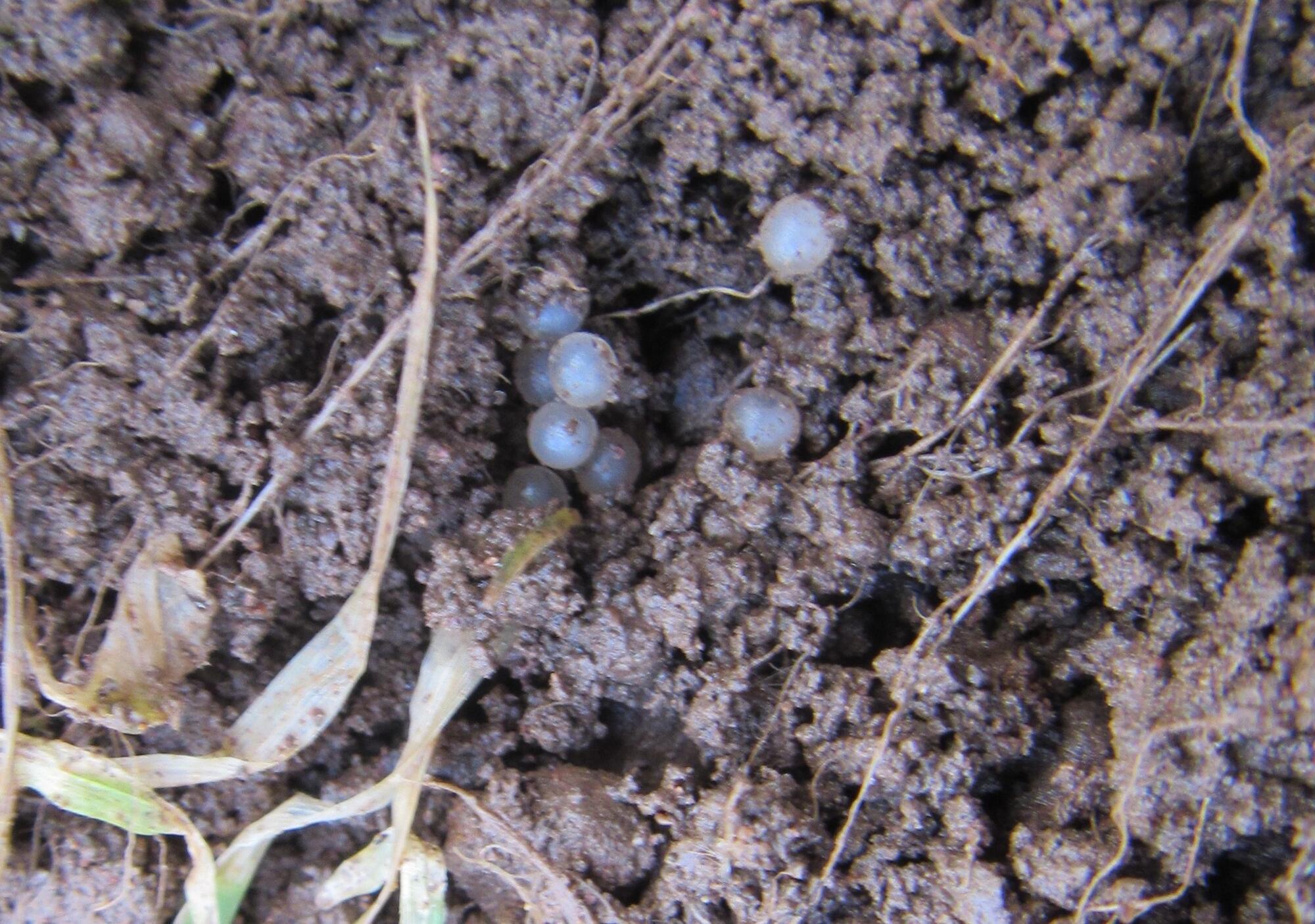
Slugs can be a major pest of winter vegetables. They are active when relative humidity approaches 100% and temperatures are 38°–88°F. Slug damage can be distinguished from other pests by the presence of slime trails.
Damaged roots have small, shallow pits; leaves are damaged by holes between veins. Slug damage can cause "window pane" holes on leaves, complete holes and shredding (Figures 8 and 9).
Recent slug holes can be distinguished from holes caused by chewing insects by the wedge-shaped edges of the holes on recently damaged leaves that is visible with a hand lens. The wedge shape is caused by their rasping mouth parts; slugs feed by scraping at their food.
Several species can be important in the Pacific Northwest, including Deroceras reticulatum, Arion rufus, A. Circumscriptus, A. intermedius, A. subfuscus, Milax gagates, Limax maximus, Deroceras laeve and Prophysaon andersonii.
Management practices include slug and snail baits (such as iron phosphate), barriers, cultivation and biological control. Birds, ground beetles and rove beetles are predators. Some parasitic nematodes (Phasmarhabditis hermaphrodita, for example) can kill slugs and snails. For more information, see Slug control.
Rodents
Rodents can cause significant damage to winter vegetables. Common rodent pests include pocket gophers (Thomomys spp.), voles (Microtus spp.) and ground squirrels (Otospermophilus spp.).
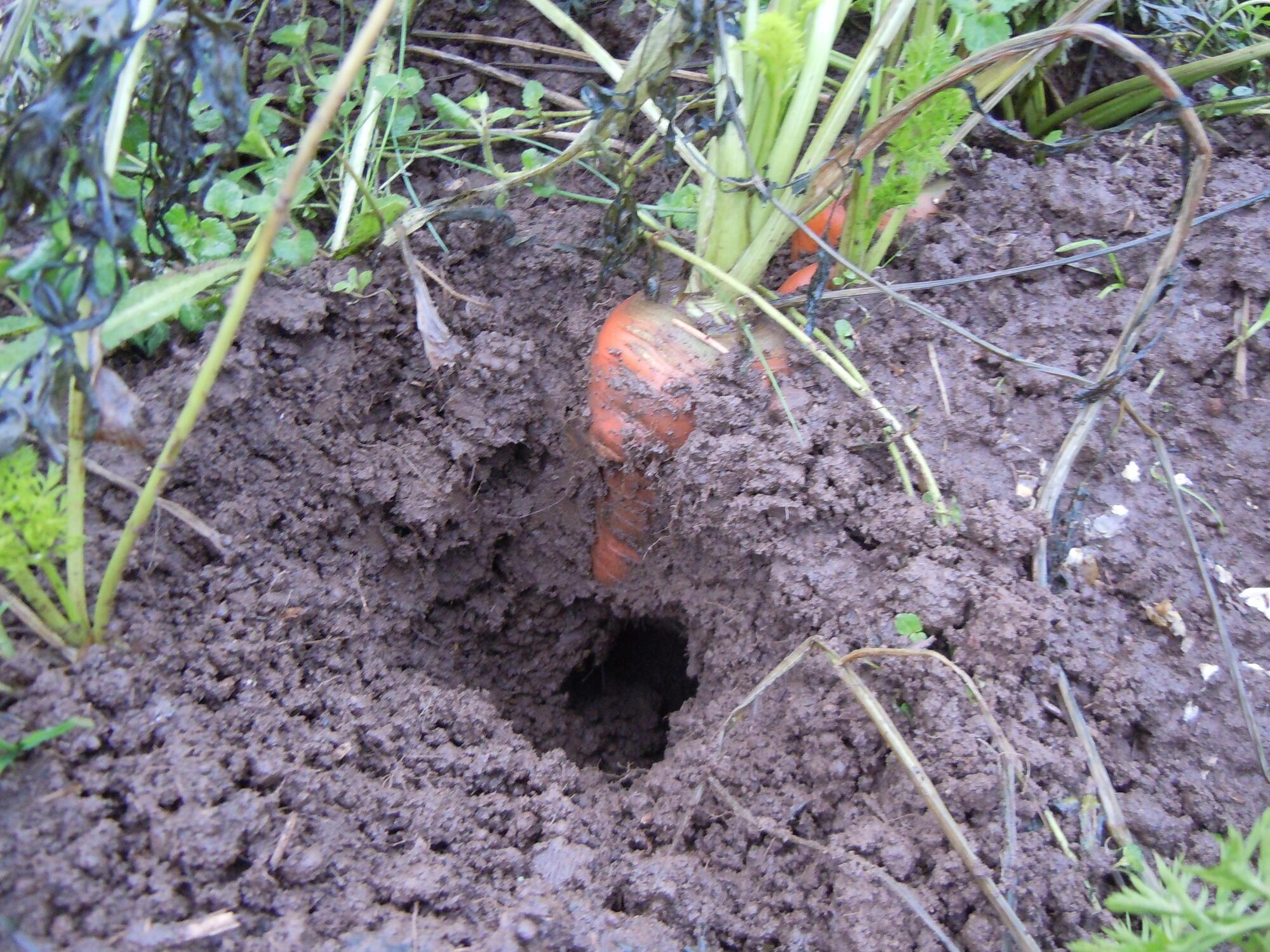
Winter vegetables are susceptible to damage because they provide rodents valuable nutrition over the winter. For example, chicory and radicchio seem to be especially attractive to pocket gophers and voles. Root crops are another rodent favorite (Figure 10), and other winter vegetables can also be damaged.
Management strategies depend on the rodent and include trapping, baits, habitat modification, deep tillage to disrupt their tunnels and nests, and predators such as raptors and coyotes.
For more information about voles, see this Montana Department of Agriculture publication Voles in Montana, their biology, damage and control. For information on pocket gophers, voles and ground squirrels, see these University of California publications:
Winter cutworm
Noctua pronuba was introduced to the Pacific Northwest in the early 2000s and recently has been reported in high numbers. They have a broad host range, including many important local crops, and have the potential to become a serious pest. Winter vegetable hosts include beet, carrot, brassicas, potato and chard.
Females can lay up to 2,000 eggs. Larvae cause crop damage and are active from September to March. They sometimes move in large numbers, clipping, mowing or notching foliage. Tillage and weed control can reduce pest pressure. Moths and larvae are mostly nocturnal. For more information, see Grass seed — winter cutworm and Winter cutworm: A new pest threat in Oregon.
Deer
Deer feed on and trample winter vegetables, sometimes causing severe crop damage. Their manure can also increase the risk of foodborne illness. They normally feed in late evening and early morning.
This University of California publication Deer discusses some management options for mule deer, Odocoileus hemionus, and Columbian black-tailed deer, O. hemionus columbianus.
Weeds
Weed management is critical during crop establishment in summer and early fall. After fall rains start, there are fewer opportunities to mechanically control weeds. Weeds that go to seed in fields or gardens will germinate and compete with crops.
Many winter vegetables compete well with winter weeds. The weeds can serve as a useful ground cover for mud management during harvest and act like a cover crop to protect the soil from erosion.
The exception is with alliums and slow-growing root crops like parsnips and carrots. These crops are less competitive with winter weeds due to their shallow root systems and open crop canopies that allow light to penetrate and promote weed growth. Their close spacing also makes cultivation difficult. Weeds can also damage the shape of these crops and interfere with harvest. Plant alliums and root crops in fields with low weed pressure.
The stale seedbed technique reduces weed seeds and helps prevent weeds after the crop is established. The technique consists of four steps:
- Prepare the seedbed and irrigate if the soil is dry.
- Allow time for weed seedlings to emerge.
- Kill the seedlings without disturbing the soil below about 2 inches.
- Plant the crop.
Steps 2 and 3 can be repeated if time allows. In some slow-germinating, direct-seeded crops (carrots and parsnips, for instance) step 3 can be used after seeding and before crop emergence if steam, flame or herbicides can control weed seedlings with no soil disturbance. The University of Maryland webpage The stale seedbed technique discusses the technique in more detail.
The Pacific Northwest Weed Management Handbook provides current weed biology and management information for a wide range of crops and weed species.
Harvest and handling
Harvest and handling practices affect the quality and shelf life of crops. Optimum harvest times depend on crop type, maturity and sometimes your preference. Gentle handling during harvest prevents bruising or other damage that can reduce shelf life and storability. Storage conditions also influence quality whether they are stored short-term or long-term.
For more information on harvest timing and postharvest handling, search the University of California’s commodity fact sheets and Post Harvest Center Bookstore. This ATTRA publication Postharvest Handling of Fruits and Vegetables is also helpful. The “crop management” section below discusses some harvest and handling considerations for specific winter vegetables. You can also consult with Extension, seed company representatives or experienced farmers.
Food safety is also a concern in crops grown for human consumption, especially those that might be eaten raw. Practices during harvest and handling have a large impact on the safety of produce. For more information, see the Iowa State University publication On-farm food safety: Cleaning and sanitizing guide. Cornell University’s National Good Agricultural Practices Program also provides extensive information.
Crop management
Growth habits of biennial winter vegetables
Most of the crops in this publication are biennials, meaning they take two years to grow from seed to seed. This influences crop management practices.
In year one, biennial crops put on vegetative growth. Vernalization (induction of spring flowering in biennial crops) is induced by low temperatures over time, the duration of cold weather needed varies by crop and variety. Strong biennials with relatively long vernalization requirements need as much as 6–8 weeks below 50⁰F degrees.
Vernalization takes longer than 6–8 weeks if daytime temperatures are above 50⁰F and some brassica species such as cabbage may even “reset” to prevernalization status if temperatures rise in late winter, as sometimes happens in February. This requires additional vernalization.
In year two, if the crop has been vernalized, they put on more vegetative growth, bolt and start flowering. Most crops are harvested before bolting or at peak bud development (such as sprouting broccoli and cauliflower).
Vernalization requirements have important practical implications when planning for successive harvest of biennial winter vegetables. Staggered planting dates allow farmers and gardeners to plan for continual harvest of many summer vegetables, but the vernalization requirements of biennial winter vegetables override time and temperature (degree-days) as a determinant of crop maturity.
Two plantings of the same cultivar at different dates may start winter at different sizes, but will switch to reproductive growth at the same time if they receive the same hours of chilling. Planting date and degree-days influence crop size and growth-stage of biennial crops at the beginning of winter, then the specific vernalization requirement of a crop and variety physiologically triggers the plant to flower after warm temperatures return: vernalization “resets” degree-day accumulation.
After vernalization, degree-days again influence the time to harvest, and this varies significantly by variety. For this reason, most varieties of a biennial winter vegetable crop are planted at the same time. Select varieties that mature at different rates in the spring (after vernalization) in order to plan for successive harvest.
Different winter vegetables have to be at different growth stages when winter arrives in order to produce a good crop. That growth stage varies depending on the crop.
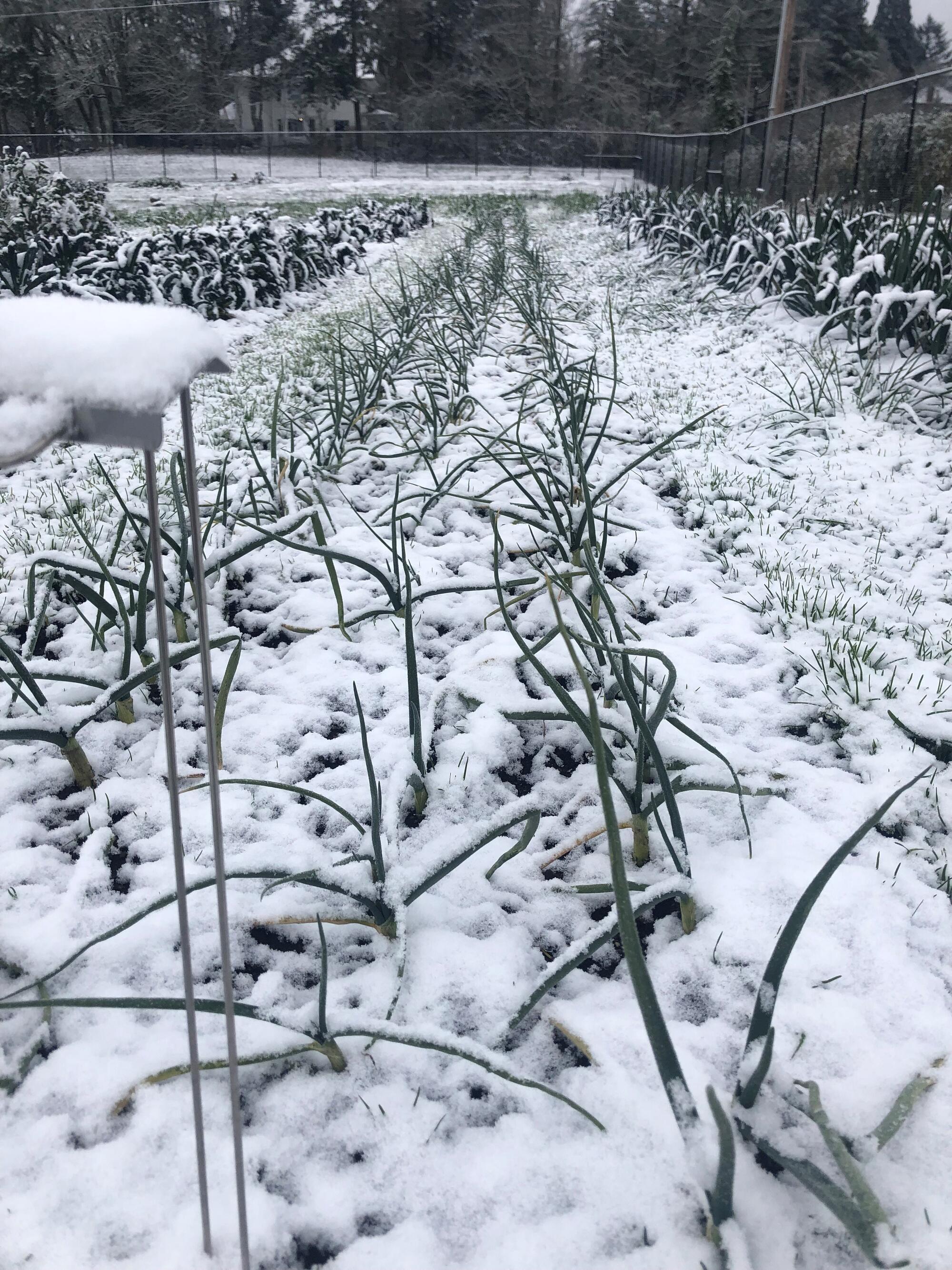
For example, sprouting broccoli and cauliflower should have large vegetative frames at the beginning of winter that will support the development of good heads in the spring after vernalization. However, overwintered onions must be small and juvenile, about pencil size, so that they don’t vernalize and bolt in the spring before bulb development (Figure 11).
Day length can also affect the development rate and growth stage of winter vegetables. For example, in bulb crops such as onions and garlic, increasing day length initiates bulb development. See the allium section below for more information.
Seed sources
Many seed companies distribute winter vegetable varieties that are well adapted to our soils and climate west of the Cascades. The partial list below includes companies that are active in the Pacific Northwest. These companies are popular with the farmers featured in this publication (see the “Farmers growing winter vegetables” section) and other experienced winter vegetable growers.
Seed company staff can recommend suitable varieties. Many of these companies conduct ongoing variety trials in the Pacific Northwest and some also breed vegetable varieties. Some of the companies are locally based and locally owned.
This list is in alphabetical order and is for information only; inclusion or exclusion of a company from this list does not imply a recommendation of any sort:
- Adaptive Seeds
- Garlicana
- Gowan Seed Company
- High Mowing Organic Seeds
- Johnny’s Selected Seeds
- Osborne Quality Seeds
- Siskiyou Seeds
- Territorial Seed Company
- Victory Seeds
- Wild Garden Seed
- Wild West Seed
Well-stocked garden centers often carry fall and winter vegetables for transplanting in late summer and often identify the expected harvest season based on the variety. Varieties may be limited. For more options, grow your own transplants from seed. Some popular varieties for winter production are included in each crop section below.
Alliums
Including bulb onions, garlic, green onions, leeks and shallots
For alliums, understanding the physiology of bulbing (forming a bulb) and bolting (forming a flower stalk) are important for cultivar selection and overall success.
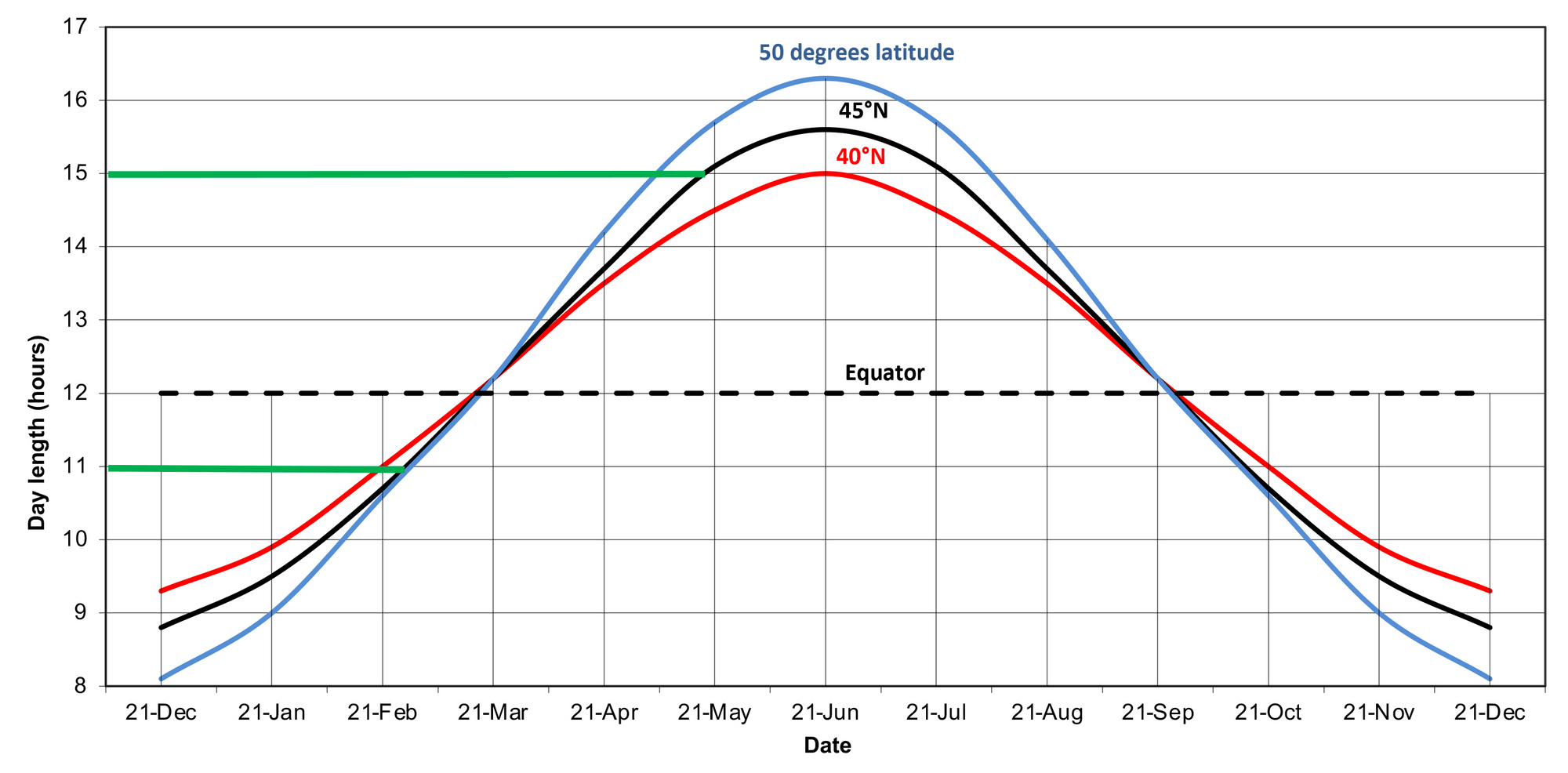
Day length is the major stimulus for bulb formation. As day length increases, bulb initiation is triggered. The critical day length varies by variety, and long-day onions are adapted for the Pacific Northwest. Short-day onions start bulb formation when day length reaches about 10–12 hours. Long-day onions initiate bulbing with about 14–16 hours of sunlight.
Figure 12 shows the approximate dates of bulb initiation for short- and long-day onions (green lines) at different latitudes in the Pacific Northwest (red, black and blue curves). The Canadian border is at 49°N and the California border is at 42°N.
For example, an 11-hour, short-day onion grown in Salem, Oregon (45°N), would initiate bulbing on Feb. 25. The plant would be too small then to develop a large bulb and would bolt before producing a marketable crop. A 15-hour, long-day onion grown at the same location would initiate bulbing on May 18 when the plant will be big enough to develop large bulbs and a good crop.
In onions, the major triggers for bolting are day length and winter vernalization (see “Growth habits of biennial winter vegetables” section). Overwintering onions planted in the fall must be small (that is, a quarter-inch diameter), going into winter, as larger onions will be stimulated to bolt before bulbs can form (Figure 11). Planting onion sets that are too large often leads to bolting.
Selection of locally adapted varieties (for example, using long-day onions in the Pacific Northwest) also avoids premature bolting. If bulbing is initiated before the plant is large enough to support bulb development, the bulbs will be small. This is mainly determined by genetics (long-day vs. short-day varieties) and the environment (day length and degree-days).
Garlic is affected by both temperature and day length; cold temperatures are needed so that bulbs can form. Garlic cloves will undergo a brief dormant period after planting, followed by a period of root and vegetative growth. Cold winter weather vernalizes the plant and initiates bulbing and then flowering in the spring and summer.
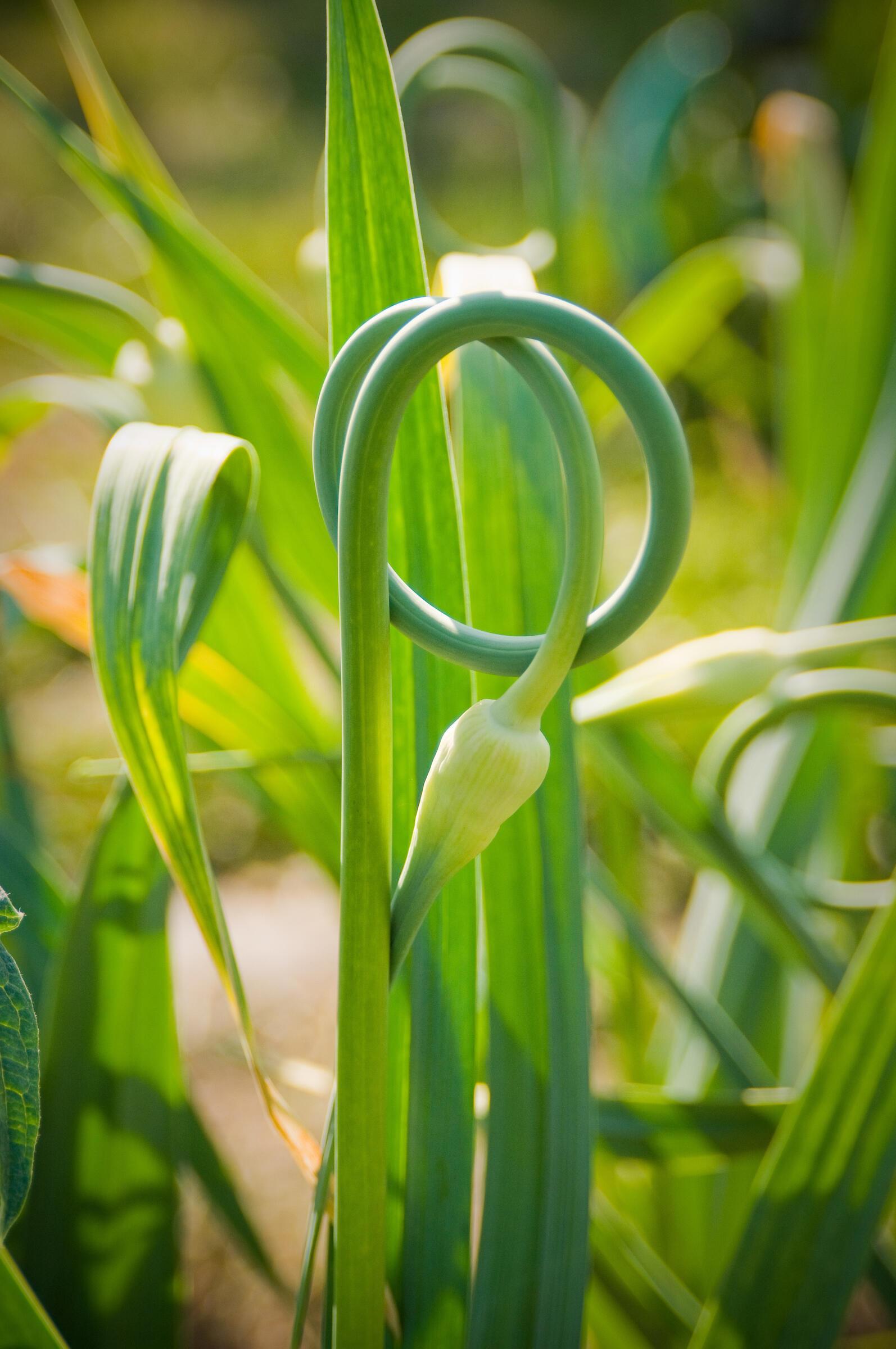
Hard neck (bolting) garlic produces a flower stalk in May or June if they have been vernalized over the winter (Figure 13), whereas soft neck (non-bolting) garlic usually don’t unless spring temperatures are low. For more information on garlic types, see Garlic types and market niches.
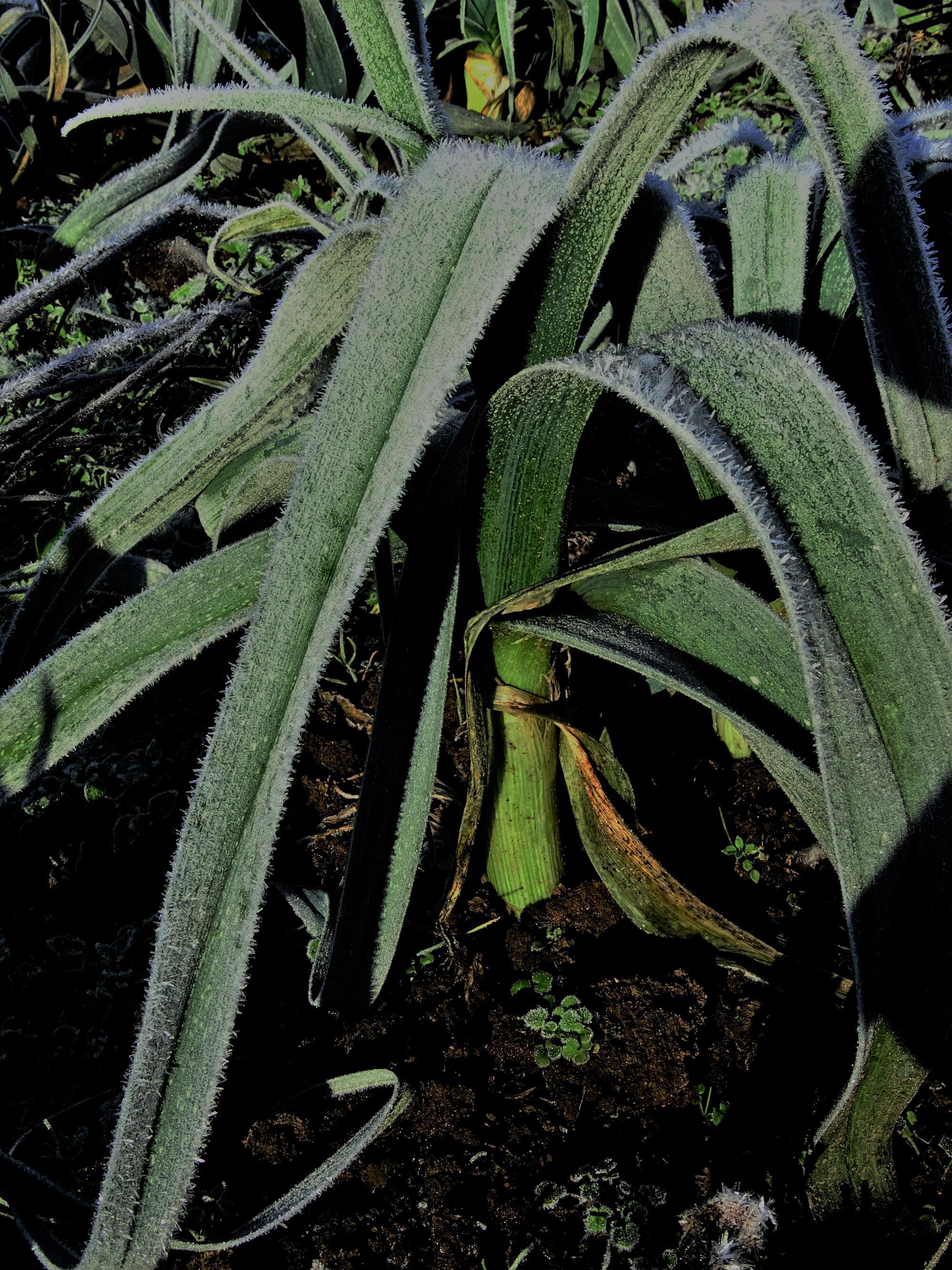
Leeks do not bulb or go dormant in winter. Instead, they continue to grow slowly through the cool season. Harvest time is flexible from fall through winter, but plants not harvested by spring will bolt (Figure 14).
Culinary descriptions
Allium family vegetables are the backbone of countless dishes and cuisines throughout the world. They are versatile and share a characteristic flavor and pungency that is due to various sulfur compounds. These compounds also provide health benefits. Alliums range in flavor and pungency and are used both raw and cooked. Their flavor depends greatly on the variety and growing conditions.
Bulb onions
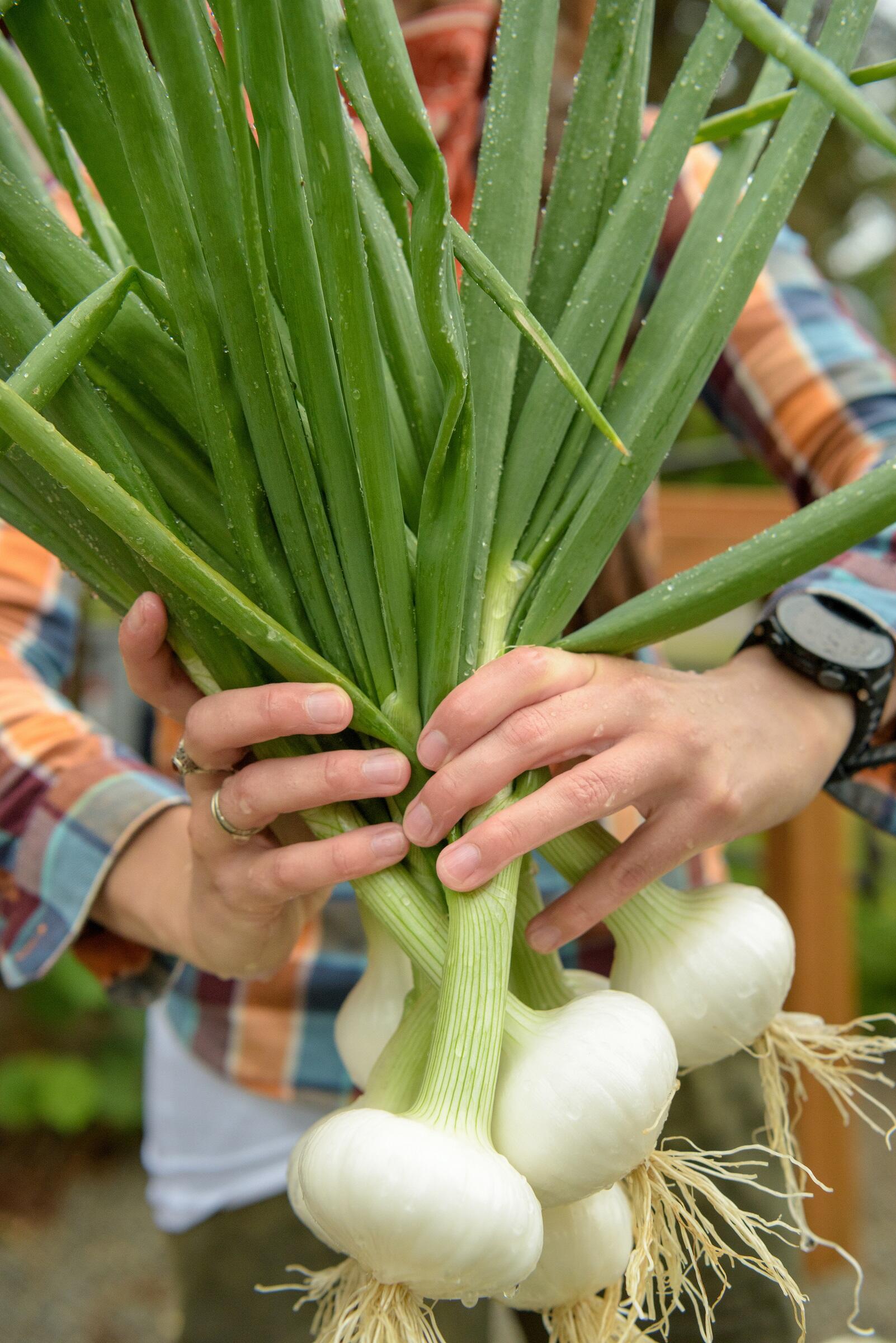
Freshly harvested onions (often seen sold at markets with their tops attached) have a sweeter, milder flavor than onions cured for storage. Yellow onions are an all-purpose onion, they have a balance of astringency and sweetness and become sweeter the longer they cook. White onions have a sharper and more pungent flavor than yellow onions. Red onions have a strong but sweet flavor. They are often consumed raw because they lose color when cooked.
Cipollini onions and shallots
Cipollini means "little onion" in Italian. They are distinctive, small-bulb onions with a slightly flattened shape (Figure 15). With thin skins and translucent white flesh, they are sweeter than other onion bulbs, which makes them perfect for roasting or caramelizing. Shallots are also smaller than other bulb onions and have a sweet, delicate, slightly garlic flavor.
Garlic
This bulb has the strongest flavor and pungency of the alliums. Raw garlic can be especially strong with a hot bite that mellows and sweetens considerably with cooking.
Field preparation and planting
Alliums are shallow-rooted and prefer airy, moist soils with abundant nutrients for much of their life cycle. They can be planted as seeds or transplants (green onions and leeks), sets (bulb onions), or bulbs/cloves (shallots and garlic). Green onions and leeks are normally transplanted in the field either by hand or with a mechanical transplanter.
Do not overcrowd bulb onions as this can distort the shape of the bulb; allow 6- to 8-inch in-row spacing. Leek transplants can be planted 3 to 4 inches deep in individual holes or trenches to produce long white stems. Soil can also be hilled around the stems as the plant grows larger. See Table 1 for typical planting times of different crops.
Plant nutrients
Alliums have moderate requirements for nitrogen. Bulb onions have relatively high requirements for phosphorus and potassium, and other alliums have modest phosphorus and potassium requirements.
Sulfur contributes to the pungent flavor of alliums. Application of sulfur fertilizer has increased pungency in some Treasure Valley, Idaho, trials, but normally, enough sulfur is available from other fertilizers or organic amendments. Once bulbing has started, nutrient requirements diminish. Cut off water two weeks prior to harvest except with leeks.
For more information see Nutrient management for onions in the Pacific Northwest (PNW 546), Nutrient management for sustainable vegetable cropping systems in Western Oregon (EM 9165), and Soil nitrate testing for Willamette Valley vegetable production (EM 9221).
Diseases
Clean, disease-free planting stock is especially important for preventing diseases in alliums. Many diseases can be prevented by purchasing clean stock from reputable sources and inspecting bulbs prior to planting.
Potential diseases that can be brought to the field on planting stock include white rot, basal rot and botrytis. Infection by white rot may make the soil unusable for alliums for many years. If you are saving your own garlic or shallots for replanting, avoid infested fields and inspect the bulbs closely for symptoms of these diseases.
Common diseases in winter alliums include the following:
- Botrytis squamosa: This is a foliage-infecting pathogen that is problematic during cool, wet weather. The pathogen overwinters in field debris. Crop rotation and removal of debris are helpful to reduce infection. For more information, see Onion — Botrytis leaf blight.
- Bulb rots: Several bacteria and yeast can cause bulb rots. These pathogens favor flooded fields and wet weather. The pathogens often enter the plant through wounds. For more information, see Onion — bulb rots.
- Neck rot: Neck rot is caused by Botrytis aclada. Symptoms appear initially as water-soaked tissue that will turn bulbs soft, especially in storage. The pathogen overwinters on plant debris or in the soil and can also be seedborne. Excess nitrogen, wet conditions and improper curing or storage can contribute to crop losses. For more information, see Onion — neck rot.
- Rust: Puccinia allii is distinguishable by yellow flecks and spots, which become orange and elongated. Disease development is favored by cool, wet weather. To reduce pathogen incidence, rotate crops, plow under crop residue and provide good spacing to promote air movement. For more information, see Garlic — rust.
- White rot: Sclerotium cepivorum infects plants in the Allium genus, causing basal leaf decay, white fungal mats and root rot, sometimes leading to plant death. This fungal pathogen’s sclerotia can survive in the soil for 20–30 years, making growing alliums in infected soils very difficult. Use pathogen-free planting material. Hot water seed treatment can be used for garlic. However, it will not destroy all the pathogen within the cloves. Be sure to buy bulbs from known sources that are not grown in infested fields. Inspect bulbs for visible signs of white rot. For more information, see Onion — white rot.
- Nematodes: Several species of nematodes can occur on alliums. Symptoms include stunting, root lesions, yellow tops and premature ripening. Wounding by nematode feeding can increase infection by pathogens. Rotate crops and use clean planting material. Hot-water treatment is sometimes used in garlic but does not kill nematodes in intact bulbs. Nematodes can be transmitted on bulbs but not on true seed. For more information, see Onion — nematode, lesion, Onion — nematode, stubby-root and Garlic — nematode, stem and bulb.
Refer to the Pacific Northwest Disease Management Handbook for detailed management information about other diseases that can damage alliums.
Pests
Pests with a broad host range that can damage alliums are discussed in the “Field management” section above. Host-specific pests that are common in winter alliums include:
- Eriophyid mites: Eriophyid mites (Aceria tulipae) are the most important insect pest of garlic in the Pacific Northwest. These mites feed on living clove tissue and reduce quality and storage potential. See Eriophyid mites on stored garlic and Cornell University’s Eriophyid mites — micro-scourge of garlic for more information.
- Bulb mites: Rhyzogyphyus sp. are shiny, white mites that are found under the root palate of onion bulbs and garlic cloves. Damage from mites allows for entry of disease. Mites stunt plant growth and promote rotting diseases in storage. Rotate crops, inspect and use clean planting material to avoid this pest. Bulb mites can be transmitted on bulbs and onion transplants, but not on true seed. For more information, see Onion — bulb mite.
- Cutworms/armyworms: Various species of armyworm and cutworm consume foliage of alliums. Life cycles vary, therefore feeding can occur during spring, summer and fall. Fall tillage to destroy overwintering pupae and weed management are important for these insects.
- Thrips: Thrips tabaci are very small insects about 0.03-inch long. They cause stippling damage and can often be found feeding at the base of leaves. Thrips can reduce bulb size of onions and reduce marketability of leeks. Populations increase on weeds, therefore manage weeds and practice field sanitation. Bright green (glossy with thin wax layer) leaf varieties are less attractive to thrips than blue-green (nonglossy with thick wax layer) leaves. Minute pirate bug (Orius insidiosus) and other predators can help reduce thrips populations. For more information see Onion — thrips.
Refer to the Pacific Northwest Insect Management Handbook for detailed management information about other pests that can damage winter alliums.
Weeds
Due to the shallow-rooted and slow-growing nature of allium crops and foliage that does not shade out weeds, alliums are susceptible to reduced yield due to weed competition. Keep the crop free of weeds, especially during establishment. Try to rotate alliums to fields where weeds haven’t recently gone to seed in large numbers and where weed pressure is low.
Harvest and handling
Harvest mature bulb onions when most of the necks are soft and tops have fallen. You can roll or bend the tops down by hand to hasten the drying process. Lift from the field with digging forks, trim roots and strip off dead outer leaves.Winter-grown onions are more succulent and have fewer protective scales, so use care when handling and protect from sunscald when curing.
For garlic, check for harvest maturity in late June to early July. Garlic is ready when the head or bulb is plump with numerous cloves and the skin is dry and papery. Garlic left in the ground too long will not store well.
Shallots should be harvested when they are well-colored and 1 to 2 inches in diameter. Leek and green onion (scallion) harvest is flexible due to winter field storage and can vary by planting date, variety, or market conditions. See Table 1 for typical harvest times of different crops.
Storage
Cure onions, shallots and garlic before storing them. Wet weather during harvest will require indoor curing. Cure them in a dry, shaded area with good air circulation until the skins are dry, then remove tops and roots. After curing, store them in a cool, dry area until sale or use. See Drying and curing for more information.
Yellow pungent bulb onions are best for storage followed by red and white types. Cipollini onions typically store well for a long time. Sweet onions do not store well. Shallots store longer than onions. Soft neck garlic stores longer than hard neck types. Leeks and green onions hold in the field and can be refrigerated or stored in a cooler after harvest. They are perishable after harvest.
Varieties
Popular varieties of winter alliums include:
- Garlic: ‘Italian Late’, ‘Kilarney’, ‘Music’, ‘Nookta Rose’ and ‘Premium Northern White’.
- Leeks: ‘Bandit’, ‘Belton’, ‘Blue Solaize’, ‘Curling’, ‘Giant Musselburg’, ‘Gladius’, ‘King Richard’, ‘King Sieg’, ‘Lexton’, ‘Liege’, ‘Mechelen’, ‘Megaton’, ‘Pancho’, ‘Siegfried Frost’, ‘Tadorna’ and ‘Verdonnet’.
- Onions: ‘Bianco di Maggio’, ‘Desert Sunrise’, ‘Red Rock’ and ‘Walla Walla’.
- Shallots: ‘Ambition’, ‘Conservor’, ‘Ed’s Red’ and ‘Sante’.
Heading brassicas
Brussels sprouts, cabbage, cauliflower, kalette and sprouting broccoli.
Heading brassicas are usually hardy to zones 8 and 9. Night-time temperatures below 15°–20°F can damage or kill winter brassicas, and cold tolerance varies among varieties. Sudden temperature drops without snow are more damaging than extended cold with snow.
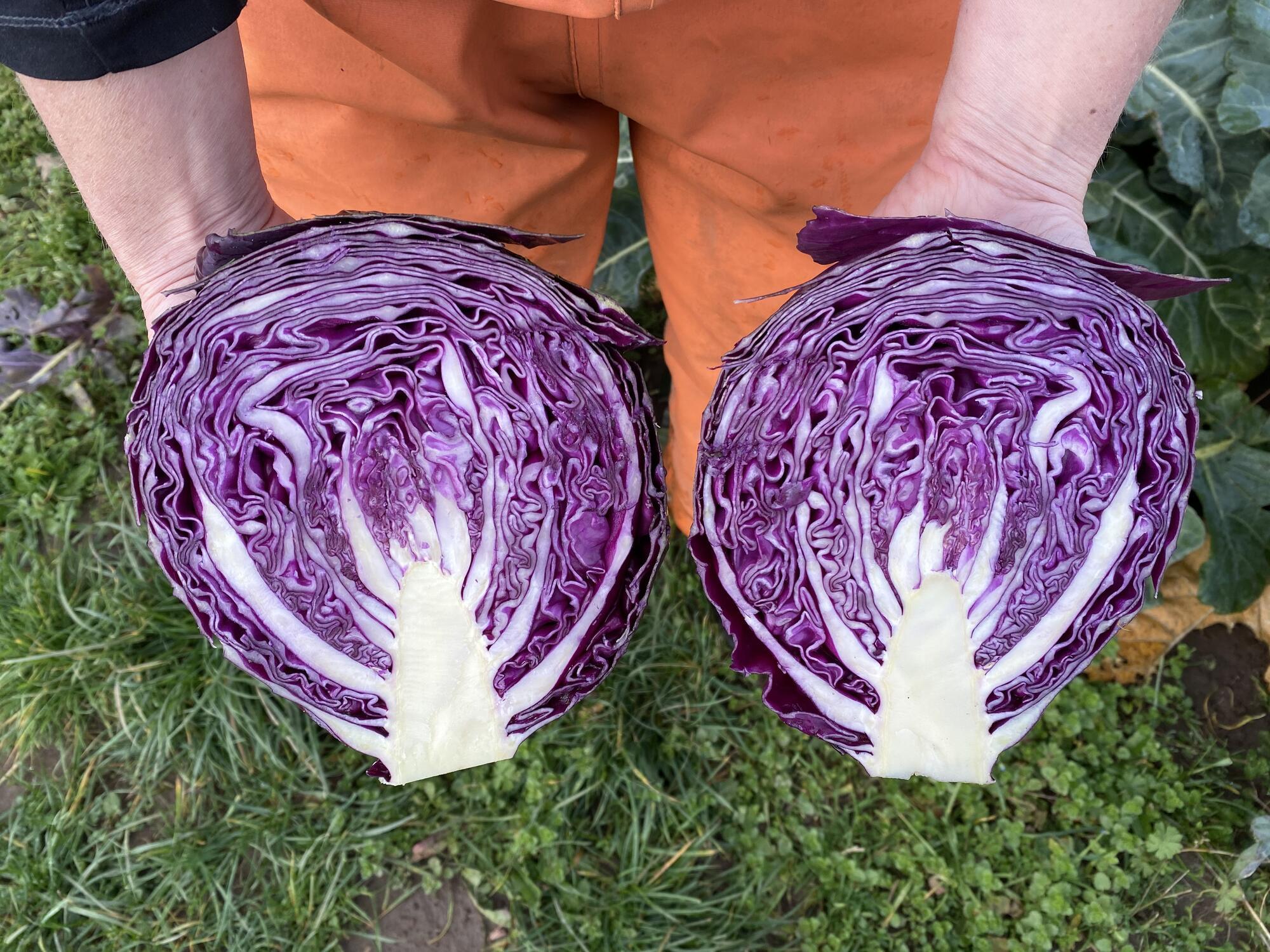
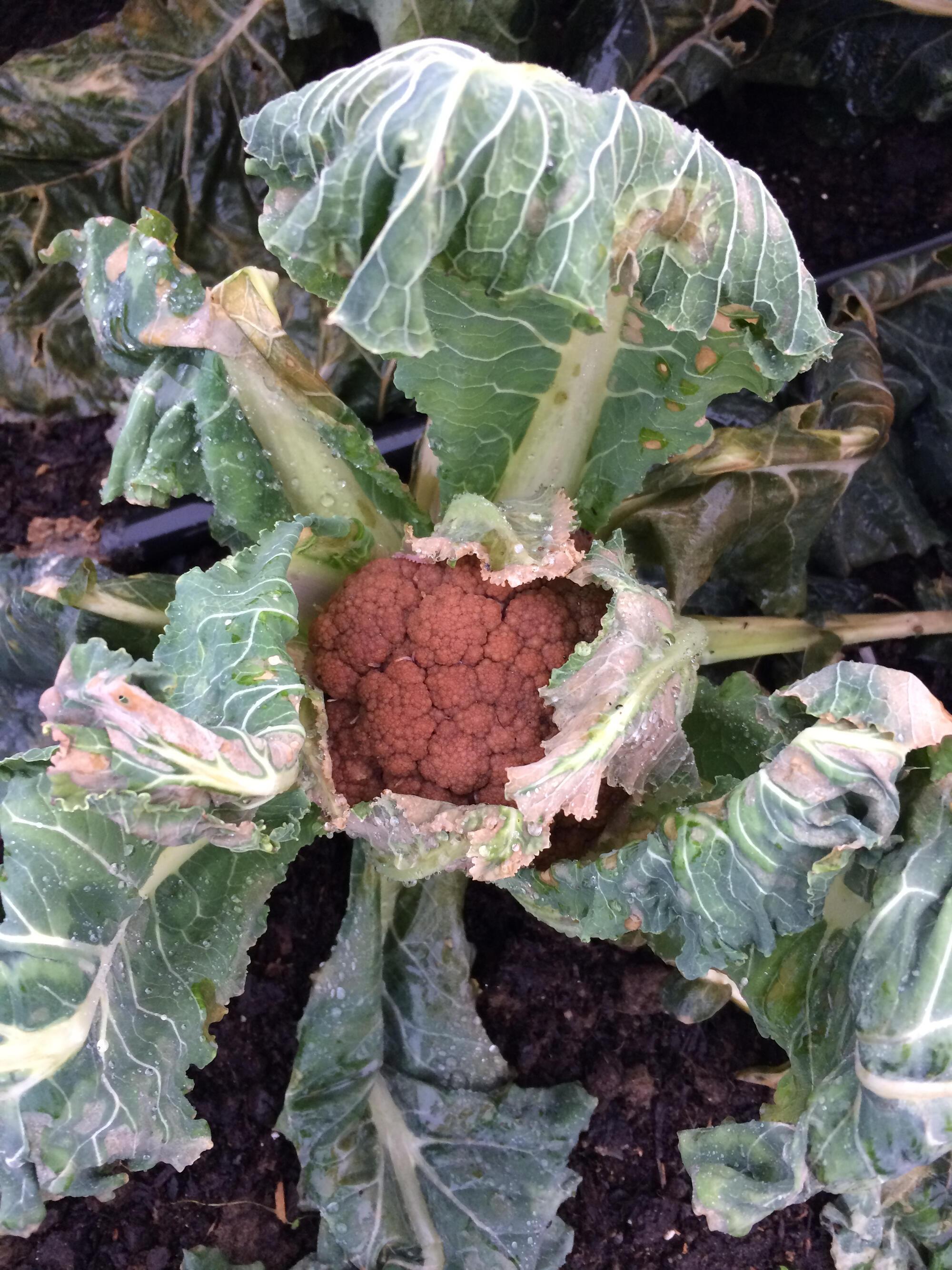
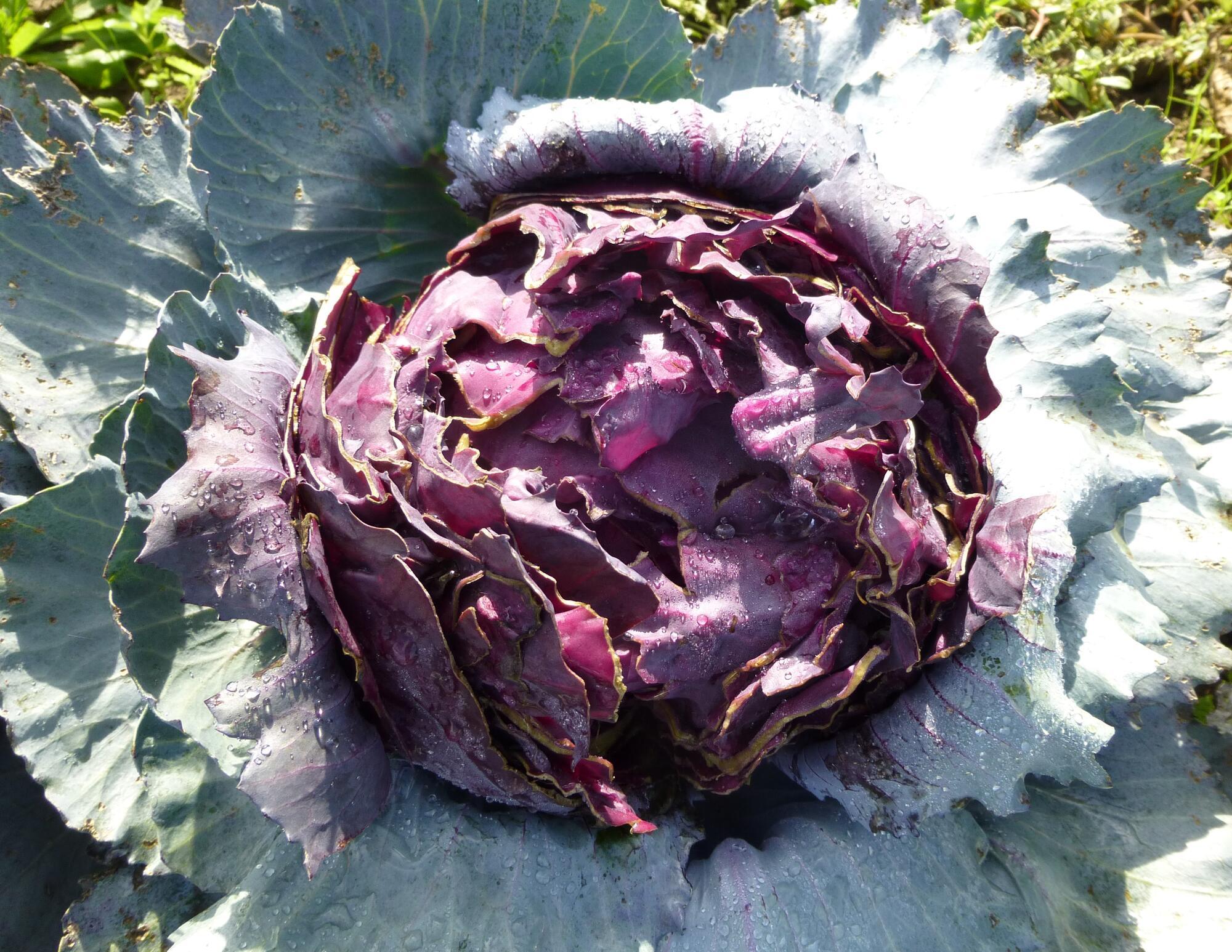
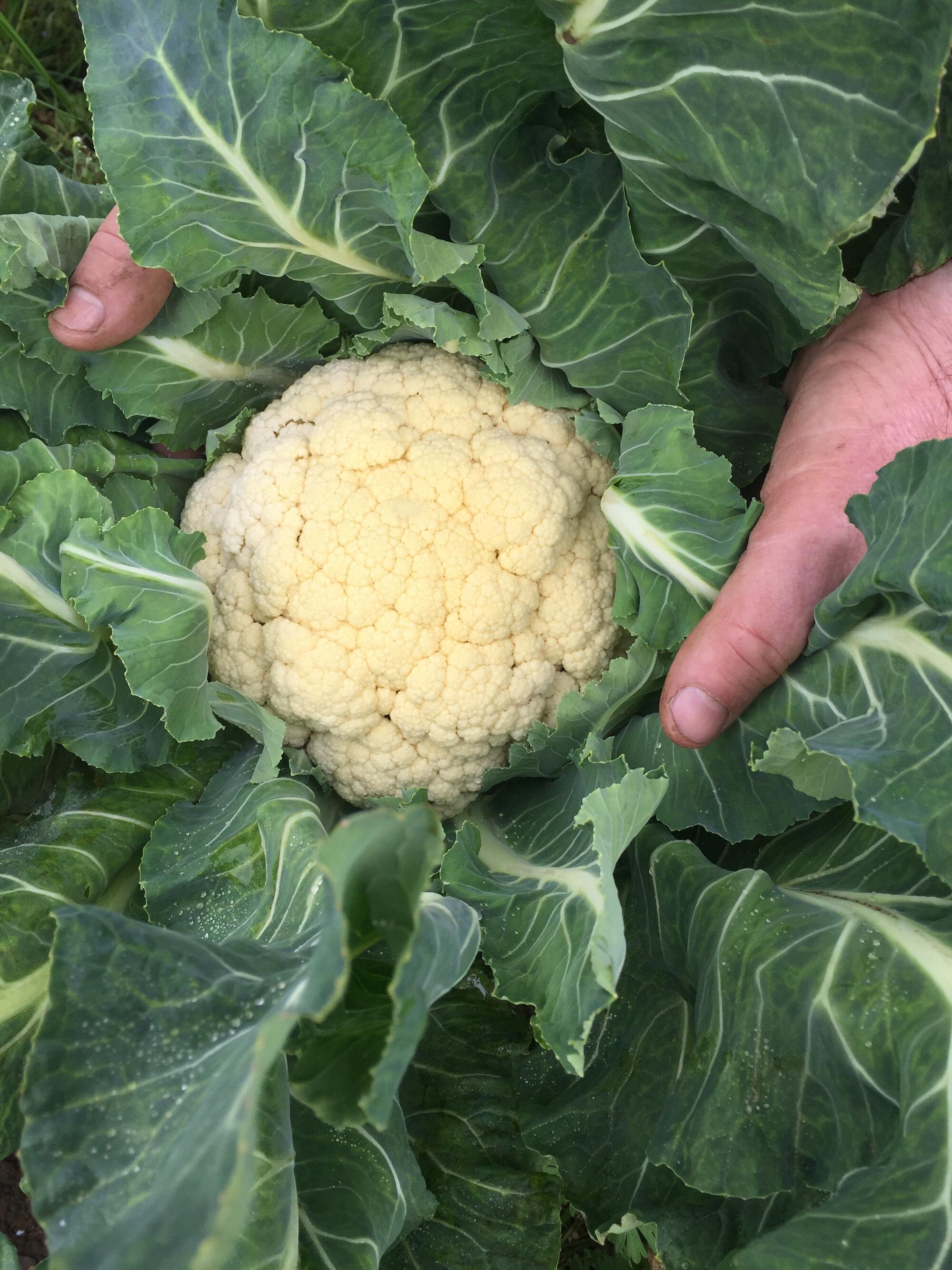
Winter cauliflower, cabbage and broccoli are all less dense than their summer counterparts (Figure 16). Savoy and semi-savoy cabbage varieties are especially cold-hardy. Most consumers buy summer varieties imported from warm climates, but there is a year-round market for locally grown fresh produce.
Culinary descriptions
Brussels sprouts
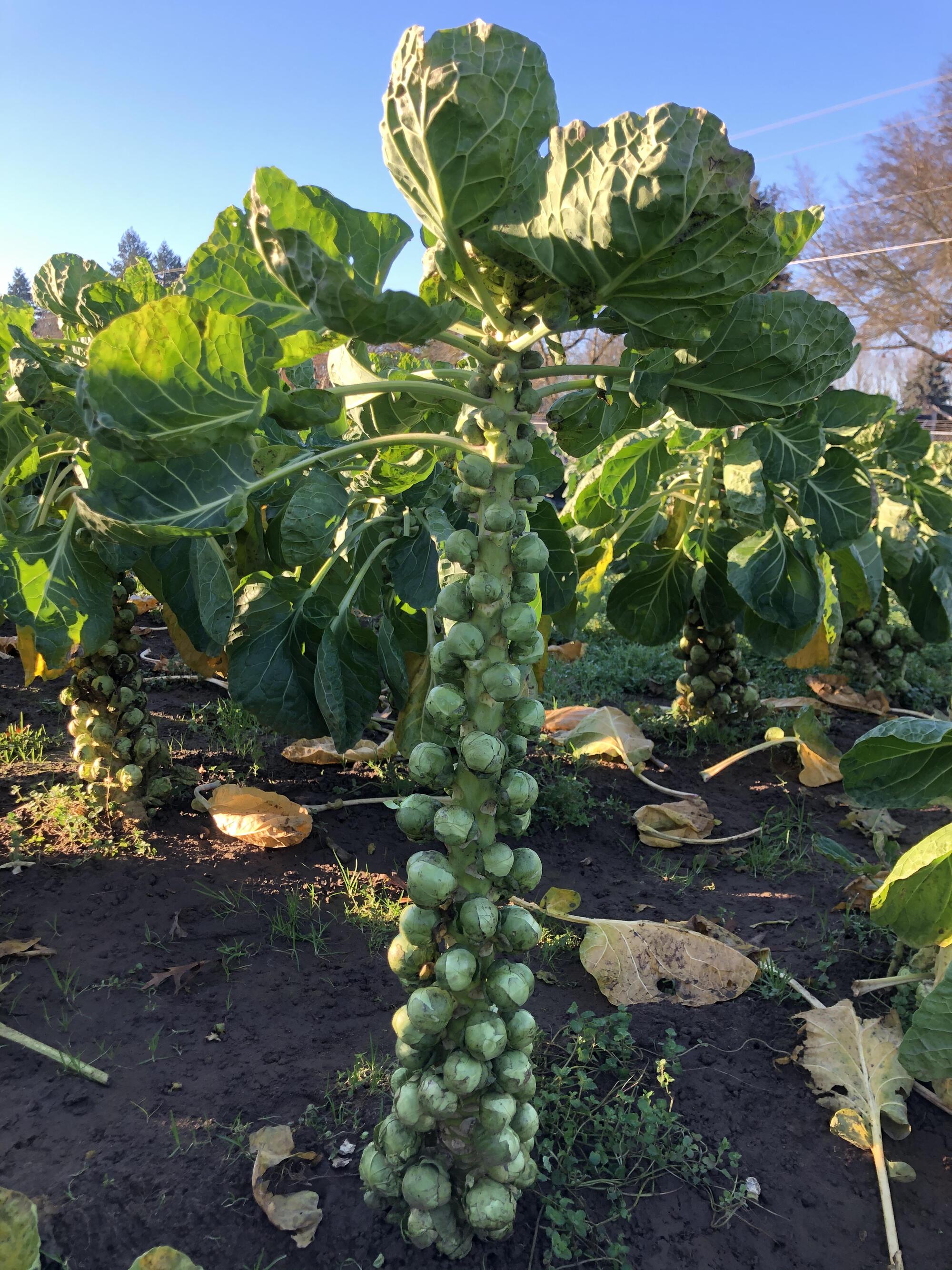
Like many winter vegetables, cold weather brings out the sweetness of Brussels sprouts. They taste similar to cabbage and they can be prepared in many different ways. To prepare sprouts for sautéing or roasting, remove yellowing leaves and cut in half or quarters rather than leaving whole. A common problem with Brussels sprouts is overcooking, so be sure to cook until just tender, not allowing them to become mushy whether you are sautéing, roasting, boiling or steaming. Sprouts can also be finely sliced or shredded raw and used in a salad or slaw. Brussels sprouts pair well with olive oil, bacon, roasted nuts, blue cheese and whole grains.
Cabbage
Crisp and pungent, cabbage is very versatile and can be used raw and shredded in salads and slaws, pickled, or cooked in many ways, including steaming, roasting, braising and sautéing. Savoy cabbage is a little more tender than smooth cabbage without the same raw crispness, so it's often best when cooked. Cabbage pairs well with ginger, garlic, beets and rich meats like beef, lamb and pork.
Cauliflower
Cauliflower flavor is at its best in winter and into early spring after the cold weather has brought out its sweetness (Figure 17). The vegetable is consumed both raw and cooked, but roasting brings out the deepest flavor.
Cauliflower's flavor is delicate, so recipes can go in two different directions — one pairing it with other mild flavors and the other pairing with stronger flavors. The more delicate recipes pair cauliflower with ingredients such as leeks, parsley and butter that make for simple dishes. Cauliflower is also paired with bolder ingredients like hot peppers, horseradish, mustard, lemon, capers, olives, curry, garlic, aged cheese and vinegar.
Kalettes
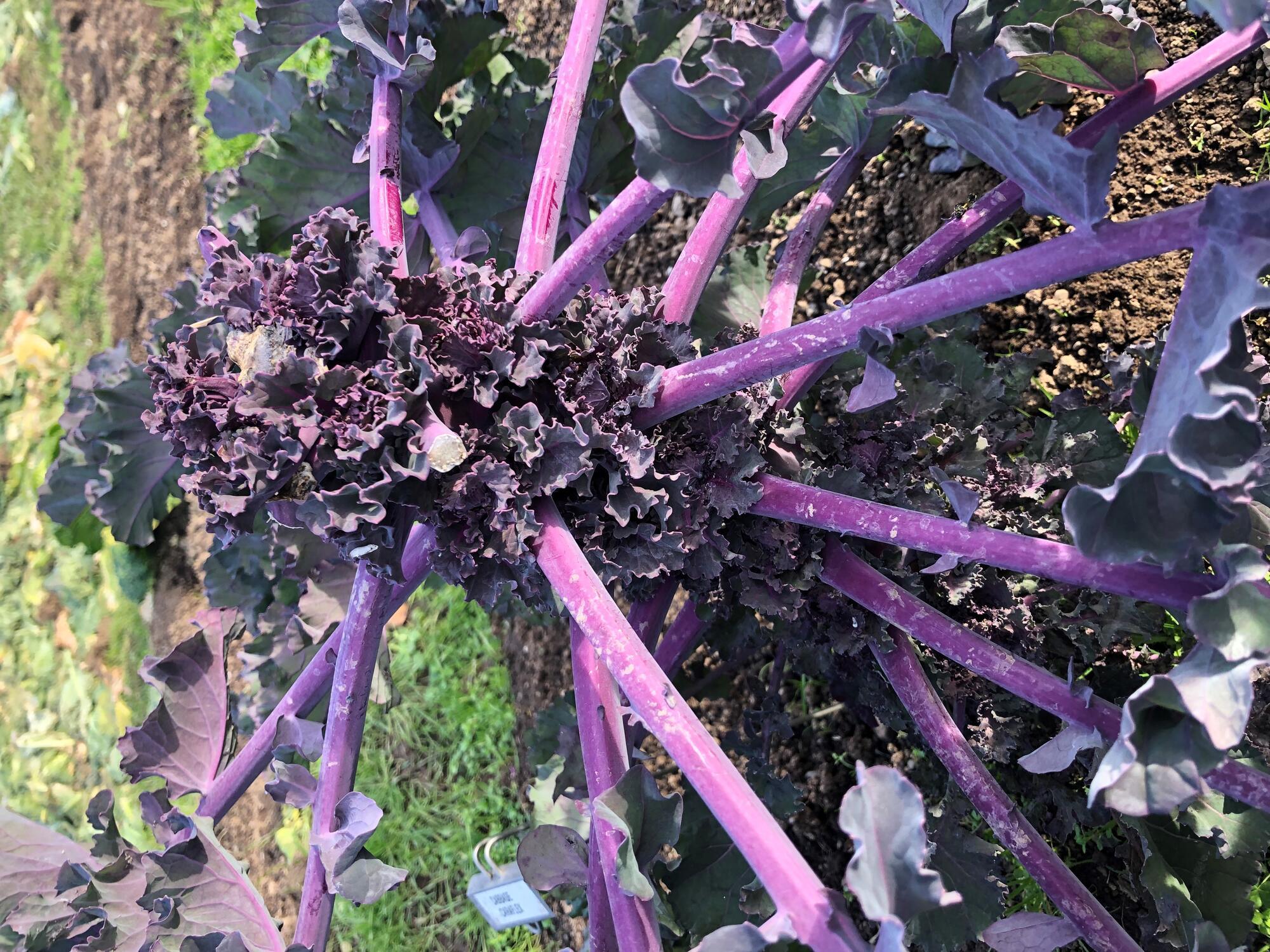
Kalettes are a cross between kale and Brussels sprouts. Like Brussels sprouts, the plants form tall stalks bearing axillary buds, also known as florets (Figure 18). Kalettes can be used in similar ways to Brussels sprouts but they cook much faster.
A great way to use them is left whole, tossed in olive oil and salt, then spread out on a baking sheet. Don’t overcrowd the pan; that will result in steaming the kalettes. Place in a 400°F oven and roast until they begin to brown at the edges. Toss with lemon zest, parmesan and chili flakes. The same method can be modified to have an Asian flair with fish sauce, mint, cilantro and minced peanuts. The combinations are endless for a simple roasted dish.
Sprouting broccoli
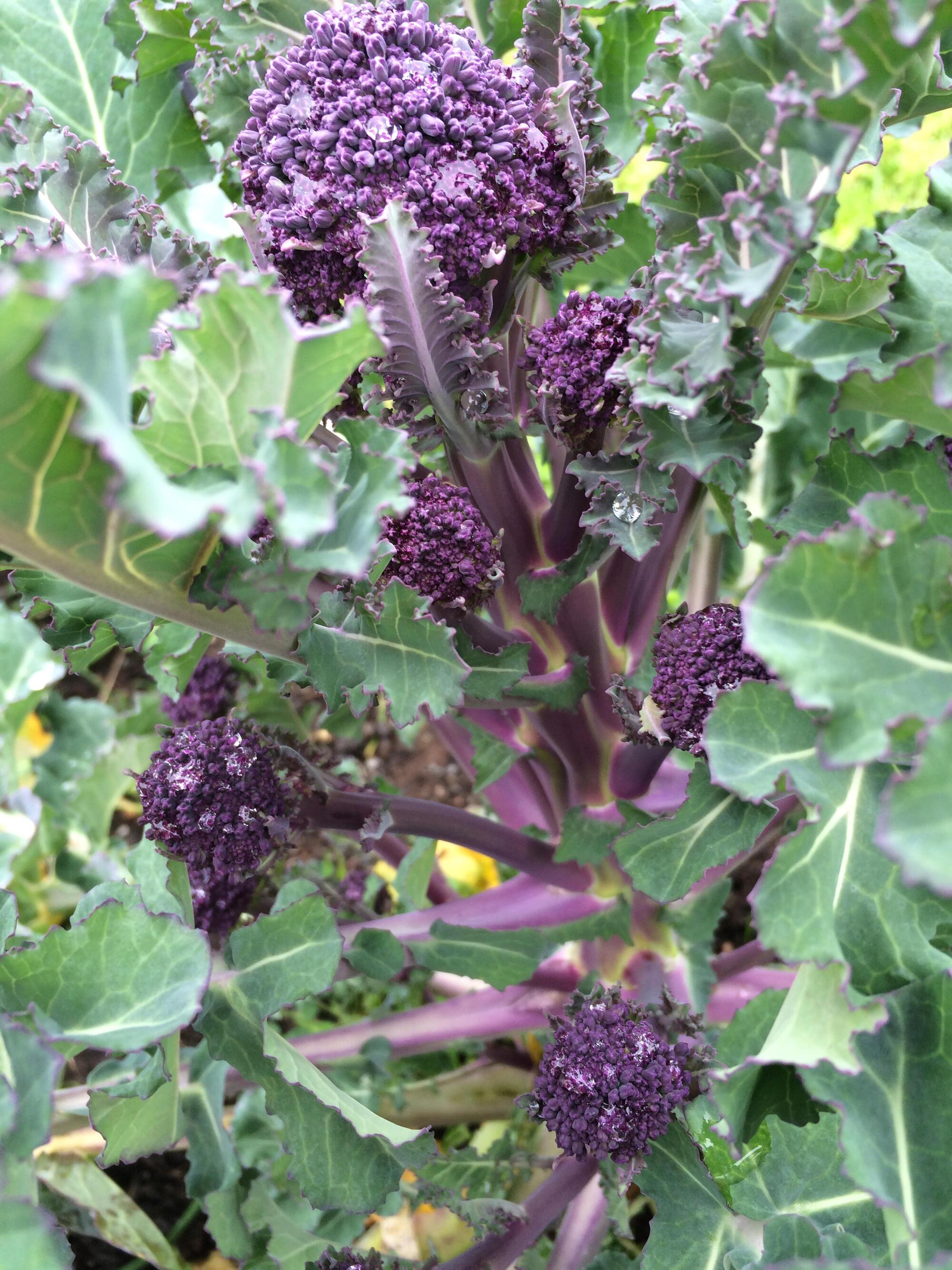
Sprouting broccoli is gaining popularity as a gourmet produce item distinct from traditional summer broccoli types (Figure 19). The best varieties have tender stems, sweet flavor and buds that are about 2 inches across and a beautiful purple color.
Roasting is the preferred cooking method for bringing out the best flavor and is often simply dressed with olive oil, lemon and hot pepper flakes. Sprouting broccoli can also be blanched briefly, then plunged in an ice bath and drained to be used alongside other vegetables to be dipped in romesco or other sauce.
Field preparation and planting
Winter brassicas are cold-tolerant plants that can suffer from high temperatures during transplant production in greenhouses or shortly after transplanting. Use shade cloth, ventilation or both to reduce heat stress during hot weather in greenhouses. Transplant into preirrigated fields and avoid drought stress during establishment. Heading brassicas are usually transplanted but can also be direct-seeded. Allow 3–4 weeks for seedlings to get to 2–4 true leaves before transplanting.
Winter brassicas are all planted at a similar time depending on the crop type. Genetics (that is, cultivar or variety) then determines the specific harvest date. Cabbages, Brussels sprouts and kalettes form heads or sprouts in the fall, and these grow larger in the spring before flowering. The heads and sprouts are vegetative structures that are harvested before flower initiation.
The earliest stages of flowering (bolting or splitting) marks the end of harvest (Figures 22A and B). The length of time they can “hold” in the field without bolting varies by cultivar. Winter cauliflower and sprouting broccoli heads are the flower buds; they are harvested after the plants have been vernalized by cold winter temperatures and flowering has been initiated.
Petal emergence or flower stalk elongation marks the end of harvest. The time of flower initiation in the spring varies by cultivar, so choose cultivars with different maturity dates to stagger harvests. See Table 1 for typical planting times of different crops.
Nutrient management
Brassica crops require a lot of nitrogen. However, in fields and gardens with a history of high rates of organic amendments like cover crops, compost or manure, little or no preplant fertilizer may be needed for heading brassicas planted in late summer.
Preplant soil nitrate test results greater than 25 parts per million indicate that no additional nitrogen is needed at transplanting. pH and macro- and micronutrients are managed as indicated in Nutrient management for sustainable vegetable cropping systems in Western Oregon (EM 9165). In early spring, some supplemental nitrogen can be helpful for overwintered heading brassica crops. For more information about nutrient management in heading brassicas, see the “Field management” section above and references cited there.
Plant diseases
Clean, disease-free planting stock is important for preventing seed and soilborne diseases in brassicas. You can prevent many diseases by purchasing clean seed and transplants and with seed treatments. Oregon and Washington require that all brassica seed planted must be accompanied by a test result stating that the untreated seed is free from black leg. The states do this to manage this new disease (see “Black leg” section below for more information). Check with your supplier to make sure the seed you are using meets this requirement.
A five- to six-year crop rotation without brassica family crops or weeds can reduce the risk of clubroot, black leg and other diseases that are specific to brassica crops. In practice, this may be difficult because so many popular crops are in the brassica family, and weeds in the brassica family are also fairly common west of the Cascades. White mold (discussed in the “Field Management” section) has a very wide host range and cannot be readily controlled by crop rotation. Other diseases that are more specific to winter brassicas include:
- Clubroot: Plasmodiophora brassicae is easy to identify from the club-like galls formed on plant roots. Avoid bringing clubroot onto your farm or garden, or spreading it if you find it. Avoid planting winter brassicas in fields with a known history of clubroot. If you have to plant into an infested field, increase in-row pH to at least 7.0 by applying agricultural lime. Clubroot spores have a 4-year half-life. Rotations of 4 to 8 years with no brassica family crops can reduce disease risk. For more information, see Integrated clubroot control strategies of brassicas: Nonchemical control strategies.
- Black leg (Phoma lingam), light leaf spot (Cylindrosporium concentricum) and white leaf spot (Pseudocercosporella capsellae) are important diseases that have recently been introduced to Oregon. Winter brassica crops are at high risk from black leg and light leaf spot because they are vulnerable hosts during the main infection period in the fall and winter. The states of Oregon and Washington require that all brassica seed that is planted must be accompanied by a test result stating that the untreated seed is free from black leg in order to help manage this new disease. For more information, see Black leg, light leaf spot, and white leaf spot in Western Oregon.
Refer to the Pacific Northwest Disease Management Handbook for detailed management information about the range of diseases that can damage winter brassicas.
Pests
Pests with a wide host range are discussed in the “Field management” section. Cabbage maggot is discussed in the “Root crops” section. Other common pests of winter brassicas include the following.
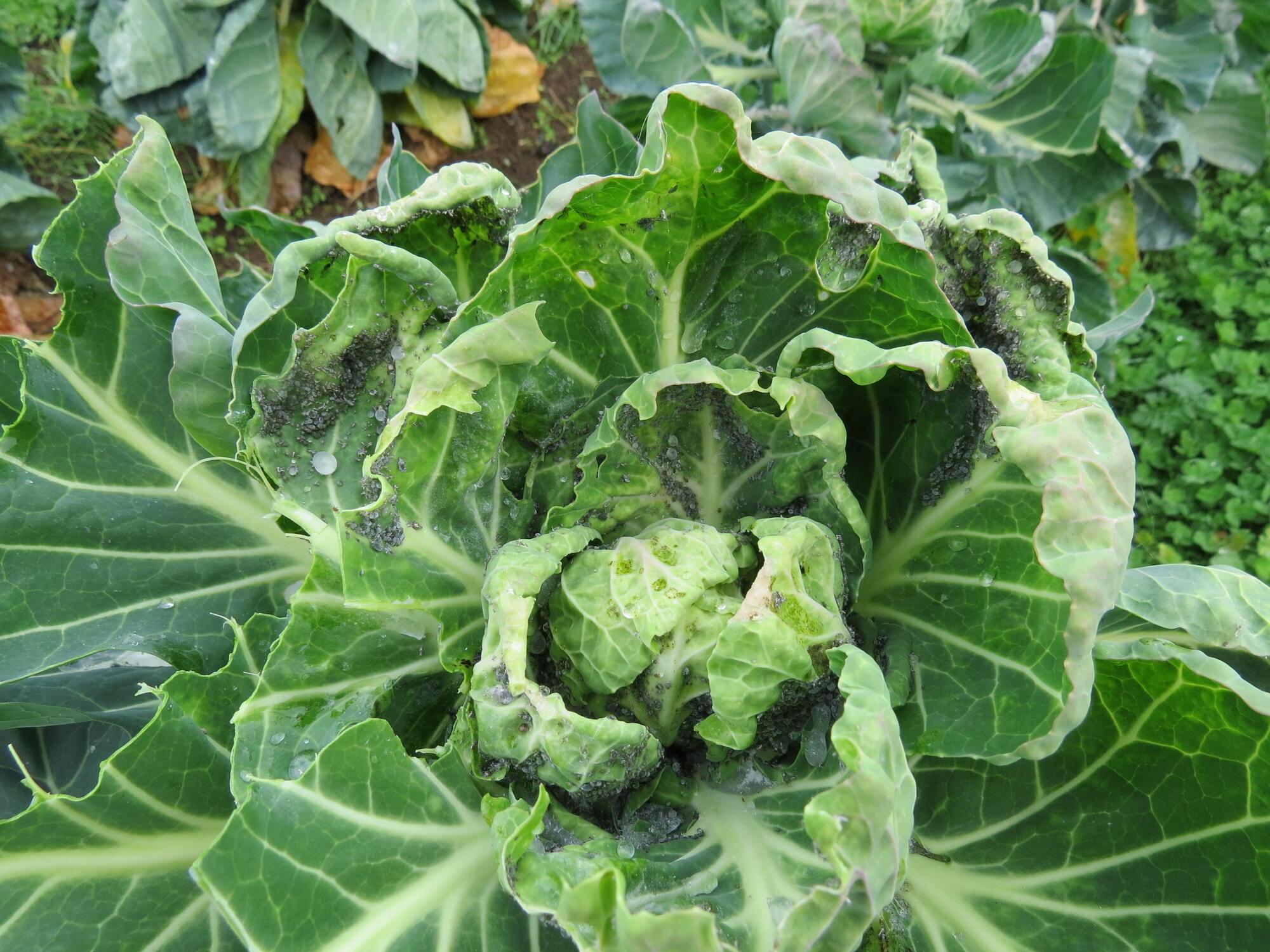
Cabbage aphids: Brevicoryne brassicae can cause serious problems on Brussels sprouts, winter cabbages, kale and other winter brassicas (Figure 20). Populations often stay low during the summer and increase to damaging levels in late summer or fall.
Generalist aphid predators like hoverflies (Syrphydidae family), green lacewings (Chrysopidae family), ladybird beetles (Coccinelidae family), and predatory midges (Aphidoletes aphidimyza) contribute to aphid control. The specialist parasitoid (Diaeretiella rapae) is also common in aphid colonies and easily recognized by the light brown mummified aphid exoskeletons left behind after the adults emerge from their host.
Together, these natural enemies help to keep aphid populations down but often not enough to prevent crop damage. Enhancing natural enemies by providing pollen and nectar sources for adults can increase aphid predation and parasitism significantly, and potentially reduce the risk of crop losses.
Drought stress can increase leaf nitrogen levels and may increase crop susceptibility to aphids. Some varieties with glossy bright green leaves are less preferred by cabbage aphid and more preferred by their natural enemies, while varieties with nonglossy (that is, blue-green) leaves are less preferred by aphids. This difference is due to wax type.
Cabbage aphids reproduce quickly and can often reach damaging levels in the fall despite preventive methods. Monitor susceptible crops and treat if aphids reach damaging levels. This University of California website on cabbage aphid provides suggested monitoring methods and treatment thresholds. This research report from the University of New Hampshire found some organically approved insecticides to be effective when treatments were started in response to monitoring. For more information on aphids in brassica vegetables and management options, see Broccoli, Brussels sprout, cabbage, cauliflower — aphid.
Brassica flea beetles: Phyllotreta cruciferae and P. albionica are black shiny flea beetles that feed on brassica plants. They are different than Epitrix species that feed on crops in the Solanaceae family (that is, potatoes, tomatoes, pepper, eggplants). Flea beetles have enlarged hind legs that allow them to jump when disturbed. This normally makes them easy to identify.
Brassica flea beetles cause shothole damage to leaves, and heavy populations can stunt or kill young brassica transplants. Nonglossy (blue-green) leaved varieties are less preferred by flea beetles, but this effect appears to be weaker than the opposite effect with cabbage aphids.
Floating row cover can be used to protect plants during crop establishment. Established crops can usually tolerate damage. For more information, see Organic management of flea beetles.
Cabbage whitefly: Aleyrodes proletella has recently been introduced to the Pacific Northwest. It has been observed displacing cabbage aphids in the Portland area and may have the potential to become a serious pest in the region. Fortunately, it is not known to vector plant viruses. For more information, see Pest alert: cabbage whitefly and New pest of brassicas in Oregon: cabbage whitefly.
Refer to the Pacific Northwest Insect Management Handbook for detailed management information about other pests that can damage winter brassicas.
Weeds
Weeds are relatively easy to manage in overwintered heading brassica fields. Two to three cultivations during establishment are usually enough. The crop canopy should outcompete weeds by late September or October, and most summer weeds stop germinating in the fall. Winter weeds or cover crops growing between rows can help reduce the risk of nutrient leaching and help protect your soil over the winter and during harvest.
Harvest and handling
Brussels sprouts are often “topped” by cutting off the growing point at the top of the plant when the lower sprouts are about a half-inch in diameter. This University of New Hampshire study found that the effect of topping on sprout uniformity and yield varies with variety and harvest time.
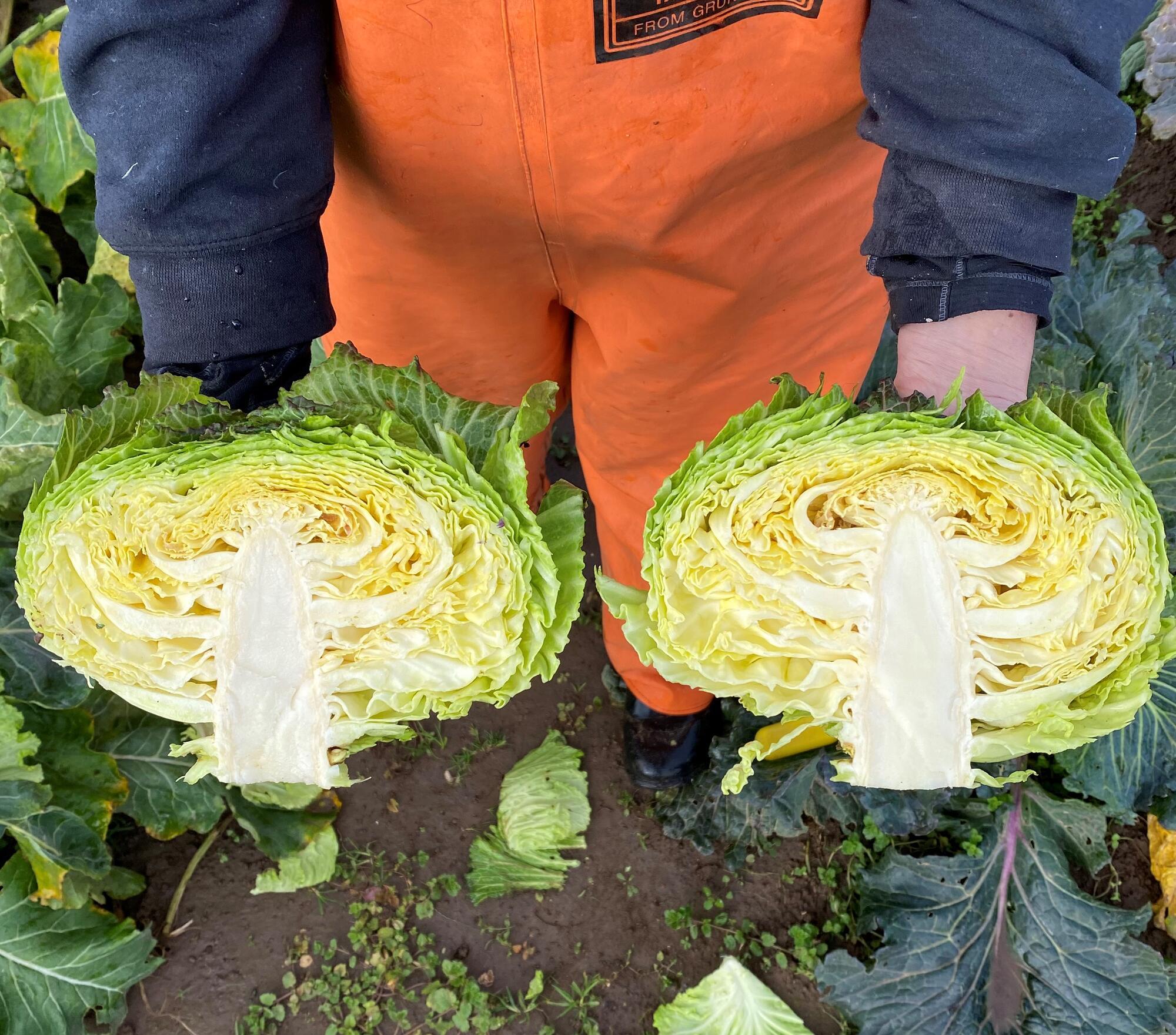
Cabbages and Brussels sprouts are harvested over the winter and in early spring before they begin to bolt (Figure 21). Early bolting marks the end of harvest. Bolting can be monitored by cutting open heads and looking for early lengthening of the internal stem in each head (Figures 22A and 22B). Cabbage heads and Brussels sprouts elongate and then split when they start to bolt. At this point, the harvest period is over.
Storage
Optimal post-harvest storage climate for winter brassicas is 36°F and 98% to 100% humidity. Winter cabbages can store for as long as three months in these conditions. Brussels sprouts and winter cauliflower can last up to two months in cold storage. Sprouting broccoli only lasts a few weeks.
Varieties
Some popular varieties of heading brassicas suited for winter production include:
- Brussels sprouts: ‘Igor’, ‘Nautic’ and ‘Redarling’.
- Cabbage: ‘Deadon’, ‘January King’, ‘Marabel’, ‘Purple Cape’, ‘Ruby Perfection’ and ‘Wirosa’.
- Cauliflower: ‘All The Year Round’, ‘Fredor’, ‘Medaillon’, ‘Picasso’ and ‘Prestige’.
- Kalette: ‘Autumn Star’, ‘Misteltoe’ and ‘Snowdrop’.
- Sprouting broccoli: ‘Bonarda’, ‘Burgundy’, ‘Mendocino’, ‘Red Fire’ and ‘Rudolph’.
Leafy greens
Leafy greens are a diverse group of crops that span several plant families. They are grown for their foliage, which may be consumed fresh or cooked. In some cases, they are used as a seasoning. Parsley is an example. Many of these crops can be grown year-round and the hardiest of them provide nutritious produce throughout the winter. See Table 1 for some general guidelines regarding cold hardiness and typical planting and harvest times of different crops. Cold hardiness and time to maturity varies widely between crop types and varieties within a crop, so check with your seed supplier for information about the varieties you are interested in growing.
Culinary descriptions
Arugula
Also called rocket, rucola and Italian cress. Wild arugula is called selvetica and has smaller, more-toothed leaves. With a tender texture and strong, peppery flavor, arugula has an exciting heat and bite similar to watercress and horseradish. Arugula is used raw in salad, on top of pizza and as a base for pesto. It can also be used wilted into a variety of dishes, including pasta, cooked potatoes and soups. It pairs well with olive oil, vinegar, lemon, anchovy, cheese, fruits and meats.
Chard and beet greens
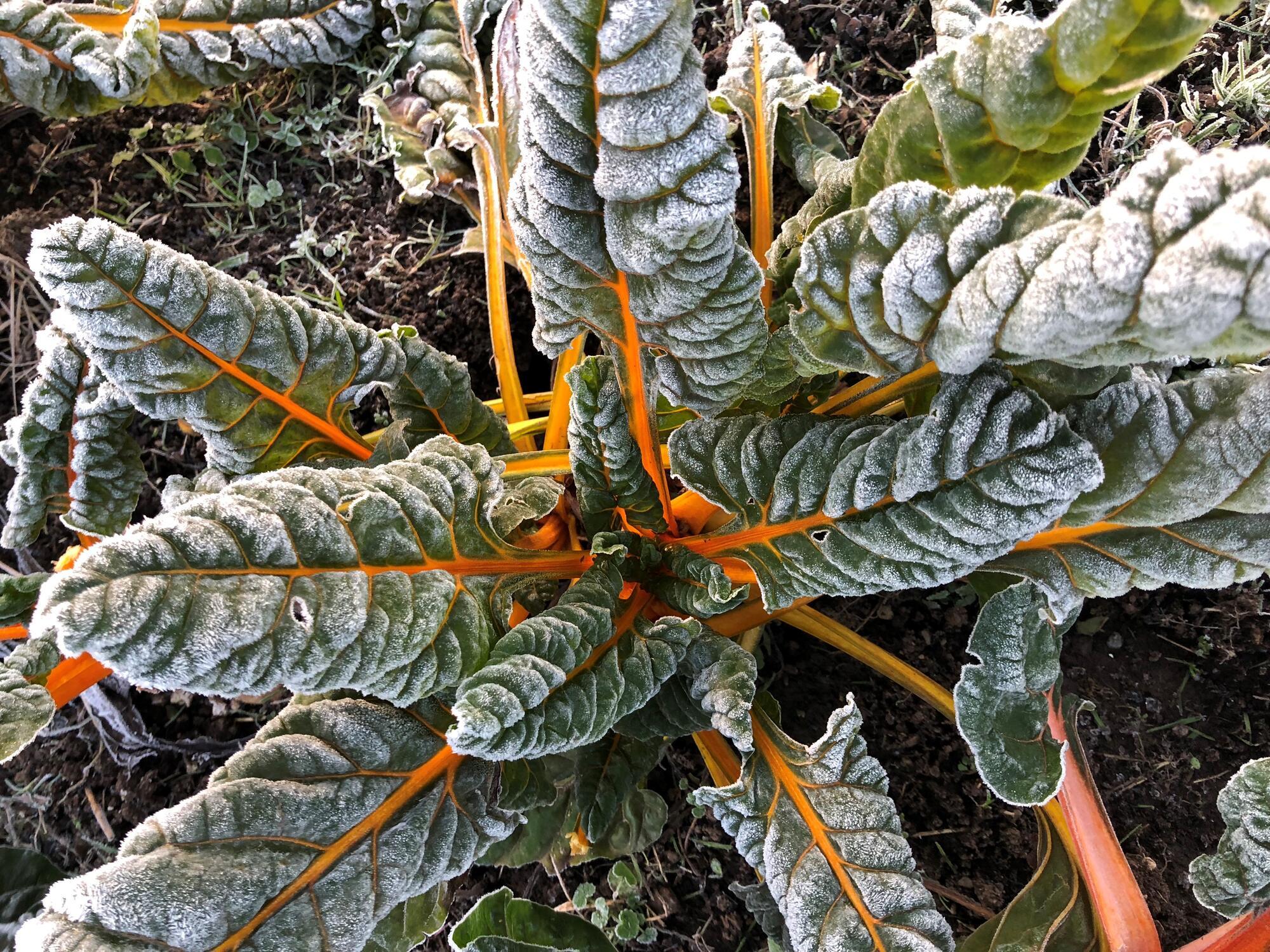
Although these two are the same species and can be used interchangeably in most dishes, the flavor of chard and beet greens differ in that beet greens typically have a stronger, earthy and slightly saline flavor. Chard with colored mid-ribs (Figure 24) are more bitter and stronger than the white-ribbed types. The nonsavoy, solid green Italian ‘bietola’ is the mildest type. They can all be eaten raw or cooked. They can also be sautéed in olive oil and garlic then added to a gratin, frittata, omelet or scrambled eggs; incorporated into a pasta dish or soup; or served as a side dish.
Endive and escarole
Annual endive and escarole (Cichorium endivia) are close relatives to biennial radicchio (Cichorium intybus) and have a similar bitter flavor. Endive and escarole lack red pigments, so they are typically less bitter than radicchio and have sturdier leaves than lettuce.
They are well-suited to eating both raw and cooked. Soaking the cut leaves in ice water for at least 30 minutes to leach out the bitter compounds, as well as cooking the leaves, mellows the flavor of both endive and escarole. The inner blanched leaves of the loose heads are much sweeter.
Endive and escarole pair nicely with nuts and nut oils; stronger flavors such as anchovy, garlic and hot pepper; rich ingredients like cheese, cream, eggs and cured meats; and hints of brightness like crisp fruits.
Kale and collards
Kale and collards are both Brassica oleracea. The leaves vary widely in shape, sizes, hues, waxiness and texture (that is, savoy or ruffled leaves versus smooth leaves) depending on the type and cultivar.
They are heartier greens that can be consumed raw or cooked. If used raw in a salad or other recipes, leftovers can last much longer in the fridge than lettuce. If used in a salad, it’s best to cut thinly and massage the dressing into the greens or toss the greens with the dressing and allow to sit for five to 10 minutes for the kale or collards to soften slightly.
Kale and collards are delicious sautéed in olive oil and garlic. Creamed kale and collards are a hardier and more decadent option.
While kale has not been very popular in the United States until fairly recently, collard greens have long been a specialty of the Southern US, where the cooking influences and preferences of enslaved or indigenous communities made these leafy greens a regional specialty. Collards, often simply called “greens,” became widely adopted as the primary green vegetable grown in many Southern regions and have long served an important nutritional role for people in the Southeast. Look for traditional Southern recipes for cooking collard greens.
Mustard greens
Mustards are similar to kale and collards in many culinary applications, though much more pungent. Tender young leaves are typically milder, both sweet and spicy, and often found in salad mixes. Mature mustard greens are most commonly cooked to cool them down a bit. Frank Morton of Wild Garden Seed describes the two species of mustards he grows as follows:
- Brassica rapa: Mild-flavored, nutritious staples of east Asian cooking and a favorite for salad mix. Cold tolerant and taste best in cool seasons. Flowers and tender bud shoots (“rapini”) are wonderful in salad.
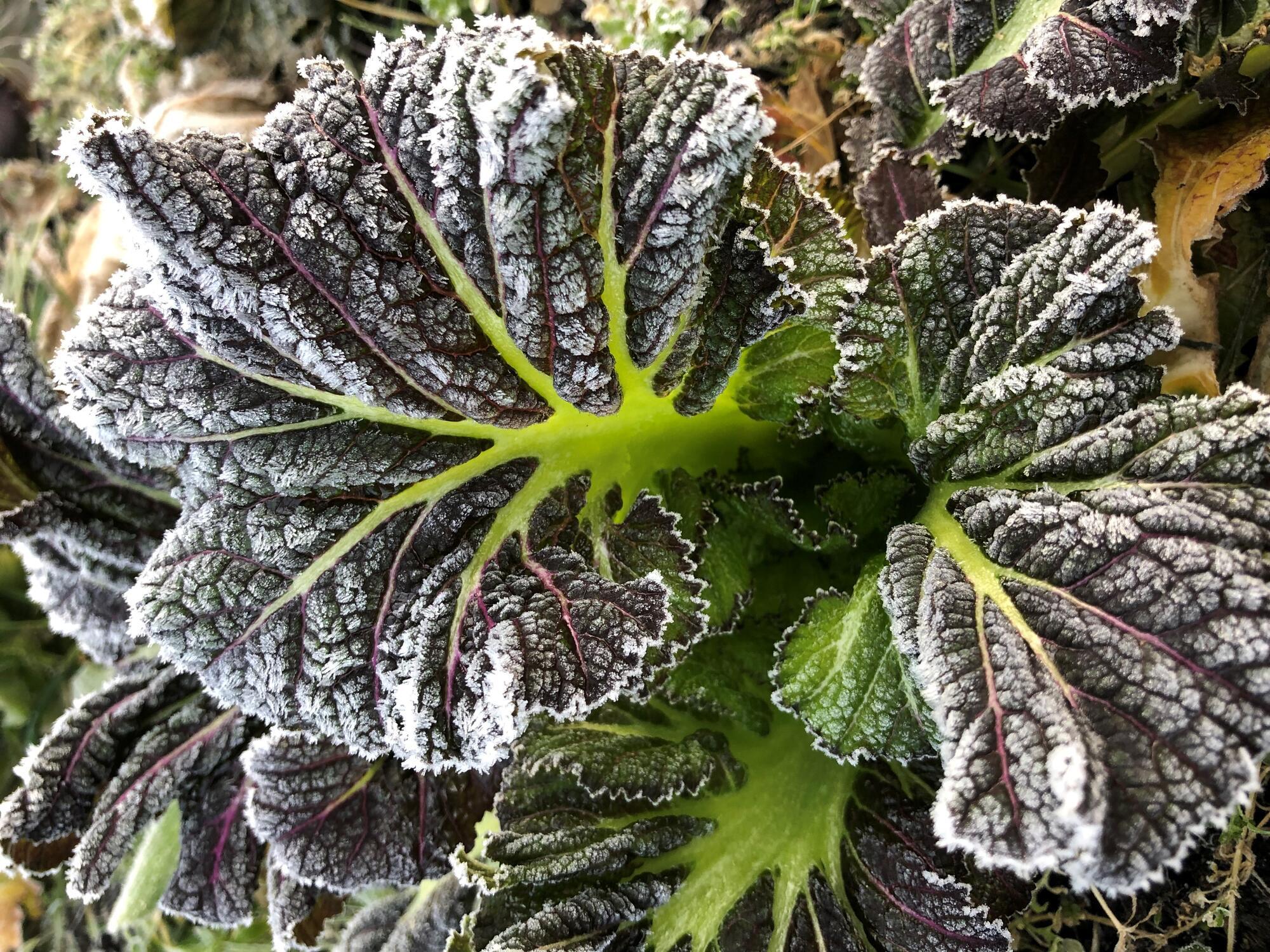
- Brassica juncea: More or less pungent species often grown for broad or swollen petioles and tender bolting stems (Figure 25), used for salad, soup, braising or stir fry. Young plants and heart leaves are autumn salad staples. Flowering buds are terrific flavor for edible flower garnish.
Radicchio
Radicchio is most popular in Italy, although it is gaining popularity beyond its borders, including in the U.S. Its bitterness is probably the greatest deterrent for most people, but this is largely a product of our culture and is an acquired taste.
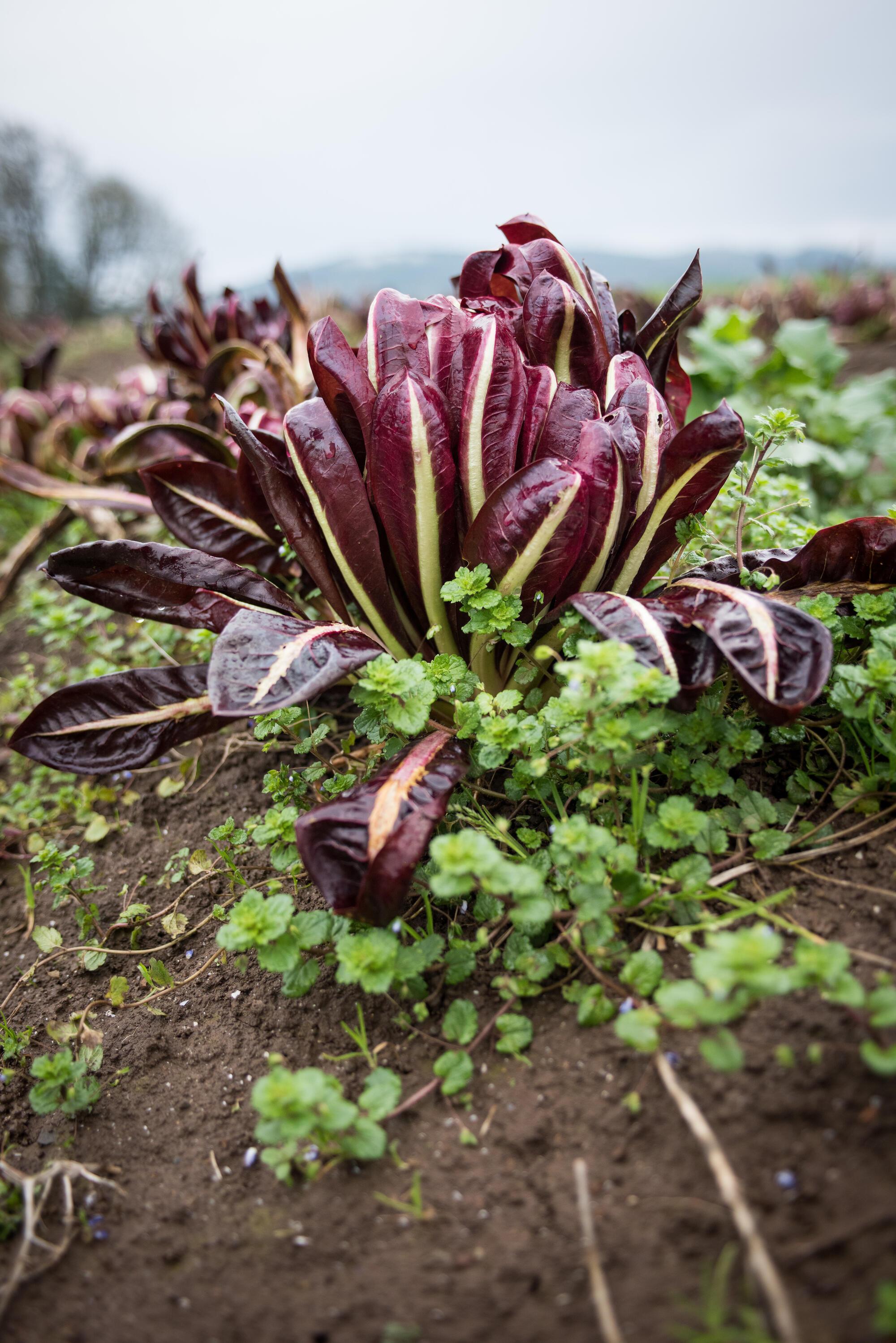
Radicchio varieties are named for the region in which they are grown in Italy, which is mainly in the Veneto region: Treviso Precoce, Treviso Tardivo, Chioggia and Castelfranco. Varieties that are purple in color (Figure 26) are typically more bitter. The green types are milder.
Eaten either raw or cooked, radicchio should first be soaked in ice-cold water for at least 30 minutes to leach out the bitter compounds. Cooking radicchio also mellows out the bitterness. Roasting, braising, sautéing or grilling radicchio will create caramelization and tame harsh flavors. Blanching beforehand also helps in that regard.
Salads of radicchio are best paired with full-flavored, fatty and acidic companions like nuts, cheese, vinegar, cream and fruit (that is, apple, pear, citrus).
Types of leafy greens
This section is organized by family to help with crop rotation and pest management decisions.
Apiaceae
Fennel (Foeniculum vulgare and F. vulgare var. azoricum)
Fennel is from the Mediterranean region. There are herb varieties and bulb varieties. Herb varieties (F. vulgare) are perennial. The foliage is harvested as an herb, and the plants will come back each year. Bullb fennel (F. vulgare azoricum) is commonly known as Florence Fennel or Finocchio, and is grown as an annual vegetable for the bulb-like swollen leaf bases. Botanically bulb fennel is a biennial.
Fennel can be direct-seeded or transplanted. Perennial types grown for the foliage have an upright habit and may grow up to 6 feet tall when in flower. Bulbing types tend to grow to about 2 to 3 feet tall. Regular water during the summer months is required. Fennel can tolerate light frosts but is not hardy enough to survive very cold winter temperatures.
Parsley (Petroselinum hortense)
There are three kinds of parsley: curly leaved, flat leaved and Hamburg (or turnip-rooted). Flat-leaf types have a stronger flavor. Hamburg types are often sold simply under that name. Transplanting is preferred to direct seeding parsley because germination of parsley is slow and variable.
Asteraceae
Chicory is a term used to refer to all vegetables in the Chicorium genus, including radicchio, but also frisee, escarole, Belgian endive and dandelion greens. Horticulturally, this is a diverse family and we only discuss a few types here.
Chicory and radicchio (Cichorium intybus)
These herbaceous perennial plants have diverse uses. They are normally grown as annual crops for their leaves (heading and nonheading types), blanched buds or roots, and they have a wide range of common names that includes Belgian endive, Catalogna chicory or puntarelle, common chicory, radicchio and witloof.
Heading types have green, red or pink leaves. Some types turn red or pink only with the onset of cool weather. They perform best under cool temperatures so are normally grown in early spring or late fall. July-transplanted varieties are harvested from October to February because different varieties have a wide range of days to maturity.
External wrapper leaves are killed by hard freezes, but the internal portion of the head is still marketable after trimming. Early spring-planted varieties that are harvested in July and August are also available.
Endive and escarole (Cichorium endivia)
Both curly-leaved endive and some types of escarole are good fall and winter crops, though they benefit from some protection as the weather gets colder. Escarole (C. endivia var. latifolia) has broad leaves and is less bitter than other types. Endive (C. endivia var. crispum) has narrow green leaves and is sometimes called chicory or frisée.
Lettuce (Lactuca sativa)
Lettuce is widely grown and there are many varieties that can be grown over the winter inside a low tunnel or high tunnel. There are four main types of lettuce: crisphead, cos (or romaine), leaf and butterhead. Leaf types tend to be more winter-hardy.
Lettuce can be sown from seed or transplanted most of the year. Plantings in August and early September provide for harvests in late September and October. Late September or October plantings will be ready for harvest in January through March.
This WSU Winter lettuce website describes different types of lettuce and includes the reports from variety trials conducted in Vancouver, Washington, from 2003 to 2005.
Brassicaceae
Arugula Eruca vesicaria ssp. sativa (annual); Diplotaxis tenuifolia (perennial)
Arugula is also known as rocket, Mediterranean salad, rucola or roquette in Europe, and gharghir in the Middle East. Continuous cutting of the young leaves stimulates further leaf production. If the crop becomes overmature, the product becomes unmarketable. Arugula may be grown with or without protection, although it will benefit from some protection as the weather becomes colder.
Broccolini
Broccolini is hybrid of gai lohn (B. oleracea var. alboglabra) and standard broccoli (B. oleracea var. italica). The harvestable portion of the plant resembles long, slender broccoli side shoots. They are harvested when they are nearly ready to flower. The flavor has been described as similar to broccoli but sweeter and less pungent, or as resembling asparagus.
Gai lohn (B. oleracea var. alboglabra)
Gai lohn is a popular bunching green bearing a resemblance to broccoli, consisting of tender, thickened, flower stalks and young leaves, which are harvested when two or three flowers have opened.
Kale and collard greens (B. oleracea Acephala group)
Kale is one of the most cold-hardy crops. It is not well-adapted to hot weather, and the best quality is produced when it is grown into the fall or winter. There are two types of kale. Scotch types have gray-green and very curled and crumpled leaves. Siberian types are blue-green and less curled.
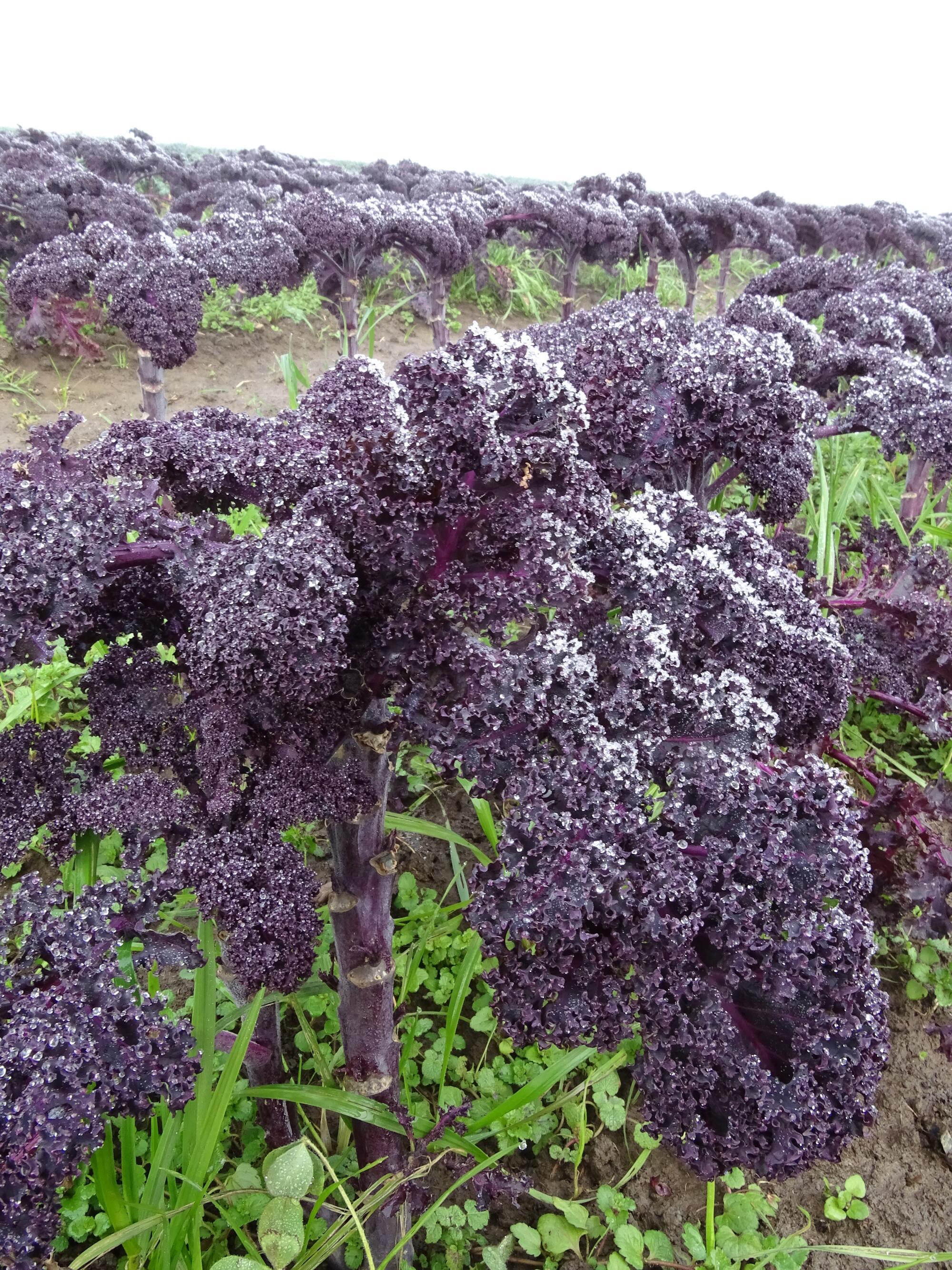
Both dwarf and tall types are available, with the dwarf types often preferred for commercial production. Some cultivars produce purple leaves and are attractive in the winter garden (Figure 27).
Mustard greens (Brassica spp.)
Mustard greens are a large and variable group involving a number of different species and subspecies and their hybrids. There is considerable opportunity for confusion regarding the names of different mustard greens because of their genetic diversity, their ability to intercross, and the wide range of descriptive terms used to describe them around the world.
Winter cress (Barbarea verna)
One of the cold-hardiest winter greens, this native of Europe and Asia has naturalized in parts of North America. It is easily grown in gardens, although care should be taken to prevent it from going to seed and becoming a weed problem. It can be harvested throughout winter and used in many ways, such as in salads, sandwiches or soups.
Other brassica greens (B. rapa)
Brassica greens in the species B. rapa are diverse and have many different common names around the world. Many either benefit from or require some winter protection, such as a high tunnel or low tunnel west of the Cascades. Check with your seed supplier for specific growing instructions.
- Bok choy, pak choi or pok choi (B. rapa Chinensis group): This group involves a wide range of varieties, but the typical bok choy has large dark green leaves arising on white, upright petioles with spoon-shaped bases. The thickness and length of the stems vary from one variety to another and in some cases may be green.
- Broccoli raab or rapini (B. rapa Ruvo group): Despite the name, broccoli raab is not related to broccoli. It is related to turnip, and the foliage looks like turnip greens. Develops early spring shoots resembling asparagus that bear mustard-like leaves and small broccoli-like heads at their tips.
- Chinese cabbage or napa cabbage (B. rapa Chinensis group or Pekinensis group) produces tall, cylindrical cabbage heads with thick white petioles. They are often used in Chinese cuisine.
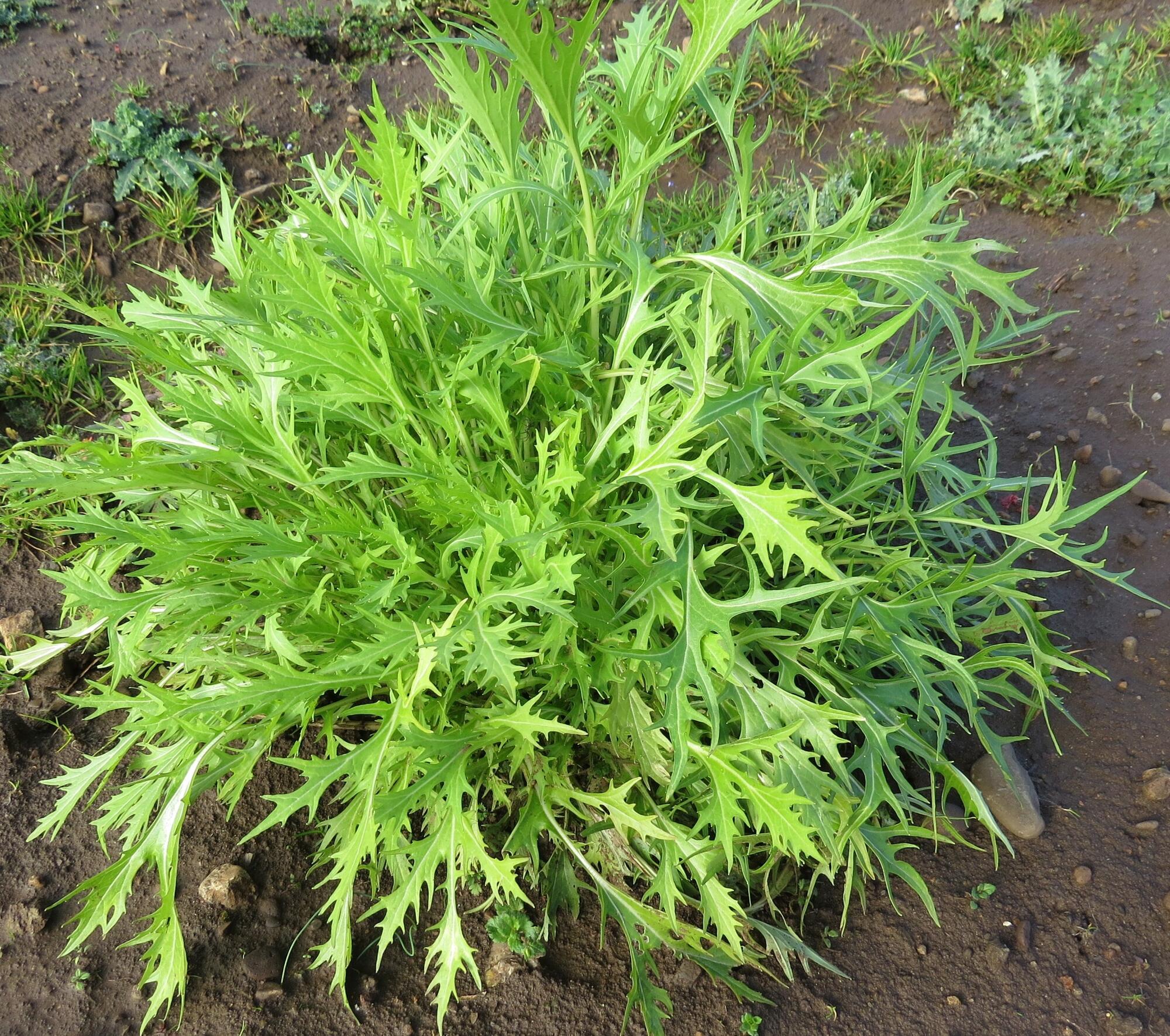
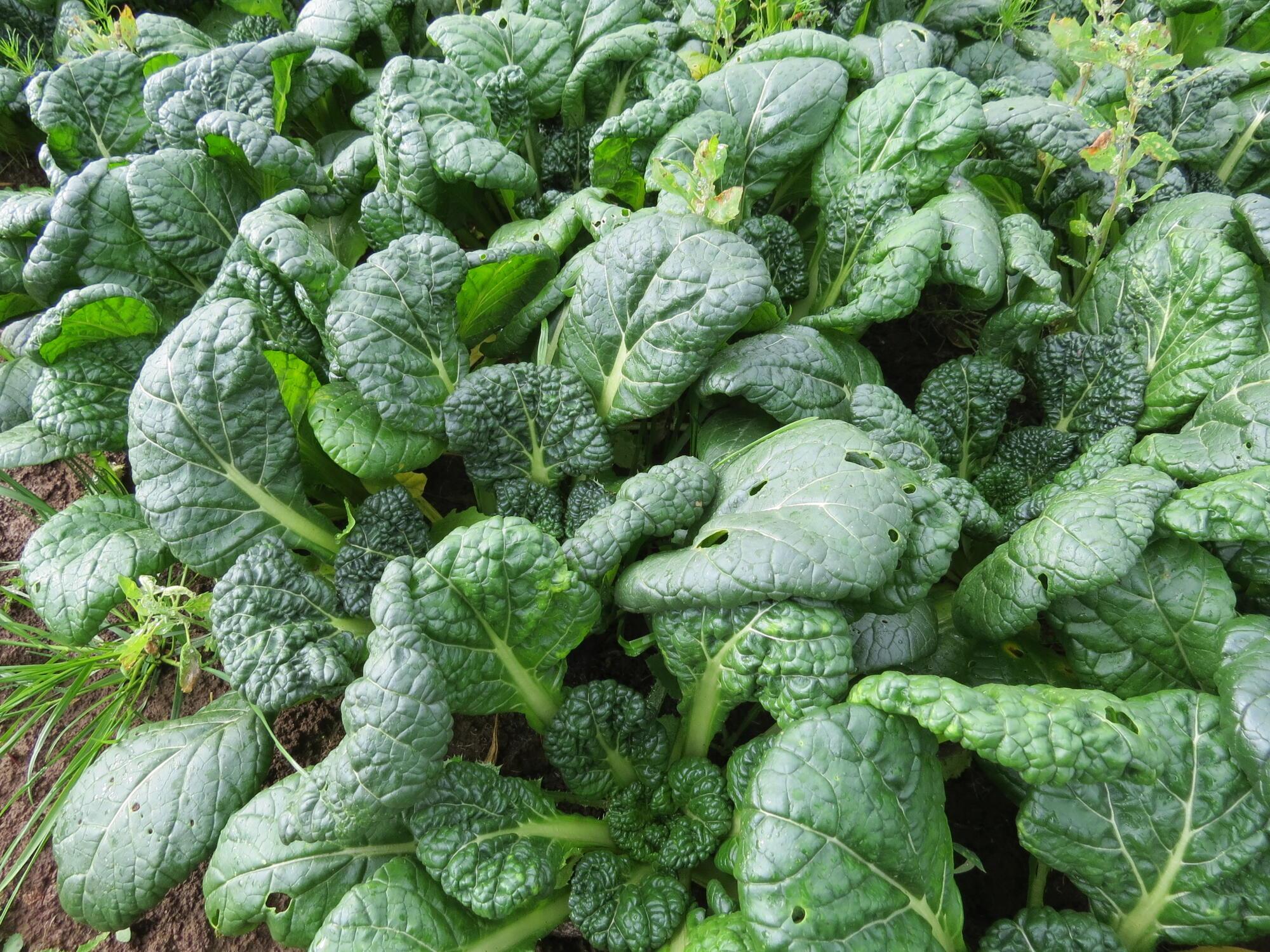
- Komatsuna (B. rapa var. perviridis): Also known as mustard spinach or spinach mustard. Bunching greens, dark green leaves with slender green petioles.
- Mibuna (B. rapa Japonica group): Produces long narrow leaves on a dense, leafy plant up to 1 foot tall. Leaves have a mild flavor. It is a traditional Japanese vegetable originally from Mibu in the Kyoto prefecture and is cold-tolerant.
- Misome (B. rapa Narinosa group): A hybrid between komatsuna and tatsoi. It has an upright-growing plant up to 10 inches tall that produces deep green, thick-textured leaves.
- Mizuna (B. rapa var. niposinica). Dense spherical plants up to 1 foot tall. The serrated leaves have a mild peppery flavor and are used in salads (Figure 28). Mizuna is very cold-tolerant.
- Tatsoi: (B. rapa Narinosa group). These plants grow as a low, flat rosette and produce thick, spoon-shaped dark green leaves (Figure 29).
- Turnip greens: (B. rapa Rapifera group). As the name suggests, these plants produce pungent leaves used both fresh and in cooking. They are the edible greens of turnip plants (see Root vegetables).
Caryophyllaceae
Chickweed (Stellaria media)
Although chickweed is usually considered a weed, common chickweed is also a fairly cold-hardy and nutritious winter annual vegetable. Other chickweeds in the genus Cerastium, such as mouseear chickweed (C. vulgatum) are hairy and are not edible.
Plants germinate in the fall when rains commence and grow throughout the winter, flowering in the spring. Common chickweed is best grown in well-amended soil, where it responds by growing more vigorously and rooting at the nodes to produce more productive plants. To avoid spread, plants should be harvested before going to seed.
Chenopodiaceae
Beet greens and chard (Beta vulgaris Orientalis group and Cicla group)
Beet greens are a form of common table beet or leaf beet, grown for its succulent leaves, which can be harvested over an extended period. Chard, also referred to as Swiss chard, is a biennial grown as an annual for leaves and stalks rather than the roots. Late spring and early summer plantings can last through a mild winter, and frost protection can further extend the season. Outer leaves may be harvested first as the plants mature.
Spinach (Spinacia oleracea)
Slow-growing, slow-bolting (that is, slow seed-stalk development as day length increases) spinach varieties are used for late spring and summer harvest. Fast-growing (and usually fast-bolting), vigorous varieties should be used for fall, winter and early spring harvest. With proper variety selection, spinach production for the fresh market is possible almost year-round in Western Oregon and Washington.
Flat, semisavoy and savoy leaf varieties are used for different markets. The flat and some of the semisavoy varieties are used for processing. All three types are used for fresh market with semisavoy and savoy types predominating.
Spinach varieties may also be classified as prostrate, semi-erect and upright. It is difficult to remove soil from savoy leaves during washing and processing, so consider practices such as cover crops or mulches to reduce soil contact. Farms that produce spinach for processing sometimes apply plant growth regulators to savoy types before harvest to encourage upright leaf growth and reduce soil contamination.
Fabaceae
Pea shoots (Pisum sativum) can be planted in early spring or late summer. Austrian winter peas are cold-tolerant and can often be grown without frost protection. However, snow pea and snap pea varieties are preferred for their flavor and tenderness. Leafy cultivars with short stems and few tendrils are also preferred.
Flowering sweet pea cultivars (Lathyrus odoratus) and other Lathyrus species are not safe to eat because they contain an amino acid that some people react negatively to. Pea shoots from WSU Extension provides production, culinary, nutritional and marketing information.
Valerianaceae
Corn salad (Valerianella locusta)
Corn salad is also known as lamb’s lettuce, maches, fetticus, feld salad or rapunzel. It is one of the hardiest winter greens and easy to grow in any garden soil. Plants are easy to establish from a seeding in mid- to late summer and eventually form small rosettes.
Field preparation and planting
Most of these crops can be grown on a wide range of soil types, though in general, loose fertile loams with good organic matter content are preferred. Soils with good water-holding capacity help to provide uniform soil moisture before winter rains begin. Since harvest will be during wet weather in fall and winter, choose soils that drain well. Soils that compact easily or are compacted can adversely affect growth and yield. Cover crops or natural weed cover can help to reduce mud and compaction during harvest.
In most cases, transplanting is the preferred method of establishing the crop, although direct seeding is an option for many leafy greens. Transplanting is preferred for parsley because its seeds germinate slowly, and direct seeding can significantly delay harvest.
Plant nutrients
This diverse group includes many minor crops with little specific nutrient management information for them. For more information about nutrient management, see the “Field management” and “Heading brassicas” sections above and other references cited there. pH between 6.0 and 6.8 is adequate for most crops.
Plant diseases
White mold can infect overwintered leafy greens and is discussed in the “Field management” section above. Some other important diseases of overwintered brassica leafy greens (that is, clubroot, black leg, light leaf spot and white leaf spot) are discussed in the "Heading brassicas" section.
Remember that the states of Oregon and Washington require that all brassica seed that is planted must be accompanied by a test result stating that the untreated seed is free from black leg (see “Black leg” in the “Heading brassicas” section for more information). Some other common diseases of overwintering brassica leafy greens include the following:
- Damping off: Pythium spp. and Rhizoctonia solani are soilborne pathogens that can attack young germinating seedlings when soil is wet. Stems are attacked as young plants emerge. Plants wilt, fall over and die. Germinating seed also can be attacked, and seeds and seedlings rot before they fully germinate and emerge. Manage the crop to promote rapid and vigorous seedling growth. Do not overwater as wet potting soil or field soils promote damping off. For more information, see Kale — damping off (wirestem).
- Downy mildew is caused by the oomycete Peronospora spp. In areas with mild, wet winters like Western Oregon and Washington, multiple cycles of downy mildew infections can occur through the winter. Young seedlings are more susceptible than older plants and can die from downy mildew. Increased plant spacing allows foliage to dry more quickly after rain. Avoid excess fertilizer nitrogen as leaves with high nitrogen are more susceptible. For more information, see Kale — downy mildrew.
- Powdery mildew: The fungus, Erysiphe cruciferarum (syn. E. polygoni), can infect most crucifer crops and cruciferous weeds. Small, discrete white patches develop on both leaf surfaces. Later, patches coalesce until a powdery mass of white mycelium and spores cover the entire leaf. Stressed plants will be more susceptible to disease. Plant resistant varieties if available. Avoid overapplication of nitrogen fertilizers. Practice a three-year rotation with nonsusceptible crops and manage crucifer weeds. For more information, see Kal — powdery mildew.
Refer to the Pacific Northwest Disease Management Handbook for detailed management information about the range of diseases that can damage leafy greens.
Pests
Important pests of leafy greens are discussed in the “Field management,” “Heading brassicas” and “Root crops” sections. They include aphids, armyworm, and cutworm, brassica flea beetles, winter cutworm, symphylans, slugs, rodents and deer.
Spinach leaf miner (Liriomyza huidobrensis) is a common pest of spinach, chard and beet greens. Adult flies lay eggs on leaves, which hatch into legless larvae with no distinct head. Larvae feed inside the leaf and cause winding trails or blotches that make leaves unmarketable. For more information see Spinach — leafminer.
Refer to the Pacific Northwest Insect Management Handbook for detailed management information about other pests that can damage leafy greens.
Weeds
Common weed problems include annual bluegrass (Poa annua), common chickweed (Stellaria media), henbit and purple deadnettle (Lamium amplexicaule and L. purpureum), and Persian speedwell (Veronica persica) (Figure 26). These are all annual or winter annual weeds and will grow slowly throughout the winter months, flowering and setting seed as the weather warms in the spring.
Harvest and handling
Leafy crops are extremely perishable and need to be handled delicately and marketed quickly. If the plants are wet with rain or dew, the leaves are more turgid and break more easily. When harvesting by hand, cut above the crown or soil line and bunch. Care should be taken to exclude leaves that are dirty with soil or are yellow. Harvested plants should be cooled as rapidly as possible to preserve quality. Specialty leaf lettuces and spinach for bag mixes are typically hand-harvested, but mechanical harvesters are also available.
Storage
Most leafy greens are very perishable and are not adapted to long-term storage. Harvested produce should be stored with refrigeration as close to 32°F as possible and at 95% to 100% relative humidity. Air circulation should be adequate to remove the heat of respiration but not rapid enough to cause transpiration and wilting.
Some leafy green varieties
Popular varieties of winter leafy greens include the following:
- Arugula: ‘Arugula’, ‘Astro’, ‘Ice-bred’, ‘Pronto’, ‘Roquette’, ‘Sputnik’ and ‘Tuscan’.
- Broccoli raab or rapini: ‘Novantina’.
- Chard: ‘Bright Lights’, ‘Fordhook Giant’, ‘Rainbow’, ‘Rhubarb’, ‘Ruby Red’ and ‘Virgo’.
- Collards: ‘Bulldog’, ‘Champion’, ‘Flash’, ‘Hi-crop’ and ‘Vates’.
- Endive and escarole: ‘Full Heart Batavian’, ‘Lorca’, ‘Ruffec’ and ‘Salanca’.
- Fennel: ‘Orion’, ‘Perfection’ ‘Preludio’, ‘Romy’ and ‘Victorio’.
- Kale: ‘Black Tuscan’, ‘Darkibor’, ‘Dazzling Blue’, ‘North Star Polaris’, ‘Red Chidori’, ‘Red Ursa’, ‘Redbor’, ‘White Russian’, ‘Wild Garden Lacenato’ and ‘Winterbor’.
- Lettuce: ‘Cardinale’, ‘Continuity’ or ‘Merveille de Quatre Saisons’, ‘Flashy Trout’s Back’, ‘Hungarian Winter Pink’, ‘Jadeite’, ‘New Red Fire’, ‘Oak Leaf’, ‘Red-Tinged Winter’, ‘Romaine Dark Green’, ‘Top Gun’, ‘Victoria’, 'Winter Density’.
- Mustard greens: ‘Dragon Tongue’, ‘Golden Frills’, ‘Green Wave’, ‘Ruby Streaks’ and ‘Golden Frills’.
- Parsley: ‘Deep Green’, ‘Forest Green’ and ‘Moss Curled’ are curly leaved types; ‘Deep Green Italian’, ‘Plain’ and ‘Plain Italian Dark Green’ are flat-leaved.
- Radicchio, Treviso and Chicory: ‘Augusto’, ‘Bottiglione’, ‘Castelfranco’, ‘Chioggia’, ‘Franchi’, ‘Grumolo’, ‘Palla Rossa’, ‘Rosalba’, ‘Rossa di Treviso’, ‘Rubello’, ‘Rubro’ and ‘Treviso’.
- Spinach: ‘Abundant Bloomsdale’, ‘Gazelle’, ‘Giant Winter’, ‘Hammerhead’, ‘Long Standing Bloomsdale’ and ‘Winter Bloomsdale’.
Legumes
“Fava beans,” “faba beans” or “broad beans” (Vicia faba) are an erect and determinate relative of vetch that is native to the Mediterranean region. They can overwinter well in some areas of Western Oregon and Washington or can be planted in early spring as soon as the soil is workable.
They can tolerate temperatures down to 15–20°F, and are more cold-tolerant when they are small going into the winter (Figure 30). Culinary varieties are large-seeded, while small-seeded varieties are bred as cover crops. In the spring, some farmers and gardeners harvest the growing tips and tendrils of fava beans; see the leafy greens section on Fabaceae for more information about tendrils.
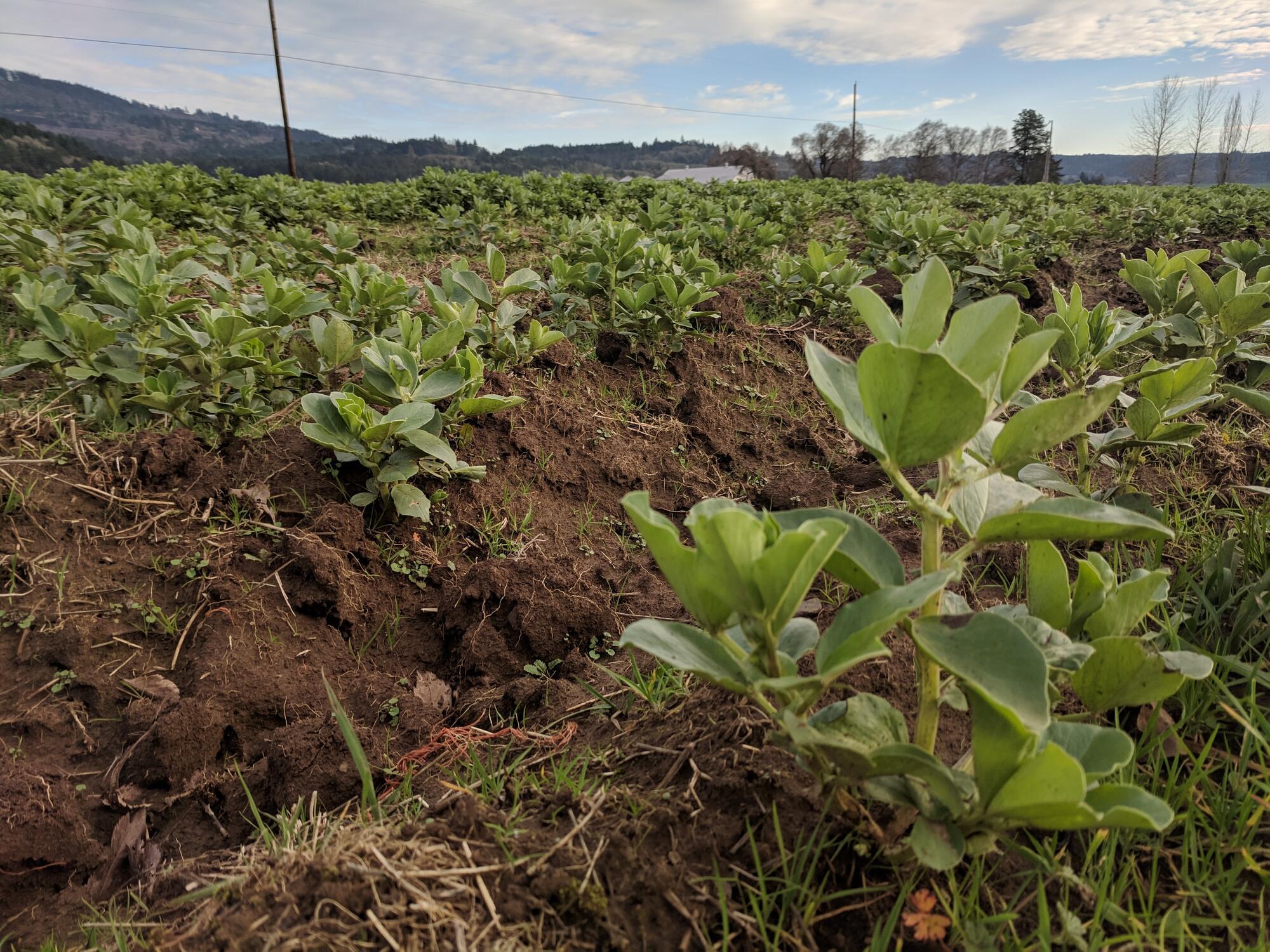
Culinary descriptions
Fresh green fava beans are a labor of love, but well worth the time and effort to prepare them. The first step in preparation is to remove the beans from their large pods (Figure 31), then blanch the beans in salted water for just a minute or two before immediately draining and rinsing in cold water to stop further cooking. Cut a slit in the pale green bean membrane of each bean with a paring knife and squeeze out the inner bright green fava.
Fresh fava beans can then be added to many dishes. They are often used in a warm or cold pasta dish or grain salad. Favas are delicious mashed by hand or with a food processor into a spread with basil or mint and olive oil. A traditional Italian way to enjoy the spread is simply on bread with Pecorino cheese.
If you have young, small-podded fava beans, you can eat these cooked whole as the pods are not yet fibrous. The whole pods are often tossed in olive oil and salt then grilled or roasted on high heat. Fava greens taste like the beans and are an early spring treat eaten raw or sautéed and paired with Asian flavors like soy, sesame, tofu, ginger and garlic.
Field preparation and planting
Fava beans do best on well-drained silt loam or sandy soils. Culinary fava beans have very large seeds (>1.0 g/seed). They are normally direct-seeded but can also be transplanted. Mechanical seeding is difficult because the seed is so large. Cover crop fava beans have smaller seeds for easier seeding, but the beans are not used in cooking.
Not all culinary varieties are winter-hardy west of the Cascades. Late-planted fava beans (that is, late September or early October) are smaller and more cold-hardy going into the winter (Figure 30). Plants that are large going into the winter are less cold-hardy than small plants (that is, more than about six true leaves). Plants are normally spaced 5–6 inches apart in the row with rows 24–36 inches apart. See Table 1 for typical planting times for fava beans.
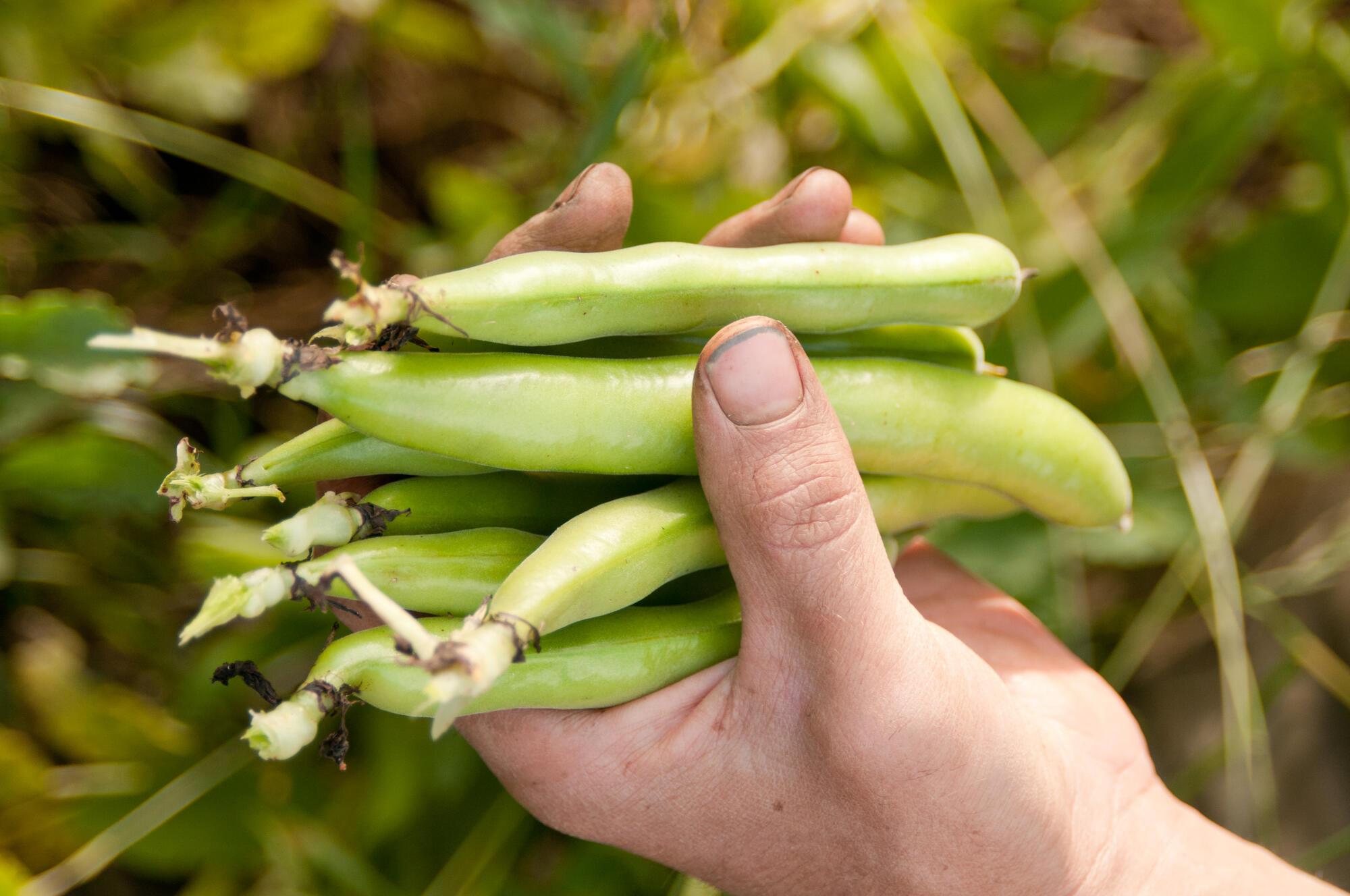
Plant nutrients
Legumes do best in neutral or slightly acidic soils. Apply lime if pH is below 5.8. All legumes can develop symbiotic relationships with Rhizobia bacteria in the soil. Rhizobia convert elemental N2 in the atmosphere to plant-available ammonium nitrogen (NH4).
To encourage this symbiotic relationship, inoculate your seed with Rhizobium leguminosarum bv. vicia. Commercial inoculant type F (fava bean and lentil) or E (field pea and vetch) work well. If the right strain of Rhizobia is rare in the soil, or if the soil already has plenty of mineral N for crop growth, legumes don’t develop this symbiotic relationship. N fertilizer is not needed if the seed is inoculated.
Refer to the “Crop management” section for more information about nutrient management, and to Nutrient management for sustainable vegetable cropping systems in Western Oregon (EM 9165) and Soil nitrate testing for Willamette Valley vegetable production (EM 9221).
Diseases
Plant diseases are usually not severe on fava beans. Sometimes mosaic viruses have been observed that are suspected to include a complex of pea enation mosaic, red clover vein mosaic and pea streak viruses. White mold can infect fava beans (see “Field management” section).
Chocolate spot: In some areas west of the Cascades, Botrytis fabae can be severe. It is a fungus that causes small red-brown spots on leaves, stems and flowers. As the lesions enlarge, the center of the spot dies and turns gray. Flowers can be aborted, and in severe infections on the stem, the plants can fall over. The fungus survives as sclerotia in the soil and can also be seedborne. Crop rotation and the use of clean seed can help manage chocolate spot. Avoid saving seed from infested crops.
Pests
Important generalist pests of fava beans are discussed in the “Field management” section. Beans are relatively tolerant of high symphyla populations. Host-specific pests include:
- Black bean aphid: Aphis fabae can attack overwintered fava beans in the fall. In the Pacific Northwest, they die over the winter and populations don’t reach damaging levels in the spring. For more information, see Bean, snap — aphid.
- Pea leaf weevil: Sitona lineata feeds on leaves causing semicircular notches on the leaf margin. They normally don’t do any economic damage. For more information, see Bean, snap — pea leaf weevil.
Weeds
Fava beans have large seeds and are relatively quick to establish. They also have an upright stature, so they are not difficult to cultivate. When growing conditions are favorable, they are competitive with most weeds. Cultivation is often not possible for late plantings as soil is too wet. Manage weeds before planting, and use a stale-seedbed if possible.
Harvest, handling and storage
Harvest green fava beans when the pod is thick with mature beans but still green and succulent. The pod should still be green and have a glossy sheen. Store the beans in the pod at 32°–40°F with 90% to 95% relative humidity. They are best consumed within five to seven days. Fava beans can also be allowed to mature into a dry bean later in the summer. See Table 1 for typical harvest times for fava beans.
Varieties
Popular varieties of fava beans include ‘Broad Windsor’ and ‘Sweet Lorane’.
Root crops
For example, carrots, parsnips, celeriac, turnips, rutabaga, radishes, horseradish, Jerusalem artichoke, etc.
Site selection is very important for overwintered root vegetables, especially if they are field stored. Avoid fields that are wet over the winter, or where water ponds or floods. Saturated soil makes harvest difficult or impossible and increases the risk of soilborne diseases. Root crops grow well in deep sandy loam, silt loam or muck soils. Finely textured clay, rocky or shallow soils are not well suited for good root production. Avoid fields that may have hard pans as this could distort root growth.
Root vegetables prefer full sun but are tolerant of partial shade. Most root crops are biennial plants from a botanical perspective. In their first year of development, they produce a storage root that can overwinter. The plant regrows from the storage root the following spring, flowers, and sets seed in year two. Horticulturally they are treated as an annual crop because you harvest the storage root that is formed in year one. Horseradish and Jerusalem artichokes are perennial root vegetables.
Culinary descriptions
Beet
Beets can be grated raw into salads and slaws for an added sweet, mineral, earthy touch, or can be pickled, boiled, steamed and roasted (Figures 32 and 33).
Roasting brings out the best flavor, and roasted beets can be a side of their own or added to many dishes. A classic roasted beet salad includes goat cheese, citrus, tarragon or fennel. Beets can be roasted in a 350⁰–400⁰F degree oven, wrapped in aluminum foil and placed on a baking sheet for about an hour or hour and a half, until a paring knife can easily cut through the center of the beets. Once beets are roasted until tender and allowed to cool enough to handle, the skins can easily be removed by simply rubbing them off. Roasted beets can be used in many dishes.
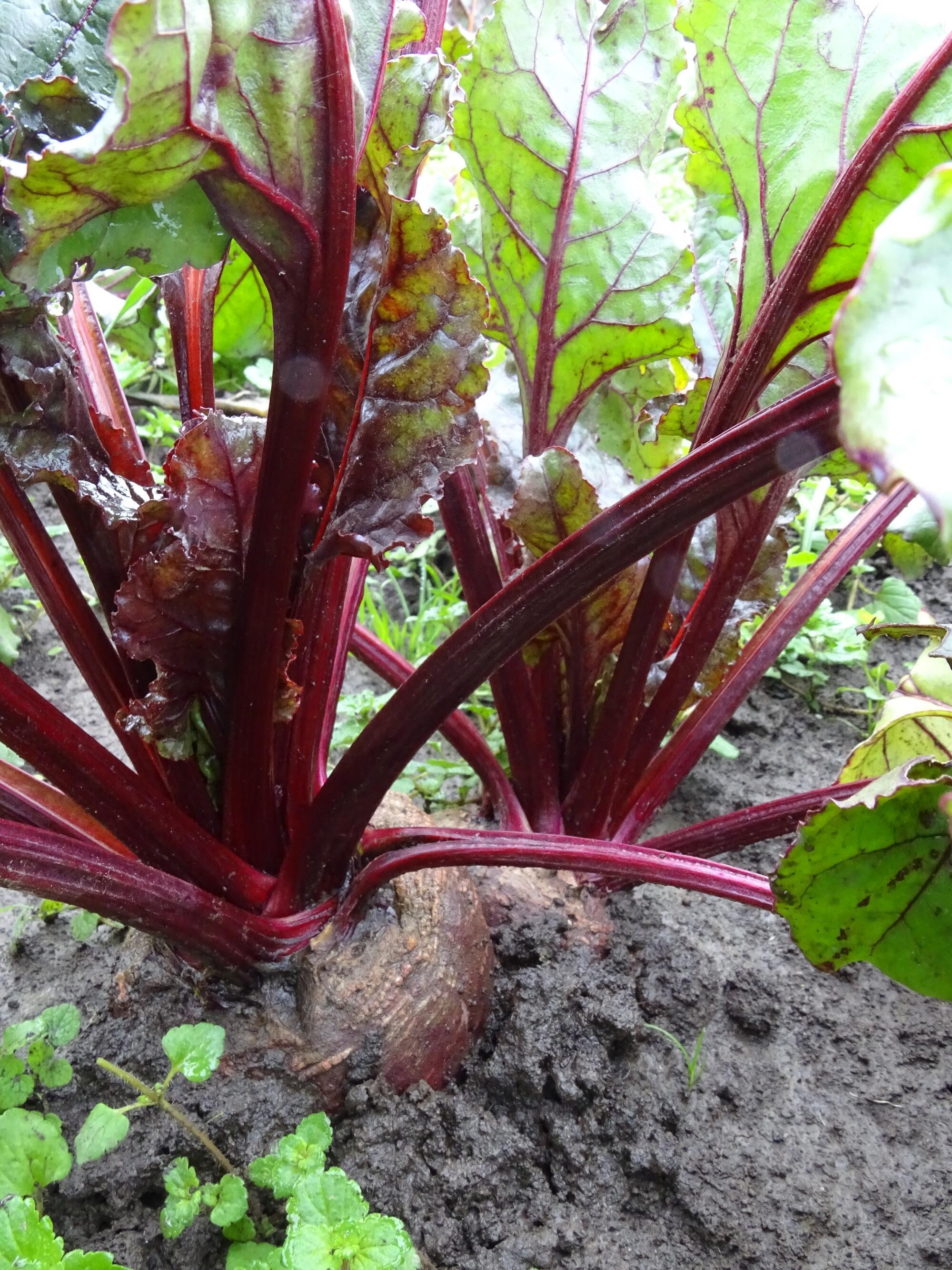
One delicious option is to cut roasted and peeled beets in half, mix them with breadcrumbs, parmesan cheese and eggs, then pan fry them. Serve them topped with a vinaigrette and goat or blue cheese. Dress beets with any oil and acid (vinegar or lemon juice) when they are still warm so it absorbs well.
Carrot
Carrots can be consumed raw, juiced, pickled or cooked in a variety of ways. They are easily and quickly grated raw into salads and slaws. Carrot salads are fantastic with toasted nuts, dried fruits and a crumbly strong or mild cheese and good olive oil.
Roasted carrots are a great way to bring out more sweetness and can be nicely accented with toasted nuts, roasted beets, fresh herbs and cheese. Vinegar and olive oil can be tossed over freshly roasted carrots to brighten their flavor. Carrots are well known for being high in vitamin A due to beta-carotene from their orange pigment which is more bioavailable when cooked.
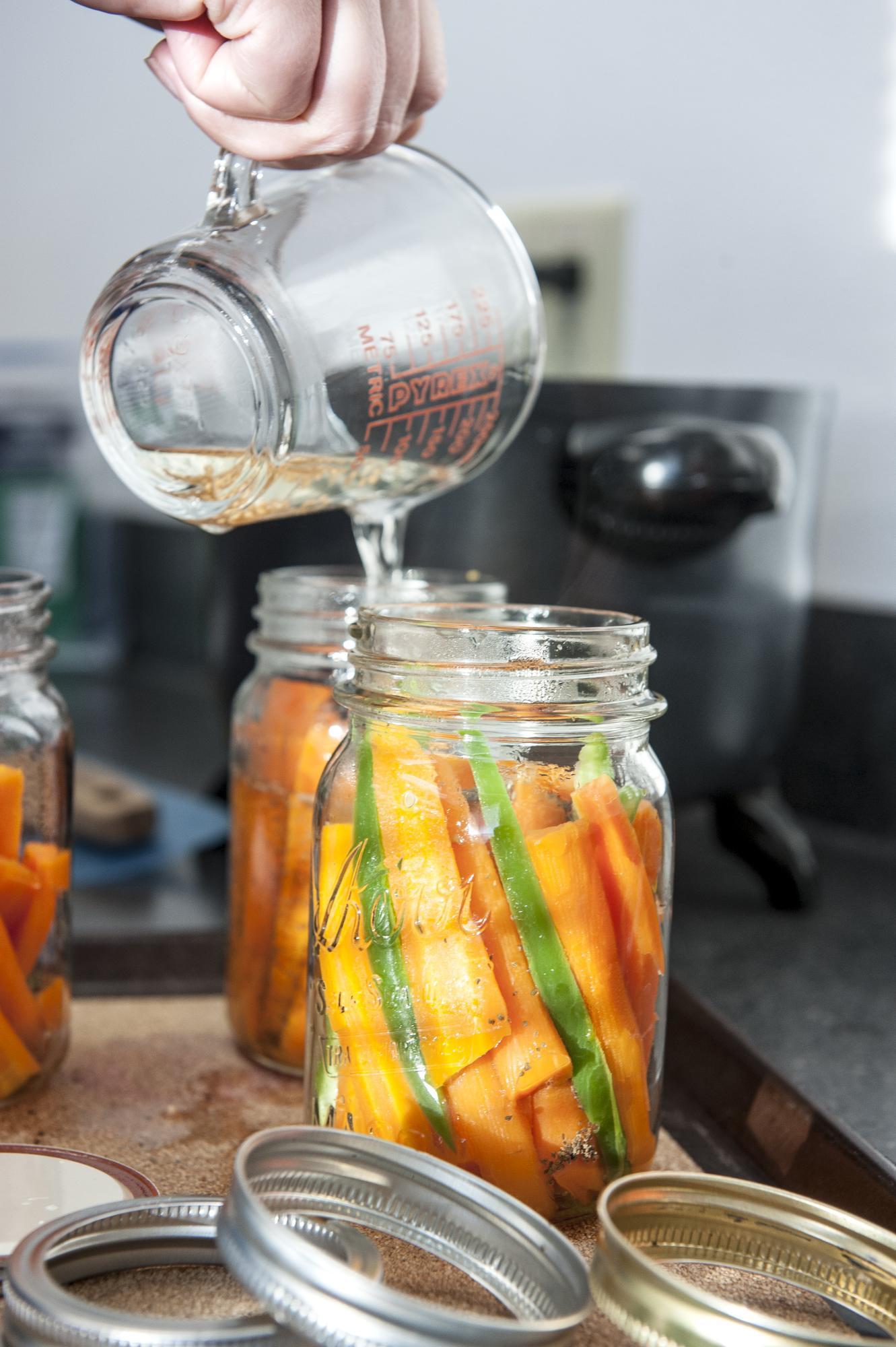
Celeriac
Celeriac is also called turnip-rooted celery, celery root or knob celery. The thick edible portion (Figure 34) is actually a swollen stem rather than a root. It is edible raw or cooked and has a mild, celery-like flavor with a starchy, potato-like texture.
The leaves and stems, which are often still attached when sold at farmers markets, are also edible raw or cooked. Celeriac pairs well with creamy, rich and spicy ingredients. Topping with oil and vinegar or lemon juice when they are still warm brings out their flavor.
Parsnip
Sweet and complex in flavor, parsnips are often underappreciated. These roots can be grated raw into salads and slaws for an earthy touch, as well as boiled, steamed, sautéed, roasted and braised. Cooking brings out the sweetness in parsnips, and they are delicious pureed into soups. Parsnips can be boiled or roasted and mashed into potatoes to add depth to traditional mashed potatoes and gravy. Or simply chop and roast along with other root vegetables in a 350⁰–400⁰F degree oven after tossing in olive oil, salt and your favorite dried or fresh herb, like thyme.
Rutabaga
A member of the brassica family, rutabagas are a cross between a turnip and wild cabbage. They are hardy, starchy and low in moisture, thus best used boiled, roasted, mashed or braised. Simply chop and roast along with other root vegetables in a 350⁰–400⁰F degree oven after tossing in olive oil, salt and your favorite dried or fresh herb. Also wonderful boiled and mashed with cream and butter.
Turnip
Late-season turnip roots are best cooked, unlike the mild spring Japanese turnips (Figure 35). They are more peppery and complex in flavor and much less tender. Roots can be roasted, sautéed or boiled and pureed until a soup.
A favorite recipe from Heidi Swanson’s cookbook Super Natural Every Day and one kids enjoy, is to slice turnips thinly with a mandoline, toss in olive oil and salt, place on a baking sheet and bake at 425⁰F until golden, then remove from the oven and sprinkle with paprika and lime juice. Some turnip varieties are bred to produce very smooth skin and tender roots that can be eaten raw in salads.
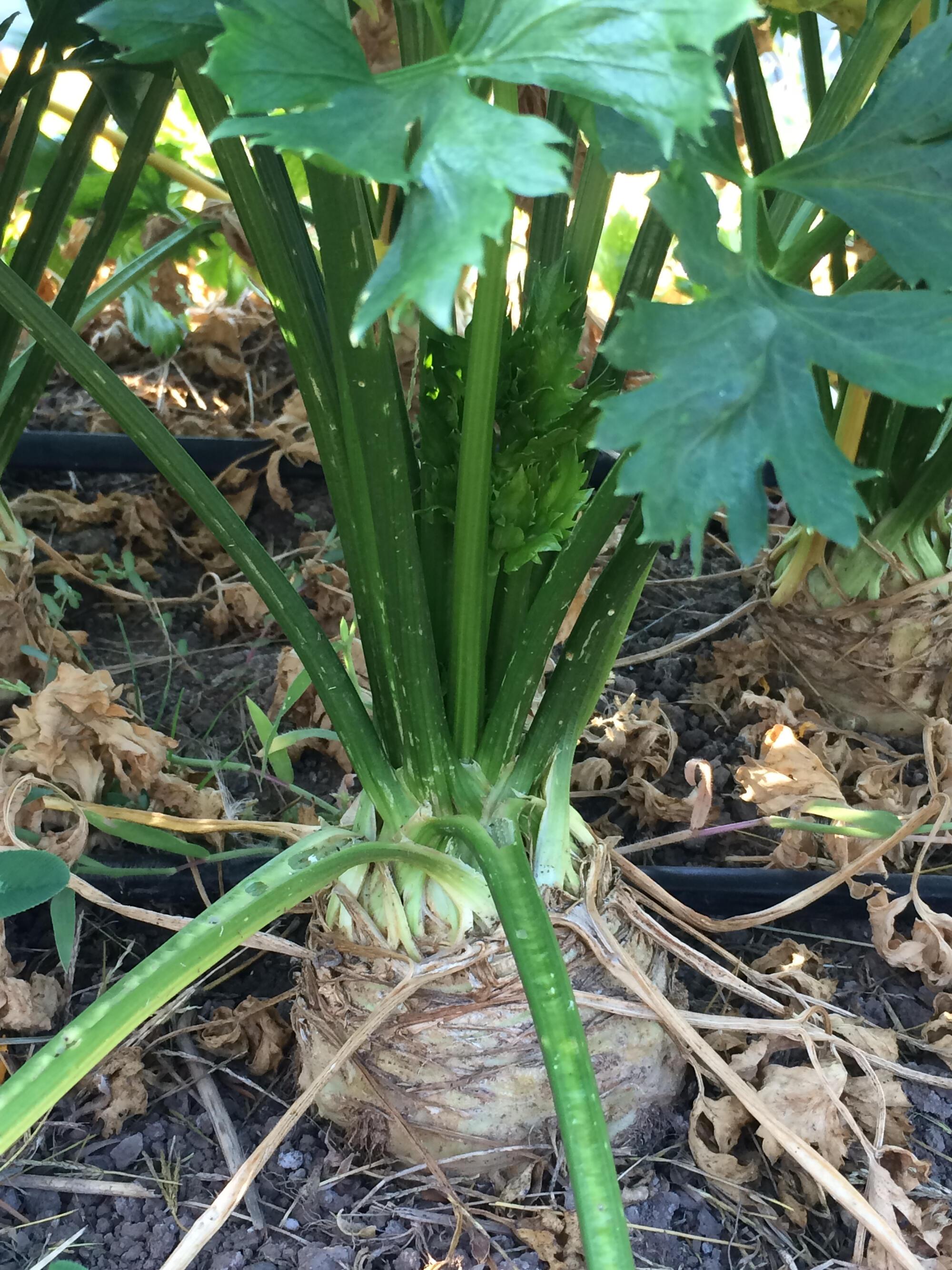
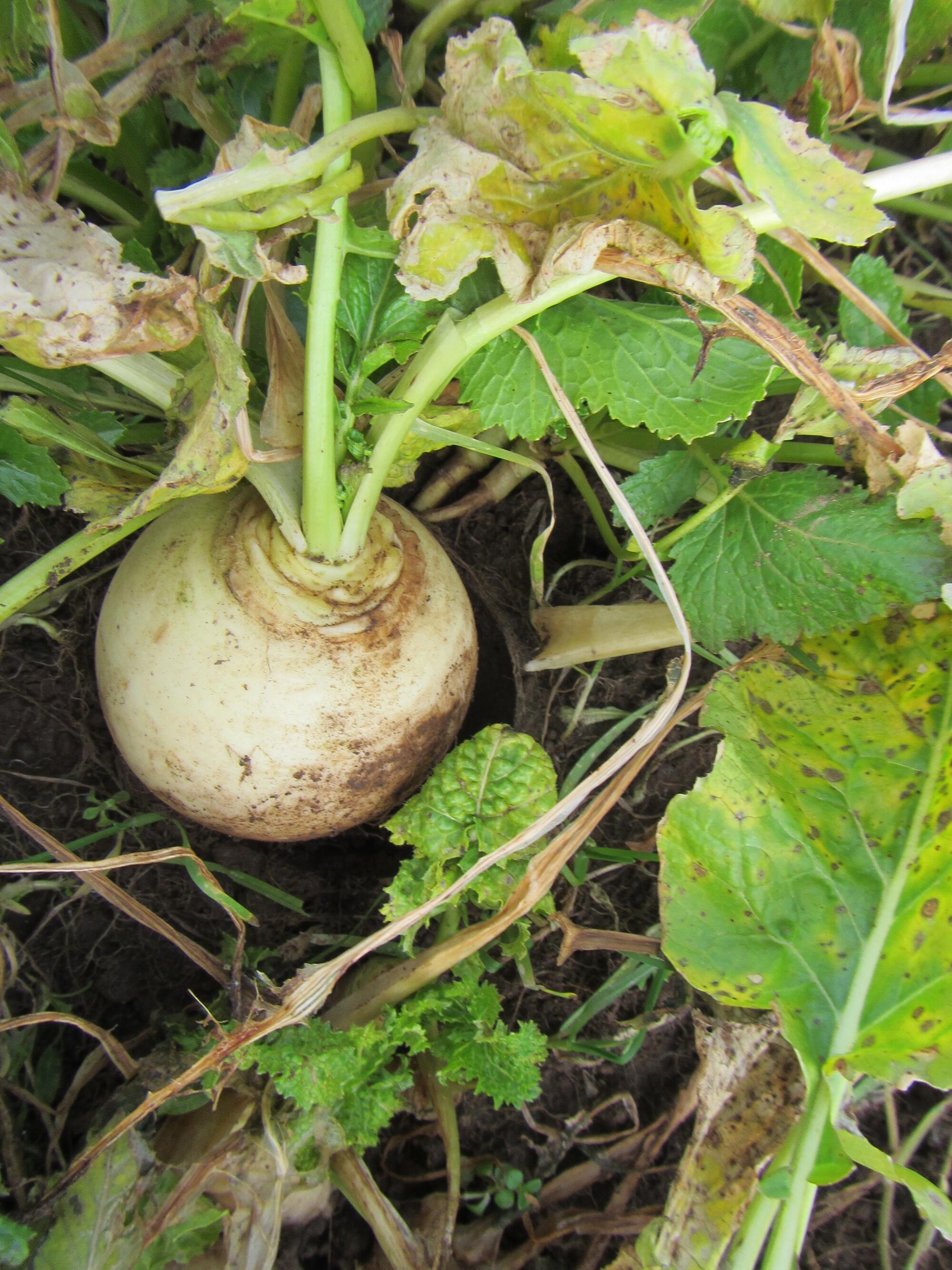
Field preparation and planting
Subsoil or use a broadfork before planting root crops if hard pans are a concern in your field. Rotate crops to avoid heavy weed pressure, soilborne diseases and root maggots before seeding root crops.
Biennial root vegetables are direct-seeded into fine seedbeds. Horseradish is propagated from root cuttings and Jerusalem artichokes are propagated from tubers. Many root crops are slow to emerge, and not very competitive with weeds. Consider using a stale-seed bed strategy for weed management by preparing the seedbed a week or more before seeding (See the “Field management” section under “Weeds”).
Winter root crops are usually direct seeded between June and early August depending on the crop, variety, desired size, and other considerations. Spacing is dependent on the vegetable variety (use seed company recommendations). Uniformity within and between rows is important for uniformly shaped roots and optimal yield. The states of Oregon and Washington require that all brassica seed that is planted must be accompanied by a test result stating that the untreated seed is free from black leg in order to help manage this new disease (see “black leg” in the Heading brassicas section for more information). Check with your supplier to make sure the seed you are using meets this requirement.
Summer-seeded winter root crops require irrigation during establishment and root development. Frequent, light irrigating during the pre-emergence period helps to prevent surface crusting and hot surface temperatures, and promotes a moist and cool soil surface through which the seedlings can emerge. See Table 1 for typical planting times of different crops.
Plant nutrients
See the “Field management” section for nutrient management information. See the sidebar about pH levels for minimum pH guidelines for some root crops grown on mineral soils. Root crops have low to medium nitrogen requirements. If preplant nitrate-N test results are higher than 25ppm, no additional N is needed. Soil nitrate testing for Willamette Valley vegetable production (EM 9221) describes how to monitor soil nitrate levels and correct nitrogen deficiencies. Excess nitrogen can result in splitting, hollow stems, and forked or “hairy” carrots or parsnips. Boron deficiency can cause canker in table beets. In OSU research (Hemphill et al., 1982), canker symptoms were reduced by applying boron fertilizer. For more information on nutrient management, see the “Field management” section and references cited there.
Diseases
A range of foliar and soilborne diseases can reduce yield and quality of root vegetables. See the “Field management” section for white mold information and other diseases with a broad host range that can infect root crops. The Heading brassicas section has clubroot and black leg information, which are important in brassicas. Other important diseases of root vegetables include:
- Root-knot nematodes (Meloidogyne hapla): Most dicotyledonous vegetables are hosts of root-knot nematodes, but damage to root crops is most severe because roots can become forked and malformed, and large galls can develop. A few years of rotation into cereals, sweet corn or other nonhost plants can dramatically reduce populations if dicotyledonous (broadleaf) weeds are controlled. If you have a root-knot nematode hot spot, you can rotate to monocotyledonous crops for a few years, then sample your soil and submit to the OSU Nematode Testing Service to check whether populations are low enough to return to susceptible crops. For more information, see Carrot — root-knot nematode in the PNW Plant Disease handbook and the University of California website Meloidogyne hapla.
- Itersonilia canker (Itersonilia perplexans) is a fungus that infects crops in the Apiaceae and Brasicaceae families, and is especially common in parsnip. It causes reddish-brown to black cankers near the top of the roots, and can make the plant more susceptible to secondary pathogens that can rot the entire root system. Crop rotation, well-drained fields, hilling soil at the base of the plant, and the use of disease-resistant varieties can reduce this disease. See Parsnip — Itersonilia canker for more information.
Refer to the Pacific Northwest Disease Management Handbook for detailed management information about other diseases that can damage root crops.
Pests
Root-feeding pests can be a challenge in root crops. See discussions of slugs, symphyla, rodents and other pests with a broad host range in the “Field management” section. Other important pests include:
Cabbage maggot (Delia radicum) and carrot rust fly (Psila rosae): Overwintered brassica and Apiaceae family root crops are seeded in mid- to late summer, which is during the peak egg-laying times for root maggots. Fly larvae can severely damage crops. If pest pressure is high, protect crops from female egg-laying with row covers or insecticides. Late planting and early harvest and storage can reduce pest damage and local populations.
Cabbage maggot adults are relatively strong fliers with many crop and weed hosts west of the Cascades. Local populations are usually high except in isolated locations. Carrot rust flies are weaker fliers with fewer crop and weed hosts. Farmers and gardeners can sometimes reduce their local populations and reduce damage.
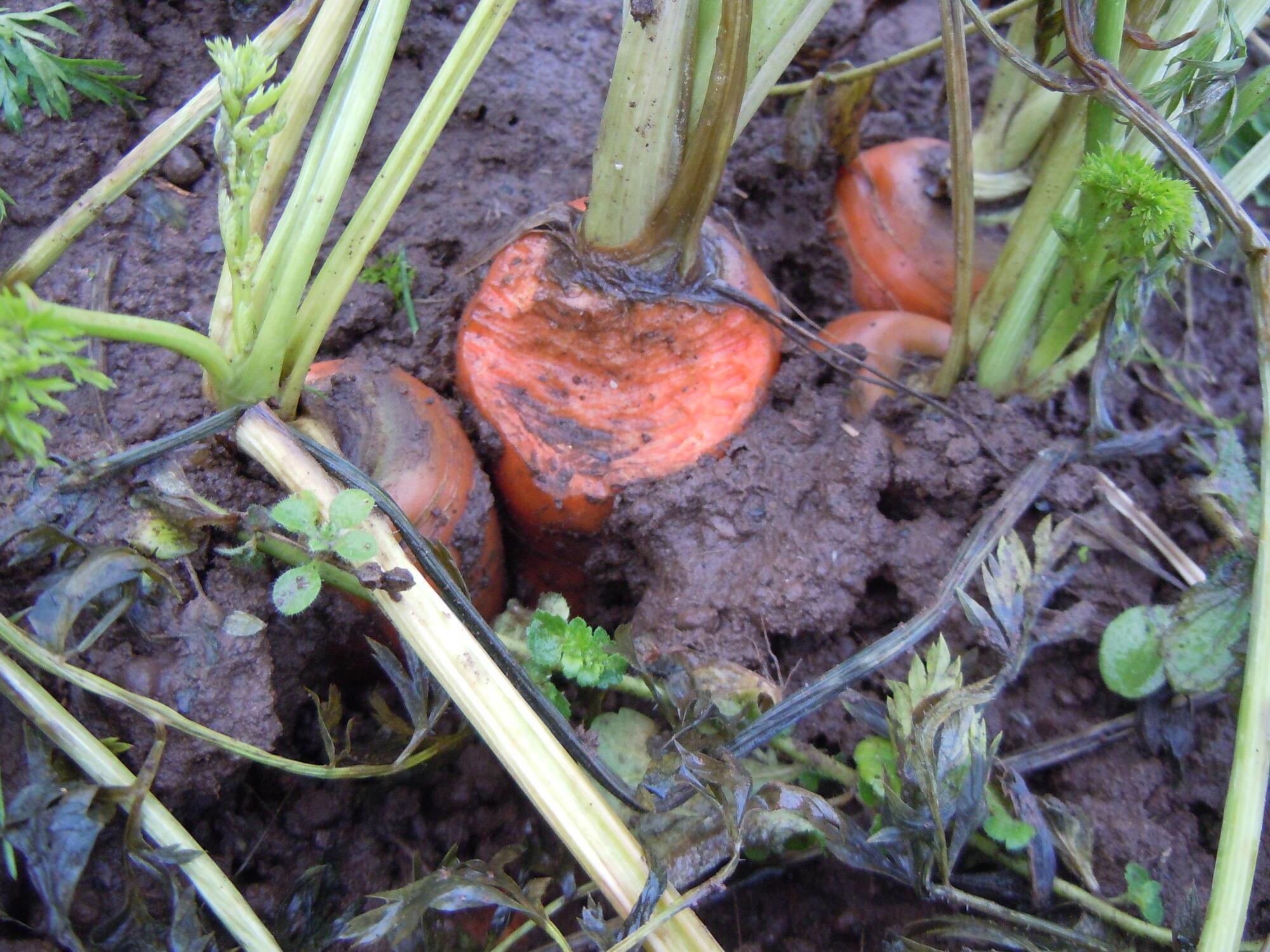
Cold storage
If root crops are harvested from wet or clayey soil, they might need to be washed to remove excess soil. Allow washed roots to air dry because excess moisture in storage makes stored roots more susceptible to diseases. Store root crops at 32⁰F and high relative humidity (that is, 95% to 98%). Lower humidity can cause root vegetables to shrivel. Losses from shrivel can be minimized if perforated film crate liners are used. In general, root vegetables are not injured by slight freezing. Remove greens for high-quality root crop storage. Exposure to ethylene, a gas given off by apples, pears, and other fruits, will cause many root crops to become bitter. Store root crops away from ethylene-producing crops or in low-temperature storage.
The following descriptions of different types of root vegetables are organized by family to help with crop rotation and pest management decisions.
Amaranthaceae
Beet (Beta vulgaris)
Beets come in many different colors, from deep red to striped to bright yellow, and can be planted until early August to produce a dependable storage crop. Beets growing in climates that experience temperatures below 15°F should be mulched or harvested and held in cold storage. If you are growing for beet greens, you can continue to plant until early September.
Apiaceae
Carrot (Daucus carota)
Carrots grown in summer or over the winter prefer a light friable soil. A light frost will increase sweetness. A fall crop will keep in the field or garden until used or temperatures dip below 5°F. However, carrots can be damaged by soil-dwelling pests and diseases, and they often survive better in storage, without tops, than in the ground. They are available in a wide range of colors and color blends.
Celeriac (Apium graveolens)
Celeriac is a slow grower that should be started indoors before transplanting. Plant celeriac with plenty of room to fill out, using 6- to 8-inch spacing. Can be stored in the ground. Mulch if temperatures dip below 18°F.
Parsnip (Pastinaca sativa)
Parsnips are very slow to emerge after seeding. They have long, cream-colored tap roots with white flesh and larger foliage than carrots. Planting parsnips close together will yield smaller, sweeter roots that are easier to work with. Other traits are similar to those described for carrots.
Asteraceae
Salsify (Tragopogon porrifolius)/Scorzonera (Scorzonera hispanica)
Salsify and scorzonera are closely related members of the daisy family and are very similar in cultivation and flavor. Scorzonera often has straighter, longer roots (up to 18 inches). They require little maintenance. Weed and water during droughty periods.
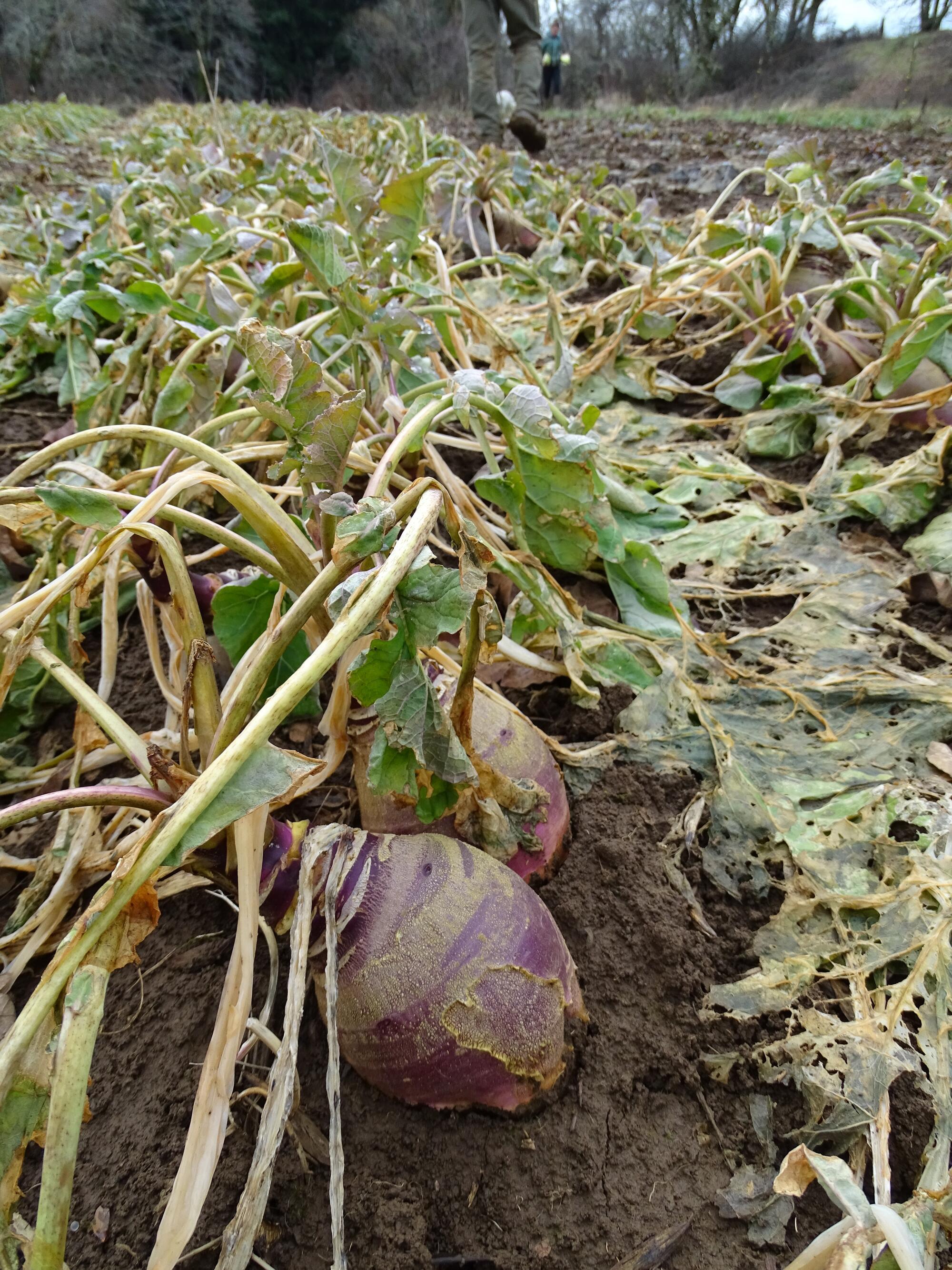
Brassicaceae
Kohlrabi (Brassica oleracea)
Both white and purple varieties are suitable for fall and winter production. Harvest when stems are still small, 1.5 to 2 inches in diameter, before the stems become woody.
Radish (Raphanus sativus)
Early varieties can be planted throughout the growing season until mid-September. These varieties will be harvestable until continuous freezing temperatures set in. Winter radishes (oriental types and Black Spanish) should be planted in July and can be harvested all winter. Midsummer sowings should be protected against cabbage maggots. Black radishes and watermelon radishes harvested in the winter will be milder and less spicy than those harvested in summer.
Rutabaga or yellow turnip (Brassica napus)
Rutabaga has white flesh with red and yellowish skin (Figure 37). The flesh is denser than turnips and takes longer to mature.
|
Crop |
Planting method1 |
Hardiness2 |
Planting date3 |
Harvest3 |
|---|---|---|---|---|
|
|
||||
|
Garlic |
Bulb | 0–15°F | Sept.–early Nov. | March–July |
|
Leek |
S | 5°F | End Feb.–Mar. | Nov.–April |
|
Leek |
TP | 5°F | May–early Aug. | Nov.–April |
|
Overwintering onion |
S | 5–10°F | Aug.–Sept. | April–June |
|
Overwintering onion |
TP | 5–10°F | Oct.–Nov. | April–June |
|
Scallion |
S | 5–10°F | Aug. | May–June |
|
Shallot |
Bulb | 5–10°F | Sept.–early Nov. | June–July |
|
|
||||
|
Brussels sprout & kalette |
TP | 25–30°F | Late May–June | Oct–March |
|
Sprouting broccoli |
TP | 15–20°F | Mid July–early Aug. | Feb.–April |
|
Winter cabbage |
TP | 20–25°F | Mid July–early Aug. | Nov.–March |
|
Winter cauliflower |
TP | 10–15°F | Mid July–early Aug. | Feb.–April |
|
|
||||
|
|
||||
|
Fennel |
S, TP | 30°F | July | Nov.–Dec. |
|
Parsley |
TP | 15°F | June–Aug. | Sept.–Apr. |
|
|
||||
|
Lettuce, leaf |
TP | 15°F | July–Aug. & Dec.–Jan. | Sept.–Oct. & March–April |
|
Radicchio |
TP | 5–20°F | July | Nov.–Jan. |
|
|
||||
|
Arugula |
TP | 20°F | June–Sept. | Sept.–April |
|
Collards |
S, TP | 0°F | S: July; TP: June–Sept. | Sept.–April |
|
Kale |
TP | 0°F | June–Aug. | Sept.–April |
|
Mustard green |
TP | 20°F | July–Aug. | Sept.–April |
|
Winter cress |
S | 15°F | Sept. | Nov.–Feb. |
|
|
||||
|
Chickweed |
S | 0°F | Sept. | Nov.–Feb. |
|
|
||||
|
Beet greens |
S, TP | 15°F | S: July; TP: Aug. | Nov.–Feb. |
|
Chard |
S, TP | 5°F | S: June–July; TP: June–Aug. | Nov.–Feb. |
|
Spinach |
S, TP | 0°F | S: Aug.–Sept. TP: July–Aug. | Nov.–Feb. |
|
|
||||
|
Corn salad |
S | 0°F | Sept. | Nov.–Feb. |
|
|
||||
|
Fava bean |
S | 15–20°F | Sept.–early Oct. | Green in late May -June, dry in July-Aug. |
|
|
||||
|
|
||||
|
Beet |
S | 15–20°F | June–Aug. | Oct.–March |
|
|
||||
|
Carrot |
S | 5°F | May–July | Oct.–March |
|
Celeriac |
TP | 20°F | May–June | Sept.–Feb. |
|
Parsnip |
S | 5°F | May–July | Oct.–March |
|
|
||||
|
Salsify |
S | 5°F | April–May | Oct.–March |
|
|
||||
|
Kohlrabi |
S | 5°F | July–Aug. | Nov.–Feb. |
|
Radish |
S | 15–20°F | Aug.–Sept. | Nov.–Feb. |
|
Rutabaga |
S | 20°F | July | March |
|
Turnip |
S | 10–20°F | Aug. | March |
1TP means transplant, S means direct seed. Many crops can be transplanted or direct-seeded. We indicate the most common planting methods in the Pacific Northwest.
2Hardiness information was collected from seed companies, experienced farmers and our observations. They are for guidance only.
3In some crops, such as heading brassicas, planting dates are normally consistent among varieties while harvest dates vary widely by variety.
|
Crop (raw unless noted) |
Serving size2 |
Calories |
Fiber (g) % DV3 |
Vit A (mcg RAE4) % DV |
Vit C (mg) % DV |
Vit K (mcg) % DV |
Antioxidants5 |
|---|---|---|---|---|---|---|---|
|
|
|||||||
|
Garlic |
1 clove (3g) | 4.5 | <1 | <1 | <1 | <1 | Al |
|
Leeks |
1 medium (89g) | 54 | 1.6, 6% | 444, 49% | 10.7, 12% | 41.8, 35% | B-c, L, S, Z |
|
Onion |
1 small onion (70g) | 28 | 1.2, 4% | 0 | 5.2, 6% | <1 | B-c, L, S, Z |
|
|
|||||||
|
Brussels sprouts |
1 cup whole (88g) | 37.8 | 3.3, 11.8% | 192, 21% | 74.8, 83% | 156, 130% | B-c, Is, L, S, Z |
|
Cabbage |
1 cup shredded (70g) | 17.5 | 1.75, 6% | 3.5, < 1% | 25.6, 28% | 53.2, 44% | B-c, Is, L, S, Z |
|
Cauliflower |
1 cup chopped (90g) | 25 | 2, 7% | 0 | 48, 53% | 15, 13% | S |
|
Sprouting broccoli |
1 cup chopped (100g) | 34 | 4, 14% | 100, 11% | 110, 122% | 185, 154% | An, B-c, In, S, L, Z |
|
|
|||||||
|
Arugula |
2 cups chopped (40g) | 10 | <1 | 284, 32% | 6, 7% | 43.4, 36% | B-c, L, Z |
|
Beet greens |
1 cup chopped (38g) | 8.4 | 1.4, 5% | 120, 13% | 11.4, 13% | 152,127% | B-c, L, Z |
|
Chard |
2 cups chopped (72g) | 14 | 1 | 110, 12% | 10.8, 12% | 299, 249% | B-c, L, Z |
|
Collards |
1 cup chopped (36g) | 11.5 | 1.4, 5% | 543, 60% | 12.7, 14% | 157, 131% | B-c, Is, L, S, Z |
|
Endive |
1 cup chopped (50g) | 8.5 | 1.6, 6% | 326, 36% | 3.2, 4% | 115.6, 96% | B-c |
|
Escarole |
2 cups chopped (85g) | 15 | 3.0, 10% | NA | 3.3, 4% | 210, 175% | B-c |
|
Kale |
1 cup chopped (50g) | 24.5 | 1.8, 6.4% | 769, 85% | 60, 67% | 352, 293% | B-c, L, Z |
|
Mizuna6 |
2 cups chopped (85g) | 10 | <1 | 600, 67% | 12, 13% | NA, >100% | B-c, L, Z |
|
Mustard greens |
1 cup chopped (56g) | 15 | 1.8, 6.8% | 507, 56% | 39.2, 44% | 144, 120% | B-c, L, Z |
|
Radicchio |
1 cup chopped (40g) | 9.2 | <1 | NA | 3.2, 4% | 102, 85% | B-c, L, Z |
|
Spinach |
1¾ cups chopped (50g) | 11.5 | 1.1, 4% | 469, 52% | 14, 16% | 242, 202% | B-c, L, Z |
|
|
|||||||
|
Fava beans (cooked) |
½ cup whole (90g) | 98 | 4.9, 18% DV | <1 | <1 | 2.6, 2% DV | B-c |
|
|
|||||||
|
Beet |
One 2” diam. (82g) | 35.3 | 2.3, 8% | 1.6, < 1% | 4, 4% | <1 | B-c |
|
Carrot |
1 medium (61g) | 25 | 2, 7% | 509, 57% | 4.3, 5% | 9.5, 7% | B-c, L, Z |
|
Celeriac |
1 cup chopped (156g) | 65.5 | 2.8, 10% | 0 | 12.5, 14% | 64, 53% | L, Z |
|
Parsnip |
½ cup sliced (67g) | 50 | 3.5, 12% | 0 | 12, 13% | 15, 13% | L x |
|
Rutabaga |
1 cup chopped (140g) | 51.8 | 3.2, 11% | 0 | 35, 39% | <1 | B-c, L, Z |
|
Turnip |
1 small (61g) | 17 | 1.1 | 0 | 12.8, 14% | <1 | S |
1 Adapted from USDA FoodData Central, and OSU Linus Pauling Institute’s Micronutrient Information Center.
2 Nutrient content is based on fresh weight, volumes shown in the table are estimates only.
3 % DV refers to percent daily value.
4 RAE refers to retinol activity equivalents.
5 Abbreviations for antioxidants. Al = allicin; An = anthocyanin; B-c = beta-carotene; In = indoles; Is = isothiocyanate; L = lutein; S = sulforaphane; Z = zeaxanthin.
6 Adapted from What is mizuna? All about this unique, leafy green.
Farmers growing winter vegetables
Pumpkin Ridge Gardens
Polly Gottesman and James Just first grew winter vegetables while participating in an internship at the Aprovecho Institute near Cottage Grove, Oregon, in 1988. When they started Pumpkin Ridge Gardens in North Plains in 1990, they started a year-round Community Supported Agriculture program right away. Theirs was one of the first CSAs in the Portland area. Polly explained that winter vegetables have always been part of their farm vision. “I eat in the winter and we’ve always wanted to grow year-round and get our customers turned on to eating fresh, locally grown food all year.”
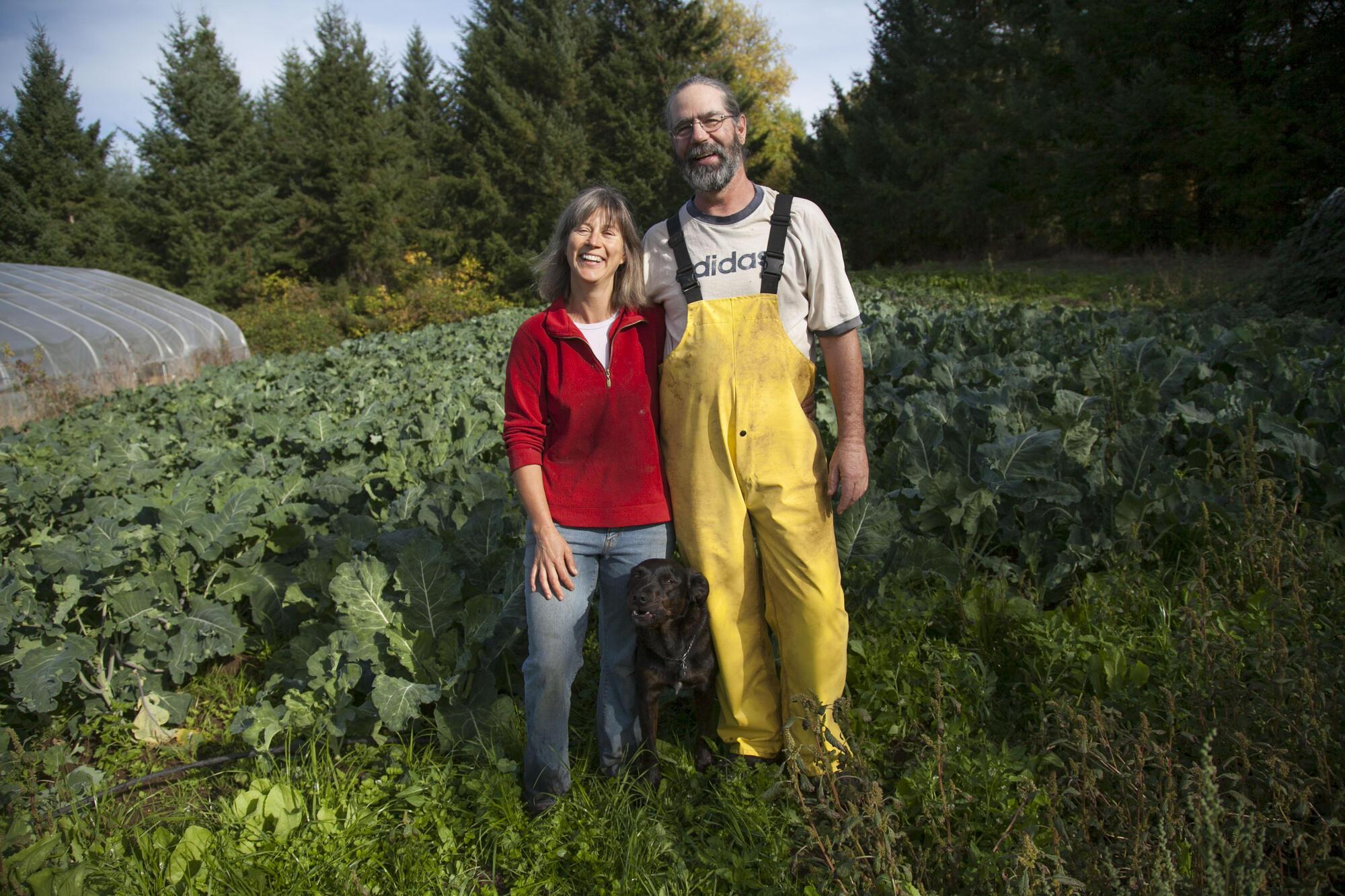
Winter vegetables are integral to their farm plan. Winter production helps them retain CSA members because there’s no gap; customers get a share 52 weeks per year. The most convenient thing for their customers is to keep subscribing. Polly and James would rather farm than spend a lot of time marketing or looking for new customers, and this year-round relationship with members helps them sell nearly all their shares to existing customers.
They haven’t evaluated the profitability of their winter vegetables specifically because they are so tightly integrated into their overall business. Their year-round CSA business model is profitable. They earn more per acre than most farms in their area. Winter vegetables keep Polly, James, one full-time worker and a part-time worker employed year-round. It’s always been part of Polly and James’ vision to earn their living from the farm without having to rely on off-farm income.
Polly and James grow a wide range of vegetables so that their CSA shares have a lot of variety every week. Winter vegetables include purple sprouting broccoli, overwintering cauliflower, cabbage, kale, collards, Brussels sprouts, chard, radicchio, celeriac, carrot, parsnip, rutabaga, table beet, turnip and leeks. They also grow lettuce, spinach, arugula, corn salad and bok choy in high tunnels. Newer crops include Hamburg parsley, early radish (February to March), celery (until December) and cilantro in the field.
Most of their crops are grown and stored in the field, but they store carrots and celeriac in the cooler to reduce root maggot damage. Sometimes they do a rush harvest of crops like table beet and cabbage if there is a quick drop in temperature with no snow.
They look for hardy, tasty and productive varieties. They work closely with their seed companies and attend OSU Extension variety field days whenever they can. Every year, they try out new varieties on their farm. Osborne Quality Seed, Territorial Seed Company and Johnny’s Selected Seeds have all been very helpful over the years.
Leeks are their most important winter crop because they can tolerate any cold snaps local weather can throw at them. They mainly use cover crops and compost as soil amendments and have increased soil fertility in their fields over time.
They’ve recently started working with OSU Extension and Concentrates Inc. on fertilizer recommendations and now add some feather meal as a result. Initial results from an OSU Extension project show that they are supplying about the right amount of nutrients for their crops this way.
They irrigate leeks the same as their other crops with their automatic drip irrigation system. They are farming on relatively fine silt loam soil (Cornelius, Kinton and Laurelwood silt loams). Typically, they run one line of t-tape per bed, and crops get two hours per day with low-flow, 12-inch emitter spacing.
They start leek seedlings in the greenhouse in February and transplant them to the field in late May or early June. They dibble the beds about 4 to 6 inches deep and drop the seedlings into the holes. They water the seedlings in by hand with a wand and sometimes the seedlings get buried at first, but they emerge quickly.
Planting into a hole blanches the lower stem and helps to produce high-quality leeks with a long white stem. The planting process is a three-person job and takes quite a lot of time. The leeks grow all summer and into the next winter. Their leeks have never been killed during the winter, even when it got down to 5°F (a historical low), and they had to chisel frozen soil to harvest the leeks.
Polly and James strongly recommend winter vegetables to other farmers but advise careful planning. Succession planting strategies used in summer vegetables don’t work with winter crops. All varieties of each type are planted at about the same time so they size up for the winter, then in the case of brassicas, they are harvested when each variety matures in late winter and spring. They recommend preparing beds and starts for most winter vegetables in July and August, which is already a busy time of year for summer crops.
Insect and disease damage can get worse over the winter. Some varieties are difficult to find because winter vegetables are a niche product and many seed companies don’t offer them.
Heading brassicas and some other winter vegetable crops take a lot of space. Polly and James use 18-by-18-inch spacing in general, 12-by-12-inch for celeriac and radicchio, and 9-by-9-inch for leeks. Be sure to allow space for them. Polly says, “There’s nothing like seeing purple sprouting broccoli or winter cauliflower reach maturity in late winter after all you’ve had for a while is leafy greens and root vegetables.”
Polly and James see a lot of potential in local winter vegetables and encourage other farmers to tap into the market. Winter vegetables work very well with their CSA model, but there are also other markets for fresh, locally grown winter vegetables, including restaurants, farmers markets and direct to retail.
47TH Avenue Farm
Laura Masterson first started growing winter vegetables for herself about 15 years ago and loved them so much that she added a winter share to her CSA offerings. She founded 47th Avenue Farm in 1997 and now farms at two locations: Lake Oswego and Grand Island, Oregon.
Her first winter CSA shares were small and were distributed once a month, but they were so popular that she has been expanding them ever since. Her winter crops include collards, kale, chicory, cabbage, Brussels sprouts, turnips, kohlrabi, rutabaga, beets, celeriac, potatoes, carrots, leeks, radish, onions, shallots, garlic, winter squash, parsnip, purple sprouting broccoli, cauliflower and broccoli raab.
47th Avenue Farm’s winter share is a key component to the farm’s viability because it helps to retain farm crews, CSA members and restaurant customers. Winter vegetables also provide winter and early spring income. Year-round work is more appealing to employees than seasonal work.
Year-round crops also keep customers interested throughout the year. Laura originally thought shareholders would want to be year-round members. However, some customers only sign up for winter shares or summer shares because of their lifestyles. Multiple options give her customers more flexibility.
In general, winter vegetables pencil out financially for 47th Avenue Farm. Laura and her crew track the cost of production for all of their vegetable crops. Winter vegetables are more profitable than some summer crops and less profitable than others.
At 47th Avenue Farm, winter crops have to be hand-harvested and hauled to the packing shed with large hand carts because its farm tracks are impassable for vehicles in the winter. Cold, wet, muddy conditions make harvest and handling more labor-intensive. They interseed cover crops into winter vegetables in September to provide ground cover and reduce mud problems.
Some of their winter crops are stored in refrigerated coolers, which increases energy costs. For example, a rutabaga harvested and sold in October has a lower cost than a rutabaga that is harvested in October and refrigerated for two to three months before being sold. There are also some losses in storage, and Laura notices that the flavor also starts to decline in storage.
In most cases, crops that are harvested and sold right away are more profitable than stored crops. Laura aims to harvest half of the storable crops in October or early November and leave half in the field for winter harvest. Winter crops have higher labor and storage costs, so Laura charges a bit more for them.
Laura works closely with seed companies to trial different varieties on her farm. Her top priority is flavor, followed by agronomic qualities like disease and insect resistance, cold hardiness and harvest windows.
In the summer, Laura fertilizes winter crops at half the crop nitrogen requirement. On her farm, this is about 50–60 lbs plant-available nitrogen per acre. Crops are irrigated an inch a week until the winter rains begin in September or October, then irrigation is halted. Overwintering brassicas are targeted for a mid- to late-July transplanting so that they are about three-quarters full size by early November.
Laura has noticed if heading crops are planted too late, they won’t form marketable heads. Leafy greens like collards and kale are more forgiving and can be planted a little bit later than heading brassica crops.
Some of her farm’s greatest successes with winter vegetables have been due to their excellent flavor. She says “winter carrots are the most delicious things on the planet. Overwintered cauliflower is the bomb and there are very few pests. With the right variety, right planting timing and right weather, there’s a beautiful shining light of ripe cauliflower at the end of a long winter.”
If you are interested in growing winter vegetables, Laura strongly recommends that you understand your market and check whether your customers want winter vegetables. Carefully consider whether you have enough acreage for winter vegetables and room to rotate all the brassicas.
Also make sure you have enough labor at the right time, especially during transplanting and harvest. Winter vegetables are a great way to extend the growing season if you want to do that.
Laura believes there is potential to expand the winter vegetable market. “People need to eat all year, and a lot of people don’t yet know how fabulous and delicious winter vegetables are.” She adds that “winter vegetables make sense for direct market growers at the small to midsize farm range, but you need to be careful. Cash-flow and retention of customers and crew is good, but it is challenging and hard work.”
Resources
Choosing a location
Ebba, J. How to site a greenhouse to receive the most sun. 2019. Durham, NH: University of New Hampshire Extension Service.
Edmunds, B. Raised bed gardening. 2020. FS 270
Soil
Climate and weather
Temperature and plant growth
USDA Plant Hardiness Zone Map.
Andrews, N., L. Coop, H. Stoven, H. Noordijk and A. Heinrich. 2021. Vegetable degree-day models: An introduction for farmers and gardeners. EM 9305. Corvallis OR: Oregon State University Extension Service.
Field management
Soil and nutrient management
Soil testing
Cappellazzi, S., C. Sullivan, G.B. Jones and L. Brewer. 2024. Get actionable results from a soil, plant or environmental testing lab. EM 8677. Corvallis, OR: Oregon State University Extension Service.
Collins, D. 2012. Soil Testing: A Guide for Farms with Diverse Vegetable Crops, EM050E. Pullman, WA: Washington State University Extension Service.
Fery, M., J. Choate, and E. Murphy. 2018. A guide to collecting soil samples for farms and gardens. EC 628. Corvallis, OR: Oregon State University Extension Service.
Jones, Gordon B., A. Moore and E. Smith. 2024. Soil testing lab selection and recommended analytical methods for Oregon. EM9243. Corvallis, OR: Oregon State University Extension Service.
Staben, M., J.W. Ellsworth, D.M. Sullivan, D.A. Horneck, B.D. Brown, and R.G. Stevens. 2018. Monitoring soil nutrients using a management unit approach. PNW 570. Corvallis, OR: Oregon State University Extension Service.
Soil organic matter
Sullivan, D.M., A. Moore, and L.J. Brewer. 2019. Soil organic matter as a soil health indicator: Sampling, testing and interpretation. EM 9251. Corvallis, OR: Oregon State University Extension Service.
Soil pH
Anderson, N.P., J.M. Hart, D.M. Sullivan, N.W. Christensen, D.A. Horneck, and G.J. Pirelli. 2013. Applying lime to raise soil pH for crop production (Western Oregon). EM 9057. Corvallis, OR: Oregon State University Extension Service.
Hart, J.M., D.M. Sullivan, N.P. Anderson, A.G. Hulting, D.A. Horneck, N.W. Christensen. 2013. Soil acidity in Oregon: Understanding and using concepts for crop production. EM 9061. Corvallis, OR: Oregon State University Extension Service.
General nutrient management
Bary, A.I., C.G. Cogger, and D.M. Sullivan. 2016. Fertilizing with Manure and Other Organic Amendments. PNW 533. Pullman, WA: Washington State University Extension Service.
Collins, D., C. Miles, C. Cogger, and R. Koenig. Soil Fertility in Organic Systems: A Guide for Gardeners and Small Acreage Farmers. PNW 646. Pullman, WA: Washington State University Extension Service.
Sullivan, D.M., E. Peachey, A. Heinrich, and L.J. Brewer. 2017. Nutrient management for sustainable vegetable cropping systems in Western Oregon. EM 9165. Corvallis, OR: Oregon State University Extension Service.
Nitrogen
Sullivan, D.M., N. Andrews, and L.J. Brewer. 2020. Estimating Plant-Available Nitrogen Release from Cover Crops. PNW 636. Corvallis, OR: Oregon State University Extension Service.
Sullivan, D.M., N. Andrews, A. Heinrich, E. Peachey, and L.J. Brewer. 2019. Soil nitrate testing for Willamette Valley vegetable production. EM 9221. Corvallis, OR: Oregon State University Extension Service.
Cold weather protection
Angima, S. and B. Biernacki. 2008. How to build your own raised-bed cloche. EC 1627-E. Corvallis, OR: Oregon State University Extension.
Fernandez-Salvador, J., E. Chernoh, A. Pheil, K. Poblador and T. Barker. 2021. Low tunnels for season extension in Oregon: Design, construction and costs. EM 9333. Corvallis, OR: Oregon State University Extension.
Parker, J., C. Miles, T. Murray and W. Snyder. 2012. How to Install a Floating Row Cover. FS089E. Pullman, WA: Washington State University Extension Service.
Crop rotation
Mohler, C.L., and S.E. Johnson. 2009. Crop Rotation on Organic Farms: A Planning Manual. USDA Sustainable Agriculture Research and Education.
Cover crops
Clark, A. editor. 2012. Managing Cover Crops Profitably (3rd Edition). USDA Sustainable Agriculture Research and Education.
General pest management
Oregon State University Plant Clinic.
Pacific Northwest Pest Management Handbooks. Corvallis, OR: Oregon State University Extension Service.
Washington State University Plant Pest Diagnostic Clinic.
Diseases
Oregon State University Department of Horticulture. What is Contans and how can it be used in Western Oregon to control white mold?
Pests
Andrews, N., M. Ambrosino, G. Fisher, S.I. Rondon. 2017. Wireworm: Biology and nonchemical management in potatoes in the Pacific Northwest. PNW 607. Corvallis, OR: Oregon State University Extension Service.
Baldwin, R.A. 2019. Pocket Gophers. UC IPM 7433. Davis, CA: University of California Extension Service.
Green, J., A.J. Dreves, B. McDonald, E. Peachey. 2016. Winter cutworm: A new pest threat in Oregon. EM 9139. Corvallis, OR: Oregon State University Extension Service.
Niamh, M.Q., M.J. Dimson, and R.A. Baldwin. 2018. Ground Squirrel. UC IPM 7438. Davis, CA: University of California Extension Service.
Salmon, T.P., and W.P. Gorenzel. 2010. Voles (Meadow Mice). UC IPM 7439. Davis, CA: University of California Extension Service.
Tim, R.M. 2019. Deer, UC IPM 74117, Davis, CA: University of California Extension Service.
Umble, J., R. Dufour, G. Fisher, J. Fisher, J. Leap, M. Van Horn. 2006. Symphylans: Soil Pest Management Options. ATTRA: National Sustainable Agricultural Information Service.
Vantassel, S.M, and L. Johns. 2019. Voles in Montana, their biology, damage and control. Helena, MT: Montana Department of Agriculture.
Weeds
Chen, G and C.R.R. Hooks. 2021. The Stale Seedbed Technique: A Relatively Underused Alternative Weed Management Tactic for Vegetable Production. University of Maryland Extension.
Harvest and handling
National Good Agriculture Practices Program (Cornell University).
University of California Postharvest Center commodity fact sheets online.
University of California Postharvest Handling resource site.
University of California Postharvest Center online bookstore.
Wilson, L, C. Strohbehn, P.A. Domoto, M. Smith, B. Brehm-Stetcher and A. Mendonca. 2013. On-farm Food Safety: Cleaning and Sanitizing Guide. PM 194C. Ames, IA: Iowa State University Extension and Outreach.
Crop management
Alliums
Drucker, A. 2020. Garlic Types and Market Niches. Western SARE.
Jepson, S.B. and M.L. Putnam. 2008. Eriophyid Mites on Stored Garlic. Oregon State University Plant Clinic.
Stewart, C. 2019. Eriophyid Mites — Micro-Scourge of Garlic. Cornell Cooperative Extension.
Sullivan, D.M., B.D. Brown, C.C. Shock, D.A. Horneck, R.G. Stevens, G.Q. Pelter, and E.B.G. Feibert. 2016. Nutrient management for onions in the Pacific Northwest. PNW 546. Corvallis, OR: Oregon State University Extension Service.
Heading brassicas
Harris, A., B. Sideman, and T. Levy. Unknown publication date. Research Report: Organic Management of Cabbage aphid (Brevicoryne brassicae) with insecticides on Brussels sprout in NH: 2016-2018. University of New Hampshire Cooperative Extension.
Heinrich, A.L., A. Stone, D.M. Sullivan, J. Myers, and E. Peachey. 2016. Integrated clubroot management for brassicas: Nonchemical control strategies. EM 9148. Corvallis, OR: Oregon State University Extension Service.
Natwick, E.T. 2009. Cole Crops: Cabbage Aphid. UC ANR 3442. Davis, CA: University of California Extension Service.
Oregon Department of Agriculture. 2016. Pest Alert: Cabbage Whitefly.
Parker, J., C.A. Miles, T. Murray, W. Snyder. 2012. Organic Management of Flea Beetles. PNW 640. Pullman, WA: Washington State University Extension Service.
Sideman, B. and O. Saunders. Unknown publication date. Brussels Sprouts Variety Trial and Topping Study, 2013 & 2014. University of New Hampshire Cooperative Extension.
Stoven, H. 2015. New Pest of Brassicas in Oregon: Cabbage Whitefly. Oregon State University Extension.
Leafy greens
Miles, C.A., K. Kolker, and G. Becker. Unknown publication date. Winter lettuce.
Miles, C.A., J. O’Dea, C.H. Daniels and J King (2018). Pea shoots. PNW 567. Pullman, WA: Washington State University Extension.
Root crops
Andrews, N. 2009. Carrot rust fly biology & management. Oregon State University Extension.
Hazzard, R. 2014. Cabbage Root Maggot. University of Massachusetts Extension.
Hemphill, D.D., M.S. Weber and T.L. Jackson. 1982. Table Beet Yield and Boron Deficiency as Influenced by Lime, Nitrogen, and Boron. Soil Science Society of America Journal, 46(6): 1190-1192.
Oregon State University Nematode Testing Service.
University of California. “Meloidogyne hapla” at Nemaplex.
Health benefits of winter vegetables
Academy of Nutrition and Dietetics.
Stoody, E.E., Obbagy, J., Pannucci, T.R., Fu, S.L., Rahavi, E.R.D., Altman, J., Adler, M., Brown, C., Scanlon, K.S., de Jesus, J., Olson, R., Perrine, C., Quam, J., Piercy, K., Vargas, A., Lerman, J., DeSilva, D., and Anderson-Villaluz, D. 2020. Dietary Guidelines for Americans (2020-2025), Ninth Edition. United States Department of Agriculture, Washington, D.C.
Mayo Clinic Drugs and Supplements.
McGrane, K. 2019. What is Mizuna? All About this Unique Leafy Green. https://www.healthline.com/nutrition/mizuna
OSU Linus Pauling Institute’s Micronutrient Information Center page on Phytochemicals.
U.S. Department of Agriculture, Agricultural Research Service. FoodData Central, 2019.
U.S. Department of Agriculture, Center for Nutrition Policy and Promotion, MyPlate.
U.S. Department of Agriculture, Nutrition.gov.
U.S. Department of Health and Human Services, National Institutes of Health Office of Dietary Supplements, Dietary Supplement Fact Sheets.
U.S. Food and Drug Administration, Nutrition Education Resources and Materials.
Additional culinary resources
Berens, A., E.E. Berger, L. Engelman. 2019. Ruffage A Practical Guide to Vegetables. Chronicle Books.
Louis, J. and K. Squires. 2017. The Book of Greens: A Cook’s Compendium. Ten Speed Press.
Madison, D. 2013. Vegetable Literacy Cooking and Gardening with Twelve Families from the Edible Plant Kingdom. Ten Speed Press.
McFadden, J., and M. Holmburg. 2017. Six Seasons: A New Way with Vegetables. Artisan, Working Man Publishing Company.
Morgan, D. 2012. Roots: The Definitive Compendium With More Than 225 Recipes. Chronicle Books.
Swanson, H. 2011. Super Natural Every Day. Penguin Random House.
Waters, A. 1996. Chez Panisse Vegetables. HarperCollins Publishers.
Acknowledgments
Thank you to the following reviewers for providing valuable feedback on this publication: Ariel Agenbroad (University of Idaho), Anna Ashby (Chef’s Garden, Allison Inn and Spa), Patty Case (Oregon State University), Jim Christopherson (Bejo Seeds), Polly Gottesman (Pumpkin Ridge Gardens), Carol Miles (Washington State University), John Navazio (Johnny’s Selected Seeds), Danny Percich (Full Plate Farm), and Alex Stone (Oregon State University).
This publication was written as part of the Eat Winter Vegetables project that aims to increase production and local consumption of winter vegetables in Oregon including Brussels sprouts, cabbage, cauliflower, celeriac, collards, garlic, purple sprouting broccoli, collards, radicchio and winter squash.
Partial funding for this publication was provided by the Oregon Department of Agriculture’s Specialty Crop Block Grant program: “Developing Oregon’s Winter Vegetable Industry”, ODA-18-007-GR. Oregon Tilth also supported this project.
About the authors


Related publications


© 2022 Published and distributed in furtherance of the Acts of Congress of May 8 and June 30, 1914, by the Oregon State University Extension Service, Washington State University Extension, University of Idaho Extension and the U.S. Department of Agriculture cooperating. The three participating Extension services offer educational programs, activities and materials without discrimination on the basis of race, color, national origin, religion, sex, gender identity (including gender expression), sexual orientation, disability, age, marital status, familial/ parental status, income derived from a public assistance program, political beliefs, genetic information, veteran’s status, reprisal or retaliation for prior civil rights activity. (Not all prohibited bases apply to all programs.)
