
Choosing your animals
Before you buy, know what your goals are for owning and raising sheep or goats. Sheep and goats not only produce meat, milk and fiber. They can also control grass and weeds, pull carts, carry loads, and serve as pets or companion animals. If your goal is to have a business selling sheep or goat products, find out before you buy animals whether there is a market for those products in your area.
Know how to choose healthy, sound animals. To reduce risk, have a veterinarian examine the animals and do any recommended lab tests to be sure you aren’t buying animals with serious diseases or other problems.
You can choose from many fiber, meat and dairy breeds of both sheep and goats. Choose species and breeds that are a good match for your goals. To help decide, visit fairs, shows and farms that raise different breeds and ask lots of questions. Don’t make decisions based solely on information from the internet.
Protection
Be sure you have good anti-predator fences in place before you bring sheep and goats to your land. Safe options for fencing are high-tensile wire, welded wire, field fencing (except for horned animals, see Figure 1), stock panels, and electric fences. Wool insulates sheep from electric fences, so shear or adjust electrical charges as needed. Netting can entangle animals; use it only where they are monitored closely. Do not use barbed wire for fencing — it can cause severe injury to animals. Monitor fencing regularly. Take care of problems right away, such as down wires, fallen trees, overgrown grass, electric charger failure and grounding out.
Livestock guardian dogs, llamas, burros, donkeys, mules and horses can be effective against predators. Each guardian species has different needs for care and handling.
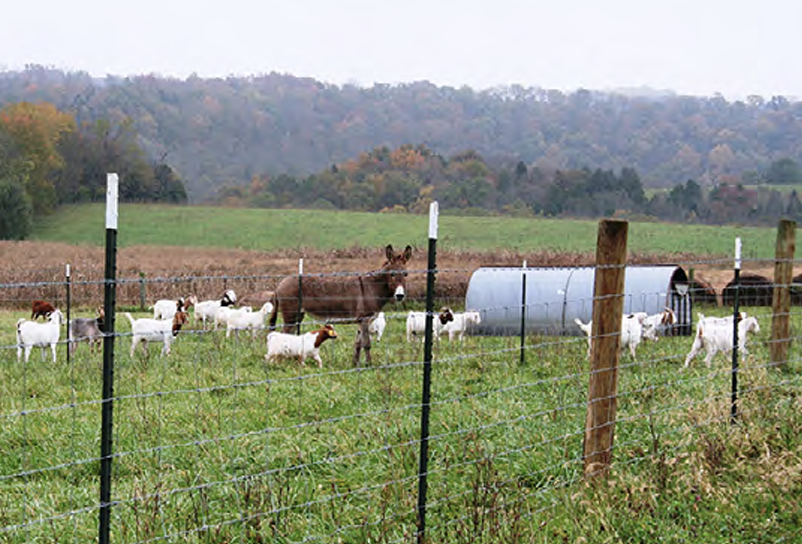
Monitor closely the first week to make sure the guardian animal you chose is compatible with your herd. Learn about the predator species in your area and the best ways to protect your livestock from them.
Shelter and other facilities
Lambs and goats of all ages need protection from sun, precipitation, wind, and cold. Adult sheep do better if they can take shelter from sun, rain and wind. A shelter should have clean bedding and enough space for all animals to fit comfortably and stay dry. Monitor air quality in shelters closely. If there is not enough ventilation, condensation and ammonia fumes accumulate, and pneumonia can result. The goal is a well-ventilated shelter with fresh air but no drafts. In many cases, three-sided sheds work well as shelters.
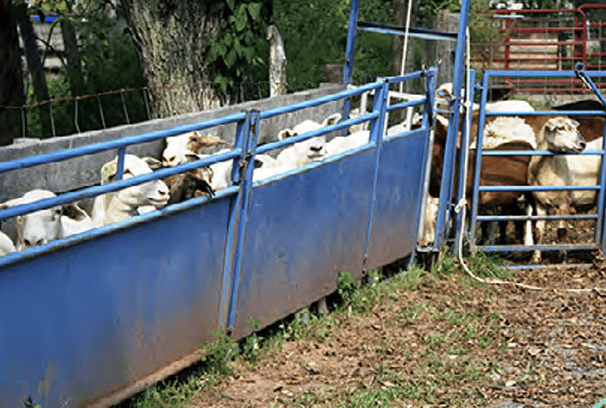
Check out other sheep and goat owners’ facilities before designing your own. Ask what they like about their facilities and what they would improve. It is best to have all facilities ready before you bring your animals home. Make sure there is nothing that can harm them, such as prominent nails, broken boards, or exposed wires.
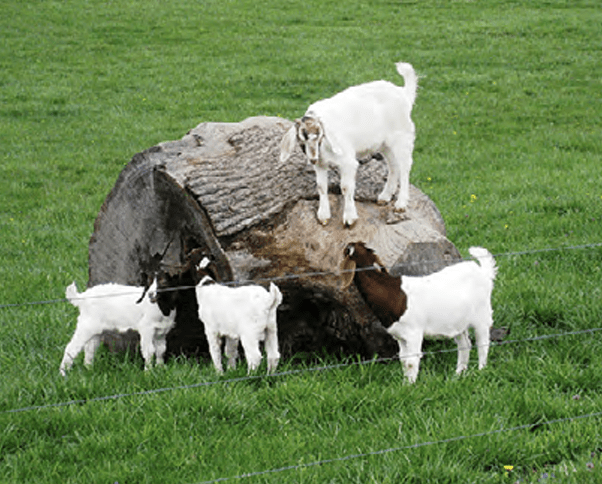
You’ll need a structure to restrain animals needing examination or treatment that keeps both animals and humans safe (Figure 2). Allow your animals as much natural behavior as possible. For example, goats prefer to browse instead of eat grass. They also like to spend free time climbing, so be sure to provide safe climbing structures (Figure 3).
Recordkeeping
Keep accurate and detailed farm records on where you got your animals, treatment received, production data, breeding history, feed, pasture productivity, paddock rotation schedule, expenses, income, weather, and all other relevant and useful information. Detailed records help you improve your management and work toward your goals, and you will need them at tax time, too.
Get connected
Join a goat or sheep association. You’ll connect with others, learn about area resources, get questions answered, learn where to get supplies, and make new friends.
Legal matters
Before getting livestock, ask your state department of agriculture about laws concerning livestock ownership or care where you live. Read local and county zoning ordinances as well, because some prohibit livestock.
