
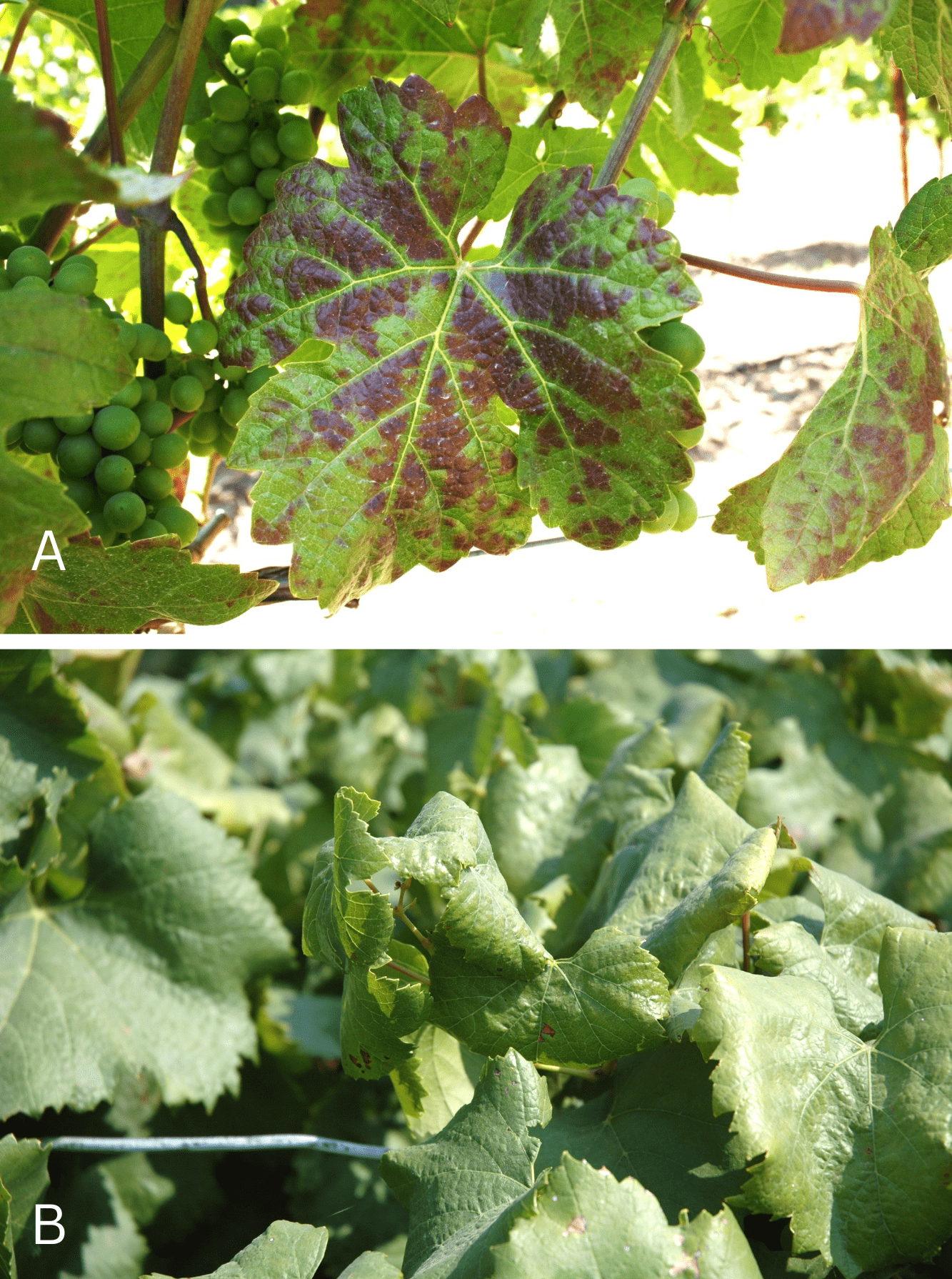
Grapevine leafroll-associated viruses are some of the most important diseases in commercial vineyards worldwide (Figure 1). Several strains of these viruses, known as GLRaVs, have forced many Oregon vineyards to remove vines and replant
A complex of up to 10 strains of the virus may produce different symptoms and severity. GLRaV 1 and 3 are the two most common in Oregon vineyards. Symptoms include leaf chlorosis or discoloration; rolling of leaf margins; reduction in berry color and ripeness; and yield reduction.
The most common means of infection and spread are through the use of unclean plant materials during propagation and insects spreading, or vectoring, the virus in field.
Mealybugs (Hemiptera: Pseudococcidae) are known vectors of GLRaVs. Researchers have identified several mealybug species in Oregon. These include grape mealybug (Pseudococcus maritimus), vine mealybug (Planococcus ficus), obscure mealybug (Pseudococcus viburni), Gill’s mealybug (Ferrisia gilliae) and longtailed mealybug (Pseudococcus longispinus). Oregon vineyards commonly feature grape mealybug, and Gill’s mealybug appears in isolated locations.
The vine mealybug is the most serious vector. It can reproduce and spread more than the others and is on the Oregon Grape Pest and Disease Quarantine list of pests. Vine mealybug was first detected in Oregon in 2021, and it remains isolated in a small region of the state.
To prevent the spread of viruses and their insect vectors, growers should implement prevention and management practices that address plants and insects. Prevention includes keeping insect vectors and viruses out of vineyards. Following Oregon’s grape quarantine is a first step toward prevention. It includes regulations for both GLRaV 1 and 3 and vine mealybug. To prevent further spread, you need to manage both GLRaVs and mealybugs if one or both already exist in the vineyard.
8 keys to prevention
- Monitor your vineyard for virus.
Look for visual signs of GLRaVs symptoms during the ripening-to-postharvest period. This includes identifying vines with canopies of red or yellow leaves, with red cultivars showing red leaves and white cultivars showing yellow or chlorotic leaves. Curling leaf margins are not always observed in Oregon vineyards. Once you identify concerning areas in your vineyard, review vineyard production data to note any progressive reduction in yield or lack of ripening that has developed. To confirm whether virus is present, sample dormant cane tissue in the postharvest period (October or later) and have these tested by a laboratory that analyzes grapevine viruses. See the OSU Extension list of virus testing labs serving growers.
- Monitor your vineyard for mealybugs.
Look for mealybugs in the vineyard. Scout the leaves, check under bark on the trunks and cordons, and look within clusters. This requires keen attention to detail and a lot of time. Sometimes the best way to find mealybugs is to look for honeydew, ants and sooty mold, especially during the growing season. Scout as early as April and extend efforts through harvest. Mid-July is the optimal time.
- Use pheromone traps.
Place pheromone lure-baited traps in vineyards and monitor for certain mealybug species. Most agricultural suppliers offer these lures. Unfortunately, no pheromones are specific to all mealybug species, but there is a commercially available vine mealybug (P. fiscus) pheromone lure.
- Examine new plants and plantings.
The most common way for insects and the virus to come into the vineyard is through plants arriving from off-site. When you receive a plant shipment, inspect the vines for mealybugs or other insects, honeydew, ants or sooty mold. If you find insects, reject the order.
After planting, scout vineyards for insects at least biweekly. Observing young vineyards isn't enough to diagnose viral infections, because water or nutrient deficiencies can cause symptoms like yellow or red leaves. Provide sufficient water and nutrition to your vineyard to allow healthy growth. Mark any suspected virus-infected vines and sample them for virus testing. Monitor for insect presence, virus symptoms and spread over time (See Field monitoring for leafroll virus and mealybug in Pacific Northwest vineyards, EM 8985, and Trapping and identifying mealybugs in Oregon vineyards, EM 8998).
- Plant clean vines.
Purchase certified plants or budwood from a reputable nursery. The certification process tests vines for viruses, including GLRaVs. The Oregon grape quarantine requires all plant materials from out of state to be certified. However, these regulations don’t cover in-state purchases of plant material. Therefore, insist that any plant material you obtain is virus-tested or certified if coming from an in-state nursery or plant source. Do not assume that plants are virus-free based on visual symptoms.
- Test vines for viruses before grafting over.
Testing is the only way to confirm virus presence. Collect vine samples from both the vineyard to be grafted and the budwood to be used for grafting over, and have them tested for viruses by a testing lab. Do not rely on visual observations only (Figure 2). Viruses can move across the graft union and transfer from the scion or the rootstock. Test for viruses using samples collected during the postharvest-to-dormancy period (fall to winter). The lab you work with should provide sampling instructions.

- Use proper sanitation.
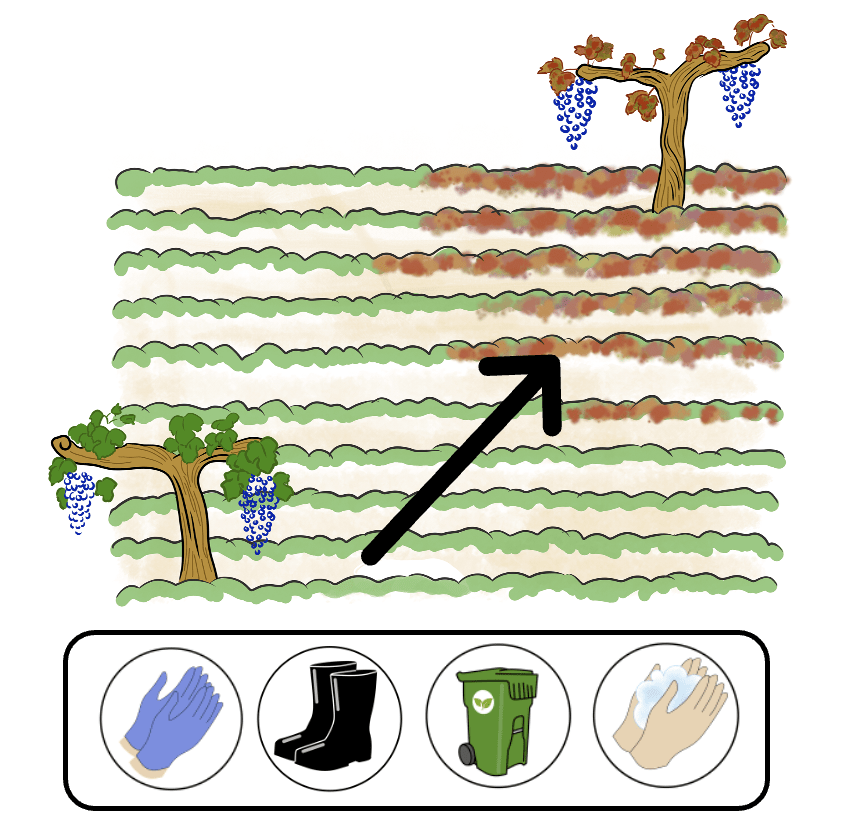
Implement sanitation practices to reduce mealybug spread in and around vineyards (Figure 3). Mealybugs can be spread physically on equipment, by field crews, on tools and by natural dispersion by birds, grazing animals and windblown infested leaves. The sticky honeydew produced by mealybugs facilitates spread. Adults, nymphs and eggs can easily adhere to equipment, laborers and animals such as grazing sheep that come in close contact with vines or fruit. Tractors, bins, picking containers, worker clothing and gloves can transport the pests to other locations.
- Properly compost pomace.
Winery waste from processed grape clusters (pomace) harvested from mealybug-infested vineyards should be composted properly. This will prevent survival and movement of mealybugs, which can lead to further spread.
Keys to GLRaV and mealybug management
If a vineyard has a mealybug infestation or GLRaVs infection, follow the management practices below to restrict spread within vineyards or to other vineyards. The effectiveness and feasibility of some practices may vary based on vineyard location and resources.
- Put high-risk plots last. Treat mealybug-infested and GLRaVs-infected areas as high risk, and manage these vineyards or areas at the end of a workflow. This could help prevent spread to other areas (Figure 3) and make sanitation procedures more efficient.
- Keep equipment and tools clean. Thoroughly pressure-wash equipment and tools, including trucks, trailers, tractors, bins, implements or hand tools that come into contact with the vines before entering or leaving a vineyard. Remove all plant debris and soil from equipment and tools. Pressure-wash large equipment on site with hot water and soap. If this is not possible, hose down equipment on site, then move it to a nearby location where it can be thoroughly washed before entering another vineyard. Do not blast debris into vineyards while washing; set up secluded wash areas that will minimize contamination.
- Don’t overlook clothing as carriers. Workers should wear disposable protective clothing in vineyards with known mealybug presence. If resources, temperature or efficiency do not allow field crews to wear such clothing, vigorously brush off work clothes to remove mealybugs and plant debris that could potentially contain crawlers. Consider encouraging workers to wear work clothes on-site and change into home clothes before leaving. Launder the workwear on-site or use a laundering service. This will reduce the risk of moving mealybugs from one place to another.
- Worker cleanup. Wash hands, arms and footwear with soap and hot water before entering or leaving a vineyard. Cleanup should be complete before leaving a vineyard.
- Remove and compost. Remove and compost all mealybug-infested vine materials resulting from cultural practices (shoots, leaves, clusters, dormant wood) to minimize mealybug movement.
- Segregate fruit loads at winery. Keep harvested loads separated by vineyard and avoid intermingling bins. Set standard sanitation measures for all loads received at the winery, not just for loads known to have come from GLRaV-infected or mealybug-infested vineyards.
- Eradicate vines. Remove GLRaVs-infected vines. The level of infection and the age of a vineyard may determine when you should pull vines. Replacing vines in a young vineyard with low infection levels is more economical than replacing vines in heavily infected older vineyards. During removal, dig out the vine and remove as much of the root system as possible. Remove one to two vines surrounding the infected plants to reduce the likelihood of secondary spread from the original source. Remove all suckers growing from residual roots in the soil.
- Do not propagate. Do not use any budwood from the vineyard for propagation if the vineyard has GLRaV.
Resources
- Distribution and monitoring of grape mealybug: A key vector of grapevine leafroll disease in Oregon, EM 9092
- Field monitoring for leafroll virus and mealybug in Pacific Northwest vineyards, EM 8985
- Fuchs, M.F. 2007. Grape Leafroll Disease. Cornell University and the New York State IPM Program.
- Smith, R., and L. Varela. 2008. Sidebar: Pomace management reduces spread of vine mealybugs. California Agriculture Journal 62 (4):172-173.
About the authors


