
Lygus bugs feed on a wide range of cultivated crops and weedy host plants. In the Pacific Northwest, Lygus bugs are pests of economically important crops, including small fruits such as strawberries; tree crops such as apples, peaches, nectarines and pears; legumes; hay or seed such as alfalfa, clover seed and canola; and vegetables such as carrots and radishes. Although rarely a pest on potatoes, in 2015, the number and distribution of Lygus bugs alarmed potato growers in Oregon and Washington, particularly in the lower Columbia Basin.
Lygus bugs cause direct damage to plants by feeding on flowers, fruit, and plant stems with their straw-like mouthparts. Damage is caused in part by injection of saliva into the plant, which continues to digest the plant tissue after feeding is finished. In addition to causing direct feeding damage to crops, Lygus bugs have been reported as vectors of plant pathogens to crops such as cotton. Recent research studies in the Pacific Northwest have sought to understand the impact of Lygus bugs on potatoes in the region. While these efforts have established an understanding of Lygus bugs feeding patterns and management, more research is needed to fully understand their impact.
Identifying Lygus bugs
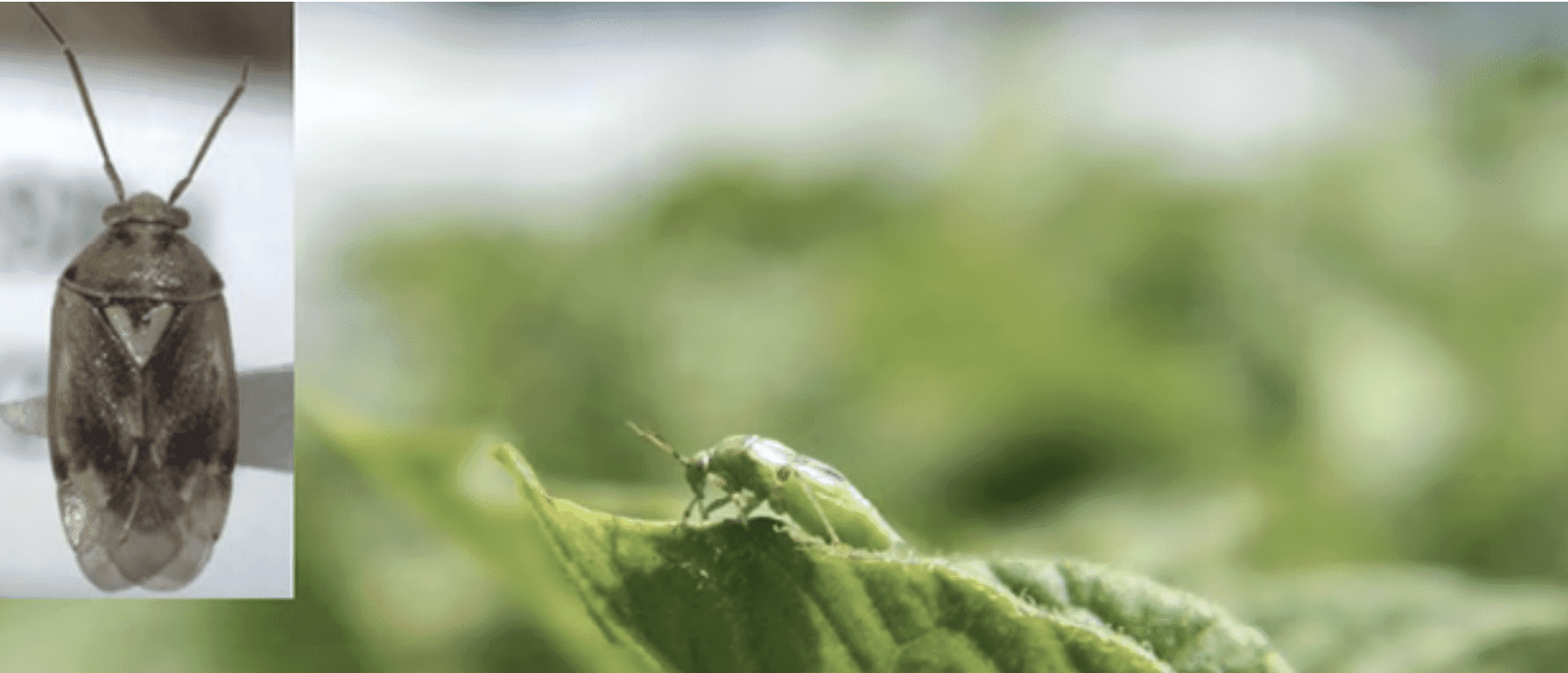
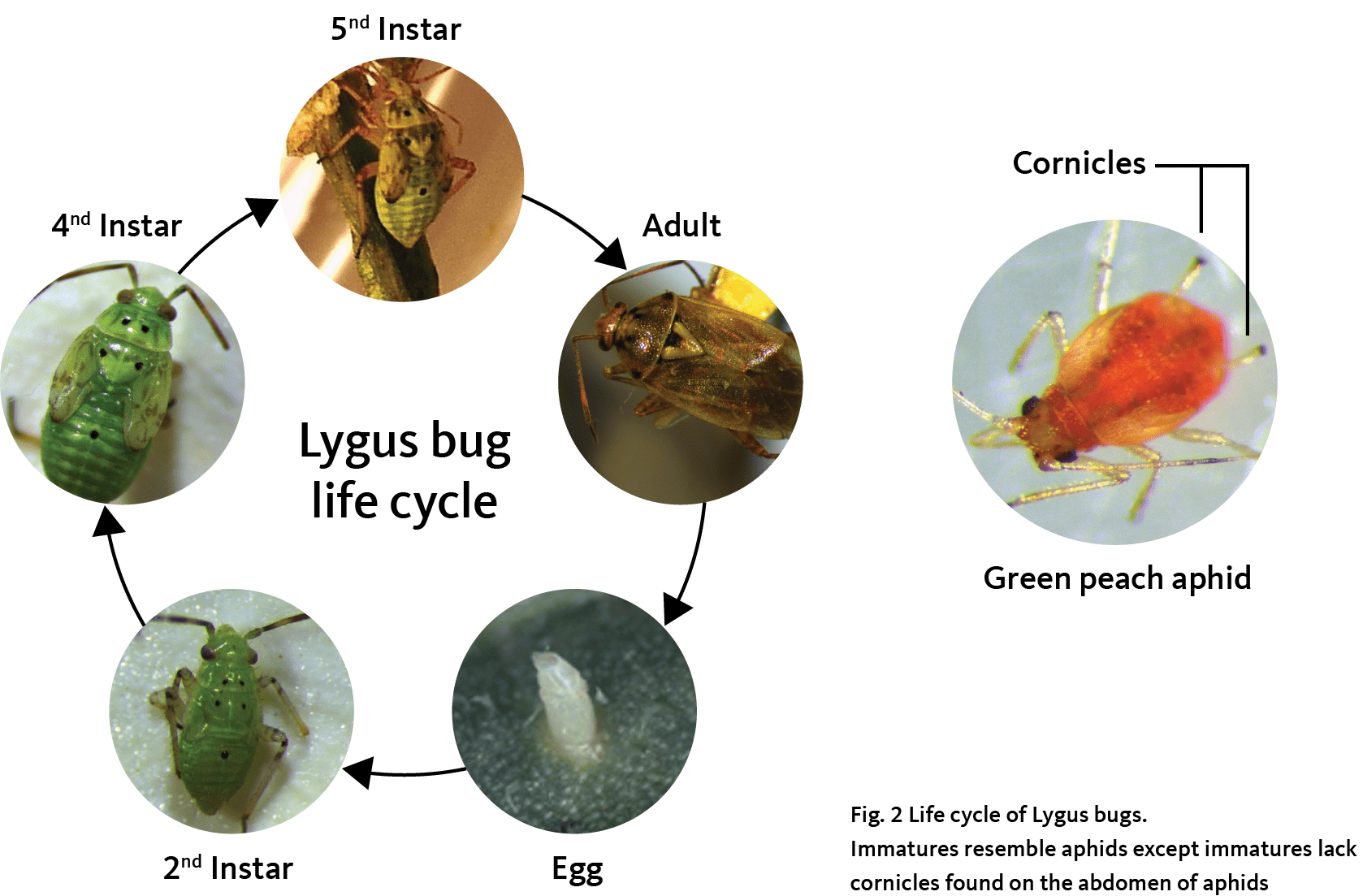
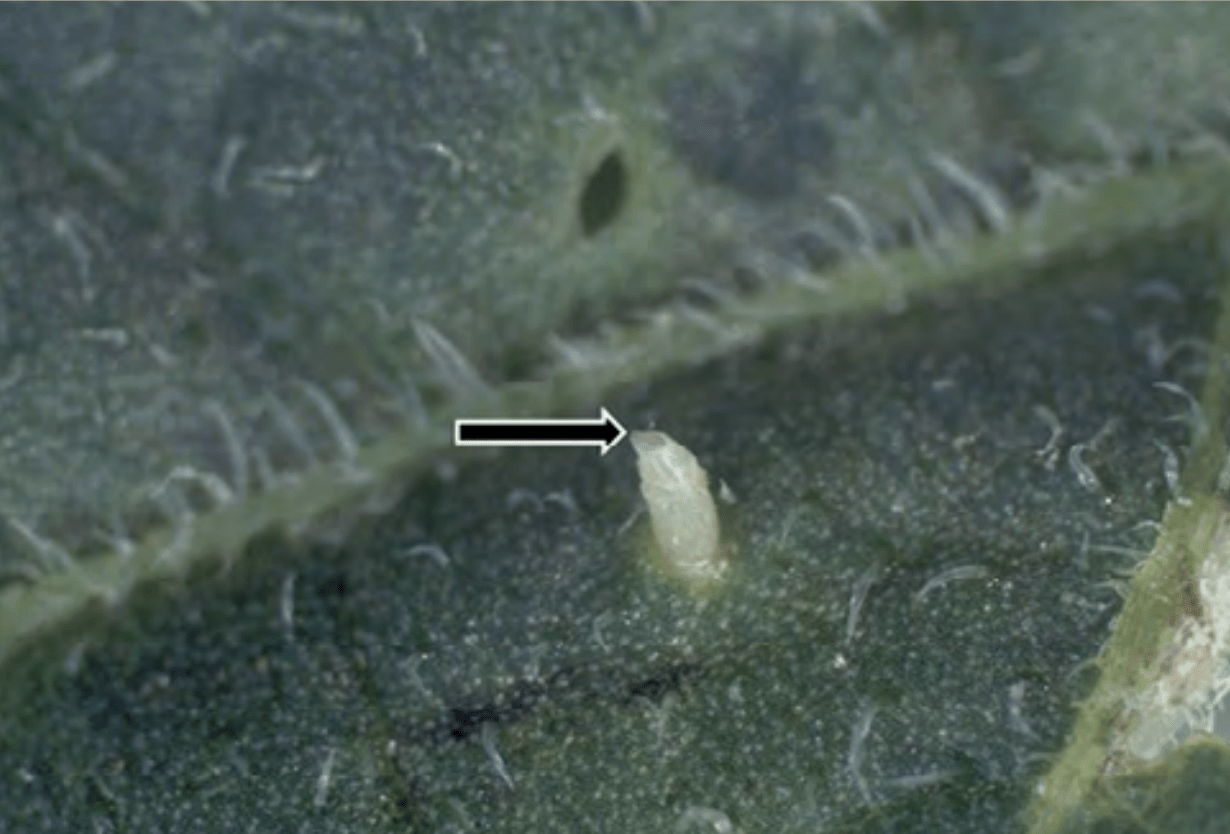
Lygus bugs are Hemipteran insects with characteristic piercing-sucking mouthparts. Adults are about 1/4 inch (6 millimeters) long, half as wide, somewhat hunchbacked, with flat abdomen and an oval shape (Figure 1). Lygus bugs are recognized by the conspicuous heart shape on the upper center of the back, known as scutellum (see insert in Figure 1). Immature Lygus bugs, or nymphs, look somewhat similar to adults, but they are smaller, wingless and do not reproduce. Newly hatched Lygus nymphs resemble aphids but can be distinguished from aphids by their lack of cornicles (Figure 2). Lygus bugs also seem to be more active than aphids. Females are slightly larger than males. They lay light creamy, oval-shaped eggs — about 0.04 inch (1 millimeter) long — in plant tissues, including leaves and stems. When eggs are laid in stems or midribs of leaves, Lygus bug eggs are difficult to see with the naked eye because females insert entire eggs into plant tissues, exposing only the flat cap cover (arrow in Figure 3) of the egg. When eggs are laid in leaves, they are easier to spot (Figure 3). In both instances, you need a hand lens to properly identify them. The cap may become raised above the stem or leaf surface as the egg develops and swells in size, and red eye spots of nymphs may become visible when eggs are ready to hatch. Lygus nymphs, usually pale green, hatch out after about seven to 10 days depending on temperature, then undergo five stages of development (each lasting about three to four days) before reaching the adult stage. On average, the entire life cycle of Lygus bugs lasts 30 to 40 days, and this may differ according to species, host plant and temperature. Depending on Lygus bug species, host plant and temperature, an adult female can live up to 52 days. Adults take about five to seven days to reach reproductive maturity. During that time, they cause a lot of feeding damage. Adults are thought to begin diapause in late summer in response to shorter daylight and overwinter in leaf litter, under host plants or move into suitable overwintering locations until warmer days start again in early spring.
Composition of Lygus bugs in potato fields in the PNW
Since 2015, the Irrigated Agricultural Entomology Program at the Hermiston Agricultural Research and Extension Center has been conducting areawide Lygus bug surveys in commercial potato fields in the lower Columbia Basin. Through this program, two main Lygus species were identified based on morphological and molecular data: Lygus hesperus (western tarnished bug) and Lygus elisus (pale legume bug). A third species, L. keltonia, was also identified, but it is less common than L. hesperus and L. elisus on potato fields in the lower Columbia Basin. Reports from Washington’s side of the Columbia Basin indicate that L. robustus also occurs in potato fields in the region. Both L. hesperus and L. elisus seem to be the most common Lygus species, not only in the Columbia Basin of Oregon and Washington but also in many parts of the western United States, including California. Lygus lineolaris (tarnished plant bug) is the most common species in the eastern United States, where it feeds on a wide range of crops including cotton, strawberry and alfalfa.
Lygus bug damage on potatoes
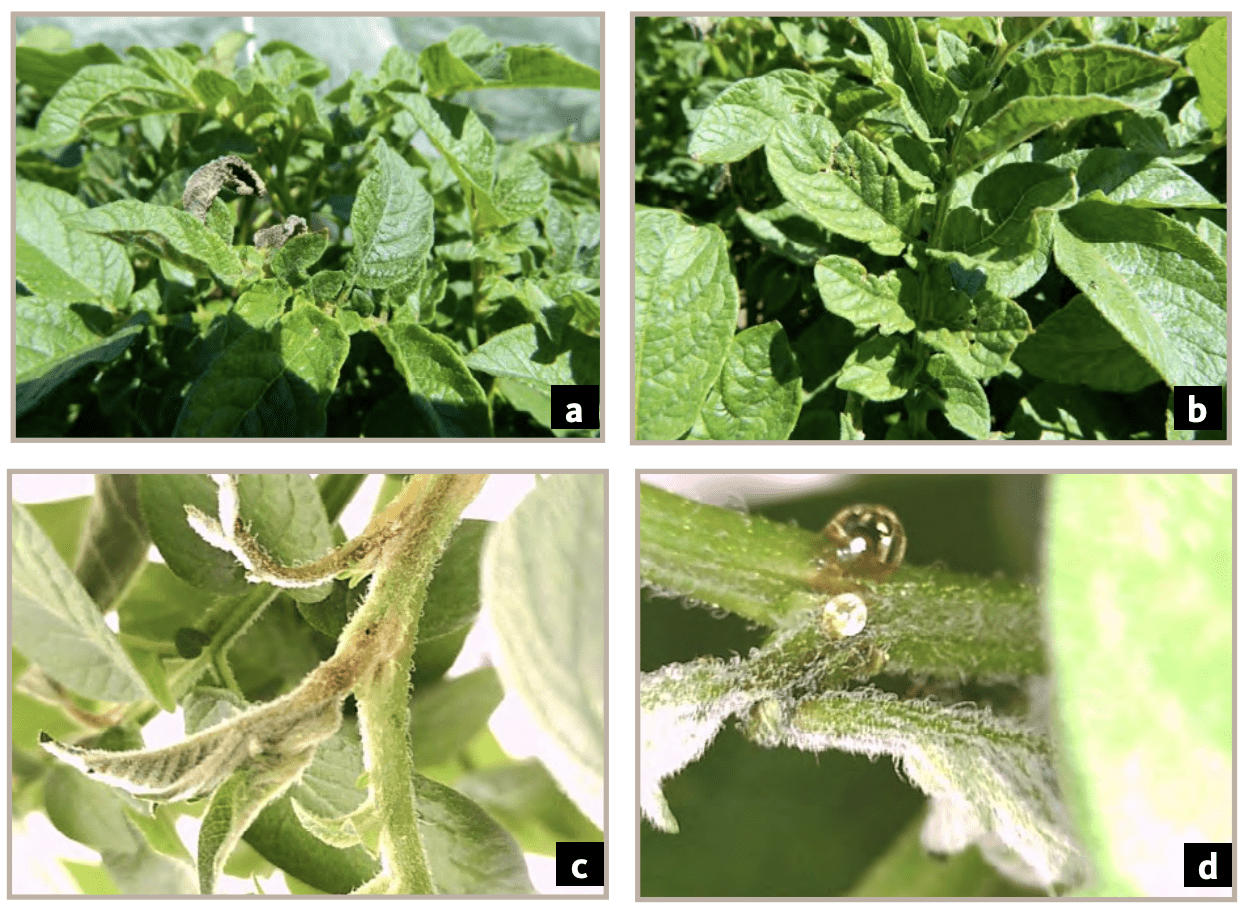
Both adults and nymphs feed on plants by inserting their piercing-sucking stylets (mouthpart) into the leaves and stems of host plants. Lygus bugs feed using a strategy called “lacerate or macerate” or “cell-rupture feeding” which allows them to ingest high volumes of food. Lygus bugs digest their food extra-orally by secreting enzymes through saliva, producing a liquefied “plant soup” before ingestion. In potatoes, tissues at the site of Lygus bug feeding do not grow normally. Feeding usually results in leaf flagging, where leaves shrivel, turn brown or die and eventually fall off (Figure 4A). Abnormal tissue growth also results in leaf deformation (Figure 4B). Feeding injury often appears as brown lesions or dead tissue on stems, leaf petiole and midrib (Figure 4C), and sometimes plant sap oozes out from the point of feeding (Figure 4D). Lygus bugs prefer to feed on terminal leaves (or upper foliage) of potatoes, leaving much of their immediate damage on terminal leaves. In advanced stages of foliage damage, plants develop shorter internodes with swollen nodes and sometimes auxiliary buds. These reductions in plant health decrease tuber quality and specific gravity, both of which affect the marketability of tubers.
Could Lygus bugs transmit pathogens to potatoes?
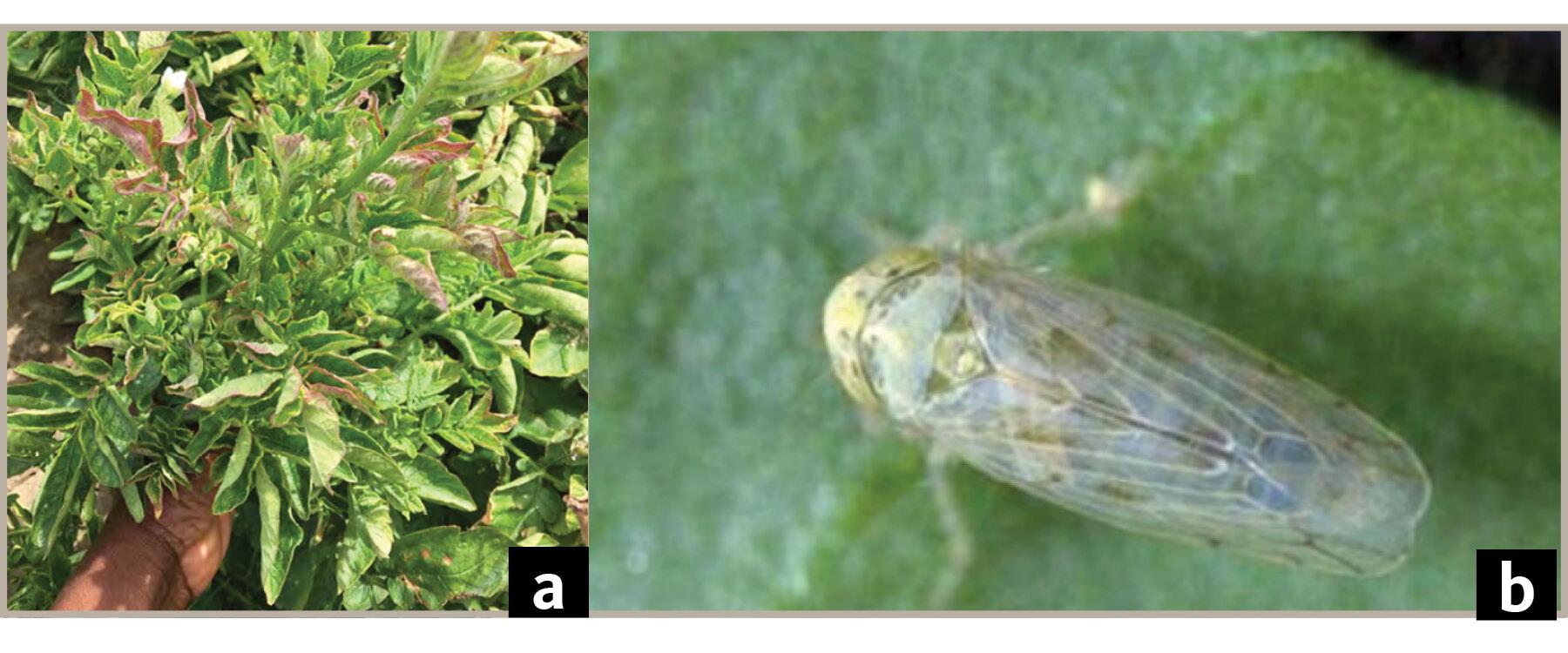
In the early 2010s, there were concerns that Lygus might be associated with purple top disease in potatoes. Purple top disease is caused by a phytoplasma called Beet Leafhopper Transmitted Virescence Agent. The pathogen is primarily transmitted to potatoes by beet leafhopper, Circulifer tenellus (Figure 5). The suspicion that Lygus may be associated with the disease was due to the extensive presence of purple coloration of terminal leaves — similar to purple top disease symptoms (Figure 5) —in potato fields infested with Lygus. However, these fields usually harbor fewer beet leafhoppers. In 2015–2016, we confirmed through molecular analysis that Lygus bugs from commercial potato fields in the Columbia Basin of Oregon carry Beet Leafhopper Transmitted Virescence Agent. However, subsequent pathogen transmission studies were unable to confirm that Lygus bugs transmit the pathogen to potatoes.
The vascular system of plants is composed of xylem and phloem. Phytoplasmas are limited to the phloem. This makes phloem-feeding insects such as leafhoppers, planthoppers and psyllids the most efficient at vectoring phytoplasmas to plants. Lygus feeds through cell rupture, irrespective of which vascular tissue is in the way of the stylet. Thus, even if Lygus bugs are able to acquire the pathogen from feeding on infected plants, they are inefficient at transmitting the pathogen to potatoes. It is more probable that the purple top symptoms of potato associated with Lygus feeding is due to disruption of the vascular tissues which impedes the flow of photosynthates within the plant. Anything that disrupts vascular flow will do this. Stem damage from rodents, stepping on plants, or simply girdling part of the stem with a sharp object will result in that damage symptom.
Monitoring Lygus bugs
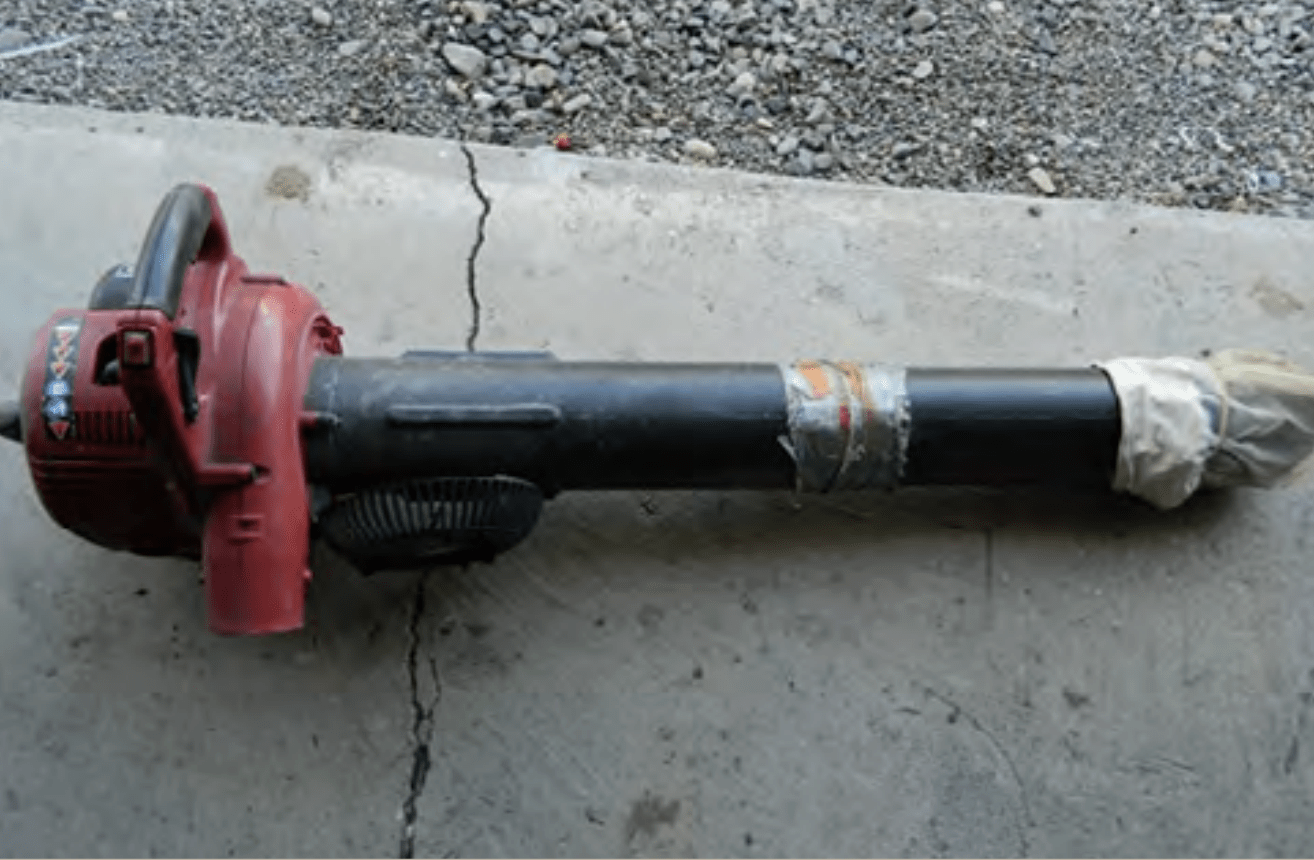
There are different techniques available for sampling Lygus bugs, including sticky cards, insect nets or vacuums. Based on our studies, the inverted leaf blower — commonly called a DVAC — is the most effective tool for sampling Lygus (Figure 6), although newer and improved leaf vacuums on the market work as well. A DVAC serves as a vacuum where the open end is covered with a nylon mesh that serves as a trapping bag for insects and prevents and them from clogging the vacuum system. Currently, we recommend sampling for five minutes, five to 10 feet from the border into the middle of fields.
There is no economic threshold for Lygus bugs on potatoes in the Pacific Northwest. It is essential to monitor Lygus bugs on the field to avoid any potential yield losses due to excessive feeding damage. Lygus bugs are abundant on potatoes throughout the growing season, from as early as the vegetative growth stage — when the visible portion of the plant emerges and develops — to vine kill, when vines start yellowing and leaves fall. Our 2015 and 2016 areawide Lygus survey yielded high numbers of Lygus from June to August, with population peaks occurring in July. This trend was similar in our most recent survey conducted through OSU Eastern Oregon Pest Alert System. Thorough scouting in the early stages of potato development is essential. This allows for early detection and management of Lygus bugs to avoid population outbreaks and severe damage, especially on young plants.
Management of Lygus bugs on potatoes and alfalfa
When given the choice between alfalfa and other field crops such as cotton, beans or tomatoes, Lygus bugs prefer alfalfa as a food choice and an oviposition (egg-laying) host. Similarly, potatoes are a preferred host for Lygus bugs, where they tend to lay large numbers of eggs.
In mature stands of alfalfa, Lygus bug populations can build up to as many as 100 adults and 500 nymphs per 100 square feet. When alfalfa is harvested, large numbers of Lygus bugs migrate into nearby potato fields. When monitoring Lygus bug numbers in potato fields, it is essential to monitor populations on surrounding vegetation such as alfalfa. If feasible, practice proper management of alfalfa fields —whether grown for seed or forage — to reduce Lygus movement into potato fields.
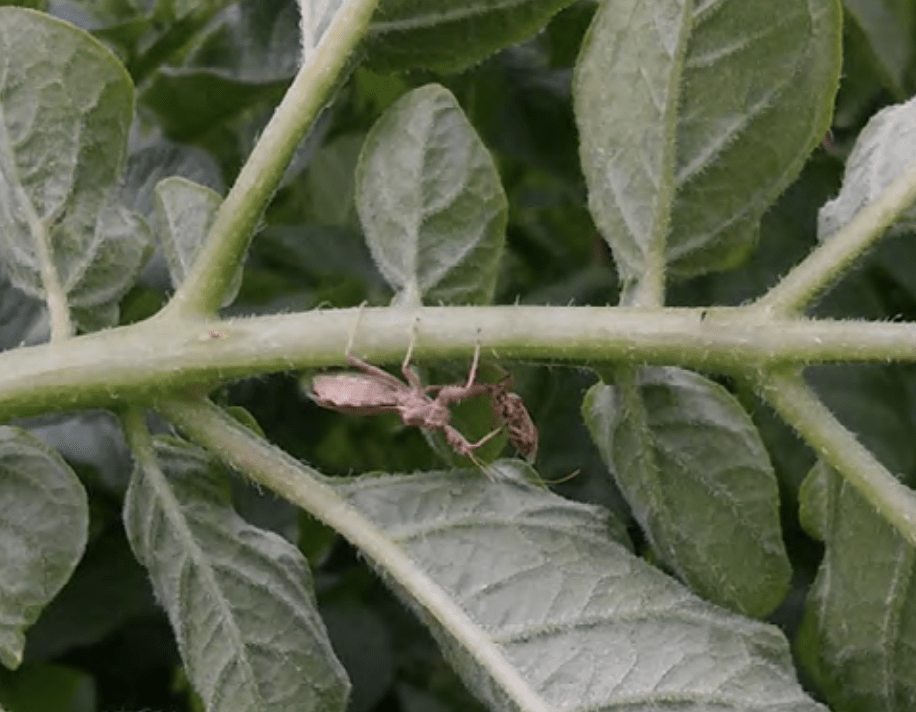
Potato growers are encouraged to time Lygus scouting to coincide with alfalfa mowing. Alfalfa can also be used as a trap crop for potatoes. In addition to serving as a trap crop for Lygus bugs, alfalfa fields serve as refuges for beneficial insects such as predators (Figure 7), parasitoids and pollinators. If left uncut, alfalfa strips will support beneficial insect populations that eventually move into potato fields to suppress Lygus bugs and other pests on potatoes.
Chemical control options for Lygus bugs
In potatoes, chemical products such as Vydate C-LV (oxamyl), Transform (sulfoxaflor), Athena (bifenthrin, avermectin), Leverage 360 (imidacloprid), Endigo ZC (thiamethoxam, lambda-cyhalothrin), and most products containing Permethrin are labeled for Lygus bugs management and promise to keep immatures and adults at low levels. Other biological insecticides containing kaolin and potassium salts or fatty acids are also effective control agents for Lygus bugs. However, it is important for growers to be mindful of proper insecticide use to manage Lygus bugs to prevent the development of insecticide tolerance in Lygus. Adoption of integrated pest management practices allows for early pest detection through monitoring, proper rotation and timing of insecticide chemistries, and conservation of beneficial insects.
Conclusion
The escalating numbers of Lygus bugs on potato fields in the Pacific Northwest in recent years suggests that Lygus bugs are emerging pests of potato. Damage caused by Lygus bug feeding distorts plant development and reduces tuber quality. Best management practices including proper insecticide rotations can help keep Lygus bug numbers down and stall the development of insecticide tolerance. Although newer research studies are beginning to enrich our understanding of the impact of Lygus bugs on potatoes in the Pacific Northwest, more research is needed to fully understand their threat to the potato industry.
- Medrano, E.G., A.A. Bell, J.K. Greene, P.M. Roberts, J.S. Bacheler, J.J. Marois, D.L. Wright, J.F. Esquivel, R.L. Nichols, S. Duke. (2015). Relationship between piercing-sucking insect control and internal lint and seed rot in southeastern cotton (Gossypium hirsutum L.). Journal of Economic Entomology 108, 1540–1544.
- Cooper, W.R., S.J. Nicholson and G.J. Puterka. (2014). Potential Transmission of Pantoea spp. and Serratia marcescens (Enterobacteriales: Enterobacteriaceae) to Plants by Lygus hesperus (Hemiptera: Miridae). Journal of Economic Entomology, Volume 107, 63–65.
- Beards, B.W. and F.E. Strong. (1966). Photoperiod in relation to diapause in Lygus hesperus Knight. Hilgardia 37: 345–362.
- Strong, F.E., and J.A. Sheldahl. (1970). The influence of temperature on longevity and fecundity in the bug Lygus hesperus (Hemiptera: Miridae). Annals of the Entomological Society of America 63, 1509–1515.
- Antwi J., Rondon S.I. (2019). Molecular and morphological identifications reveal species composition of lygus (Hemiptera: Miridae) bugs in potato fields in the Lower Columbia Basin of the United States.
- Waters T, Cooper R, Horton D. Wohleb C. 2020. Lygus feeding on potatoes: final report on damage symptomology and potential for impact on yield and quality. Washington-Oregon Potato Conference.
- Backus, E.A., A.R. Cline, M.R. Ellerseick and M.S. Serrano. (2007). Lygus hesperus (Hemiptera: Miridae) Feeding on Cotton: New methods and parameters for analysis of nonsequential electrical penetration graph data, Annals of the Entomological Society of America 100, 296–310.
- Shrestha, G., and S.I. Rondon. (2024). Host plant preference of Lygus hesperus (Hemiptera: Miridae) in four field crops: potato, alfalfa, carrot and pea. Environmental Entomology 53, 288–292.
- Walsh, D., T. Waters and A. Adesanya. (2023). Lygus bug and alfalfa weevil insecticide resistance in the Pacific Northwest. Crops & Soils Magazine 56, 28-37.
About the authors


