
Composting, a controlled process for stabilization of organic matter, can turn organic waste into a valuable soil amendment. Compost can return nutrients and organic matter to the soil, a proven practice for soil health enhancement. It can improve crop growth and provide environmental benefits by improving soil tilth and the soil’s capacity to absorb and hold water and plant nutrients. A properly managed composting process can destroy weed seeds, plant pathogens, and human pathogens.
Compost analysis assists buyers of bulk compost to be confident that they are receiving good value for their money. This publication is designed for wholesale buyers of compost for resale, farmers, nursery managers, and public/private landscape managers.
This publication focuses on the following:
- Selecting a laboratory to perform compost analyses
- Recognizing the different approaches used for analysis of compost intended for field application versus compost used in potting soil
- Determining which compost analyses are most relevant to your needs
- Assessing whether compost is sufficiently stabilized for its intended use
- Avoiding overapplication of composts that are high in soluble salts or have a pH unsuited to the crop being grown
Choosing a laboratory
Selecting a commercial analytical laboratory to analyze your compost is an important first step. Because compost testing requires skill and experience to produce reliable results, it’s best to select a lab that specializes in this type of analysis. Unfortunately, only a few laboratories have this expertise.
Look for labs on the Compost Analysis Proficiency Program website. CAP is sponsored by the U.S. Composting Council, and labs participate voluntarily as a way to improve testing accuracy and precision based on standard methods published in a peer-reviewed manual, Test Methods for the Examination of Composting and Compost. Lab representatives should be able to produce a CAP proficiency testing report that reviews the lab’s analytical performance at your request. You can read more about how the CAP Program ensures testing quality in the sidebar “Laboratory proficiency: How reproducible are compost analyses?”.
Compost testing labs typically offer several analysis “packages” designed to evaluate compost for use as a soil amendment in the field or as a component of a soilless mix (potting soil) for container-grown crops. Before submitting a sample, we recommend contacting the lab to discuss analysis options and to determine sample submission details (for example, sample size needed, shipping instructions). We also recommend requesting an example of a compost analytical report to determine what test interpretations are provided and whether they are relevant to your needs.
To get the most value from a compost analysis, the sample must represent the compost in the field. Sampling instructions are provided in Extension publications PNW 533, Fertilizing with manure and other organic amendments, and PNW 673, Sampling dairy manure and compost for nutrient analysis.
Compost analysis methods
Moisture and bulk density
Compost moisture, or water content, is expressed as a percentage of compost wet weight. A compost with 60% moisture contains 40% dry matter. Composts with high moisture content (above 60%) are usually clumpy and difficult to spread. Composts with low moisture content (below 40%) are dusty. The higher the moisture content, the lower the amount of organic matter per ton of compost. Compost moisture and dry matter are determined by drying the sample in an oven at 70°C (158°F).
Bulk density is expressed in pounds per cubic yard. Bulk density allows you to convert between weight units (tons) and volume units (cubic yards). This conversion is often necessary because labs report nutrient concentration on a weight basis, while field application is often on a volume basis.
As a rule of thumb, screened composts that contain 50% moisture will have a bulk density of about 1,000 lb/cu yd. Very wet composts can have a bulk density of over 1,500 lb/cu yd.
Laboratories can perform a bulk density test, or you can perform one in the field. Field determination of bulk density often is more informative than laboratory measurement because it uses a larger volume of compost. Also, multiple samples can be evaluated to obtain an average bulk density. For a simple method to calculate compost bulk density, see “Additional tests conducted by the compost vendor or user”.
Organic matter
In many situations, organic matter is the most valuable component of compost for soil health improvement.
Total organic carbon and organic matter are expressed as a percentage of compost dry weight. Organic carbon (C) represents about half of the organic matter weight. Thus, if you know the organic C content, you can estimate total organic matter content. For example, a compost with 25% total organic C contains about 50% organic matter.
Two methods can be used to estimate C or organic matter:
- Total organic carbon (TOC) is generally determined by combustion of compost in a specialized instrument equipped with a high-temperature furnace and an infrared or other detector to determine the amount of C in the sample. This method does not discriminate between organic and inorganic C (for example, carbonates). Inorganic C can be significant in composts with a pH above 7.3 and in composts that have been amended with alkaline materials such as lime. To get a “true” value for organic C in these composts, inorganic C must be subtracted from the total C value determined via combustion. Thus, testing for inorganic C is recommended for these composts.
- Organic matter (OM) is estimated by the loss on ignition (LOI), or “volatile solids,” method, which estimates the portion of sample weight lost during combustion at 550°C (1,022°F). Because organic matter content is not determined directly by the LOI method, the reported value is only an approximation. Weight can also be lost during combustion from other sources, including rubber, plastic and “mineral-bound” water.
Often, low organic matter values in compost (below 25%) result from soil or sand being mixed into the compost during turning. This is common when compost is prepared on bare ground.
Composts with high levels of organic matter (more than 65%) may not have been thoroughly composted. These materials may contain considerable unstable organic matter that will be lost (as carbon dioxide gas) via rapid decomposition after field application.
If you know the percentage of organic matter, you can calculate organic matter supplied per cubic yard of compost as follows:
organic matter/cu yd = bulk density x % dry matter x % organic matter
Example: A fresh “as-is” compost has a bulk density of 1,000 lb/cu yd and contains 50% moisture. Organic matter in dry matter is also 50%. This compost will supply 250 lb organic matter/cu yd, calculated as follows:
1,000 lb compost/cu yd x 0.50 dry matter x 0.50 organic matter = 250 lb organic matter/cu yd
pH and electrical conductivity
Compost pH is a measure of acidity/alkalinity. Most plant-based composts are moderately acidic (pH 6) to moderately alkaline (pH 7.5). Manure-based composts usually have pH of 7 to 8. The high pH of most manure-based composts makes them unsuitable for acid-loving plants such as rhododendron and blueberry.
Electrical conductivity (EC) is an indicator of soluble salt content. Electrical conductivity is usually reported in units of mmhos/cm, mS/cm, or dS/m. These units are equivalent and have the same interpretation.
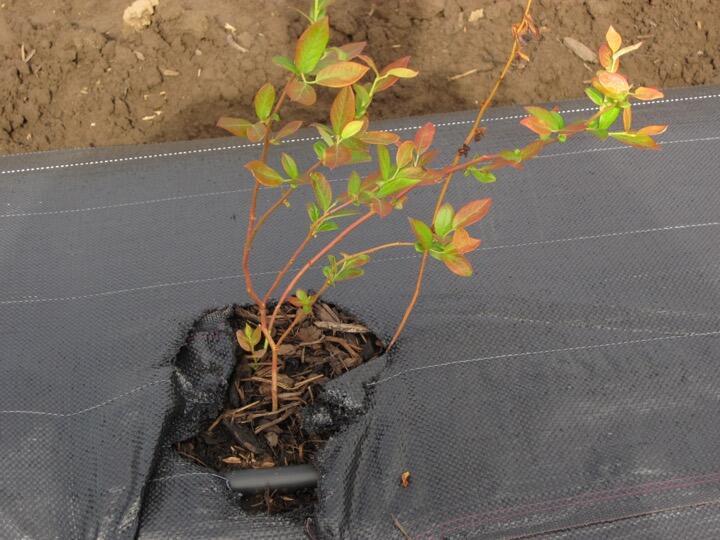
High salt levels may injure plants, with seedlings and transplants being most susceptible to injury. After compost application, salts are usually moved downward via leaching. However, when irrigation water moves soluble salts across a planting bed, as it does with drip irrigation, salts can become concentrated, increasing the risk of plant injury (Figure 2). See PNW 601-E, Managing salt-affected soils for crop production for more information on crop sensitivity to soluble salts.
On the other hand, most soluble salts are soluble nutrients, so compost with a high salt concentration may be a good source of nutrients when applied at a low rate.
Acceptable EC for compost used in field situations depends on the compost application rate, soil EC prior to application, depth of compost incorporation (tillage), soil texture, and irrigation water management.
An online calculator available from the University of California can be used to predict soil EC after compost application. To use the calculator, you’ll need to know the following about your compost:
- Application rate (ton/acre)
- EC (1:5 method; dS/m)
- Moisture (percentage of wet weight)
- Organic matter (percentage of dry weight)
The calculator assumes uniform mixing of soil and compost after application and no dilution of EC by leaching. Calculator predictions have been verified for selected soils and composts.
Two protocols are used for water addition to compost in preparation for pH and EC determination: the 1:5 compost:water method and the saturated extract method. The saturated extract method is preferred for compost to be used in potting media. For all other applications, the 1:5 compost:water method is preferred.
The amount of water added for the 1:5 method is greater than for the saturated extract method. Because of greater dilution, the EC determined in a 1:5 extract will be two to five times lower than in a saturated extract. Conversely, the pH determined via the 1:5 method is usually 0.1 to 0.3 pH unit higher than the pH determined via the saturated extract method.
Nutrients
Nitrogen
Total nitrogen (N) is the sum of two types of N:
- Organically bound N, which is not immediately plant-available
- Inorganic N (the sum of ammonium-N and nitrate-N), which is immediately plant-available
Compost organic N is estimated as total N minus inorganic N. Usually, more than 95 percent of total N in compost is organic N.
The carbon to nitrogen (C:N) ratio is the ratio of total C to total N. Well-composted materials reach a stable C:N ratio of 10 to 15, similar to the C:N ratio found in soil organic matter. Woody composts typically have higher C:N ratios (above 20). These composts may increase the N fertilizer requirement. Composts with C:N ratios below 10 supply a significant amount of plant-available N in the short term.
Ammonium (NH4-N) and nitrate-N (NO3-N)—sometimes called plant-available N, inorganic N, or mineral N—are soluble inorganic ions that are released as organic N is decomposed. In most composts, inorganic N is usually less than 5 percent of total N, with the remainder in organic form. Mature composts usually contain more NO3-N than NH4-N.
See “Interpreting compost nitrogen analyses” for additional information on using N analyses to assess compost maturity and N fertilizer replacement value.
Macro- and micronutrients
In addition to N, composts supply other macro- and micronutrients that are important for plant nutrition, including phosphorus (P), potassium (K), calcium (Ca), magnesium (Mg), sulfur (S), zinc (Zn), manganese (Mn), copper (Cu), iron (Fe), and boron (B).
For compost intended for field application, nutrient analysis is routinely used to estimate effects of compost on soil in the field. For example, if compost contains 2% of a nutrient (dry weight basis), a dry ton of compost will supply 40 lb of that nutrient.
Acid digestion of compost is used to prepare samples for analysis. This method measures all of a nutrient present in compost, whether it is in plant-available form or not, so the result is known as total nutrient analysis. See the sidebar “Evaluating total macronutrient concentrations in compost” for additional information.
If compost is intended for use in potting media, the saturated extract method for nutrient extraction is preferred. Compost is saturated with water, and water is extracted from the compost under a vacuum. The nutrients present in a saturated extract are a “snapshot in time” and are subject to change, so they are not useful for long-term planning.
The saturated extract method is useful for determining chloride (Cl) and boron (B) content of compost. This is important because too much water-soluble B and Cl can injure plants. When Cl is above 500 ppm (mg/L) or B exceeds 1 ppm (mg/L), as determined via the saturated extract method, sensitive plants may be injured.
Routine soil tests, such as the Bray or Olsen method for P or the DTPA method for micronutrients, are not appropriate for high-organic-matter substrates such as compost. However, routine soil tests are recommended to document long-term effects of compost on soil nutrient status. Wait at least six to 12 months after compost application before sampling soil for nutrient status. This will allow time for compost nutrients to equilibrate with the soil and will provide more reliable information for planning crop nutrient additions.
Compost maturity and stability
Compost maturity and stability are not the same thing.
- Maturity is a broad, subjective classification that describes the suitability of compost for a particular use. Very immature composts contain volatile organic acids and/or ammonia that can kill or injure plants.
- Stability is the resistance of compost to further biological decomposition. Adequate compost stability is critical for composts used in greenhouse potting mixes and bagged composts, but less important for field application, especially when several weeks elapse between application and planting. Compost stability is a predictor of volume loss in container crops (shrinkage) after potting.
Testing laboratories do not measure maturity directly. Instead, “maturity ratings” are assigned, based on a battery of quantitative tests. Measurement of compost stability is one of the major criteria used in assessing compost maturity. See the sidebar “Industry standards for compost ‘maturity’” for an example of compost maturity ratings sanctioned by the U.S. Composting Council.
A few labs that specialize in compost testing offer stability tests. Stability is usually determined by measuring carbon dioxide loss during incubation of a compost sample. The most reproducible stability test is a three-day measurement of compost respiration rate at 37⁰C (99°F). The greater the respiration rate, the less stable the compost. “Very stable” composts have decomposition rates below 2 mg CO2-C/g organic matter/day, and “stable” composts have decomposition rates below 8.
High concentrations of ammonia in a compost can inhibit microbial activity, thereby reducing the measured carbon dioxide evolution rate and rendering stability test data invalid. Improved compost stability testing protocols are the subject of ongoing research.
Additional tests available from some commercial laboratories
The following compost tests are sometimes useful, depending on how you plan to use the compost.
- Particle size is determined by sieving. Composts for greenhouse potting mixes must be of specific size classes to ensure correct porosity and water-holding capacity. Composts with too many fine particles may limit drainage from containers, while coarse particles can reduce seed germination due to poor seed-to-soil contact.
Particle size is of limited importance when compost is incorporated in the field for soil improvement. When compost is used as a surface mulch, larger particle sizes are desirable.
Recommended compost particle size distribution (by weight) for field application of compost in agriculture in California is:
— Soil amendment: 95% passing 0.6-inch (16-mm) screen; 70% passing 0.4-inch (9.5-mm) screen
— Mulch: 99% passing 3-inch (76-mm) screen; less than 25% passing 0.4-inch (9.5-mm) screen
- Calcium carbonate equivalent (CCE) is the amount of lime present in a compost. Lime increases pH (makes soil alkaline), and compost CCE can substitute for lime addition to raise pH in acid soils. Compost with 5% CCE will provide the equivalent of 100 lb calcium carbonate/dry ton. Composts with CCE greater than 5% are usually unsuitable for use with acid-loving plants such as blueberry and rhododendron.
- Seed germination and early plant growth are sensitive to soluble salts and to the volatile fatty acids often present in uncured compost. Laboratories use a number of protocols to evaluate germination and growth. The most common are short-term evaluations of plant growth and appearance or counts of germinating seeds. These tests generally consist of a comparison of plants grown in compost versus a no-compost control. Test plants commonly used for these bioassays are cress, cucumber, peas, and beans.
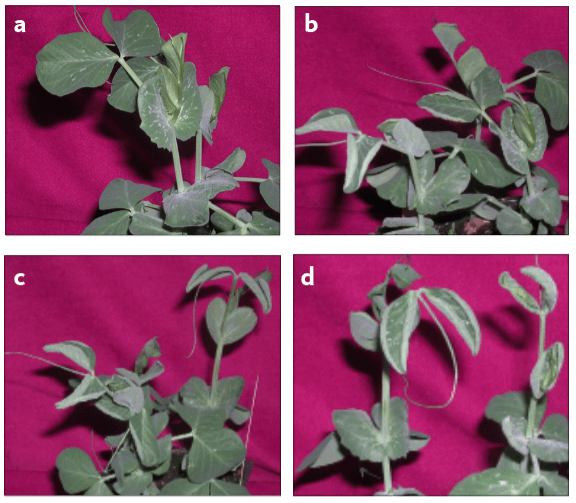
- Herbicide bioassay tests are available from a few commercial laboratories. These plant growth tests are a more sensitive indicator of the potential for plant injury from persistent herbicides than are quantifications of herbicide concentration, as some herbicides affect plant growth when present at ppb (parts per billion) concentrations. Commercially available plant growth tests are usually expensive, and the results apply only to the specific compost sample.
You can perform your own plant growth test to verify the absence of herbicides in compost (see “A pea bioassay to test for contamination by persistent herbicides”). This protocol is suitable for detecting the risk of plant injury from a variety of broadleaf herbicides, including clopyralid and aminopyralid.
Bioassays may be especially important for certified organic farms, where herbicides in compost can impact certification status. Contact your organic certifier for guidance.
- Inerts refer to plastic, glass, metal, and other contaminants. As compost organic matter decomposes, inerts become more prominent. Composts with more than a trace of inerts are unacceptable for use in potting media or for most agricultural uses. Compost that is marketed at a bargain price may contain significant quantities of inert material. For this reason, it is worthwhile to establish a long-term relationship with a compost supplier who delivers clean compost, even if it is more expensive.
- Microbiological analyses (enumeration, activity, diversity) of compost biological populations are offered by some labs. These analyses — counts of fungi, bacteria, actinomycetes, and other microbial indicators — may be of interest for specific applications. However, compost biology is extremely variable, and the organisms present in compost may be short-lived after compost is incorporated into soil. Thus, these tests are of limited use for most agricultural applications. In general, controlled experimentation has not been done to verify relationships between microbiological test results and crop growth.
Additional tests conducted by the compost vendor or user
- Weed seed germination testing is not offered by commercial laboratories on a routine basis. Weed growth can be evaluated informally by keeping compost moist and warm in a greenhouse or sunny window. Keep in mind that seed dormancy varies among weed species, and not all weed seeds will germinate immediately.
Contamination of compost with weed seed is most likely when cured compost is left uncovered outdoors for long periods, particularly in areas with abundant weeds nearby. Some weed seeds may also survive an improperly managed composting process.
- “As-is” bulk density is the weight of compost present per unit volume. When applying compost by volume (e.g., spreader load), estimates of as-is compost bulk density and moisture are needed to estimate dry matter application rates. Depending on moisture content, particle size, and compaction, bulk density can range from 800 to more than 1,600 lb/cu yd.
As-is bulk density can be measured on-site, using a scale and a 5-gallon bucket with vertical sides, as follows:
- Weigh the empty bucket and record its weight.
- Fill the bucket with 5 gallons of water and mark the water level on the inside of the bucket. Empty the bucket. Use a ruler to measure and mark lines at one-third and two-thirds of the 5-gallon line.
- Fill the bucket with compost to the one-third line. Drop the bucket 10 times from a height of 1 foot. Add compost up to the two-thirds line and drop the bucket 10 times. Add compost to the 5-gallon line and drop 10 times. After the final drop, top off the bucket with compost to the 5-gallon line.
- Weigh the full bucket and subtract the weight of the empty bucket. This is the weight of 5 gallons of compost.
- Multiply this weight by 40 to calculate the bulk density in Ib/cu yd.
For an illustration of the bucket method (with a sample calculation), Fertilizing with manure and other organic amendments.
For more information
Bary, A.I., C.G. Cogger and D.M. Sullivan. Fertilizing with manure and other organic amendments, PNW 533.
California Compost Quality Council. 2001. Compost Maturity Index.
Crohn, D.M. 2016. Assessing Compost Quality for Agriculture. ANR 8514, University of California.
Horneck, D.A., J.W. Ellsworth, B.G. Hopkins, D.M. Sullivan and R.G. Stevens. Managing salt-affected soils for crop production, PNW 601-E.
Moore, A., M. de Haro-Marti and L. Chen. Sampling Dairy Manure and Compost for Nutrient Analysis, PNW 673.
Reddy N. and D.M. Crohn. 2013. Compost induced soil salinity: A new prediction method and its effect on plant growth. Compost Science and Utilization 20(3):133–140.
U.S. Composting Council. 2001a. Test Methods for the Examination of Composting and Composts.
U.S. Composting Council. 2001b. Composting testing programs.
Washington State University and the Washington State Department of Ecology. 2002. Bioassay Test for Herbicide Residues in Compost: Protocol for Gardeners and Researchers in Washington State.
Wichuk, K.M. and D. McCartney. 2010. Compost stability and maturity evaluation—a literature review. Canadian Journal of Civil Engineering 37(11):1505–1523.
