
Introduction
Oregon is the largest producer of seed for many agriculturally important clover species in the U.S. — a feat accomplished through the help of bees. Clover seed growers and beekeepers work together to safeguard these essential pollinators when managing their crop. Learn what steps you can take to protect bees while maintaining high yields.
Clover seed is not only critical internationally for livestock pasture, hay and silage, and wildlife feed, but is increasingly important as nitrogen-fixing cover crop. The top species grown in Oregon are white clover (Trifolium repens) and red clover (Trifolium pratense), both of which are short-lived perennial species, and crimson clover (Trifolium incarnatum), an annual species. Other minor species include arrowleaf clover (Trifolium vesiculosum), balansa clover (Trifolium michelianum) and berseem clover (Trifolium alexandrinum).
All commercial clover species require bee pollination to set seeds. Approximately 7,000 honey bee colonies are rented by growers for clover seed pollination in the Pacific Northwest states. Commercial clover seed production largely relies on honey bee pollination, although studies have shown the considerable pollination of red clover comes from wild bumble bee pollination.
Clover, including wild and native species, are among the most important sources of nectar and pollen for long-tongued bees such as honey bees and wild bee species such as bumble bees (Bombus spp.), digger bees (Anthophora spp.), mason bees (Osmia spp.) and leafcutter bees (Megachile spp.). The importance of commercial clover seed production to wild species is a major reason why Oregon maintains high abundance and diversity of bumble bees in agricultural areas. The value to managed honey bees is also significant, as light-colored clover honey is widely sought after on global markets.
Clover seed growers and beekeepers have had a strong relationship that is mutually beneficial. Together, they have established standard practices, outlined here, to ensure sustained partnership around three key areas:
- Honey bee pollination (that is, the strength, placement and timing of movement of honey bee colonies).
- Pest management during bloom.
- Maintaining clear communication among all growers, applicators, crop consultants and beekeepers leading up to the placement of colonies until their removal.
The protocol also provides information on how growers can encourage bumble bee pollination of red clover seed fields.
Bee pollination
Pollination requirements
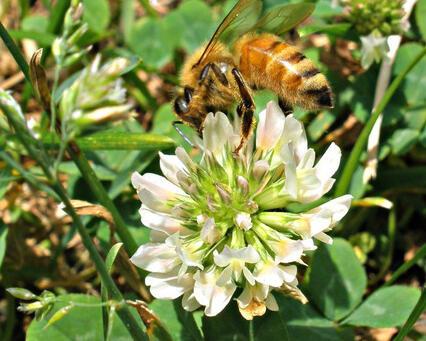
What is commonly called a clover “flower” is actually a dense cluster of many individual flowers known as an inflorescence. A single red clover head, for example, consists of 50 to 200 narrow, tubular flowers called florets. Each floret contains ten anthers (the male parts) arranged around a single stigma (the female part). However, the stigma is positioned such that it remains physically separated from the anthers while the floret is at rest, preventing the plant from pollinating itself by chance.
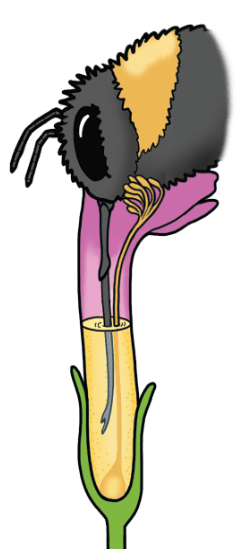
Pollination is driven by the bee’s search for nectar hidden at the base of these tubes. As a bee forces its head into the floret, it triggers a spring-loaded mechanism called “tripping” (Figure 1). This motion causes the anthers and stigma to snap forward, precisely striking the underside of the bee’s head. This ingenious placement targets an area the bee cannot easily groom, allowing a diverse mixture of pollen from many different plants to accumulate.
Tripped flowers are visually distinct from their unvisited neighbors. Once triggered, the lower "lip" of the flower relaxes and bends downward toward the stem. Within one to five days of a successful visit, these florets begin to turn brown and wither. This "collision" during the tripping process serves two purposes: it moves the flower's own pollen, but more importantly, it deposits foreign pollen collected by the bee from previous visits onto the stigma.
This process, known as cross-pollination, is vital for self-sterile species like red and white clover, which cannot produce seeds using pollen from the same flower. In contrast, while crimson clover is primarily self-fertile, it remains dependent on bees to trip the mechanical "lock" of the floret to allow any pollen transfer to occur.
Bumble bee pollination of red clover
Red clover has the longest and narrowest florets of any of the commercial clover species grown in Oregon. This can result in the nectar occasionally being too deep in the flower for honey bees to access with their tongues (Figure 1). In fact, the nectar can be so deep that many bumble bee species also have tongues that are too short to access the nectar. With the nectar-reward out of reach, these flowers lose their attractiveness to these bees. In contrast, white clover and crimson clover have relatively shallow flowers that are highly accessible and attractive to honey bees.
Some bumble bee species have exceptionally long tongues, and they continue to visit red clover flowers when other bees do not. These include the yellow-faced bumble bee (Bombus vosnesenskii), the golden northern bumble bee (Bombus fervidus), the white-shouldered bumble bee (Bombus appositus) and the Nevada bumble bee (Bombus nevadensis).
Early in the Willamette Valley’s red clover bloom, honey bees do most of the pollination while wild bumble bee colonies are still building their numbers. By late July, however, the dynamic shifts: bumble bee populations peak just as nectar becomes harder for honey bees to reach. While honey bees typically slow their visits to red clover after peak bloom, researchers at Oregon State University have noted a key exception. In hot, dry conditions where temperatures consistently top 95°F, honey bees continue to forage alongside long-tongued bumble bees, often driving seed yields 50% higher than average. In more temperate years, however, the crop remains dependent on wild bumble bees for pollination through the latter half of bloom.
Strategic spring plantings are vital for queen bumble bees as they begin founding their nests. In Sweden, researchers found that strips of lacy phacelia (Phacelia tanacetifolia) acted as a magnet for honey bees and short-tongued bees. This "distraction" effectively cleared a path for long-tongued bees to forage more deeply within red clover fields. However, a more targeted approach may involve cultivating plants that specifically cater to long-tongued species. Native Oregon shrubs like golden currant (Ribes aureum), red-flowering currant (Ribes sanguineum) and common snowberry (Symphoricarpos albus) —along with perennials such as common selfheal (Prunella vulgaris), larkspurs (e.g., Delphinium trolliifolium or Delphinium menziesii) common vetch (Vicia sativa) and hairy vetch (Vicia villosa)— are good choices to preferentially support long-tongued bumble species.
Honey bee pollination: Colony strength and stocking rate
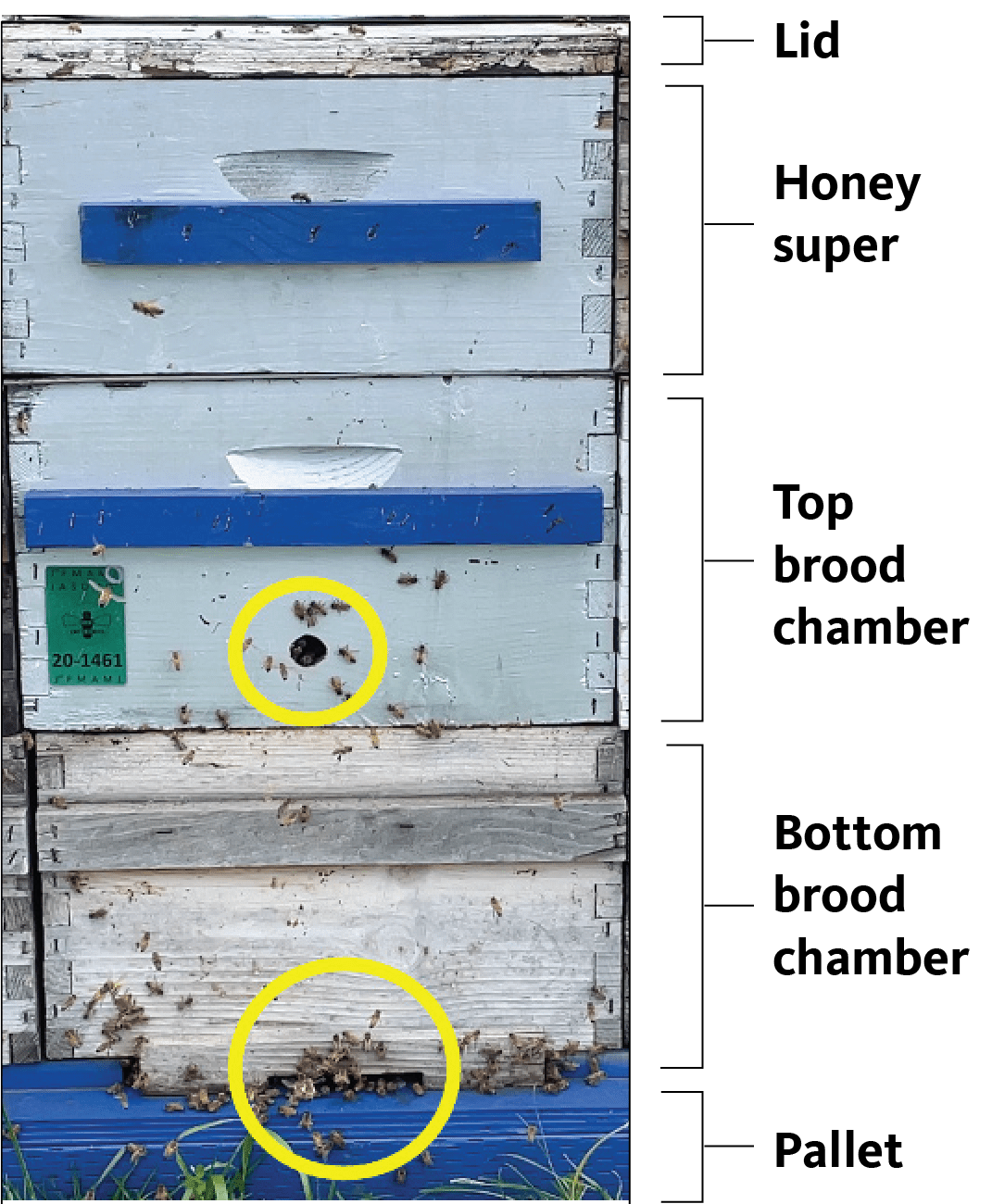
A typical honey bee colony consists of a stack of boxes containing movable comb frames that the bees use to rear their young (known as brood) and store pollen and nectar (Figure 2). Typically, colonies delivered to clover consist of at least two boxes known as brood chambers. The queen roams freely in the brood chambers, laying eggs, which enables the colony to grow. As colonies grow in population, beekeepers may add additional boxes known as “honey supers,” which are restricted from the queen and are used for making honey. In addition, there may be one or more holes where bees enter and exit, known as entrances.
Strong honey bee colonies are required to ensure adequate pollination of clover. Colony strength is comprised of three parts:
- The size of the workforce of foraging workers.
- The size of the brood nest, which comprises the number of immature bees and their attending adult nurses.
- The presence of a laying queen.
A long-established Oregon regulation specified that colonies rented for “field crops,” should have six standard (Langstroth-sized equipment) frames well-filled with brood and ten standard frames well-covered with adult bees. (See Evaluating honey bee colonies for pollination.) This standard is a good rule of thumb for most clover species, except crimson clover. Because crimson clover blooms earlier than other species, bee colonies often have not reached peak size by the time pollination is required. For this reason, the minimum strength requirements are lower than for other clover species: at least four standard frames of brood and six standard frames covered with adult bees.
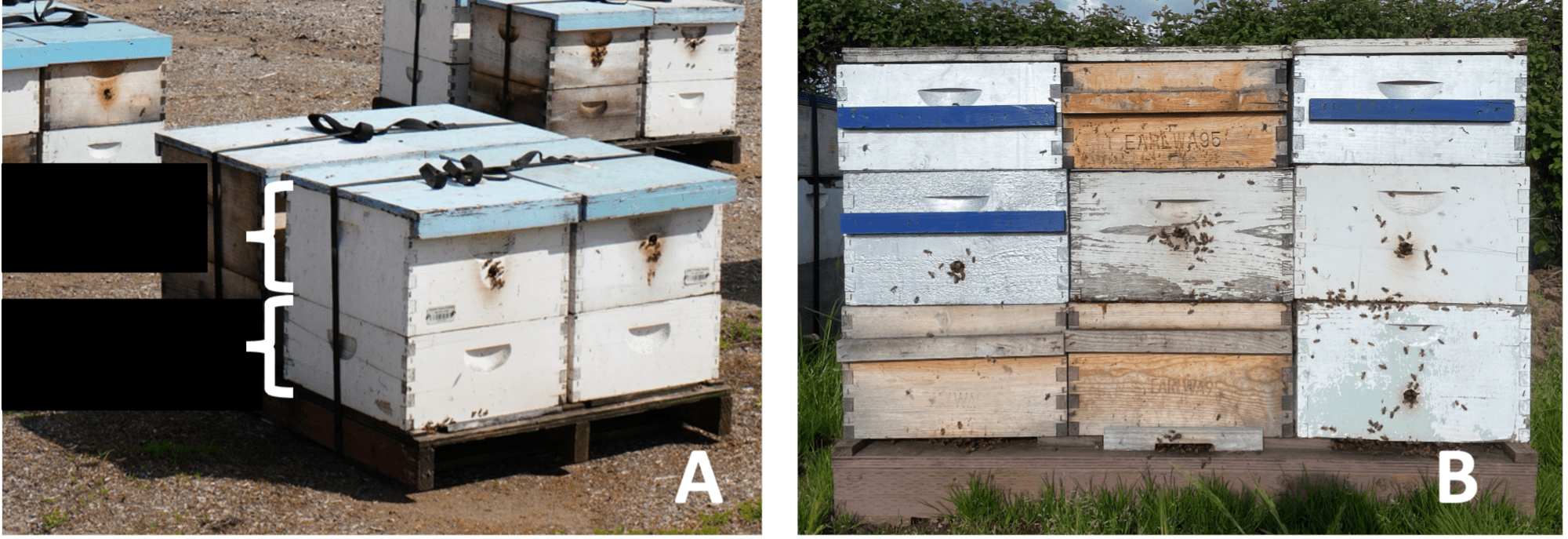
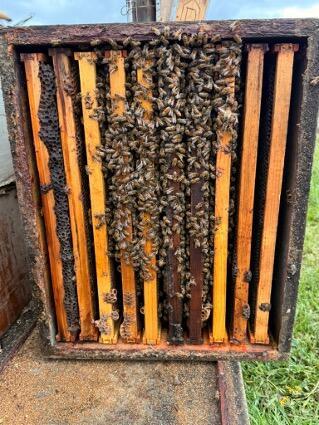
Notably, these standards assume Langstroth equipment, whereas today many beekeepers frequently operate a box that is 75% the volume of a standard Langstroth box (Figure 3A). Also, while standard Langstroth equipment contains nine to 10 frames per box, some narrower Langstroth equipment contains only eight frames per box (Figure 3B). These regulations are currently not being enforced; see Evaluating honey bee colonies for pollination, PNW 623.
The number of colonies per acre (known as the “stocking rate”) can also influence the number of bees pollinating the crop. We recommend one colony per acre for white clover and crimson clover and two colonies per acre for red clover.
“Stocking strength” is the product of the number of colonies delivered to a field and the average population of bees. A beekeeper providing stronger colonies (for example, 12-16 frames of bees) may provide the same pollination at a lower stocking rate than a beekeeper delivering standard-sized colonies. We recommend that growers incentivize beekeepers who consistently deliver strong colonies, even if the precise value of the extra frames is still being studied.
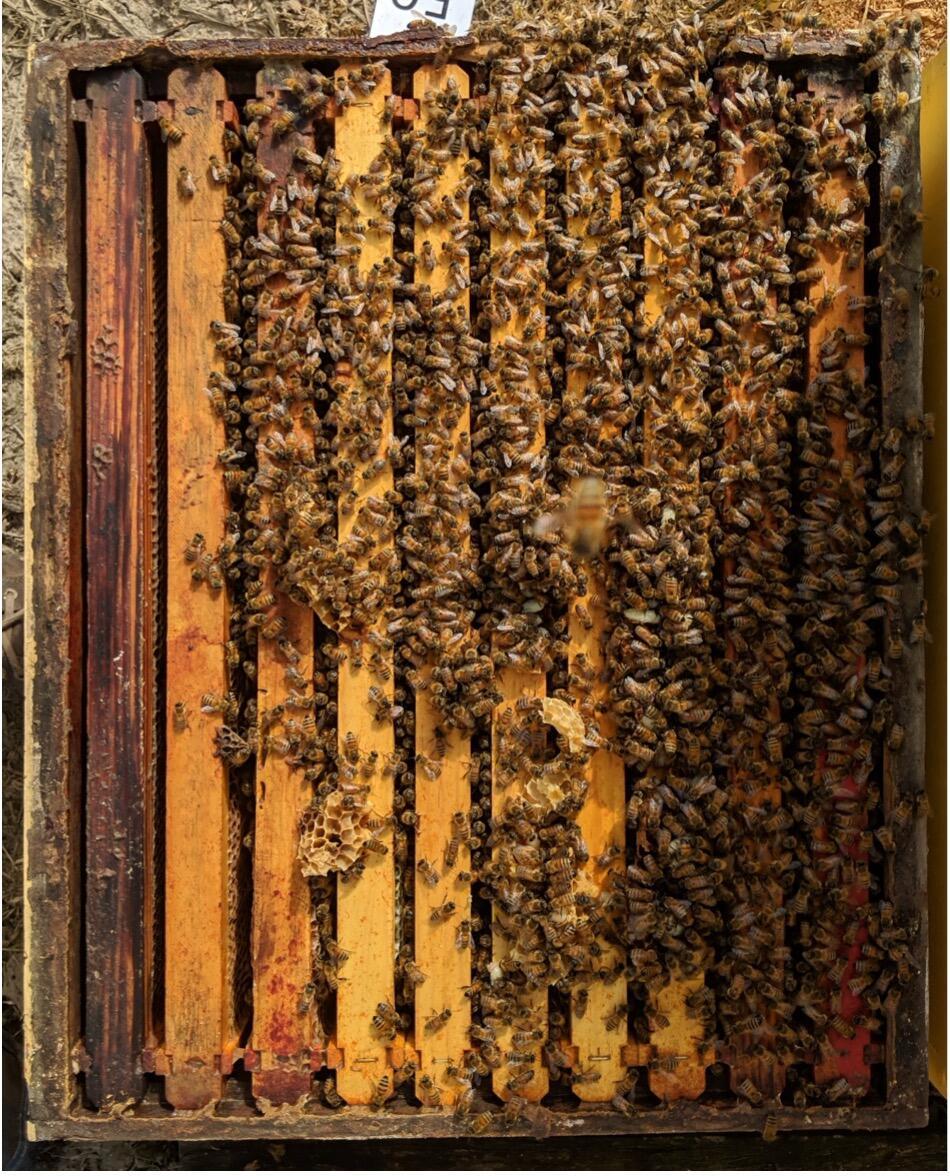
A grower can confirm the strength of colonies by contacting their beekeeper to open colonies; growers should never open or disturb a colony without the beekeeper’s permission. During an inspection, a beekeeper will split the boxes to inspect how many frames are occupied by bees. By looking down on a frame, a grower can count how many of the spaces between the frames (known as seams) are covered by bees as the beekeeper opens the boxes (Figure 4). By averaging the seams occupied on the top and bottom of each box, a grower can estimate the number of frames of bees in a colony. Inspection is at the beekeeper’s expense, so it can help if growers preselect up to 10 colonies that they think are strong or weak.
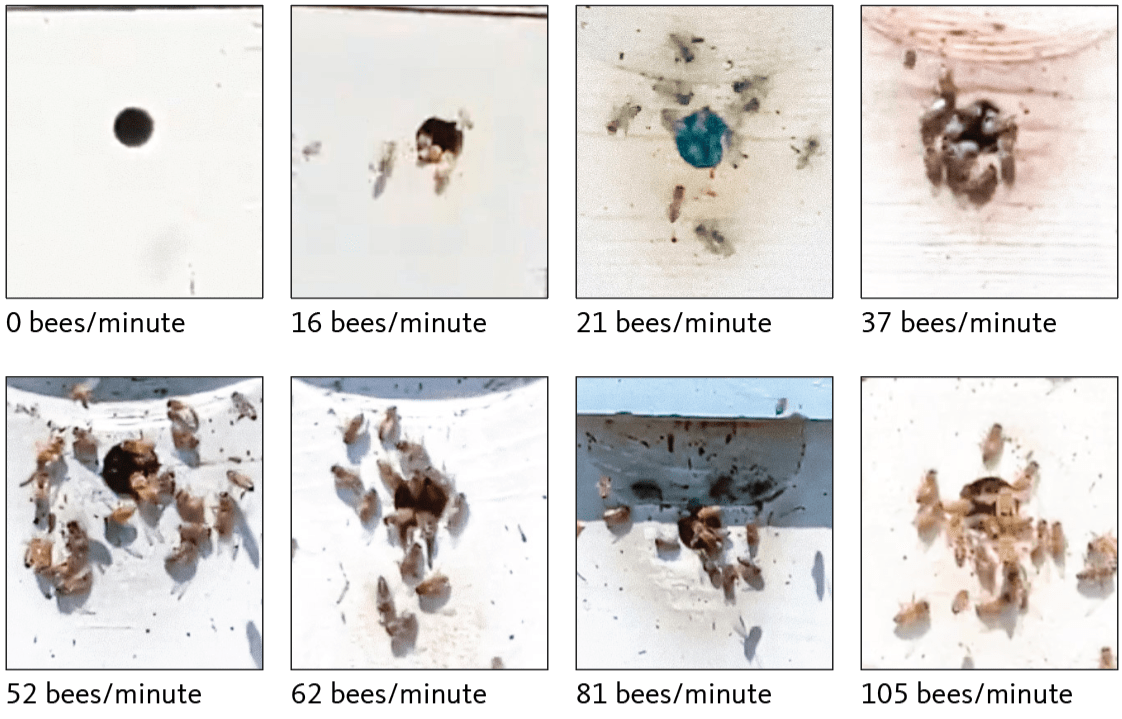
One way to preselect colonies is to monitor the rate of returning foragers at the colony entrance. This method is quick but is less accurate than opening colonies. A grower surveying 5%–10% of the colonies using this method can readily identify dead colonies and gauge whether the beekeeper is delivering stronger-than-average colonies.
To use this method, wait two to three days after the colonies have been delivered and have settled in. Surveys should only be done when temperatures are 65°F and above, and when winds are less than 10 miles per hour. Also, the grower needs to identify all the entrances the bees are frequenting (Figure 2). In many cases, bees will enter through one primary auger hole in the top box. In other cases, bees may be using holes on the rear of the box.
Inspect the colony fully to find the dominant entrances before beginning a count. Colonies where no bees are seen returning to a hive entrance in one minute may be dead; flag these with a surveyor stake on the exterior of the colony front.
In contrast, colonies where the rate of returning bees is consistently too rapid to count are considered strong (Figure 5).
Report any dead colonies to the beekeeper by texting the GPS coordinates of the colonies, along with a smartphone image showing the surveyor stake. The beekeeper can then replace them.
While extremes in colony size can be detected using the returning-forager-count method, it can be difficult to assess fine-scale colony strength.
Colony strength and stocking rate should be specified in pollination contracts (Appendix) and where contracts are not used, in written correspondence between the grower and beekeeper.
Timing of honey bee colony arrival and departure
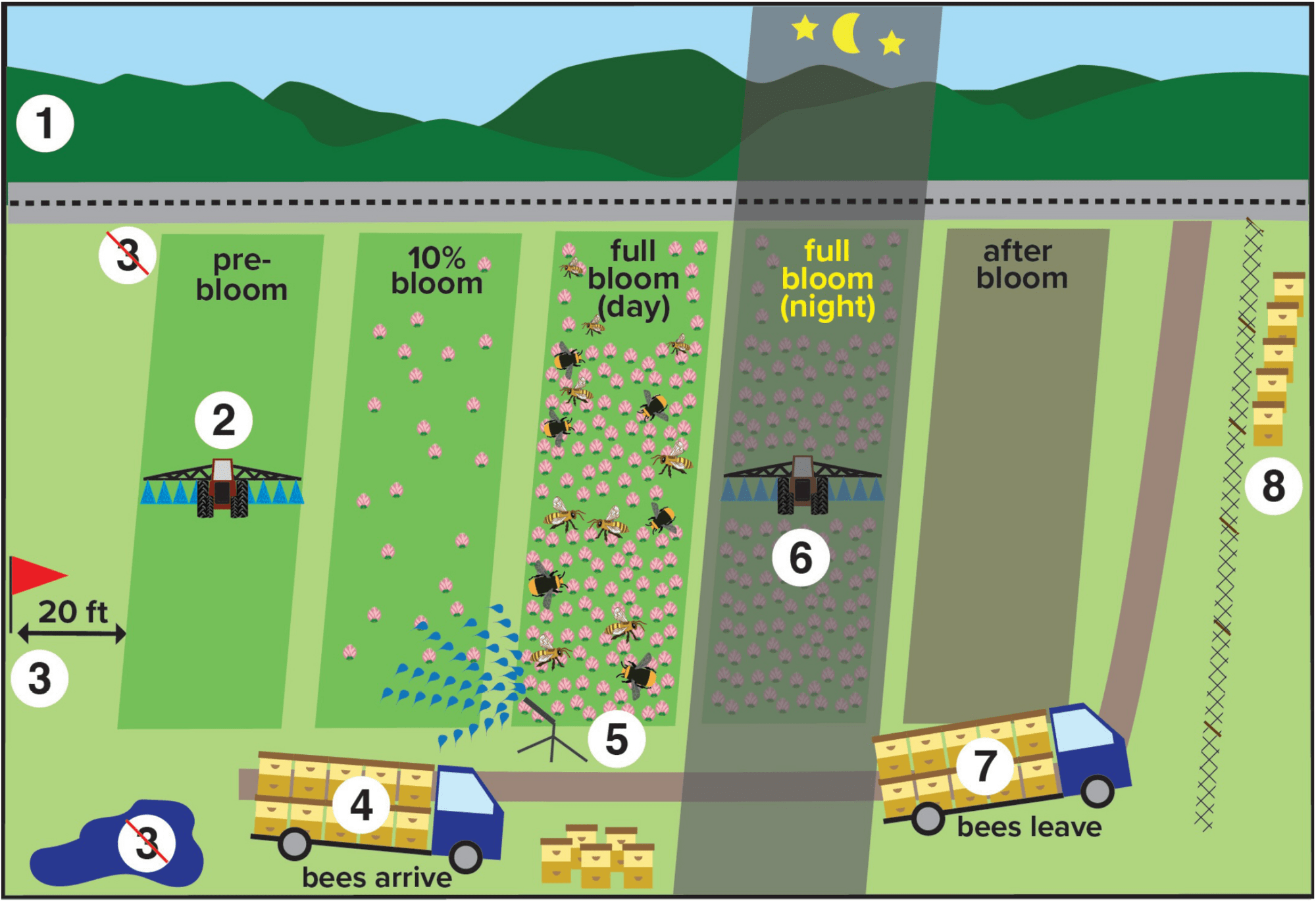
Growers should establish clear expectations with their beekeepers, outlining in advance when colonies can arrive and when they should depart. Start the conversation in January or February, when beekeepers have a sense of how their colonies have survived the winter as well as the anticipated start of almond pollination (Figure 6.1). However, if the grower plans to change their total number of colonies by more than 10%, they should notify their beekeeper by the end of the previous summer. This gives the beekeeper enough lead time to prepare the additional hives prior to their fall preparations.
Growers should reach back out to their beekeepers about a month before colonies are expected to arrive and firm up delivery 10 days before expected colony placement. Move colonies into fields at around 10% bloom to ensure adequate bloom to hold the bees on the clover, so they do not seek bloom elsewhere (Figure 6.2).
Colonies can be removed from fields when 90% of the flower heads have turned brown. Beekeepers should move their colonies out prior to growers applying desiccants (Figure 6.7). If desiccant is not used, beekeepers may request to leave colonies in white and red clover fields through the winter. Growers who provide beekeepers with these wintering locations will earn their gratitude and may help build a stronger relationship. Colonies will move to California through the month of January.
Honey bee colony placement
The ideal location for colonies during pollination is (Figure 6.3):
- Accessible by the beekeeper and free of obstruction during bloom, as the beekeeper will need to periodically manage colonies.
- At least 20 feet from the edge of the crop to prevent directly spraying the colonies with pesticides (Figure 7).
- Outside of the range of irrigation spray guns and pooling irrigation water.
- Not directly adjacent to highways, as bees can collide with vehicles. This risks a dwindling of the pollinating workforce over time.
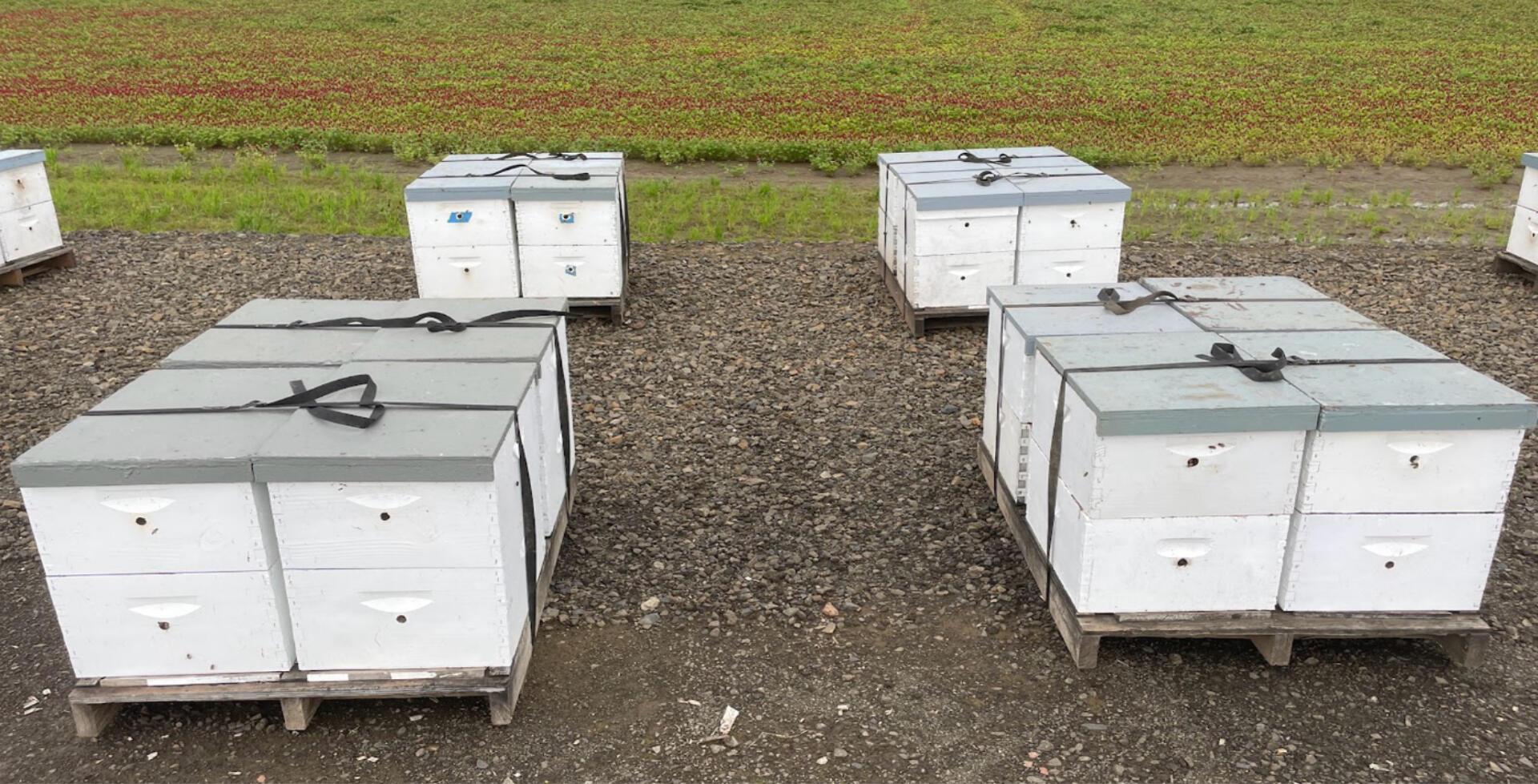
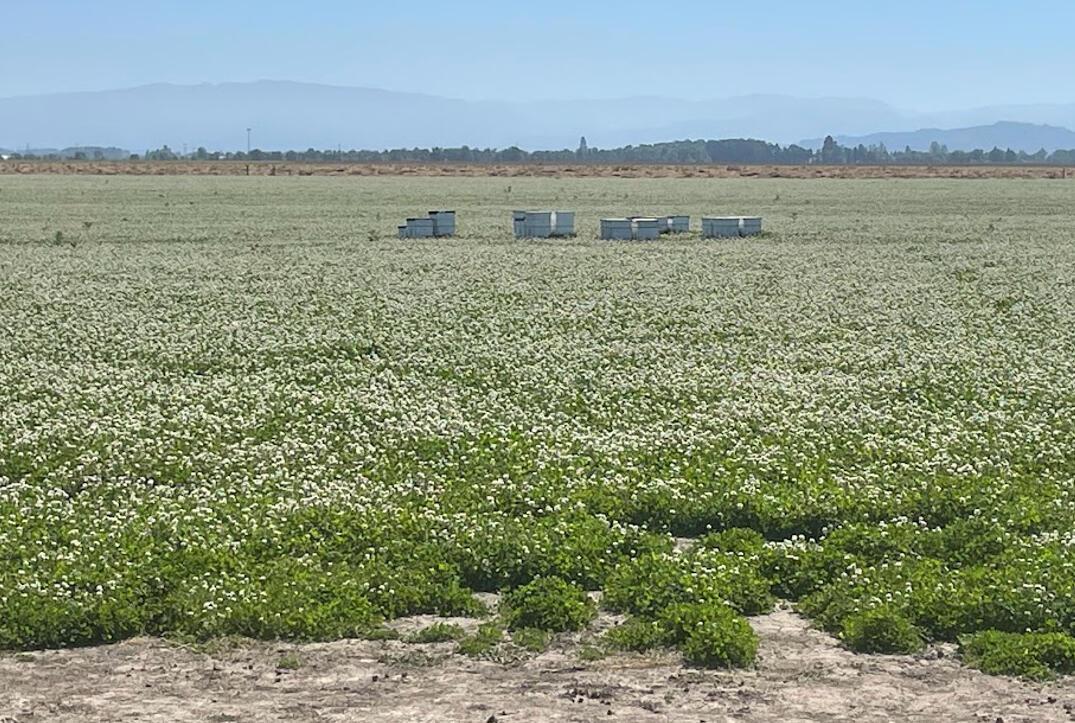
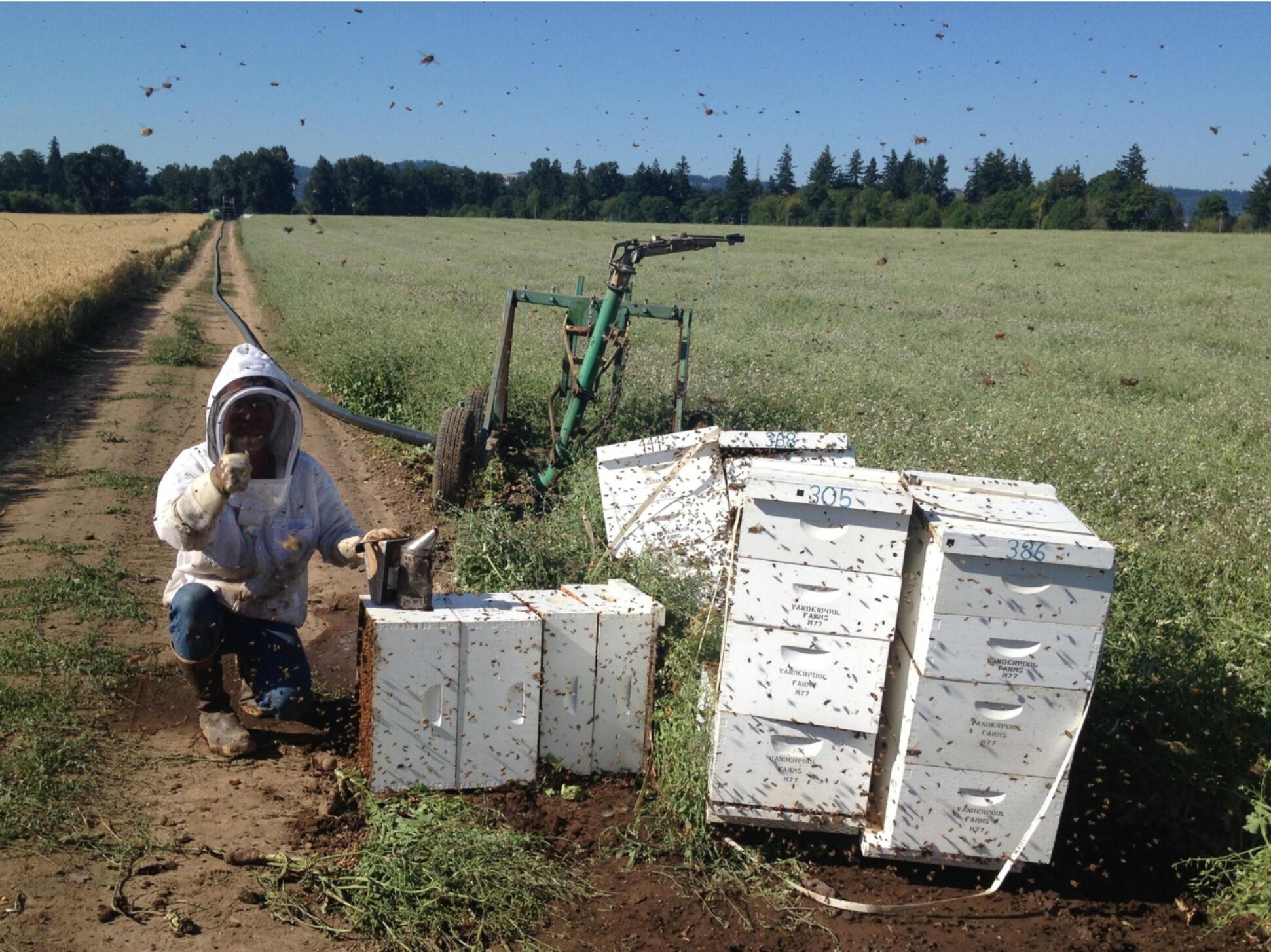
Growers should provide clear instructions for bee drop-off in advance of the beekeepers’ arrival. Ideally, the grower and beekeeper should meet before bloom to discuss colony placement, as beekeepers will be placing colonies at night and may not be able to locate drop locations. Flagging locations, as well as nearby wheel line irrigation tracks, will help ensure correct placement and help avoid collisions between honey bee colonies and irrigation equipment (Figure 8).
In some cases, growers may experience uninvited colonies placed on their property. If found contact Oregon Department of Agriculture (Figure 6.8).
Care of honey bee colonies during pollination
Colony strength is dynamic and requires active management throughout the pollination period. To ensure hives remain productive, beekeepers should "service" colonies by checking for a laying queen and adding boxes to prevent the brood nest from becoming nectar-bound. This management is especially critical for early species like crimson clover, where it helps prevent swarming and maintains a strong foraging force for maximum seed set. In white and red clover, beekeepers may also remove honey supers to treat mite parasites in the colony (Varroa mites).
Growers need to factor in beekeeper access to colonies during pollination to ensure colonies remain at full strength. Growers should ensure field workers, seed companies and outside contractors have clear instructions to provide a wide berth to pallets of beehives and understand the serious nature of knocking over or disturbing the colonies.
Clover pest management and bees
The risk of pesticide application to honey bees is the product of four factors:
- The toxicity of the product to honey bees.
- The attractiveness of the blooms to bees.
- The residual time of the product (how long it remains toxic on the surface of a flower or leaf).
- The formulation of the product. The best way to protect bees from pesticides is to avoid all pesticide applications when bee colonies are present in the field.
Avoiding all pesticide applications during bloom is not always possible. Some pests cannot be managed effectively outside of the bloom period, and pest or disease pressure may increase or arise unexpectedly during bloom and require treatment. Restrict pesticide applications during bloom to days when:
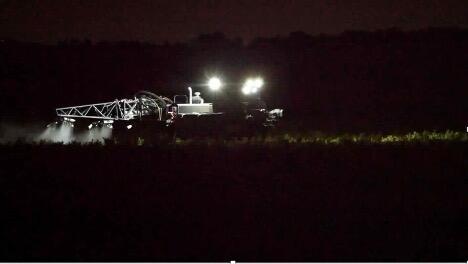
- Temperatures are expected to be below 50°F.
- Temperatures are warmer from early evening up until 30 minutes before sunrise. (Figure 9, Table 1).
Also, do not apply insecticides that are toxic to bees unless they have a residual time of less than eight hours and the application occurs after dusk and before sunrise (Table 1). Avoid spraying any products directly over or into bee colonies.
Finally, there is growing concern around the use of adjuvants in conjunction with insecticide and fungicide sprays during bloom. While the science identifying which specific adjuvants pose a risk to bees remains incomplete, growers should avoid adding additional adjuvants when plants are in bloom.
|
Active ingredient |
Products |
Pest |
Toxicity to honey bees (label language)1 |
Residual toxicity (label language)2 |
RT25 values3 |
|---|---|---|---|---|---|
|
Prebloom insecticides |
|||||
|
Acetamiprid |
Assail 30SG | aphids | Toxic | Do not apply this product while bees are actively visiting the treatment area. |
EPA: n/a Environmental hazards: <8h |
|
Bifenthrin |
Bifenture EC, Brigade 2EC, Discipline 2EC, Fanfare 2EC, Fanfare ES, Tundra EC | aphids, lygus | Highly toxic | Do not apply this product or allow it to drift to blooming crops or weeds if bees are visiting the treatment area. |
EPA: <24h OSU (clover): ~96h Environmental hazards: >8h |
|
Flupyradifuron |
Sivanto Prime | aphids | Highly toxic | In order to minimize exposure to pollinators, it is recommended that foliar insecticides are applied late in the afternoon, evening, or at night outside of daily peak foraging periods. |
EPA: <3h OSU (clover): <3h Environmental hazards: >8h |
|
Malathion |
Malathion 57% EC | aphids, lygus | Highly toxic | Do not apply this product or allow it to drift to blooming crops or weeds if bees are visiting the treatment area. |
EPA: <24h OSU (clover): >12h Environmental hazards: >8h |
|
Bloom insecticides |
|||||
|
Bifenazate |
Acramite- 4SC | spider mites | Toxic | This product is toxic to bees exposed to direct treatment. Do not apply this product while bees are foraging the treatment area. |
EPA: <3h Environmental hazards: >8h |
|
Flupyradifuron |
Sivanto Prime | aphids | Toxic to adult bees in laboratory studies via oral exposure. Not toxic to honey bees or bumble bees through contact exposure. Field studies conducted with this product have shown no effects on honeybee colony development. | No warning |
EPA: <3h OSU (clover): <3h Environmental hazards: N/A |
|
Malathion |
Malathion 57% EC | aphids, lygus | Highly toxic | Do not apply this product or allow it to drift to blooming crops or weeds if bees are visiting the treatment area. |
EPA: <24h OSU (clover): >12h Environmental hazards: >8h |
|
Bloom fungicides |
|||||
|
Boscalid (group 7) |
Endura | sclerotinia | No toxicity warning on label | ||
|
Iprodione (group 2) |
Rovral 4 Flowable, Rovral F | sclerotinia | No toxicity warning on label | ||
|
Strobilurin (group 11) |
Flint, Quadris Flowable | sclerotinia | No toxicity warning on label | ||
1- Toxicity language is outlined in EPA’s Label Review Manual. Insecticides that kill more than 50% of test honey bees in laboratory trials (LD50) at a dose lower than 2 mg/bee are labeled “highly toxic to bees” under the environmental hazards section of the pesticide label. Insecticides with an LD50 less than 11 mg/bee but greater than 2 mg/bee are labeled “toxic to bees.” Products with LD50 values above 11 mg/bee will have no bee toxicity warning on the label.
2 - Bee residual toxicity language is outlined in EPA’s Label Review Manual. Insecticides that dissipate within eight hours to levels that kill fewer than 25% of the bees (RT25) will have the following phrase on the label under environmental hazards: “Do not apply this product or allow it to drift to blooming crops or weeds while bees are actively visiting the treatment area.” Insecticides that remain toxic to bees after eight hours of weathering (RT25 > 8 hours) have the phrase: “Do not apply this product or allow it to drift to blooming crops or weeds while bees are visiting the treatment area.”
3 - RT25 is the residual time needed to reduce the activity of the test substance and bring bee mortality down to 25% in cage test exposures to field-weathered spray deposits. EPA has published RT25 values. Where EPA has not published RT25 values, they have been inferred from the residual toxicity statement on the label (see point 2, above). Finally, recent research from OSU is also listed.
Pests and diseases around bloom
Clover seed is a high-value field crop, and even minor damage can result in significant economic losses. Consequently, clover seed growers may need to control several insects at bloom, most notably aphids (Nearctaphis bakeri or Acyrthosiphon pisum), clover seed weevil (Tychius picirostris), lygus bug (Lygus hesperus), red clover casebearer moth (Coleophora deauratella), and two-spotted spider mites (Tetranychus urticae). Most insect pests can be managed with a treatment at 1%-2% bloom, but frequently these pests require a clean-up spray during full bloom.
Clover seed growers rarely need to control of fungal diseases during bloom, except for sclerotinia crown rot (Sclerotinia trifoliorum) on crimson clover.
Growers should consult with their beekeeper if they need to apply a pesticide treatment during the pollination period to arrive at a mutually agreeable plan of action.
When bees are in fields, runoff from the washing and rinsing of pesticide application equipment must be contained and not allowed to pool in range of bees gathering water (for an area within a 2-mile radius of the colonies). These containment procedures are particularly important in mid- to late-summer heat when bee water foraging is at its peak.
Insecticides around bloom
Most insecticides labeled for clover seed crops are toxic to bees. If a cleanup spray is applied before colonies arrive, growers must wait at least four days after treatment before moving bees into the field. The purpose of the cleanup spray is to generally reduce insect pressure population with a broad-spectrum insecticide to ensure pest pressures remain low throughout the bloom period.
Clover seed weevil
- Prebloom (cleanup): Due to widespread resistance, bifenthrin-based products (for example, Brigade, Tundra, Discipline) are no longer effective. Steward EC (indoxacarb) is the recommended replacement, but it must be used only as a cleanup spray prior to bloom.
- During bloom: Currently, there are no registered products for weevil with a residual time shorter than 8 hours.
- Management: If a midbloom treatment is unavoidable, you must provide the beekeeper (and neighbors) at least 48 hours' notice to move colonies. Note that moving hives out and back in is often impractical and can result in lost pollination.
Aphids
- During bloom: Sivanto Prime is the least toxic option for aphid control during the blooming period.
- Application timing: Following the Special Local Needs (SLN) label, apply treatments in the late afternoon only after bee activity has subsided.
Spider mites
- Prebloom: Bifenthrin products may be used if bees are not yet present.
- During bloom: Acramite-4SC is the preferred choice.
- Application timing: Apply between 9 p.m. and midnight. This allows the toxicity to dissipate before bees return the following morning.
Red clover casebearer moth
- Management: Like the seed weevil, there are currently no mid-bloom treatments that are also not toxic to bees. Focus control efforts on reducing populations before honey bee colonies are delivered.
Fungicides around bloom
Unlike insecticides, there are no label restrictions associated with the use of fungicides. When disease pressure is high, fungicides may need to be applied on a seven- to 14-day schedule throughout the bloom period. Moreover, growers should rotate products from different FRAC groups to avoid the development of resistance.
The presence of the iprodione fungicides (FRAC Group 2) in pollen has been implicated in reduced honey bee colony survival. Fortunately, fungicides are rarely applied to clover during bloom, except for crimson clover for management of sclerotinia crown rot. Crimson clover seed growers should focus on conducting treatments prior to bloom, especially as the crowns sprout new vegetative growth in early spring. If fungicide applications are necessary while clover is flowering, restrict the use of iprodione products to late afternoon or evening when bees and pollen are much reduced in fields. Do not spray too late in the evening, so the fungicide does not have time to dry before bees begin foraging the next day.
Check in with neighbors
Pest management by growers in adjacent land can impact colony strength. Efforts should be made to educate neighbors on pest management restrictions when bees are being rented for pollination.
Communication between growers and beekeepers
Industry communication
Every five years, representatives from OSU Extension, the Oregon Clover Commission and Oregon State Beekeepers Association meet to discuss provisions in the Bee Protection Protocol. They talk about new pollination needs, emerging pest and disease problems for each industry, pending Special Local Need pesticides, and other issues. Based on this dialogue, the groups may choose to revise this document.
Pollination contract
Recommended for new growers — some beekeepers and growers have long-lasting relationships and may not require a contract. See Appendix.
Communication checklist
Beekeepers and growers should exchange cell phone numbers when entering a business relationship. It is typical to communicate via text message, which enables sharing map images or GPS coordinates. Best practices for communication between growers and beekeepers are:
End of the season (August-September)
- Growers should let the beekeeper know if they are planning to increase or reduce colony rentals by 10% for the following year. This is also a good time for the grower to let the beekeeper know how seed yields have turned out and how pollination worked out.
Early season (mid-November–early January)
- Beekeepers and growers generally have wrapped up their management tasks by mid-November. This is a good time to touch base about the upcoming pollination and target hive numbers.
- If the grower is working with a new beekeeper, the grower and beekeeper should drive together to each field and map and flag loading and placement areas. Talk to the beekeeper about fields that had low seed set and where stocking rate should be boosted or decreased.
One month prior to moving colonies into fields
- Beekeepers will be finishing pollination in California almonds for crimson clover and will have a good sense of their numbers coming into clover pollination. For other clover species, beekeepers will have a firm idea of their colony numbers as the colonies will already placed in other early season crops for pollination. Growers will also have a better sense of the crop's progress towards bloom. This is a good time to firm up colony numbers and rough out a delivery date for colonies.
10 days prior to moving colonies to the field
- Grower updates the beekeeper on the expected date of colony move-in.
- Grower to let the beekeeper know if there will be any issues applying prebloom insecticides close to move-in.
- Grower should provide at least 72 hours’ notice of when they want the colonies delivered, or some prearranged notice time.
Bloom
- Grower contacts beekeeper 48 hours before applying pesticides.
- Grower contacts beekeeper at 50% bloom (full bloom) to discuss the removal time of the bees from the crop.
References and resources
- Cecen, S., Gosterit, A. and Gurel, F., 2007. Pollination effects of the bumble bee and honey bee on white clover (Trifolium repens L.) seed production. Journal of Apicultural Research, 46(2), pp.69-72.
- Harris, C., and Ratnieks, F.L., 2022. Clover in agriculture: combined benefits for bees, environment, and farmer. Journal of Insect Conservation, 26(3), pp.339-357.
- Holm, S.N., 1966. The utilization and management of bumble bees for red clover and alfalfa seed production. Annual Review of Entomology, 11, pp.152-182
- Jing, S., Kryger, P. and Boelt, B., 2021. Review of seed yield components and pollination conditions in red clover (Trifolium pratense L.) seed production. Euphytica, 217(4), p.69.
- Kaur, N., Tiwari, G., Anderson, N.P., Lightle, D.M., Tanner, K.C., and Dorman, S.J., 2024. Management Guidelines for the Clover Seed Weevil in Oregon White Clover Seed Production. EM9429. Oregon State University Extension Catalog
- Lindström, S.A., Rundlöf, M. and Herbertsson, L., 2022. Simple and farmer-friendly bumblebee conservation: Straw bales as nest sites in agricultural landscapes. Basic and Applied Ecology, 63, pp.196-205.
- Pfeiffer, V., Silbernagel, J., Guédot, C. and Zalapa, J., 2019. Woodland and floral richness boost bumble bee density in cranberry resource pulse landscapes. Landscape Ecology, 34(5), pp.979-996.
- Rao, S., and Stephen, W.P., 2009. Bumble bee pollinators in red clover seed production. Crop Science, 49(6), pp.2207-2214.
- Rundlöf, M., Lundin, O. and Bommarco, R., 2018. Annual flower strips support pollinators and potentially enhance red clover seed yield. Ecology and Evolution, 8(16), pp.7974-7985.
- Sagili, R. and Burgett, M., 2011. Evaluating Honey Bee Colonies for Pollination. PNW623. Oregon State University Extension Catalog
- Stephen, W.P., 1955. Alfalfa pollination in Manitoba. Journal of Economic Entomology, 48(5): 543-548
- Stephen, W.P., 2015. Apis sets record red clover seed: a climatic aberration. Journal of Apicultural Research, 54(2), pp.137-143.
- Tiwari, G., Kaur, N., Anderson, N.P., Tanner, K.C., Lightle, D.M., Willette, A.R., Donovan, B.C. and Dorman, S.J., 2024. Evaluating foliar insecticides and economic thresholds for Tychius picirostris (Coleoptera: Curculionidae) management in Oregon white clover seed production. Journal of Economic Entomology, 117(5), pp.1892-1900.
- Vleugels, T., Amdahl, H., Roldán-Ruiz, I. and Cnops, G., 2019. Factors underlying seed yield in red clover: review of current knowledge and perspectives. Agronomy, 9(12), p.829.
Acknowledgment
The protocol involved the close involvement of the Oregon Clover Commission and Oregon State Beekeepers Association, particularly the following individuals: Derek Berger (Berger International), Tom Cinquini (Sowers Apiaries), Karen Finley (Queen Bee Apiary), Mark Johnson (Nature's Best-Oregon Honey), Peter Kuenzi (Pratum Co-op), Ron Quiring (Quiring Farms), Ian Roth (Nutrien), Denny Thorud (Valley Agronomics), Harry Vanderpool (Vanderpool Farms LLC), Mike Vandehey (Vandehey Farms). Thanks to Cynthia Ocamb for assistance on the section around fungicides in clover crops. The writing of this document was supported by a grant from Western SARE (SW19-903).
Appendix: Sample pollinator contract
Pollination agreement
This agreement is made between ______________________________ (hereafter referred to as “Beekeeper”) and _____________________________ (hereafter referred to as “Grower”).
The terms of this agreement shall be for the DATE ___________, CROP _________________________ growing season.
Responsibilities of the beekeeper
The beekeeper shall supply the grower with hives (colonies) of honey bees to be delivered as follows:
- Approximate date of introduction: _________________
- Approximate number of hives required: _____
- Colony strength shall be average eight frames, with a minimum of five frames.
The beekeeper shall locate said bees in accordance with directions of the grower or, if none are given, according to his judgment in providing the maximum pollination coverage. The beekeeper agrees to provide colonies of the following minimum standards: honey bee colonies with a laying queen as evidenced by brood frames with brood and frames covered with adult bees (required strength as specified above) in deep hives with eight to 10 frames per hive. The beekeeper agrees to open and demonstrate the strength of colonies randomly selected by the grower.
The beekeeper agrees to maintain the bees in proper pollinating condition by judicious inspection, appropriate medication, treatments, and adding supers or removing honey as needed.
The beekeeper agrees to leave the bees on the crop until full petal fall or end of nectar flow as determined by the beekeeper or until traditional germination seasons are complete as determined by beekeeper or grower, whichever comes first.
Responsibilities of the grower
- The rental fee for the colonies will be $000.00 per colony for the period described above.
- The balance will be due in full at release date.
The grower agrees to provide a suitable place to locate the hives. The site must be accessible to a truck or other vehicles used in handling and servicing the colonies. The grower shall allow the beekeeper entry to the premises at all times. The grower assumes full responsibility for all loss and damage to his fields or crops resulting from the use of trucks or other vehicles in handling and servicing such colonies of honey bees.
The grower agrees not to apply pesticides highly toxic to bees to the crop while the bees are being used as pollinators. The grower shall not apply pesticides immediately prior (according to label) to the bees’ movement in the field or orchard if the residue would endanger the colonies.
The grower agrees to properly dispose of all pesticide solutions in such a manner that bees will not be able to contact the material while searching for a water source.
The grower agrees to give the beekeeper a 72-hour notice if hazardous materials not listed on this contract need to be applied. The cost of moving the bees away from and back to the crop to prevent damage from toxic materials shall be borne by the grower at the rate of ~$50 per hive. In addition, a mileage fee of ~$2.50 per mile per hive with a minimum of five miles movement may apply. Additional moves or setting shall require a fee of ~$50 per hive per move, after original setting.
The grower agrees not to touch, open, move, disturb or otherwise harass any beehives without the express written permission of the beekeeper.
The cost of the destruction of beehives due to any vandalism, movement, theft or relocation by trespassers, friends, family, the grower, agent or employees of the grower shall be borne by the grower or property owner at the rate of ~$200 per hive. PLEASE, for your own safety and fiscal liability and responsibility do not touch the hives in any manner.
In addition, the grower agrees to provide adequate watering facilities for the bees if none are available within one-half mile of each colony used in pollinating the crop. The grower or property owner also agrees to hold harmless and without fault ____________________________, its agents, owners and employees in the event of any stinging incident.
Performance
It is understood and agreed that either party to this agreement shall be excused from the performance hereof in the event that, prior to delivery of the colonies, such performance is prevented by causes beyond the control of such party.
Grower signature:________________________________________Date:____/____/____
Mailing address:_______________________________________________
____________________________________________________________
____________________________________________________________
Day Phone:_____________________ Night phone:______________________
Beekeeper signature:______________________________________Date:____/____/____
Mailing address:_______________________________________________
____________________________________________________________
____________________________________________________________
Cell phone: _______________________ Home:_________________________
About the authors


