ASTORIA, Ore. — After receiving safety gear at an event hosted by Charleston Fishing Families, a fisherman expressed gratitude with a plainspoken remark typical of what’s heard on a fishing boat.
“Wet feet are no good for a fisherman,” he said.
Commercial fishing remains one of the most dangerous occupations in the United States. The fatality rate is 117 deaths per 100,000 workers — compared with a national average of four. Along the Oregon Coast, fatalities are most often tied to vessel disasters (47%), falls overboard (30%) and onboard injuries (12%).
“We want to make one of the nation’s most dangerous jobs safer so more fishermen return home to their families after every trip to sea."
Beyond deaths, injuries are also common: About 20% of Oregon Dungeness crab fishermen report injuries each season, and roughly half of those injuries lead to lost work time or modified duties.
Over time, injuries can contribute to chronic pain, mobility limitations and early retirement, with ripple effects for fishing families and coastal economies.
For more than a decade, Oregon Sea Grant, the Oregon State University Extension Service, the OSU College of Health and coastal fishing communities have worked together to address those risks through a commercial fishing safety initiative built on trust, shared expertise and programs led by fishermen themselves.
“The grind of commercial fishing without proper gear is brutal,” the fisherman in Charleston said. “Thank you so much for the help. It was definitely needed.”
In 2024 and 2025, that work expanded across eight ports in Oregon and Washington after state maritime workforce funding helped scale up safety training, equipment distribution and workforce support.
“This is a public health crisis that not only affects our fishing families but our coastal communities,” said Amelia Vaughan, research project coordinator in the College of Health.
For Oregon Sea Grant and its community partners, the goal remains simple.
“We want to make one of the nation’s most dangerous jobs safer so more fishermen return home to their families after every trip to sea,” said Amanda Gladics, Oregon Sea Grant Extension fisheries specialist and associate professor of practice in Oregon State University's Department of Fisheries, Wildlife, and Conservation Sciences in the College of Agricultural Sciences.
Building trust in fishing communities
The initiative spans waters from Washington fishing grounds to the Columbia River and Astoria south along the Oregon Coast to Brookings.
Key community partners include Newport Fishermen’s Wives, FishHer Columbia Pacific Community Alliance, Charleston Fishing Families and WeFish. Additional partners include the U.S. Coast Guard’s District 13, instructors with the Alaska Marine Safety Education Association, Englund Marine and marine mental health professionals.
The work is carried out through two interconnected programs in the OSU College of Health: the Fishermen-Led Injury Prevention Program, which focuses on safety equipment and research, and the Fishermen First Aid and Safety Training program, which prepares fishermen to respond to medical emergencies at sea.
The programs were developed through years of collaboration with fishing communities.
Rather than bringing outside solutions into fishing ports, Oregon Sea Grant Extension staff worked alongside fishermen to identify needs and build programs together.
“We’ve become insiders within the community,” Gladics said. “It’s showing up, listening and co-developing solutions.”
That long-term presence helped build the trust needed to launch programs such as the first aid and safety training course tailored specifically for commercial fishermen.
Partnerships meet a strategic opportunity
By 2024, those partnerships had matured through earlier federal grants, foundation funding and community-led events focused on safety.
At the same time, the state of Oregon launched a Maritime Workforce Initiative administered through regional workforce development organizations, including the Southwest Oregon Workforce Investment Board and Northwest Oregon Works.
The funding created an opportunity to expand programs that were already working.
Charleston Fishing Families secured the first grant — $53,000 to support fleet safety in its region. Leaders from that organization shared their strategy with other coastal groups and encouraged them to apply.
All three organizations ultimately secured Maritime Workforce Initiative funding, bringing the total investment to about $135,000 for safety equipment, training logistics and outreach.
The funding supported items such as commercial fishing licenses for fishermen facing economic barriers, protective gear including boots and rain gear, life jackets and emergency vessel equipment such as emergency position-indicating radio beacons and life raft servicing.
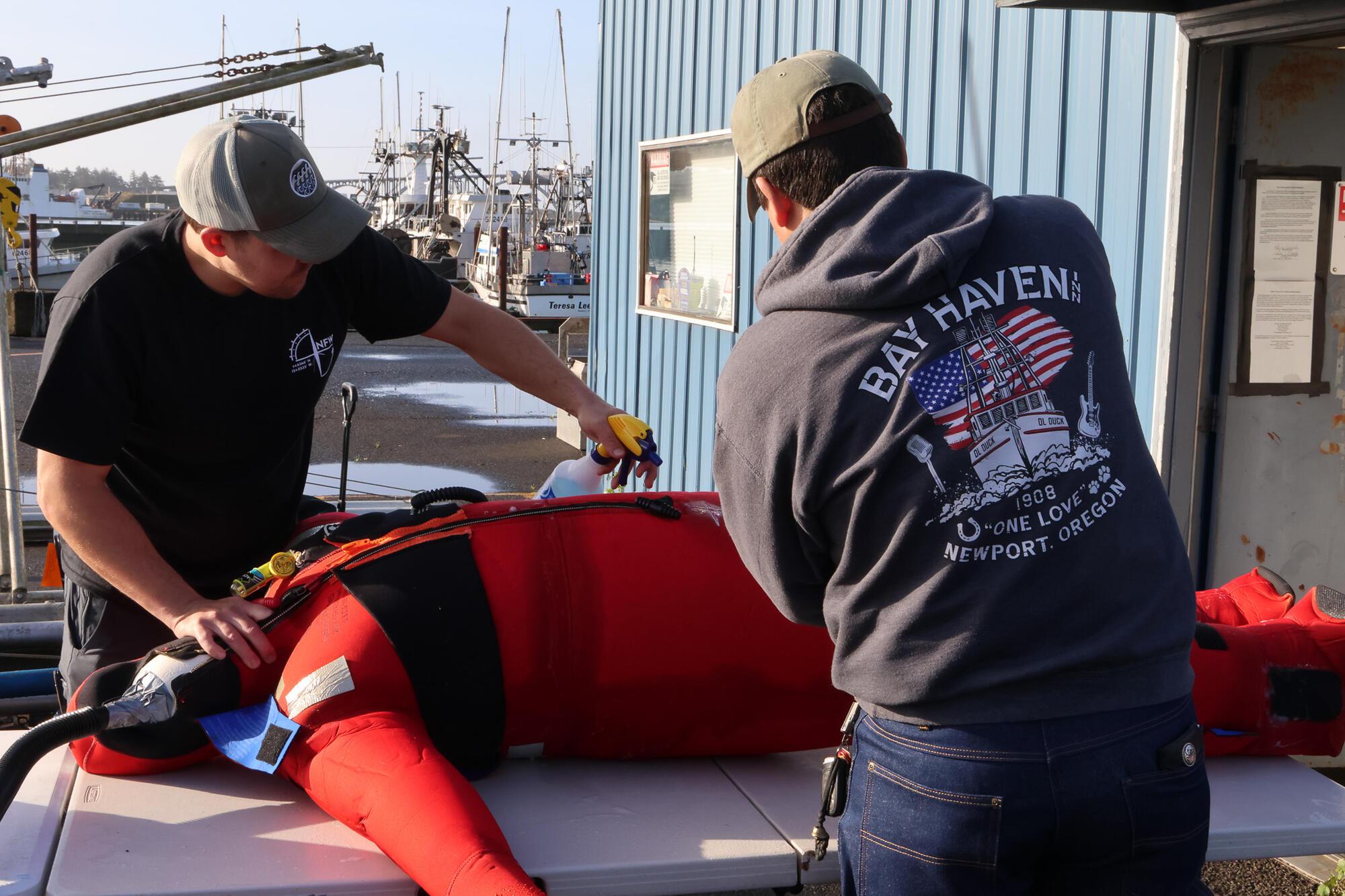
It also supported survival suit testing clinics to ensure immersion suits used in emergencies were still functional.
Training designed for the realities of fishing
The initiative also expanded training programs designed around the real conditions fishermen face offshore.
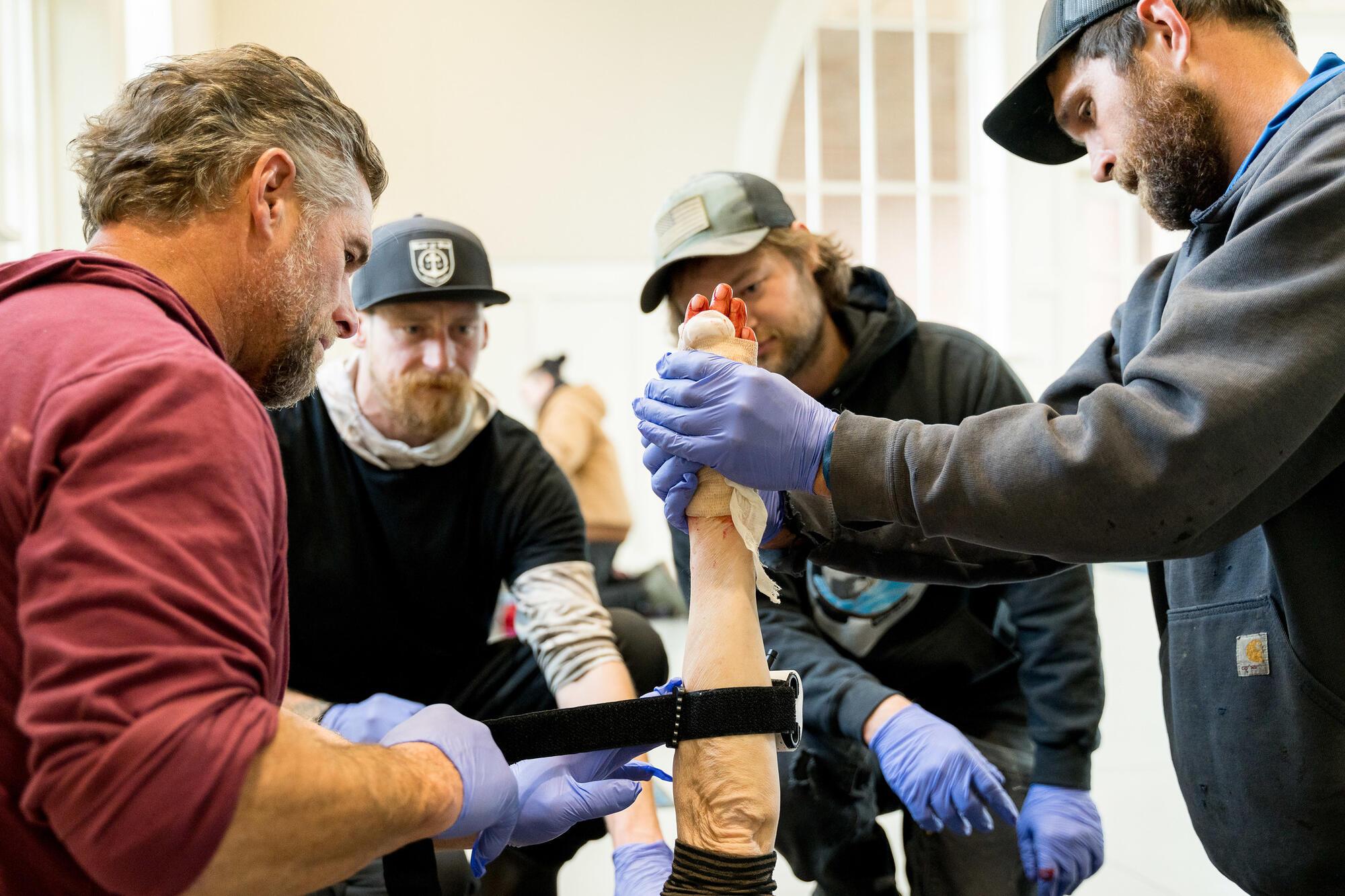
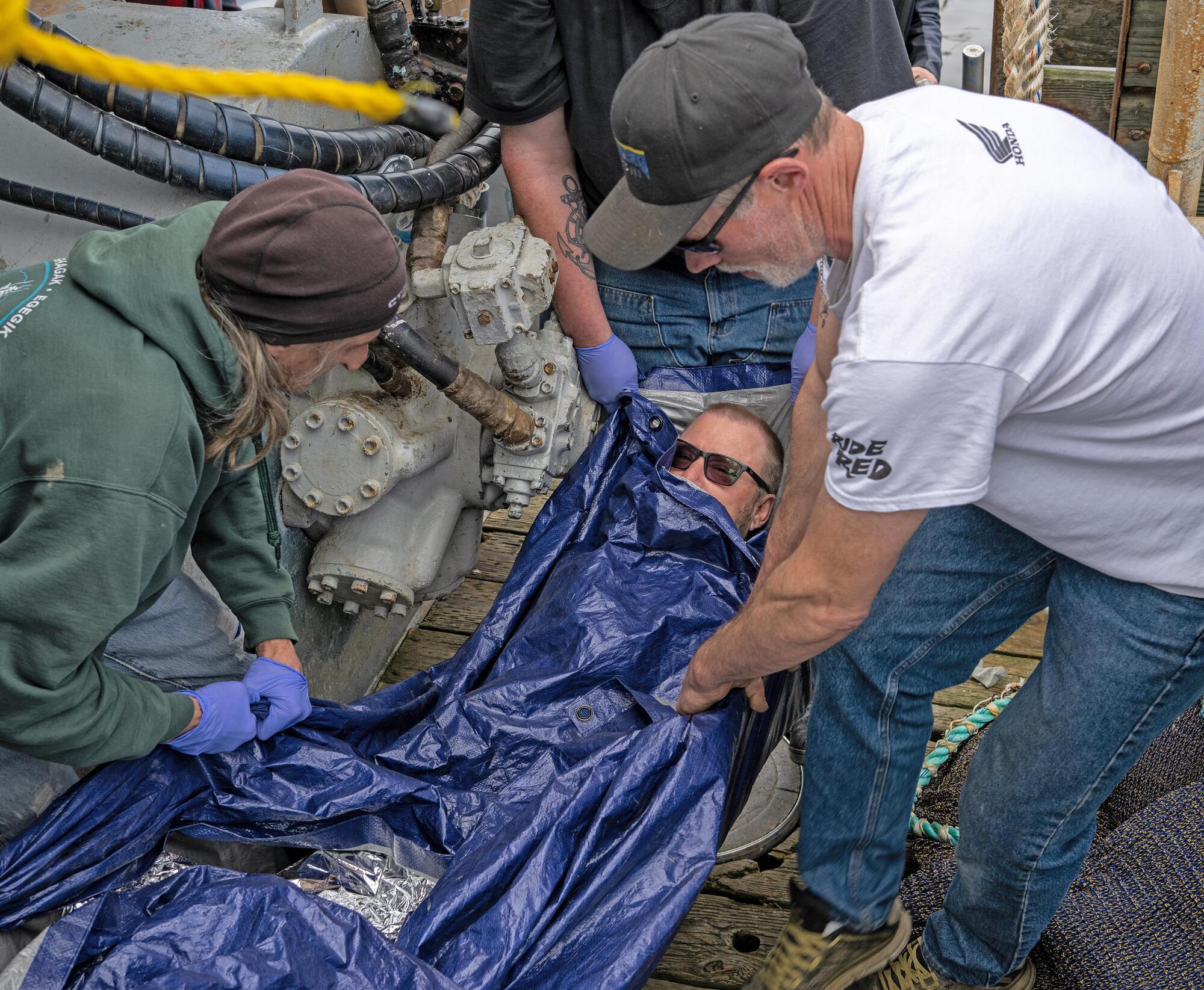
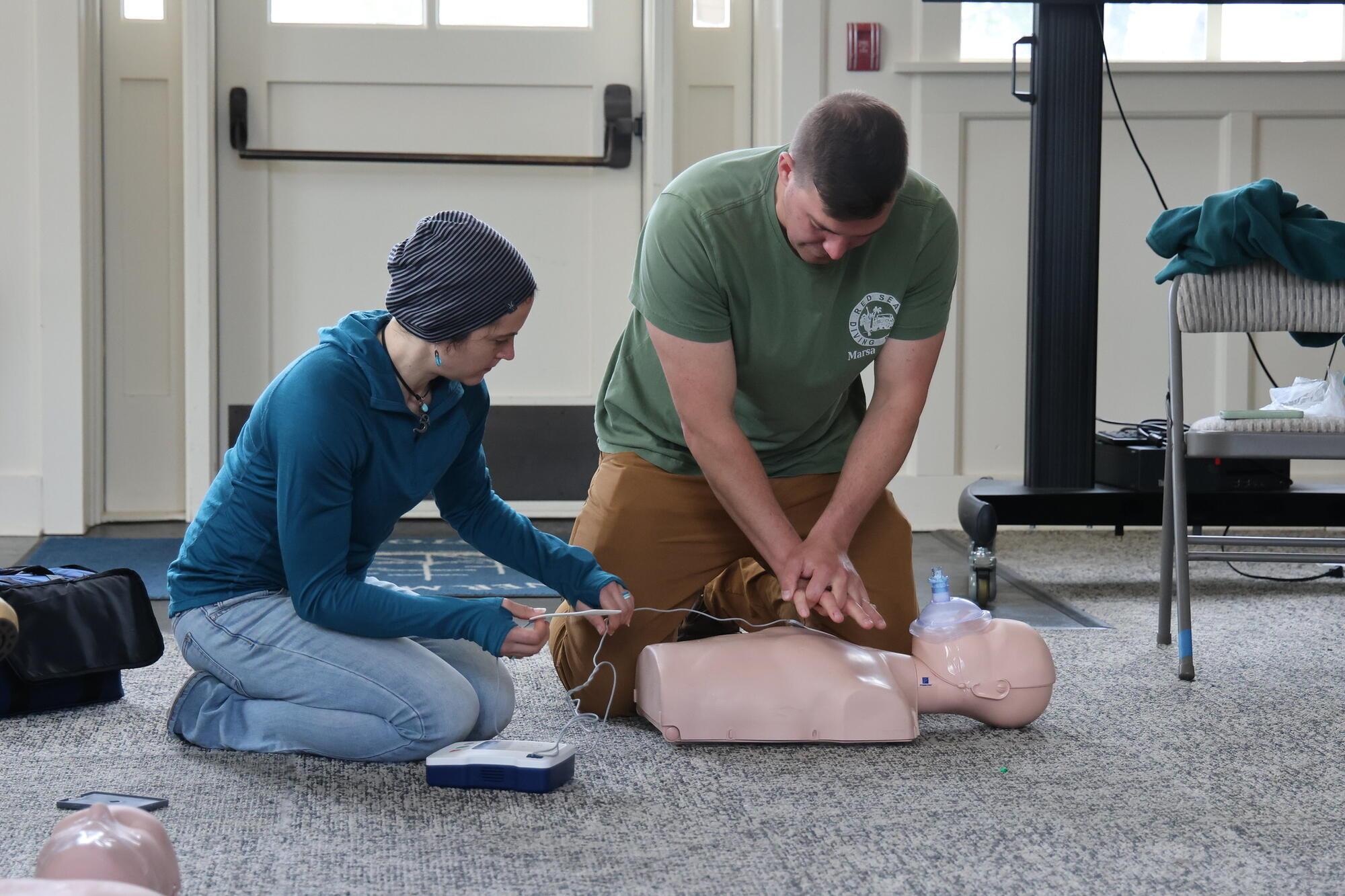
The Fishermen First Aid and Safety Training program teaches medical response skills for injuries common on fishing vessels, including crush injuries, hypothermia and traumatic wounds. The training adapts wilderness medicine principles for the marine environment, where crews may be hours away from professional medical care.
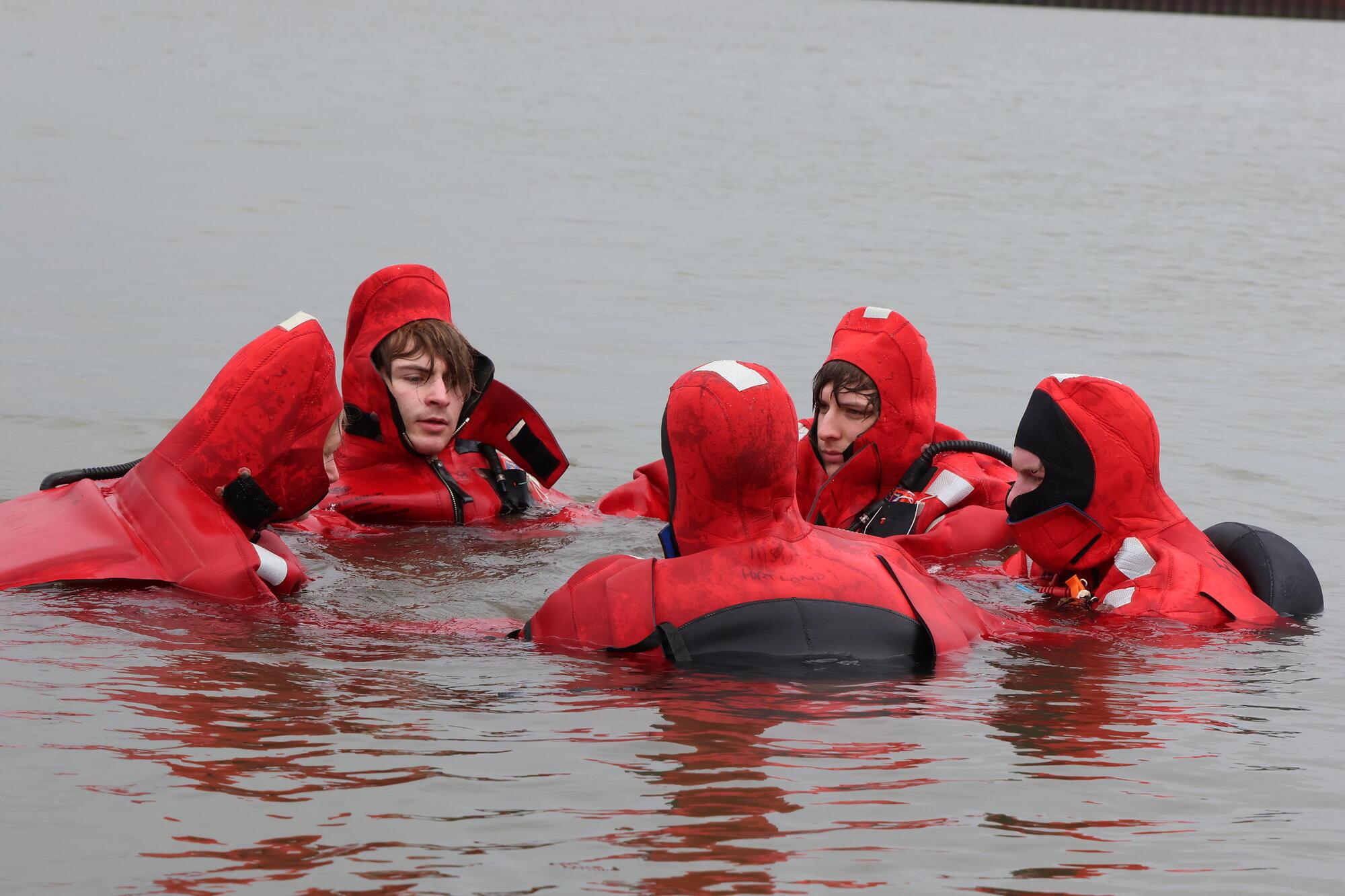
In 2024, program organizers began integrating that course with the Coast Guard’s drill conductor training, which prepares fishermen to lead emergency drills on vessels. The drills cover scenarios such as man-overboard recovery, abandoning ship, firefighting and flooding response.
Combining the programs into a single course reduced time commitments for fishermen and increased participation.
Community partners helped recruit fishermen, provide training locations and coordinate logistics.
Coastwide impact
Between October 2024 and March 2026, the initiative reached fishermen across eight ports in Oregon and Washington.
Over that period:
- 727 life jackets were distributed on more than 375 vessels.
- 695 fishermen enrolled in a research project focused on improving life jacket use.
- 141 fishermen completed first aid and drill conductor training.
- 206 immersion suits were tested and 127 outdated suits replaced.
- 146 commercial fishing licenses were provided to fishermen facing financial barriers.
- 84 nutrition-focused meal kits were distributed to support injury recovery and health.
Community organizations led equipment distribution through trusted networks within their ports while Oregon Sea Grant Extension provided training coordination and research support.
A reminder of the stakes
The dangers of commercial fishing remain ever-present.
On May 9, 2025, the fishing vessel Captain Raleigh capsized off Westport, Washington. Within hours, the network of fishing organizations connected families and crews, coordinated vigils and fundraising efforts and helped connect survivors with mental health support.
One of the surviving crew members had completed the combined safety training months earlier and used the procedures learned in the course during the emergency.
The incident reinforced the importance of combining equipment, training and strong community networks.
Equipment alone is not enough, Gladics said. Training alone is not enough. And funding alone is not enough.
But when those elements come together with trusted partnerships, the results can save lives.
Looking ahead
Community organizations from Oregon and Washington gathered in January in Cannon Beach for a strategic retreat focused on the future of commercial fishing safety. Eighteen attendees came together to identify priorities, strengthen coordination and plan for the next phase of the work.
Those conversations have already helped generate new momentum. Community partners secured funding through Pacific Northwest Agricultural Safety and Health to support Project Joel, which focuses on man-overboard self-rescue equipment, and a Fishing Family Wellness and Community Health Worker Needs Assessment project.
The work is also expanding beyond the Pacific Northwest. Gladics and partners recently traveled to New Bedford, Massachusetts, to meet with international fishing safety experts through FISH Platform. Three board members from community partner organizations joined the trip, helping build local leadership and deepen the region’s capacity to advance commercial fishing safety.
For Gladics, the initiative demonstrates what can happen when long-term relationships align with the right resources.
“Strong partnerships take years to build,” she said. “When they meet strategic opportunities and adequate resources, transformative change can happen very quickly.”