DORENA, Ore. — As the weeks went by and the virtual cooking lessons continued, Val Rocco noticed a change in her students.
“You could tell they built up their endurance, that they had to read the recipes beforehand. Toward the end, we had amazing, intellectual conversations about food.”
Rocco, who teaches health and physical education at Dorena School in south Lane County, partnered this year with Jillian Drewes, coordinator of the Oregon State University Extension Family and Community Health Program in Lane County, to offer a farm-to-table cooking project for sixth, seventh and eighth graders.
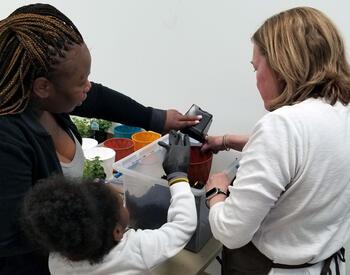
Drewes prepared meals in the Lane County Extension office in Eugene while students followed along at home on their school-issued tablets. In the first couple of monthly classes, Rocco saw some students struggling to focus.
Gradually, that changed. The group became quieter, more engaged.
“You could tell they built up their endurance, that they had to read the recipes beforehand,” Rocco said. “Toward the end, we had amazing, intellectual conversations about food.”
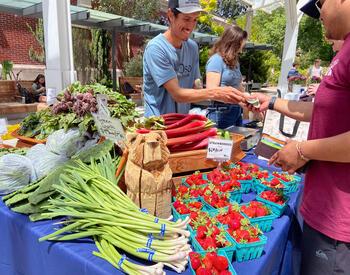
The COVID-19 pandemic inspired Rocco to find a way to connect her students with locally grown food.
“Everything changed so quickly during the pandemic,” she said. “I wanted to do something that was both outside the box and rewarding for the students. We’re a rural school. Making food and farming is my background, and I wanted to pass those values to my students.”
Rocco received a grant to fund five meal kits for each student, with enough ingredients to feed a family of six. The first box included kitchen basics: an apron, measuring cups and spoons, oil, salt, pepper and a mixing bowl.
The recipes came from Food Hero, a statewide initiative of the Oregon Supplemental Nutrition Assistance Program Education (SNAP-Ed) program, developed by OSU Extension in English and Spanish. All recipes are tested for flavor, color, texture, cost, and ease of preparation. Food Hero meals feature easy-to-find ingredients, simple instructions and minimal preparation time.
Adapting culinary education during the pandemic
Once the grant was secured, Rocco contacted Drewes to plan the classes. Before the pandemic, Drewes taught in-person culinary lessons in schools. She had already adapted her approach, partnering last year with Kalapuya High School in Eugene for home-based cooking lessons using videos she recorded.
A benefit of at-home lessons, Drewes said, is that students can complete an entire dish themselves rather than working in groups on only part of a recipe.
“They get to do every part of the activity,” Drewes said. “Especially for older students, this has been a real discovery for us.”
Previously titled Middle-school cooking class leads to serious conversations about food