History
As a crop species, lupin was important to many ancient civilizations and has been cultivated, mostly as a green manure, for at least 3,000 years. Its native range extends through the western parts of North and South America as well as around the Mediterranean, extending into eastern Africa.
Of the more than 300 Lupinus species, only five are cultivated (L. albus, L. angustifolius, L. luteus, L. mutabilis, and L. cosentenii). In the 1920s, German plant breeders produced the first low-alkaloid lupin varieties. Like other legumes, lupin fixes atmospheric nitrogen and produces a high-protein seed that is used as a feed and food source throughout the world.
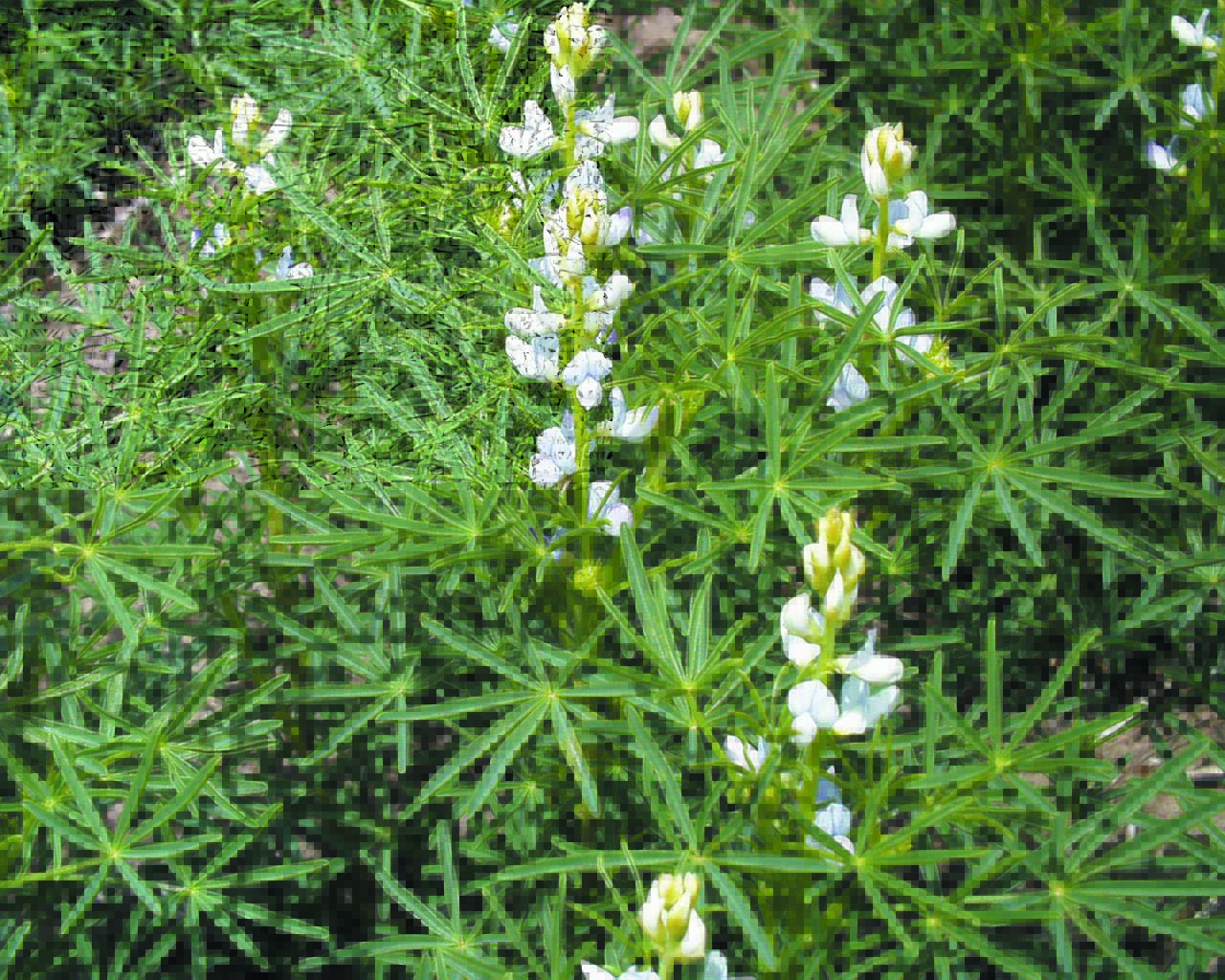
In the past, lupin production in Oregon was limited to white lupin varieties (L. albus). White lupin has been grown in the Columbia Gorge region since the late 1980s. Research at the Oregon State University Moro Research Station showed excellent yield potential. Although white lupin is well adapted to most growing conditions in Oregon, it has suffered from undetermined disease problems.
In 1998, OSU researchers resumed lupin research in response to grower interest. After conferring with Australian researchers, William Payne became convinced that imported narrow-leaf lupin varieties (L. angustifolius) from Australia would provide resistance to the types of diseases that had troubled white lupin in the past. Because current Oregon lupin research has focused on narrow-leaf varieties, this publication will discuss the agronomic practices of growing the narrow-leaf varieties developed in Australia.
Uses
Lupins are valued primarily for their high protein content. The major protein source of lupin seed is a group of globulins called conglutins. Conglutins make up approximately 85% of lupin’s total protein and are similar in size and properties to the storage proteins of other legumes.
The amino acid profile is good, with a high content of arginine, lucine, and phenylalanine. Lupin protein is deficient in the sulfur-containing amino acids lysine, methionine, and cysteine and must be supplemented for some animal feeds.
The oil content generally is higher than in other pulse crops and cereals but much lower than soybean and the oilseeds. Lupin protein and oil are more digestible than those of soybean, and lupins have low levels of the common antinutritional factors.
Lupin seeds have little starch but are rich in dietary fiber, mainly in the cell wall material of the cotyledons. Lupin alkaloid levels vary, but are not a problem in narrow-leaf varieties. See Table 1 for protein, oil and fiber comparisons between lupin species and soybean.
Low-cost feed source
The price paid by stock feed manufacturers for a particular ingredient depends on its nutritional components and the availability and price of substitutes.
Most feed mills carry out constant computer analysis to reach target feed composition specifications at the lowest possible price. In these analyses, lupin seed can be compared with other feeds such as soybean meal and canola meal.
|
Seed coat |
Crude protein |
Oil |
Crude fiber |
|
|---|---|---|---|---|
| L. angustifolius | 24 | 28–38 | 5–7 | 13–17 |
| L. albus | 18 | 34–45 | 9–15 | 3–10 |
| L. luteus | 24 | 36–48 | 4–7 | 15–18 |
| Soybean | 10 | 34 | 19 | 4 |
Adapted from: Lupin Development Guide.
The value of lupin seed depends on the price and availability of domestically produced feed materials.
For example, the presence of a Tillamook cheese plant in the Columbia Basin presents a unique opportunity to produce lupin as a local protein source for dairy cattle. The closeness of the dairies should make lupin cost-competitive with soymeal because of lower transportation costs.
Food uses
Lupin flour is used to produce an alternative flour source for people with gluten allergy. In France, lupin tofu and cheese products are produced using white lupin. It is thought that narrow-leaf lupin could be used for the same types of products.
Research has shown that 10% lupin flour can be added to pastas and bread to make them more nutritious. The blend of cereal and legume helps to balance the amino acid profile and make a more complete food.
In Middle Eastern and Asian foods that traditionally use soybean or other legumes, lupin has been accepted by taste panels. Tempe, miso and soy sauces have been reported to taste better when made with lupin. These types of research open many potential new markets for lupin.
Growth habit and life cycle
The life cycle of lupins can be divided into three stages: vegetative phase, floral phase, and pod and seed growth phase. The rate at which the plant progresses through each phase depends on temperature and day length.
Lupin emergence depends on soil moisture, temperature and depth of planting. Emergence usually takes three to 10 days, although the quality of seed seems to have a great effect on lupin emergence and growth.
Growth stages are referred to in terms of leaf number (for example, four-leaf stage). The internode length and plant height at the start of flowering are affected by temperature and light.
Given optimum temperatures, both leaf area and dry matter increase more slowly in lupins than in cereals. Slow early growth can affect the crop’s ability to compete with weeds and can increase disease and insect damage.
Branches develop in the leaf axils below the main stem inflorescence and are referred to as orders. Most well-grown lupin crops have multiple orders (branches). In dry seasons, only a few first-order branches may develop. The vigor and extent of lupin branching varies both within and between lupin species.
Lupin develops a single main taproot with lateral branches. In sandy soils, roots can reach 1 meter in depth within six weeks of sowing even when the shoot is still small. This rapid root growth allows lupin to use nutrients that are unavailable to wheat’s shallow, fibrous root system. As the taproot grows, it develops nitrogen-fixing nodules and lateral roots.
Lupin can produce as many as 70 flowers on the main stem. The flowers open in ascending order, usually one or two per day. Lupins are strongly self-pollinating, so almost all flowers are fertilized and capable of forming pods.
After fertilization, the flower ovary develops into a pod, or the flower dies and drops off. Flower abortion on the main stem is dramatic; 80% to 90% of all flowers are aborted. This abortion is normal in legumes. However, due to the compensatory ability of different branch orders, good yields are possible even with poor pod set on the main stem. Even with 70% flower abortion on a plant as a whole, lupin is capable of very high yields.
Floral abortion is intensified by moisture stress, low temperatures (below 50°F), and high temperatures (above 80°F) at flowering. Pod set is decreased under very favorable growing conditions, as ample soil moisture and cool, cloudy weather promote vegetative rather than reproductive growth.
Most lupin pods are capable of producing four to five seeds. Generally, larger seeds are produced on the main stem and under cool ripening conditions.
In 14 to 20 weeks, flowering ceases, and maximum dry matter is reached. All of the plant’s nutrients are redirected from growth to seed filling.
The crop is physiologically mature when the moisture content of the seeds falls to about 40%. At this stage, stems and leaves are light green to yellow, leaf drop starts, and the cotyledons of the seeds are green. The rest of the crop season is primarily a drying process.
Environmental requirements
Climate
The ideal temperature for lupin growth is around 68° to 77°F during the day and 50° to 60°F at night. High temperatures (above 80°F) terminate branch development, shorten internode length, accelerate flowering and maturity, and increase flower abortion. Studies in Australia have shown that even two days of hot weather (80°F or greater) during bloom or when seed pods are filling can abort blossoms and reduce yields.
Low temperatures slow germination and emergence, increase susceptibility to brown leaf spot, delay flowering and maturity, increase flower abortion and can cause frost damage to flowers.
Soil
Lupins are sensitive to soil pH, preferring acid to near-neutral conditions (pH of 4.5 to 7.5). They will tolerate slightly alkaline soils (to pH 8.0), providing the free lime or calcium content of the soil is low.
Lupins grow very well on sandy soils, deep sandy loams, and gravelly soils overlaying clay subsoils. Good soil drainage is important for optimum growth.
It is advisable to grow a few small test strips before planting a large area.
Variety selection
Ideally, choose a variety that is disease-resistant, vigorous, and suited to local growing conditions. Due to plant breeders' rights restrictions, only the public varieties Merrit and Gungurru are currently available for planting (Tables 2 and 3). OSU is working with Oregon farmers to gather data and assess the need to import and license plant breeders' rights varieties from Australia.
|
|
||||||||
|---|---|---|---|---|---|---|---|---|
|
Variety |
Year of release |
Flowering |
Height |
Early vigor |
Brown leaf spot |
CMV |
Phomopsis |
Drought |
| Merrit | 1991 | Early | Short | Med | MS | MS | R | MS |
| Gungurru | 1988 | Early | Short | Med | MS | MS | R | S |
R = resistant; MS = moderately susceptible; S = susceptible
Adapted from Producing Lupins in Western Australia.
|
|
|
|||
|---|---|---|---|---|
|
1998 yield (lb/a)† |
1999 yield (lb/a)† |
1998 yield (lb/a)† |
1999 yield (lb/a)† |
|
| Merrit | 1,237a | 1,162a | 779a | 1,220b |
| Yorrel** | 702b | 1,132a | 488b | 1,581a |
| Chittick** | 32c | 1,313a | 1d | 1,613a |
| Danja** | 569b | 1,250a | 303c | 1,381a,b |
* Moro rainfall was 12.22 and 8.35 inches for the cropping season (September–August) in 1997–1998 and 1998–1999, respectively (91-year average = 11.46). Pendleton rainfall was 15.57 and 18.35 inches for the cropping season (September–August) in 1997–1998 and 1998–1999, respectively (71-year average = 16.54).
†Means in the same column followed by the same letter are not significantly different according to the LSD (P= 0.05).
**Varieties not commercially available in the United States.
Adapted from: 2001 Columbia Basin Agricultural Research Center Annual Report.
Germination
Despite lupin’s high natural germinability, germination testing is necessary to guarantee that poor-quality or damaged seed does not result in low stand density and reduced yield.
The seed germination rate for narrow-leaf lupin can range from 20% to 90%, depending on harvesting and handling methods. It is important to use seed with a germination percentage of 80% or better.
Lupin seed can be damaged by incorrect handling between harvest and seeding. Handling should be kept to a minimum to reduce seed damage. Screw augers usually cause the most damage. This problem can be partly overcome by slowing down the auger and making sure it runs full at all times.
Seed damage also can be caused in air-seeders by excessive air pressure. It is a good practice to adjust the air pressure setting so it does not exceed that needed to ensure reliable
operation.
Seed preparation
Lupins form a symbiosis with the root-nodule bacterium Bradyrhizobium lupini. Inoculation is recommended where lupins have not been grown before or if there has been an extended (4- to 5-year) gap between lupin crops. Use a group G inoculum. The inoculum contains live bacteria, so follow label instructions for storing it until used. Contact your local Extension office or seed dealer for information about obtaining inoculum.
Dry dusting the inoculant onto the seed is not an effective way to inoculate lupins. In Australia, a “gum slurry” inoculation has been used successfully.
Commercial peat inoculant is mixed with a methyl cellulose adhesive and applied to the seed, which is then dried and sown. The process involves mixing the gum slurry with the seed in an auger as seed is transferred from storage to the seeding unit. Whole milk has been used as a slurry liquid with other legume seed.
Do not treat inoculated seed with fungicides or insecticides. Sow seed as soon as possible after treatment. Sowing with high rates of superphosphate or with superphosphate containing trace amounts of copper sulfate may lead to nodulation failure.
Cultural practices
Method and rate of seeding
Seedbeds for lupin are similar to those required for small grains. The optimum seeding depth is 2 inches. In drier growing areas, the seed can be planted to moisture.
Seeding rate depends on several factors, including germination percentage, seed weight and size, row spacing, disease incidence, weed control practices and seed cost. A seeding rate of 80 to 150 pounds per acre is recommended. In good environments, the lower density is adequate.
Drought stress requires a higher density to maximize yield. Advantages of higher densities are better weed control, more uniform plant height and maturity, and increased ease of harvest. However, with higher densities, the cost of seed becomes a factor.
Remember to consider seed weight and germination percentage when calculating seeding rates. Do not plant seed with a germination rate below 80%.
With lupin, there is no advantage to cultivation before planting. In fact, direct seeding can be advantageous. Because the cotyledons and growing point of lupin seedlings are above the soil, they are susceptible to sand blasting and insect damage. Residue from previous crops can protect the seedlings.
Also, plowing buries weed seeds below the reach of preemergent soil herbicides and can bury Pleiochaeta disease spores to the root zone, where they will cause the most damage.
Seeding date
By far the most important agronomic practice for getting good yield and height is early planting. Seed as early as temperatures allow and as soon as equipment can be used in the field.
Narrow-leaf lupins can take some freezing temperatures and seem to have no problem with temperatures in the upper 20s Fahrenheit. However, although lupin needs to be sown early, sowing too early can result in poor stands due to disease pressure and nonuniform germination.
Yield potential in lupins is determined by the production of successive orders of inflorescences produced on ancillary branches. Lupin yields decline more rapidly than cereals as the sowing date is delayed and the effective growing season shortened. The sensitivity of narrow-leaf lupin to high temperature in spring is an additional reason for early sowing.
Fertility
A soil test is the best tool on which to base fertilizer management decisions. A well-nodulated lupin crop does not need nitrogen fertilizer. In most cases, lupin is used as a source of nitrogen in the farming system, and nitrogen fertilizer application to the crop is rare.
Excess applied nitrogen may promote vigorous early growth, but it can inhibit or delay nodulation and nitrogen fixation even when nodules form. Nitrogen application rarely increases yield, but often stimulates weed growth.
Based on preliminary studies conducted in 2000 and 2001 at the Columbia Basin Agricultural Research Center (Pendleton) and the Sherman Experiment Station (Moro), the application of N-containing starter fertilizer at planting greatly suppressed lupin seedling emergence, thereby affecting seed yield. Starter fertilizer without N did not affect seedling emergence and yield.
Good levels of soil phosphate are needed for maximum vegetative growth and yield. Lupins will respond to high rates of superphosphate on phosphorus-deficient soils. However, rates above 180 pounds per acre produce toxicity and reduce seedling emergence when drilled with the seed.
If more than 180 pounds per acre of superphosphate are needed, apply it in a deep band before sowing. High rates of superphosphate also tend to make potassium and manganese uptake more difficult for the lupin plant.
Manganese (Mn) deficiency manifests itself as a split seed disorder. Split seed can occur after a short dry spell or during pod filling after prolonged dry conditions. Manganese uptake is poor in dry topsoil, and Mn is relatively immobile in the plant so it does not move into areas of new growth.
Early sowing and higher seeding rates reduce the risk of split seed, as the seed will fill and mature before soil moisture is exhausted.
Weed control
Weed competition is one of the biggest constraints to producing lupins. The lupin canopy develops slowly, allowing weeds to germinate and grow over a long period of time. Late-germinating broadleaf weeds are especially problematic. For this reason, weed control is essential for success with lupin.
Avoid fields with heavy weed populations, especially perennial weeds. Use disease-free seed to produce a more vigorous lupin crop. Rotate crops to avoid weed buildup.
Weeds of particular importance in Pacific Northwest lupin production include kochia, Russian thistle, prostrate knotweed, and winter annual grasses, including volunteer cereals.
Mechanical control
A rotary hoe or flexible-tined, spring or spike-tooth harrow can be used before lupin emergence to control early emerging weeds. If the crop has emerged, the rotary hoe or flexible-tined harrow is safer to use than the spike- or spring-tooth harrow.
To be successful, rotary hoeing or harrowing should be done just before the weed seedlings have emerged from the soil. Hoeing and harrowing are most effective when done in late morning or early afternoon.
Chemical control
Alternatives exist for controlling winter annual grasses, so emphasize effective treatments to control broadleaf weeds. Several compounds are registered for use in lupin including pendimethalin, metolachlor, sethoxydim and paraquat, but the spectrum of weeds controlled by these compounds does not fit well with existing weed control needs in the Pacific Northwest.
Several herbicide treatment combinations are being evaluated for weed control efficacy and lupin crop tolerance. The data compiled from these studies will facilitate the eventual registration of additional herbicidal compounds for commercial use in lupin.
Herbicides being evaluated for general broadleaf weed control include the following:
- Ethalfluralin (Sonalan EC and 10G)
- Pendimethalin (Prowl)
- Flufenacet + metribuzin (Axiom)
- Sulfentrazone (Spartan)
- Metolachlor (Dual Magnum)
Preliminary results of the lupin herbicide screening can be found in 2001 Columbia Basin Agricultural Research Center Annual Report.
Diseases and their control
In Columbia Basin lupin research trials, late-planted fields showed signs of disease pressure. The disease may have been leaf spot. The limited data from these trials suggest that early planting reduces disease problems. However, as lupin acreages increase, so will the potential for disease problems.
Lupin diseases fall into four main categories: root, leaf, stem, and virus. In Australia, the most important are fungal diseases caused by Pleiochaeta, Rhizoctonia, and Anthracnose. Common diseases are described in Table 4.
Anthracnose, cucumber mosaic, and bean yellow mosaic virus can be seed-borne, and infected lupin seed can act as a bridge when other hosts are absent. When importing seed, request that the seed be tested for these diseases. Phytosanitary certificates do not require seed testing.
Insects
Narrow-leaf lupin has not been grown long enough in the Columbia Basin to get a true picture of which insects will affect the crop. In OSU lupin trials, army cutworm, false wireworm and true wireworms have been found. As with other legumes, aphids might be a vector for disease.
The insects infesting narrow-leaf lupin in Australia are Lucerne flea (Sminthurus viridis L.), red-legged earth mite (Halotydeus destructor Tucker), cutworms (Agrotis spp.), brown pasture looper (Ciampa arietaria), aphids, Australian native budworm (Helicoverpa punctigera), Lucerne seed web moth (Etiella), and Lygus spp.
If you decide to grow lupin, it would be helpful to scout the field often to monitor insect damage. Consult your local Extension professional for help in identifying and controlling any insect pest you may find.
|
Disease |
Caused by |
Main symptoms |
Importance |
Control |
|---|---|---|---|---|
|
|
||||
|
Pleiochaeta root rot |
Pleiochaeta setosa | Browning and rotting of tap and lateral roots. Plant death. | Serious — reduces stand density and vigor. | Long cereal breaks. Sow at 2 inches. Do not use disc plows. |
|
Rhizoctonia bare patch |
Rhizoctonia solani Strains ZG1, ZG2 | Round bare patches in the crop. Bent ends pinched off — “spear tips.” | Not yet common but potentially important. | Tillage will reduce severity. |
|
Rhizoctonia hypocotyl rot |
Rhizoctonia solani Strain ZG3 | Red-brown marks on hypocotyl. Plant death. | Sometimes severe — reduces stand density. | Increase seeding rate. Sow shallow (less than 1.25 inches). Sow disease-prone fields last. |
|
Rhizoctonia root and hypocotyl rot |
Rhizoctonia solani Strain ZG6 | Marks on both root and hypocotyl. | Sometimes severe — reduces stand density. | Increase seeding rate. Sow disease-prone fields last. |
|
Sclerotinia collar rot |
Sclerotinia minor | White, cottony growth on lower stem and upper roots. Sclerotia.* | Minor importance. | Cereal rotation. |
|
Charcoal rot |
Macrophomina phaseolina | Stem base and taproot gray-colored. Tiny sclerotia inside tissue. | Limited to periods of water stress. | Don't sow lupins on unfavoralbe soils. |
|
|
||||
|
Brown leaf spot |
Pleiochaeta setosa | Dark, netlike spots on leaves. Leaves drop off. Spots also on pods, stems and flowers. | Very common and important, especially in cooler regions. | Sow early. Stubble retention. Fungicide seed dressing. Dense plant stand. Cereal rotation. Good P nutrition. |
|
Gray leaf spot |
Stemphylium vesicarium | Gray leaf spots. | Now unimportant. | Commercial varieties are resistant. |
|
|
||||
|
Phomopsis stem blight |
Phomopsis leptostromiformis | Purplish-black marks on stems at end of season. | Very common — toxin causes lupinosis in stock. | Use varieties Gungurru and 75A:430 (new variety). |
|
Sclerotinia stem rot |
Sclerotinia sclerotiorum | White, cottony growth on stem and sometimes on pods. Sclerotia* inside. | Minor — sporadic and isolated. | Cereal rotation. |
|
|
||||
|
Cucumber mosaic |
Cucumber mosaic virus (CMV) | New leaflets bunched and pale. Young plants stunted. Seed infection important. | Low if recommended agronomic practices and clean seed are used. | Use seed with low infection levels. Plant early. Dense stand. |
|
Bean yellow mosaic |
Bean yellow mosaic virus (BYMV) | Brown streaks on stems. Shepherd's crooking of branch ends. Plants wilt and die. | Important in cooler, high-rainfall areas. | Dense stand. Protect crop perimeters with cereal buffers. |
*Sclerotia are small, black fruiting bodies that can survive for a long time in dead tissue or soil.
Adapted from: Producing Lupins in Western Australia.
Harvesting
A major consideration of lupin production is harvest loss. Mechanical harvest of lupin is more difficult than harvest of small grains. Inadequate crop height and loss from the front of the combine header are problems currently encountered in grower drill strip tests.
Harvest lupins as soon as they are ripe. Harvest should start as soon as the moisture content reaches 12% to 15%. In some seasons, stems are still pale green at this time. Delays can result in significant yield losses due to lodging, pod shattering and pod drop. Lupins must be harvested within three weeks of maturity.
|
Conventional |
Rotary/axial |
|
|---|---|---|
|
RPM |
450a | 200–400 |
|
Concave setting (inch) |
1 | 1–2 |
|
Travel speed (mph) |
3–8 | 3–8 |
|
Fan speed (rpm) |
750 | 650–750b |
* Consult your operator’s manual for specific details.
a Depending on cylinder diameter; consult operator’s manual.
b Depending on crop conditions.
Adapted from: Lupin Production and Utilization Guide.
Lupin can be direct combine harvested with the same equipment that is used for small grains. Both conventional and axial flow combines work well. Keep cylinder speed slow and the concaves open wider than you would for small grains (Table 5). Check harvested seed frequently and adjust the settings as needed to prevent losses or damage to the seed.
Harvest losses
Losses between 5% and 40% can occur as pods shatter entering the header. Vibration due to cutter bar action, plant-on-plant or reel-on-crop impact, and poor removal of cut material by the table auger all cause shattering and grain loss.
Various harvest techniques and combine modifications can be used, including stripper header harvest, use of combine air reels, and sickle bar modifications. Other factors that are important in reducing harvest losses are a sharp sickle blade or a quick-cut style sickle blade. Research on combine modifications to reduce shatter loss is being conducted in Eastern Oregon.
Field losses due to shattering can be avoided or reduced by harvesting in the early morning or late evening, when moisture is more likely to be present on the pods. Avoid combining in extreme heat.
Harvest loss estimates can be calculated using the same method as for soybeans; count the number of shattered seeds in a square-foot area. Do 20 to 30 counts to determine an average loss. Two seeds per square foot equals a loss of one bushel per acre.
Storage
Lupin can be stored directly from the field if the grain moisture content is 15% or less. If the seed is to be stored for more than four to five months, the moisture content should be below 12%.
Saving seed
To ensure maximum germination percentage, seed for next year’s crop should be harvested as soon as it is mature. Set the harvester drum speed to a minimum (less than 500 rpm) and the concave so that some unthreshed pods end up in the harvester bin. The seed embryo is brittle and very sensitive to impact when fully dry. Even seed with no visible damage may have markedly reduced germination.
If necessary, you can reduce the moisture content by drying seed before storage. Australian farmers dry seed in open mesh silos or on fertilizer shed floors before grading and storage in sealed silos.
Economics of production and markets
Several markets are available for lupins. The seed can be fed directly to poultry and livestock, either whole, cracked or ground. Lupin can replace soymeal in livestock rations. Lupin flour can be incorporated into food products for human consumption.
In the short term, lupin markets will need to be local to reduce transportation costs and increase the profit margin. In the future, Oregon growers could compete with Australia in international markets.
At this time, production limitations such as adaptation, stand establishment and weed control are more important to the success of lupin in a region than is the presence of markets.
OSU continues to research the varieties and agronomic practices of growing lupin. OSU Extension’s work has prompted Dr. Fred Muelbauer of the Agriculture Research Service (ARS) to start a small breeding program to develop lupin varieties adapted to Oregon and Washington growing areas.
Work is underway to develop a complete enterprise budget sheet for narrow-leaf lupin. To date (spring 2003), production has been limited to research trials and small field experiments; thus, developing a meaningful budget is difficult. Seed has been imported from Australia, and it is not possible to obtain a reasonable estimate of seed cost — one of the major production expenses.
Using a 2X multiplier of grain value (grain value set at 75% of soybean meal, using a $180/ton soybean meal price) to estimate seed cost would suggest a cost of $0.14 per pound. With a seeding rate of 100 lb/a, an inoculant cost of $5/a, herbicides at $18/a with application (Sonalan preplant followed by Sencor and glyphosate preemerge), and fertilizer at $11/a (100 lb/a 16-20-0-14), variable costs alone would be $48/a. With a 1,200 lb/a yield at a value of $135/ton (75% of soymeal), gross per-acre income would be $81, net at $33 to cover all other variable and fixed costs. A more complete budget will be added to this publication when available.
Information sources
Oregon State University. Dr. Stephen Machado, Columbia Basin Agricultural Research Center ([email protected]), for trial results and information on growing lupin in dryland production systems.
Agriculture Western Australia. Good information about growing lupins and other Australian crops.
References
Ball, D. 2001. Personal communication via e-mail. Columbia Basin Agricultural Research Center, Pendleton, OR.
Chen, C., W. Payne, and D. Ball, 2001. Narrow-leaf lupin as an alternative crop for Pacific Northwest agriculture. In A. Bechtel (ed.). 2001 Columbia Basin Agricultural Research Center Annual Report (SR 1026, Oregon State University, Corvallis, OR).
Cowling, W.A., B.J. Buirchell, and M.E. Tapia. 1998. Lupin. Lupinus L. Promoting the Conservation and Use of Underutilized and Neglected Crops (International Plant Genetic Resources Institute, Rome, Italy).
Dracup, M. and E.J.M. Kirby. 1996. Lupin Development Guide (University of Western Australia Press, Western Australia).
Gladstones, J.S., C. Atkins, and J. Hamblin (eds.). 1998. Lupins as Crop Plants: Biology, Production and Utilization (CAB International, New York, NY).
Gross, R. 1986. Lupins in the old and new world: A biological–cultural co-evolution. Pp. 244–277 in Proc. Fourth Int. Lupin Conf. Au 8. 1j–22, 1986, Geraldton. (W. Australia. Int. Lupin Assoc.).
Haq, N. 1993. Lupins. Pp. 103–130 in J.T. Williams (ed.). Underutilized Crops: Pulses and Vegetables (Chapman & Hall, London).
Kay, D.E. 1979. Food Legumes (Tropical Products Institute, London).
Macnab, S. 2001. Enterprise Budget: Wheat, Winter (Conventional), Mid-Columbia Area, 2000 (EM 8508, Oregon State University, Corvallis, OR).
Meronuck, R.A., H. Meredith, and D.H. Putnam (eds.). 1993. Lupin Production and Utilization Guide (Center for Alternative Plant and Animal Products, St. Paul, MN).
Nelson P. and R. Delane (eds.). 1991. Producing Lupins in Western Australia (Bulletin 4179, Department of Agriculture, Western Australia, Perth).
Reader, M.A., M. Dracup, and C.A. Atkins. 1997. Transient high temperatures during seed growth in narrow-leafed lupin (Lupinus angustifolius L.). Aust. J. Agric Vol 48, pp. 1169–78.
About the authors

Related publications