
Introduction
The early-seral stage of a forest — when it’s recovering from timber harvest — is important to the ecological value of a landscape. Woodland managers can learn to balance the biodiversity of their property during this critical early period while meeting other management objectives.
The early-seral stage is the youngest in a forest’s development. It occurs after a significant disturbance when very few live trees remain on site and the canopy is wide open. This stage ends when trees grow in and the canopy closes.
Canopy closure can be relatively quick (10–15 years), such as after reforestation, or relatively slow (50 years or more). This depends on the type of disturbance and the following management activities.
Timber harvesting operations that support forest regeneration, such as clearcuts and group selection harvests, can create early-seral habitats. These openings increase plants’ and animals’ access to needed sunlight, water, nutrients and space. Species associated with the early-seral stages are adapted to landscape disturbances that create similar conditions.
Early-seral forests created after timber harvest can lack certain habitat elements and are shorter-lived than those developed after natural disturbances. Although timber harvests may not replicate natural disturbances like fires, techniques that mimic these events can support biodiversity.
Overall, there is no shortage of early-seral forests in Western Oregon. However, many early-seral forests on the landscape today lack the necessary characteristics to enhance postharvest biodiversity. The habitat in other locations doesn’t last long because planted trees quickly close the canopy.
Intensive forest management has the potential to decrease biodiversity and shorten the time your forest is in the early-seral stage. So, if you are harvesting for other management objectives, the following techniques can help enhance and lengthen the early-seral stage while meeting the reforestation requirements of the Oregon Forest Practices Act:
- Extend the time the tree canopy remains open.
- Increase standing and down dead wood.
- Nurture diverse and robust herbaceous and woody broadleaf vegetation.
- Retain some large live trees.
Plan to foster these characteristics before, during and after your harvest. These actions can help to mimic natural disturbance and enhance the potential for a diverse and long-lived early-seral forest.
Planning before harvest
The best time to start thinking about enhancing early-seral forest is before you harvest. An organized and planned approach to choosing the live and dead trees you leave behind can increase their effectiveness.
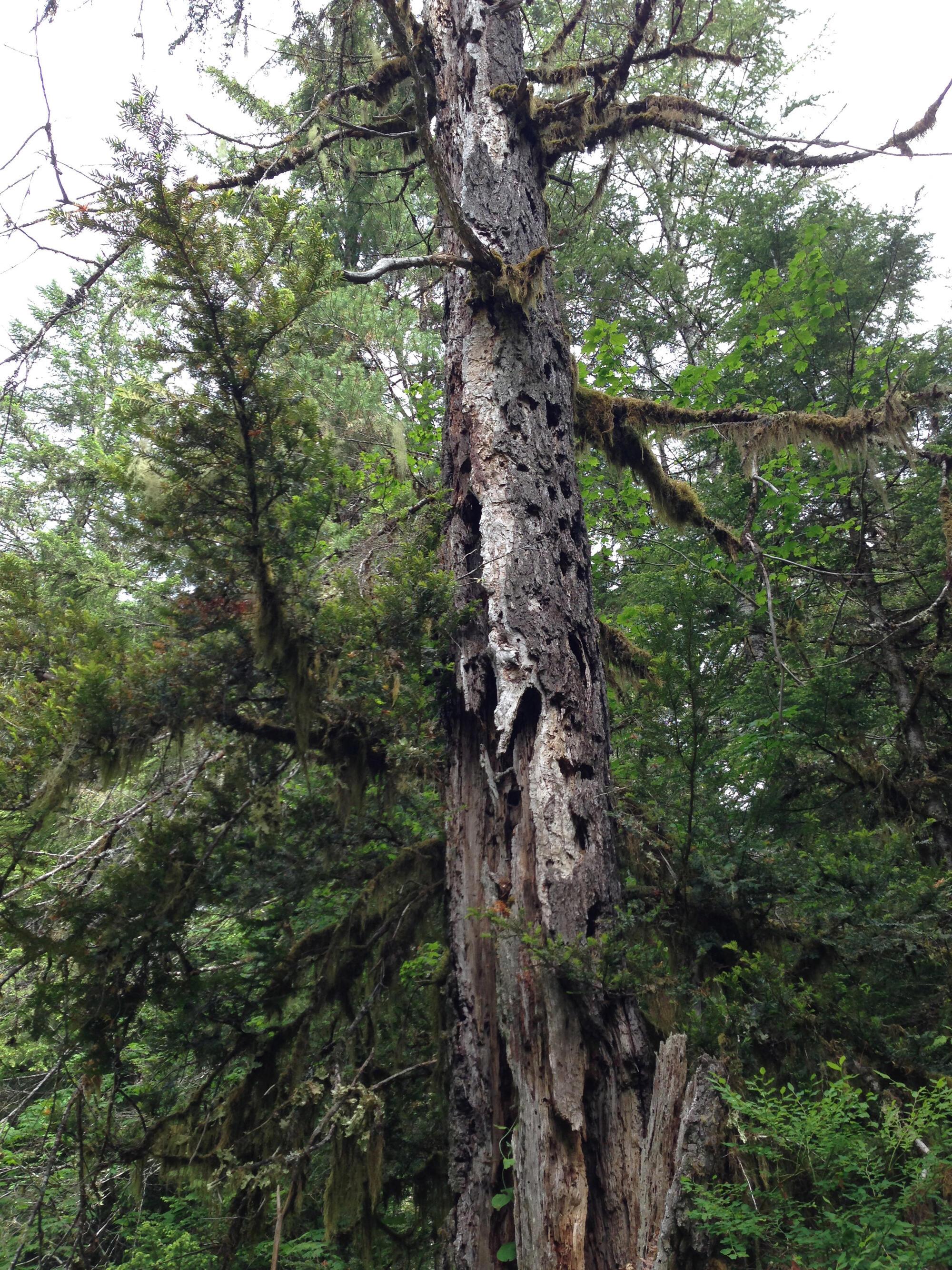
It’s essential to retain live trees after harvest in your early-seral enhancement (Figure 1). These trees provide valuable wildlife habitat for species that require early-seral conditions adjacent to live and dead trees, such as woodpeckers and purple martins.
You can retain extra trees near riparian zones or in the middle of the harvest unit. Trees left around riparian areas support more comprehensive species diversity than those left in upland patches. When leaving trees in upland patches, plan for clumps of 15 trees or more to support wildlife. Clumps of trees are less prone to blowdown than individual trees and can protect patches of understory vegetation during and after harvest operations.
Large trees with big branches, cavities, imperfections or rot pockets provide the best wildlife habitat features and are less likely to have much value at the mill. Deciduous trees provide more diverse food and rot pockets for different populations of insects, birds and other animals than conifer species. Mark these trees with a “W” (to designate a wildlife tree) so they aren’t cut during operations.
The ground under individual or clumps of trees left in the stand is not subject to reforestation requirements. After harvest, you will not need to replant or manage vegetation under these trees. Consult with your stewardship forester about the arrangement and diversity of leave trees before the harvest to confirm your plan follows retention rules.
The harvesting technique and equipment you decide to use will influence the amount of dead wood left on the landscape. This preference will also affect operator choice, since not all companies have the same equipment.
Techniques that pull the whole tree to the landing reduce downed wood. In contrast, techniques that process the trees in the forest increase their number. This is because treetops, branches and any other wood that can’t be sold are left out on the landscape instead of being brought to the landing. This woody material can either remain scattered or be piled. If the slash is left scattered, planting crews might find it challenging to get seedlings in the ground. Fire risk will also increase temporarily until the needles and smaller branches fall to the ground and begin to decompose.
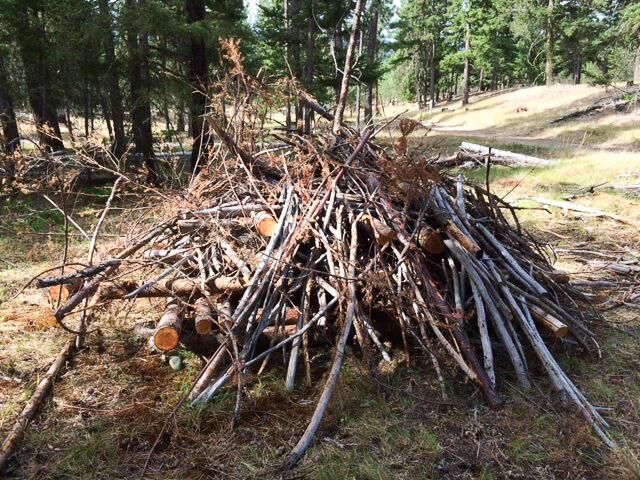
If you choose to pile the slash, leave some or all the piles unburned to retain the downed wood on the site longer, increase habitat availability and make planting easier. Build wildlife-friendly piles with large wood at the bottom and smaller wood at the top. These piles will not be burned. Lay logs in layers perpendicular to each other to provide animals room to move through the pile (Figure 2).
The Oregon Forest Practices Act acknowledges that wildlife habitat is essential to forest management. The Wildlife Food Plots reforestation exemption rules allow landowners with 10 or more acres to set aside a percentage of their land specifically for wildlife food resources. These areas don’t have to be planted with trees if they are managed for the herbaceous and woody plants that provide substantial nutritional resources for wildlife.
Talk to your local Oregon Department of Forestry stewardship forester before your harvest to determine your eligibility for this program. You’ll need to discuss your food plot's appropriate size and location. When choosing a location, consider areas with other wildlife habitat features like snags and water resources or full sun throughout the day to support healthy flower, seed and berry production.
Planning during harvest
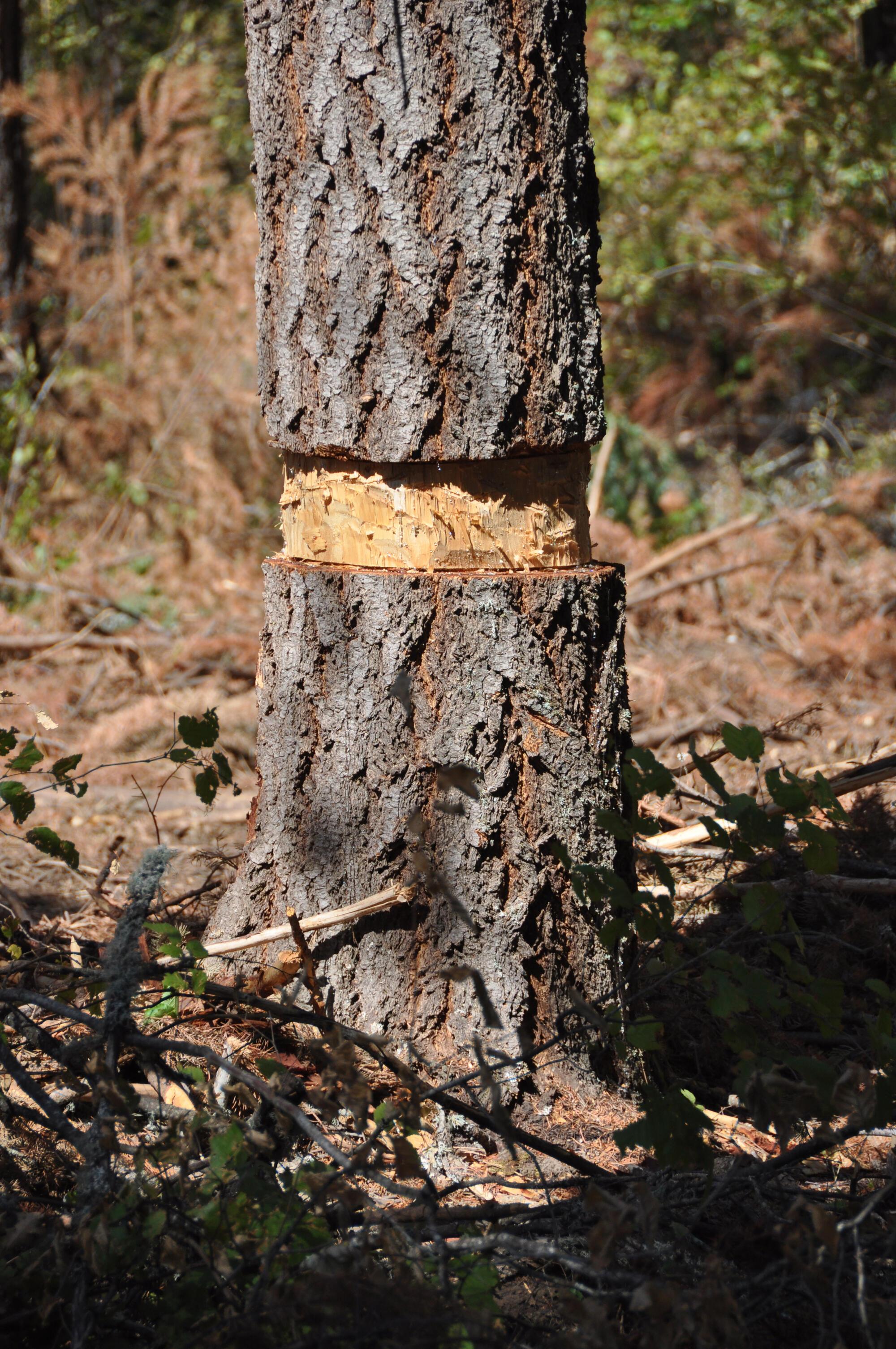
Preserving large woody structures during harvesting activities can significantly enhance early seral-habitat. There are numerous benefits to maintaining large wood on the landscape. Many birds, small mammals and insects use snags (standing dead trees) for foraging and nesting. Snags may already exist in the harvested area, so it helps to retain all existing snags if possible. If there are no snags on site and you are willing to forgo sending a few trees to the mill, you can create snags by topping or blasting trees high up or girdling them near the base.
Both conifer and hardwood trees make great snags, and larger trees support a higher diversity of wildlife!
If large down wood is lacking in your forest, you can create it by allowing some of the logs that would have been cut for timber to be left on site. Logs with defects like rot pockets are good candidates because they wouldn’t be as valuable at the mill. If only small-diameter logs are available, pile them lengthwise next to each other to mimic a large log.
If the contractor is going to pile slash after the harvest, have them leave out the chunks of wood larger (in diameter) than your hard hat to be retained as down wood on the site.
The Oregon Forest Practices Act requires a minimum of two standing trees and two down trees per acre for clearcut harvests of 25 acres or more. Exceeding these minimums will better mimic natural disturbances and increase benefits to wildlife. Minimize disturbance around snags and existing large down wood, root wads, wood piles, stumps and other down woody structures.
Planning after harvest
After the harvest, planting and vegetation management techniques will have the greatest effect on the diversity and residence time of herbaceous and woody broadleaf vegetation. A combination of planting techniques that extend the time to tree-canopy closure and selective vegetation removal can maintain an open canopy and support a diverse plant community.
Plant communities of early-seral forests require abundant sunlight to grow, flower and fruit. Depending on your objectives, consider the following timing and spacing options to support a successful reforestation project that enhances early-seral structure and habitat features.
Planting
One way to enhance early-seral habitat in managed forests is to follow standard tree-planting practices. This will ensure tree establishment and meet Oregon Forest Practices' reforestation requirements. Once trees are free to grow, implement an early precommercial thinning when the trees are 6–10 years old. When thinning, reduce stand density to the minimal trees per acre or spacing allowed. This will extend the open canopy conditions that benefit early-seral species.
This approach can be applied uniformly across the stand or variably, with gaps up to ¼-acre in size. If done variably, the more open patches may persist longer than the more clumped parts of the stand. This strategy will allow you to establish trees quickly and adhere to the laws, while giving you flexibility into the future.
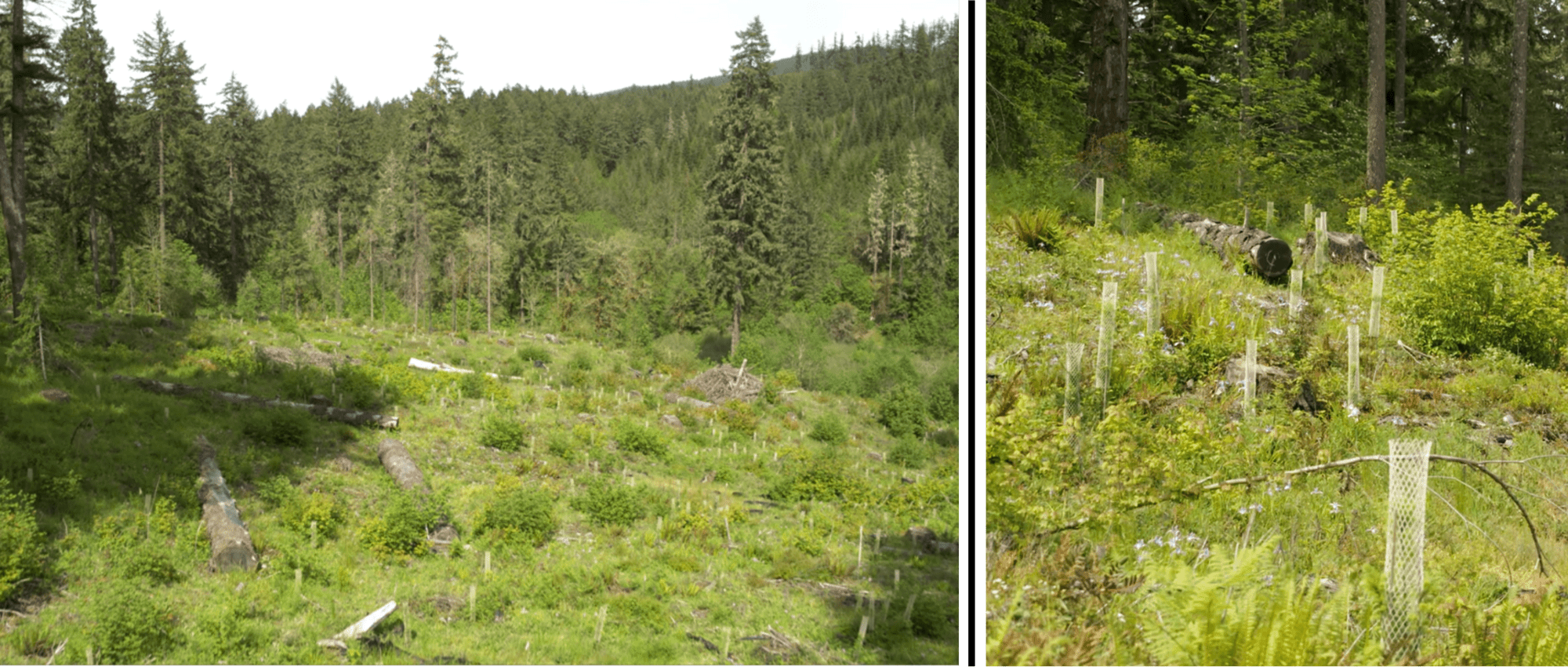
Another option is to use a variable planting arrangement from the start. This may help keep the canopy open with some gaps longer than if the trees were uniform (Figure 4). Plant trees at a broader and more irregular spacing to create a clumpy, patchy arrangement, allowing some areas to have large gaps up to ¼ acre in size where canopy closure is delayed several more years.
If your objectives include future harvest for wood products, avoid spacings greater than 14 feet within clumps to reduce high tree taper and large lower limbs that will decrease value at the mill. Keep in mind that planting fewer trees per acre may require more work to manage vegetation. Subsequent plantings may be necessary to meet requirements of the Oregon Forest Practices Act if there are high seedling mortality rates.
Planting your seedlings immediately after harvest can reduce the need for site preparation (commonly herbicide application) (Figure 4). This technique will require you to order your seedlings one to two years in advance of the harvest so they are ready to go into the ground right away. If your seedlings are planted the winter immediately following harvest, then seedlings can establish before early-seral vegetation takes over the site.
It is important that tree seedlings get established first so they are not overwhelmed by competing vegetation. If it appears tree seedlings are under too much competitive pressure one to two years after planting, follow up with an herbicide treatment or manual weeding around each seedling. This can temporarily alleviate and reduce competition while allowing for robust early-seral vegetation growth between seedlings.
Vegetation management
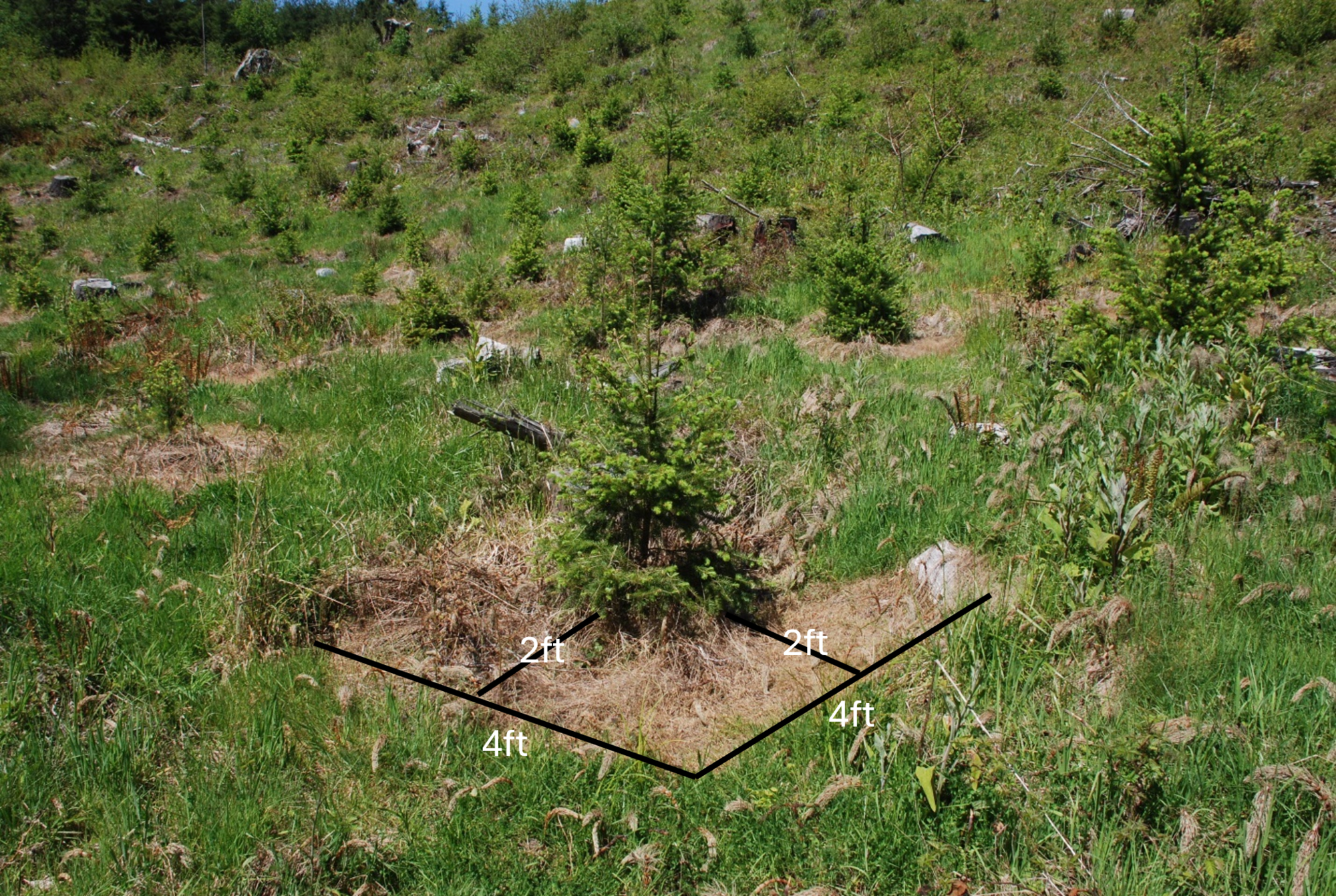
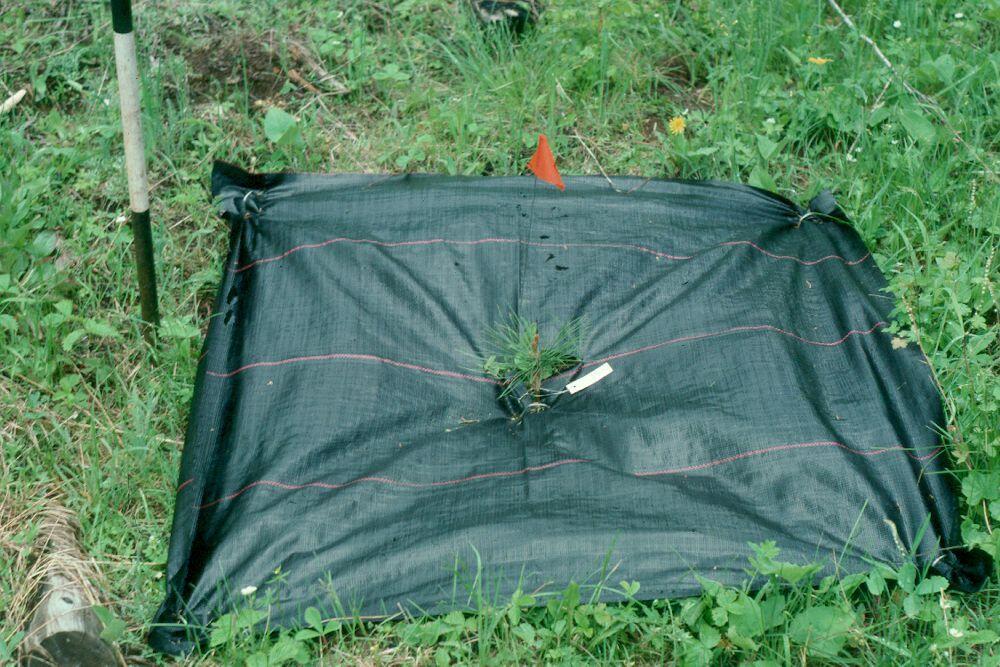
Competition from herbaceous and woody broadleaf vegetation can have consequences for the growth and survival of planted seedlings. In these situations, spot treatments — in which you treat the vegetation right around the seedlings instead of across the entire site — can help meet both objectives. Mulch mats or spot herbicide or mechanical treatments help to decrease competition for water for seedlings while leaving behind some shrubs, grasses and herbaceous plants between seedlings.
For example, if you have tree seedlings planted on a 10x10-foot spaced grid, removing the vegetation within a 4-foot square around the tree stem removes only 16% of the competing vegetation in the harvested area. This still provides most of the growth benefits for tree seedlings that would be accomplished with a more aggressive treatment (Figure 5).
Lay down mulch mats at planting time to increase contact with the ground (Figure 6). You may need a more aggressive treatment if you are on a drier site or your property has a legacy of invasive species. For example, if you plant seedlings on a 12x12-foot grid, removing the vegetation in a 6-foot square around the stems leaves 75% of vegetation for other ecological benefits.
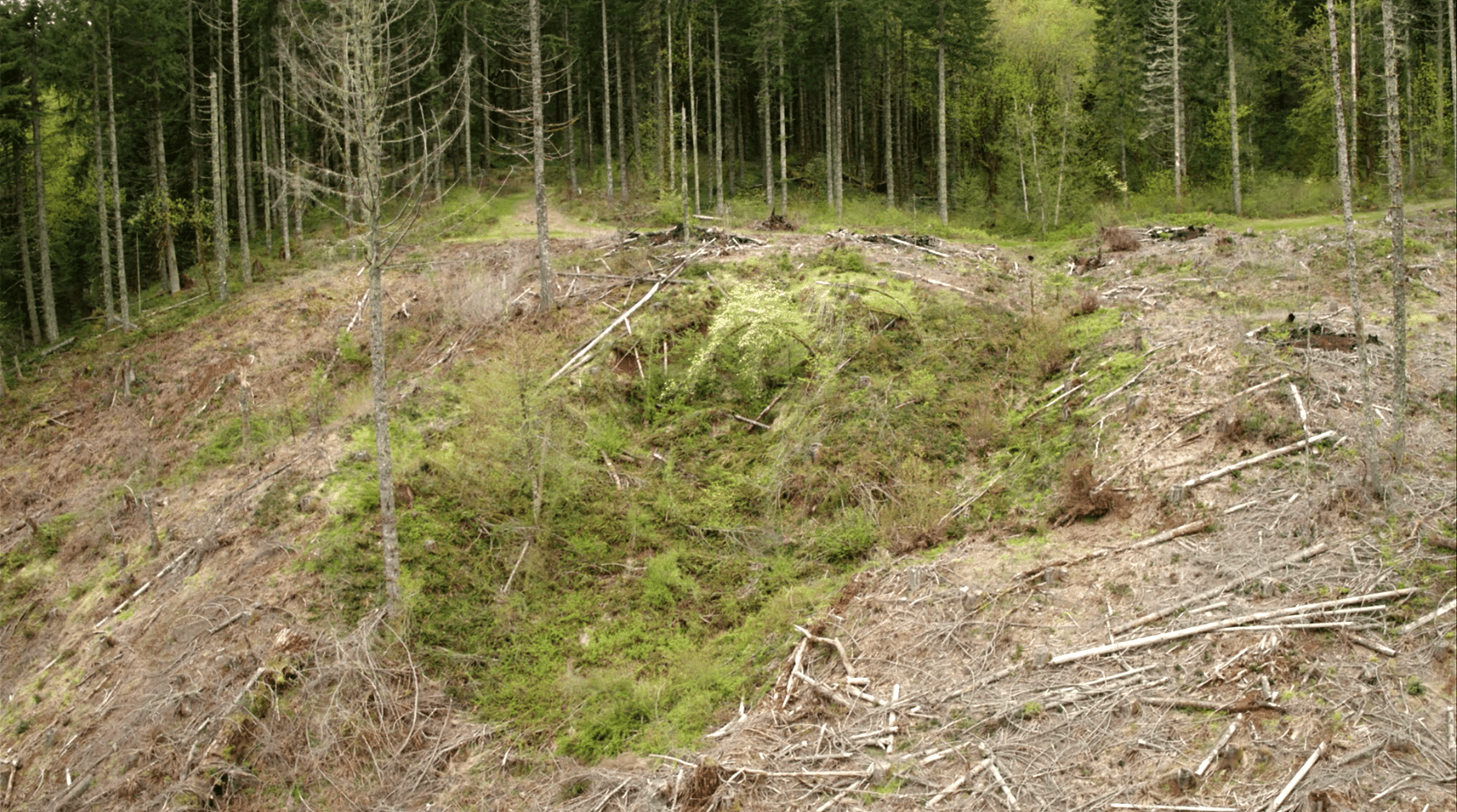
Leaving some areas untreated is also an option (Figure 7). These are larger areas within the reforestation zone where vegetation is intentionally left unmanaged. These skips are often more effective when done in conjunction with wildlife food plots, seasonal springs, areas with evidence of other wildlife habitat features or snag retention, or spots that have full sun throughout the day. Combining these areas with live-tree retention areas can be particularly advantageous, since those areas won’t need to be replanted and won’t require vegetation management. Site spray skips on the south or west side of leave-tree areas to maximize sunlight and support healthy flower, seed and berry production.
Invasive species removal is also critical to maximize native plant diversity. If invasive species are allowed to proliferate, broadcast herbicide and mechanical treatment may be necessary. This can hinder your ability to promote diverse early-seral vegetation. If possible, remove invasive species early, in a targeted way, to limit impacts on native vegetation.
Planting and seeding vegetation
Planting and seeding woody and herbaceous vegetation can also create a robust vegetation layer of flowering plants. This strategy might be useful if your management plan includes burning slash piles or revegetating temporary harvesting structures such as skid trails and landings. Focused seeding of these areas typically increases germination success because bare mineral soil is exposed, thus increasing germination rates.
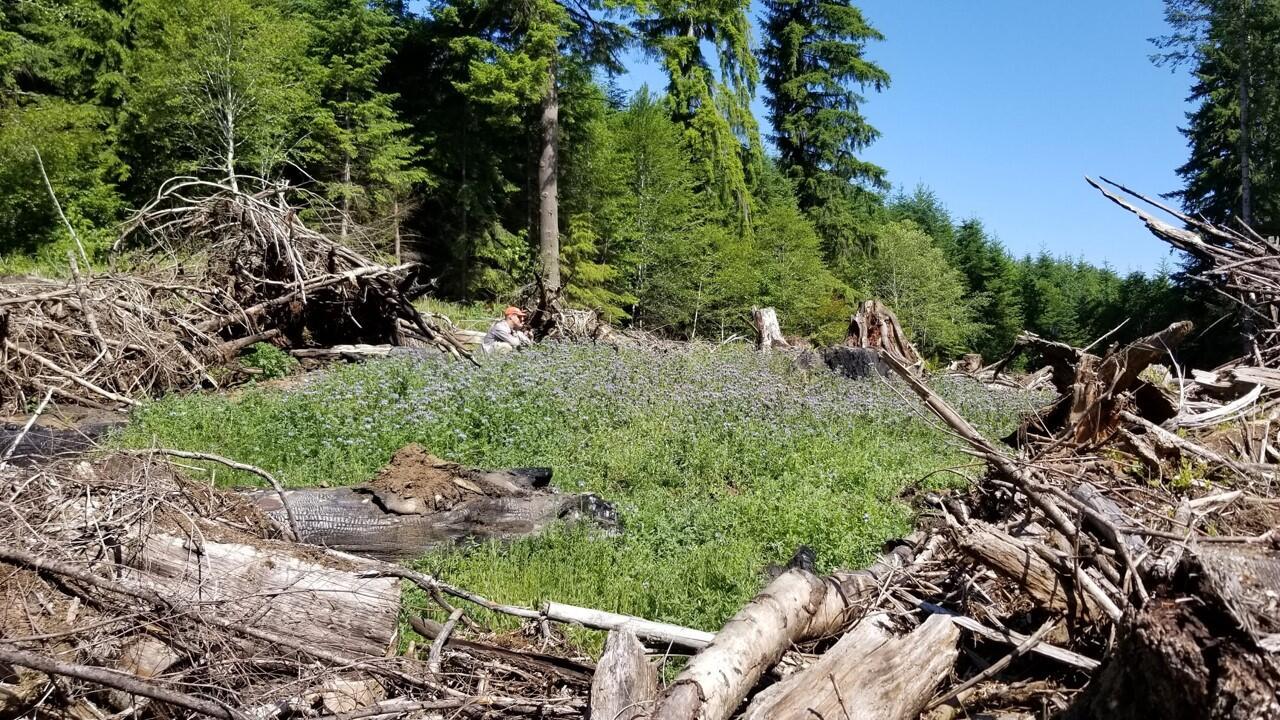
Burn piles are the best place for seeding because fire usually creates a concentration of nitrogen in the area and sterilizes the seed bank, decreasing potential competition with invasive species sprouting from seed (Figure 8). Order seeds in late fall so they are available when burning is complete. There are lots of places to source seed from, so make sure to order native seed for your area.
The seed mix should contain a good balance of annuals, short-lived perennials and long-lived perennials. Spread the seed in early winter to allow the rains to push the seed into the ground and benefit any species that requires a cold-wet period to germinate. Seeding in winter may also decrease seed loss due to predation by rodents and birds. Take special precautions (flag out) not to spray your seeded areas if using herbicide treatments in the spring.
If woody shrubs are scarce on the unit, consider planting woody vegetation to get things started. Plant along skid trails, in old landings or along property boundaries. Plantings can be diverse in species and height (just one shrub or various seeds, shrubs, and flowering plants), depending on your objectives.
Plant native woody shrubs in rows to speed up their establishment. Prepare the site as you would for any other planting by opening planting space and removing competing vegetation. Plant shrubs 3 to 6 feet apart during the winter; the frequent rain will support root development. These areas will need maintenance to keep out invasive species, so monitor these plantings along with your trees.
Also, consider that browsing deer can damage your planted shrubs. If populations are high in your area, choose deer-resistant and pollinator-friendly species where possible.
Conclusion
With careful planning throughout your harvesting operations, you can increase potential for a diverse and long-lived early-seral forest. Through each stage of your harvest, remember to retain more live trees and standing and down dead wood. Increase the time the canopy stays open, and boost the diversity and abundance of herbaceous and woody broadleaf vegetation. These techniques can extend the length of your early-seral forest and provide resources that support a wide variety of wildlife and plant communities.
Additional resources
- How to Choose a Good Pollinator Seed Mix, Corvallis Plant Materials Center
- Habitat Piles: Tools for Family Forestland Owners, Woodland Fish & Wildlife Group
- Managing Wildlife Leave Trees in the Pacific Northwest, Oregon Forest Resources Institute
- Oregon Forest Practices Act
- Oregon Forest Practices Act — Wildlife Food Plots
- Find your forester, Oregon Department of Forestry
- Wildlife-friendly Fuels Reduction
About the authors


Related publications


