
Proper training and pruning are essential for healthy, productive grapevines. Grapes produce fruit on lateral shoots that grow from 1-year-old canes. To maintain vine health and maximize fruit production, vigorous annual pruning is necessary.
Pruning methods
After three years of growth, grapevines are typically trained using one of two pruning methods:
- Spur pruning: retains short, two-bud spurs along permanent arms and is typically used for wine grapes and muscadines in warmer regions.
- Cane pruning: involves removing most of the previous year’s growth and retaining only a few long canes and short spurs; it is commonly used for table grapes and some wine grapes in cooler climates like Oregon.
This guide covers the basics of both methods.
Planting grapevines
- Wine grapes: Use grafted rootstock to prevent phylloxera infestation, which is common in the United States.
- Table grapes: American varieties can be planted on their own roots.
Planting tips
When planting grapes, remove any broken shoots and roots from the plant. If the roots are excessively long, they can be pruned back. Plan to dig a hole deep enough that the roots can fit in without bending or clumping.

Establishing the vine (years 1–3)
First growing season
During the first growing season, allow all shoots to grow. This will help you identify the most vigorous shoot for the next season.
First dormant season
Select the strongest shoot and remove the rest of the shoots. Prune the selected shoot to three to four buds. (This shoot becomes the trunk of the plant.)

Second growing season
Let shoots grow to about 1 foot. Select the most vigorous one or two shoots (depending on your trellis system) and remove all other shoots from the trunk.
Second dormant season
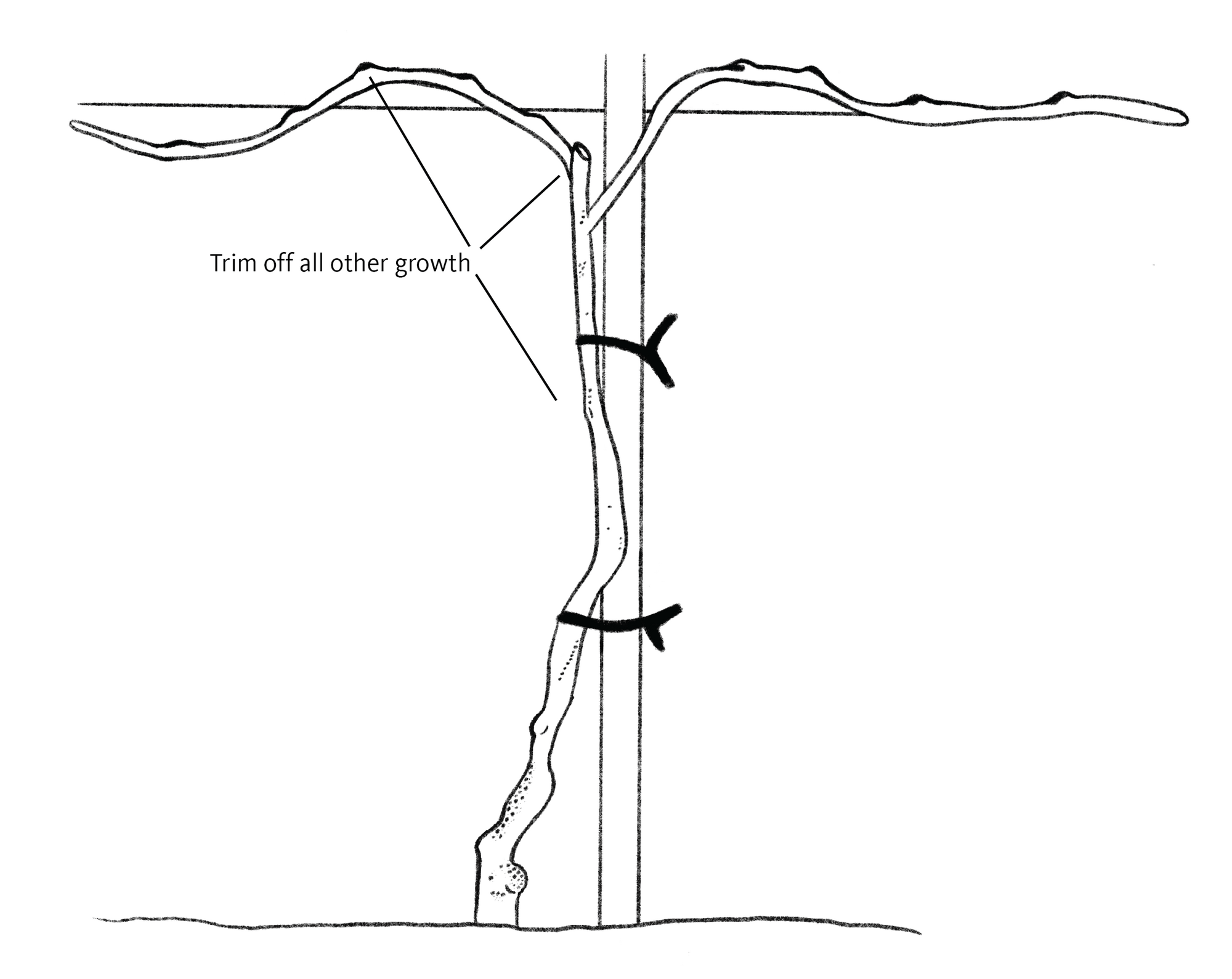
Remove side shoots, leaving only the trunk and two main shoots. Tie these shoots to the trellis or arbor.
Third growing season
Allow the vine to grow freely. Remove any shoots growing from the sides of the trunk, leaving only the shoots on the head or trellis points.
After the third growing season, the vine is established and ready for annual pruning.

Spur pruning
Spur pruning involves cutting side branches on the lateral arms down to two buds during the dormant season. Each bud will produce a fruiting shoot.
Annual spur pruning
Dormant season
- Each spur will have two shoots from the previous summer.
- Remove weak shoots.
- Prune strong shoots to two to three buds.
- Keep the trunk clear of growth.
Third dormant season (initial spur setup)
- Remove all shoots from the vertical trunk.
- Select strong side shoots on horizontal arms.
- Cut each to two buds.
- Space spurs 6–10 inches apart.

Cane pruning
Cane pruning involves retaining two full canes from the previous season and two additional canes pruned to spurs (two buds each). The full canes will bear fruit, while the spurs will grow replacement canes.
Annual cane pruning
Dormant season
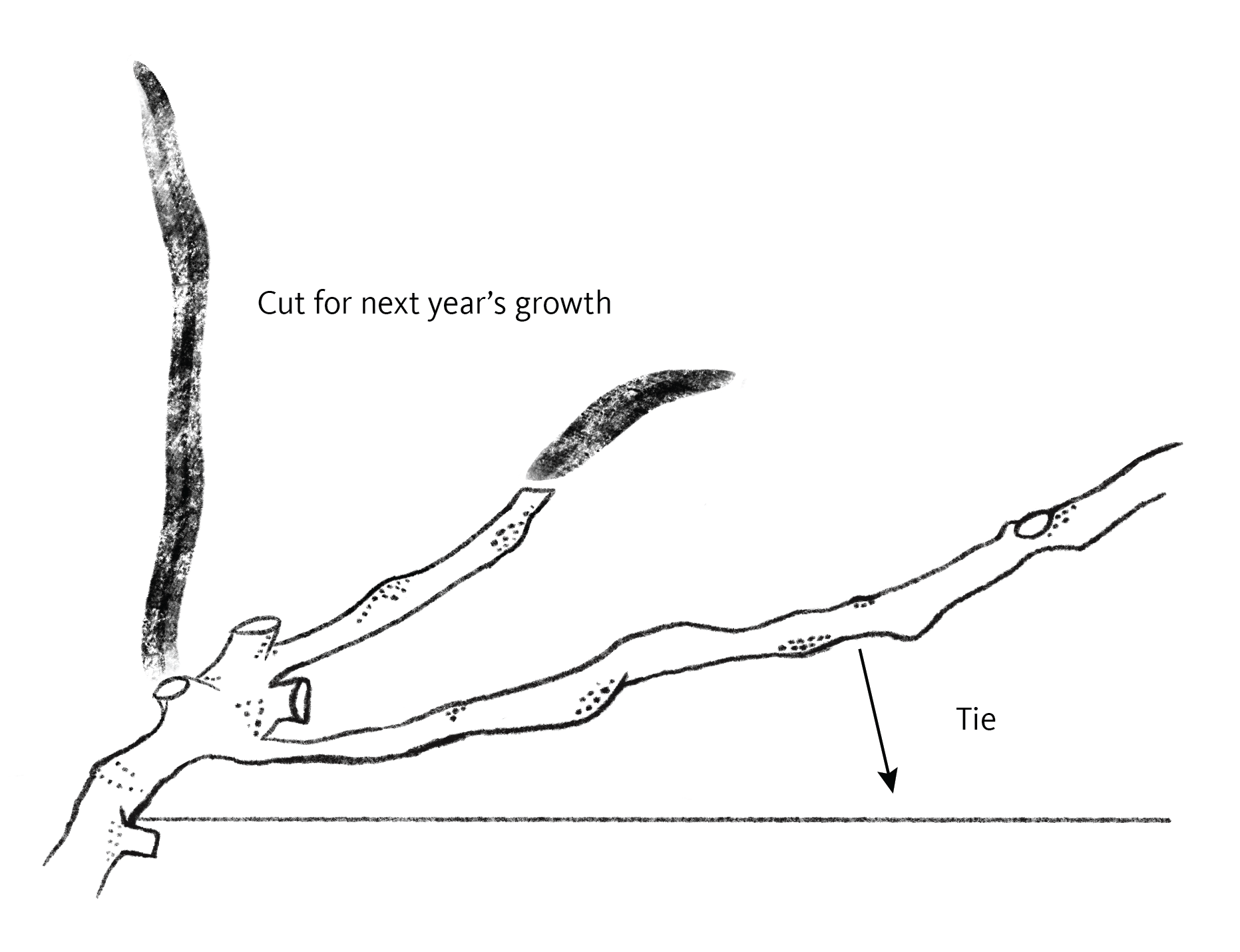
- Remove all growth except two full canes and two canes cut down to two to three buds as replacement canes.
- Train the full canes along the trellis wire.
Third dormant season (initial cane setup)
- Remove all shoots from the sides of the trunk, only retaining shoots on the head or trellis points.
- Select two shoots to use as the canes for the year (outer canes) and two shoots to use as replacement growth (inner shoots).
- Tie the two outer shoots to the trellis wire to use as fruiting canes.
- Cut the inner shoot to two to three buds (for replacement growth).

